
Rethink your leadership
The best leaders are not the ones who always have the answers. They are the ones who keep questioning them. According to organizational psychologist Adam Grant, the ability
to rethink assumptions, challenge established practices and encourage new ideas is becoming a critical leadership skill in a world where yesterday’s solutions quickly become obsolete.
For many leaders, experience is a source of confidence. It helps us solve problems faster, make decisions under pressure, and avoid mistakes we have seen before. But experience can also create blind spots. The longer we rely on familiar methods, the harder it becomes to notice when they no longer work.
This is one of the central messages from organizational psychologist and bestselling author Adam Grant. Success today depends less on what we know and more on our willingness to question what we know. The leaders who thrive are not those who defend old assumptions. They are the ones prepared to challenge them. His ideas, drawn from the bestselling books Think Again and Originals, offer a practical framework for organizations seeking to remain adaptable and innovative.
For maintenance and asset management professionals, that mindset has never been more important. Digitalization, sustainability requirements, changing workforce demographics, and increasing operational complexity are forcing organizations to rethink long-established ways of working. Competitive advantage increasingly comes from the ability to learn faster than the pace of change.
Grant argues that many of us fall into unproductive thinking patterns. We defend our beliefs, try to prove others wrong, or seek support for our own views. Effective leaders take a different approach. They think like scientists. They test assumptions, seek evidence, and remain willing to revise their conclusions when new information emerges.
The willingness to change your mind is often misunderstood as indecision. Grant sees it as a strength. In fast-changing environments, rethinking allows organizations to adapt before circumstances force them to do so. Leaders who approach decisions with curiosity rather than certainty are better equipped to identify risks, uncover opportunities, and respond when conditions change.
One of the greatest obstacles to this mindset is expertise itself. Knowledge is valuable, but it can also create overconfidence. The deeper our expertise, the easier it becomes to assume that current practices are the right ones. That is why Grant advocates a culture of continuous learning, where people are encouraged to challenge existing assumptions, remain curious, and acknowledge what they do not know.
Creating such a culture requires psychological safety. Employees must feel comfortable raising concerns, question assumptions, and share ideas without fear of criticism. In many organizations, valuable insights never reach decision-makers because people hesitate to speak up. This is especially relevant in maintenance and reliability environments, where frontline employees often have the clearest view of operational risks, inefficiencies, and improvement opportunities.
Grant also believes that organizations do not suffer from a shortage of ideas. The real challenge is recognizing and supporting them. Original thinkers are often willing to challenge established practices and propose alternatives, but their ideas can be dismissed because they seem unfamiliar or disruptive. Leaders who want innovation must create conditions where new thinking can be heard and tested.
At the same time, organizations need to guard against groupthink. Strong teams can become too aligned, reinforcing the same assumptions and perspectives. Fresh viewpoints, constructive disagreement, and diverse experiences help prevent complacency and often reveal opportunities that established teams no longer see.
This principle extends to recruitment. Rather than focusing solely on culture fit, Grant encourages leaders to think about cultural contribution. The goal is not to hire people who think like everyone else, but people who bring perspectives, experiences, and skills that strengthen the organization.
As maintenance and industrial organizations navigate increasingly complex challenges, Adam Grant’s message is clear: adaptability is becoming a competitive advantage. Organizations that encourage questioning, welcome constructive disagreement, and create space for new ideas are better positioned to improve performance and respond to change. The organizations that will lead the future are not necessarily those with the deepest expertise. They are the ones that continue learning, questioning, and improving long after others have settled for what they already know.



Subscribe to the free Maintworld newsletter here!
Rethinking Military Maintenance: Why Data Alone Isn’t Enough
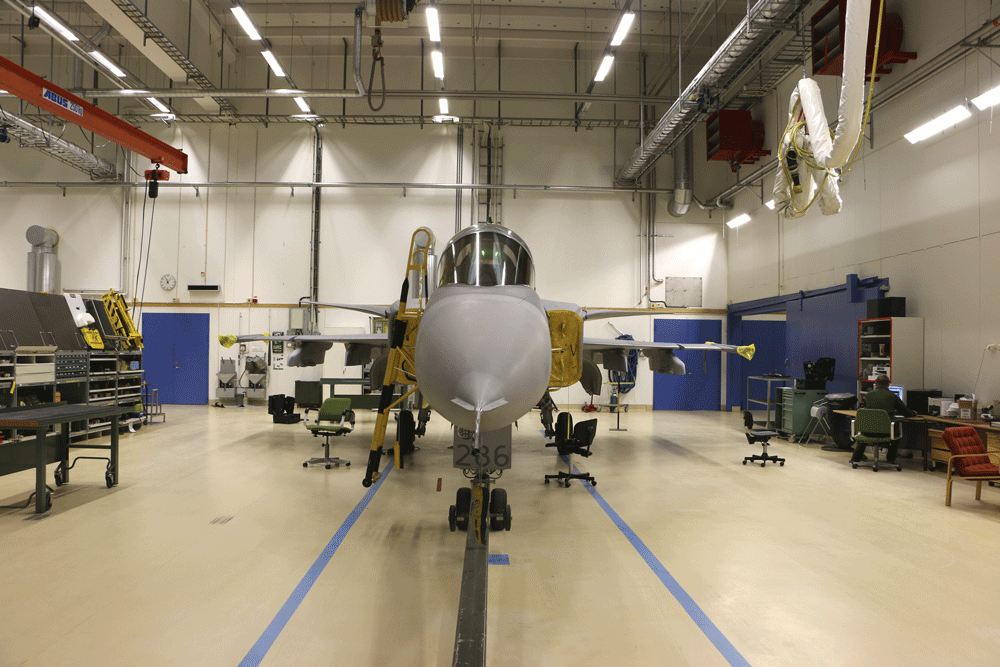
Modern military aircraft generate vast amounts of technical data every second. From engine performance to structural loads and avionics health, fleets are more instrumented than ever before.
At Luleå University of Technology (LTU), researchers are exploring how this data can be used more effectively—not just through advanced analytics, but through improved collaboration between military aircraft pilots and maintenance technicians.
Today, at the centre of military aircraft maintenance is Prognostics and Health Management (PHM), a technology-driven approach that continuously monitors aircraft health and predicts potential failures before they occur.
PHM is a key enabler of condition-based maintenance (CBM), in which maintenance decisions are increasingly based on the actual condition of aircraft components and systems rather than fixed maintenance intervals.
The aim of PHM is greater efficiency, less downtime, and higher aircraft availability. However, research shows that technology alone is not enough—successful PHM implementation also depends on organisational, human, and operational factors.
Doctoral researcher Angelo Compierchio at Luleå University of Technology notes that one of the greatest opportunities for improving maintenance lies not in developing new technologies but in strengthening how pilots and maintainers communicate and collaborate as teams toward a shared goal. This approach ensues a safe, reliable, and mission ready aircraft.
Compierchio’s doctoral research – supervised by Professor of Human Work Sciences at LTU, Phillip Tretten, and Adjunct Senior Lecturer in Operation and Maintenance Engineering, Prasanna Illankoon – examines human factors and ergonomics in fifth-generation military aircraft, particularly the F-35, in the cockpit and maintenance contexts.
After analysing 29 reported mainly F-35 accidents and incidents between 2014 and 2026, Compierchio found that technical issues are often closely intertwined with communication, decision-making, and maintenance practices. More specifically, around 40% of the incidents were linked to human factors.
“Many accidents are not caused by a single technical failure. They involve interactions between pilots, maintainers and increasingly intelligent aircraft systems,” Compierchio says.
Although PHM systems provide large volumes of condition data to both aircraft and ground maintenance organisations, shared access to data does not guarantee shared interpretation, Compierchio explains.
For example, a pilot may detect unusual aircraft behaviour before it is registered by onboard diagnostic systems. And the sensors do not always convey the necessary information to make the best maintenance decisions. Therefore, if this experience is not communicated effectively, valuable information may be lost before it reaches maintenance personnel.
To address this gap, Compierchio proposes moving beyond simple data exchange toward what he calls a Team Intent Approach.
The idea, he says, is that maintenance should focus not only on what the data shows, but also on building a shared understanding of what is happening, why it matters, and what all stakeholders are trying to achieve.
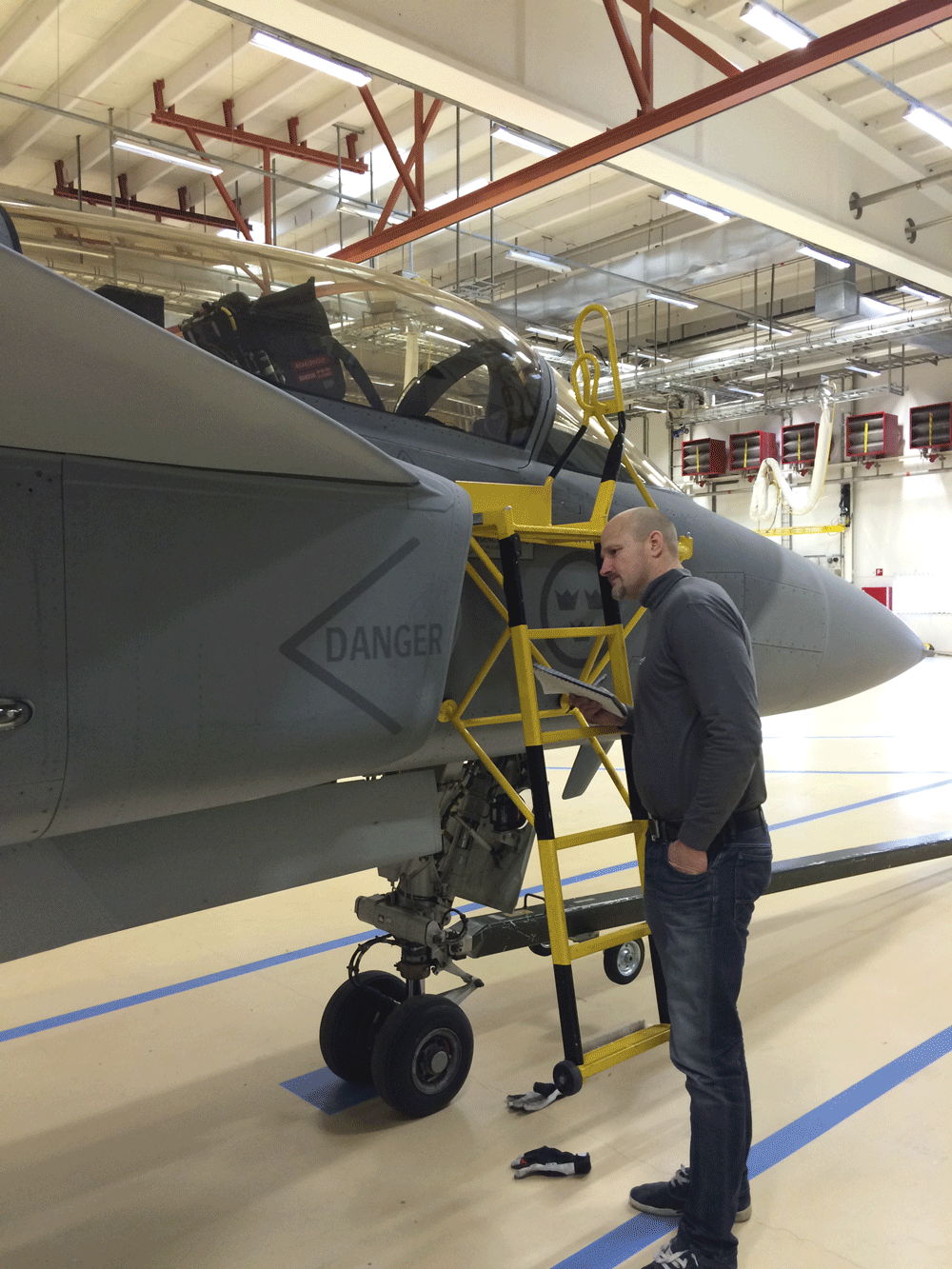
The Team Intent Approach refers to the collaborative alignment between pilots and maintenance personnel, where pilot perceptions during in-flight anomalies or emergencies are integrated with PHM data. This ensures that sensor-based diagnostics are interpreted alongside real operational experience.
The concept of “intent” is already well established in military command philosophy. Instead of issuing only detailed instructions or “commands,” commanders communicate overall mission intent so personnel can adapt their actions as conditions change.
Compierchio suggests applying this same principle to military aircraft maintenance operations.
Instead of simply reporting faults, pilots and maintenance teams should communicate with a shared understanding of operational goals, aircraft condition, and mission priorities. This allows maintenance decisions to be informed not only by sensor data, but also by operational context and human experience, he says.
Despite increasing automation in military aviation, Compierchio emphasises that humans remain central to safe and effective operations.
Artificial intelligence and PHM systems can support decision-making, but pilots and maintenance personnel must still interpret complex and sometimes ambiguous situations together.
As he notes: “The human remains in the loop. Technology supports decisions, but people provide the context.”
His research highlights that maintenance personnel are not only technical specialists but also operational partners whose decisions directly influence safety, readiness, and mission success. By working in closer communication with military pilots, a common intent devolved into maintenance tasks that improve aircraft availability is needed.
Although the research focuses on military aviation, its principles extend to other industries such as energy, manufacturing, and process industries. In these environments, operators often detect subtle anomalies before monitoring systems register a fault.
Improving communication between operators and maintenance teams could therefore reduce downtime, improve troubleshooting efficiency, and enhance overall system reliability.
This changes the focus from asking “What failed?” to also asking, for instance, “What was the operator experiencing before and during the failure event?”
As military aviation moves toward increasingly autonomous systems and more advanced predictive technologies, the importance of human collaboration is likely to grow.
Future aircraft will likely produce even more data, not less. The challenge will be ensuring that this information is not only collected and analysed but also understood in a shared operational context.
LTU research suggests that the next major step in the evolution of maintenance may not come from new sensors or algorithms alone, but from better ways to align people around a common intent.
“The most significant advances in maintenance may not come from new technologies alone, but from improving how people understand and coordinate with one another,” Compierchio concludes.
EuroMaintenance 2026: Team Intent Approach for Aircraft Maintenance
Doctoral researcher Angelo Compierchio’s paper “Team Intent Approach to PHM Data in Military Aviation” (Compierchio et al.), presented at EuroMaintenance 2026 at Luleå University of Technology, explores how Prognostics and Health Management (PHM) data can be better used in military aircraft maintenance to enhance aircraft performance, safety, and mission readiness.
The study introduces a “Team Intent Approach” that improves collaboration between pilots and maintenance personnel by enabling shared interpretation of aircraft health information among flight crews and ground engineers. The approach aims to enhance situational awareness and support more effective maintenance decisions by combining pilot observations with PHM data.
Text: Nina Garlo-Melkas Photos: Phillip Tretten
Subscribe to the free Maintworld newsletter here!
From Apprentice to Global Innovator
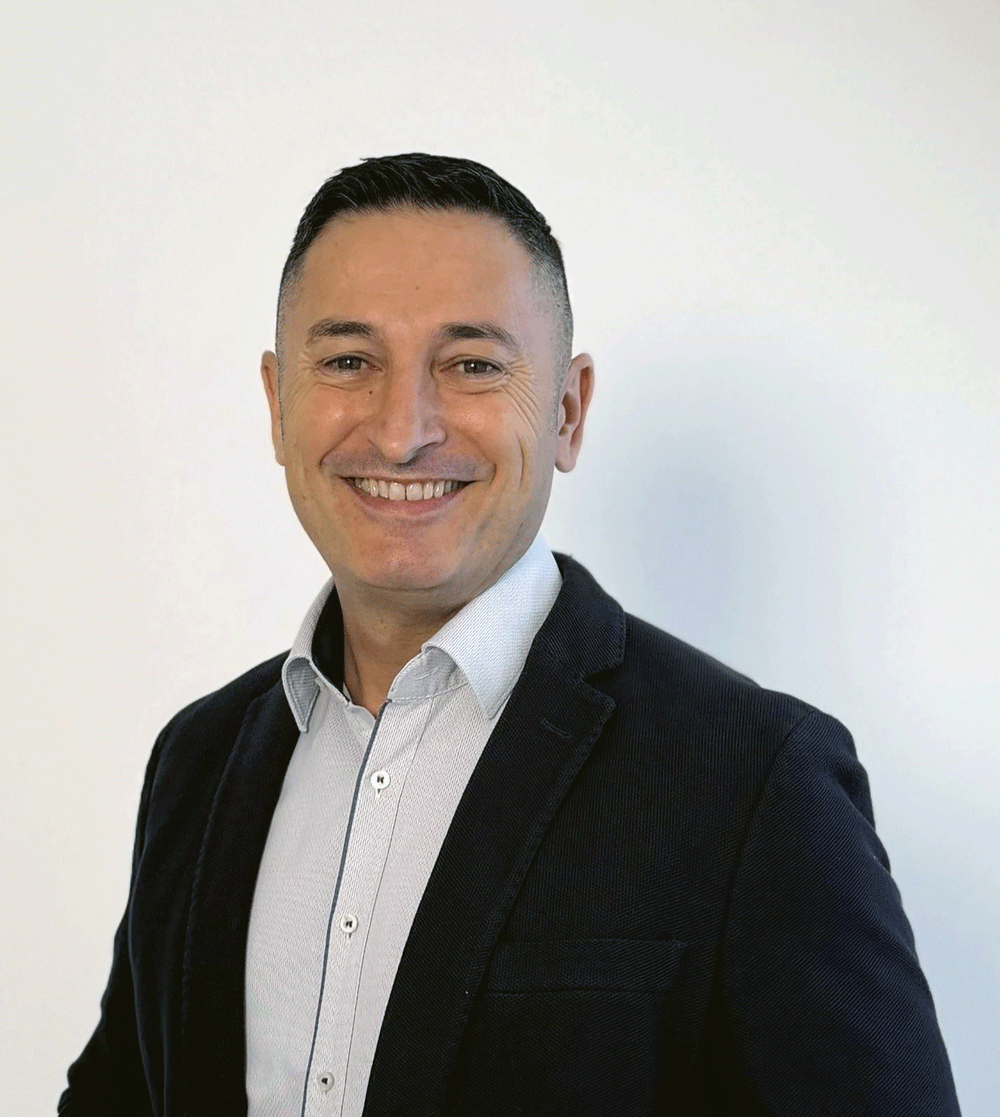
How Eduardo García Magraner turned a factory-floor idea into one of Ford’s most celebrated maintenance innovations.
When Eduardo García Magraner started his career at Ford Motor Company 37 years ago, he could hardly have imagined that a maintenance idea developed inside a Spanish factory would one day monitor more than 38,000 parts of equipment around the Valencia plant. Today, as Manufacturing Manager for Assembly and Battery at Ford Valencia and one of the most recognized maintenance innovators in the automotive industry remains convinced that technology alone is never the answer. The real secret, he says, believes in people, persistence, and the courage to turn ideas into reality.
There is a common assumption that successful industrial careers follow a carefully planned route. Eduardo García Magraner’s story suggests otherwise.
His professional journey began not in a management office or university laboratory, but on the factory floor. Fresh from an apprenticeship program, he joined Ford Valencia as a maintenance operator. From there, he progressed through engineering, supervisory and manufacturing leadership roles, eventually becoming Manufacturing Manager responsible for Assembly and Battery operations while also shaping maintenance strategies across multiple production areas. Looking back, García Magraner describes his career as less of a carefully designed roadmap and more of a continuous search for opportunities to learn.
“I never planned every step,” he says. “But maintenance has always been part of my journey.”
That journey has taken him through stamping plants, body shops, production management and global manufacturing initiatives. Along the way, he gained something many industrial leaders struggle to acquire: a deep understanding of operations from every level of the organization. For García Magraner, that experience remains one of his greatest advantages.
“You cannot lead maintenance from an office. You must understand the reality of the shop floor.”
That conviction still guides his daily work. Despite his senior position, he remains committed to spending time where production happens, talking with operators, supporting teams and solving problems directly.
“The most important lesson I have learned is that people are everything,” he says.
It is a simple statement, yet one that repeatedly emerges throughout his career story.
While many maintenance discussions focus on technology, systems and equipment, García Magraner consistently returns to the human dimension. He believes successful organizations are built by motivated teams with diverse skills and perspectives.
Technology matters, data matters, processes matter, but people come first.
His leadership philosophy is straightforward: supporting people, helping them succeed and creating an environment where ideas can emerge.
“When people are motivated, they bring solutions, suggestions and innovation. That is where real improvement comes from.”
That focus on people would later become crucial when García Magraner embarked on a challenge that would define much of his professional legacy.
In 2012, while already working in manufacturing leadership, he began pursuing a PhD in Computer Engineering and Industrial Production. Unlike many academic research projects, however, his objective was never purely academic.
“I wanted to solve a real industrial problem.”
The problem was familiar to every maintenance professional: breakdowns. Machine failures interrupt production, create waste, consume resources and generate costs throughout the organization.
The challenge was how to detect deterioration before failures occurred.
Predictive maintenance was already attracting attention, but many solutions required extensive investments in new sensors and monitoring systems. García Magraner wondered whether the answer might already exist inside the factory.
The result was Miniterms 4.0, an Industrial Internet of Things (IIoT) real-time predictive maintenance support system that would eventually transform maintenance practices across Ford’s manufacturing operations. Its breakthrough was deceptively simple. Rather than installing thousands of new sensors, the system uses data already available from existing programmable logic controllers (PLCs). By analyzing tiny variations in cycle times, sometimes measured in milliseconds, it can identify equipment deterioration before a failure occurs. The concept challenged conventional thinking.
“We realized that the machines were already telling us what was happening,” García Magraner explains. “We simply needed to listen differently.”
What began as a small laboratory project inside the Valencia plant grew steadily through testing, validation and real-world results. The turning point came when the team demonstrated measurable improvements in reliability and technical availability. Success generated credibility, credibility generated support and support enabled expansion. Today the system monitors more than 38,000 assets across Ford manufacturing facilities in Valencia, and work is currently underway on its deployment in operations in North America, Mexico, South Africa and Thailand.
“It started as a dream,” García Magraner says.
A dream that became one of Ford’s most successful predictive maintenance initiatives worldwide.
The achievement earned widespread recognition, including the prestigious Henry Ford Technical Award in 2019, regarded as one of the highest honors within Ford Motor Company. Additional recognitions followed, including the Best Industrial Paper Award at ICINCO 2020, Global Manufacturing Technical Excellence Awards in 2020, the President’s Health & Safety Global Winner
Award in 2022 and the Ángel Herrera Award for Best National Research Team in 2024.
Yet when asked which achievement matters most, García Magraner rarely speaks first about the awards themselves. Instead, he talks about impact as for him, success is not measured by trophies but by creating lasting value.
“When an idea remains in the factory and continues helping people years later, that is something special.”
His philosophy reflects a broader perspective on maintenance itself. During his nearly four decades in the automotive industry, he has witnessed extraordinary technological change. He began his career in a world of relays, cables and basic automation. Then came programmable logic controllers following industrial networks and digital manufacturing. Now comes artificial intelligence.
According to García Magraner, the industry is entering a new industrial revolution driven by data, cloud technologies and AI.
“What is different today is that we can connect everything.”
Modern manufacturing systems generate enormous amounts of information. Machines communicate continuously. Production lines create vast digital footprints. Cloud platforms provide unprecedented processing capabilities. For maintenance organizations, this creates opportunities that were unimaginable only a decade ago. Ford is already exploring AI-driven applications designed to prioritize maintenance activities and improve decision-making. One project compares machine health monitoring to a medical examination. Just as a doctor evaluates a patient and identifies areas requiring attention, AI systems can analyze operational data and identify the equipment most at risk. For maintenance teams responsible for thousands of machines, such prioritization is invaluable.
“You cannot focus on everything,” García Magraner explains. “You need to know where your resources will create the greatest value.”
Despite the excitement surrounding artificial intelligence, he rejects the notion that AI will replace maintenance professionals. Instead, he sees transformation rather than replacement.
“AI will change professions, not eliminate them.”
Future maintenance technicians may increasingly rely on intelligent systems for diagnostics, planning and decision support. AI may suggest likely causes of failures, identify corrective actions and optimize scheduling. But someone will still need to repair the equipment. Mechanical expertise, electrical skills and practical experience will remain essential.
“AI can tell you what to do but it cannot replace the person who does it in maintenance.”
That practical mindset also shapes García Magraner’s views on maintenance performance. For years, maintenance was often viewed as a necessary cost. Today, he argues, it has become a strategic function directly linked to business success. The difference is measurement.
“Without data, we only have opinions.”
World-class maintenance organizations understand their performance through measurable indicators. García Magraner points to technical availability as the most important overall metric. The objective is simple: maximize the percentage of required production achieved without losses caused by breakdowns. In elite operations, technical availability exceeds 98%.
Predictive maintenance plays a crucial role in reaching those levels because it enables planned intervention before failures disrupt production.
“When you predict a failure, you can prepare the spare parts, prepare the tools and prepare the people,” he explains.
The alternative is familiar to every maintenance manager: emergency repairs, frantic troubleshooting and costly downtime. This philosophy formed the basis of García Magraner’s keynote presentation at EuroMaintenance 2026 in Luleå Sweden.
His presentation, “The practical transition from predictive maintenance pilots to sustained impact in real plant operations — connecting technology, organizational alignment and measurable performance improvement”, addresses a challenge facing many organizations. While predictive maintenance pilots often generate promising results, scaling them into sustainable operational practices is far more difficult. According to García Magraner, many organizations become trapped in endless pilot programs without achieving plant-wide transformation. The reason is not technology. The real barriers are organizational commitment, trust and the ability to demonstrate measurable business value.
“You need results that people can believe in.”
For him, the future belongs to organizations capable of combining technology, leadership and operational discipline. Technology alone cannot deliver transformation, neither can data, nor artificial intelligence. Only when all three work together with people and processes can predictive maintenance achieve its full potential.
As maintenance professionals prepare for the next generation of industrial operations, García Magraner offers a simple piece of advice: measure everything, remain curious and never stop learning.
It is advice he continues to follow himself. Alongside his industrial responsibilities, he remains active in research, has co-supervised multiple doctoral candidates and continues publishing technical papers and sharing knowledge internationally.
For all his enthusiasm for technology and innovation, García Magraner’s life outside the factory reveals a different side of his personality. Together with his wife, he enjoys dancing salsa, an activity that provides a welcome contrast to the highly structured world of manufacturing. When he is not dancing, he can often be found on the road. A dedicated Harley-Davidson rider, García Magraner regularly joins fellow enthusiasts for motorcycle trips across the Spanish countryside. He is also an enthusiastic cook, another hobby that reflects his belief in creativity, discipline and continuous learning. Whether in the kitchen, on a motorcycle or on a factory floor, he approaches challenges with the same curiosity and energy that have defined his professional career.
Recently, he added another accomplishment to an already remarkable career: authoring his first book “El DO del Guerrero Industrial”, combining lessons from Lean Manufacturing, the history of the Samurai and nearly four decades of factory experience. The combination may seem unusual, yet perhaps it perfectly reflects the person behind the achievements. A manufacturing leader who values discipline and continuous improvement, a researcher focused on practical results, a maintenance professional who believes technology must serve people. And someone who, nearly forty years after starting as an apprentice, remains as enthusiastic about learning as ever. That motivation has already carried him a long way. And judging by his energy, curiosity and passion for maintenance, his journey is far from over.
Eduardo García Magraner
Position: Manufacturing Manager, Assembly and Battery Manufacturing, Ford Motor Company, Valencia, Spain
Education: PhD in Computer Engineering and Industrial Production
Experience: 37 years with Ford Motor Company
Known for: Development of the Miniterms 4.0 real-time predictive maintenance support system
Awards include:
• Henry Ford Technical Award (2019)
• Best Industrial Paper Award (ICINCO 2020)
• Global Manufacturing Technical Excellence Awards (2020)
• President’s Health & Safety Global Winner Award (2022) and (2026)
• Ángel Herrera Award – Best National Research Team (2024)
Research activity: 47 publications and technical documents; co-supervisor of industrial doctoral research
Text: Mia Heiskanen Photos: Eduardo García Magraner archive
Subscribe to the free Maintworld newsletter here!
Creating Value through Maintenance
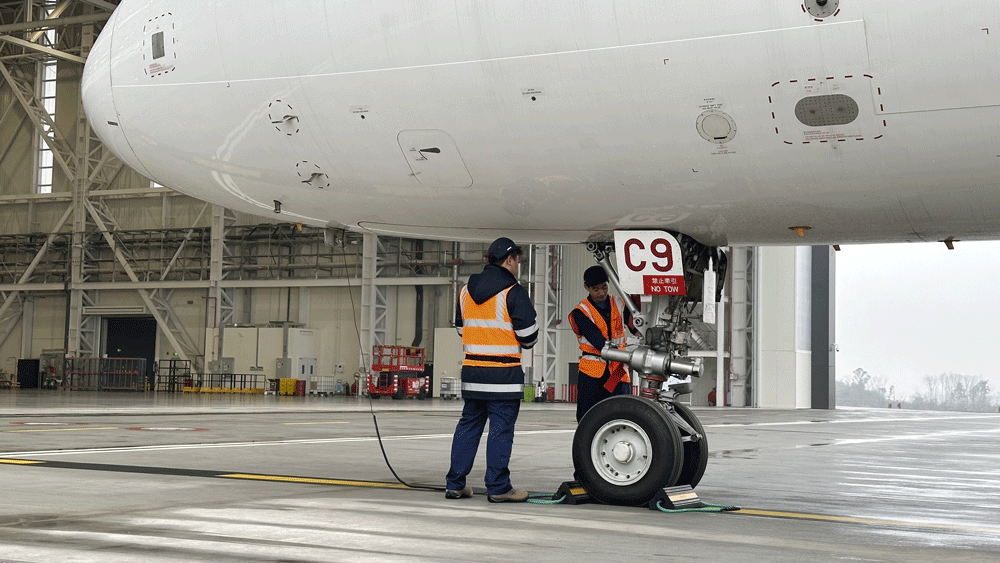
At one of Europe’s most advanced aerostructures facilities, maintenance has evolved from a cost centre to a strategic driver of productivity, investment, and long-term competitiveness.
Maintenance impacts the profit and loss statement directly—not only as a cost, but by creating value through reliability, safety, quality, sustainability and smarter investment decisions,” says Borja López García, Head of Industrial Means Maintenance at Airbus.
Borja leads industrial maintenance at Airbus’ Illescas facility near Madrid, a major aerostructures site with multiple production lines, automated part manufacturing processes and specialised industrial assets for high-precision manufacturing.
At this scale, even minor equipment failures can quickly cascade into production disruptions, making maintenance central to operational performance rather than simply equipment upkeep.
“We shouldn’t only focus on uptime or downtime,” López García explains.
“We also need to analyse asset obsolescence, define long-term plans, and make data-based decisions on replacement, refurbishment or decommissioning.”
These decisions extend beyond technical maintenance and directly shape investment strategy.
“They have a clear impact on capital expenditure (CapEx) strategy and support better investment decisions in the years ahead.”
For López García, maintenance creates value through multiple channels: improving reliability, protecting high-value assets, supporting safety and sustainability, and enabling better investment decisions. His philosophy reflects a broader industrial shift in which maintenance is increasingly recognised as a driver of business performance rather than a support function.
“At first, my mindset about maintenance strategy was based mainly on reliability. Several years ago, however, my mindset changed—from thinking mainly about technical performance to thinking about maintenance’s impact on the business,” he says.
“The value of maintenance must be managed. We need a value culture where everyone understands how their daily work contributes to the organisation’s success.”
For decades, maintenance was widely seen as a necessary cost of doing business—essential, but rarely strategic. López García argues this mindset is increasingly outdated. It underestimates maintenance’s contribution to operational performance, competitiveness, and long-term business value.
In his view, maintenance extends far beyond cost control.
“There are four drivers of value, and only one is cost,” he notes.
“The others—operational performance, lifecycle optimisation, and safety and sustainability—are where maintenance creates its strongest impact.”
This value-driven approach must be embedded in daily operations, he explains. That means agreeing with business units on acceptable levels of disruption through service-level agreements and expressing maintenance performance indicators in financial terms so their business impact is clear.
“If we know how many euros one hour of downtime costs, we can clearly understand the business impact of a breakdown,” López García explains.
This ability to connect technical performance to financial outcomes is becoming a critical capability for modern maintenance leaders.
One of the most significant shifts in maintenance is the need to communicate in business terms rather than purely technical indicators.
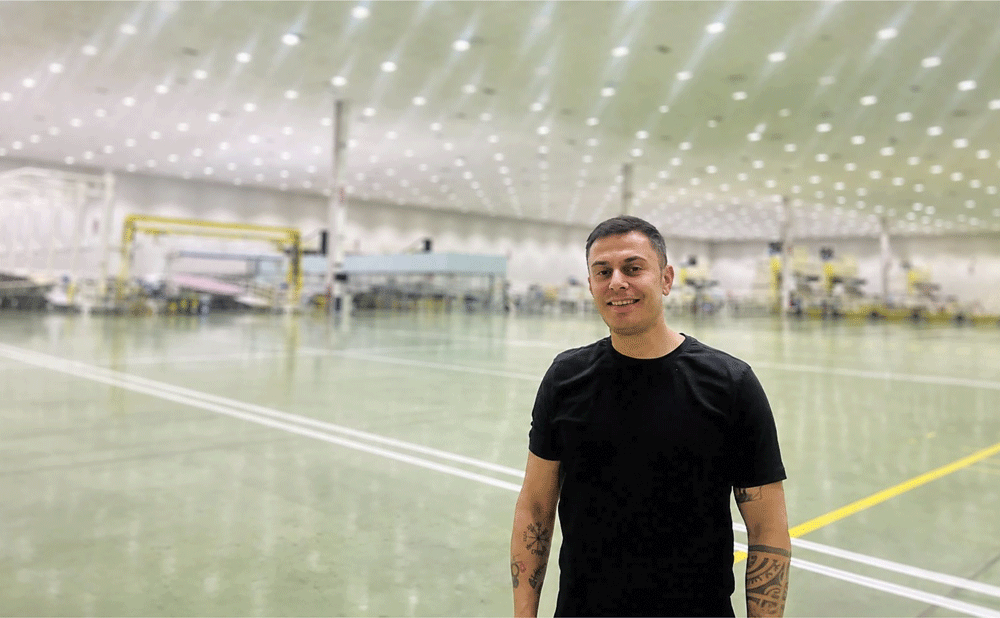
“Maintenance managers need to quantify, communicate and make understandable the value of maintenance. We need to speak the financial language,” he says.
Translating asset condition, availability, or obsolescence risk into monetary impact fundamentally changes decision-making. A €50,000 condition monitoring system becomes easier to justify when weighed against €500,000 in avoided downtime. Staffing, spare parts strategies, and investment priorities all become clearer when expressed in financial terms.
“This shift also improves prioritisation on the shop floor,” López García says.
“When every work order carries an estimated financial impact, teams can distinguish between tasks that feel urgent and tasks that truly affect business performance.”
A one-hour facility stop, for example, is no longer an abstract technical incident.
“Instead of saying ‘line downtime increased by 3%,’ López García notes that you can say, ‘we lost €120,000 in production capacity this week.’”
“That shift changes the conversation. It determines whether a maintenance investment is seen as a cost centre expense or a profit-protection strategy,” he explains.
Ultimately, translating maintenance metrics into monetary impact bridges a long-standing communication gap between engineering and management. It allows both sides to evaluate the same reality through a shared lens: value creation and value protection.
Despite progress, many organisations remain stuck in reactive maintenance modes, focused on short-term breakdowns rather than long-term value creation.
“When maintenance managers spend each day firefighting, they cannot focus on strategy or value creation,” López García says.
A strategic maintenance organisation must look beyond immediate failures. It must actively manage asset lifecycles, anticipate obsolescence risks, and develop long-term asset plans aligned with business objectives.
This shift—from operational response to strategic value creation—is, in his view, one of the most important transformations facing the industry.
For López García, value creation is not solely a managerial responsibility.
It depends on organisational culture and shared understanding.
“Value must be managed.”
He illustrates this idea with a simple but powerful metaphor: two workers in a stone quarry are asked what they do. One replies, “I extract rocks.” The other answers, “I build cathedrals.” The task is identical; the perspective is not.
“We need to create a culture where every employee understands how their daily work creates value for the organisation,” he says.
For maintenance departments, this means ensuring technicians and engineers understand how their work influences safety, production, quality, sustainability, and financial performance.
When discussing how digital transformation is reshaping maintenance, López García takes a notably pragmatic view: technology alone does not create value.
“A bad process that is digitalised is still a bad process,” he says. “First, you need the right process. Then digitalisation can make it more efficient.”
At Airbus Illescas, artificial intelligence is already supporting maintenance activities ranging from inventory optimisation to compliance checks and technician assistance systems. One AI-driven initiative significantly reduced lubricant and oil references, simplifying inventory management and generating measurable savings.
Yet López García cautions against unnecessary complexity.
“Not every problem requires a big AI system. Many issues can be solved with a good prompt.”
The emphasis, he argues, should remain on practical outcomes rather than technology for its own sake.
Despite rapid advances in tools and automation, López García sees people as the defining challenge for the future.
“The biggest challenge for the future is people.”
Across Europe, industrial organisations face increasing difficulty recruiting skilled maintenance professionals, particularly technicians. Competition with technology firms and other sectors for digitally skilled talent is intensifying.
Modern maintenance roles now require familiarity with automation, data analysis, and AI tools, yet candidates often have attractive alternatives outside manufacturing.
“We need to make industry attractive for talent,” he says.
This challenge is compounded by changing expectations around work. Younger generations increasingly value remote and flexible work models, options that are often limited in maintenance roles.
“This is not a reality for many maintenance roles, where physical presence is still essential for safety, hands-on intervention, and real-time problem-solving.”
López García argues that industry must respond through stronger collaboration with education systems.
“The maintenance technician of the future will not appear by accident. We must develop that talent together with schools and universities.”
Reflecting on his over 20 years working in Assets & Maintenance Management, López García describes a clear personal and professional evolution—from technical optimisation to business impact.
“Today I think more about the impact of maintenance on the business than about technical indicators,” he says.
This shift mirrors a broader transformation across industry. Maintenance is no longer defined solely by repairs, reliability, or cost control. Its true value lies in enabling production, protecting assets, supporting sustainability, and strengthening long-term business performance.
As López García summarises it: “Maintenance is not a cost centre. Maintenance is a value driver.”
Borja López García
Borja López García, Head of Industrial Means Maintenance at Airbus’ Illescas facility in Spain, has over 20 years of experience spanning facilities management, industrial maintenance, engineering, and asset management.
López García is a strong advocate of value-driven maintenance, promoting it as a strategic driver of business performance. His own podcast series, now with 60+ episodes, shares best practices and supports the shift from reactive maintenance to a more business-aligned approach.
López García is also active in the European Federation of National Maintenance Societies. He presented his work on value-driven maintenance at EuroMaintenance 2026, held in Luleå in June.
Text: Nina Garlo-Melkas Photos: Airbus
Subscribe to the free Maintworld newsletter here!
Circular sludge systems don’t fail on technology—but do on insufficient maintenance
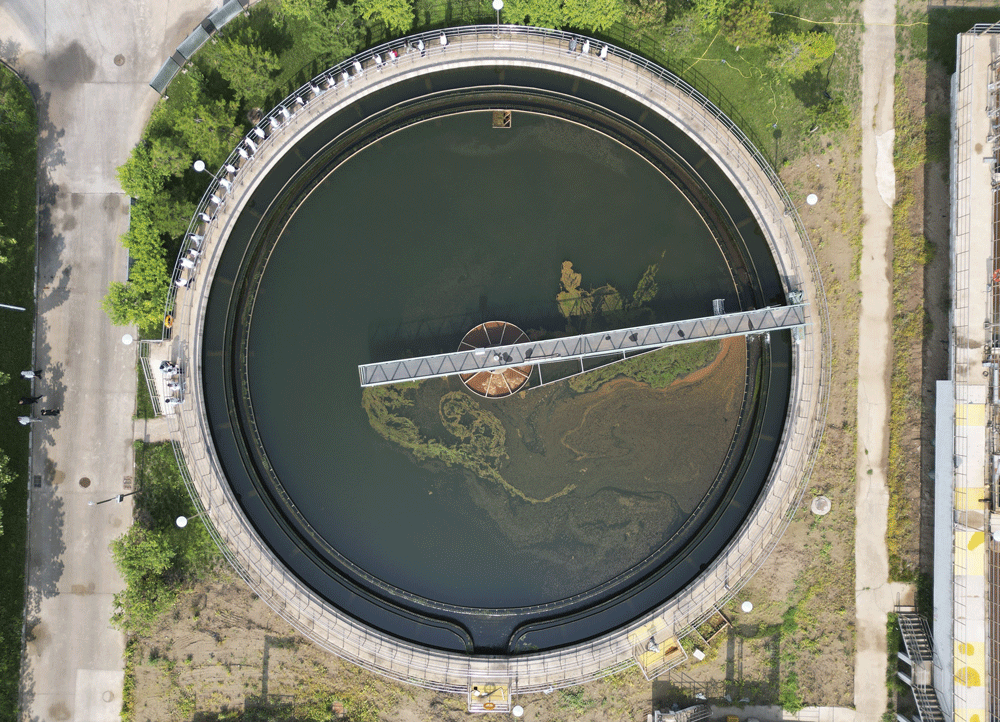
In wastewater treatment, the circular economy depends less on new technology than on the ability to keep existing systems running consistently and without interruption.
Globally, the amount of municipal sewage sludge produced each year is growing rapidly as cities expand, living standards rise, and wastewater treatment infrastructure continues to develop. At the same time, traditional disposal methods such as landfilling and incineration are increasingly viewed as unsustainable, driving the sector toward resource recovery as the new standard for sludge management.
“This is not just a conceptual change. It is an operational one,” says Water & Sanitation Expert Eng. Ayman Abdallah AbuRowaa in a previous Maintworld article, Sewage Sludge Isn’t Waste Anymore—Utilities Are Becoming Resource Factories (MW2/26).
Across the world, wastewater utilities are investing in circular sludge systems designed to recover these resources and reduce environmental impact.
Yet the performance of these systems rarely depends on innovation alone. In practice, it depends on something far less visible: maintenance discipline, AbuRowaa says.
On paper, circular sludge systems seem straightforward: anaerobic digestion produces biogas, nutrient recovery systems extract phosphorus, and advanced processes convert residuals into usable products.
In practice, however, these processes only deliver their promised value when operated within narrow stability windows. Advanced wastewater treatment can recover energy (biogas), fertilisers, minerals, and metals embedded in the wastewater stream—but only when systems are reliably maintained and operated.
“The digester, for instance, is really a living reactor. The methanogens doing the work are slow-growing and fussy about their environment, so most maintenance is about keeping conditions boring and stable,” AbuRowaa notes.
That “boring stability” is, in reality, what determines whether circularity succeeds or fails.
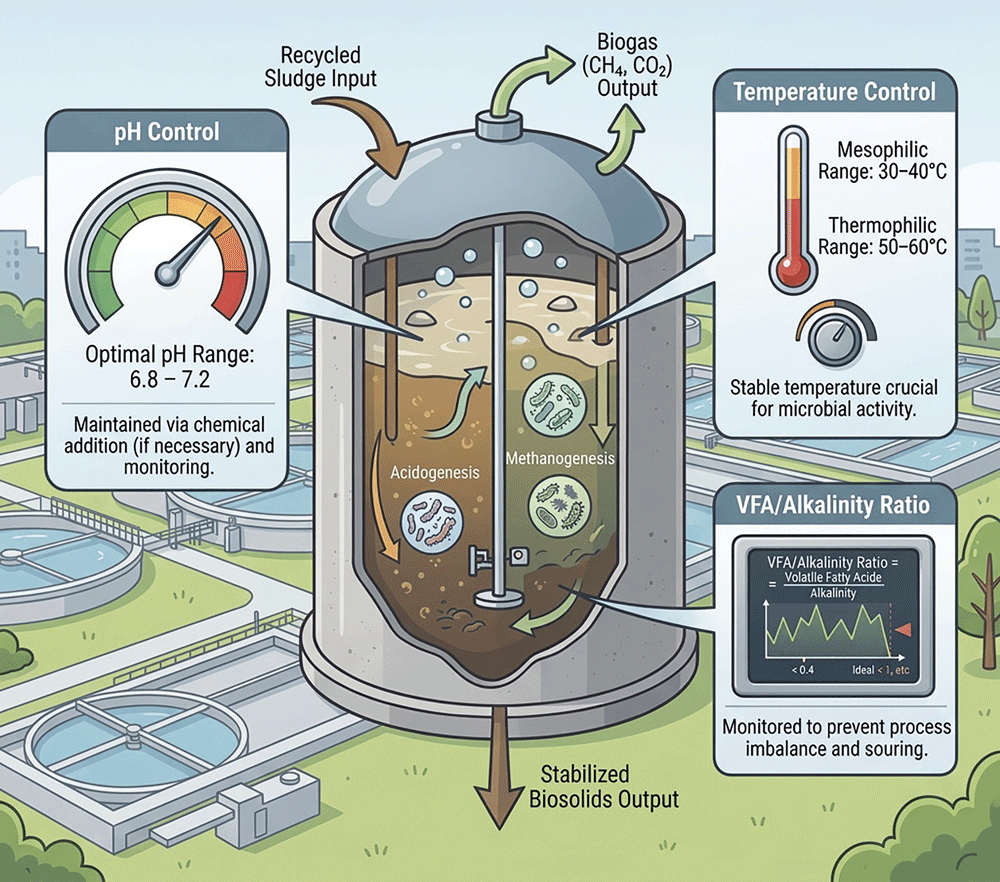
The anaerobic digester, for instance, which is the core unit in many circular sludge systems, requires tightly controlled operating conditions. Operators of the system must keep pH within a narrow range of roughly 6.8–7.2, maintain stable temperatures in either the mesophilic (30–40°C) or thermophilic (50–60°C) range, and closely monitor the ratio of volatile fatty acids (VFAs) to alkalinity.
“A sudden rise in VFAs is often an early warning sign that acid-producing bacteria are outpacing the methanogens responsible for methane production—a situation that can quickly lead to process failure if left unchecked,” AbuRowaa stresses.
Studies on anaerobic digestion performance consistently show that even small deviations in temperature, organic loading rate, or alkalinity can reduce methane yields by tens of per cent and trigger significant process upsets.
This highlights a key reality of the process: the challenge is not the technology itself but the ability to keep it operating within narrow, tightly controlled parameters.
When these conditions are maintained, biogas recovery from wastewater and sludge can deliver substantial energy output. Case studies demonstrate an annual generation potential of around 130
GWh from combined heat and power (CHP) recovery at a single wastewater treatment plant, while also avoiding tens of thousands of tonnes of CO₂-equivalent emissions each year.
If anaerobic digestion is the biological heart of circular sludge systems, dewatering is the economic hinge.
Dewatering reduces the water content of sludge before transport, further treatment, or disposal. Technologies such as belt presses, centrifuges, and filter presses are commonly used to separate solids from liquids.
At first glance, dewatering appears to be a mechanical step. In reality, it has system-wide consequences.
Even relatively small deviations in performance can significantly alter downstream economics. A small increase in moisture content can raise transport costs, increase energy consumption in drying processes, and reduce the efficiency of subsequent treatment stages.
AbuRowaa notes that because sludge is heavy and expensive to transport, these changes compound quickly. A few percentage points of additional water content can shift an entire project from profitable to marginal.
“Dewatering is often a prerequisite for further treatment, which means a clogged belt press or a fouled membrane can stall the entire recovery chain. Even a 2–3% drop in dry solids content can increase transport costs by 10–15% and raise thermal drying energy demand by up to 25%,” AbuRowaa explains.
He adds that dewatering equipment is also highly sensitive to wear, fouling, and misalignment. Without consistent maintenance, performance gradually declines rather than failing abruptly. This can make problems harder to detect until costs have already increased.
Struvite precipitation is another key process technology in circular sludge systems, used to recover phosphorus from wastewater as magnesium ammonium phosphate (MAP). When properly controlled, it produces a marketable slow-release fertiliser and helps reduce scaling in downstream equipment.
However, the same chemistry that enables recovery can also create operational challenges.
Struvite forms when the concentrations of magnesium, ammonium, and phosphate reach supersaturation. Under controlled conditions, crystallisation occurs in dedicated reactors, allowing struvite to be harvested as a product. When control is lost, precipitation occurs in unintended locations such as pipes, pumps, and centrifuges.
This uncontrolled scaling can restrict flow, increase pumping energy demand, and lead to blockages that require mechanical cleaning or equipment shutdowns.
The key challenge is operational precision. Struvite systems require tight control of reagent dosing, mixing intensity, and supersaturation levels. Even small deviations can shift the system from targeted crystallisation to uncontrolled deposition.
As AbuRowaa notes, the chemistry itself is not the issue. The difficulty lies in maintaining stable operating conditions within narrow limits over extended periods.
Across anaerobic digestion, dewatering, and nutrient recovery, a common pattern emerges: performance is governed less by design and more by upkeep.
Circular sludge systems are often presented as technological upgrades—install a digester, add nutrient recovery, optimise outputs. But in reality, they are continuous biological and chemical environments that respond constantly to operational conditions.
“Anaerobic digesters and struvite reactors are running 24/7,” AbuRowaa says. “They punish neglect.”
Maintenance in this context is not limited to repairing equipment after failure. It includes monitoring, calibration, cleaning, process control, and early detection of deviations. It is what keeps systems within the narrow boundaries where they function effectively.
When maintenance is strong, circular systems deliver reliable energy production, stable nutrient recovery, and predictable operating costs. When it is weak, even advanced technology cannot compensate.
The idea of the circular economy in wastewater treatment is often associated with innovation—new reactors, new separation technologies, new recovery pathways. But the reality is more grounded.
Circularity depends on stability. Stability depends on maintenance.
Technology defines what is possible. Maintenance determines what is achieved.
In sludge systems, the difference between success and failure is rarely found in design documents or equipment specifications. It is found in day-to-day operational discipline: maintaining steady temperatures, preventing fouling, maintaining balance in biological systems, and ensuring that small deviations do not become system-wide failures.
In the end, circular sludge systems do not fail because they are too complex. They fail when they are not kept stable enough to work at all.
Maintenance failures in sludge systems do more than disrupt operations, AbuRowaa stresses. They can also undermine the environmental benefits that circular economy initiatives are designed to deliver.
“A linear plant with excellent maintenance produces better environmental outcomes than a circular plant with poor maintenance.”
Life cycle assessment (LCA) studies support this view. Optimised maintenance practices can reduce greenhouse gas emissions by up to 25% without requiring any new technology investments. The
Massahi et al. (2023) review confirms this: innovative sludge management technologies can significantly reduce GHG emissions, with sludge-as-feedstock for energy production that replaces fossil fuels and yields substantial reductions in net emissions. Conversely, environmentally damaging traditional methods that require high energy inputs amplify the carbon footprint of the entire wastewater sector.
Next issue MW 4/26: The Future of Sludge Management: From Resource Recovery to Contaminant Control. We continue our circularity theme by exploring how emerging contaminants are reshaping sludge management and why sludge has become an increasingly important part of climate policy.
Text: Nina Garlo-Melkas Photos: HSY, Ayman Abdallah AbuRowaa
Subscribe to the free Maintworld newsletter here!
The Spanish Maintenance Association at 50: Raising the Strategic Value of Maintenance
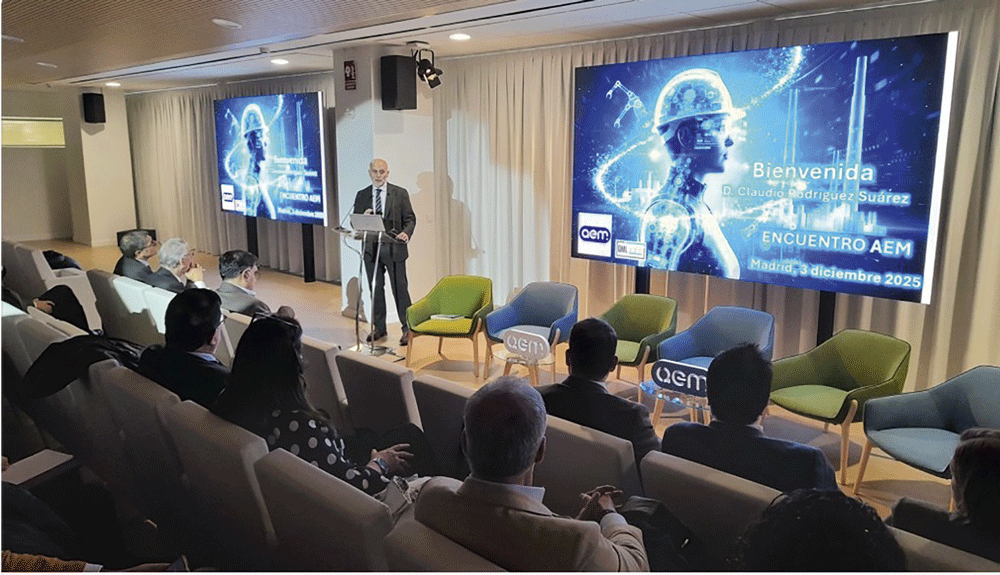
As the Spanish Maintenance Association (Asociación Española de Mantenimiento, AEM) approaches its 50th anniversary next year, its focus is firmly on the future. Rather than looking back, the organisation is using the milestone to strengthen recognition of maintenance as a strategic business function that supports industrial competitiveness, resilience and sustainability.
For AEM President Claudio Pedro Rodríguez Suárez, the upcoming anniversary represents an opportunity to reposition maintenance at the centre of industrial decision-making in Spain.
“Fifty years is an important milestone for us,” he says. “It gives us the opportunity not only to celebrate our history but also to define where maintenance must go in the decades ahead.”
Over nearly five decades, the profession has changed dramatically. Maintenance has evolved from a largely operational function into a strategic discipline shaped by digitalisation, predictive technologies, asset management and sustainability requirements. The challenge now, Rodríguez Suárez argues, is ensuring that executives recognise maintenance not as a cost centre but as a creator of long-term business value. This is becoming increasingly important as the economy undergoes a technological transformation aimed at achieving climate neutrality in the coming decades.
During this transition, companies must manage new types of risk. These include new failure modes arising from the transformation or extended use of existing assets, as well as the introduction of emerging technologies that have lower levels of technical maturity.
One of AEM’s main priorities is promoting wider adoption of asset management principles throughout Spanish industry.
Although international standards such as ISO 55000 have become an important framework for managing industrial assets throughout their lifecycle, certification remains relatively uncommon in
Spain, as in much of Southern Europe. So far, only a handful of Spanish companies have obtained integrated asset management certification.
“In Spain only three companies have this type of internationally recognised certification,” Rodríguez Suárez says. “This shows that we still have a long way to go.”
The issue extends beyond certification itself. It reflects the need for organisations to view maintenance as a strategic management discipline that contributes directly to business continuity, operational performance and long-term competitiveness.
This shift is also being reinforced by public policy. Spain is preparing new industrial legislation, and the European Union has adopted the Critical Entities Resilience (CER) Directive, which places greater emphasis on resilience, business continuity and sustainable industrial operations.
“There is a draft regulation that focuses on business continuity, resilience and many other aspects that are directly linked with modern asset management,” Rodríguez Suárez explains. “This is helping industry understand that maintenance is already part of the solution.”
Changing long-established perceptions requires evidence rather than opinion. That is why AEM established the Spanish Maintenance Observatory (Observatorio sobre el Mantenimiento en España), the country’s first national initiative dedicated to measuring maintenance’s economic and operational impact.
Launched last year, the observatory gathers information from leading industrial companies to produce reliable indicators describing the current state of maintenance in Spain. It monitors industry trends, benchmarks performance and provides data that companies, policymakers and researchers can use to support evidence-based decision-making.
“We are interviewing the most relevant companies in Spain,” Rodríguez Suárez says. “We want reliable KPIs that clearly show the influence of maintenance on business continuity, sustainability, safety and the efficient use of resources.”
The observatory also seeks to quantify maintenance’s overall contribution to the national economy. Preliminary findings indicate that maintenance accounts for approximately 8.6% of Spain’s gross domestic product, underlining its importance as one of the country’s largest industrial activities.
“From an economic point of view, we estimate that maintenance is the second-largest industrial economic segment in Spain,” Rodríguez Suárez says. “Maintenance has enormous economic impact, but unfortunately it is still poorly recognised.”
Reliable industry-wide data has long been missing from discussions about maintenance investment. Too often, decisions have been based on operational experience rather than measurable economic evidence. By providing objective benchmarks, the observatory aims to help companies improve performance while giving policymakers a clearer understanding of maintenance’s contribution to industrial productivity.
“Our goal is to demonstrate to both industry and government that maintenance is not simply a cost,” Rodríguez Suárez says. “It has a direct influence on sustainability, safety, resilience and business performance.”
Across Europe, maintenance professionals increasingly argue that maintenance should be viewed as an investment rather than an expense. Better maintenance improves equipment reliability, extends asset life, reduces environmental impact and strengthens operational resilience.
That argument is becoming increasingly relevant as manufacturers navigate digital transformation, decarbonisation, supply-chain uncertainty and growing geopolitical risks. Business continuity has become a board-level priority, making reliable assets more valuable than ever.
“When organisations begin thinking about resilience, maintenance becomes essential,” Rodríguez Suárez says. “Reliable assets are the foundation of reliable businesses.”
Professional certification is another key strategic priority. Working with the European Federation of National Maintenance Societies (EFNMS), AEM is reviewing its certification programmes to strengthen professional standards across the maintenance sector.
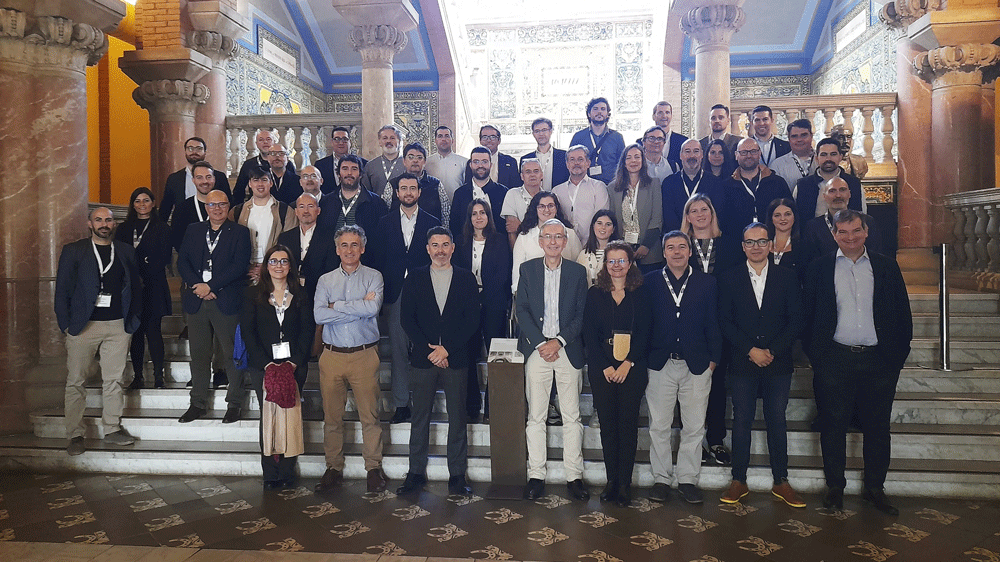
For Rodríguez Suárez, certification is about much more than technical qualifications. Modern maintenance professionals must combine engineering knowledge with analytical skills, asset management expertise and strategic thinking.
“We want companies to recognise the value of certified professionals,” he says. “When major maintenance contracts are awarded, the people responsible should hold recognised qualifications that demonstrate their competence. Only then can maintenance services evolve from being merely preventive or reactive to becoming truly proactive and value-creating.”
The objective is not simply to issue more certificates but to raise professional standards across the sector while giving employers greater confidence that maintenance decisions are based on internationally recognised good practice.
Spain’s industrial landscape is also changing rapidly, creating new opportunities for the association to expand its regional and sectorial presence.
Over the past year, AEM has signed cooperation agreements with several of the country’s leading industrial clusters, including Catalonia, Murcia and Cartagena, and Andalusia. These regions host major chemical, energy and manufacturing industries, while new investments linked to hydrogen production and the energy transition are creating additional opportunities.
“We are working with the main chemical, energy and industrial hubs in Spain,” Rodríguez Suárez says. “The industrial map is changing because of the hydrogen economy and new industries are appearing. We want to be present wherever these developments are taking place.”
In addition, AEM has expanded its activities through a matrix structure of sector-specific and cross-cutting committees. This structure enables the association to respond to emerging industries by establishing new committees, most recently in the food and defence sectors. The defence industry, in particular, is experiencing rapid growth across Europe and offers significant opportunities to transfer digital maintenance solutions and best practices to other industrial sectors.
By strengthening its regional network and sectoral expertise, AEM aims to ensure that maintenance knowledge and capabilities support both established industries and emerging fields.
The association’s ambitions also extend across Europe. Last year AEM submitted, for the first time in its history, a proposal to host an Euromaintenance congress. Hosting Europe’s flagship maintenance congress would showcase Spanish industry while strengthening cooperation between maintenance professionals across the continent.
Rodríguez Suárez seen international collaboration becoming increasingly important as digital technologies, artificial intelligence, predictive maintenance, asset management, sustainability and cognitive maintenance as an clear ambition, continue to reshape industrial operations.
Rodríguez Suárez sees international collaboration as increasingly important as digital technologies, artificial intelligence, predictive maintenance, asset management and sustainability continue to reshape industrial operations.
He believes Europe’s ambition for greater energy, technological and supply chain independence depends on recognising maintainability as a key element throughout the asset lifecycle. Achieving this requires common standards and closer cooperation between industry, technology providers and academia, while ensuring that professionals remain at the centre of this transformation.
“Spain’s ambition to become a leading European renewable energy hub by 2030 will also depend on the evolving role of maintenance,” Rodríguez Suárez notes.
He believes that sharing knowledge across Europe can accelerate innovation, prevent repeated mistakes and demonstrate the strategic value maintenance brings to European goals.
As AEM approaches its golden anniversary, its priorities are firmly focused on the future.
The Spanish Maintenance Observatory is providing the data needed to influence decision-makers. Expanded certification programmes aim to strengthen professional competence. Regional partnerships are connecting the association with Spain’s evolving industrial landscape, while international engagement promises closer European cooperation.
Together, these initiatives pursue a common objective: to position maintenance as a recognised driver of industrial performance and as a transformative, innovative sector capable of attracting the next generation of Talent 5.0 professionals.
“Maintenance influences productivity, sustainability, safety and business continuity. When industry recognises that reality, everybody benefits,” concludes Rodríguez Suárez
Subscribe to the free Maintworld newsletter here!
Maintenance in Pharma: “Basics First” is the key to quality, safety and successful digitalisation
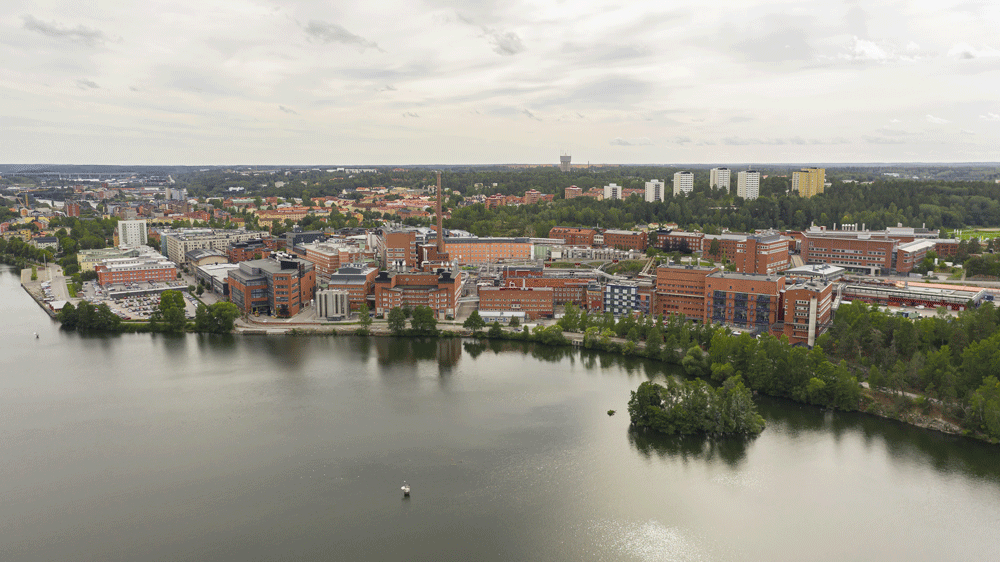
In pharmaceutical manufacturing, where every deviation can have direct consequences for patient safety and product quality, maintenance is not simply a technical discipline. It is a core pillar of the entire production system.
Jerry Johansson, Head of Engineering at AstraZeneca, stresses that even in an era of advanced predictive technologies and highly connected production systems, success begins with the fundamentals.
“If you go for advanced predictive methodologies or tools, they are fancy and good. But if you don’t know how to operate the basics, it doesn’t make sense,” Johansson explains.
For Johansson, digitalisation and predictive maintenance are often introduced too early—before organisations have secured the operational discipline required to benefit from them.
“The most important thing we have is to keep the machines up and running,” he highlights. This is not just an operational goal. It is the cornerstone of safe pharmaceutical production.
“Because by that we avoid the risk of people getting injured, we avoid the risk of getting poor quality out, we get a higher OE out, which affects the cost in a positive way”
In pharma, every interruption carries consequences. Production stops are not simply inefficiencies, they increase the risk of deviations in a heavily regulated environment where quality must be proven, not assumed.
Johansson highlights a fundamental difference between industries he has worked in, automotive industry and pharmaceutical manufacturing at Astra Zeneca.
“Everything is much more controlled in pharma.”
Unlike in automotive environments, where improvements and changes can be implemented relatively quickly, pharma operates under strict regulatory frameworks that require every modification to be justified, documented, and validated.
“You can’t change anything just because you think it’s a good idea.”
This control brings both advantages and challenges. While it reduces the risk of untested changes, it can also slow down improvement work and make maintenance optimisation more complex.
One of the most common and persistent issues in maintenance, Johansson notes, is not the use of advanced technology. It’s something far more basic: the lack of updated documentation.
“The most common problem I see in the industry is that you have a mismatch, that you don’t update your documentation over time.”
Across industries maintenance teams often rely on documentation that no longer reflects the equipment’s true condition.
This gap between reality and records creates risk, inefficiency, and potential quality deviations—especially in regulated environments where traceability is essential.
When discussing equipment selection, Johansson emphasises that decision-making is increasingly driven by long-term performance rather than upfront cost.
“Cost is a factor, but maintainability matters most. It’s worth choosing equipment that’s easy to maintain or a minimum of maintenance.”
More important than the purchase price is the asset’s total lifecycle performance.
“We are looking at the lifecycle cost of the asset instead of just checking on the purchase price”
In other words, better-designed equipment reduces long-term operational burden—even if it costs more initially.
“Still, too many people don’t understand the foundational part of maintenance, which is quite simple. Cleaning, inspection, lubrication and tightening. These are the main pillars in maintenance,” Johansson says.
These activities may appear elementary, but in pharmaceutical production, they are directly linked to product quality and equipment reliability.
“Make sure the equipment is clean and free of dust, sawdust, or any other debris that could obstruct the machine. Keep it properly lubricated and ensure all components are tightened.”
Johansson emphasises that these basics are not optional or secondary, they define whether a machine performs as intended.
Only when these basics are reliably in place does advanced monitoring or predictive maintenance become meaningful.
Johansson is critical of organisations that invest heavily in sensors, data platforms, and predictive systems without first stabilising maintenance discipline.
“If I don’t lubricate my bearing, I don’t need to buy costly sensors.”
The logic is straightforward: technology cannot compensate for poor basic maintenance practice.
He explains that predictive maintenance should start from condition-based understanding, not complex systems: “The simplest way of digital maintenance or predictive maintenance is to do condition-based monitoring”
The conclusion is not anti-digital—but rather pragmatic: digital tools must serve a stable operational foundation.
As production environments become increasingly connected, Johansson highlights a new and growing risk area: cybersecurity.
“The more connected the machine, the shop floor is, the more vulnerable we are to external threats.”
For pharma manufacturers, digital integration brings efficiency—but also exposure. Even so-called secure systems are never fully immune to threats.
“Cybersecurity is our number one concern, and that means ensuring we maintain an isolated, segmented network.”
However, he is also realistic about the limitations of isolation strategies:
“The only thing you know about a segmented network is that it isn’t completely safe. It isn’t truly isolated—if not air gapped. If someone is determined enough, they can get through.”
As pharmaceutical manufacturing becomes increasingly data-driven, maintenance teams are expected to expand their skillsets far beyond traditional mechanical expertise.
At AstraZeneca, maintenance leaders are already seeing a shift toward hybrid competencies that combine engineering, IT, and data understanding.
Alongside conventional maintenance training, new roles are emerging—such as data specialists and operational technology (OT) architects—who can bridge the gap between shop floor equipment and digital systems.
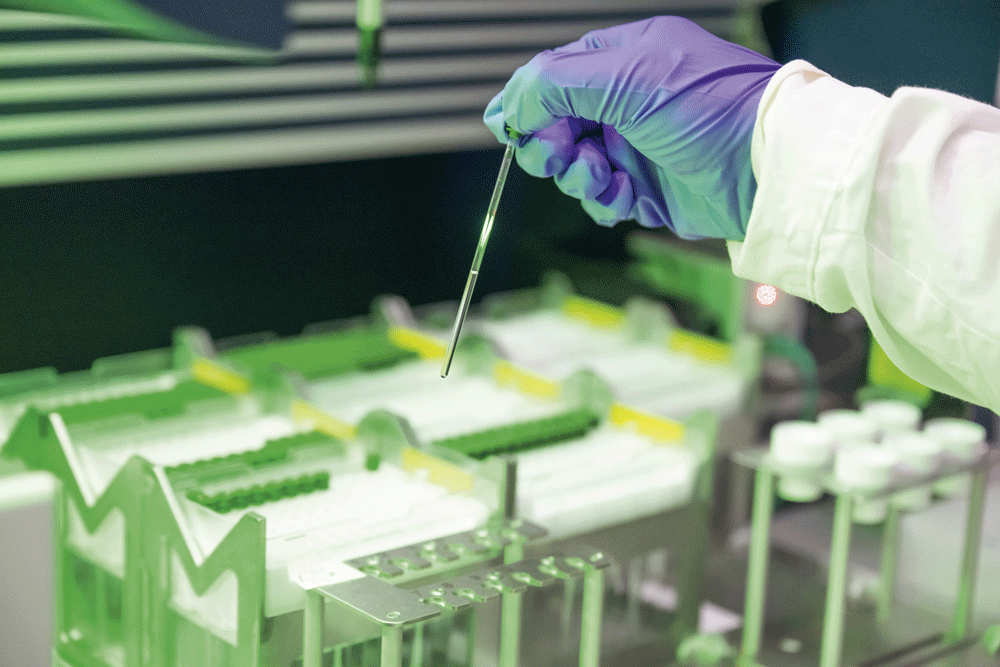
“We see a new skillset needed for maintenance teams, like data scientists or operational technology architects, that can understand design and networks, segregated networks together with IT.”
The growing use of production data in pharma makes this shift essential. While data is already widely used for production release and process optimisation, its full potential depends on interpretation rather than collection alone.
“We use the data for production release for sure, but also for advanced process analytics to improve yield, to improve OE, to improve the process.”
However, the challenge is not data availability—it is understanding what the data is showing.
“It’s more to see patterns, how we set up things, how we set up signals together and combine them into a good result so we can follow that up.”
Johansson illustrates this with a practical example: in some cases, equipment issues only become visible through patterns in vibration or process signals, which may not be immediately understood until later linked to an actual fault.
This reflects a broader shift in maintenance work—from reacting to failures to interpreting complex data patterns that signal emerging problems.
At the same time, Johansson emphasises that traditional skills remain essential. Maintenance organisations must therefore balance two priorities: strengthening basic mechanical competence while building new digital and analytical capabilities.
In this way, the future maintenance professional becomes a hybrid specialist—grounded in reliability fundamentals but capable of working confidently with data-driven systems.
The Human Side of Maintenance Digitalisation
While much of the maintenance discussion in pharmaceutical manufacturing, as elsewhere in other industries, focuses on technology, Jerry Johansson at AstraZeneca emphasises that the real transformation is driven by people, not systems.
“Digitalisation is 90% people and 10% technology,” AstraZeneca’s Head of Engineering expresses his point.
The tools already exist, but value is only created when organisations change how they think, work, and make decisions.
“The technology is there. We have all the technology we need. Just make it happen.”
This shift has direct implications for competence development in maintenance organisations. Traditional mechanical expertise remains essential, but it is no longer sufficient on its own.
Johansson highlights that future maintenance teams must increasingly combine operational knowledge with digital and analytical capabilities.
He points to emerging roles such as data-oriented specialists and OT/IT integration experts who can bridge maintenance, automation, and information systems.
Rather than replacing technicians, digitalisation is reshaping how maintenance teams interpret information and solve problems. In practice, this means moving from purely reactive or task-based work toward pattern recognition and data-supported decision-making.
“It’s more to see patterns, how we set up things, how we set up signals together and combine them into a good result so we can follow that up.”
At the same time, Johansson stresses that training must remain balanced. Organisations cannot focus only on advanced analytics or data science while neglecting core maintenance skills.
The future, he suggests, lies in dual competence: strong fundamentals in mechanical reliability combined with the ability to understand and use data.
In this sense, digitalisation does not remove the human factor—it makes it more important than ever.
Text: Nina Garlo-Melkas Photos: Astra Zeneca
Subscribe to the free Maintworld newsletter here!
Flexible Machines, Reliable Operations?
Industrial companies are under constant pressure to make their assets more adaptable. But as machinery becomes increasingly flexible, reliability risks can emerge in unexpected places.
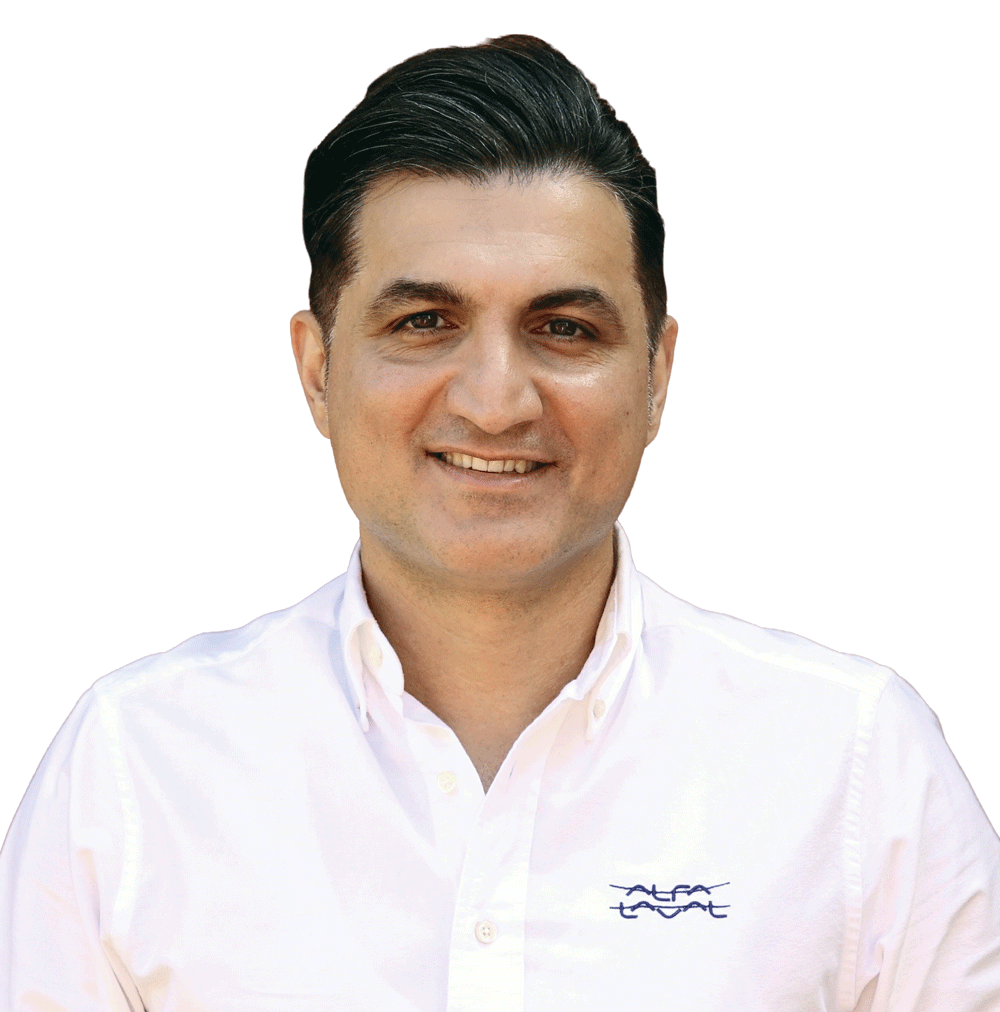
For decades, reliability has largely been viewed as a maintenance subject. When equipment fails, maintenance teams investigate, repair, replace components, and restore operations. Yet according to Yousef Rahmani, a rotating equipment specialist at Alfa Laval Sweden, this perspective is too narrow. Reliability is not the responsibility of one department. It is the outcome of decisions made throughout the entire lifecycle of an asset.
“Reliability is a chain,” Rahmani says. “It starts with design and continues through procurement, transportation, installation, operation, maintenance, and even end-of-life activities. Every phase affects the reliability of equipment.”
This broader understanding has led Rahmani to focus on a topic that receives surprisingly little attention despite its growing importance: the relationship between flexibility and reliability.
Modern industrial facilities increasingly demand flexibility from their assets. Production environments are changing faster than ever. Companies need equipment that can handle multiple products, varying operating conditions, fluctuating demand, and changing process requirements. Flexibility has become a valuable competitive advantage. The challenge, however, is that flexibility and reliability do not always move in the same direction.
“We often assume that adding flexibility is automatically beneficial,” Rahmani explains. “But every new flexibility feature should raise a question: what impact will it have on reliability?”
The answer is not always straightforward.
According to Rahmani, flexibility can take many forms. It may involve equipment capable of performing different functions, handling different process media, or operating across a wider range of capacities. A pump may be required to process fluids with significantly different viscosities. A compressor may need to handle multiple gases. Production assets may be expected to operate efficiently under varying loads.
In many cases, these capabilities are enabled through relatively small modifications or advanced control systems. From an operational perspective, the benefits are obvious. The equipment becomes more versatile and can adapt to changing business needs.
But flexibility often introduces complexity. And complexity can create new reliability challenges.
One example is the widespread use of Variable Frequency Drives (VFDs). These systems allow operators to adjust motor speed and therefore change the output capacity of equipment. VFDs have become a common tool for improving energy efficiency and operational flexibility.
However, expanding the operating range of machinery may unintentionally expose equipment to conditions that were previously avoided.
“When you change speed, you also change the dynamic behavior of the machine and the structure around it,” Rahmani says. “There can be specific operating points where vibration levels increase significantly because natural frequencies are excited.”
The equipment may continue running and deliver the required output. From a production standpoint, everything appears normal. Yet elevated vibration levels can accelerate wear, shorten component life, and increase the likelihood of failures. In other words, the machine is flexible enough to operate in that condition, but not necessarily reliable enough to do so for extended periods.
Rahmani refers to these situations as conflict zones between flexibility and reliability.
Identifying such zones early can have substantial benefits. During commissioning, for example, assets are often tested to verify functionality. Rahmani argues that organizations should go further and systematically evaluate reliability performance throughout the entire operating range.
“Operating over a wide speed range requires reliability assessment of the entire system across the full operating range,” he says. “You need to understand where potential risks exist before they become future maintenance problems.”
The rewards of this proactive approach can be significant. Detecting reliability risks during commissioning or early operation can reduce maintenance costs, improve uptime, extend equipment life, and enhance safety.
Some reliability issues may remain hidden for years before they develop into serious failures. By that point, organizations often face costly repairs, production losses, or even major incidents.
“Finding these areas early is much cheaper than dealing with the consequences later,” Rahmani says.
The concept is not limited to rotating equipment. The same principle can be applied across industrial systems and asset classes. Any modification intended to increase flexibility should trigger a parallel discussion about reliability. This is where Rahmani believes many organizations face a challenge.
Addressing reliability-related tensions requires collaboration between multiple disciplines. Designers, operators, production personnel, maintenance specialists, reliability engineers, and procurement teams all possess pieces of the puzzle. Yet these groups do not always work together when decisions are made.
“It is often easier to replace a failed component than to investigate why the failure keeps happening,” Rahmani says. “The root cause may actually be connected to how the equipment is being used or how it was originally designed.”
As a result, recurring failures can become accepted as normal operating conditions rather than symptoms of a deeper issue.
Rahmani believes industrial organizations should actively search for these hidden trade-offs. A useful starting point is to ask a simple question about every critical asset: What flexibility features does this equipment have, and how might they affect reliability?
Exercise can reveal opportunities that might otherwise remain invisible.
An operating mode that appears beneficial from a production perspective may be creating excessive stress on equipment. A process modification that increases throughput may be reducing asset life. A design change that expands functionality may be introducing new maintenance challenges.
Understanding these relationships enables better decision-making across the asset lifecycle.
The discussion is particularly relevant today as digitalization, automation, and advanced monitoring technologies continue to reshape industrial operations. Condition monitoring systems, predictive maintenance tools, and artificial intelligence can help detect failures earlier than ever before. Yet Rahmani warns that technology alone cannot solve every reliability problem.
“Advanced monitoring is valuable, but sometimes we need to look deeper,” he says. “Technology may tell us that a problem exists, but we still need to understand why it exists.”
That requires a mindset shift. Instead of viewing reliability as something that begins when equipment starts to fail, organizations should consider reliability from the moment flexibility is introduced. Every new operating mode, every new capability, and every design modification should be evaluated through both lenses.
The goal is not to choose between flexibility and reliability. Both are essential for modern industrial operations. The objective is to find the right balance.
“Think about flexibility and reliability at the same time,” Rahmani says. “Do not sacrifice one for the other. The best solutions come when we understand both.”
For maintenance, production, and asset management professionals, that may be the most important takeaway. Reliability is not simply about repairing equipment. It is about understanding the decisions that shape equipment performance long before the first failure occurs. And in a world where flexibility is increasingly demanded, recognizing the hidden tension between adaptability and reliability may be one of the most valuable reliability strategies of all.
Text: Mia Heiskanen Photos: Yousef Rahmani photo archive, SHUTTERSTOCK
Subscribe to the free Maintworld newsletter here!
Sensor replaced, Machine restarted: the four words quietly erasing your plant’s memory
Maintenance know-how is leaving factories faster than it is being written down. The problem is not only fixing the fault; it is keeping what the team learned while fixing it.
A control panel lights up at 3 a.m.
A line is down, a young technician is alone in front of a machine he has serviced twice in his life, and the one person who really knew this equipment retired last spring. He fixes it, eventually. Then he closes the work order with four words that will haunt the plant for years: “sensor replaced, machine restarted.” The line runs again. The knowledge of what actually happened is already gone.
Versions of this scene are familiar across industrial maintenance: the repair succeeds, and the reasoning behind it rarely reaches the next shift. Maintenance teams are ageing, turnover is rising, and the know-how that lives in a few experienced heads is walking out faster than it is being written down. “When the day shift arrives, they sometimes restart the whole diagnosis from scratch, because nobody quite trusts what was written about the night intervention,” says a maintenance manager at a large French electronics plant. It is tempting to read this as a staffing problem, something for recruitment and training budgets. It is more than that. It is a reliability problem. Every undocumented intervention is a small hole in the plant’s memory, and the holes compound: the same fault diagnosed from scratch three times, the mean time to repair creeping up, not because the team got worse, but because it keeps relearning what it already knew.
Artificial intelligence is now offered as the obvious cure, and that is exactly where things get complicated, because the two most common answers fall short in ways that matter on the shop floor. The first is the documentation assistant: a language model over the PDF manuals, whether it retrieves by keywords or by semantic search. Ask a question, get a fluent, confident answer. Fluent, confident, and shallow. A manual does not know that this valve is wired to that relay, or that a temperature alarm on this motor is, on this particular line, almost always a sensor fault rather than an overheating one. Even the best retrieval gives you sentences. It does not give you the machine.
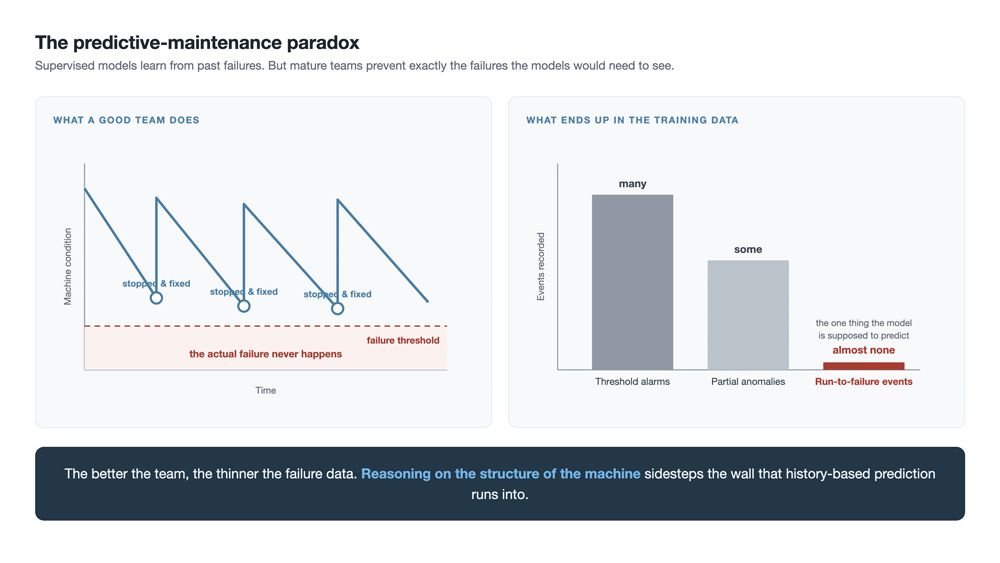
The second answer is predictive maintenance, and the objection has to be precise, because the field is broad. Condition monitoring, vibration analysis, anomaly detection and physics-based models all have their place, and they answer a different question: whether a component is drifting towards failure, not why this machine is faulting now. The structural problem lies with the supervised variant, a model trained on the history of labelled failures so it can forecast the next one. Good maintenance teams stop machines before they break; that is precisely the mark of a mature operation. So the history contains few run-to-failure examples, and such a model learns from partial anomalies and threshold alarms, not from the events it is supposed to anticipate. The better the team, the thinner the data.
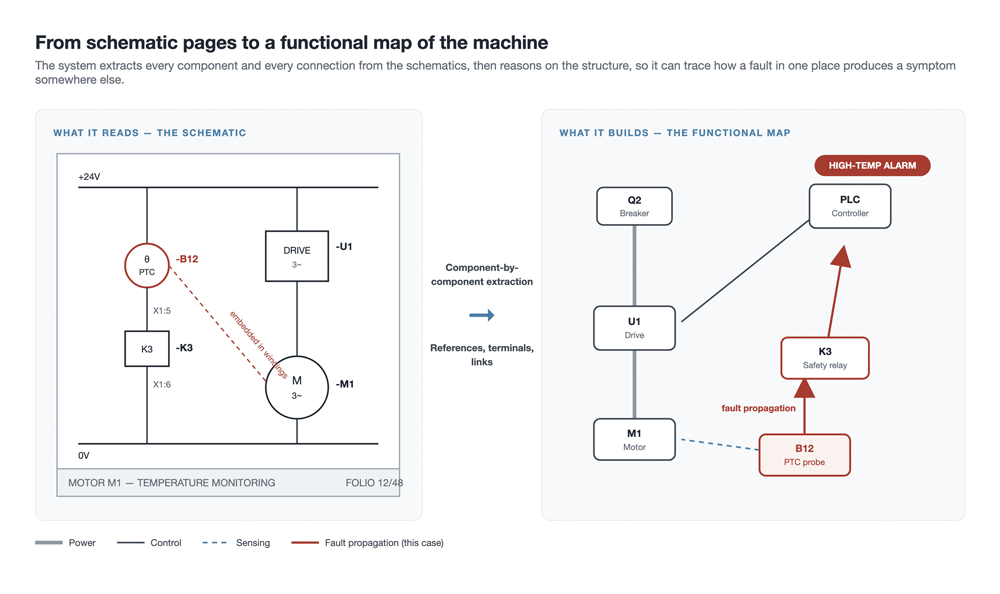
So what does useful AI look like on a real fault? Take one. A motor trips on a high-temperature alarm, but when the technician gets there, the motor is cold. The assistant has already read the machine’s electrical schematics, not as PDF pages but as a functional map: every component extracted, every connection traced, so it can follow how a fault in one place may produce a symptom somewhere else.
It states the expected behaviour, the technician confirms it, and the leading hypothesis comes back: an intermittent fault in the PTC temperature-sensing chain, with the component reference and the relevant sheet number in the schematic. First a visual inspection: nothing abnormal is found, and the result is recorded. Then a measurement on the probe, cold. The young technician admits he is not sure how to run the test. The assistant explains: ohmmeter, machine stopped, circuit disconnected, and which terminals to put the leads on, because the terminal numbers were extracted from the schematic too. The reading turns unstable the moment the cable is moved. By testing the sensor separately from its cabling, the technician isolates the intermittent fault to the PTC probe itself. The probe is replaced, the machine is restarted and normal operation is verified. The intervention report is then generated from the recorded steps: symptom, hypotheses, tests, readings, cause, remedy, and the residual risk to keep an eye on.
Another plant ran the approach retrospectively. A diagnosis that had taken a team four hours was replayed through the system: the faulty component surfaced after about ten minutes of dialogue.
Isolation, repair, verification and restart would still have taken their normal time. What shrank was the path from the first symptom to the first useful test.
Notice what the AI did and did not do. It did not announce “replace part X” like an oracle. It proposed, the technician disposed, and a human kept the final call at every step. The technician can push back, “it cannot be that, I already tested it”, and the system revises the hypothesis set accordingly. That distinction is not cosmetic; it is the line between a tool a maintenance crew will trust and one it will quietly abandon. And it rests on guardrails worth naming. Explainability: every suggestion traces back to its source, a schematic reference, a manual section, a past intervention, so the technician sees why, not just what. Traceability: a complete log of what the system did and what the human decided. Read against the European Union’s AI Act, these are not bureaucratic boxes to tick. Where a system falls within a regulated category, the requirements around documentation, logging and human oversight carry real weight. And even where they are not legally mandated, the same disciplines are what let a plant explain, months later, how a given decision was reached.
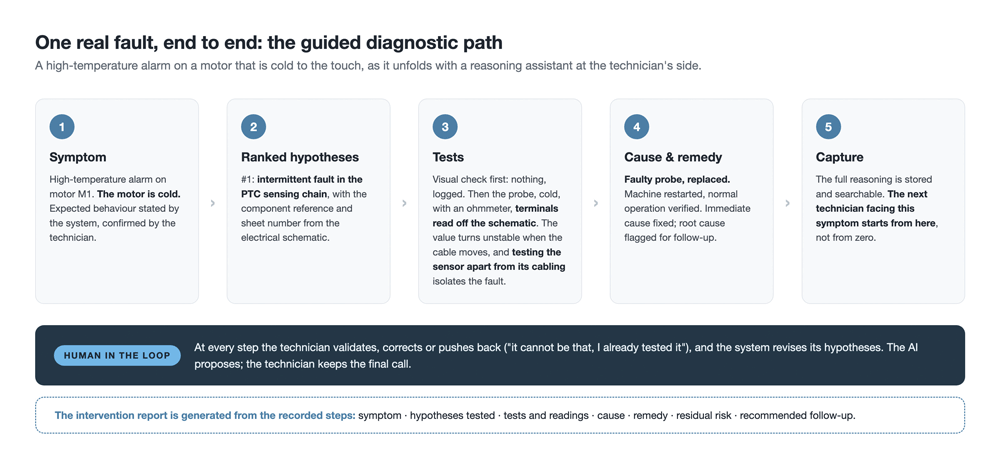
It is worth being just as honest about the limits. The approach depends on machine-specific evidence: an undocumented machine the system has never seen gives it nothing to reason over.
Schematic extraction is not error-free, so the functional map still requires human review before it is trusted. And the technology removes the blank-page problem and the memory loss; it does not remove the need for technical judgement. A technician still has to recognise an implausible hypothesis, run the test correctly and interpret what comes back. Poor judgement does not become sound judgement because an AI system sits alongside it.
Three questions before using ai for fault diagnosis
1. What evidence is the diagnosis based on? Retrieved text, machine topology, past interventions, sensor data, or several of these combined? The answer sets the boundary of what the system can reason about, and what stays outside it.
2. What does the available data actually contain? Any approach that learns from past failures depends on how many confirmed failure events exist and how representative they are. On a well-run site, that number is usually smaller than expected: fifty thousand work orders are not fifty thousand usable diagnoses.
3. What can the technician inspect and overrule? Every recommendation should trace back to a source that can be checked, and the operator should keep the final call on the maintenance decision.
Visible reasoning and a working override matter on the shop floor, and they matter again wherever the EU AI Act applies.
The real prize sits one level above the single repair. When interventions are captured properly, structured along the diagnostic path rather than scribbled as one-liners, they stop being static records and become a working memory. One plant discovered it this way: a variable-speed drive failed, was replaced, failed again, was replaced again. Read together and structured, the interventions told another story. The drive was a victim. The recurring cause sat one step upstream, in the fieldbus communication, a cable shielding and routing problem that no single work order, read alone, could reveal. Less experienced technicians can work through faults using the accumulated evidence, instead of waiting years to inherit an expert’s intuition. It works in the other direction too: a senior can record the trick nobody else knows, that on this machine, before re-teaching a robot point, you first check the reference positions, and the system resurfaces it the next time anyone, on any shift, reports a positioning fault. The know-how stops being trapped in one head. Each fault solved becomes an antibody against the next one. The factory, slowly, starts to remember.
From four words to a working memory
What a structured intervention record should capture:
• The symptom as observed, not just the alarm code: “high-temperature alarm, motor cold.”
• The hypotheses tested and ruled out, and why, so the next person skips the dead ends.
• The tests and the readings: which terminals, what value, what it did when the cable moved.
• The immediate cause (what restarted the machine) kept distinct from the root cause (what will stop it failing again).
• The remedy, the residual risks, the recommended follow-up.
Four words tell you a sensor was replaced. This tells you what your plant learned.
The caution behind that manager’s observation is justified. Maintenance teams should not be expected to hand diagnostic decisions to a black box. The useful question is therefore not whether to accept or refuse AI, but what evidence the system uses, what the technician can verify and contradict, and what remains in the plant’s records once the repair is done. If the reasoning disappears when the work order closes, the knowledge problem is still there in the morning.
Text: Text: Cédric Jean
ABOUT THE AUTHOR

Cédric Jean is the CEO and co-founder of Mimorian (https://mimorian.co), a French company building trustworthy AI for industrial maintenance. He works with industrial plants on capturing field know-how and supporting technicians’ reasoning, with humans keeping the final say, in line with the EU AI Act.
Subscribe to the free Maintworld newsletter here!
Competence Strategy: The Missing Piece of Industrial Performance
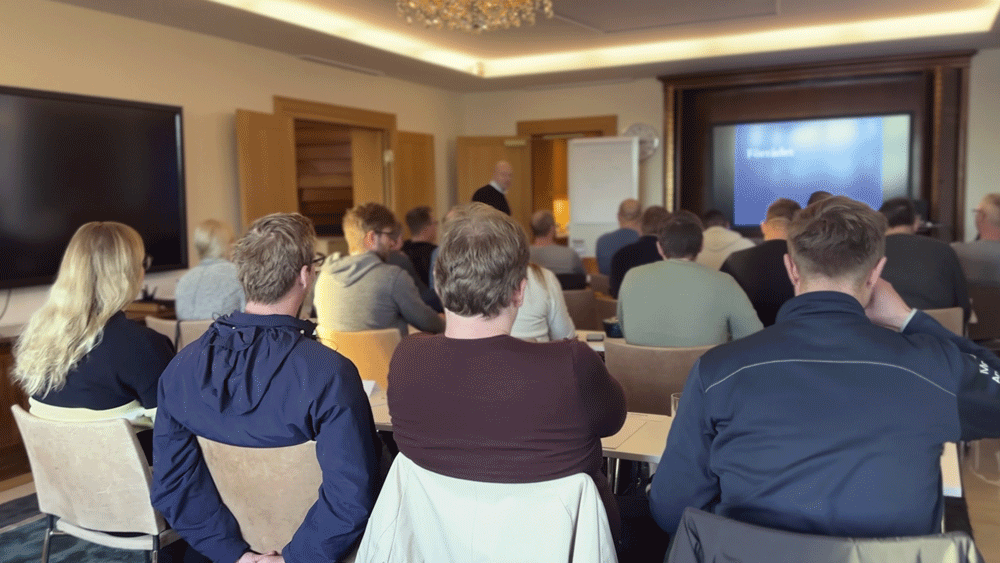
As maintenance organisations adopt AI, digital tools and increasingly complex assets, one question is becoming critical: who will have the competence to operate, maintain, and improve them?
According to Mia Ilkko, Senior Maintenance Management Developer and organiser of EFNMS exams in Europe, the answer lies. in something many organisations still lack — a structured competence strategy.
“While companies routinely develop long-term plans for equipment, production capacity and digital transformation, far fewer take the same strategic approach to developing their people,” Ilkko says.
Competence is still often treated as an individual attribute. In modern industry, however, it is better understood as a strategic capability — something that can be designed, developed and measured.
“I would like to see more organisations with a real competence strategy — with clear actions for developing, retaining and preparing people for the future,” Ilkko says.
“Many companies will struggle just to secure enough personnel in the next five years.”
Across Europe, that pressure is already visible. Experienced maintenance professionals are increasingly hard to find, and the shortage is not limited to one country or sector.
From manufacturing and energy to infrastructure and transport, employers report growing difficulty finding people with the right mix of technical knowledge and hands-on experience.
At the same time, organisations are struggling to retain senior professionals with decades of operational expertise.
“This is not only about new talent entering the labour market,” Ilkko notes.
Modern industrial environments require more hybrid skill sets: technicians and engineers who can work across disciplines, adapt quickly, and operate in digitally enabled environments. That shift is accelerating demand for continuous training.
Henric Mellbin, CEO of Idhammar, says the organisations that perform best are those that systematically build shared knowledge.
“When maintenance technicians, engineers, managers and service providers understand the same concepts and methods, communication improves and decisions are made faster,” he says.
He adds that the key differentiator is the ability to turn competence into organisational capability — not just individual skill. Some companies are already rethinking how work is structured instead of focusing solely on recruitment. At one company, employees rotate between production and maintenance roles throughout the year. The approach increases flexibility but also raises competence requirements.
To support this, the company has invested in structured training and participated in the EFNMS competence certification programme — a Europe-wide framework assessing both theoretical knowledge and practical maintenance skills.
“This kind of structured development turns competence into a long-term workforce strategy rather than a one-off initiative,” Mellbin says.
In today’s industrial environment, both experts agree: continuous training is no longer optional. Certifications, structured learning and upskilling are becoming essential tools for closing Europe’s widening competence gap.
Training also strengthens individual employability in a labour market increasingly shaped by specialised skills and rapid technological change. Still, training is often viewed through a financial lens—focused on budgets, time away from operations, and the need to justify costs.
While Mellbin agrees that companies do, and realistically should, recognise training as an expense, he also argues that it should be seen as one of the most important strategic priorities for any company.
“Whether you invest in a machine or in the people who operate and improve it, both are investments in performance,” he says. Ilkko notes a shift in mindset already underway: “Many organisations have reduced spending in other areas but continue investing in training. Conferences may be postponed, but competence development is often non-negotiable,” she says.
She adds that a structured competence strategy brings together elements that are often managed separately: training, validation, certification, succession planning and workforce development.
“Without this framework, organisations risk uneven skill development and a reactive approach to capability building.”
Training alone does not guarantee competence, which is why certification plays a central role. For more than 30 years, the European Federation of National Maintenance Societies (EFNMS) has provided certification for maintenance technicians, engineers and managers, assessing both knowledge and practical application.
“Competence is not only what you know, but what you can apply,” Ilkko explains.
Successful candidates receive European-level certification recognised across the industry, while organisations gain a visible quality benchmark.
“Certified personnel give organisations a recognised quality stamp,” Mellbin says.
He highlights use as an example of long-term commitment to building competence. The company has strengthened its maintenance capability and aims for an 80% certification rate by 2028.
So far, it reports improved technical availability, stronger engagement, and a more proactive maintenance culture.
“When people share the same concepts and methods, collaboration becomes far more effective,” Mellbin says.
of Idhammar.
“Certification helps break down silos.”
The same applies to external service providers, where shared terminology improves communication and performance.
One challenge remains: quantifying the return on competence investment. While difficult to measure precisely, the impact is widely recognised — improved safety, faster troubleshooting, better preventive maintenance and lower operational risk.
“The effects are clear, even when they are difficult to express in exact numbers,” Ilkko says.
Beyond formal training, certification programmes also create space for knowledge exchange between professionals from different organisations, extending learning beyond the classroom.
About Idhammar
Idhammar is a Swedish based company specialising in maintenance and asset management. The company provides consulting, training and education to help asset intensive orgaizations improve equipment reliability, maintenance performance, operational efficieny and asset mangagement development.
About the Swedish Maintenance Society
The Swedish Maintenance Society (Svenskt Underhåll) is Sweden’s national maintenance society and a member of the European Federation of National Maintenance Societies (EFNMS). It works to promote maintenance as a strategic discipline through professional development, knowledge sharing, networking and competence certification.
Subscribe to the free Maintworld newsletter here!