
Rethinking Military Maintenance: Why Data Alone Isn’t Enough
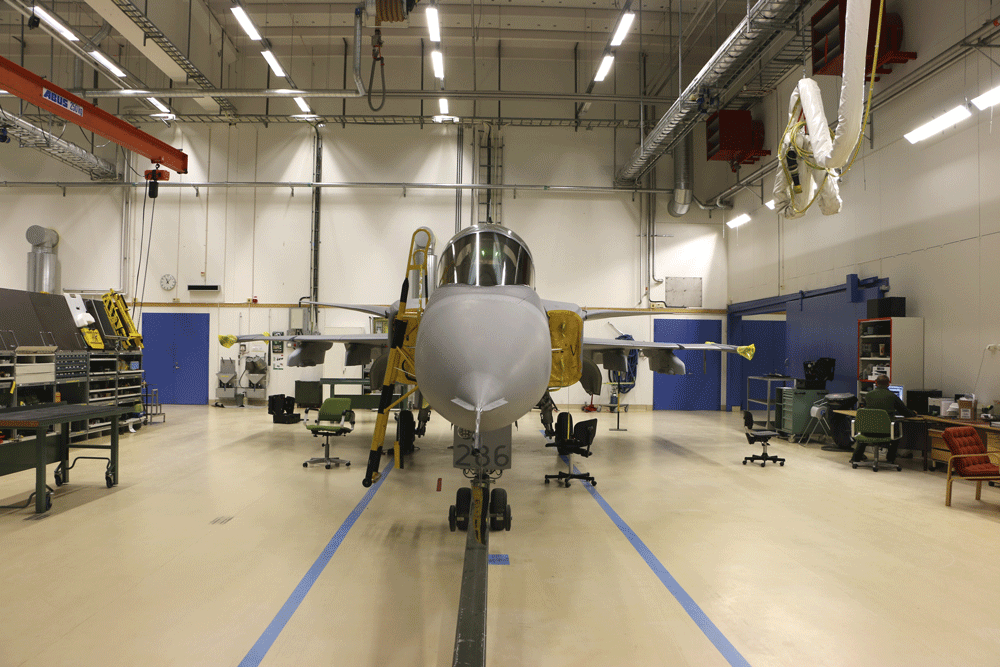
Modern military aircraft generate vast amounts of technical data every second. From engine performance to structural loads and avionics health, fleets are more instrumented than ever before.
At Luleå University of Technology (LTU), researchers are exploring how this data can be used more effectively—not just through advanced analytics, but through improved collaboration between military aircraft pilots and maintenance technicians.
Today, at the centre of military aircraft maintenance is Prognostics and Health Management (PHM), a technology-driven approach that continuously monitors aircraft health and predicts potential failures before they occur.

PHM is a key enabler of condition-based maintenance (CBM), in which maintenance decisions are increasingly based on the actual condition of aircraft components and systems rather than fixed maintenance intervals.
The aim of PHM is greater efficiency, less downtime, and higher aircraft availability. However, research shows that technology alone is not enough—successful PHM implementation also depends on organisational, human, and operational factors.
Doctoral researcher Angelo Compierchio at Luleå University of Technology notes that one of the greatest opportunities for improving maintenance lies not in developing new technologies but in strengthening how pilots and maintainers communicate and collaborate as teams toward a shared goal. This approach ensues a safe, reliable, and mission ready aircraft.
Compierchio’s doctoral research – supervised by Professor of Human Work Sciences at LTU, Phillip Tretten, and Adjunct Senior Lecturer in Operation and Maintenance Engineering, Prasanna Illankoon – examines human factors and ergonomics in fifth-generation military aircraft, particularly the F-35, in the cockpit and maintenance contexts.
After analysing 29 reported mainly F-35 accidents and incidents between 2014 and 2026, Compierchio found that technical issues are often closely intertwined with communication, decision-making, and maintenance practices. More specifically, around 40% of the incidents were linked to human factors.
“Many accidents are not caused by a single technical failure. They involve interactions between pilots, maintainers and increasingly intelligent aircraft systems,” Compierchio says.
Although PHM systems provide large volumes of condition data to both aircraft and ground maintenance organisations, shared access to data does not guarantee shared interpretation, Compierchio explains.
For example, a pilot may detect unusual aircraft behaviour before it is registered by onboard diagnostic systems. And the sensors do not always convey the necessary information to make the best maintenance decisions. Therefore, if this experience is not communicated effectively, valuable information may be lost before it reaches maintenance personnel.
To address this gap, Compierchio proposes moving beyond simple data exchange toward what he calls a Team Intent Approach.
The idea, he says, is that maintenance should focus not only on what the data shows, but also on building a shared understanding of what is happening, why it matters, and what all stakeholders are trying to achieve.
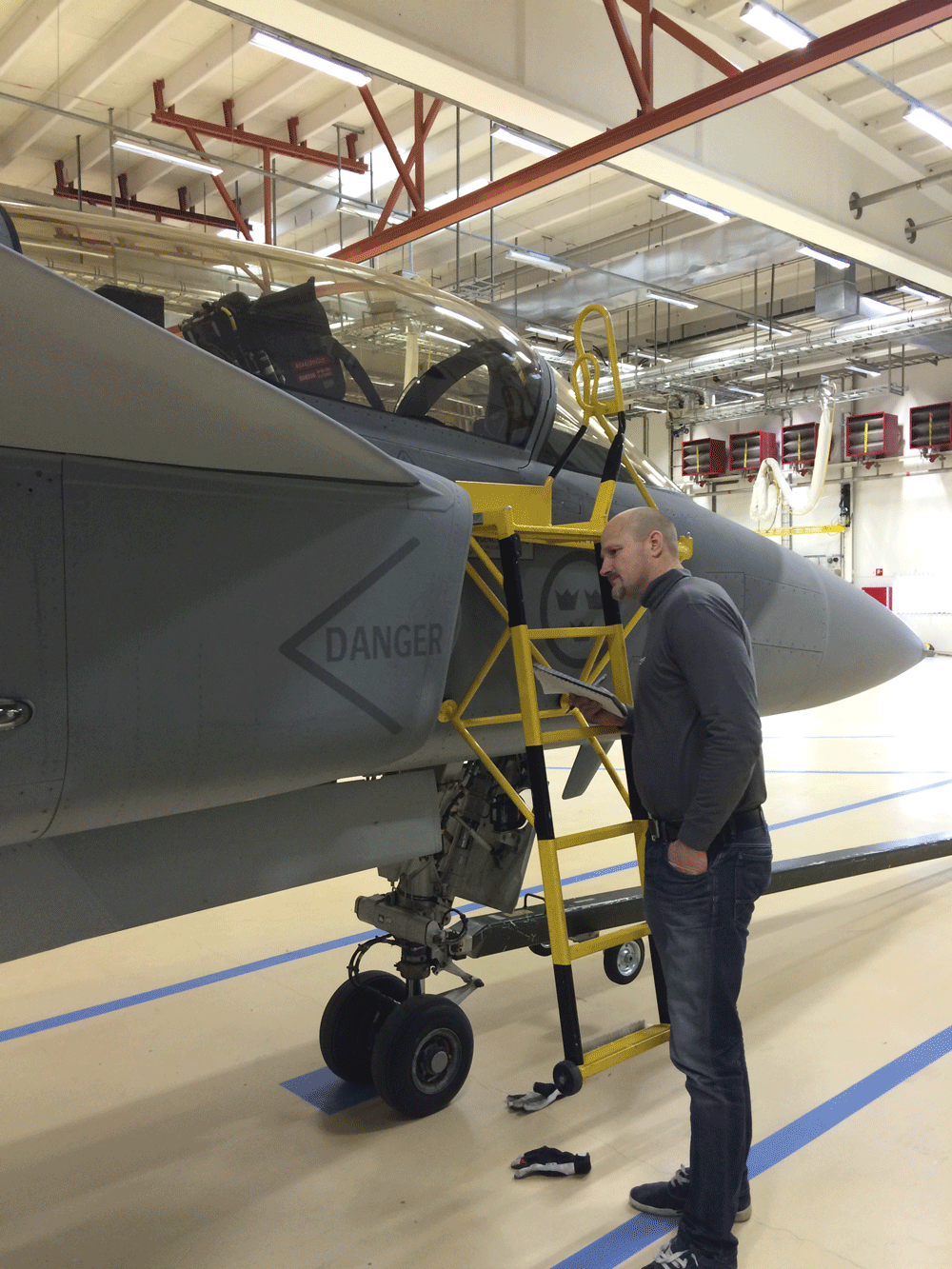
The Team Intent Approach refers to the collaborative alignment between pilots and maintenance personnel, where pilot perceptions during in-flight anomalies or emergencies are integrated with PHM data. This ensures that sensor-based diagnostics are interpreted alongside real operational experience.
The concept of “intent” is already well established in military command philosophy. Instead of issuing only detailed instructions or “commands,” commanders communicate overall mission intent so personnel can adapt their actions as conditions change.
Compierchio suggests applying this same principle to military aircraft maintenance operations.
Instead of simply reporting faults, pilots and maintenance teams should communicate with a shared understanding of operational goals, aircraft condition, and mission priorities. This allows maintenance decisions to be informed not only by sensor data, but also by operational context and human experience, he says.
Despite increasing automation in military aviation, Compierchio emphasises that humans remain central to safe and effective operations.
Artificial intelligence and PHM systems can support decision-making, but pilots and maintenance personnel must still interpret complex and sometimes ambiguous situations together.
As he notes: “The human remains in the loop. Technology supports decisions, but people provide the context.”
His research highlights that maintenance personnel are not only technical specialists but also operational partners whose decisions directly influence safety, readiness, and mission success. By working in closer communication with military pilots, a common intent devolved into maintenance tasks that improve aircraft availability is needed.
Although the research focuses on military aviation, its principles extend to other industries such as energy, manufacturing, and process industries. In these environments, operators often detect subtle anomalies before monitoring systems register a fault.
Improving communication between operators and maintenance teams could therefore reduce downtime, improve troubleshooting efficiency, and enhance overall system reliability.
This changes the focus from asking “What failed?” to also asking, for instance, “What was the operator experiencing before and during the failure event?”
As military aviation moves toward increasingly autonomous systems and more advanced predictive technologies, the importance of human collaboration is likely to grow.
Future aircraft will likely produce even more data, not less. The challenge will be ensuring that this information is not only collected and analysed but also understood in a shared operational context.
LTU research suggests that the next major step in the evolution of maintenance may not come from new sensors or algorithms alone, but from better ways to align people around a common intent.
“The most significant advances in maintenance may not come from new technologies alone, but from improving how people understand and coordinate with one another,” Compierchio concludes.
EuroMaintenance 2026: Team Intent Approach for Aircraft Maintenance
Doctoral researcher Angelo Compierchio’s paper “Team Intent Approach to PHM Data in Military Aviation” (Compierchio et al.), presented at EuroMaintenance 2026 at Luleå University of Technology, explores how Prognostics and Health Management (PHM) data can be better used in military aircraft maintenance to enhance aircraft performance, safety, and mission readiness.
The study introduces a “Team Intent Approach” that improves collaboration between pilots and maintenance personnel by enabling shared interpretation of aircraft health information among flight crews and ground engineers. The approach aims to enhance situational awareness and support more effective maintenance decisions by combining pilot observations with PHM data.
Text: Nina Garlo-Melkas Photos: Phillip Tretten



Subscribe to the free Maintworld newsletter here!
Latest