
Maintenance in Pharma: “Basics First” is the key to quality, safety and successful digitalisation
In pharmaceutical manufacturing, where every deviation can have direct consequences for patient safety and product quality, maintenance is not simply a technical discipline. It is a core pillar of the entire production system.
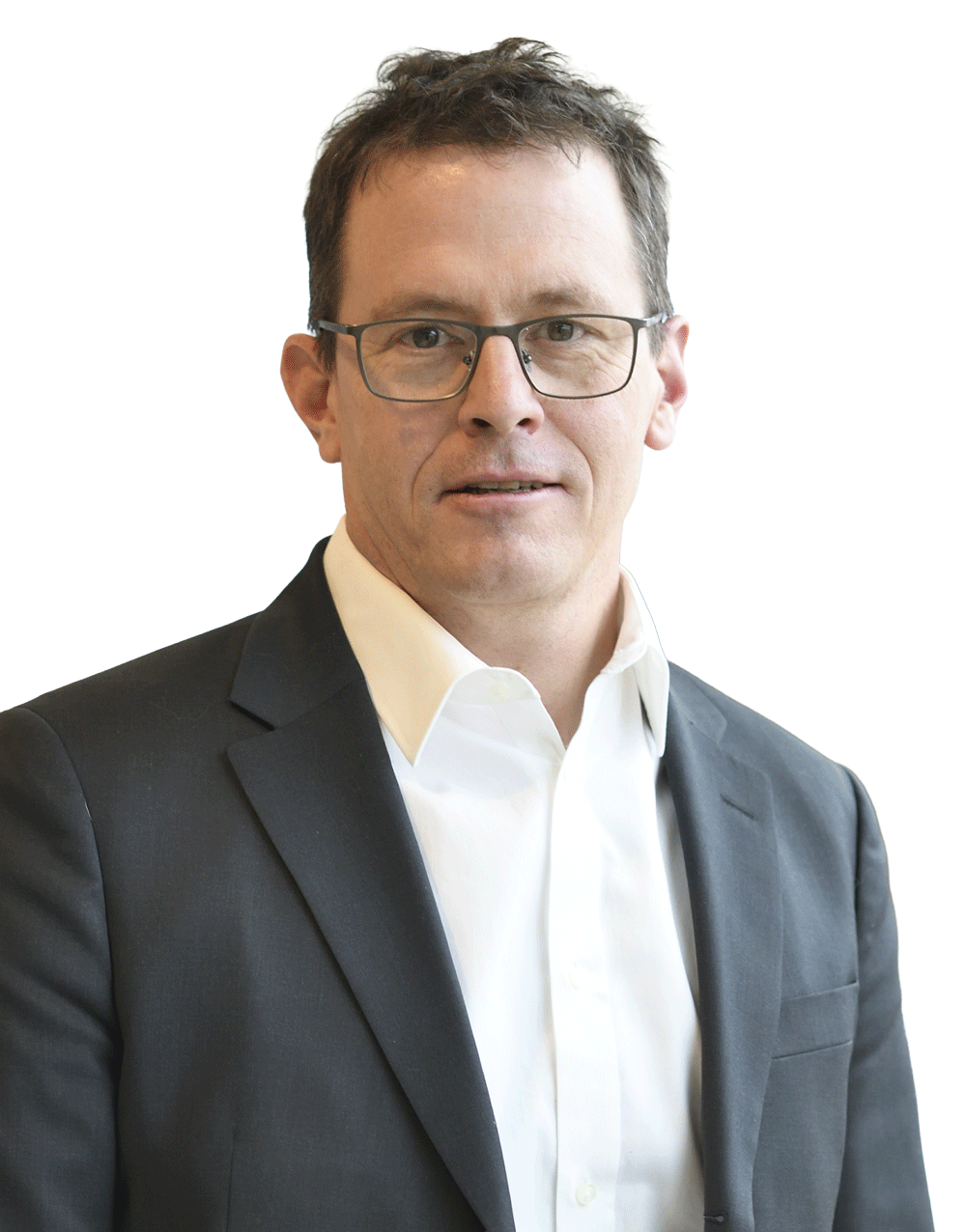
Jerry Johansson, Head of Engineering at AstraZeneca, stresses that even in an era of advanced predictive technologies and highly connected production systems, success begins with the fundamentals.
“If you go for advanced predictive methodologies or tools, they are fancy and good. But if you don’t know how to operate the basics, it doesn’t make sense,” Johansson explains.

For Johansson, digitalisation and predictive maintenance are often introduced too early—before organisations have secured the operational discipline required to benefit from them.
“The most important thing we have is to keep the machines up and running,” he highlights. This is not just an operational goal. It is the cornerstone of safe pharmaceutical production.
“Because by that we avoid the risk of people getting injured, we avoid the risk of getting poor quality out, we get a higher OE out, which affects the cost in a positive way”
In pharma, every interruption carries consequences. Production stops are not simply inefficiencies, they increase the risk of deviations in a heavily regulated environment where quality must be proven, not assumed.
Johansson highlights a fundamental difference between industries he has worked in, automotive industry and pharmaceutical manufacturing at Astra Zeneca.
“Everything is much more controlled in pharma.”
Unlike in automotive environments, where improvements and changes can be implemented relatively quickly, pharma operates under strict regulatory frameworks that require every modification to be justified, documented, and validated.
“You can’t change anything just because you think it’s a good idea.”
This control brings both advantages and challenges. While it reduces the risk of untested changes, it can also slow down improvement work and make maintenance optimisation more complex.
One of the most common and persistent issues in maintenance, Johansson notes, is not the use of advanced technology. It’s something far more basic: the lack of updated documentation.
“The most common problem I see in the industry is that you have a mismatch, that you don’t update your documentation over time.”
Across industries maintenance teams often rely on documentation that no longer reflects the equipment’s true condition.
This gap between reality and records creates risk, inefficiency, and potential quality deviations—especially in regulated environments where traceability is essential.
When discussing equipment selection, Johansson emphasises that decision-making is increasingly driven by long-term performance rather than upfront cost.
“Cost is a factor, but maintainability matters most. It’s worth choosing equipment that’s easy to maintain or a minimum of maintenance.”
More important than the purchase price is the asset’s total lifecycle performance.
“We are looking at the lifecycle cost of the asset instead of just checking on the purchase price”
In other words, better-designed equipment reduces long-term operational burden—even if it costs more initially.
“Still, too many people don’t understand the foundational part of maintenance, which is quite simple. Cleaning, inspection, lubrication and tightening. These are the main pillars in maintenance,” Johansson says.
These activities may appear elementary, but in pharmaceutical production, they are directly linked to product quality and equipment reliability.
“Make sure the equipment is clean and free of dust, sawdust, or any other debris that could obstruct the machine. Keep it properly lubricated and ensure all components are tightened.”
Johansson emphasises that these basics are not optional or secondary, they define whether a machine performs as intended.
Only when these basics are reliably in place does advanced monitoring or predictive maintenance become meaningful.
Johansson is critical of organisations that invest heavily in sensors, data platforms, and predictive systems without first stabilising maintenance discipline.
“If I don’t lubricate my bearing, I don’t need to buy costly sensors.”
The logic is straightforward: technology cannot compensate for poor basic maintenance practice.
He explains that predictive maintenance should start from condition-based understanding, not complex systems: “The simplest way of digital maintenance or predictive maintenance is to do condition-based monitoring”
The conclusion is not anti-digital—but rather pragmatic: digital tools must serve a stable operational foundation.
As production environments become increasingly connected, Johansson highlights a new and growing risk area: cybersecurity.
“The more connected the machine, the shop floor is, the more vulnerable we are to external threats.”
For pharma manufacturers, digital integration brings efficiency—but also exposure. Even so-called secure systems are never fully immune to threats.
“Cybersecurity is our number one concern, and that means ensuring we maintain an isolated, segmented network.”
However, he is also realistic about the limitations of isolation strategies:
“The only thing you know about a segmented network is that it isn’t completely safe. It isn’t truly isolated—if not air gapped. If someone is determined enough, they can get through.”
As pharmaceutical manufacturing becomes increasingly data-driven, maintenance teams are expected to expand their skillsets far beyond traditional mechanical expertise.
At AstraZeneca, maintenance leaders are already seeing a shift toward hybrid competencies that combine engineering, IT, and data understanding.
Alongside conventional maintenance training, new roles are emerging—such as data specialists and operational technology (OT) architects—who can bridge the gap between shop floor equipment and digital systems.
“We see a new skillset needed for maintenance teams, like data scientists or operational technology architects, that can understand design and networks, segregated networks together with IT.”
The growing use of production data in pharma makes this shift essential. While data is already widely used for production release and process optimisation, its full potential depends on interpretation rather than collection alone.
“We use the data for production release for sure, but also for advanced process analytics to improve yield, to improve OE, to improve the process.”
However, the challenge is not data availability—it is understanding what the data is showing.
“It’s more to see patterns, how we set up things, how we set up signals together and combine them into a good result so we can follow that up.”
Johansson illustrates this with a practical example: in some cases, equipment issues only become visible through patterns in vibration or process signals, which may not be immediately understood until later linked to an actual fault.
This reflects a broader shift in maintenance work—from reacting to failures to interpreting complex data patterns that signal emerging problems.
At the same time, Johansson emphasises that traditional skills remain essential. Maintenance organisations must therefore balance two priorities: strengthening basic mechanical competence while building new digital and analytical capabilities.
In this way, the future maintenance professional becomes a hybrid specialist—grounded in reliability fundamentals but capable of working confidently with data-driven systems.
The Human Side of Maintenance Digitalisation
While much of the maintenance discussion in pharmaceutical manufacturing, as elsewhere in other industries, focuses on technology, Jerry Johansson at AstraZeneca emphasises that the real transformation is driven by people, not systems.
“Digitalisation is 90% people and 10% technology,” AstraZeneca’s Head of Engineering expresses his point.
The tools already exist, but value is only created when organisations change how they think, work, and make decisions.
“The technology is there. We have all the technology we need. Just make it happen.”
This shift has direct implications for competence development in maintenance organisations. Traditional mechanical expertise remains essential, but it is no longer sufficient on its own.
Johansson highlights that future maintenance teams must increasingly combine operational knowledge with digital and analytical capabilities.
He points to emerging roles such as data-oriented specialists and OT/IT integration experts who can bridge maintenance, automation, and information systems.
Rather than replacing technicians, digitalisation is reshaping how maintenance teams interpret information and solve problems. In practice, this means moving from purely reactive or task-based work toward pattern recognition and data-supported decision-making.
“It’s more to see patterns, how we set up things, how we set up signals together and combine them into a good result so we can follow that up.”
At the same time, Johansson stresses that training must remain balanced. Organisations cannot focus only on advanced analytics or data science while neglecting core maintenance skills.
The future, he suggests, lies in dual competence: strong fundamentals in mechanical reliability combined with the ability to understand and use data.
In this sense, digitalisation does not remove the human factor—it makes it more important than ever.
Text: Nina Garlo-Melkas Photos: Astra Zeneca



Subscribe to the free Maintworld newsletter here!

Latest