
From Pilots to Impact
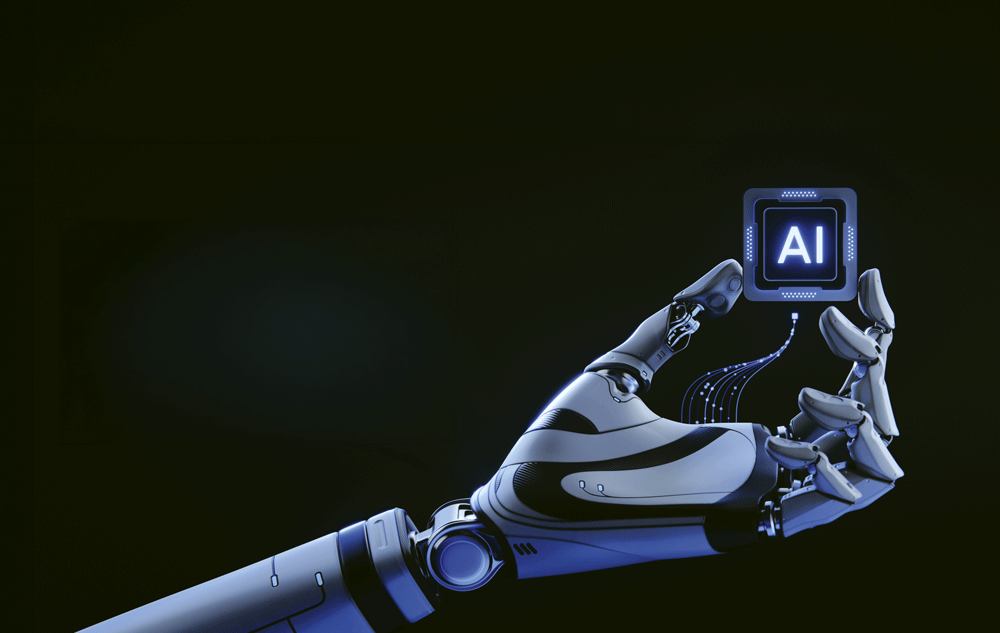
Industrial AI will not transform maintenance on its own. According to Martin Lundqvist, CEO of Arundo Analytics, lasting value comes when companies manage AI with the same discipline they already apply to their most critical assets.
Industrial AI will not create value simply by being powerful. According to Martin Lundqvist, the real breakthrough comes when companies start treating AI with the same discipline they already apply to critical assets.
It is three o’clock in the morning. Somewhere in a plant, a vibration alarm goes off on a critical compressor train. A maintenance technician is woken up and asked to decide. Is the compressor really in trouble, or is the sensor faulty? Should spare parts be ordered? Should production be slowed down? Should the assets be stopped immediately, or can the decision wait until morning?

For Martin Lundqvist, this is where industrial AI either proves itself or fails.
“AI needs to be seen as a way to make better decisions consistently and to do them in day-to-day operations,” he says.
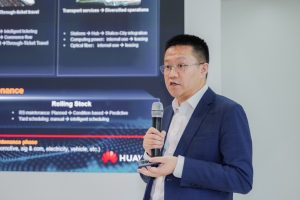
Lundqvist spoke at EuroMaintenance 2026 in Luleå, Sweden. His presentation, From Pilots to Impact: How to Turn AI into Operational Advantage in Industrial Operations, explored why so many industrial AI initiatives fail to move beyond the pilot stage. His central message was simple: run AI like an asset.
According to Lundqvist, AI cannot be treated as another software experiment or an isolated IT project. It should be managed like any business-critical asset, with clear ownership, monitoring and lifecycle management.
“When companies implement AI into their maintenance processes, they should treat it much like they would a new piece of equipment,” he says.
To maintenance professionals, this way of thinking is nothing new.
“Maintenance isn’t behind on AI. AI is behind on maintenance.”
The maintenance profession has spent more than a century learning how to operate equipment that simply cannot fail. It understands ownership, operating envelopes, changing control and lifecycle management. Most AI initiatives, Lundqvist argues, lack exactly this kind of discipline.
The real opportunity lies in combining two worlds that have traditionally worked separately: advanced analytics and practical maintenance expertise.
“When you bring these two skills together, I have witnessed something very nice unfold.”
The timing could hardly be more important as industrial companies face labour shortages while experienced maintenance professionals retire in growing numbers. At the same time, maintenance teams sit on enormous amounts of operational knowledge that rarely comes together when critical decisions are made.
“We have a human skills issue, and we have a data coordination issue. Modern AI can help address both.”
Just a few years ago, AI in maintenance was largely associated with predictive maintenance and anomaly detection. Today, Lundqvist believes the frontier has shifted.
“The frontier has shifted from prediction to reasoning.”
An experienced maintenance engineer rarely bases a decision on a single vibration signal. Instead, they combine alarm histories, work orders, manuals, maintenance records, operating conditions and observations from previous shifts before deciding what to do.
Modern AI is becoming capable of working in much the same way. Rather than producing another prediction score, it can collect evidence, connect information and help people understand a situation more quickly.
“The promise is faster time to understanding.”
The value is not that AI suddenly becomes infallible. It does not. The value is that a technician who previously spent days collecting information can receive a structured overview in minutes, leaving more time for analysis and decision-making. But this is also where Lundqvist becomes cautious.
“You can’t just blindly trust the information.”
Unlike conventional software, AI systems are probabilistic. They sometimes connect the wrong dots or generate convincing but incorrect conclusions. In maintenance, where poor decisions can lead to production losses or even safety incidents, that matters.
“The better AI becomes at reasoning across industrial context, the more disciplined we must become about consequences.”
For that reason, Lundqvist argues that organisations should stop chasing perfect accuracy and instead focus on trustworthy decision support.
He summarises his approach in five practical principles: start with the decision, not the technology; design for consequences rather than perfect accuracy; add context instead of simply collecting more data; integrate AI into existing workflows; and ensure every recommendation is explainable.
The first principle is perhaps the most important. Many organisations begin with ambitions such as “we need more AI”. A better starting point is a concrete operational decision. For example: How should maintenance priorities for a critical compressor change based on its current condition? Once that decision is defined, it becomes much easier to determine who owns it, what information is required and where AI can genuinely improve the process.
The second principle is equally pragmatic: assume AI will sometimes be wrong. Rather than trying to build a perfect system, organisations should design one that fails safely and only makes recommendations when sufficient trusted information is available.
“Don’t spend forever trying to make the system perfect,” Lundqvist says. “Design for the consequences instead.”
Another common misconception concerns data. Many companies believe they lack sufficient data, while Lundqvist argues they usually lack context. A vibration measurement is simply a number until the system understands which compressor produced it, how it normally operates, what maintenance has recently been performed and how the asset fits into the wider production process.
“Context is what really unlocks AI. Not necessarily having more data but having better context.”
The fourth principle is one maintenance professionals immediately recognise. AI should become part of the existing workflow, not another destination. Manufacturing sites already have established ways of detecting problems, diagnosing faults and planning maintenance. Adding yet another dashboard simply creates another system to monitor.
“If everything you develop ends up sitting outside the workflow, then you’re not developing capabilities, you’re developing liabilities.”
Instead, AI should fit naturally into maintenance management systems, planning processes and control room routines.
The fifth principle is explainability. Maintenance engineers cannot simply accept a recommendation because an algorithm produced it. If AI suggests postponing maintenance or shutting down an asset, users need to understand why.
“If an AI recommends something that you can’t understand, you’re simply not going to follow it.”
Lundqvist has also noticed another common denominator in successful implementations. Almost every successful project has what he calls an AI ambassador. The role is rarely formal. It may be a maintenance engineer, a reliability specialist or someone from the data organisation. What matters is that the person understands the industrial process, has credibility within the organisation and genuinely believes data-driven decision support can improve operations. According to Lundqvist, that individual often makes the difference between an interesting pilot and a successful transformation.
Industrial AI has no shortage of pilots, it has a shortage of impact and many organisations choose the wrong problem to solve or develop AI in isolation from the people who understand the assets best. The result may be technically impressive but fails to fit everyday operations.
Maintenance offers a better starting point because the objectives are already clear: keep assets running, reduce failures, improve reliability and support production safely and efficiently. The same applies to measuring success. Rather than inventing new AI metrics, companies should continue using the KPIs that already matter.
“If AI doesn’t improve those KPIs, then why are you building it?”
Lundqvist believes organisations should ask three questions before scaling any AI solution. Has it measurably improved business performance? Do the people using it genuinely feel it helps them?
And can it realistically be deployed across multiple sites? Scaling, he emphasises, is not simply copying software from one factory to another. Each site has different equipment, maintenance practices, operating constraints and organisational cultures.
“Successful scaling means repeating the learning process rather than merely copying technology.”
One success story comes from a European PVC manufacturer. The company began by optimising production schedules according to changing electricity prices at a single site. After proving the concept, it expanded the solution across eight plants, generating approximately eight million euros in annual savings within twelve months.
According to Lundqvist, one reason for that success was that AI did not arrive as a stand-alone digital initiative. The company already had a strong Operational Excellence programme, and AI became another tool supporting continuous improvement.
That may be the most important lesson of all. Successful industrial AI is less about technology than operational discipline. It succeeds when organisations treat AI as another capability to be managed rather than another innovation to be demonstrated.
Lundqvist is equally careful not to exaggerate where AI is heading. He does not expect maintenance professionals to disappear or fully autonomous “lights out” factories to become commonplace any time soon. Instead, he imagines what he calls a “dimmed lights” factory where maintenance professionals remain firmly in control but increasingly work alongside AI agents capable of gathering evidence, reviewing documentation, analysing operational data and presenting structured recommendations.
“AI recommends, humans decide. It is a future based on augmentation rather than replacement.”
Experienced maintenance engineers, Lundqvist believes, are better prepared for that future they may realise. Their profession has always required balancing uncertainty, interpreting incomplete information and making decisions with significant consequences. Those are precisely the skills needed to govern industrial AI responsibly.
His conclusion is ultimately optimistic. Industrial companies do not need to reinvent themselves before embracing AI. Many of the capabilities they need already exist inside their maintenance organisations: ownership, accountability, operational discipline and a culture of continuous improvement. The challenge is to recognize that the same principles apply to artificial intelligence. Because in the end, successful AI is not measured by how intelligent it appears. It is measured by whether the people on shift trust it enough to make better decisions. And that, Lundqvist believes, is something maintenance professionals have been mastering for decades.
Five disciplines for trustworthy industrial AI
1. Start with the decision Define the operational decision AI should improve before selecting technology.
2. Design for consequences Assume AI will occasionally be wrong and build safeguards around its recommendations.
3. Context beats more data The missing ingredient is usually context rather than additional data.
4. Integrate AI into existing workflows Support existing maintenance processes instead of creating separate dashboards.
5. Make recommendations explainable Engineers need to understand why AI suggests a particular action before they can trust it.

Martin Lundqvist
Martin Lundqvist is CEO of Arundo Analytics, an AI software company helping asset-intensive industries improve maintenance, reliability and operational performance through advanced analytics and artificial intelligence.
Before joining Arundo, he was a Partner at McKinsey & Company, leading digital and analytics initiatives across industrial, telecom, banking and the public sector. He holds an MSc in Industrial
Engineering and Management from Linköping University and studied Computer Science at ETH Zürich.
Text: Mia Heiskanen Photo: Martin Lundqvist photo archive, SHUTTERSTOCK



Subscribe to the free Maintworld newsletter here!
Latest