

When one missing part stops production: How logistics keeps industry running

In industrial production, one principle has remained unchanged despite advances in automation, digitalization and process optimization: production cannot tolerate downtime. When a critical component fails, the consequences are immediate and often costly. In such situations, success is not determined solely by maintenance capabilities, but by how quickly the right replacement part or maintenance component can be delivered.
The operating environment in industrial manufacturing has changed significantly over the past decades. Production systems are increasingly synchronized, facility space is used more efficiently, and inventory has been moved away from factory floors. At the same time, utilization rates have increased, leaving less tolerance for disruptions.
The importance of logistics for production and maintenance operations is well understood at ABB, a global technology leader that develops electrification, automation, and digitalization solutions for industry, infrastructure, and energy systems.

“If a single critical component is missing, it can cause major problems. Everything else may arrive on time, but one missing part can disrupt the entire production process,” says Mika Erkkilä, Operations Manager, BL LV & MV Drives, Finland, Motion Services, ABB.
Maintenance performance is both about technical expertise and material availability. The right component must be available at the exact moment it is needed.
Inventory is no longer located inside the factory
One of the most significant structural changes has been the relocation of inventory. Traditionally, factories maintained extensive on-site storage, allowing technicians to retrieve parts directly from shelves.
Today, this model has largely been replaced.
“In the past, materials were stored on-site and technicians could pick them directly. Now there are practically no shelves in the factory—everything is delivered externally, exactly when needed,” Erkkilä explains.
This shift has enabled production growth without expanding physical space. However, it has also increased dependency on logistics performance. Material flows must be precisely managed and highly reliable.
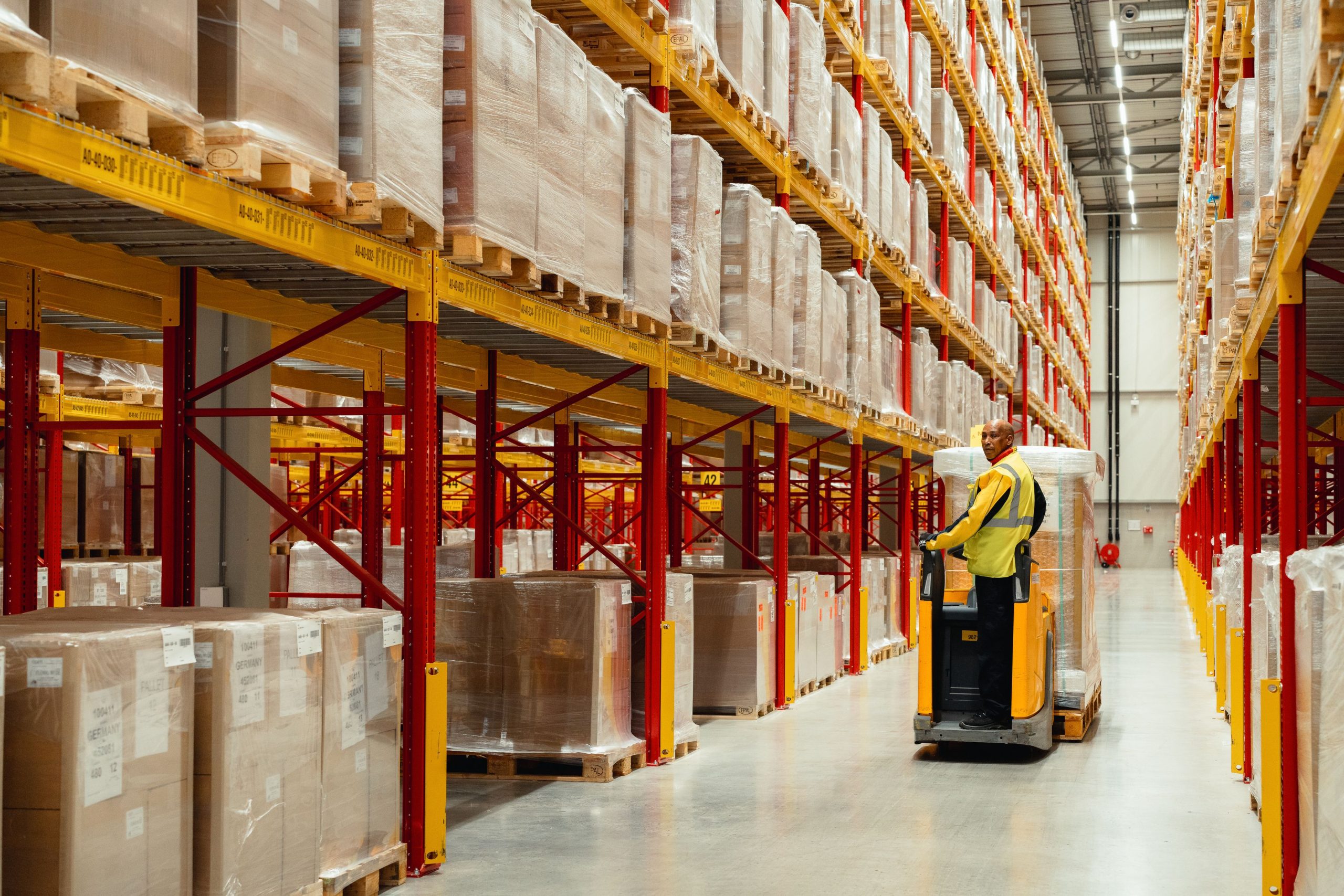
Real-time logistics and material visibility enable fast response times and reliable spare parts availability worldwide.
Photo: DHL Supply Chain
Inbound to Manufacturing integrates the supply chain
To meet these demands, many industrial companies rely on specialized logistics partners. Supporting ABB in this role is DHL Supply Chain, a leading contract logistics provider.
The collaboration between these global players culminates in a logistics center located near Helsinki’s busiest airport. From there, production materials for ABB’s manufacturing operations as well as spare parts and maintenance materials for aftersales services are dispatched to ABB locations and customers around the world by road or air.
The partnership is defined by DHL Supply Chain’s Inbound to Manufacturing (I2M) model, which integrates logistics directly into production processes and material planning.
“Inbound to Manufacturing connects suppliers, transportation, inventory, and production planning into one unified chain. We deliver materials at the right time directly to the right production point,” explains Otso-Tapio Forsblom, DHL Supply Chain Nordics Managing Director.
In this model, logistics is not a separate function but an integral part of the production system. DHL manages inbound flows from suppliers, oversees warehousing, and provides value-added services such as kitting or pre-assembly.
The model relies heavily on continuous data exchange.
“We receive forecasts and operational input from the customer, and based on that we run the operation. At the same time, we provide full transparency on where materials are and how they move through the chain,” Forsblom says.
The objective is to eliminate delays and ensure uninterrupted production flow.
Service logistics ensures maintenance responsiveness
While logistics integrated with manufacturing ensures smooth material flows between warehousing and production, spare parts logistics plays a critical role in aftersales and maintenance services. Service requirements may arise unexpectedly, and response time is crucial.
“When a service technician arrives on-site, the required components must be there at the exact time the work begins,” ABB’s Erkkilä emphasizes.
DHL Supply Chain’s Service Logistics concept is designed to meet this challenge. It is built on a global network and around-the-clock operations.
“We operate a network of warehouses in over 140 countries and manage the entire spare parts logistics through a single system. The goal is to ensure availability and correct stock levels globally,” Forsblom explains.
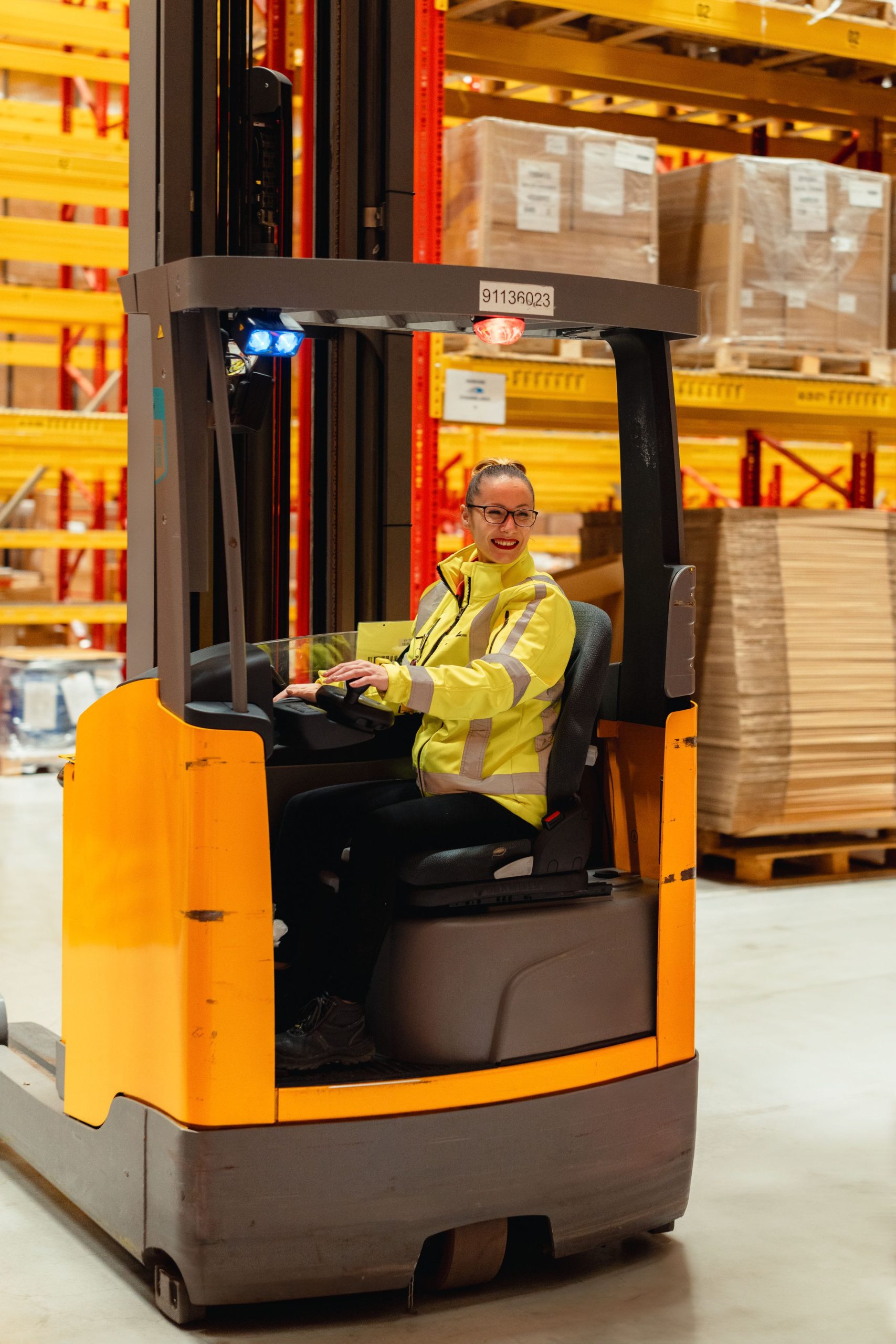
In practice, this enables extremely fast delivery cycles, which have become standard in the day-to-day collaboration between ABB and DHL Supply Chain.
“In the best case, an order placed in the evening can arrive at its destination the next morning somewhere in Europe,” Erkkilä notes.
This level of responsiveness is essential in minimizing downtime and maintaining operational continuity.
Data and transparency drive performance
Digitalization has fundamentally transformed logistics. Physical flows are now complemented by continuous data streams that enable forecasting, optimization, and real-time control.
“There is a lot of data available, but it must create value. We manage operations based on data,” says Forsblom.
Transparency is equally important from the customer’s perspective.
“We need visibility into the critical elements, but we also trust our partner to manage the overall operation. We don’t need to see everything ourselves,” Erkkilä adds.
Data-driven decision-making allows companies to anticipate demand, optimize inventory, and respond rapidly to changes.
Partnership enables continuous development
The collaboration between DHL Supply Chain and ABB goes beyond a traditional supplier–customer relationship.
“This is not a transactional relationship—it’s a partnership. Our systems and processes are integrated, and we develop operations together as a whole,” Erkkilä says.
This approach also supports long-term investments and innovation.
“When a customer commits to long-term collaboration, it enables us to further invest in the supply chain, including automation and sustainable transport solutions,” Forsblom explains.
Ultimately, the success of such integrated operations depends on trust.
“Trust is everything. Without it, collaboration at this scale would not be possible,” Forsblom concludes.
“Trust is built over time through shared experiences. Challenges will always occur, but solving them together strengthens the partnership,” Erkkilä adds.
Resilience is becoming a key competitive factor
Recent global disruptions have highlighted the importance of resilience in supply chains. Industrial operations must be able to continue despite uncertainty and external shocks.
“The world is constantly changing, and supply chains are affected by geopolitical events and disruptions. Our role is to ensure that our customer’s operations do not stop because of logistics,” Forsblom states.
Resilient logistics systems rely on global networks, alternative routing options, and strong coordination between partners.
When downtime costs – why spare parts logistics matters
In modern industrial environments, downtime is rarely caused by a lack of technical expertise. More often, the bottleneck lies in availability. A missing component can halt an entire production line, regardless of how well maintenance processes are organized.
As ABB’s Mika Erkkilä puts it:
“When a service technician arrives on-site, the required components must be there at the exact time the work begins.”
In global operations, critical spare and maintenance parts cannot be stored everywhere in large quantities—it would be inefficient and costly. Instead, availability must be ensured through a responsive and well-orchestrated logistics system.
This is where logistics partners such as DHL Supply Chain come into play through their Service Logistics model. Rather than relying on a single centralized warehouse, the model leverages a global network of strategically located facilities, supported by real-time data and 24/7 operations. The focus is not only on storage, but on end-to-end control: knowing where parts are at any given moment, how quickly they can be moved, and how to respond effectively when demand changes unexpectedly.
The result is a shift in how maintenance is executed. Instead of relying on local stockpiles, companies depend on logistics performance. This enables leaner operations but requires absolute reliability.



Subscribe to the free Maintworld newsletter here!

Latest