
Creating Value through Maintenance
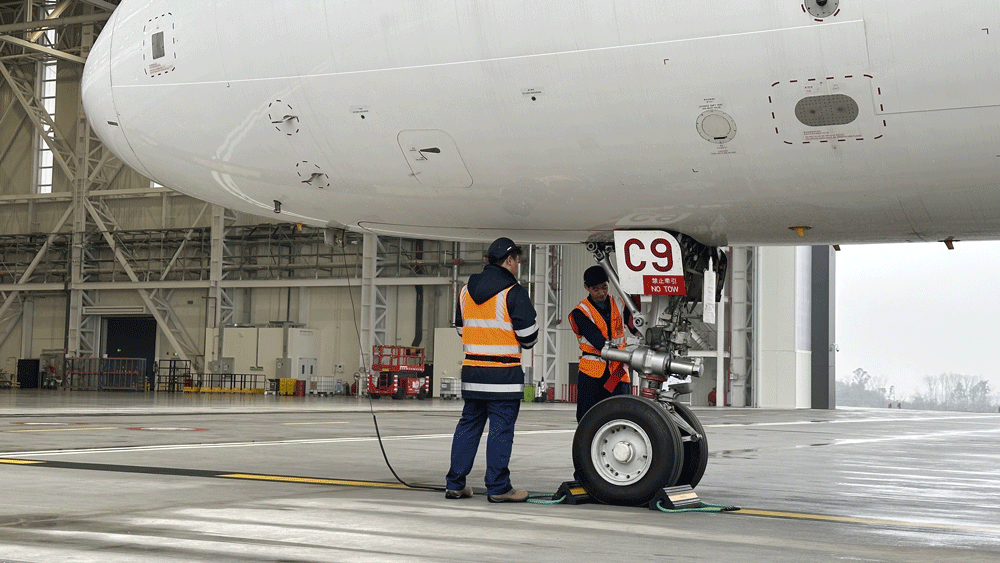
At one of Europe’s most advanced aerostructures facilities, maintenance has evolved from a cost centre to a strategic driver of productivity, investment, and long-term competitiveness.
Maintenance impacts the profit and loss statement directly—not only as a cost, but by creating value through reliability, safety, quality, sustainability and smarter investment decisions,” says Borja López García, Head of Industrial Means Maintenance at Airbus.
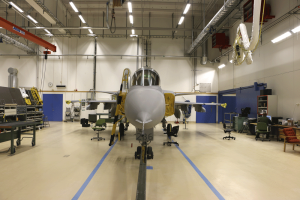
Borja leads industrial maintenance at Airbus’ Illescas facility near Madrid, a major aerostructures site with multiple production lines, automated part manufacturing processes and specialised industrial assets for high-precision manufacturing.

At this scale, even minor equipment failures can quickly cascade into production disruptions, making maintenance central to operational performance rather than simply equipment upkeep.
“We shouldn’t only focus on uptime or downtime,” López García explains.
“We also need to analyse asset obsolescence, define long-term plans, and make data-based decisions on replacement, refurbishment or decommissioning.”
These decisions extend beyond technical maintenance and directly shape investment strategy.
“They have a clear impact on capital expenditure (CapEx) strategy and support better investment decisions in the years ahead.”
For López García, maintenance creates value through multiple channels: improving reliability, protecting high-value assets, supporting safety and sustainability, and enabling better investment decisions. His philosophy reflects a broader industrial shift in which maintenance is increasingly recognised as a driver of business performance rather than a support function.
“At first, my mindset about maintenance strategy was based mainly on reliability. Several years ago, however, my mindset changed—from thinking mainly about technical performance to thinking about maintenance’s impact on the business,” he says.
“The value of maintenance must be managed. We need a value culture where everyone understands how their daily work contributes to the organisation’s success.”
For decades, maintenance was widely seen as a necessary cost of doing business—essential, but rarely strategic. López García argues this mindset is increasingly outdated. It underestimates maintenance’s contribution to operational performance, competitiveness, and long-term business value.
In his view, maintenance extends far beyond cost control.
“There are four drivers of value, and only one is cost,” he notes.
“The others—operational performance, lifecycle optimisation, and safety and sustainability—are where maintenance creates its strongest impact.”
This value-driven approach must be embedded in daily operations, he explains. That means agreeing with business units on acceptable levels of disruption through service-level agreements and expressing maintenance performance indicators in financial terms so their business impact is clear.
“If we know how many euros one hour of downtime costs, we can clearly understand the business impact of a breakdown,” López García explains.
This ability to connect technical performance to financial outcomes is becoming a critical capability for modern maintenance leaders.
One of the most significant shifts in maintenance is the need to communicate in business terms rather than purely technical indicators.
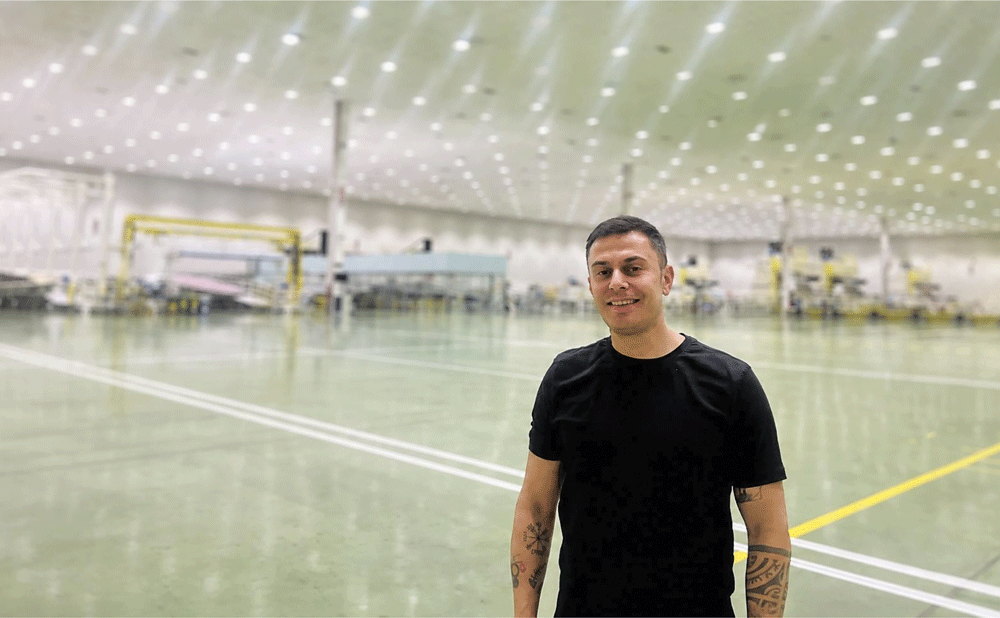
“Maintenance managers need to quantify, communicate and make understandable the value of maintenance. We need to speak the financial language,” he says.
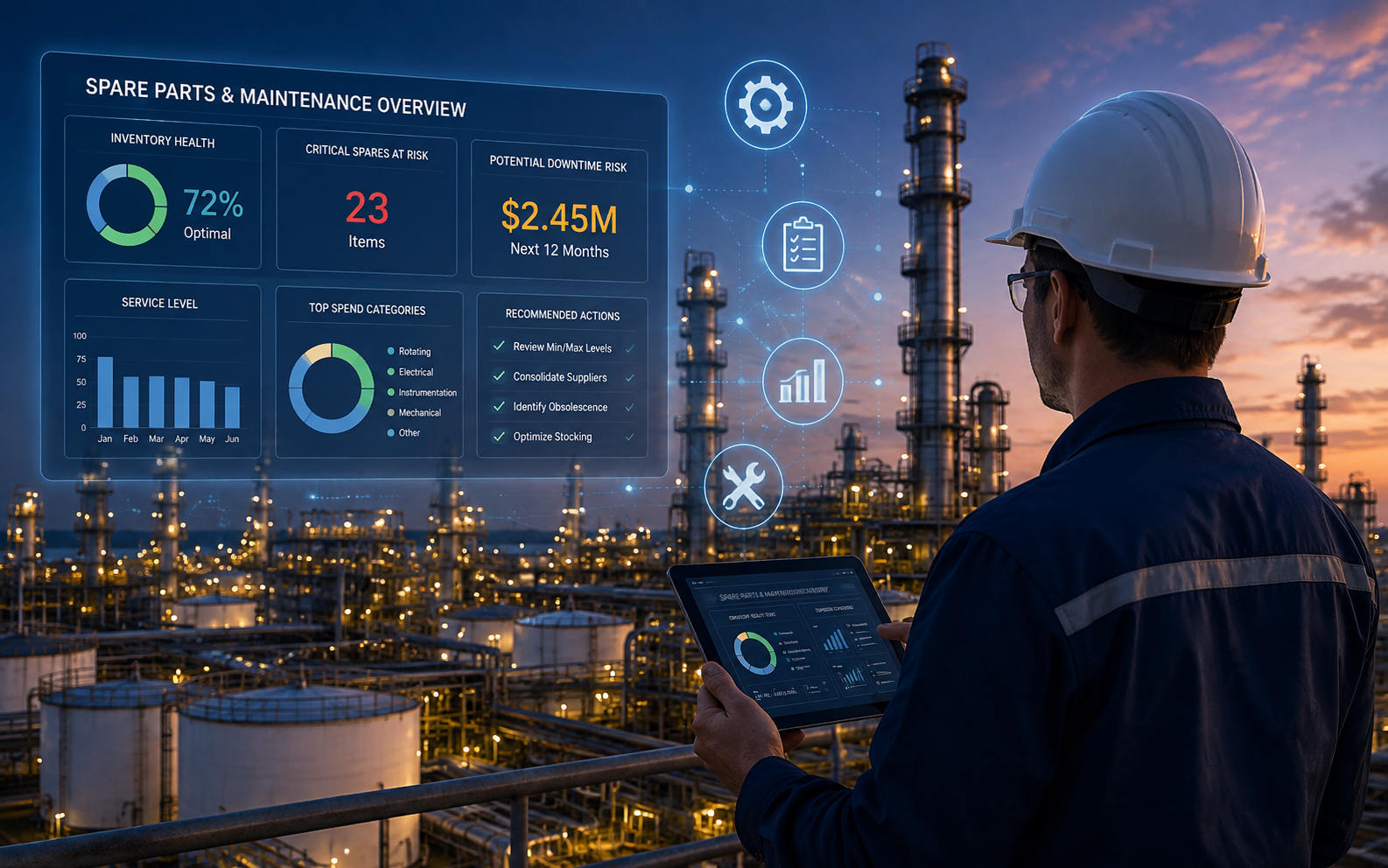
Translating asset condition, availability, or obsolescence risk into monetary impact fundamentally changes decision-making. A €50,000 condition monitoring system becomes easier to justify when weighed against €500,000 in avoided downtime. Staffing, spare parts strategies, and investment priorities all become clearer when expressed in financial terms.
“This shift also improves prioritisation on the shop floor,” López García says.
“When every work order carries an estimated financial impact, teams can distinguish between tasks that feel urgent and tasks that truly affect business performance.”
A one-hour facility stop, for example, is no longer an abstract technical incident.
“Instead of saying ‘line downtime increased by 3%,’ López García notes that you can say, ‘we lost €120,000 in production capacity this week.’”
“That shift changes the conversation. It determines whether a maintenance investment is seen as a cost centre expense or a profit-protection strategy,” he explains.
Ultimately, translating maintenance metrics into monetary impact bridges a long-standing communication gap between engineering and management. It allows both sides to evaluate the same reality through a shared lens: value creation and value protection.
Despite progress, many organisations remain stuck in reactive maintenance modes, focused on short-term breakdowns rather than long-term value creation.
“When maintenance managers spend each day firefighting, they cannot focus on strategy or value creation,” López García says.
A strategic maintenance organisation must look beyond immediate failures. It must actively manage asset lifecycles, anticipate obsolescence risks, and develop long-term asset plans aligned with business objectives.
This shift—from operational response to strategic value creation—is, in his view, one of the most important transformations facing the industry.
For López García, value creation is not solely a managerial responsibility.
It depends on organisational culture and shared understanding.
“Value must be managed.”
He illustrates this idea with a simple but powerful metaphor: two workers in a stone quarry are asked what they do. One replies, “I extract rocks.” The other answers, “I build cathedrals.” The task is identical; the perspective is not.
“We need to create a culture where every employee understands how their daily work creates value for the organisation,” he says.
For maintenance departments, this means ensuring technicians and engineers understand how their work influences safety, production, quality, sustainability, and financial performance.
When discussing how digital transformation is reshaping maintenance, López García takes a notably pragmatic view: technology alone does not create value.
“A bad process that is digitalised is still a bad process,” he says. “First, you need the right process. Then digitalisation can make it more efficient.”
At Airbus Illescas, artificial intelligence is already supporting maintenance activities ranging from inventory optimisation to compliance checks and technician assistance systems. One AI-driven initiative significantly reduced lubricant and oil references, simplifying inventory management and generating measurable savings.
Yet López García cautions against unnecessary complexity.
“Not every problem requires a big AI system. Many issues can be solved with a good prompt.”
The emphasis, he argues, should remain on practical outcomes rather than technology for its own sake.
Despite rapid advances in tools and automation, López García sees people as the defining challenge for the future.
“The biggest challenge for the future is people.”
Across Europe, industrial organisations face increasing difficulty recruiting skilled maintenance professionals, particularly technicians. Competition with technology firms and other sectors for digitally skilled talent is intensifying.
Modern maintenance roles now require familiarity with automation, data analysis, and AI tools, yet candidates often have attractive alternatives outside manufacturing.
“We need to make industry attractive for talent,” he says.
This challenge is compounded by changing expectations around work. Younger generations increasingly value remote and flexible work models, options that are often limited in maintenance roles.
“This is not a reality for many maintenance roles, where physical presence is still essential for safety, hands-on intervention, and real-time problem-solving.”
López García argues that industry must respond through stronger collaboration with education systems.
“The maintenance technician of the future will not appear by accident. We must develop that talent together with schools and universities.”
Reflecting on his over 20 years working in Assets & Maintenance Management, López García describes a clear personal and professional evolution—from technical optimisation to business impact.
“Today I think more about the impact of maintenance on the business than about technical indicators,” he says.
This shift mirrors a broader transformation across industry. Maintenance is no longer defined solely by repairs, reliability, or cost control. Its true value lies in enabling production, protecting assets, supporting sustainability, and strengthening long-term business performance.
As López García summarises it: “Maintenance is not a cost centre. Maintenance is a value driver.”
Borja López García
Borja López García, Head of Industrial Means Maintenance at Airbus’ Illescas facility in Spain, has over 20 years of experience spanning facilities management, industrial maintenance, engineering, and asset management.
López García is a strong advocate of value-driven maintenance, promoting it as a strategic driver of business performance. His own podcast series, now with 60+ episodes, shares best practices and supports the shift from reactive maintenance to a more business-aligned approach.
López García is also active in the European Federation of National Maintenance Societies. He presented his work on value-driven maintenance at EuroMaintenance 2026, held in Luleå in June.
Text: Nina Garlo-Melkas Photos: Airbus



Subscribe to the free Maintworld newsletter here!
Latest