
Competence Strategy: The Missing Piece of Industrial Performance
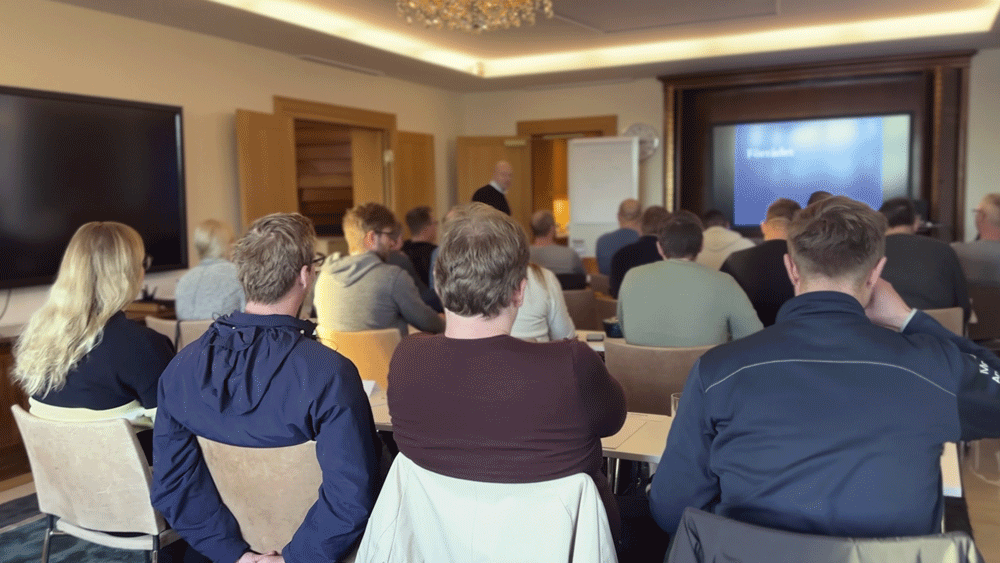
As maintenance organisations adopt AI, digital tools and increasingly complex assets, one question is becoming critical: who will have the competence to operate, maintain, and improve them?
According to Mia Ilkko, Senior Maintenance Management Developer and organiser of EFNMS exams in Europe, the answer lies. in something many organisations still lack — a structured competence strategy.
“While companies routinely develop long-term plans for equipment, production capacity and digital transformation, far fewer take the same strategic approach to developing their people,” Ilkko says.

Competence is still often treated as an individual attribute. In modern industry, however, it is better understood as a strategic capability — something that can be designed, developed and measured.
“I would like to see more organisations with a real competence strategy — with clear actions for developing, retaining and preparing people for the future,” Ilkko says.
“Many companies will struggle just to secure enough personnel in the next five years.”
Across Europe, that pressure is already visible. Experienced maintenance professionals are increasingly hard to find, and the shortage is not limited to one country or sector.
From manufacturing and energy to infrastructure and transport, employers report growing difficulty finding people with the right mix of technical knowledge and hands-on experience.
At the same time, organisations are struggling to retain senior professionals with decades of operational expertise.
“This is not only about new talent entering the labour market,” Ilkko notes.
Modern industrial environments require more hybrid skill sets: technicians and engineers who can work across disciplines, adapt quickly, and operate in digitally enabled environments. That shift is accelerating demand for continuous training.
Henric Mellbin, CEO of Idhammar, says the organisations that perform best are those that systematically build shared knowledge.
“When maintenance technicians, engineers, managers and service providers understand the same concepts and methods, communication improves and decisions are made faster,” he says.
He adds that the key differentiator is the ability to turn competence into organisational capability — not just individual skill. Some companies are already rethinking how work is structured instead of focusing solely on recruitment. At one company, employees rotate between production and maintenance roles throughout the year. The approach increases flexibility but also raises competence requirements.
To support this, the company has invested in structured training and participated in the EFNMS competence certification programme — a Europe-wide framework assessing both theoretical knowledge and practical maintenance skills.
“This kind of structured development turns competence into a long-term workforce strategy rather than a one-off initiative,” Mellbin says.
In today’s industrial environment, both experts agree: continuous training is no longer optional. Certifications, structured learning and upskilling are becoming essential tools for closing Europe’s widening competence gap.
Training also strengthens individual employability in a labour market increasingly shaped by specialised skills and rapid technological change. Still, training is often viewed through a financial lens—focused on budgets, time away from operations, and the need to justify costs.
While Mellbin agrees that companies do, and realistically should, recognise training as an expense, he also argues that it should be seen as one of the most important strategic priorities for any company.
“Whether you invest in a machine or in the people who operate and improve it, both are investments in performance,” he says. Ilkko notes a shift in mindset already underway: “Many organisations have reduced spending in other areas but continue investing in training. Conferences may be postponed, but competence development is often non-negotiable,” she says.
She adds that a structured competence strategy brings together elements that are often managed separately: training, validation, certification, succession planning and workforce development.
“Without this framework, organisations risk uneven skill development and a reactive approach to capability building.”
Training alone does not guarantee competence, which is why certification plays a central role. For more than 30 years, the European Federation of National Maintenance Societies (EFNMS) has provided certification for maintenance technicians, engineers and managers, assessing both knowledge and practical application.
“Competence is not only what you know, but what you can apply,” Ilkko explains.
Successful candidates receive European-level certification recognised across the industry, while organisations gain a visible quality benchmark.
“Certified personnel give organisations a recognised quality stamp,” Mellbin says.
He highlights use as an example of long-term commitment to building competence. The company has strengthened its maintenance capability and aims for an 80% certification rate by 2028.
So far, it reports improved technical availability, stronger engagement, and a more proactive maintenance culture.
“When people share the same concepts and methods, collaboration becomes far more effective,” Mellbin says.
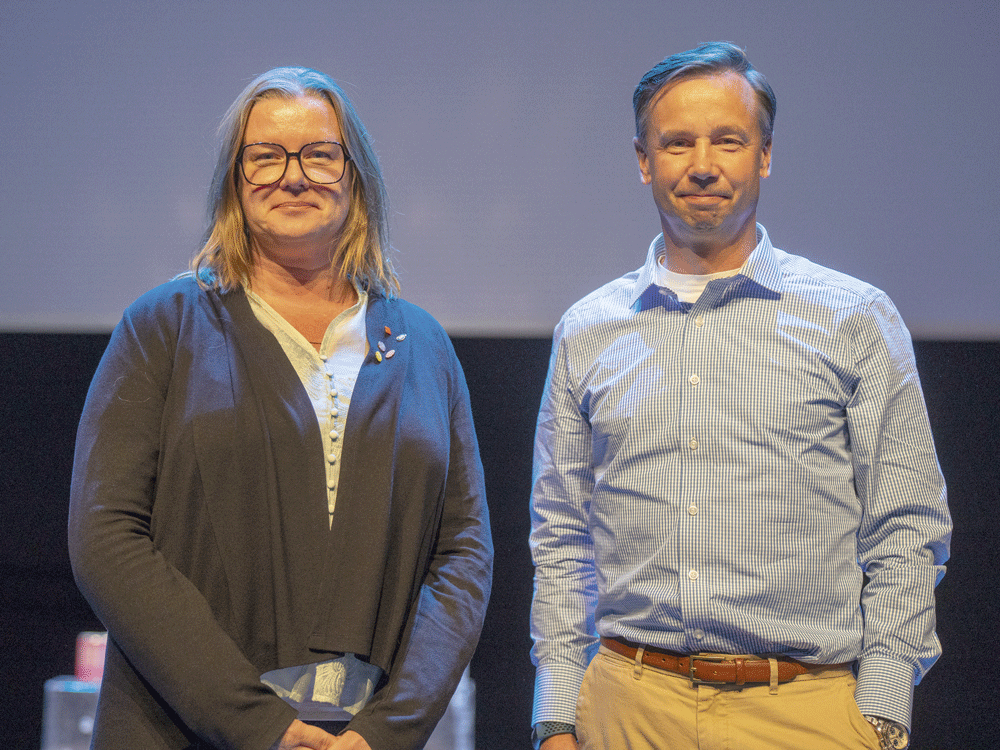
of Idhammar.
“Certification helps break down silos.”
The same applies to external service providers, where shared terminology improves communication and performance.
One challenge remains: quantifying the return on competence investment. While difficult to measure precisely, the impact is widely recognised — improved safety, faster troubleshooting, better preventive maintenance and lower operational risk.
“The effects are clear, even when they are difficult to express in exact numbers,” Ilkko says.
Beyond formal training, certification programmes also create space for knowledge exchange between professionals from different organisations, extending learning beyond the classroom.
About Idhammar
Idhammar is a Swedish based company specialising in maintenance and asset management. The company provides consulting, training and education to help asset intensive orgaizations improve equipment reliability, maintenance performance, operational efficieny and asset mangagement development.
About the Swedish Maintenance Society
The Swedish Maintenance Society (Svenskt Underhåll) is Sweden’s national maintenance society and a member of the European Federation of National Maintenance Societies (EFNMS). It works to promote maintenance as a strategic discipline through professional development, knowledge sharing, networking and competence certification.



Subscribe to the free Maintworld newsletter here!
Latest