
The Spanish Maintenance Association at 50: Raising the Strategic Value of Maintenance
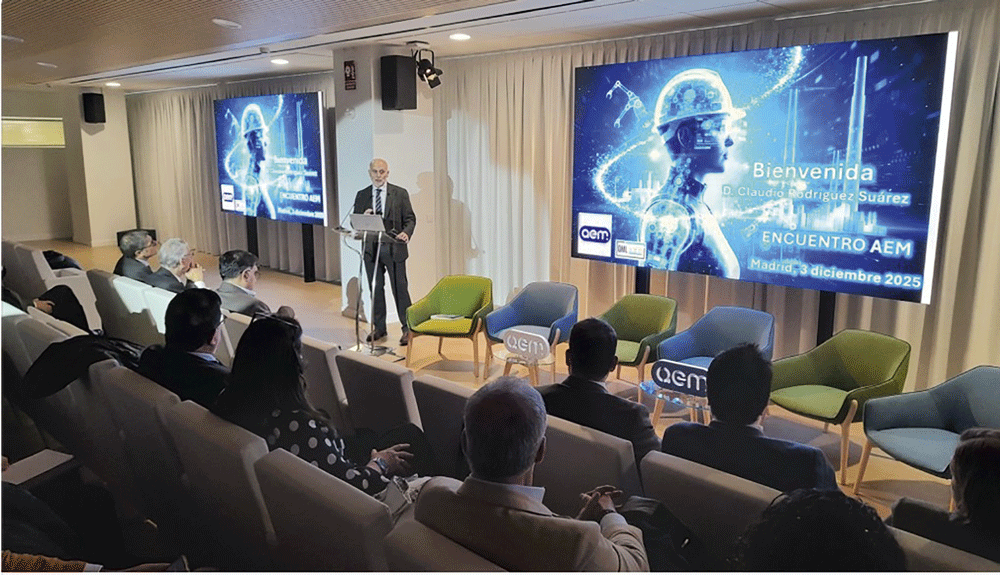
As the Spanish Maintenance Association (Asociación Española de Mantenimiento, AEM) approaches its 50th anniversary next year, its focus is firmly on the future. Rather than looking back, the organisation is using the milestone to strengthen recognition of maintenance as a strategic business function that supports industrial competitiveness, resilience and sustainability.
For AEM President Claudio Pedro Rodríguez Suárez, the upcoming anniversary represents an opportunity to reposition maintenance at the centre of industrial decision-making in Spain.
“Fifty years is an important milestone for us,” he says. “It gives us the opportunity not only to celebrate our history but also to define where maintenance must go in the decades ahead.”

Over nearly five decades, the profession has changed dramatically. Maintenance has evolved from a largely operational function into a strategic discipline shaped by digitalisation, predictive technologies, asset management and sustainability requirements. The challenge now, Rodríguez Suárez argues, is ensuring that executives recognise maintenance not as a cost centre but as a creator of long-term business value. This is becoming increasingly important as the economy undergoes a technological transformation aimed at achieving climate neutrality in the coming decades.
During this transition, companies must manage new types of risk. These include new failure modes arising from the transformation or extended use of existing assets, as well as the introduction of emerging technologies that have lower levels of technical maturity.
One of AEM’s main priorities is promoting wider adoption of asset management principles throughout Spanish industry.
Although international standards such as ISO 55000 have become an important framework for managing industrial assets throughout their lifecycle, certification remains relatively uncommon in
Spain, as in much of Southern Europe. So far, only a handful of Spanish companies have obtained integrated asset management certification.
“In Spain only three companies have this type of internationally recognised certification,” Rodríguez Suárez says. “This shows that we still have a long way to go.”
The issue extends beyond certification itself. It reflects the need for organisations to view maintenance as a strategic management discipline that contributes directly to business continuity, operational performance and long-term competitiveness.
This shift is also being reinforced by public policy. Spain is preparing new industrial legislation, and the European Union has adopted the Critical Entities Resilience (CER) Directive, which places greater emphasis on resilience, business continuity and sustainable industrial operations.
“There is a draft regulation that focuses on business continuity, resilience and many other aspects that are directly linked with modern asset management,” Rodríguez Suárez explains. “This is helping industry understand that maintenance is already part of the solution.”
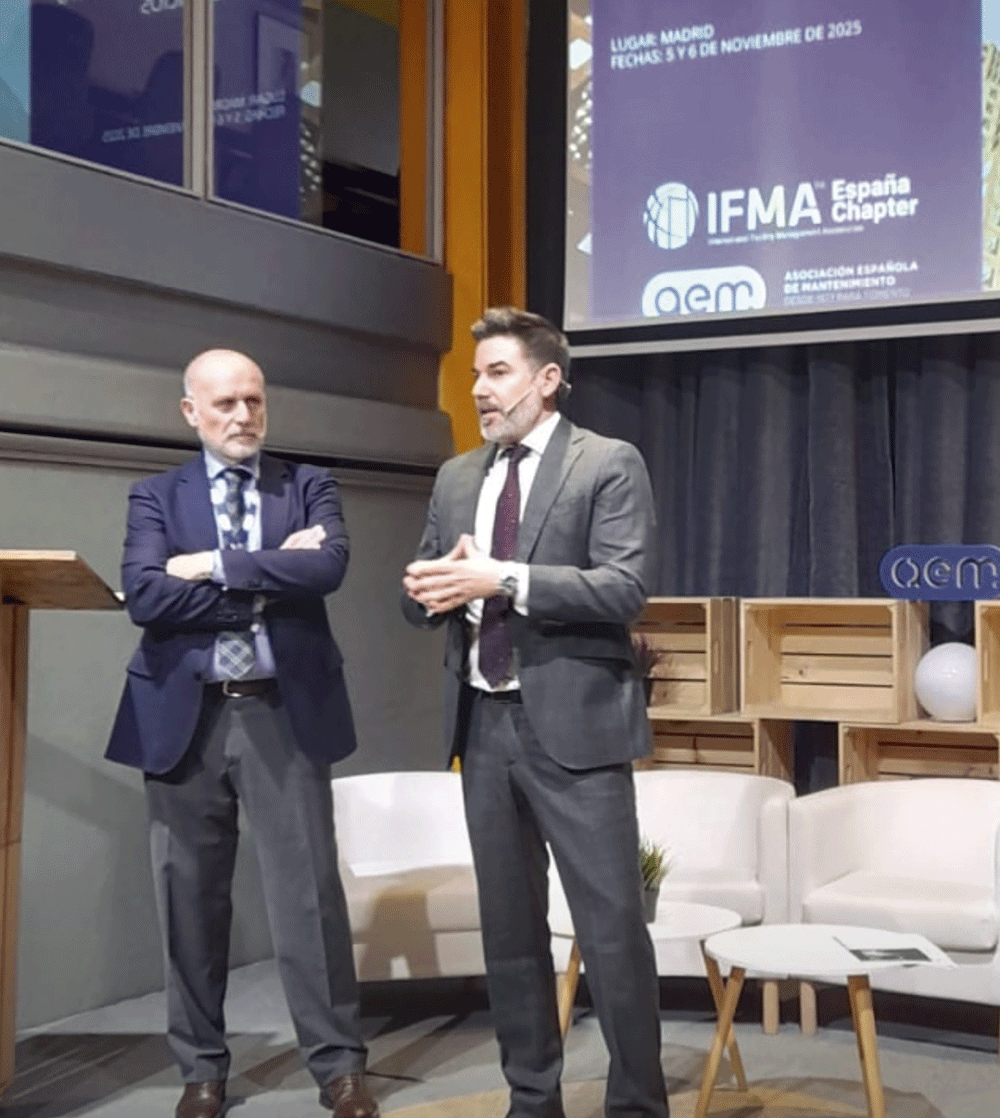
Changing long-established perceptions requires evidence rather than opinion. That is why AEM established the Spanish Maintenance Observatory (Observatorio sobre el Mantenimiento en España), the country’s first national initiative dedicated to measuring maintenance’s economic and operational impact.
Launched last year, the observatory gathers information from leading industrial companies to produce reliable indicators describing the current state of maintenance in Spain. It monitors industry trends, benchmarks performance and provides data that companies, policymakers and researchers can use to support evidence-based decision-making.
“We are interviewing the most relevant companies in Spain,” Rodríguez Suárez says. “We want reliable KPIs that clearly show the influence of maintenance on business continuity, sustainability, safety and the efficient use of resources.”
The observatory also seeks to quantify maintenance’s overall contribution to the national economy. Preliminary findings indicate that maintenance accounts for approximately 8.6% of Spain’s gross domestic product, underlining its importance as one of the country’s largest industrial activities.
“From an economic point of view, we estimate that maintenance is the second-largest industrial economic segment in Spain,” Rodríguez Suárez says. “Maintenance has enormous economic impact, but unfortunately it is still poorly recognised.”
Reliable industry-wide data has long been missing from discussions about maintenance investment. Too often, decisions have been based on operational experience rather than measurable economic evidence. By providing objective benchmarks, the observatory aims to help companies improve performance while giving policymakers a clearer understanding of maintenance’s contribution to industrial productivity.
“Our goal is to demonstrate to both industry and government that maintenance is not simply a cost,” Rodríguez Suárez says. “It has a direct influence on sustainability, safety, resilience and business performance.”
Across Europe, maintenance professionals increasingly argue that maintenance should be viewed as an investment rather than an expense. Better maintenance improves equipment reliability, extends asset life, reduces environmental impact and strengthens operational resilience.
That argument is becoming increasingly relevant as manufacturers navigate digital transformation, decarbonisation, supply-chain uncertainty and growing geopolitical risks. Business continuity has become a board-level priority, making reliable assets more valuable than ever.
“When organisations begin thinking about resilience, maintenance becomes essential,” Rodríguez Suárez says. “Reliable assets are the foundation of reliable businesses.”
Professional certification is another key strategic priority. Working with the European Federation of National Maintenance Societies (EFNMS), AEM is reviewing its certification programmes to strengthen professional standards across the maintenance sector.
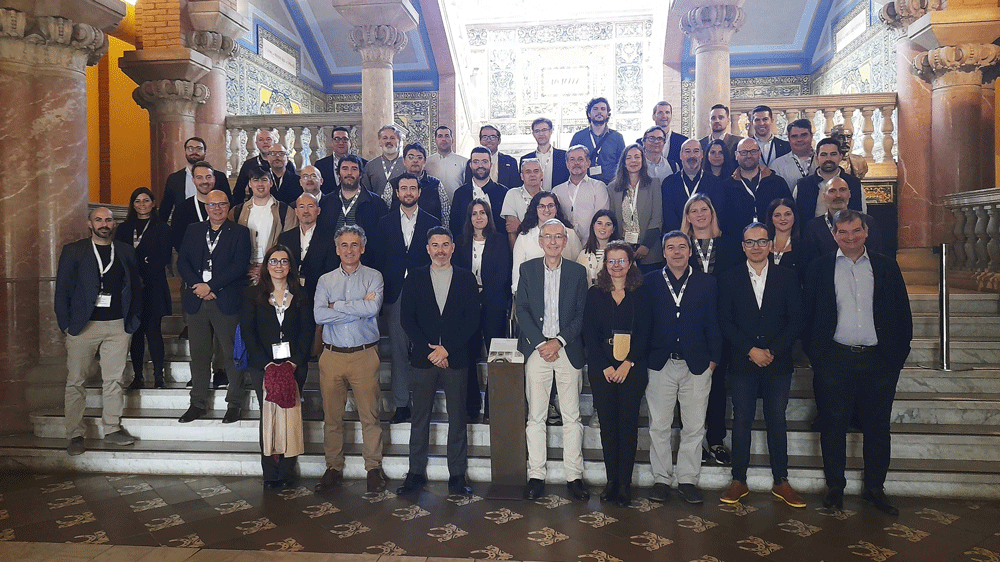
For Rodríguez Suárez, certification is about much more than technical qualifications. Modern maintenance professionals must combine engineering knowledge with analytical skills, asset management expertise and strategic thinking.
“We want companies to recognise the value of certified professionals,” he says. “When major maintenance contracts are awarded, the people responsible should hold recognised qualifications that demonstrate their competence. Only then can maintenance services evolve from being merely preventive or reactive to becoming truly proactive and value-creating.”
The objective is not simply to issue more certificates but to raise professional standards across the sector while giving employers greater confidence that maintenance decisions are based on internationally recognised good practice.
Spain’s industrial landscape is also changing rapidly, creating new opportunities for the association to expand its regional and sectorial presence.
Over the past year, AEM has signed cooperation agreements with several of the country’s leading industrial clusters, including Catalonia, Murcia and Cartagena, and Andalusia. These regions host major chemical, energy and manufacturing industries, while new investments linked to hydrogen production and the energy transition are creating additional opportunities.
“We are working with the main chemical, energy and industrial hubs in Spain,” Rodríguez Suárez says. “The industrial map is changing because of the hydrogen economy and new industries are appearing. We want to be present wherever these developments are taking place.”
In addition, AEM has expanded its activities through a matrix structure of sector-specific and cross-cutting committees. This structure enables the association to respond to emerging industries by establishing new committees, most recently in the food and defence sectors. The defence industry, in particular, is experiencing rapid growth across Europe and offers significant opportunities to transfer digital maintenance solutions and best practices to other industrial sectors.
By strengthening its regional network and sectoral expertise, AEM aims to ensure that maintenance knowledge and capabilities support both established industries and emerging fields.
The association’s ambitions also extend across Europe. Last year AEM submitted, for the first time in its history, a proposal to host an Euromaintenance congress. Hosting Europe’s flagship maintenance congress would showcase Spanish industry while strengthening cooperation between maintenance professionals across the continent.
Rodríguez Suárez seen international collaboration becoming increasingly important as digital technologies, artificial intelligence, predictive maintenance, asset management, sustainability and cognitive maintenance as an clear ambition, continue to reshape industrial operations.
Rodríguez Suárez sees international collaboration as increasingly important as digital technologies, artificial intelligence, predictive maintenance, asset management and sustainability continue to reshape industrial operations.
He believes Europe’s ambition for greater energy, technological and supply chain independence depends on recognising maintainability as a key element throughout the asset lifecycle. Achieving this requires common standards and closer cooperation between industry, technology providers and academia, while ensuring that professionals remain at the centre of this transformation.
“Spain’s ambition to become a leading European renewable energy hub by 2030 will also depend on the evolving role of maintenance,” Rodríguez Suárez notes.
He believes that sharing knowledge across Europe can accelerate innovation, prevent repeated mistakes and demonstrate the strategic value maintenance brings to European goals.
As AEM approaches its golden anniversary, its priorities are firmly focused on the future.
The Spanish Maintenance Observatory is providing the data needed to influence decision-makers. Expanded certification programmes aim to strengthen professional competence. Regional partnerships are connecting the association with Spain’s evolving industrial landscape, while international engagement promises closer European cooperation.
Together, these initiatives pursue a common objective: to position maintenance as a recognised driver of industrial performance and as a transformative, innovative sector capable of attracting the next generation of Talent 5.0 professionals.
“Maintenance influences productivity, sustainability, safety and business continuity. When industry recognises that reality, everybody benefits,” concludes Rodríguez Suárez



Subscribe to the free Maintworld newsletter here!
Latest