
From Apprentice to Global Innovator
How Eduardo García Magraner turned a factory-floor idea into one of Ford’s most celebrated maintenance innovations.
When Eduardo García Magraner started his career at Ford Motor Company 37 years ago, he could hardly have imagined that a maintenance idea developed inside a Spanish factory would one day monitor more than 38,000 parts of equipment around the Valencia plant. Today, as Manufacturing Manager for Assembly and Battery at Ford Valencia and one of the most recognized maintenance innovators in the automotive industry remains convinced that technology alone is never the answer. The real secret, he says, believes in people, persistence, and the courage to turn ideas into reality.
There is a common assumption that successful industrial careers follow a carefully planned route. Eduardo García Magraner’s story suggests otherwise.

His professional journey began not in a management office or university laboratory, but on the factory floor. Fresh from an apprenticeship program, he joined Ford Valencia as a maintenance operator. From there, he progressed through engineering, supervisory and manufacturing leadership roles, eventually becoming Manufacturing Manager responsible for Assembly and Battery operations while also shaping maintenance strategies across multiple production areas. Looking back, García Magraner describes his career as less of a carefully designed roadmap and more of a continuous search for opportunities to learn.
“I never planned every step,” he says. “But maintenance has always been part of my journey.”
That journey has taken him through stamping plants, body shops, production management and global manufacturing initiatives. Along the way, he gained something many industrial leaders struggle to acquire: a deep understanding of operations from every level of the organization. For García Magraner, that experience remains one of his greatest advantages.
“You cannot lead maintenance from an office. You must understand the reality of the shop floor.”
That conviction still guides his daily work. Despite his senior position, he remains committed to spending time where production happens, talking with operators, supporting teams and solving problems directly.
“The most important lesson I have learned is that people are everything,” he says.
It is a simple statement, yet one that repeatedly emerges throughout his career story.
While many maintenance discussions focus on technology, systems and equipment, García Magraner consistently returns to the human dimension. He believes successful organizations are built by motivated teams with diverse skills and perspectives.
Technology matters, data matters, processes matter, but people come first.
His leadership philosophy is straightforward: supporting people, helping them succeed and creating an environment where ideas can emerge.
“When people are motivated, they bring solutions, suggestions and innovation. That is where real improvement comes from.”
That focus on people would later become crucial when García Magraner embarked on a challenge that would define much of his professional legacy.
In 2012, while already working in manufacturing leadership, he began pursuing a PhD in Computer Engineering and Industrial Production. Unlike many academic research projects, however, his objective was never purely academic.
“I wanted to solve a real industrial problem.”
The problem was familiar to every maintenance professional: breakdowns. Machine failures interrupt production, create waste, consume resources and generate costs throughout the organization.
The challenge was how to detect deterioration before failures occurred.
Predictive maintenance was already attracting attention, but many solutions required extensive investments in new sensors and monitoring systems. García Magraner wondered whether the answer might already exist inside the factory.
The result was Miniterms 4.0, an Industrial Internet of Things (IIoT) real-time predictive maintenance support system that would eventually transform maintenance practices across Ford’s manufacturing operations. Its breakthrough was deceptively simple. Rather than installing thousands of new sensors, the system uses data already available from existing programmable logic controllers (PLCs). By analyzing tiny variations in cycle times, sometimes measured in milliseconds, it can identify equipment deterioration before a failure occurs. The concept challenged conventional thinking.
“We realized that the machines were already telling us what was happening,” García Magraner explains. “We simply needed to listen differently.”
What began as a small laboratory project inside the Valencia plant grew steadily through testing, validation and real-world results. The turning point came when the team demonstrated measurable improvements in reliability and technical availability. Success generated credibility, credibility generated support and support enabled expansion. Today the system monitors more than 38,000 assets across Ford manufacturing facilities in Valencia, and work is currently underway on its deployment in operations in North America, Mexico, South Africa and Thailand.
“It started as a dream,” García Magraner says.
A dream that became one of Ford’s most successful predictive maintenance initiatives worldwide.
The achievement earned widespread recognition, including the prestigious Henry Ford Technical Award in 2019, regarded as one of the highest honors within Ford Motor Company. Additional recognitions followed, including the Best Industrial Paper Award at ICINCO 2020, Global Manufacturing Technical Excellence Awards in 2020, the President’s Health & Safety Global Winner
Award in 2022 and the Ángel Herrera Award for Best National Research Team in 2024.
Yet when asked which achievement matters most, García Magraner rarely speaks first about the awards themselves. Instead, he talks about impact as for him, success is not measured by trophies but by creating lasting value.
“When an idea remains in the factory and continues helping people years later, that is something special.”
His philosophy reflects a broader perspective on maintenance itself. During his nearly four decades in the automotive industry, he has witnessed extraordinary technological change. He began his career in a world of relays, cables and basic automation. Then came programmable logic controllers following industrial networks and digital manufacturing. Now comes artificial intelligence.
According to García Magraner, the industry is entering a new industrial revolution driven by data, cloud technologies and AI.
“What is different today is that we can connect everything.”
Modern manufacturing systems generate enormous amounts of information. Machines communicate continuously. Production lines create vast digital footprints. Cloud platforms provide unprecedented processing capabilities. For maintenance organizations, this creates opportunities that were unimaginable only a decade ago. Ford is already exploring AI-driven applications designed to prioritize maintenance activities and improve decision-making. One project compares machine health monitoring to a medical examination. Just as a doctor evaluates a patient and identifies areas requiring attention, AI systems can analyze operational data and identify the equipment most at risk. For maintenance teams responsible for thousands of machines, such prioritization is invaluable.
“You cannot focus on everything,” García Magraner explains. “You need to know where your resources will create the greatest value.”
Despite the excitement surrounding artificial intelligence, he rejects the notion that AI will replace maintenance professionals. Instead, he sees transformation rather than replacement.
“AI will change professions, not eliminate them.”
Future maintenance technicians may increasingly rely on intelligent systems for diagnostics, planning and decision support. AI may suggest likely causes of failures, identify corrective actions and optimize scheduling. But someone will still need to repair the equipment. Mechanical expertise, electrical skills and practical experience will remain essential.
“AI can tell you what to do but it cannot replace the person who does it in maintenance.”
That practical mindset also shapes García Magraner’s views on maintenance performance. For years, maintenance was often viewed as a necessary cost. Today, he argues, it has become a strategic function directly linked to business success. The difference is measurement.
“Without data, we only have opinions.”
World-class maintenance organizations understand their performance through measurable indicators. García Magraner points to technical availability as the most important overall metric. The objective is simple: maximize the percentage of required production achieved without losses caused by breakdowns. In elite operations, technical availability exceeds 98%.
Predictive maintenance plays a crucial role in reaching those levels because it enables planned intervention before failures disrupt production.
“When you predict a failure, you can prepare the spare parts, prepare the tools and prepare the people,” he explains.
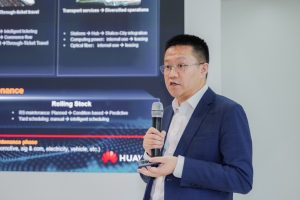
The alternative is familiar to every maintenance manager: emergency repairs, frantic troubleshooting and costly downtime. This philosophy formed the basis of García Magraner’s keynote presentation at EuroMaintenance 2026 in Luleå Sweden.
His presentation, “The practical transition from predictive maintenance pilots to sustained impact in real plant operations — connecting technology, organizational alignment and measurable performance improvement”, addresses a challenge facing many organizations. While predictive maintenance pilots often generate promising results, scaling them into sustainable operational practices is far more difficult. According to García Magraner, many organizations become trapped in endless pilot programs without achieving plant-wide transformation. The reason is not technology. The real barriers are organizational commitment, trust and the ability to demonstrate measurable business value.
“You need results that people can believe in.”
For him, the future belongs to organizations capable of combining technology, leadership and operational discipline. Technology alone cannot deliver transformation, neither can data, nor artificial intelligence. Only when all three work together with people and processes can predictive maintenance achieve its full potential.
As maintenance professionals prepare for the next generation of industrial operations, García Magraner offers a simple piece of advice: measure everything, remain curious and never stop learning.
It is advice he continues to follow himself. Alongside his industrial responsibilities, he remains active in research, has co-supervised multiple doctoral candidates and continues publishing technical papers and sharing knowledge internationally.
For all his enthusiasm for technology and innovation, García Magraner’s life outside the factory reveals a different side of his personality. Together with his wife, he enjoys dancing salsa, an activity that provides a welcome contrast to the highly structured world of manufacturing. When he is not dancing, he can often be found on the road. A dedicated Harley-Davidson rider, García Magraner regularly joins fellow enthusiasts for motorcycle trips across the Spanish countryside. He is also an enthusiastic cook, another hobby that reflects his belief in creativity, discipline and continuous learning. Whether in the kitchen, on a motorcycle or on a factory floor, he approaches challenges with the same curiosity and energy that have defined his professional career.
Recently, he added another accomplishment to an already remarkable career: authoring his first book “El DO del Guerrero Industrial”, combining lessons from Lean Manufacturing, the history of the Samurai and nearly four decades of factory experience. The combination may seem unusual, yet perhaps it perfectly reflects the person behind the achievements. A manufacturing leader who values discipline and continuous improvement, a researcher focused on practical results, a maintenance professional who believes technology must serve people. And someone who, nearly forty years after starting as an apprentice, remains as enthusiastic about learning as ever. That motivation has already carried him a long way. And judging by his energy, curiosity and passion for maintenance, his journey is far from over.
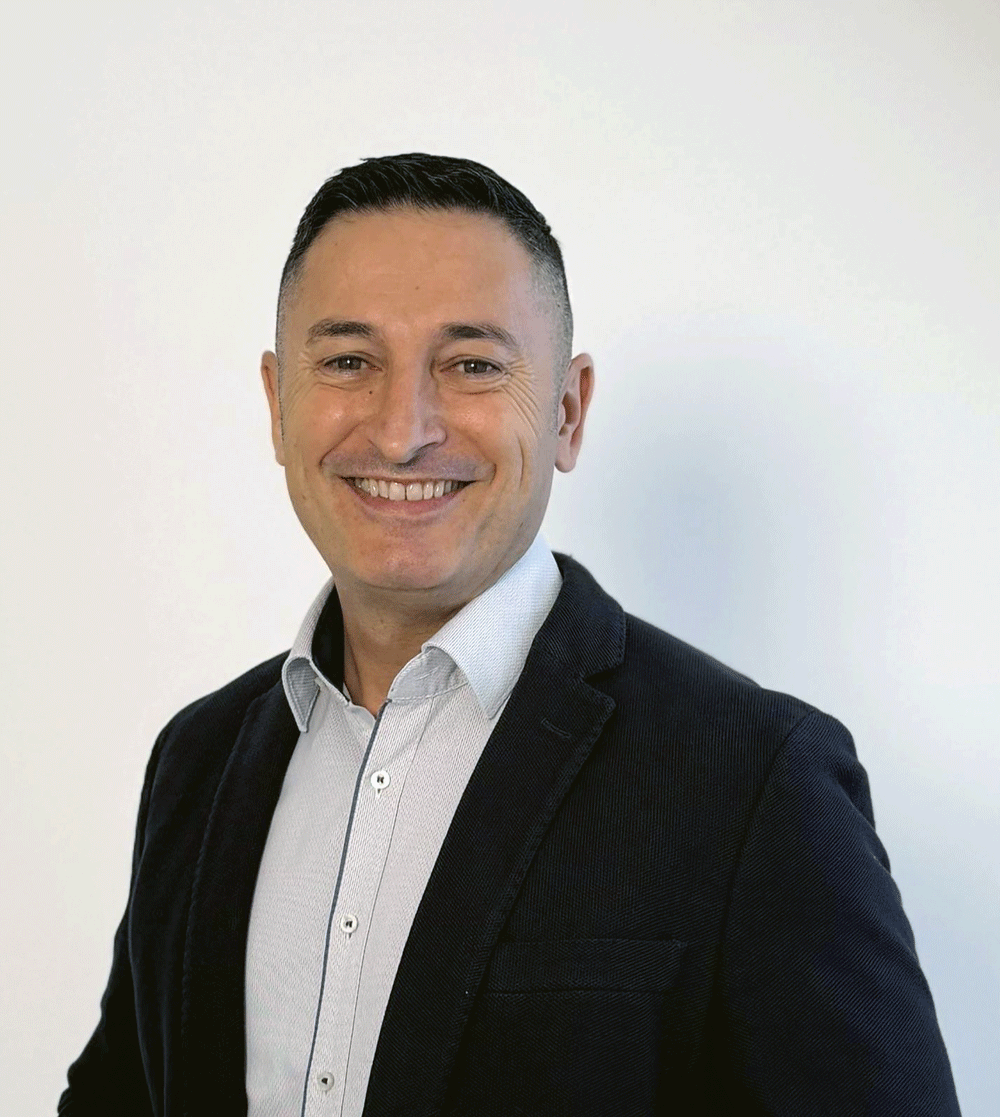
Eduardo García Magraner
Position: Manufacturing Manager, Assembly and Battery Manufacturing, Ford Motor Company, Valencia, Spain
Education: PhD in Computer Engineering and Industrial Production
Experience: 37 years with Ford Motor Company
Known for: Development of the Miniterms 4.0 real-time predictive maintenance support system
Awards include:
• Henry Ford Technical Award (2019)
• Best Industrial Paper Award (ICINCO 2020)
• Global Manufacturing Technical Excellence Awards (2020)
• President’s Health & Safety Global Winner Award (2022) and (2026)
• Ángel Herrera Award – Best National Research Team (2024)
Research activity: 47 publications and technical documents; co-supervisor of industrial doctoral research
Text: Mia Heiskanen Photos: Eduardo García Magraner archive



Subscribe to the free Maintworld newsletter here!
Latest