
No Shortcuts to Reliability
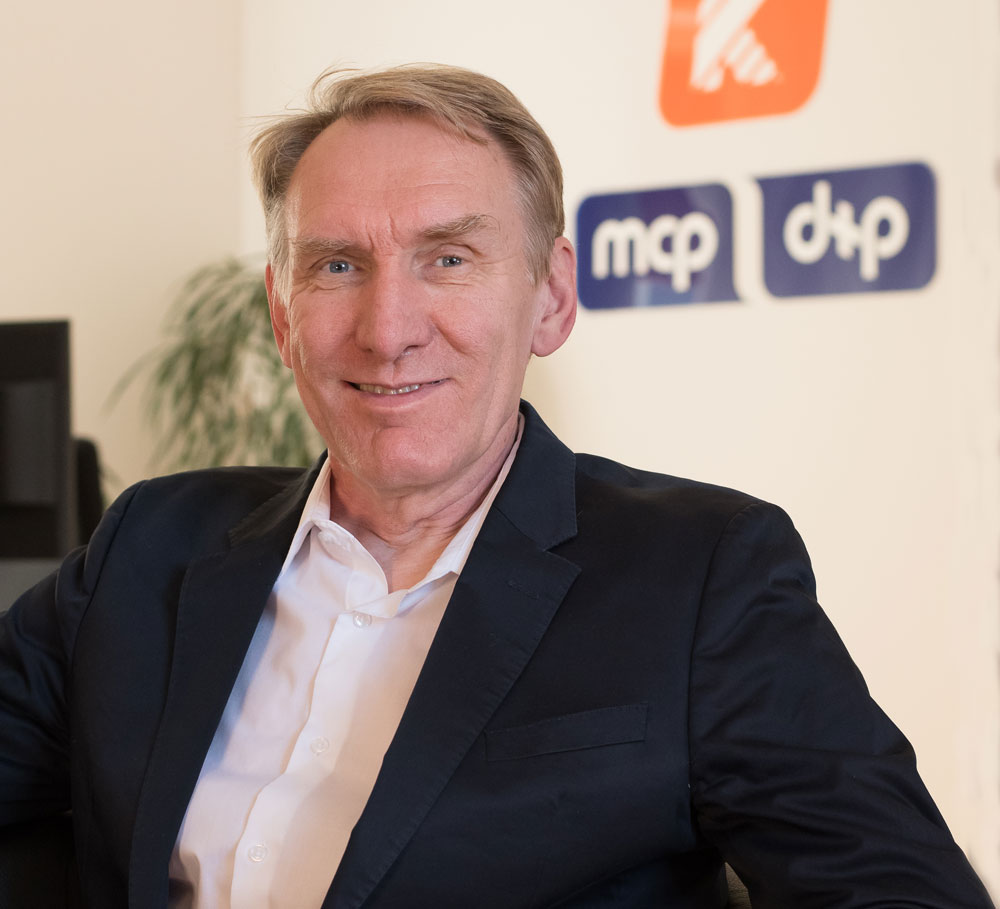
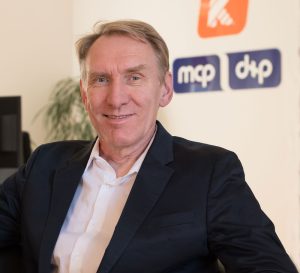
Artificial intelligence can help maintenance teams find information, analyse histories and plan work faster. But Reinhard Korb argues that technology cannot replace technical judgement, disciplined leadership or the difficult work of building a sound maintenance foundation.
Reinhard Korb entered maintenance almost by accident. He studied mechanical engineering at TU Wien, focusing on automation, control systems and the modelling of physical processes. He completed his doctorate in 1997, yet one subject had been conspicuously absent from his education.
“I had not heard the word maintenance once during my entire studies,” he says.
Maintenance appeared later, when Korb joined a pharmaceutical company in 1999 and was asked to bring a team responsible for production equipment to a more professional level. In a tightly regulated industry, the work had to become formal, transparent and consistent enough to stand up to inspections by health authorities.
The team developed detailed preventive maintenance instructions. Clearer instructions reduced variation in the way tasks were performed. The results became more predictable, equipment reliability improved and daily work contained fewer unwelcome surprises.
“There was less stress for the people and fewer surprises in daily operation,” Korb says.
Within about a year and a half, the approach had expanded from cleaning equipment across the production area. Better reliability released time for employees to deepen their understanding of the assets and bring more work in-house. The cost of external maintenance services fell by 30 to 40 per cent within a year, while the company retained its own people.
The experience shaped Korb’s career. Maintenance improves when knowledge is translated into repeatable practices, failures are studied rather than merely repaired, and people have time to learn.
Korb later assumed responsibility for utilities at several pharmaceutical sites in Vienna and moved into an engineering director role covering Central European sites, including a project management office overseeing around 200 projects.
He founded Korb Consulting KG in 2009 to apply what he had learned across industries. He became a shareholder of MCP Deutschland GmbH in 2014 and has served as Head of International
Consultancy for MCP Consulting Group since 2024. He is also a member of the advisory board of IBE AG. His assignments have taken him to more than 20 countries and many industries. He also represents the Maintenance and Facility Management Society of Austria, or MFA, in the General Assembly of the European Federation of National Maintenance Societies, or EFNMS.
Asked what still fascinates him about maintenance, Korb gives a deceptively simple answer: doing it right. Strategy matters, but he is particularly drawn to reliability engineering because it connects analysis with action.
There is also a wider reason why the field continues to motivate him. For Korb, one of the greatest rewards of maintenance is its contribution to sustainability. Proper maintenance allows existing equipment to operate longer and saves resources in terms of both energy and raw materials. In a circular economy, he argues, the aim should be to keep the circle as small as possible. Repairing rather than replacing is one obvious example.
Asset management fascinates him for a related reason: it forces organisations to consider the full picture. Instead of allowing individual functions to optimise their own performance, sometimes in contradictory ways, asset management seeks the solution that creates the greatest overall value for the organisation. Breaking down silos and changing established mindsets can be exhausting,
Korb acknowledges, but that difficulty is also part of the appeal.
Reliability engineering has a reactive and a proactive side. Reactive work begins after something has failed. Its purpose is not only to restore production but to determine what caused the event.
Proactive work looks ahead through criticality analysis and methods such as failure mode, effects and criticality analysis, or FMECA. It asks what could fail, what the consequences would be, and which maintenance, training or spare parts measures would reduce the risk.
The two sides depend on each other. An organisation cannot anticipate failures intelligently if it never learns from those it has experienced.
“If you do not learn from your failures, you do not build the knowledge needed to discuss potential failures,” Korb says.
This is why he regards analytical thinking as essential in maintenance leadership. Maintenance organisations are rich in practical skills and immediate problem-solving ability. Those qualities are indispensable, but they can also sustain a culture in which the most visible heroes are the people who repeatedly rescue production. Recognition goes to the fire brigade, while prevention remains invisible.
“Today we may have to fight the fires. But if we reserve some of our time for fire prevention, perhaps one day we will have fewer fires,” he says.
The natural response to a breakdown is to fix it, restart the equipment and turn to the next urgent problem. That restores function but does not necessarily remove the reason the failure occurred.
Escaping this reactive state requires direction, protected resources and leaders who ask a second question after production resumes: what must change so that this does not happen again?
For this reason, Korb favours reliability engineers who are fully dedicated to reliability work. Attempts to allocate 20 or 30 per cent of their time to daily operational support tends to fail. Daily issues expand until they consume all available time.
Recognition reinforces the problem. Solving an immediate breakdown produces visible success. Preventing a recurrence may produce no result that others can see for months. If leaders reward only rapid rescue, reliability engineers will return to operational work.
“A failure may have been removed, but the cause is still there,” Korb says. “The reliability engineer’s job begins after the equipment is running again. The real cause may be technical, organisational or both.”
Much of Korb’s consultancy work therefore concerns culture as much as machinery. He still returns to operational assignments to test his thinking against industrial reality. The first requirement for recovery is simple: problems must be solved faster than new ones. The longer task is to change the conditions that keep creating them.
Technical expertise opened the door to this work, but success depends on the human side of change. A leader must engage people and divide a large transformation into manageable steps.
“Technical knowledge is still the door opener,” he says. “But in the end, you have to reach the people.”
The challenge is clear when an excellent technician is promoted into a supervisory role. The organisation selects its best mechanic or electrician, then expects that person to stop being the leading technical expert and start developing other people. When discomfort grows, new supervisors often return to work in which they already feel competent.
This is one reason Korb is sceptical of purely vertical careers. A sideways move can force a leader to rely on the expertise of the new team instead of competing with it. He recalls the example of a male handball coach of a female team who described the boundary clearly. The coach could train the players, but he could never run onto the court and play the match for them.
“That is exactly how leadership should be understood,” Korb says. “Even if you are capable of doing the task yourself, it is usually not a good idea. Your responsibility is to make the team capable.”
This lesson is increasingly relevant as artificial intelligence enters maintenance. Korb’s perspective extends further than the rise of large language models. His doctoral research used neural networks to model physical systems, including large combustion engines used for heat and power production. By today’s definition, this was already AI.
What has changed is the accessibility of the technology and the range of information it can process. Korb sees practical applications throughout maintenance. AI can extract requirements from original equipment manufacturer manuals and accelerate the creation of maintenance plans. It can translate technical documents, turn a technician’s spoken report into a structured work history in a computerised maintenance management system, or CMMS, and summarise lengthy notes.
It can search for previous work orders for patterns that human memory may miss. A similar fault might have occurred on another line several years earlier. AI can locate the connection within seconds, provided that the organisation has captured a usable history. It can also make vast electronic archives easier to navigate.
These applications may sound modest beside visions of autonomous factories, but they solve recognisable problems and can be introduced step by step. More demanding analysis still requires specialists and a reliable database. Korb nevertheless attaches a firm condition to every use case.
“AI must be seen as a companion, not a replacement,” he says. “As with every companion, trust has to be built through repeated positive experience.”
A useful companion can make work faster, but it cannot relieve the user of judgement. Korb compares the situation to a calculator. If a calculator claims that two plus three equals seven, a person recognises the error only because the person already knows the answer. The same applies to an AI generated maintenance plan or recommendation. Without sufficient subject knowledge, the user may accept a fluent but flawed output.
That risk makes human competence more important, not less. Maintenance knowledge is often distributed across a team. One person understands the mechanical behaviour of an asset, another is its electrical systems, another its operating history. The organisation needs someone capable of assembling those fragments into a coherent analysis.
“If you do not have the detailed knowledge to challenge the result, using AI is very risky,” Korb says.
His assessment of the AI discussion is deliberately mixed. Industry is simultaneously underestimating what is already possible and overestimating products that promise more than they deliver.
Condition monitoring is a good example. Solutions are often sold under the label of predictive maintenance even when they merely report the present condition of an asset.
True prediction requires the current condition, its history and a model of how that condition is likely to develop. The model must also account for factors such as production volume, equipment usage and operating practices. Only then can it estimate remaining useful life. Even then, a prediction several years into the future will contain considerable uncertainty and become more reliable only as the asset approaches the relevant point of failure.
“Condition monitoring tells you where the asset is now,” Korb says. “Predictive maintenance needs a model that can describe where it is going.”
The model must be specific enough to the equipment to be useful. General conclusions may create attractive dashboards without supporting sound decisions. Digital twins can strengthen prediction only when they reflect the actual asset and its operating context.
The quality and scale of data remain constraints. Korb sees a missed opportunity in the limited exchange of information between equipment manufacturers and industrial users. A factory may operate thousands of different machines and learn a great deal about each one, yet it cannot automatically transfer that knowledge to unrelated equipment. A manufacturer may have hundreds or thousands of similar units operating across customer sites. Combining lessons from those units could produce much stronger models of failure behaviour and remaining useful life.
Commercial interests and questions of ownership stand in the way. Data has value, so each party wants to control it. Large technology companies may offer platforms for exchange, but these can create new dependencies. Korb would prefer arrangements in which manufacturers and maintenance organisations both benefit from shared knowledge.
Despite the scale of technological change, Korb says almost nothing about the future of maintenance itself worries him. On the contrary, he expects maintenance to become even more important in an environment where reinvestments are delayed, and existing assets have to remain productive for longer. What concerns him is the possibility that organisations will fail to seize that opportunity because maintenance remains trapped in reactive mode. Excellent asset management requires long term thinking, while many management and incentive systems still reward short term results.
For Korb, that mismatch is a weakness in the way organisations are managed.
The future skills challenge is equally complex. As automation and AI spread, maintenance will need more people who understand automation. Reliability engineers may feel most comfortable with mechanical failures, while electrical systems receive less attention and software remains a black box. Yet a growing share of the functionality of modern industrial equipment is based on software, much of it proprietary.
“To understand a modern machine, you increasingly have to understand its software,” he says.
This does not make traditional competence obsolete. Mechanical knowledge, material awareness and practical experience remain essential. Electrical and automation knowledge must be added to them, not substituted for them. Organisations may also need to reconsider structures that separate automation from maintenance so completely that reliability teams cannot troubleshoot the full system.
The same logic applies to management. New software, mobile devices and AI tools do not remove the need for a maintenance strategy, clear organisation, effective work orders, planning and scheduling. In many companies, these fundamentals are still incomplete. Adding an advanced tool to a weak process may digitise confusion rather than eliminate it.
Korb often sees managers searching for what he calls a wormhole, a shortcut through time and space that would allow the organisation to leap directly from firefighting to predictive maintenance.
The image is humorous, but the warning is serious. There is no technology that allows a company to skip reliable data, disciplined processes, competent people and sustained leadership.
For Korb, the response is neither resistance nor uncritical enthusiasm. Maintenance professionals should use the new tools, build trust through evidence and remain capable of challenging the answers they receive. Leaders should protect the time required for reliability work and reward prevention as seriously as rapid recovery. Above all, organisations should resist the temptation to confuse a new tool with a mature maintenance system.
“We still need the foundation,” Korb says. “There is no wormhole that can take us directly from firefighting to predictive maintenance.”
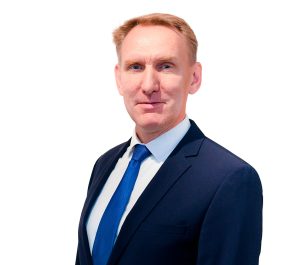
REINHARD KORB
Reinhard Korb is an Austrian mechanical engineer and maintenance and asset management specialist. He holds a doctorate from TU Wien and founded Korb Consulting KG in 2009. He has been a shareholder of MCP Deutschland GmbH since 2014 and Head of International Consultancy for MCP Consulting Group since 2024. Korb is also a member of the advisory board of IBE AG and represents the Maintenance and Facility Management Society of Austria in the EFNMS General Assembly. His international consultancy experience covers more than 20 countries and industries including pharmaceuticals, chemicals, paper, food production and medical devices.
Text: Mia Heiskanen Photos: Reinhard Korb



Subscribe to the free Maintworld newsletter here!

Engineering Reliability Under Pressure: Building a Reliability-Driven Maintenance Culture
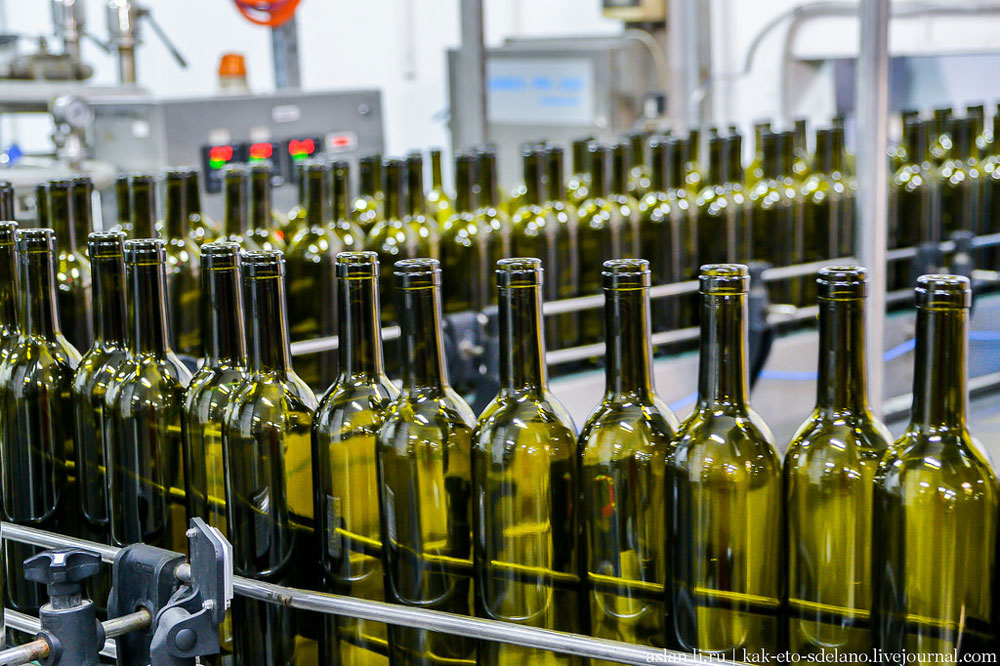
Every maintenance professional knows that equipment reliability is truly tested during periods of maximum production. When every minute of downtime affects productivity, product quality, and operating costs, maintenance becomes far more than equipment repair—it becomes a critical part of the production process.
For wineries, this challenge arrives with the annual grape harvest.
Unlike many manufacturing facilities that operate under relatively stable production conditions, wineries experience an intense seasonal period during which grape reception and primary processing equipment must operate almost continuously for several weeks. Once harvesting begins, unexpected equipment failures can quickly disrupt production and place significant pressure on both maintenance and operations.
When I joined Armenia Wine, one of the largest wineries in the South Caucasus, I realized that preparing the facility for harvest required more than routine preventive maintenance. The winery operated more than sixty major production assets—including grape reception equipment, crushers, destemmers, presses, pumps, filtration systems, steam generation equipment, bottling lines, labeling systems, packaging machinery, and utilities—supported by a maintenance team of ten professionals.
Historically, the harvest season was also the period when emergency repairs and unexpected equipment failures occurred most frequently. The objective was clear: maintenance had to move beyond reacting to failures and begin preventing them.
The first step was changing how maintenance priorities were established.
Rather than treating every machine equally, equipment was evaluated according to its operational criticality. Assets capable of interrupting grape reception and primary processing received the highest maintenance priority before the harvest season.
Manufacturer recommendations remained an essential technical reference, but they became the starting point rather than the final maintenance strategy. Inspection intervals, lubrication schedules, and component replacement timing were continuously refined using equipment history, seasonal operating conditions, recurring failure analysis, and practical engineering experience.
Communication between production personnel and the maintenance department also became an important part of the reliability strategy. Operators often noticed subtle changes in equipment performance long before failures became visible during scheduled inspections. Small increases in vibration, unusual noises, hydraulic leaks, or abnormal operating behavior frequently provided the earliest warning signs of developing problems.
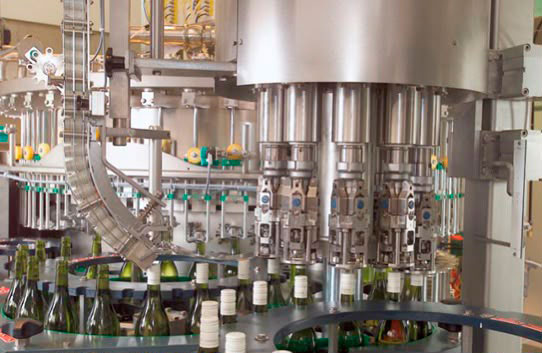
Maintenance records gradually evolved from simple repair documentation into a valuable engineering resource. Historical failures, inspection findings, spare parts consumption, and production feedback allowed maintenance planning to become increasingly data-driven rather than relying solely on fixed preventive maintenance schedules.
One principle became central to the entire strategy: Every repeated failure has a root cause. Replacing the same bearing, seal, chain, coupling, pump component, or pneumatic cylinder without understanding why it failed simply delayed the next breakdown. Whenever repetitive failures occurred, the priority shifted from restoring production as quickly as possible to identifying and eliminating the underlying engineering cause.
Equipment alignment, lubrication practices, installation quality, vibration, operating conditions, and interactions between connected mechanical systems were systematically evaluated before replacement became the final solution. In many cases, relatively small engineering improvements significantly increased component life while reducing future maintenance requirements.
As operational knowledge accumulated, maintenance gradually evolved from a scheduled activity into a continuous reliability improvement process built on observation, engineering analysis, and disciplined execution.
As the maintenance strategy matured, it became clear that improving reliability required more than better preventive maintenance. Long-term success depended on understanding equipment behaviour and using that knowledge to make better engineering decisions.
One area that demonstrated this particularly well was spare parts management.
Instead of treating spare parts simply as inventory, we began viewing their consumption as an indicator of equipment health. Every repeatedly replaced bearing, seal, chain, gearbox component, pump element, pneumatic cylinder, or sensor raised the same engineering question: Why did this component fail? Maintenance history, inspection findings, and production feedback were analyzed together to identify recurring failure patterns. In many cases, the failed component was not the root cause. Premature wear resulted from improper alignment, inadequate lubrication, excessive vibration, installation inaccuracies, or operating conditions that accelerated deterioration.
Correcting these underlying conditions often produced greater improvements than repeatedly replacing the affected components.
Procurement strategy also changed. Instead of following historical purchasing practices, spare parts were selected according to technical suitability, supplier reliability, delivery time, and total life-cycle cost. Whenever appropriate, standard components were sourced locally, while critical proprietary parts continued to be purchased directly from original equipment manufacturers.
The greatest validation of the maintenance strategy came during the annual grape harvest. For approximately two months, grape reception and primary processing equipment operated under continuous maximum production. Before harvest began, critical equipment received additional inspections, wear components were replaced proactively, lubrication systems were verified, alignment was rechecked, and critical spare parts were positioned in advance.
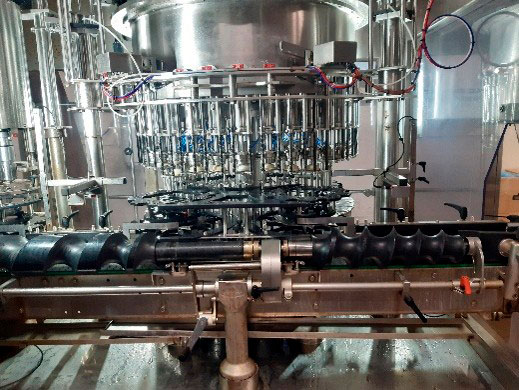
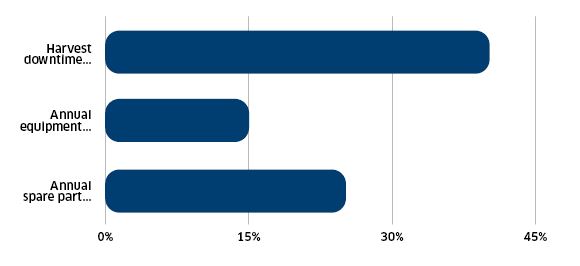
The objective was simple: Enter the harvest season with as few unknowns as possible. The results exceeded expectations. Equipment-related downtime during grape reception and primary processing was reduced by more than 40% compared with previous seasons. Across the remainder of the year, equipment failures decreased by approximately 10–15%, while annual spare parts expenditures were reduced by nearly 25%.
More importantly, maintenance became predictable. Instead of responding to constant emergency repairs, the maintenance team focused on preventive inspections, engineering improvements, and long-term reliability planning. Perhaps the greatest achievement was cultural rather than technical. Operators became active participants in equipment reliability, maintenance decisions became increasingly proactive, and reliability evolved into a shared operational responsibility rather than solely a maintenance function.
Looking back on this experience, I believe the greatest achievement was not simply reducing downtime or maintenance costs. Those were measurable results, but they reflected a much more important change—the transformation of maintenance from a reactive support function into a reliability-focused engineering discipline.
Modern manufacturing demands more than rapid repairs. Increasing automation, tighter production schedules, and higher quality expectations require maintenance organizations to anticipate failures rather than simply respond to them.
I believe the future of industrial maintenance will combine engineering expertise with digital technologies such as condition monitoring, CMMS, predictive analytics, and artificial intelligence. These tools will improve decision-making, but they cannot replace engineering judgement. Sensors can detect abnormal conditions. Software can analyze trends. Artificial intelligence can identify patterns.
However, understanding why failures occur and selecting the most appropriate engineering solution will continue to depend on experienced maintenance professionals.
Another major challenge for industry is preserving practical knowledge. Many experienced maintenance specialists are approaching retirement, while younger engineers often begin their careers with strong theoretical backgrounds but limited exposure to real production environments. Organizations that successfully transfer practical experience to the next generation will gain an important competitive advantage. My experience reinforced one simple conclusion: Reliable production begins with reliable maintenance, and reliable maintenance begins with sound engineering decisions.
Whether the facility produces wine, food, pharmaceuticals, or industrial products, the same principle applies. Reliability is not created by a single innovation. It is built through hundreds of consistent engineering decisions—careful inspections, effective planning, root cause analysis, and continuous improvement.
Ultimately, maintenance is not about repairing equipment. It is about creating the conditions in which equipment performs safely, predictably, and reliably throughout its operating life.
Preparing for Harvest: Reliability Starts Months Before Production
One of the most important lessons learned at Armenia Wine was that equipment reliability during harvest is determined long before the first grapes arrive at the winery.
Peak production is not the time to discover worn bearings, leaking hydraulic systems, damaged pumps, misaligned drives, or unreliable pneumatic components. During harvest, maintenance personnel should be supporting production—not performing emergency repairs.
Preparation therefore began several months before the harvest season. Critical equipment was identified, inspection frequencies were increased, lubrication systems were verified, alignment checks were completed, wear components approaching the end of their expected service life were proactively replaced, and spare parts inventories were carefully reviewed to ensure immediate availability of critical items.
Equally important was communication between production operators and the maintenance department. Operators often detected subtle changes in equipment performance before scheduled inspections identified measurable problems. Integrating these observations into maintenance planning significantly improved decision-making and reduced the likelihood of unexpected failures during peak production.
The experience demonstrated that successful harvest preparation depends not on performing more maintenance, but on performing the right maintenance at the right time.
When the Harvest Began
The true measure of any maintenance strategy is not how well it performs during normal production, but how it performs when the entire facility operates under maximum pressure. At Armenia
Wine, that moment arrived every autumn with the grape harvest. For approximately two months, grape reception, crushing, destemming, pumping, pressing, and primary processing equipment operated almost continuously. Trucks carrying freshly harvested grapes arrived throughout the day, leaving very little opportunity for unexpected repairs. Every hour of downtime risked disrupting production schedules and increasing operational pressure across the facility.
Previous harvest seasons had often required maintenance personnel to respond to emergency failures while production waited for equipment to return to service.
Following implementation of the reliability-focused maintenance strategy, the situation changed dramatically.
The harvest season was completed with remarkably few unplanned equipment interruptions. Downtime during grape reception and primary processing was reduced by more than 40 percent, allowing production to continue with a level of stability that exceeded management’s expectations.
For the maintenance team, the greatest success was not simply that fewer failures occurred. It was that maintenance had become predictable.
Instead of constantly reacting to emergencies, engineers and technicians were able to monitor equipment condition, support production proactively, and focus on preventing problems before they affected operations. That experience reinforced one important principle: The best maintenance intervention is the one that production never notices because the failure never occurs.
Tigran Hovhannisyan
Tigran Hovhannisyan is an industrial maintenance and reliability professional with over 15 years of international experience across Canada, Armenia, Ukraine, and India. Throughout his career, he has successfully developed and implemented practical, reliability-focused maintenance strategies in complex sectors, including food and beverage manufacturing, commercial printing, large-scale amusement operations, and industrial wineries. His engineering leadership has consistently delivered measurable improvements in equipment asset availability, operational efficiency, and maintenance cost optimization. He holds a Master’s degree in Mechanical Engineering and is currently based in Ontario, Canada, where he continues his work in advanced industrial maintenance and asset management.
Text and photos: Tigran Hovhannisyan
Subscribe to the free Maintworld newsletter here!
Maintenance Is Inspiring and Progress Requires It
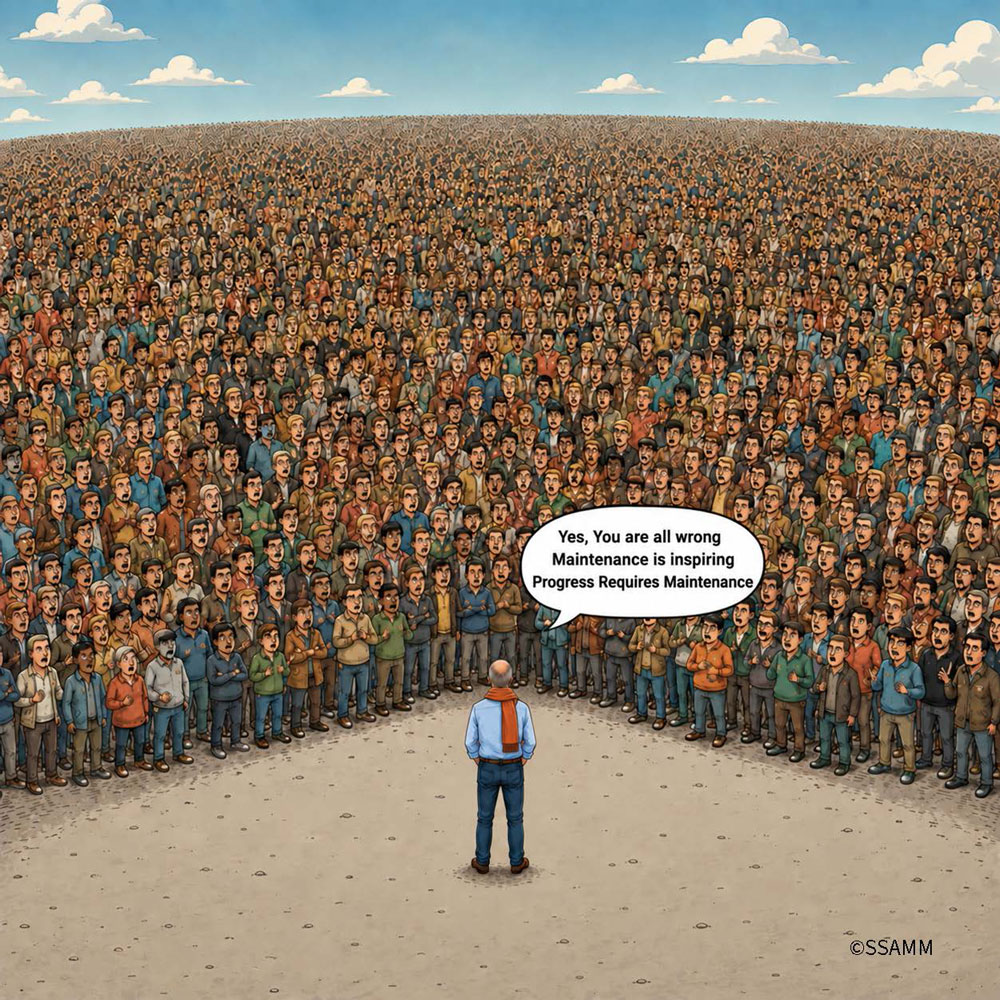
A single image started a much larger conversation. In it, one person stands before an overwhelming crowd and says: “Yes, you are all wrong. Maintenance is inspiring.” The visual was deliberately provocative, but it was never directed against individuals. It challenged a stubborn narrative: “Maintenance is not sexy.”
I have heard that phrase from managers, directors, public leaders and even maintenance professionals. It is usually meant positively: maintenance may not be attractive, but it is essential. Yet language shapes status. Every repetition first places our profession in a lower category — unattractive, secondary and costly — and only then tries to defend it. The expression is also dated and needlessly gendered.
The response surprised me. The solitary figure did not remain alone. Professionals in several countries added their own voices. Some stressed systems thinking and the connection between strategy, people, risk, equipment and outcomes. Others spoke about collaboration between maintenance, operations, engineering and management. They described maintenance as precise, challenging, innovative, value-creating and, yes, enjoyable. Their shared point was clear: design intentions are tested only when assets meet the physical world.
That is also why maintenance cannot be reduced to repairing what has failed. It influences maintainability in design, investment decisions, reliability, risk acceptance, resources, renewal and disposal. For an asset-intensive organisation, Asset Management cannot succeed when maintenance is treated as an operational afterthought.
The standard architecture reinforces this position. The ISO 55000 series provides the overarching Asset Management System framework. The CEN/TC 319 standards provide the maintenance-specific language, processes, management, engineering, performance indicators and competences. Standardising the overarching system while leaving one of its most decisive life-cycle functions to local interpretation is inconsistent.
My deepest concern, however, is the next generation. We need technicians, engineers, reliability professionals and managers who are curious, digitally capable and willing to accept responsibility for complex systems. We will not attract them by apologising for our own profession. Modern maintenance combines practical mastery with data, condition monitoring, artificial intelligence, systems thinking and human judgement.
My generation should therefore stop repeating a frame that diminishes the people, education and knowledge on which our future depends. Maintenance is not what remains after the important decisions have been made. It belongs at the table where those decisions are made and where strategy is translated into safe, reliable and lasting performance.
About the author
Jan Stoker is a senior lecturer, researcher and strategic advisor in Asset & Maintenance Management. He is the founder of SSAMM, Chair of the EFNMS European Training Committee and a Visiting Fellow at Cranfield University. His work focuses on the integration of Maintenance, Asset Management, life-cycle decision-making, competence development and international standards.
Copyright © 2026 Jan Stoker (SSAMM). All rights reserved.
Subscribe to the free Maintworld newsletter here!
Built for the Long Term
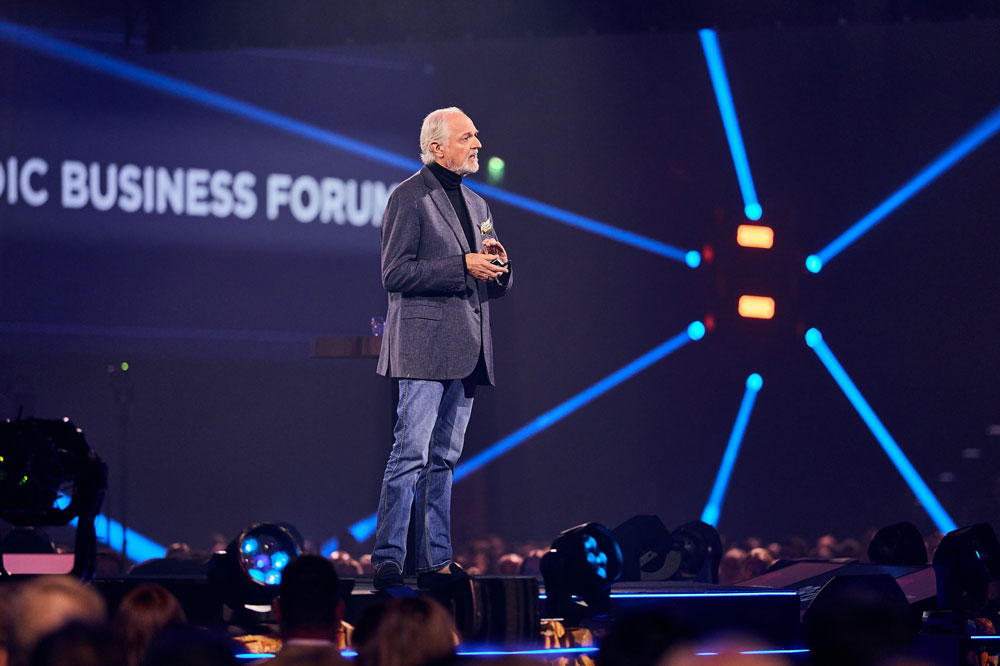
Industrial leaders are used to managing assets over decades. Paul Polman argues that the same long-term discipline should now be applied to business itself. In a turbulent world, resilience may depend on looking beyond efficiency, quarterly performance and the boundaries of your own operations.
Industrial companies know something about the long term. A plant, production line, energy system or piece of critical infrastructure is rarely managed only for the next quarter. Decisions made today can determine reliability, cost, safety and performance years from now.
Paul Polman believes business leadership needs to start thinking in much the same way. The former CEO of Unilever describes a world undergoing a fundamental transition. Climate change, geopolitical uncertainty, inequality, pressure on natural resources, technological disruption and declining trust are interacting rather than developing separately. The result is what has increasingly been called a polycrisis. For leaders, this changes the job.
“Leadership used to be to manage complexity in a fairly stable world. Today, many of the assumptions companies once relied upon, from growing markets and globalization to abundant resources and cheap energy, can no longer simply be taken for granted”, Polman says.
Leadership has therefore become the management of complexity in a turbulent world. For industry and asset management, that observation deserves attention. Reliability has traditionally meant keeping equipment and processes performing as intended. Increasingly, however, the resilience of an industrial operation also depends on energy, materials, suppliers, skills, regulation, infrastructure and environmental conditions beyond the factory gate.
An asset can be technically reliable while the system around it becomes increasingly fragile. Polman sees a paradox. Never have companies had greater awareness of the challenges ahead.
Technology is advancing rapidly. According to him, solutions based on technologies already available, could address a large share of the problems facing society. Yet progress remains too slow.
One reason is short-term thinking. Another is that the costs and benefits of change rarely fall neatly within the same organization. One company makes an investment while another participant in the value chain receives part of the benefit. Without trust and cooperation, rational decisions for the system can become difficult decisions for the individual company. Polman describes this as a kind of prisoner’s dilemma.
“If we all don’t do it together, we collectively pay a price for that.”
That logic is familiar in industrial ecosystems. Decarbonizing a value chain, creating circular material flows, improving traceability or developing shared infrastructure often requires several organizations to move simultaneously. Optimizing one link does not necessarily optimize the chain. This is where Polman challenges conventional corporate responsibility. Most companies, he says, have become considerably better at reducing negative impacts. They use less energy, emit less carbon, generate less waste or consume fewer resources per unit of production. That progress matters. But he questions whether “less bad” is an adequate destination.
“If you’re collectively less bad, then if you add it up, you make the situation worse.”
His alternative is the concept of net positive business: companies becoming regenerative, restorative and reparative, and ultimately giving more than they take. He reduces the idea to two simple questions: Is the company profiting from solving the world’s problems or creating them? And is the world better off because the company exists? For industrial leaders, these questions can sound abstract until they are translated into investment decisions.
Polman remembers facing choices as a CEO about entering new markets, building factories, investing in IT and developing people. Such decisions were naturally treated as investments in the future of the business. Sustainability, however, is still often placed in another category: a cost to be justified, a compliance requirement or a risk to be mitigated.
“We see it as a cost instead of an investment. We see it as a risk mitigation instead of an opportunity.”
That distinction matters for asset management. Replacing an inefficient system, redesigning a process, extending equipment life, improving energy efficiency or investing in predictive technologies can all appear differently depending on the time horizon and the boundaries of the calculation. A decision that looks expensive when measured against this year’s budget may look very different when lifecycle cost, resource availability, energy exposure, carbon, resilience and operational risk are considered.
Polman argues that the economics themselves are increasingly changing. In his view, the cost of acting on major sustainability challenges has fallen while the cost of inaction has risen. That turns sustainability from an obligation into what he calls “the biggest business opportunity of the century.”
His own experience at Unilever forms an important part of the argument. During his decade as CEO, the company attempted to decouple growth from environmental impact while putting broader social objectives alongside financial performance. Polman says Unilever generated a 300 percent shareholder return during that period while outperforming its competitive set. For him, this was not evidence that financial performance no longer mattered. Quite the opposite.
“I don’t feel it’s a debate between short and long term. If you’re a good leader, you manage your business obviously for the long term, but you also have to deliver.”
This may be one of the more useful messages for industrial management. Long-term thinking is sometimes interpreted as accepting weaker performance today in exchange for uncertain benefits tomorrow. Polman rejects that framing. Companies still need discipline, sound investments, capable people and competitive operations. The difference is that the definition of performance becomes broader and the time horizon longer.
His model for a net positive company begins with responsibility. Businesses, he says, cannot outsource parts of their value chain and assume that responsibility has been outsourced with them.
Leaders need to understand the total impact of the business and own it.
For asset-intensive organizations, that raises challenging questions. Where do critical raw materials originate? What happens to equipment at the end of its useful life? How resilient are suppliers?
What environmental or social risks are embedded upstream? Could components be repaired, remanufactured or reused rather than replaced? Are purchasing, operations, maintenance and investment decisions pulling in the same direction?
The second principle is to be science based and sufficiently ambitious. Polman says that many companies establish targets by extrapolating from what they have already achieved. Genuine transformation works differently. The starting point should be what is required, even when the route towards the goal is not yet clear.
“If you don’t feel uncomfortable or if you already think you have all the answers, you’re just not ambitious enough.”
There is an interesting parallel with industrial reliability. No serious maintenance organization would define acceptable equipment condition solely according to what happens to be convenient.
Limits are based on engineering requirements, safety and the performance expected from the asset. Polman essentially asks businesses to apply similar discipline to their wider impact.
His third principle is perhaps the most relevant for executives struggling with the divide between sustainability ambitions and operational reality: sustainability must become strategy.
“It is your strategy. It is the core of how you drive your business.”
A sustainability department cannot compensate for capital allocation pointing in the opposite direction. Nor can ambitious public commitments compensate for investment decisions that perpetuate the old operating model. Polman argues that the real priorities of an organization become visible when pressure arrives where money is invested, which projects survive, how people are rewarded and what management protects when difficult choices must be made.
For maintenance and asset management leaders, this brings the discussion remarkably close to everyday work. Asset strategies translate corporate ambitions into physical reality. Decisions about equipment lifetime, modernization, energy use, materials, reliability, digitalization and capital replacement ultimately determine how an industrial company operates for years or decades. If sustainability is genuinely part of strategy, it should therefore be visible in asset management plans, lifecycle decisions and maintenance priorities, not only in corporate reporting.
Consistency is Polman’s fourth principle. Companies are increasingly transparent, and stakeholders can compare what organizations say with what they do. Capital allocation, lobbying, taxation and executive incentives can all strengthen or undermine credibility.
“People will watch what you do, especially when the going gets tough.”
The fifth principle is collaboration. Polman believes many of the challenges facing business have become too large and interconnected for individual companies to solve alone. During his time at
Unilever, this meant working with competitors and other partners on issues including deforestation, palm oil, sanitation and plastics. His message is deliberately provocative: “When it gets to the future of humanity, we should not compete, we should cooperate.”
Competition does not disappear. Companies still compete in technology, service, productivity, quality and innovation. But Polman argues that there are areas where maintaining the system on which everyone depends, requires collective action.
Industrial leaders may recognize the logic. Standards, safety, cybersecurity, infrastructure, skills development, circular material systems and decarbonization can all contain problems where cooperation strengthens the entire ecosystem. There is another reason why his argument resonates with asset management. The profession is fundamentally built around stewardship. The objective is not simply to extract the maximum possible performance from an asset today, but to balance performance, risk and expenditure throughout its lifecycle.
Polman is asking leaders to extend that stewardship mentality beyond individual assets. What if companies managed natural resources, human capability, supply chains and societal trust with the same recognition that neglect eventually creates failure? The analogy is not perfect. Societies and ecosystems cannot be managed like machines. But the underlying principle is familiar: deterioration ignored today rarely becomes cheaper tomorrow.
Despite the scale of the problems, Polman ends up in a position of hope rather than pessimism. Technology exists, knowledge exists, economics are moving. Nature has shown an ability to recover when given the opportunity, and a new generation is entering working life with different expectations and considerable capacity for innovation. What remains, in his view, is leadership and human will.
For industry, that is the most useful question to take away. We spend enormous efforts ensuring that critical assets remain capable of performing their required functions in the future. Are we applying the same discipline to the organizations and systems around them?

ABOUT PAUL POLMAN
Paul Polman is a business leader, campaigner and author best known for serving as CEO of Unilever from 2008 to 2019. He is an internationally recognized advocate of sustainable and responsible business and was involved in the development of the UN Sustainable Development Goals. Polman is the co-author of Net Positive: How Courageous Companies Thrive by Giving More Than They Take. Today, through board roles, investments and advocacy, he promotes leadership models that combine long-term business performance with positive social and environmental impact.
Subscribe to the free Maintworld newsletter here!
Designed to Be Maintained
Maintenance professionals often work where others do not: at height, inside confined spaces and wherever equipment happens to fail. For Jan Teun Koningen, Chair of the EFNMS European Health, Safety & Environmental Committee, safer maintenance starts long before anyone picks up a tool.
Jan Teun Koningen did not deliberately set out to build a career in maintenance. Like many people in the profession, he found his way into it almost by accident. With a background in industrial engineering and management and a master’s degree in change management, Koningen entered the field through a university assignment in the early 2000s. The task was to investigate what asset management could mean for an organisation. It became the starting point for a career that has remained closely connected to maintenance, reliability and operational asset management ever since.
He began his career in maintenance and reliability engineering consulting and moved through project management, team management and eventually a COO position. International assignments took him into the oil and gas industry and included establishing operations in Houston and Singapore. Later, he co-founded a consulting company of his own. Today, he works for FrieslandCampina in the Netherlands, where he leads a team of project managers responsible for capital projects at one of the world’s largest dairy factories. Despite the changes in roles, companies and responsibilities, there has been a common thread.
“Almost everything I did has a relationship with operational asset management,” Koningen says.
He has always been attracted to industrial environments and to the tangible nature of factories: places where something is actually produced. Maintenance sits at the heart of that reality.
“There is always a lot of talk about maintenance not being very sexy,” he says. “But if you look at the developments in digitalisation and AI over the past couple of years, maintenance is very inspiring.”
More importantly, its impact is difficult to ignore.
“The contribution of maintenance to the result of the company is large if you do it right. And if you do it wrong, you notice it immediately.”
Koningen became involved with the European Federation of National Maintenance Societies (EFNMS) through the Dutch maintenance society NVDO. After years of international work, the
European network offered an opportunity to put that experience to use while collaborating with maintenance professionals from different countries. He joined EFNMS in 2018 and has chaired its
European Health, Safety & Environmental Committee (EHSEC) for approximately three years.
The committee has a somewhat different role from several other EFNMS committees. While much of the federation’s work concerns areas such as competence, training and certification, EHSEC concentrates heavily on the content of maintenance work itself and on practical issues that can make it safer.
One of its current priorities is LOTOTO, or Lockout, Tagout, Tryout. The basic principle is straightforward: before maintenance begins, workers must be protected from every source of hazardous energy associated with the equipment. That does not mean electricity alone. Pressure, temperature and other forms of stored energy must also be isolated, and the isolation needs to be verified before work starts. For Koningen, the issue illustrates something fundamental about maintenance safety. Maintenance professionals rarely perform their jobs in predictable working environments.
“If you look at the maintenance guy, he must go where things break down. And that’s never a normal working area.”
It may mean working at height, entering an enclosed space or finding equipment in a difficult part of a production installation. The workplace changes with the problem. Protecting the person doing the job therefore requires systematic preparation as well as technical safeguards.
Yet LOTOTO is part of a considerably larger idea that Koningen would like the industry to embrace: maintainability. If an asset requires maintenance throughout its life, he argues that the ability to perform that maintenance should be considered when the asset is designed. Can technicians reach the component safely? Can it be repaired? Are suitable tools and spare parts available? Can the work be carried out without creating unnecessary hazards or excessive downtime?
“The umbrella that we try to promote is maintainability,” Koningen explains. “You would like to make sure already from a design phase that the item is maintainable.”
This makes maintainability more than a maintenance department’s concern. Decisions made during engineering and procurement can determine the conditions under which maintenance professionals will work years later.
It also connects safety with sustainability. Equipment that can be inspected, serviced and repaired effectively is more likely to remain useful for longer. In Koningen’s view, designing for maintainability can therefore contribute both to safer work and to lower consumption of materials and energy.
The committee is trying to push these ideas beyond discussion. Some of its members participate in work within the European Committee for Standardization (CEN) and contribute maintenance expertise to standards. The committee also works with the European Agency for Safety and Health at Work (EU-OSHA), helping to ensure that maintenance professionals are represented in wider occupational safety and health initiatives.
The partnership gives the committee another route to reach maintenance organisations across Europe. EFNMS itself is supported by national maintenance societies of very different sizes and levels of development, while EU-OSHA works through a European network that includes national focal points. Combining those networks can help translate European initiatives into information, events and practical material for maintenance professionals.
One emerging subject is mental health. EU-OSHA’s 2026–2028 Healthy Workplaces Campaign, together for mental health at work, focuses on psychosocial risks and the creation of supportive and mentally healthy working environments. As part of its cooperation with EU-OSHA, EHSEC is preparing a survey focused specifically on maintenance professionals. The aim is to understand the mental health challenges they face and to provide information that national maintenance societies can use in their own activities. The European campaign officially launches in October 2026. The committee also maintains links with universities, with several professors participating in its work. Koningen sees this as another way to connect practical industrial experience with research and to identify questions that deserve closer attention.
Another challenge is the uneven approach to safety competence across Europe. Some countries have personal safety certification schemes that workers must complete before entering industrial sites. According to Koningen, comparable systems do not exist consistently throughout Europe.
A more harmonised approach, potentially resembling a European safety passport, could strengthen basic safety awareness among a workforce that increasingly operates across national borders.
The committee is exploring cooperation in this area with the European Network of Safety and Health Professional Organisations (ENSHPO).
Standards and certificates, however, can only go so far. Koningen emphasises that organisational safety culture remains crucial. This becomes particularly interesting as industry faces a generational transition. Experienced maintenance professionals carry enormous amounts of practical knowledge, including an intuitive understanding of hazards developed through years of working with equipment. When they retire, part of that knowledge can disappear with them.
But Koningen sees another side to the transition as well. Experienced workers may know risks exceptionally well, yet people who have spent decades working in a particular way can sometimes find new safety requirements harder to adopt. Younger employees, without the same established routines, may be more willing to accept stricter procedures from the beginning.
“The experienced people do know the risks from experience,” he says. “So it’s a bit of both.”
The challenge is therefore not simply to preserve everything from the previous generation. It is to transfer valuable practical knowledge while continuing to improve working practices and safety culture.
Technology adds another dimension. Koningen does not believe that digitalisation or artificial intelligence automatically makes workplaces safer. But he sees significant opportunities when technology is applied to the right problems.
In warehouses, for example, cameras and AI-based systems can distinguish between pedestrians, forklifts and automated vehicles and warn people before dangerous encounters occur. In maintenance, drones can replace some inspections that would otherwise require scaffolding or workers to be lifted to difficult or hazardous locations. The next step could be greater use of robots not only for inspection but also for repair tasks. Condition monitoring may have an equally important, if less visible, effect. Better information about asset health allows maintenance teams to anticipate failures more accurately. That makes work easier to plan and reduces the amount of reactive corrective maintenance.
And planning matters for safety. If maintenance teams know what work is coming, they have more time to identify hazards, prepare the job, arrange the correct resources and isolate equipment properly. The safety benefit of AI may therefore come not only from removing people physically from dangerous situations but also from helping organisations replace emergency work with planned interventions.
This brings the discussion back to maintainability. Koningen would like the concept to gain the same kind of attention that the industry already gives to asset management, reliability management and maintenance management. Digital tools may provide increasingly sophisticated information about asset condition, but someone still must translate that information into safe and effective work.
“The devil is in the detail and is in preparing the maintenance work,” he says.
Understanding failure mechanisms through methods such as reliability-centred maintenance (RCM) and failure mode, effects and criticality analysis (FMECA) is important. So is understanding the risks involved in performing the actual task and ensuring that the installation has been designed, or adapted, so that the work can be carried out properly.
Koningen has a concrete ambition for EHSEC: ultimately, he would like maintainability to become the subject of a European standard. Behind that ambition is a broader conviction about the value of maintenance itself. Koningen points out that much of the maintenance that keeps modern society functioning remains largely invisible. Infrastructure works, factories produce, electricity flows and services remain available precisely because someone is maintaining the assets behind them. Usually, the public notices that work only when something stops functioning.
“We need to make sure that those people stay safe.”
For him, there is also an environmental argument. If society becomes better at maintaining its assets, extending their useful lives and reducing unnecessary replacement, fewer resources and less energy may be required. The logic that increasingly encourages repairability in consumer products has relevance far beyond household goods. Making industrial assets easier to maintain from the start could help factories operate more safely, use resources more effectively and keep valuable equipment productive for longer. That makes maintainability something larger than a technical design criterion. It becomes a link between reliability, safety and sustainability.
And perhaps that is also why Koningen stayed in maintenance after stumbling into the profession more than two decades ago. The work may often remain unseen, but its consequences are everywhere.
Subscribe to the free Maintworld newsletter here!
Learnings from refinery turnarounds
After decades of refinery turnarounds, Christer Olsson has reached a simple conclusion: successful shutdowns are won long before the plant comes to a halt. Technology has transformed the tools, but detailed planning, competent people and genuine commitment remain at the heart of turnaround performance.
Christer Olsson’s experience with refinery turnarounds reaches back to 1976. By then, he had already worked on the operations side of the refinery business, first as an operator and later in control room and supervisory roles. Moving from operations into maintenance gave him a perspective that would shape much of his later career: maintenance and operations may see the same plant very differently, but neither can succeed without the other.
His first turnaround also gave him an early lesson in the limitations of planning systems. The system in use at the time had not been designed for the fast-moving environment of a refinery turnaround. Information was processed elsewhere and returned too slowly to support day-to-day decisions. Resource planning was also heavily driven by costs, which could mean crews being moved from one area to another even when the practical work demanded continuity.
“You cannot wait. You must be updated all the time,” Olsson recalls.
The technology was primitive by today’s standards, but the underlying problem is still familiar. A plan only has value if it reflects what is happening and allows people to act accordingly. Olsson learned to follow progress closely, question the plan when necessary and take responsibility when circumstances demanded it.
His definition of responsibility was influenced by another lesson from those early years. Working with American colleagues exposed him to a more hierarchical management culture than he was accustomed to in Sweden. He remembers being asked why he was dealing with matters that were supposedly outside his formal responsibility. His answer was straightforward: responsibility should be taken where it is needed. That does not mean ignoring rules or authority. It means creating an organization in which people understand their responsibilities well enough to act instead of waiting for someone higher up the hierarchy to solve every problem.
Over the following decades, Olsson participated in major refinery turnarounds as well as numerous smaller shutdowns and maintenance projects. For him, improvement became a continuous process.
“You do something, you check it, you learn, and then you improve the next time.”
A major turning point came through refinery benchmarking. In the late 1980s, Olsson’s refinery performed exceptionally well in the Solomon benchmarking study. By 1990, however, its relative performance had deteriorated significantly. Management responded with a broad transformation. Maintenance was given a clearer focus, capital projects were separated from their core responsibilities, and the organization began reconsidering how work, competence and responsibility should be structured.
One important question concerned turnaround intervals. The refinery had traditionally operated for three years between major turnarounds, while some European refineries were achieving longer intervals. Extending the interval required more than simply changing a schedule. Safety requirements had to be addressed together with authorities, and the refinery had to demonstrate that its equipment and maintenance practices could support the change.
The interval was eventually extended, first to four years and later to six. At the same time, the company invested heavily in people. Around 280 craftsmen underwent extensive training covering areas such as computers, leadership, drawings, planning and decision making. The intention was to enable them to assume greater responsibility and work more independently as coordinators.
Supervisors moved towards engineering and support roles, while management itself received leadership training. For Olsson, this illustrates a principle that remains central to successful turnaround management: competence cannot simply be assumed.
“If you don’t find the right competence, you have to train to the level of it.”
He gives gasket handling as a practical example. Poor installation can result in leaks with consequences for safety, reliability and availability. Instead of assuming that everyone arriving at a turnaround understood the work to the required standard, Olsson brought together experienced specialists from maintenance and operations to demonstrate correct practices. Training material was produced, workers were trained and their competence was verified.
Asked what distinguishes the most successful turnarounds he has experienced, Olsson does not hesitate: planning and scheduling.
“The devil lies in the details.”
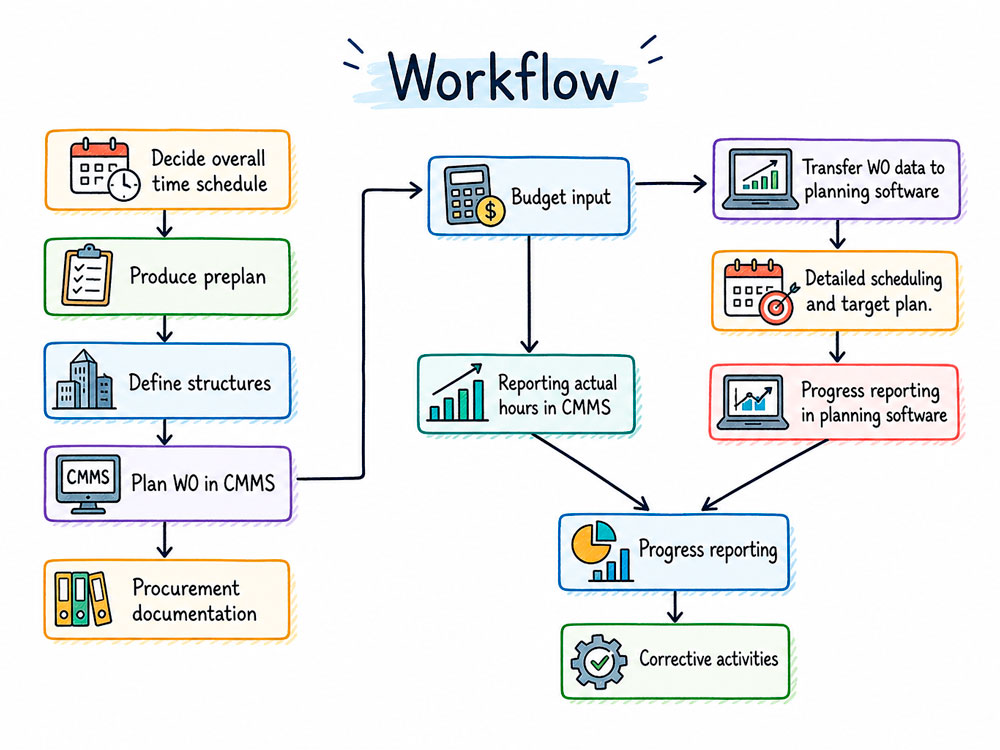
For a major refinery turnaround, he says, preparation may begin around two years before the actual shutdown. The process must cover far more than the technical work itself. Scope, organization, procurement, documentation, resources, competence, quality, environment, safety, security, cost control and lessons from previous turnarounds all need to be addressed.
Olsson advocates a comprehensive quality plan that defines how the turnaround will be managed. Known work should be prepared systematically in the computerized maintenance management system, with work orders linked to equipment, activities, responsibilities, competencies, estimated hours, materials, tools and costs. Long lead items need to be identified early. Interfaces between maintenance, operations, contractors and support functions must also be clear. This depth of preparation can appear excessive to people who have not experienced a major turnaround. Olsson sees it differently. Most turnaround work is already known in advance. If that work is thoroughly prepared, management can focus its attention on what does not go according to plan.
One turnaround in 2003 remains a particularly strong example for him. Contractors were brought directly into the planning process and worked with experienced planners before the shutdown. Responsibilities and competence requirements were agreed in advance. Once the turnaround began, Olsson could see each morning which activities were progressing according to plan and which required intervention.
“If 90 percent is doing well, I can concentrate on the 10 percent that isn’t.”
That is very different from an organization where everyone is busy, but nobody has a reliable picture of overall progress. Olsson recalls asking a contractor after the first week what felt different about that turnaround.
The answer was revealing: “Nobody’s running.” People knew what they were supposed to do. The organization could see where it was against the schedule, and management could concentrate on deviations instead of trying to control everything simultaneously.
This also explains why being ahead of schedule is not automatically a sign of success. A turnaround is a tightly connected system of activities, resources and dependencies. If one task moves ahead unexpectedly, it may occupy equipment or people needed elsewhere. Progress therefore must be evaluated against the entire plan rather than celebrated in isolation.
“The plan is important not because of the plan itself, but because of what it makes you do.”
For Olsson, one of the biggest warning signs is when a turnaround organization begins to say that everyone is simply working as fast as possible. Without reliable planning and follow up, a four- or five-week turnaround can quickly start to feel like operating in a vacuum. Detailed planning creates the opposite condition: people know where they are, managers see deviations and the organization maintains control.
The same principle applies to the digital infrastructure supporting the turnaround. When CMMS became an essential management tool, Olsson challenged IT personnel over acceptable downtime. If the planning and maintenance system is the main tool used to control thousands of activities, its availability is not merely an IT issue. It is part of turnaround risk management.
Digitalization has nevertheless changed what is possible. In Olsson’s early career, work orders and reporting were largely paper based. Today, digital systems can provide information almost continuously. Managers can follow progress much more closely and connect maintenance data with scheduling systems. In a large turnaround involving thousands of contractors and tens of thousands of activities, that visibility can be enormously valuable. But Olsson is cautious about assuming that better technology automatically means better management.
The problem is data quality. A number stored in a system may appear authoritative, but behind it is usually a person who entered or reported something. If people do not understand why accurate reporting matters, technology cannot correct the weakness at its source. A recorded two-hour task is useful only if two hours reflects reality.
“When you see data in the system, you think it is true. But you have people reporting things that create the data.”
This is also how Olsson views the growing possibilities of AI. New technology can provide new ways to evaluate information and support decision making, but it does not remove the need for competent people, reliable input and disciplined processes. The fundamentals of turnaround management remain remarkably stable: prepare properly, create a clear organization, train people, involve contractors and operations, and make sure everyone understands how their contribution affects the whole.
Commitment is a word Olsson returns to repeatedly. He illustrates it with the old breakfast analogy of the hen and the pig: in eggs and bacon, the hen is involved, but the pig is committed.
Successful turnarounds need people who feel responsible for the result, not merely people who have been assigned tasks. That requires clear responsibilities, appropriate competence and genuine participation in planning.
The same thinking helped Olsson bridge the traditional divide between maintenance and operations. Having worked on both sides, he understood how easily each function could blame the other. His response was to bring operations into planning and look at shutdowns, startups and maintenance activities as shared processes. When both sides understand the constraints of the other, they can often change their own plans to improve the overall result.
Much of Olsson’s career has followed that pattern: finding something that could work better, bringing people together and creating a structure that allows them to improve it. Later, as a consultant and trainer, his role changed from being the manager making decisions to what he describes as a provider of “information and possibilities.”
The tools available to maintenance professionals today would have been unimaginable when he entered his first turnaround in 1976. Yet his central lesson is strikingly resistant to technological change. Good turnaround management is not about reacting faster to chaos. It is about doing enough work beforehand that chaos does not become the normal way of operating.
And perhaps that is why two expressions particularly bother Olsson: “We have always done it that way” and “We have never done it that way.” Both close the door to improvement. After decades of planning, shutdowns, organizational changes and lessons learned, his advice is instead to remain open and actively search for new possibilities.
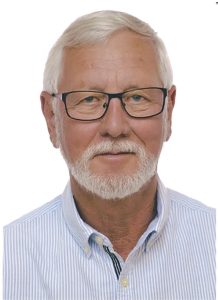
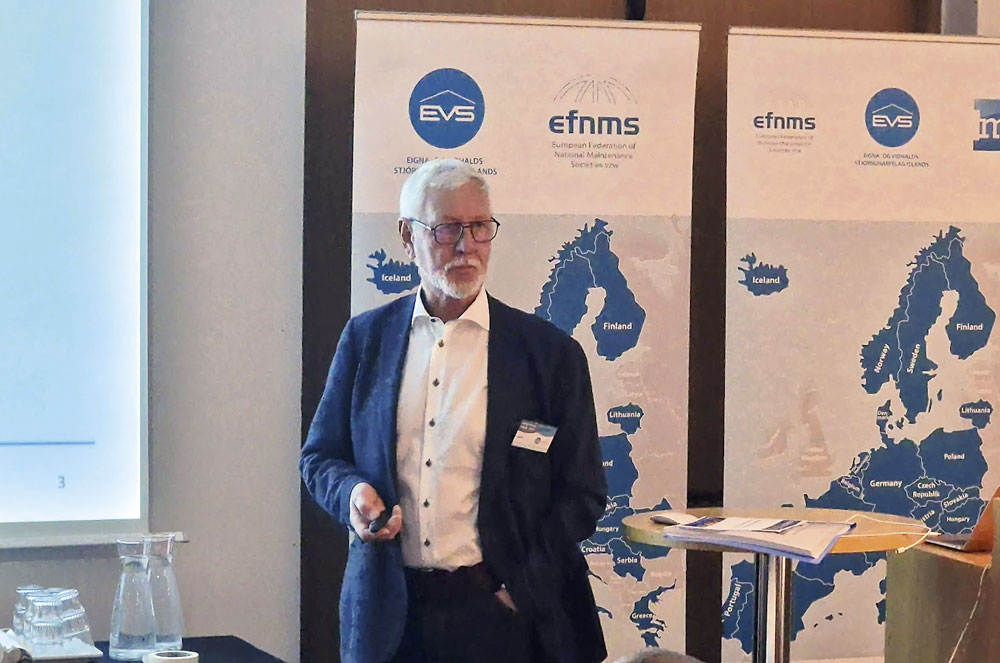
Christer Olsson
From 1996 – approx. 2015: Member of board the Swedish Maintenance Society , member of EFNMS General Assembly for Sweden,
From a 2009 – approx. 2020: Chairman EFNMS committee EMAC (Maintenance Assessment Committee)
Text: Mia Heiskanen Photos: Christer Olsson
Subscribe to the free Maintworld newsletter here!
Smarter, Leaner, Greener: The Case for Modernizing What You Already Have
European industry has spent decades treating electrical infrastructure as a cost to defer. The current energy crisis didn’t create that vulnerability; it just made the bill impossible to ignore. Marco Tellarini, SVP – EMEA at ABB’s Electrification Service division, argues that the targeted modernization of existing assets is the most undervalued strategic lever available to industrial leaders today.
European energy prices remain among the highest in the industrialized world. According to the International Energy Agency’s Electricity 2026 report, electricity prices for energy-intensive industries in the EU averaged more than double those in the US and nearly 50% above China over the past year. Supply chains that once ran through stable corridors now route around conflict zones, sanctions, and shifting alliances. For industrial leaders, the planning horizon has compressed from years to months, and capital allocation decisions carry more weight than ever. But here’s an uncomfortable truth: the current volatility did not create Europe’s infrastructure vulnerability. It merely exposed it.
Modernization, the deliberate upgrade of existing electrical infrastructure rather than wholesale replacement, is no longer a maintenance line item. Now, more than ever, business leaders are waking up to the reality that it’s a strategic lever with implications for resilience, competitiveness, and decarbonization. The smarter path is not ripping out entire systems but upgrading the components that have become obsolete: circuit breakers, switches, protection relays. Meanwhile, structural elements that remain sound, such as frames, busbars, and power cables, are retained.
This approach extends asset lifespans by two to three decades, introduces digital monitoring and automation, and avoids the embodied carbon of manufacturing entirely new systems. It hedges against energy volatility by enabling real-time consumption monitoring, early fault detection, and condition-based maintenance. And it addresses a competitive reality Europe cannot afford to ignore: industries here will not win on labor cost. They must win on asset performance, energy efficiency, and uptime. When even modest unplanned outages cost thousands of euros per hour and energy price forecasts change quarterly, the return on a well-targeted modernization investment is often measured in months, not years.
Continuity, reliability, and sustainability: what modernization delivers. These arguments are not theoretical. Across European industry and critical infrastructure, the pattern is consistent: organizations that commit to targeted modernization see measurable gains in reliability, safety, energy efficiency, and operational continuity. When I reflect on some of the experiences that our customers have had, I can see that they cluster around three interconnected themes.
The first is continuity — the recognition that in many operations, downtime is not merely expensive but existentially disruptive. At Helsinki University Hospital, Finland’s largest healthcare provider, 100 percent power uptime is a life-or-death requirement. With 700,000 patients treated annually and 87,000 surgical procedures each year, the hospital operates transformers scattered across a sprawling campus, some of which had aged up to 20 years. That’s the challenge with businesses that provide critical and essential services — a complete shutdown, even if for maintenance, simply isn’t feasible when patients are on life support. To mitigate this, a cloud-based sensing solution measuring sounds, vibrations, temperature, and magnetic fields was installed in under an hour per transformer, delivering reliable power and continuous real-time condition monitoring with zero asset downtime.
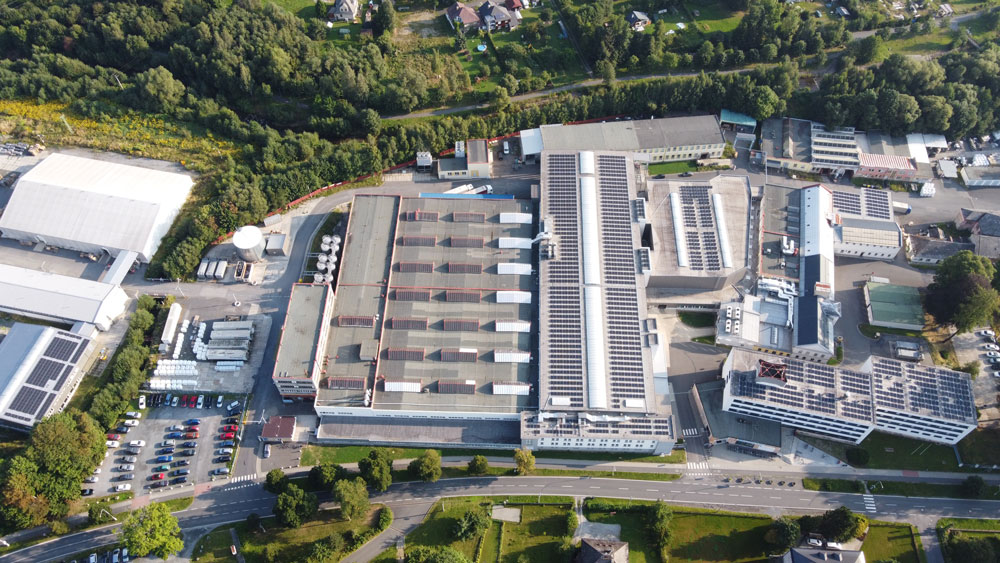
A similar imperative drives manufacturing operations where continuous production is non-negotiable. At Cemex’s Rudniki cement plant in Poland, the furnace takes up to 36 hours to relight after a power interruption; at Husqvarna’s robotic lawnmower facility in Vrbno pod Pradědem, Czech Republic, 650 employees and 20 industrial robots work around the clock, with unplanned downtime costing thousands of euros per hour. In both cases, the electrical installed base had aged well past the point of reliable operation, yet wholesale replacement would have meant the very disruption these plants could least afford.
The second theme I’m seeing is intelligence, the shift from analog guesswork to continuous, data-driven asset management. At Cemex, a retrofit replaced aged analog protection systems with digital Emax2 circuit breakers equipped with Ekip Touch, enabling cloud-based energy monitoring with measurements accurate to one percent. A withdrawable breaker design now allows operators to isolate and test individual units without disconnecting the furnace from the power supply, a safety and productivity breakthrough the previous system made impossible.
That same shift is playing out beyond individual breakers and across wider electrical infrastructure. At Helsinki University Hospital, transformer health is tracked around the clock with anomalies flagged early rather than discovered during emergency shutdowns. Husqvarna’s upgrade followed a similar logic. The immediate priority was to replace obsolete load break switches with modular NAL/NALF air-insulated units that require no service for 15 years after commissioning. However, a comprehensive technical assessment ensured the upgrade also secured a foundation for future digital investment.
In each case, the upgrade was not just in hardware but in operational philosophy, giving leaders the real-time information they need to make better decisions about maintenance and energy management.
The third theme is sustainability, where modernization carries an environmental logic that wholesale replacement simply cannot match. When Hafslund Celsio, Norway’s largest district heating and waste incineration company, upgraded the switchgear at its waste-to-energy plant in Oslo, its infrastructure had been running for over 30 years. More than 50 percent of the existing electrical equipment was reused outright, avoiding the embodied carbon of manufacturing an entirely new system. The retrofit introduced intelligent air circuit breakers with digital relay protection, enabling smart automation and improved condition monitoring, while the main switchboard replacement was completed in a single week during a planned shutdown with a perfect safety record. At Cemex, the case for sustainability took a different but complementary form. Improved thermal efficiency helped reduce clinker consumption and lower CO₂ emissions, showing how modernization can also cut environmental impact by improving the performance of existing industrial processes rather than replacing them outright.
The pattern holds across all four cases: by preserving structural elements that remain sound and upgrading only what has become obsolete, modernization delivers improved reliability, energy efficiency, and personnel safety at a fraction of the cost and carbon footprint of full replacement.
These are not isolated wins. They represent a convergence that European industry cannot afford to dismiss: modernization, executed strategically, delivers compounding returns across operational, financial, and environmental performance.
Every year without an upgrade is a year of rising risk: Every year that electrical infrastructure goes unmodernized is a year in which a decision is being made not to invest, not to upgrade, not to introduce digital visibility into assets that are running without it. That decision has consequences, including higher risk of unplanned failure, rising energy costs with no lever to pull, and a widening gap between organizations that have data-driven maintenance programs and those still relying on scheduled physical inspections of equipment that hasn’t been touched in decades.
European industry leaders have a window to close that gap before it becomes structural. The technology exists. The retrofit pathways are proven. The financial case, lower total cost of ownership, extended asset life, reduced unplanned downtime, improved energy efficiency, is well-documented.
What is required now is the organizational will to treat modernization as the strategic priority it has always been, rather than the cost to be deferred it has too often become. The companies that make that shift will not just survive the current period of volatility. They will outperform through it.

Marco Tellarini, Senior Vice President – EMEA Region, Electrification Service, ABB
Text: Marco Tellarini Photos: ABB
Subscribe to the free Maintworld newsletter here!
From Predictive Maintenance to Autonomous Operations

Artificial intelligence is rapidly changing its role in industry. Rather than serving only as a monitoring or reporting tool, AI is increasingly becoming part of operational decision-making in factories, energy systems and asset management.
For years, predictive maintenance focused on condition monitoring and anomaly detection. Companies installed sensors, collected operational data and used analytics to predict failures before breakdowns occurred. While these approaches reduced unplanned downtime, they still relied heavily on human interpretation and manual processes.
Today, industrial AI is moving beyond dashboards and alerts. New systems are designed to prioritize risks, recommend corrective actions, optimize maintenance schedules and support workflows in real time. The focus is no longer simply on collecting data but on turning industrial data into actionable decisions.
This shift is already visible in industrial deployments. Siemens has expanded its Industrial Copilot platform with generative AI-powered maintenance capabilities integrated with its Senseye predictive maintenance environment. The goal is to support the entire maintenance cycle, from fault detection and diagnostics to planning and optimization. Early pilot projects have reportedly reduced reactive maintenance work by around 25%.
A key enabler of this evolution is the digital twin. Once primarily used for engineering simulations, digital twins are increasingly becoming operational tools connected directly to live industrial data streams. By combining sensor information, operational history and asset performance data, they create dynamic models that mirror real-world equipment behavior.
At the same time, AI is expanding beyond maintenance into broader operational optimization. Digital-first factories are using virtual models and real-time data to optimize production flow, factory layouts and resource utilization before physical commissioning even begins.
Another emerging trend is the rise of agentic AI. Instead of functioning only as analytical tools, AI agents are beginning to act as operational assistants that coordinate tasks and workflows across systems. Gartner predicts that by 2030 semiautonomous AI agents will orchestrate an increasing share of production, quality and maintenance activities, while humans retain final decision authority.
The most advanced industrial AI environments combine several technologies: Industrial IoT sensors, edge computing, machine learning, digital twins and AI copilots that provide recommendations and operational guidance. Increasingly, these systems also work alongside robotics and automated inspection technologies to improve reliability and reduce downtime.
The business drivers are clear. Organizations are under constant pressure to reduce downtime, extend asset life, improve energy efficiency and optimize maintenance resources. Traditional preventive maintenance often results in unnecessary servicing or unexpected failures between inspections. AI-driven maintenance aims to intervene at the right moment based on actual asset condition.
Despite growing momentum, challenges remain. Data quality continues to be a major obstacle, particularly in environments with fragmented systems, legacy equipment and inconsistent maintenance records. AI can only be as effective as the data that supports it. Explainability is another critical issue. Many organizations remain cautious about allowing autonomous systems to make operational decisions without transparency. As a result, most industrial AI implementations today still operate within a human-in-the-loop framework. This human element may ultimately be the key to successful adoption. While AI excels at pattern recognition and large-scale analysis, maintenance expertise and operational judgment remain essential. The most successful organizations are treating AI not as a replacement for maintenance professionals, but as a tool that enhances human decision-making.
The next phase of industrial AI is therefore unlikely to be fully autonomous factories operating without people. A more realistic near-term future is one in which AI continuously supports engineers, operators and maintenance teams with faster diagnostics, predictive insights and better operational decisions.
For maintenance professionals, it looks like predictive maintenance is evolving from a standalone capability into part of a broader intelligent operational ecosystem where AI, digital twins and real-time industrial data increasingly shape everyday decision-making.
Mia Heiskanen
Maintworld Editor
SourceS:
Industry reports and publications from Hannover Messe, Siemens, Business Insider, IIoT World, PatSnap Eureka, Gartner Manufacturing Predicts, and ScienceDirect research on digital twins.
Subscribe to the free Maintworld newsletter here!
Maintenance as a Strategic Capability: Hungary’s MIKSZ Calls for a Stronger Voice
Hungary has built a modern manufacturing base deeply integrated into European industry. As production becomes more automated and complex, the challenge is shifting from building capacity to keeping it productive, reliable and competitive.
“That puts maintenance in a critical position,” says Nyeste Zsolt, President of the Hungarian Industrial Maintenance Organization (MIKSZ).
Hungary, with a population of around 9.5 million, has seen its industrial landscape change substantially since the transition from a centrally planned to a market economy in 1989. Traditional industries have been restructured, while foreign investment has brought new technologies and connected Hungarian manufacturing more closely to European supply chains. Automotive production, electronics, machinery and battery-related industries are now core parts of the country’s industrial base.
For maintenance professionals, the implications of transition have been clear: more complex assets require more sophisticated maintenance, but technology alone does not solve the problem. Skills, lifecycle thinking and management commitment remain essential.
According to Zsolt, maintenance is becoming increasingly important to business performance, even though its value is not always reflected in management thinking.
“Technological development is making maintenance increasingly strategic to business performance and continuity. At the same time, top management often continues to view maintenance primarily as a cost rather than a strategic asset,” he says.
“Maintenance often finds itself caught between two forces: increasing strategic importance on one side and continuous cost pressure on the other.”
MIKSZ was established in 2012 by professionals from industrial companies, maintenance service providers, equipment suppliers and universities. Its approximately 100 members represent Hungarian industry and higher education, alongside individual maintenance professionals.
Today, the association organises conferences, workshops and training, supports professional development and represents Hungarian maintenance professionals internationally through EFNMS, the
European Federation of National Maintenance Societies.
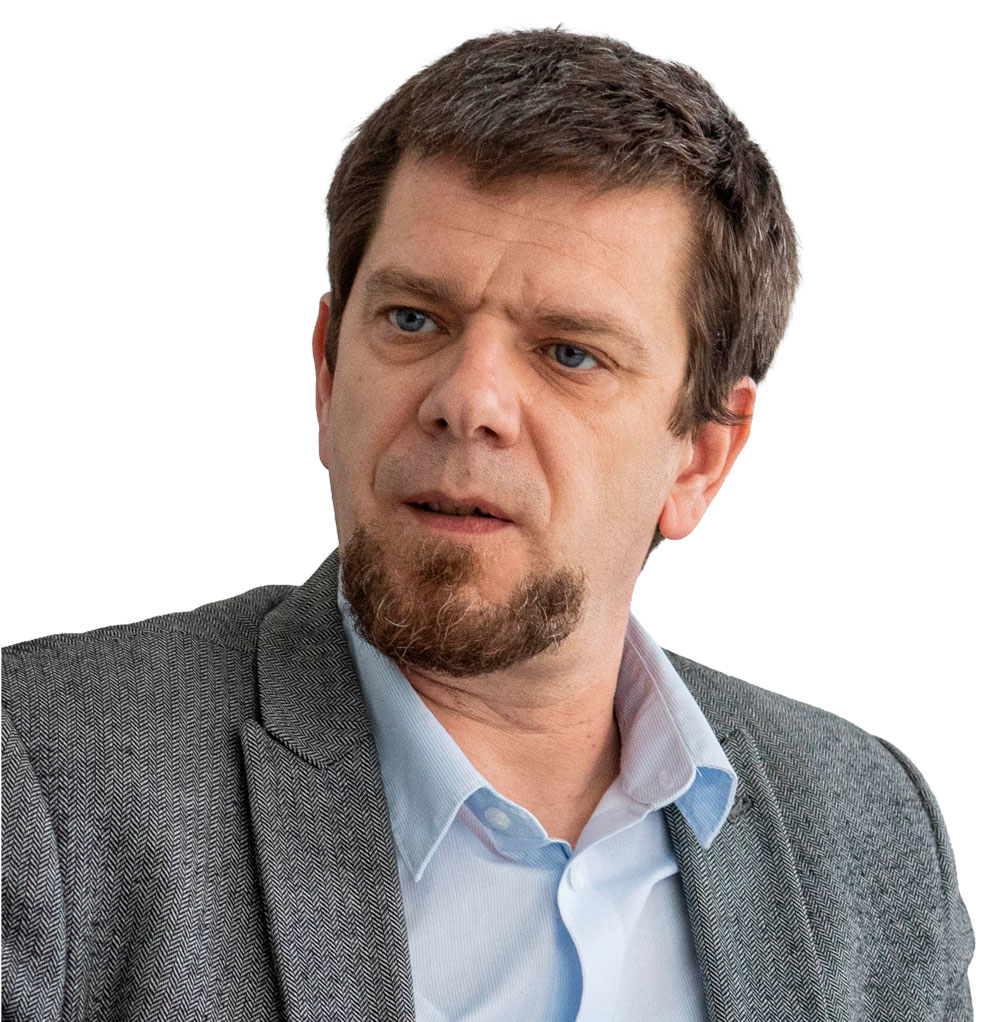
The challenges facing its members are familiar across Europe: ageing assets, increasingly sophisticated production systems and a shortage of skilled workers – all while companies are under pressure to control downtime and maintenance costs.
Zsolt notes that digitalisation has transformed what is possible in maintenance. Sensors, condition monitoring, data analytics, predictive maintenance and artificial intelligence can help companies move from reactive maintenance towards more proactive asset management.
But digital maturity varies considerably across Hungary.
“The reality is that we see both ends of the digital maturity spectrum,” Zsolt says.
“Hungary has highly capable developers and solution providers who can address sophisticated industrial challenges through digital technologies, including AI. At the same time, many companies still manage assets and maintenance processes largely through Excel,” he continues.
The availability of technology does not automatically lead to digital transformation, Zsolt says.
“It happens when the need for change becomes clear, when there is a strong business case, or when customers, partners and professional communities provide the necessary inspiration and support.”
This is one area where MIKSZ sees an important role for itself: connecting companies with practical knowledge and examples. Its activities include benchmarking visits and the
MaintenEssance webinar series, while its National Maintenance Conference in Veszprém provides a forum for professionals to exchange experiences.
The association also works to bring young engineers into the profession, supporting professional education and recognising outstanding maintenance-related diploma projects through an annual award competition.
As Hungary’s workforce ages, Zsolt stresses that technology alone cannot solve the maintenance sector’s skills challenge.
Across Hungary’s diverse industrial landscape, he sees the availability of skilled people as a common denominator.
“Today, maintenance is unfortunately not perceived as an attractive career choice by many young people, and the reputation and visibility of the profession remain relatively low,” he says.
For MIKSZ, this creates an important area of work. Strengthening the profession begins with education and visibility: encouraging young people to pursue maintenance-related engineering disciplines and demonstrating that maintenance is not simply about repairing equipment after failure.
Effective maintenance is fundamentally about availability and reliability: maximising operational uptime while reducing both planned and unplanned downtime. But there is another important dimension – extending the useful life of equipment.
Good maintenance can postpone major replacement inve stments while keeping machinery productive and reliable. For companies under pressure to control costs and capital expenditure, this makes maintenance a strategic contribution to competitiveness rather than simply an operating expense.
Zsolt takes the argument a step further, linking maintenance to national industrial resilience.
Hungary’s transition to a market economy brought profound changes to its industrial structure. In the process, some of the country’s traditional capabilities in heavy industrial equipment and related services declined.
This raises a question that goes beyond individual companies: does Hungary retain sufficient domestic expertise to operate, repair and maintain critical infrastructure independently?
“If a country cannot maintain its own critical infrastructure, including water, energy and petrochemical systems, it becomes increasingly dependent on external capabilities and expertise,” Zsolt says.
“Maintenance is therefore more than a technical or operational discipline. It is a strategic capability that contributes to the resilience, security and long-term functioning of a country.”
Maintenance also has a direct link to sustainability and safety. Extending equipment life, avoiding premature replacement and keeping systems operating efficiently can support resource efficiency, while effective maintenance is closely connected to industrial safety.
“MIKSZ works with Hungary’s Directorate of Disaster Management through training and knowledge sharing on maintenance issues, connected to safety” Zsolt says.
MIKSZ joined EFNMS in 2018, marking an important step in its international development. Since then, it has participated in committees and initiatives across the European maintenance community.
One significant example was the Erasmus+ CEMaint project, in which partners from several countries worked together on the development of maintenance professional certification.
“What made this collaboration particularly valuable was that it did not end with the project itself,” Zsolt says. “The relationships, exchange of knowledge and joint development continued, creating a lasting platform for European cooperation.”
In 2022, MIKSZ hosted the EFNMS General Assembly in Budapest, providing an opportunity to mark the association’s tenth anniversary with European colleagues and partners.
“No one has a monopoly on knowledge,” Zsolt says. “The moment we think we know everything is the moment we stop learning.”
Through EFNMS, Zsolt says MIKSZ acts as a bridge between Hungarian and European maintenance professionals, allowing experience and best practices to move in both directions.
Looking towards the next five to ten years, Zsolt believes one of the sector’s greatest opportunities is to give maintenance a stronger voice in industrial decision-making.
The association wants to strengthen dialogue between maintenance professionals and policymakers. Almost a decade ago, MIKSZ developed a National Maintenance Strategy. The 30-page proposal outlined major challenges facing the profession and recommendations for addressing them. Although it did not receive a formal response from decision-makers at the time, Zsolt believes many of the issues remain relevant.
“Ageing industrial assets and declining competitiveness represent significant challenges, and maintenance can be part of the solution,” he says.
“It is about moving forward. We want decision-makers to understand that maintenance is a strategic asset.”
For MIKSZ, the objective is to ensure that maintenance is included in discussions about the future of Hungarian industry. Zsolt says he would like to see maintenance regain the professional recognition and prestige it once held and have a stronger voice in policymaking.
From Maintenance Manager to MIKSZ President
Nyeste Zsolt’s involvement with the Hungarian Industrial Maintenance Organization (MIKSZ) began through his professional work in industry.
“When MIKSZ was established in 2012, I was responsible for maintenance at an international company while also actively building relationships with professional organisations and universities. In a way, these two paths naturally came together,” Zsolt explains.
What attracted him to the newly established association was not only its vision, but also the people behind it.
“The members at that time were all highly respected professionals in their respective fields, and it was both a pleasure and an honour to become part of such a community,” Zsolt says.
Over the years, MIKSZ grew into both a professional community and a network of long-standing relationships. For Zsolt, the motivation to remain involved has centred on knowledge-sharing, cooperation and mutual respect.
About ten years ago, MIKSZ’s president and one of the organisation’s key driving forces, Dr György Péczely, passed away. After a short transition period, experienced members of the governing board asked Zsolt to take over as president.
He accepted the role, seeing it not as a career step, but as a way of continuing the work started by the association’s founders.
“For me, it has never been simply a position. It is about continuing a professional legacy, strengthening the community, and carrying forward the values and vision on which MIKSZ was founded.”
His approach to leadership is summed up in a simple principle: “Titles are temporary, but the impact we create can last much longer.”
MIKSZ at a Glance
Full name: Hungarian Industrial Maintenance Organization (MIKSZ) Established: 2012.
Members: Approximately 100. Members include: Industrial companies, service providers, equipment suppliers, universities and maintenance professionals
Mission: To strengthen the maintenance profession, promote knowledge sharing and best practices, and increase its recognition in Hungary.
Activities: Conferences, workshops, training, benchmarking, webinars and professional publications
Key events: National Maintenance Conference in Veszprém; annual awards for professional contributions and outstanding university theses
EFNMS member: Since 2018, in 2022, hosted the EFNMS General Assembly in Budapest and celebrated its 10th anniversary
Text: Nina Garlo-Melkas Photos: MIKSZ
Subscribe to the free Maintworld newsletter here!
Smart Maintenance: Five Trends Shaping the Future
From wireless sensors to AI-driven decisions, industrial maintenance is entering a new phase. Yet while technology is advancing rapidly, most factories are only beginning to explore its potential. What are the trends that matter most as 2026 draws to a close?
Artificial intelligence is spreading across the maintenance value chain, wireless condition monitoring is gaining momentum, and software systems are becoming increasingly interconnected. At the same time, the retirement of experienced professionals is creating new pressure to modernise maintenance practices.
Knud Lasse Lueth, CEO, and Zeynep Kaman, Analyst, at IoT Analytics, identify several developments that could reshape industrial maintenance in the coming years.
AI moves across the maintenance value chain. Artificial intelligence is no longer confined to predicting equipment failures. It is increasingly being integrated into diagnostics, maintenance recommendations, software interfaces and work order management.
“There’s a lot of AI in a lot of different parts of the value chain,” Lueth observes.
The next step is greater autonomy. AI systems can already provide predictions, recommend corrective actions and explain the reasoning behind their conclusions. However, allowing AI to independently initiate maintenance activities remains a different matter.
According to Lueth, human approval is still generally required before AI-generated recommendations become actual work orders. Trust, safety and operational responsibility remain important barriers to fully autonomous maintenance.
Wireless sensors gain momentum. One of the fastest-growing segments in smart maintenance is wireless condition monitoring. According to IoT Analytics’ market observations, some wireless sensor providers are reporting annual growth exceeding 100 %.
The appeal is straightforward. Wireless sensors can be mounted on existing equipment without extensive cabling, making condition monitoring easier and often less expensive to deploy.
Kaman points out that technology itself has also matured. Connectivity has improved, and wireless devices can now capture more detailed vibration data, including low- and high-frequency measurements. For maintenance organisations, this creates opportunities to extend condition monitoring to assets that previously lacked continuous monitoring.
Predictive becomes prescriptive. Predictive maintenance answers the question of when equipment might fail. Prescriptive maintenance takes the next step by recommending what should be done about it.
Instead of simply warning that a component may fail within ten days, a prescriptive system can suggest corrective measures and potentially identify the underlying cause. This distinction matters because detecting a problem does not automatically tell a maintenance team how to solve it. Lueth stresses, however, that most industrial maintenance is still preventive or condition based.
Predictive solutions are expanding, while prescriptive maintenance remains at an earlier stage of adoption. The direction is nevertheless clear: from identifying potential failures towards supporting decisions on how to prevent them.
Closing the loop. Another significant development is the convergence of previously separate maintenance systems.
Condition monitoring platforms, asset performance management solutions and computerised maintenance management systems (CMMS) are becoming more closely integrated. The objective is to connect the entire process, from detecting an anomaly and recommending corrective action to creating a work order, completing the repair and recording the outcome.
Kaman emphasises that prescriptive analytics and system integration reinforce each other. Feedback from technicians can improve future alerts and recommendations, creating a continuous learning process.
Rather than operating as isolated tools, these technologies are gradually moving towards a more unified smart maintenance environment.
The skills shortage accelerates digitalisation. Perhaps the most pressing challenge is not technological at all.
Lueth identifies the retirement of experienced maintenance professionals as one of the industry’s biggest challenges. As skilled workers leave, companies risk losing decades of practical knowledge.
Digital technologies offer ways to preserve that expertise. Recording experienced technicians’ work through video, audio and other documentation can create searchable knowledge resources for future employees. Meanwhile, maintenance software is becoming more intuitive and mobile-first. Technicians can access work orders, equipment information and diagnostic data directly through tablets or smartphones.
Kaman highlights the growing importance of simple interfaces and clear instructions that help less experienced employees work effectively.
For maintenance organisations, the message is increasingly urgent: digitalisation is not simply about improving efficiency. It is also about ensuring that critical knowledge and skills remain available when experienced employees retire.
Text: Mia Heiskanen
Subscribe to the free Maintworld newsletter here!