
Safety by Design: How Digitalisation is Reshaping Ship Repair at Tallinn Shipyard
Safety in ship repair is no longer a checklist of protective gear, permits and audits. It is a strategic capability that shapes operational efficiency, customer trust and long‑term competitiveness
At Tallinn Shipyard, one of BLRT Repair Yards, this shift is already taking shape under the leadership of Chairman of the Management Board Sergei Kravchenko. The yard has modernised its safety culture through digital systems, preventive maintenance, workforce development and environmental technologies, creating an operational model in which safety and productivity reinforce one another.
Kravchenko emphasises that the biggest challenge in ship repair today is not the hazards themselves, but how organisations respond to them.

“Safety challenges in our industry have always been serious,” he says. “What matters is the attitude towards them.”
A relaxed view of risk, he warns, can trap companies in outdated practices. As shipowners, insurers and classification societies demand higher safety maturity — especially for offshore projects, complex repairs and retrofit projects aimed at reducing emissions — paper‑based systems are no longer sufficient. Tallinn Shipyard has therefore redesigned many of its core processes in recent years.
“A significant number of processes that used to depend on paper and on long human chains have been moved to digital or semi‑digital formats,” Kravchenko explains.
At Tallinn Shipyard, digital tools are at the heart of safety. Over the past five years, the shipyard has digitised numerous safety‑critical activities, including:
• Digital Near‑Miss Reporting through an in‑house platform
• Planned Preventive Maintenance for cranes, docks and production equipment
• Electronic hot‑work permits with multi‑layer verification
• Digital monitoring of active hot‑work operations
• More than 100 emergency drill scenarios integrated into routine training
These systems do not replace people; they support them by highlighting non‑conformities, reminding teams of critical steps and ensuring work cannot proceed until safety requirements are met, Kravchenko says.
One of his key messages is that maintenance is fundamental to safety. Digital PPM systems now schedule inspections, alert engineers to upcoming tasks, and improve traceability across critical assets.
“The system reminds engineers coming on shift of the work due that shift, week or month.”
The next step is predictive maintenance.
“Not just scheduled maintenance, but condition-based maintenance with failure prediction — this reduces risks for people and for production at the same time.”
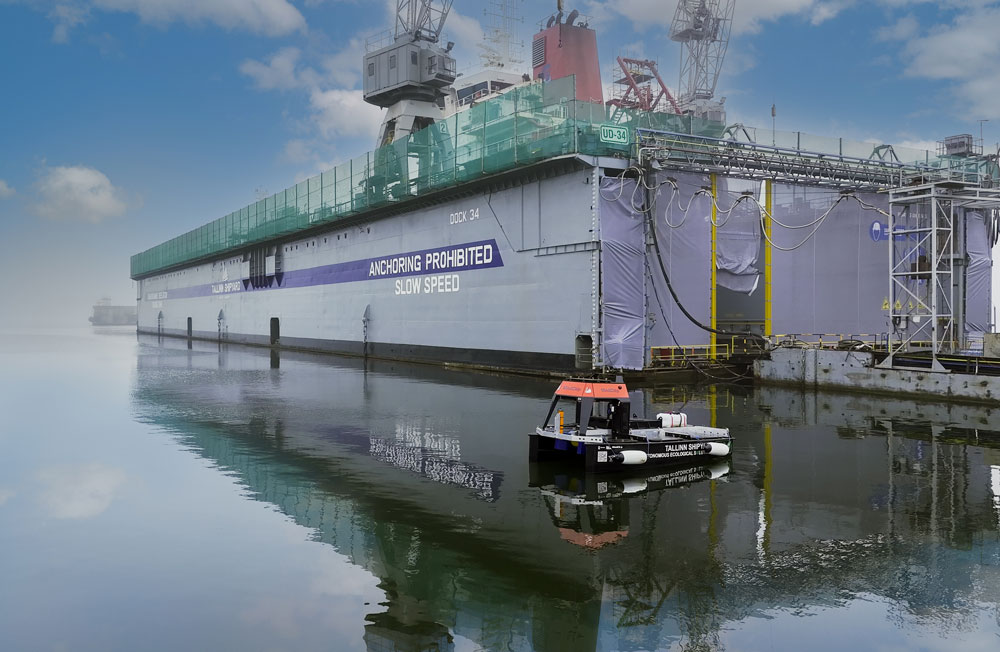
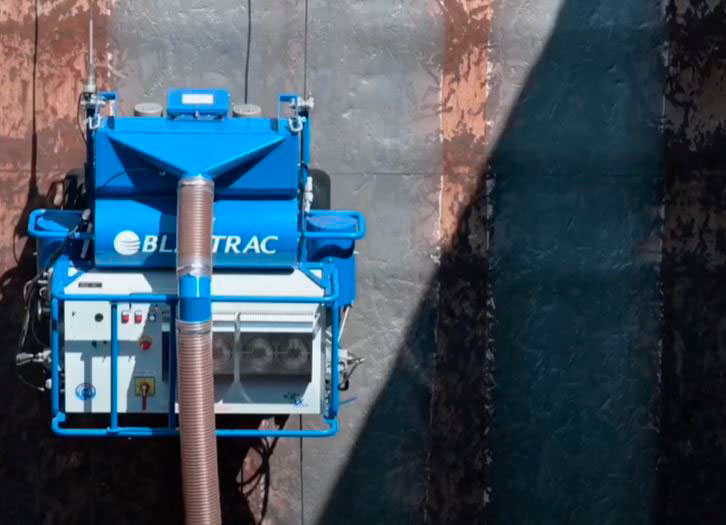
Robotics will also play a growing role. Tallinn Shipyard is already using robotic welding solutions and is now working on new robotised applications for selected ship repair processes. The yard’s experience with the autonomous MC4000 water-surface cleaning vessel shows how automation can support safer operations by reducing direct human involvement in higher-risk tasks, while also strengthening environmental monitoring and response.
Kravchenko emphasises that skilled people remain the foundation of every effective safety system.
“Competence and safety are two sides of the same coin,” he says.
The link works both on a professional and on a psychological level: the higher the competence of an employee, the deeper their understanding of the seriousness and importance of the measures introduced by the yard. A competent person does not see them as “extra controls” but as a tool that protects their own life, health and the team’s reputation, Kravchenko explains.
He notes that the shortage of maritime trades — welders, pipefitters, electricians, painters — affects not only schedules and quality but also safety performance. DNV’s review of maritime safety trends (2012–2022) underscores that digitalisation and alternative fuels require parallel competence development; otherwise new risks emerge. DNV (Det Norske Veritas) is one of the world’s leading classification societies and maritime safety, risk and certification organisations.
Kravchenko notes that the Tallinn Shipyard tracks training effectiveness digitally, ensuring that “every training session, every certification, every drill is an investment in reducing the overall probability of an incident.”
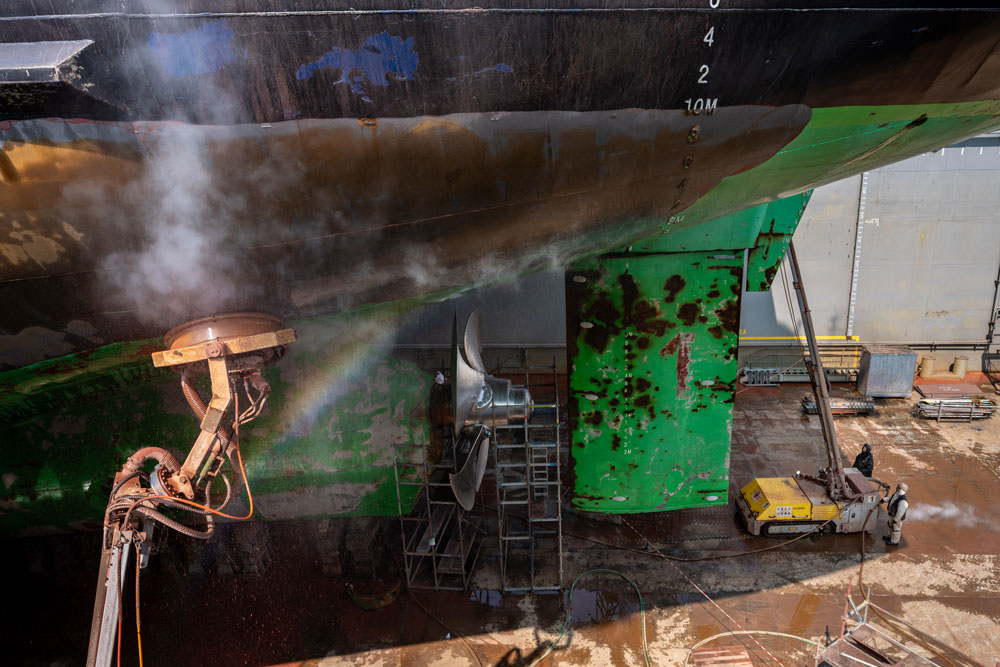
Ship repair differs from shipbuilding in one crucial way: projects evolve continuously once a vessel enters dry dock. Inspections often expand the scope, creating schedule pressure that can tempt shortcuts. This dynamic introduces a distinct risk profile, where keys risks include:
• Fire during hot work
• Confined‑space hazards
• Work at height
• Lifting operations
• Dock operations and watertight integrity
• Environmental incidents such as oil spills or emissions
To counter these risks, Tallinn Shipyard embeds safety directly into workflows. Critical activities cannot proceed until permits, inspections and approvals are
completed.
“The system must be designed so that critical safety steps are built into the workflow.”
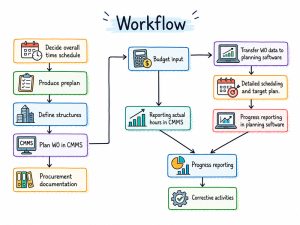
Kravchenko points out that planning is not just a commercial activity but a core safety function. Effective planning prevents incompatible work — such as welding next to coating operations — and ensures adequate resources for gas testing, ventilation and fire watch. Poor planning creates rush, and rush creates incidents.
Modern planning software and digital work orders therefore contribute directly to safer operations while improving productivity. One of the yard’s most significant innovations is its digital hot‑work management system. Electronic permits with multiple verification stages and real‑time monitoring points give supervisors visibility across the yard and improve coordination between contractors.
Digitalisation also extends to environmental safety. The autonomous MC4000 robot helps reduce the need for personnel to be directly involved in higher-risk water-surface cleanup operations.
Developed together with technology partners in Estonia, the fully electric autonomous vessel supports oil-product detection, recovery operations and environmental monitoring.
Ship repair involves many specialist companies working simultaneously in confined spaces. Poor communication can escalate risks quickly. Tallinn Shipyard addresses this through a specific model of integrated project teams that include representatives from every major trade, together with project managers and QHSE personnel. Safety objectives are approached collectively, encouraging collaboration rather than siloed priorities.
“Systems must help people do their work better and more safely,” he stresses. Technology is an amplifier, not a substitute for judgement. If culture encourages shortcuts, digital systems will be bypassed; if it encourages openness, even simple tools deliver strong results.
Kravchenko summarises the future of operational resilience succinctly: “Operational resilience will increasingly be defined not by the size of docks or the tonnage of cranes but by the maturity of this triad: people • processes • digital systems.”
Reliability, productivity and safety are no longer separate disciplines. They form one interconnected system — and shipyards that master this integration will remain competitive in any market.
About Tallinn Shipyard
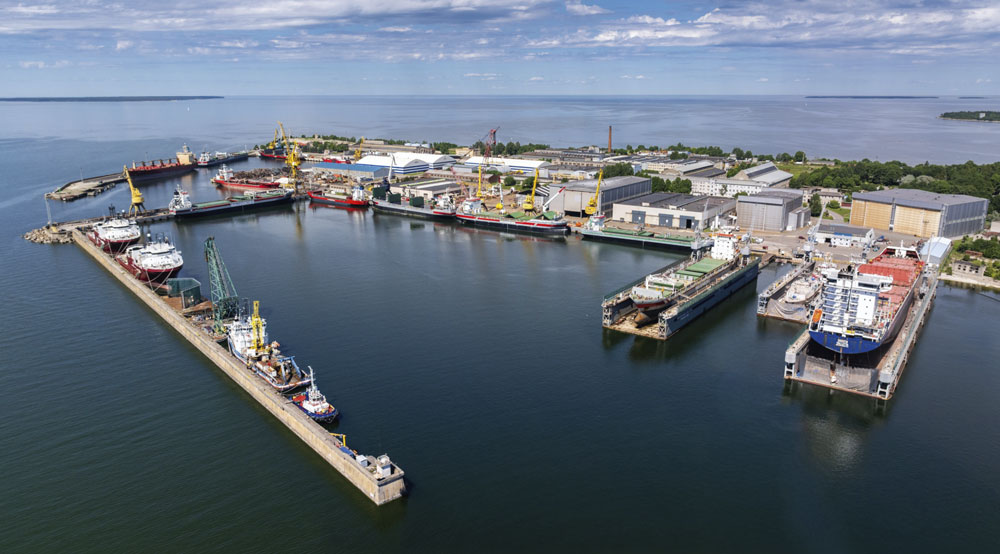
Tallinn Shipyard, one of BLRT Repair Yards, members of BLRT Grupp. is a modern ship repair yard in Estonia, serving shipowners and operators across the Baltic Sea region. The yard provides repair, maintenance, modernisation and retrofit services for vessels of different types and complexity, supported by 3 floating docks of different sizes, skilled production teams, engineering expertise and specialised workshops for steel, mechanical, piping, electrical and surface-treatment works.
Tallinn Shipyard continues to modernise its operational practices in response to rising technical, environmental and safety requirements. Environmental management is part of daily yard operations, supported by technologies such as the autonomous MC4000 water-surface cleaning vessel, which helps with oil-product detection, recovery operations and environmental monitoring.
Current development priorities include stronger contractor coordination, tighter process control and wider use of digital tools across safety and maintenance workflows. This reflects a broader industry shift towards integrated planning, condition-based maintenance and more data-driven operational control.
Six Ways Tallinn Shipyard Is Digitising Safety
Over the past five years, Tallinn Shipyard has transformed many of its traditionally paper-based processes into integrated digital systems designed to improve safety, maintenance and operational efficiency. According to Chairman of the Management Board Sergei Kravchenko, the objective is not simply to introduce new technology, but to create a safer, more resilient organisation capable of taking on increasingly complex projects.
Digital Near-Miss Reporting
The shipyard has developed its own electronic near-miss reporting platform, allowing every employee to report hazardous situations quickly and easily. Each report is reviewed against established standards, with verified issues triggering corrective actions and follow-up. The system encourages proactive reporting and strengthens the yard’s safety culture.
Planned Preventive Maintenance Goes Digital
Maintenance of critical assets—including floating docks, cranes, workshops and production facilities—is now managed through a digital Planned Preventive Maintenance (PPM) system. Automated reminders and scheduled maintenance tasks help engineers ensure inspections are completed consistently, reducing the risk of equipment failures that could compromise both productivity and safety.
Passenger-Ship Safety Applied Ashore
Drawing on best practices from the passenger ferry sector, Tallinn Shipyard has incorporated more than 100 emergency drill scenarios into its safety programme. The exercises cover fires, dock emergencies, blackouts, watertight integrity and other incidents specific to ship repair, ensuring personnel are prepared for a wide range of operational risks.
Smarter Hot-Work Management
One of the yard’s most significant improvements has been replacing paper-based hot-work permits with a digital, multi-layer approval system. Electronic registration and monitoring provide supervisors with real-time visibility of ongoing hot work, improve coordination between contractors and create full traceability of permits and safety checks before high-risk activities begin.
Autonomous Environmental Protection
Tallinn Shipyard became the first ship repair facility to deploy the MC4000, an autonomous electric surface-cleaning robot developed developed jointly with MindChip, a spin-off of Tallinn University of Technology | TalTech, with support from the Estonian Environmental Investment Centre (KIK).
Equipped with pollution-detection sensors and oil recovery capability, the vessel continuously monitors harbour waters while reducing the need for manual intervention. Its modular design also allows future expansion with additional environmental monitoring technologies.
Building Capacity Through Safety
For Tallinn Shipyard, digitalisation is ultimately a business strategy as much as a safety initiative. Demonstrating high levels of HSE maturity is increasingly essential for securing offshore projects, specialised repairs and decarbonisation retrofits. By modernising safety processes and benchmarking against leading European shipyards, the company aims to position itself as a technologically advanced and resilient partner in the global ship repair market.
Text: Nina Garlo-Melkas
Photos: Tallinn Shipyard



Subscribe to the free Maintworld newsletter here!