Maintenance as a Strategic Capability: Hungary’s MIKSZ Calls for a Stronger Voice
Hungary has built a modern manufacturing base deeply integrated into European industry. As production becomes more automated and complex, the challenge is shifting from building capacity to keeping it productive, reliable and competitive.
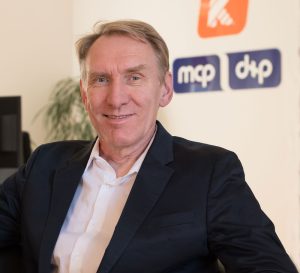
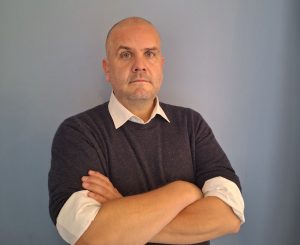
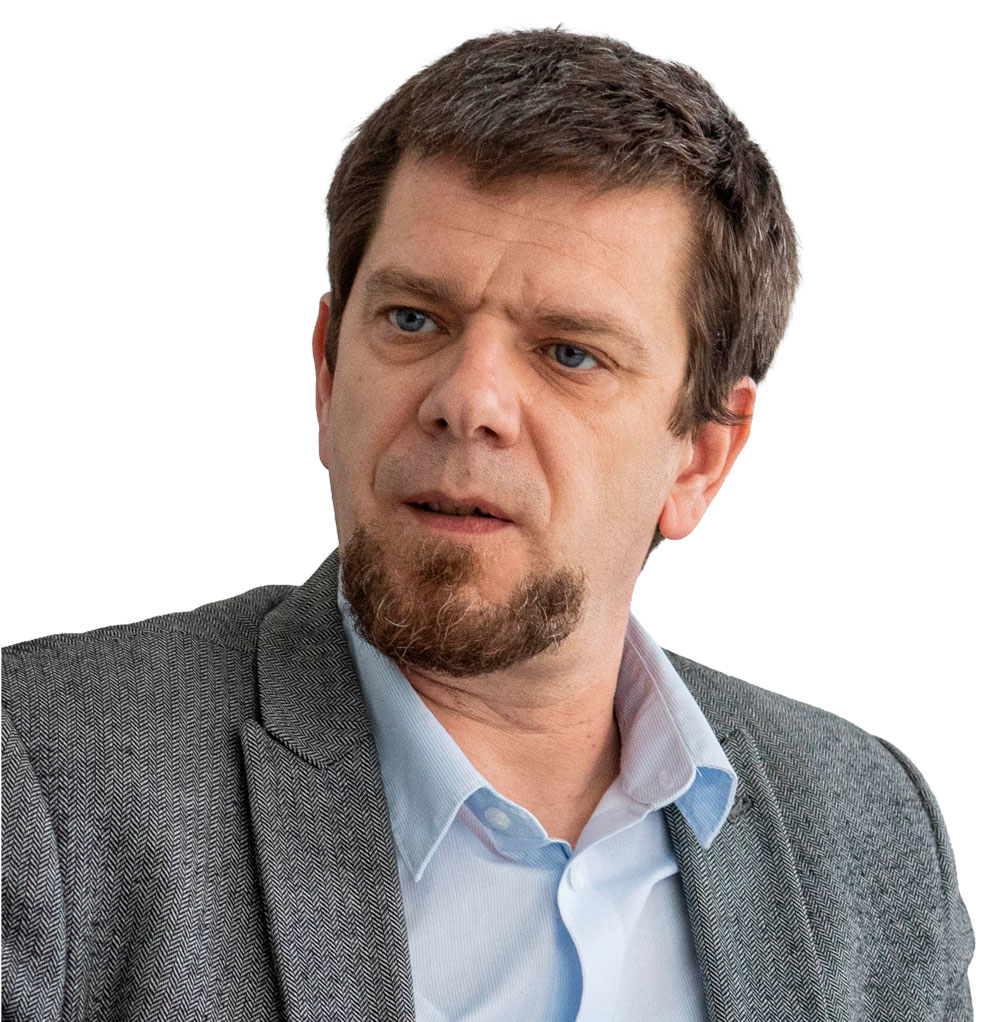
“That puts maintenance in a critical position,” says Nyeste Zsolt, President of the Hungarian Industrial Maintenance Organization (MIKSZ).
Hungary, with a population of around 9.5 million, has seen its industrial landscape change substantially since the transition from a centrally planned to a market economy in 1989. Traditional industries have been restructured, while foreign investment has brought new technologies and connected Hungarian manufacturing more closely to European supply chains. Automotive production, electronics, machinery and battery-related industries are now core parts of the country’s industrial base.

For maintenance professionals, the implications of transition have been clear: more complex assets require more sophisticated maintenance, but technology alone does not solve the problem. Skills, lifecycle thinking and management commitment remain essential.
According to Zsolt, maintenance is becoming increasingly important to business performance, even though its value is not always reflected in management thinking.
“Technological development is making maintenance increasingly strategic to business performance and continuity. At the same time, top management often continues to view maintenance primarily as a cost rather than a strategic asset,” he says.
“Maintenance often finds itself caught between two forces: increasing strategic importance on one side and continuous cost pressure on the other.”
MIKSZ was established in 2012 by professionals from industrial companies, maintenance service providers, equipment suppliers and universities. Its approximately 100 members represent Hungarian industry and higher education, alongside individual maintenance professionals.
Today, the association organises conferences, workshops and training, supports professional development and represents Hungarian maintenance professionals internationally through EFNMS, the
European Federation of National Maintenance Societies.
The challenges facing its members are familiar across Europe: ageing assets, increasingly sophisticated production systems and a shortage of skilled workers – all while companies are under pressure to control downtime and maintenance costs.
Zsolt notes that digitalisation has transformed what is possible in maintenance. Sensors, condition monitoring, data analytics, predictive maintenance and artificial intelligence can help companies move from reactive maintenance towards more proactive asset management.
But digital maturity varies considerably across Hungary.
“The reality is that we see both ends of the digital maturity spectrum,” Zsolt says.
“Hungary has highly capable developers and solution providers who can address sophisticated industrial challenges through digital technologies, including AI. At the same time, many companies still manage assets and maintenance processes largely through Excel,” he continues.
The availability of technology does not automatically lead to digital transformation, Zsolt says.
“It happens when the need for change becomes clear, when there is a strong business case, or when customers, partners and professional communities provide the necessary inspiration and support.”
This is one area where MIKSZ sees an important role for itself: connecting companies with practical knowledge and examples. Its activities include benchmarking visits and the
MaintenEssance webinar series, while its National Maintenance Conference in Veszprém provides a forum for professionals to exchange experiences.
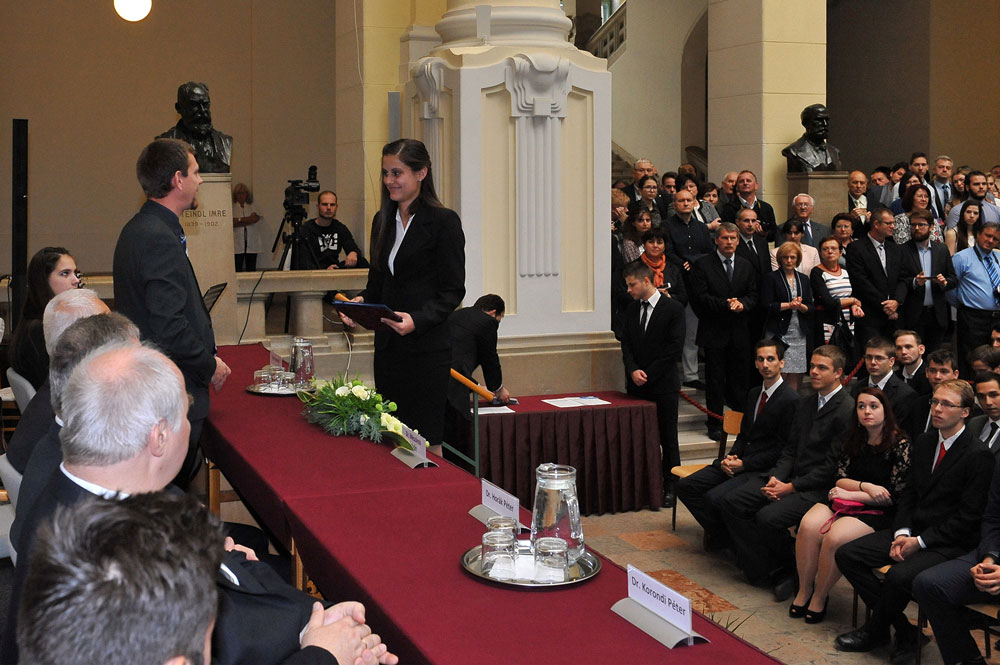
The association also works to bring young engineers into the profession, supporting professional education and recognising outstanding maintenance-related diploma projects through an annual award competition.
As Hungary’s workforce ages, Zsolt stresses that technology alone cannot solve the maintenance sector’s skills challenge.
Across Hungary’s diverse industrial landscape, he sees the availability of skilled people as a common denominator.
“Today, maintenance is unfortunately not perceived as an attractive career choice by many young people, and the reputation and visibility of the profession remain relatively low,” he says.
For MIKSZ, this creates an important area of work. Strengthening the profession begins with education and visibility: encouraging young people to pursue maintenance-related engineering disciplines and demonstrating that maintenance is not simply about repairing equipment after failure.
Effective maintenance is fundamentally about availability and reliability: maximising operational uptime while reducing both planned and unplanned downtime. But there is another important dimension – extending the useful life of equipment.
Good maintenance can postpone major replacement inve stments while keeping machinery productive and reliable. For companies under pressure to control costs and capital expenditure, this makes maintenance a strategic contribution to competitiveness rather than simply an operating expense.
Zsolt takes the argument a step further, linking maintenance to national industrial resilience.
Hungary’s transition to a market economy brought profound changes to its industrial structure. In the process, some of the country’s traditional capabilities in heavy industrial equipment and related services declined.
This raises a question that goes beyond individual companies: does Hungary retain sufficient domestic expertise to operate, repair and maintain critical infrastructure independently?
“If a country cannot maintain its own critical infrastructure, including water, energy and petrochemical systems, it becomes increasingly dependent on external capabilities and expertise,” Zsolt says.
“Maintenance is therefore more than a technical or operational discipline. It is a strategic capability that contributes to the resilience, security and long-term functioning of a country.”
Maintenance also has a direct link to sustainability and safety. Extending equipment life, avoiding premature replacement and keeping systems operating efficiently can support resource efficiency, while effective maintenance is closely connected to industrial safety.
“MIKSZ works with Hungary’s Directorate of Disaster Management through training and knowledge sharing on maintenance issues, connected to safety” Zsolt says.
MIKSZ joined EFNMS in 2018, marking an important step in its international development. Since then, it has participated in committees and initiatives across the European maintenance community.
One significant example was the Erasmus+ CEMaint project, in which partners from several countries worked together on the development of maintenance professional certification.
“What made this collaboration particularly valuable was that it did not end with the project itself,” Zsolt says. “The relationships, exchange of knowledge and joint development continued, creating a lasting platform for European cooperation.”
In 2022, MIKSZ hosted the EFNMS General Assembly in Budapest, providing an opportunity to mark the association’s tenth anniversary with European colleagues and partners.
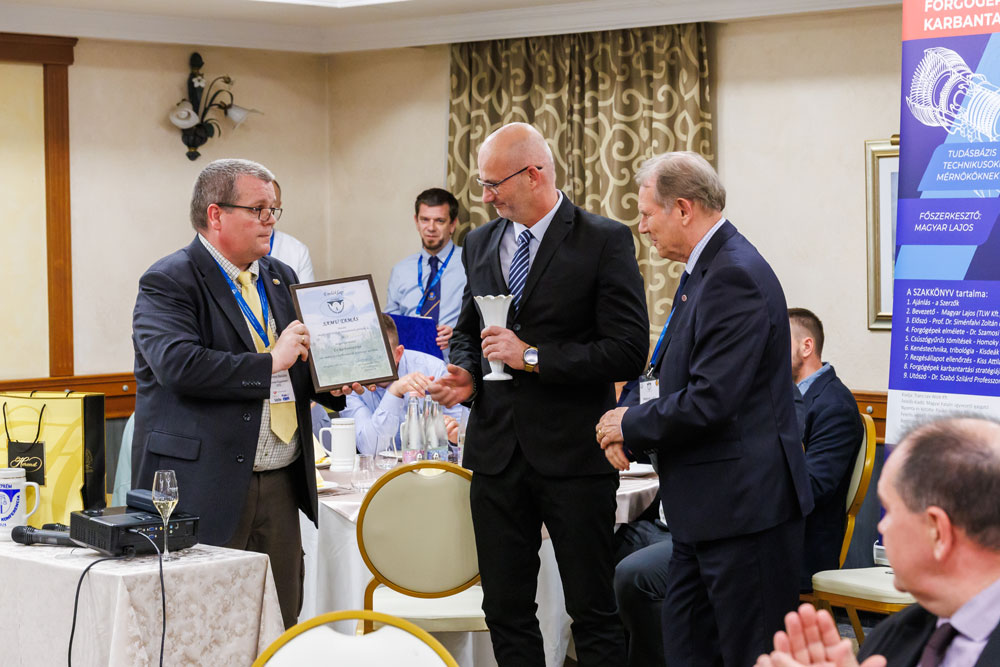
“No one has a monopoly on knowledge,” Zsolt says. “The moment we think we know everything is the moment we stop learning.”
Through EFNMS, Zsolt says MIKSZ acts as a bridge between Hungarian and European maintenance professionals, allowing experience and best practices to move in both directions.
Looking towards the next five to ten years, Zsolt believes one of the sector’s greatest opportunities is to give maintenance a stronger voice in industrial decision-making.
The association wants to strengthen dialogue between maintenance professionals and policymakers. Almost a decade ago, MIKSZ developed a National Maintenance Strategy. The 30-page proposal outlined major challenges facing the profession and recommendations for addressing them. Although it did not receive a formal response from decision-makers at the time, Zsolt believes many of the issues remain relevant.
“Ageing industrial assets and declining competitiveness represent significant challenges, and maintenance can be part of the solution,” he says.
“It is about moving forward. We want decision-makers to understand that maintenance is a strategic asset.”
For MIKSZ, the objective is to ensure that maintenance is included in discussions about the future of Hungarian industry. Zsolt says he would like to see maintenance regain the professional recognition and prestige it once held and have a stronger voice in policymaking.
From Maintenance Manager to MIKSZ President
Nyeste Zsolt’s involvement with the Hungarian Industrial Maintenance Organization (MIKSZ) began through his professional work in industry.
“When MIKSZ was established in 2012, I was responsible for maintenance at an international company while also actively building relationships with professional organisations and universities. In a way, these two paths naturally came together,” Zsolt explains.
What attracted him to the newly established association was not only its vision, but also the people behind it.
“The members at that time were all highly respected professionals in their respective fields, and it was both a pleasure and an honour to become part of such a community,” Zsolt says.
Over the years, MIKSZ grew into both a professional community and a network of long-standing relationships. For Zsolt, the motivation to remain involved has centred on knowledge-sharing, cooperation and mutual respect.
About ten years ago, MIKSZ’s president and one of the organisation’s key driving forces, Dr György Péczely, passed away. After a short transition period, experienced members of the governing board asked Zsolt to take over as president.
He accepted the role, seeing it not as a career step, but as a way of continuing the work started by the association’s founders.
“For me, it has never been simply a position. It is about continuing a professional legacy, strengthening the community, and carrying forward the values and vision on which MIKSZ was founded.”
His approach to leadership is summed up in a simple principle: “Titles are temporary, but the impact we create can last much longer.”
MIKSZ at a Glance
Full name: Hungarian Industrial Maintenance Organization (MIKSZ) Established: 2012.
Members: Approximately 100. Members include: Industrial companies, service providers, equipment suppliers, universities and maintenance professionals
Mission: To strengthen the maintenance profession, promote knowledge sharing and best practices, and increase its recognition in Hungary.
Activities: Conferences, workshops, training, benchmarking, webinars and professional publications
Key events: National Maintenance Conference in Veszprém; annual awards for professional contributions and outstanding university theses
EFNMS member: Since 2018, in 2022, hosted the EFNMS General Assembly in Budapest and celebrated its 10th anniversary
Text: Nina Garlo-Melkas Photos: MIKSZ



Subscribe to the free Maintworld newsletter here!