
Smarter, Leaner, Greener: The Case for Modernizing What You Already Have
European industry has spent decades treating electrical infrastructure as a cost to defer. The current energy crisis didn’t create that vulnerability; it just made the bill impossible to ignore. Marco Tellarini, SVP – EMEA at ABB’s Electrification Service division, argues that the targeted modernization of existing assets is the most undervalued strategic lever available to industrial leaders today.
European energy prices remain among the highest in the industrialized world. According to the International Energy Agency’s Electricity 2026 report, electricity prices for energy-intensive industries in the EU averaged more than double those in the US and nearly 50% above China over the past year. Supply chains that once ran through stable corridors now route around conflict zones, sanctions, and shifting alliances. For industrial leaders, the planning horizon has compressed from years to months, and capital allocation decisions carry more weight than ever. But here’s an uncomfortable truth: the current volatility did not create Europe’s infrastructure vulnerability. It merely exposed it.
Modernization, the deliberate upgrade of existing electrical infrastructure rather than wholesale replacement, is no longer a maintenance line item. Now, more than ever, business leaders are waking up to the reality that it’s a strategic lever with implications for resilience, competitiveness, and decarbonization. The smarter path is not ripping out entire systems but upgrading the components that have become obsolete: circuit breakers, switches, protection relays. Meanwhile, structural elements that remain sound, such as frames, busbars, and power cables, are retained.

This approach extends asset lifespans by two to three decades, introduces digital monitoring and automation, and avoids the embodied carbon of manufacturing entirely new systems. It hedges against energy volatility by enabling real-time consumption monitoring, early fault detection, and condition-based maintenance. And it addresses a competitive reality Europe cannot afford to ignore: industries here will not win on labor cost. They must win on asset performance, energy efficiency, and uptime. When even modest unplanned outages cost thousands of euros per hour and energy price forecasts change quarterly, the return on a well-targeted modernization investment is often measured in months, not years.
Continuity, reliability, and sustainability: what modernization delivers. These arguments are not theoretical. Across European industry and critical infrastructure, the pattern is consistent: organizations that commit to targeted modernization see measurable gains in reliability, safety, energy efficiency, and operational continuity. When I reflect on some of the experiences that our customers have had, I can see that they cluster around three interconnected themes.
The first is continuity — the recognition that in many operations, downtime is not merely expensive but existentially disruptive. At Helsinki University Hospital, Finland’s largest healthcare provider, 100 percent power uptime is a life-or-death requirement. With 700,000 patients treated annually and 87,000 surgical procedures each year, the hospital operates transformers scattered across a sprawling campus, some of which had aged up to 20 years. That’s the challenge with businesses that provide critical and essential services — a complete shutdown, even if for maintenance, simply isn’t feasible when patients are on life support. To mitigate this, a cloud-based sensing solution measuring sounds, vibrations, temperature, and magnetic fields was installed in under an hour per transformer, delivering reliable power and continuous real-time condition monitoring with zero asset downtime.
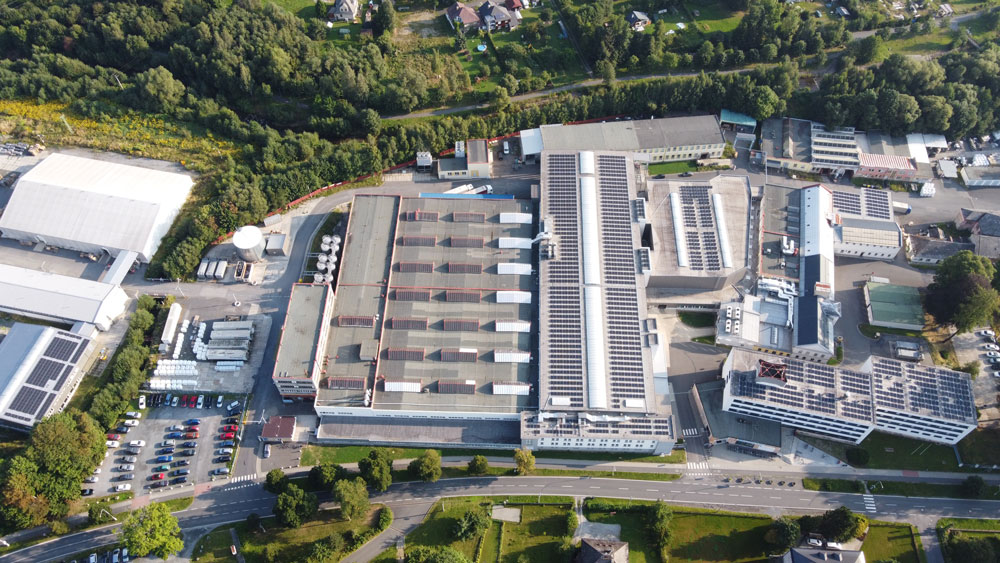
A similar imperative drives manufacturing operations where continuous production is non-negotiable. At Cemex’s Rudniki cement plant in Poland, the furnace takes up to 36 hours to relight after a power interruption; at Husqvarna’s robotic lawnmower facility in Vrbno pod Pradědem, Czech Republic, 650 employees and 20 industrial robots work around the clock, with unplanned downtime costing thousands of euros per hour. In both cases, the electrical installed base had aged well past the point of reliable operation, yet wholesale replacement would have meant the very disruption these plants could least afford.
The second theme I’m seeing is intelligence, the shift from analog guesswork to continuous, data-driven asset management. At Cemex, a retrofit replaced aged analog protection systems with digital Emax2 circuit breakers equipped with Ekip Touch, enabling cloud-based energy monitoring with measurements accurate to one percent. A withdrawable breaker design now allows operators to isolate and test individual units without disconnecting the furnace from the power supply, a safety and productivity breakthrough the previous system made impossible.
That same shift is playing out beyond individual breakers and across wider electrical infrastructure. At Helsinki University Hospital, transformer health is tracked around the clock with anomalies flagged early rather than discovered during emergency shutdowns. Husqvarna’s upgrade followed a similar logic. The immediate priority was to replace obsolete load break switches with modular NAL/NALF air-insulated units that require no service for 15 years after commissioning. However, a comprehensive technical assessment ensured the upgrade also secured a foundation for future digital investment.
In each case, the upgrade was not just in hardware but in operational philosophy, giving leaders the real-time information they need to make better decisions about maintenance and energy management.
The third theme is sustainability, where modernization carries an environmental logic that wholesale replacement simply cannot match. When Hafslund Celsio, Norway’s largest district heating and waste incineration company, upgraded the switchgear at its waste-to-energy plant in Oslo, its infrastructure had been running for over 30 years. More than 50 percent of the existing electrical equipment was reused outright, avoiding the embodied carbon of manufacturing an entirely new system. The retrofit introduced intelligent air circuit breakers with digital relay protection, enabling smart automation and improved condition monitoring, while the main switchboard replacement was completed in a single week during a planned shutdown with a perfect safety record. At Cemex, the case for sustainability took a different but complementary form. Improved thermal efficiency helped reduce clinker consumption and lower CO₂ emissions, showing how modernization can also cut environmental impact by improving the performance of existing industrial processes rather than replacing them outright.
The pattern holds across all four cases: by preserving structural elements that remain sound and upgrading only what has become obsolete, modernization delivers improved reliability, energy efficiency, and personnel safety at a fraction of the cost and carbon footprint of full replacement.
These are not isolated wins. They represent a convergence that European industry cannot afford to dismiss: modernization, executed strategically, delivers compounding returns across operational, financial, and environmental performance.
Every year without an upgrade is a year of rising risk: Every year that electrical infrastructure goes unmodernized is a year in which a decision is being made not to invest, not to upgrade, not to introduce digital visibility into assets that are running without it. That decision has consequences, including higher risk of unplanned failure, rising energy costs with no lever to pull, and a widening gap between organizations that have data-driven maintenance programs and those still relying on scheduled physical inspections of equipment that hasn’t been touched in decades.
European industry leaders have a window to close that gap before it becomes structural. The technology exists. The retrofit pathways are proven. The financial case, lower total cost of ownership, extended asset life, reduced unplanned downtime, improved energy efficiency, is well-documented.
What is required now is the organizational will to treat modernization as the strategic priority it has always been, rather than the cost to be deferred it has too often become. The companies that make that shift will not just survive the current period of volatility. They will outperform through it.

Marco Tellarini, Senior Vice President – EMEA Region, Electrification Service, ABB
Text: Marco Tellarini Photos: ABB



Subscribe to the free Maintworld newsletter here!