
Engineering Reliability Under Pressure: Building a Reliability-Driven Maintenance Culture
Every maintenance professional knows that equipment reliability is truly tested during periods of maximum production. When every minute of downtime affects productivity, product quality, and operating costs, maintenance becomes far more than equipment repair—it becomes a critical part of the production process.
For wineries, this challenge arrives with the annual grape harvest.
Unlike many manufacturing facilities that operate under relatively stable production conditions, wineries experience an intense seasonal period during which grape reception and primary processing equipment must operate almost continuously for several weeks. Once harvesting begins, unexpected equipment failures can quickly disrupt production and place significant pressure on both maintenance and operations.

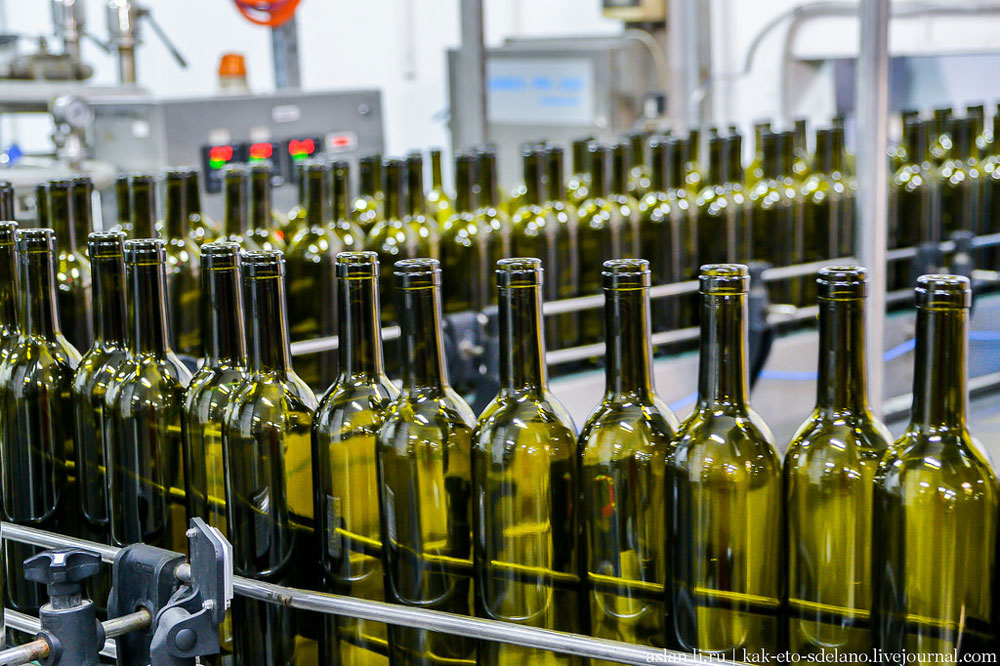
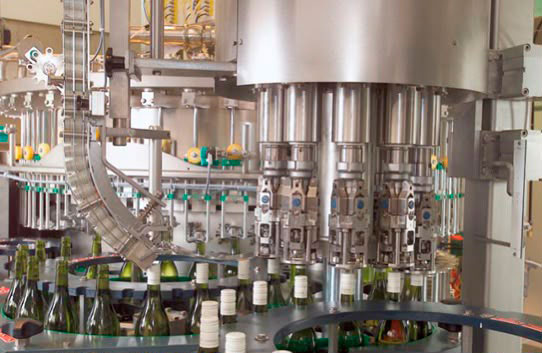
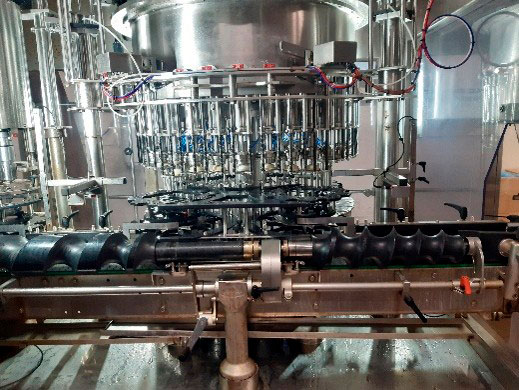
When I joined Armenia Wine, one of the largest wineries in the South Caucasus, I realized that preparing the facility for harvest required more than routine preventive maintenance. The winery operated more than sixty major production assets—including grape reception equipment, crushers, destemmers, presses, pumps, filtration systems, steam generation equipment, bottling lines, labeling systems, packaging machinery, and utilities—supported by a maintenance team of ten professionals.
Historically, the harvest season was also the period when emergency repairs and unexpected equipment failures occurred most frequently. The objective was clear: maintenance had to move beyond reacting to failures and begin preventing them.
The first step was changing how maintenance priorities were established.
Rather than treating every machine equally, equipment was evaluated according to its operational criticality. Assets capable of interrupting grape reception and primary processing received the highest maintenance priority before the harvest season.
Manufacturer recommendations remained an essential technical reference, but they became the starting point rather than the final maintenance strategy. Inspection intervals, lubrication schedules, and component replacement timing were continuously refined using equipment history, seasonal operating conditions, recurring failure analysis, and practical engineering experience.
Communication between production personnel and the maintenance department also became an important part of the reliability strategy. Operators often noticed subtle changes in equipment performance long before failures became visible during scheduled inspections. Small increases in vibration, unusual noises, hydraulic leaks, or abnormal operating behavior frequently provided the earliest warning signs of developing problems.
Maintenance records gradually evolved from simple repair documentation into a valuable engineering resource. Historical failures, inspection findings, spare parts consumption, and production feedback allowed maintenance planning to become increasingly data-driven rather than relying solely on fixed preventive maintenance schedules.
One principle became central to the entire strategy: Every repeated failure has a root cause. Replacing the same bearing, seal, chain, coupling, pump component, or pneumatic cylinder without understanding why it failed simply delayed the next breakdown. Whenever repetitive failures occurred, the priority shifted from restoring production as quickly as possible to identifying and eliminating the underlying engineering cause.
Equipment alignment, lubrication practices, installation quality, vibration, operating conditions, and interactions between connected mechanical systems were systematically evaluated before replacement became the final solution. In many cases, relatively small engineering improvements significantly increased component life while reducing future maintenance requirements.
As operational knowledge accumulated, maintenance gradually evolved from a scheduled activity into a continuous reliability improvement process built on observation, engineering analysis, and disciplined execution.
As the maintenance strategy matured, it became clear that improving reliability required more than better preventive maintenance. Long-term success depended on understanding equipment behaviour and using that knowledge to make better engineering decisions.
One area that demonstrated this particularly well was spare parts management.
Instead of treating spare parts simply as inventory, we began viewing their consumption as an indicator of equipment health. Every repeatedly replaced bearing, seal, chain, gearbox component, pump element, pneumatic cylinder, or sensor raised the same engineering question: Why did this component fail? Maintenance history, inspection findings, and production feedback were analyzed together to identify recurring failure patterns. In many cases, the failed component was not the root cause. Premature wear resulted from improper alignment, inadequate lubrication, excessive vibration, installation inaccuracies, or operating conditions that accelerated deterioration.
Correcting these underlying conditions often produced greater improvements than repeatedly replacing the affected components.
Procurement strategy also changed. Instead of following historical purchasing practices, spare parts were selected according to technical suitability, supplier reliability, delivery time, and total life-cycle cost. Whenever appropriate, standard components were sourced locally, while critical proprietary parts continued to be purchased directly from original equipment manufacturers.
The greatest validation of the maintenance strategy came during the annual grape harvest. For approximately two months, grape reception and primary processing equipment operated under continuous maximum production. Before harvest began, critical equipment received additional inspections, wear components were replaced proactively, lubrication systems were verified, alignment was rechecked, and critical spare parts were positioned in advance.
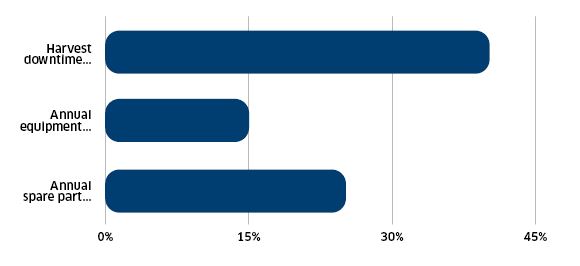
The objective was simple: Enter the harvest season with as few unknowns as possible. The results exceeded expectations. Equipment-related downtime during grape reception and primary processing was reduced by more than 40% compared with previous seasons. Across the remainder of the year, equipment failures decreased by approximately 10–15%, while annual spare parts expenditures were reduced by nearly 25%.
More importantly, maintenance became predictable. Instead of responding to constant emergency repairs, the maintenance team focused on preventive inspections, engineering improvements, and long-term reliability planning. Perhaps the greatest achievement was cultural rather than technical. Operators became active participants in equipment reliability, maintenance decisions became increasingly proactive, and reliability evolved into a shared operational responsibility rather than solely a maintenance function.
Looking back on this experience, I believe the greatest achievement was not simply reducing downtime or maintenance costs. Those were measurable results, but they reflected a much more important change—the transformation of maintenance from a reactive support function into a reliability-focused engineering discipline.
Modern manufacturing demands more than rapid repairs. Increasing automation, tighter production schedules, and higher quality expectations require maintenance organizations to anticipate failures rather than simply respond to them.
I believe the future of industrial maintenance will combine engineering expertise with digital technologies such as condition monitoring, CMMS, predictive analytics, and artificial intelligence. These tools will improve decision-making, but they cannot replace engineering judgement. Sensors can detect abnormal conditions. Software can analyze trends. Artificial intelligence can identify patterns.
However, understanding why failures occur and selecting the most appropriate engineering solution will continue to depend on experienced maintenance professionals.
Another major challenge for industry is preserving practical knowledge. Many experienced maintenance specialists are approaching retirement, while younger engineers often begin their careers with strong theoretical backgrounds but limited exposure to real production environments. Organizations that successfully transfer practical experience to the next generation will gain an important competitive advantage. My experience reinforced one simple conclusion: Reliable production begins with reliable maintenance, and reliable maintenance begins with sound engineering decisions.
Whether the facility produces wine, food, pharmaceuticals, or industrial products, the same principle applies. Reliability is not created by a single innovation. It is built through hundreds of consistent engineering decisions—careful inspections, effective planning, root cause analysis, and continuous improvement.
Ultimately, maintenance is not about repairing equipment. It is about creating the conditions in which equipment performs safely, predictably, and reliably throughout its operating life.
Preparing for Harvest: Reliability Starts Months Before Production
One of the most important lessons learned at Armenia Wine was that equipment reliability during harvest is determined long before the first grapes arrive at the winery.
Peak production is not the time to discover worn bearings, leaking hydraulic systems, damaged pumps, misaligned drives, or unreliable pneumatic components. During harvest, maintenance personnel should be supporting production—not performing emergency repairs.
Preparation therefore began several months before the harvest season. Critical equipment was identified, inspection frequencies were increased, lubrication systems were verified, alignment checks were completed, wear components approaching the end of their expected service life were proactively replaced, and spare parts inventories were carefully reviewed to ensure immediate availability of critical items.
Equally important was communication between production operators and the maintenance department. Operators often detected subtle changes in equipment performance before scheduled inspections identified measurable problems. Integrating these observations into maintenance planning significantly improved decision-making and reduced the likelihood of unexpected failures during peak production.
The experience demonstrated that successful harvest preparation depends not on performing more maintenance, but on performing the right maintenance at the right time.
When the Harvest Began
The true measure of any maintenance strategy is not how well it performs during normal production, but how it performs when the entire facility operates under maximum pressure. At Armenia
Wine, that moment arrived every autumn with the grape harvest. For approximately two months, grape reception, crushing, destemming, pumping, pressing, and primary processing equipment operated almost continuously. Trucks carrying freshly harvested grapes arrived throughout the day, leaving very little opportunity for unexpected repairs. Every hour of downtime risked disrupting production schedules and increasing operational pressure across the facility.
Previous harvest seasons had often required maintenance personnel to respond to emergency failures while production waited for equipment to return to service.
Following implementation of the reliability-focused maintenance strategy, the situation changed dramatically.
The harvest season was completed with remarkably few unplanned equipment interruptions. Downtime during grape reception and primary processing was reduced by more than 40 percent, allowing production to continue with a level of stability that exceeded management’s expectations.
For the maintenance team, the greatest success was not simply that fewer failures occurred. It was that maintenance had become predictable.
Instead of constantly reacting to emergencies, engineers and technicians were able to monitor equipment condition, support production proactively, and focus on preventing problems before they affected operations. That experience reinforced one important principle: The best maintenance intervention is the one that production never notices because the failure never occurs.

Tigran Hovhannisyan
Tigran Hovhannisyan is an industrial maintenance and reliability professional with over 15 years of international experience across Canada, Armenia, Ukraine, and India. Throughout his career, he has successfully developed and implemented practical, reliability-focused maintenance strategies in complex sectors, including food and beverage manufacturing, commercial printing, large-scale amusement operations, and industrial wineries. His engineering leadership has consistently delivered measurable improvements in equipment asset availability, operational efficiency, and maintenance cost optimization. He holds a Master’s degree in Mechanical Engineering and is currently based in Ontario, Canada, where he continues his work in advanced industrial maintenance and asset management.
Text and photos: Tigran Hovhannisyan



Subscribe to the free Maintworld newsletter here!