Putting a Price on Reliability
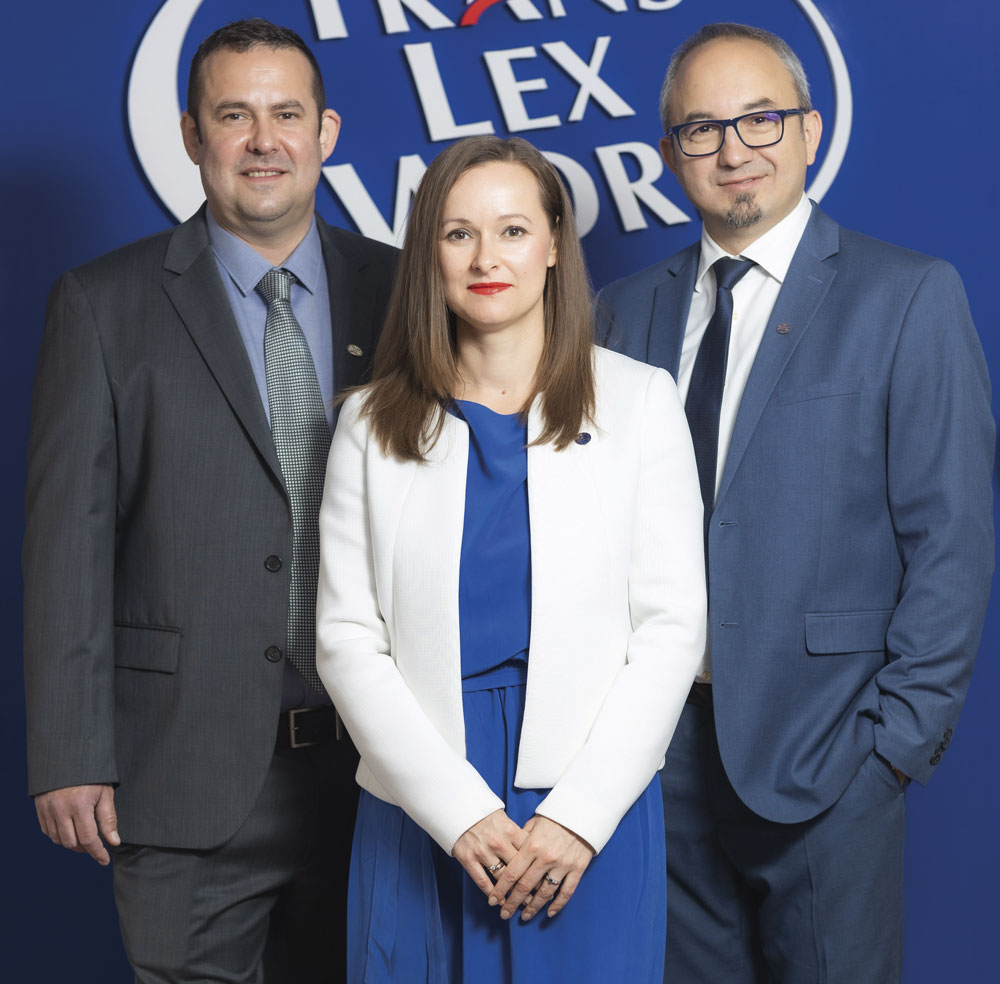
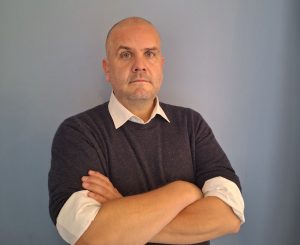
People often judge maintenance by cost rather than contribution. Yet the better it performs, the less visible its value becomes, notes Katalin Magyar, former banker and current co-director of family-owned Hungarian maintenance specialist Trans Lex Work (TLW).
For her, keeping machinery running means managing financial risk, preserving specialist knowledge and extending asset life.
But what does it really cost when a critical machine stops for a day?

“This is a question companies should always ask themselves when shaping their maintenance strategies,” Magyar stresses.
Magyar highlights that maintenance has an accounting problem: its costs are immediately visible in the accounts, while much of the value it creates is not. Inspections, spare parts, technicians and planned shutdowns all have a price.
The calculation needs to be viewed the other way around. Condition monitoring, efficient interventions and better-planned shutdowns may cost money today but prevent far larger losses tomorrow.
“If we had three unplanned stoppages this year, what did that cost? If the maintenance yearly budget had been 15% higher, maybe that would have been only 2% of the loss.”
For TLW, this is not an abstract financial calculation. The company specialises in maintaining large rotating equipment, including steam and gas turbines, compressors, pumps and fans, much of it decades old, which have been causing extra costs for clients due to unmatured maintenance strategy
Magyar describes maintenance as a “hidden bonus”: “It only appears when there is an unplanned stoppage and then the money just flows out,” she describes.
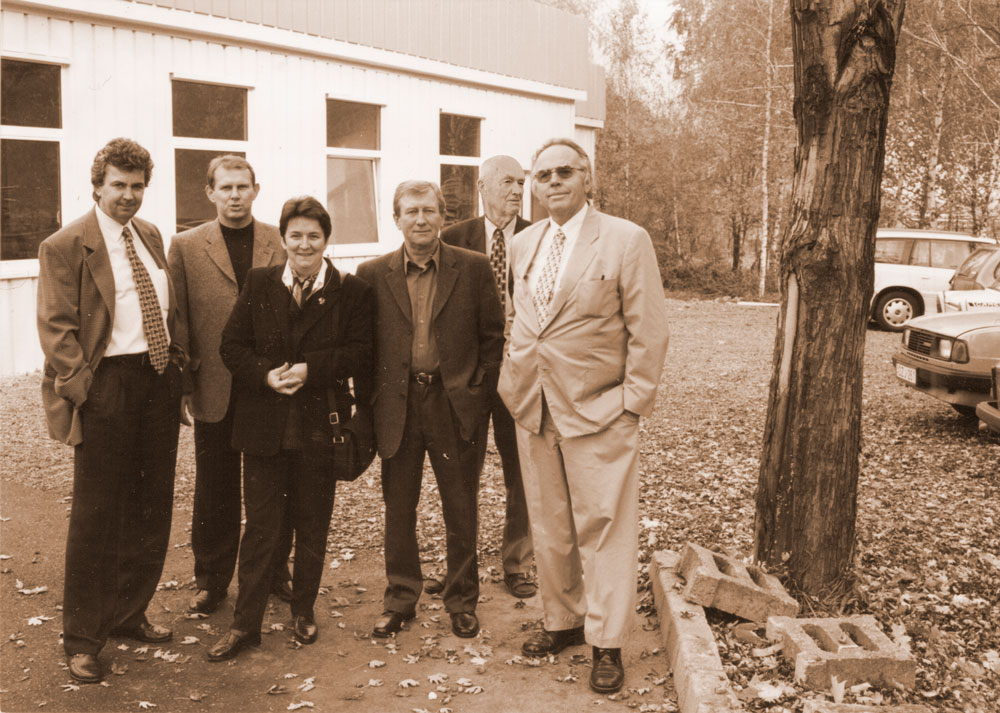
TLW’s origins date back to 1992, when Hungary was transitioning from a state-controlled economy to a market economy. Five engineers founded the company after helping rebuild an industrial plant in Iran, damaged during the Iran-Iraq War.
Magyar’s father was among the founders. The project drew on expertise developed in Hungary’s petrochemical sector and helped establish TLW’s reputation for providing industrial companies highly specialised technical work.
TLW began operating in Hungary in 1994 and gradually expanded its capabilities in vibration monitoring and rotating-equipment maintenance. By 2008, specialised maintenance had become the core of the business.
Today, the company employs around 40 people and focuses on rotating equipment, providing both ad hoc interventions and continuous maintenance services.
The age of the industrial equipment we help maintain makes experience particularly important, Magyar says.
“The Client’s machines are running from 30 to even 60 years, so experience is very important.
TLW has retained documentation going back decades: “We still have the documentation with us from 15 to even 30 years back,” Magyar says.
“When a machine has been modified, repaired and maintained over decades, its history can help determine what should happen next.”
Finding and retaining skilled people in an ageing workforce is one of the company’s biggest challenges in an increasingly competitive market.
Magyar notes that it can take three to five years for a new technician to become fully familiar with the equipment, customers and practical realities of the job. When an experienced employee leaves, the company loses both knowledge and its investment in training.
“Training is a very big investment and also a cost if we lose someone. And usually, they go to our clients.”
TLW is therefore working actively to transfer knowledge between generations. Magyar cites a 73-year-old specialist who works alongside a younger engineer, passing on decades of hands-on experience and machine-specific know-how.
For a company working with machines that can be up to 60 years old, that knowledge is not simply a human resource — it is part of the asset’s history.
Magyar’s route into the maintenance business was unconventional. With a background in economics and finance, she had to build her understanding of an industry dominated by engineers and technicians.
Today, she oversees finance, international relations, marketing and contracting, while family members lead projects and operations.
In Hungary, women remain relatively uncommon in field maintenance. But Magyar believes being a woman can sometimes help when discussions become difficult, allowing her to ease tensions and bring a broader perspective to the table.
Ultimately, however, the measure of success is the same for everyone.
“In Hungary, women remain relatively uncommon in field maintenance.”
“At the end of the day, the machine has to be running,” she says.
Keeping the machine running can require spending that is difficult to justify when budgets are under pressure. Magyar says the tension between maintenance costs and the cost of failure becomes particularly clear when customers want to cut spending or shorten shutdowns.
The key question, she says, is what those apparent savings could cost if the machine fails.
She recalls a power-plant customer with a 30-year-old machine. The customer wanted TLW to guarantee vibration limits after a minor overhaul or bearing replacement. However, based on the machine’s history and previous modifications, TLW’s specialists noted that the machine needed a more extensive inspection.
“They wanted only minor maintenance,” Magyar says. “But we knew that this maintenance would not improve the condition of the machine.”
The cheaper option may sometimes look attractive on paper, but the calculation changes completely if the machine fails. This is one of the paradoxes of maintenance: the decision that costs least upfront can carry the greatest financial risk.
“If everything goes smoothly, it’s the cheapest. But if there is an outage or a production failure, that can cost a lot. And this cost is never shown in the balance figures.”
This is why maintenance decisions need to be linked more closely to their operational and financial consequences. Lower maintenance costs may look like a saving, but the real cost can emerge later in lost production, extended downtime, and unexpected repairs.
TLW’s more than 20-year relationship with Birla Carbon Hungary Ltd. shows the value of long-term maintenance partnerships.
Under a fixed-price 24/7 call-out agreement, TLW has a direct incentive to keep the machinery running rather than rely on emergency repairs. TLW uses vibration monitoring and works closely with the customer to identify and address problems before they develop into failures.
“It is in our utmost interest to have as few interventions on the machines as possible. If we only work a little but very efficiently, then we also make more profit,” Magyar stresses.
“For that reason, there really are not any unplanned stoppages. For both of us, the cooperation is very beneficial.”
This points to a broader role for maintenance providers.
“The service provider should be more strategically involved in the customer’s operations,” she says.
Instead of being called in when something breaks, maintenance specialists should be involved earlier to assess equipment condition, plan maintenance and manage risks before they become costly failures.
Magyar sees a similar need for closer cooperation within industrial companies.Maintenance, operations, procurement and finance often have very different priorities. Procurement may focus on immediate purchase price, while maintenance professionals focus on reliability and long-term performance.
For critical equipment, she believes the people who understand the machinery should have greater influence over purchasing decisions.
“KPIs should not focus only on lowering costs or securing the contract. They should also reflect how the project performed — whether the maintenance objectives were achieved and what the outcome was for the customer.”
Magyar recalls a case in which her company lost a tender to a lower-priced contractor. The turbine was subsequently damaged during start-up, resulting in a 10-month shutdown.
“And there were no consequences for the procurement,” she says.
The example highlights a broader problem: the price of a procurement decision is easy to measure, while its consequences may emerge much later — and be felt elsewhere in the organisation.
Technology offers another way to preserve and extend accumulated knowledge.
“Maintenance, operations, procurement and finance often have very different priorities.
TLW operates its own remote monitoring system and is exploring how artificial intelligence could assist with the preliminary analysis of monitoring data. Another practical application is helping engineers find relevant information more quickly.
“We have so much documentation on our server. Sometimes, finding all the documentation takes hours.”
Instead of relying solely on individuals to remember what happened to a machine in the past, engineers can use historical records to identify relevant information and patterns more quickly.
“The aim is not to replace experienced engineers, but to help them identify relevant information and patterns more efficiently,” Magyar says.
The same logic increasingly applies to industrial assets themselves.
Magyar says customers today are seeking to extend operating periods between stoppages, particularly in a more uncertain economic environment.
“Most of our clients try to lengthen the operational time between stoppages. And that can only be served by monitoring and appropriate maintenance.”
When investment in new equipment is not financially viable, extending the productive life of existing assets becomes increasingly important.
For assets that have already operated for decades, extending their life depends on understanding their condition and retaining the knowledge of the people who know them best.
That brings the argument back to the fundamental paradox of maintenance.
Finance focuses on costs. Procurement seeks competitive prices. Operations want uninterrupted production. Maintenance focuses on reliability.
Yet all four ultimately depend on the same physical asset.
And when maintenance is done well, little appears to happen. Production continues, equipment performs as expected, and potential failures never materialise.
“The machine has to be running,” Magyar says.
That, Magyar stresses, is maintenance’s hidden value: its greatest successes are often the events that never happen.
The Second Life of Industrial Machinery
Hungary’s economy has been through a prolonged period of sluggish growth: GDP grew by just 0.5% in 2025, while investment fell by 18% between 2022 and 2024 after strong growth in the preceding years.
Against this backdrop, Katalin Magyar of TLW says industrial clients are increasingly looking at how long they can keep existing machinery in productive operation rather than replacing it.
“And that can only [be] served by monitoring and appropriate maintenance.”
Magyar also sees potential for a stronger second-hand market for industrial machinery. She points to equipment bought with EU funding that can end up being discarded after only a few years if the company operating it goes bankrupt or can no longer use it.
“There should be a second-hand market for that,” she says.
In her view, EU and national funding could also support the reuse of existing machinery — for example, by helping companies repair and return second-hand equipment to productive use. Tax incentives or other forms of public support could make such reuse more economically attractive.
For maintenance companies, this could create another opportunity to assess, repair and refurbish equipment, extending its productive life rather than seeing it replaced or scrapped.
As the Hungarian market slows, TLW is also expanding its international footprint. The company has already worked in Norway, Spain and Ukraine and is now exploring opportunities in neighbouring markets, including Austria, Slovakia and the Balkans.
“We’re shifting our focus towards international opportunities,” Magyar says. “We want to build on decades of expertise and relationships with industrial customers and partners to expand our business across the region.”
Katalin Magyar’s 4 tips for making maintenance value visible
1. Measure the cost of failure, not just the cost of maintenance.
2. Protect and transfer maintenance knowledge before it is lost.
3. Treat maintenance providers as strategic partners, not emergency contractors. Plan together!
4. Bring asset and reliability engineers to the decision table for investments, procurement, and performance verification after major maintenance.



Subscribe to the free Maintworld newsletter here!