
No Shortcuts to Reliability
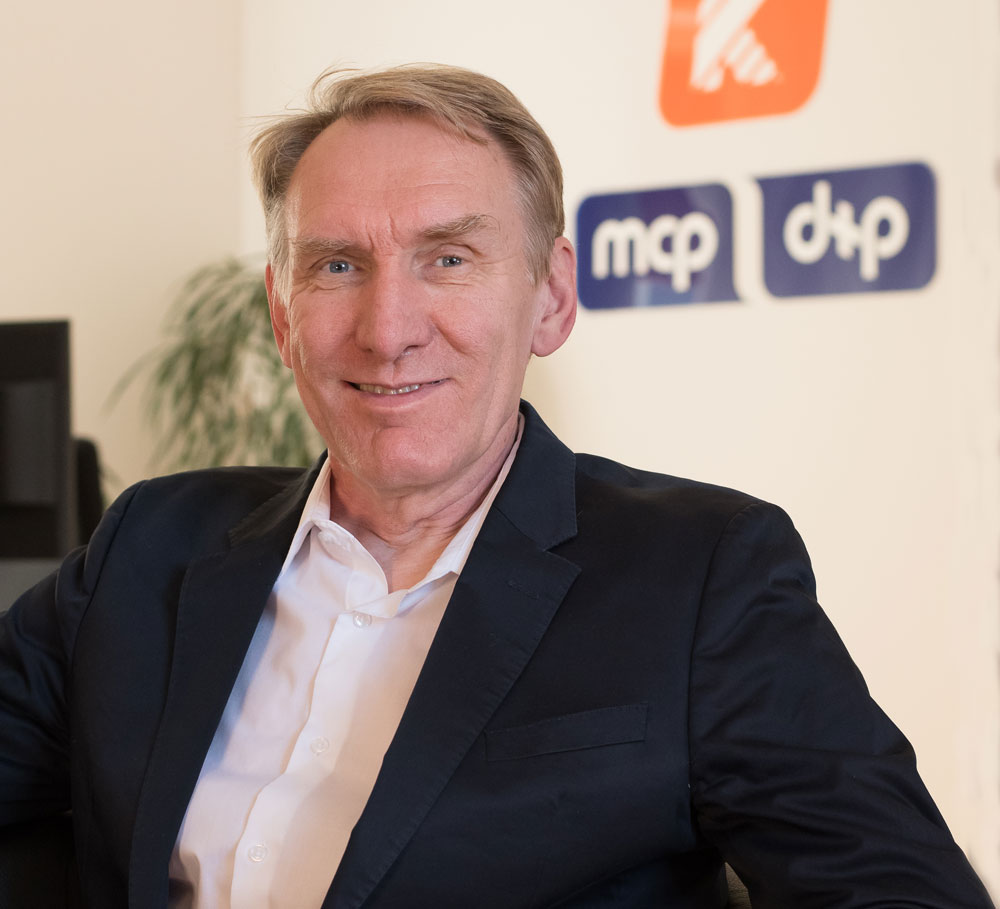
Artificial intelligence can help maintenance teams find information, analyse histories and plan work faster. But Reinhard Korb argues that technology cannot replace technical judgement, disciplined leadership or the difficult work of building a sound maintenance foundation.
Reinhard Korb entered maintenance almost by accident. He studied mechanical engineering at TU Wien, focusing on automation, control systems and the modelling of physical processes. He completed his doctorate in 1997, yet one subject had been conspicuously absent from his education.
“I had not heard the word maintenance once during my entire studies,” he says.

Maintenance appeared later, when Korb joined a pharmaceutical company in 1999 and was asked to bring a team responsible for production equipment to a more professional level. In a tightly regulated industry, the work had to become formal, transparent and consistent enough to stand up to inspections by health authorities.
The team developed detailed preventive maintenance instructions. Clearer instructions reduced variation in the way tasks were performed. The results became more predictable, equipment reliability improved and daily work contained fewer unwelcome surprises.
“There was less stress for the people and fewer surprises in daily operation,” Korb says.
Within about a year and a half, the approach had expanded from cleaning equipment across the production area. Better reliability released time for employees to deepen their understanding of the assets and bring more work in-house. The cost of external maintenance services fell by 30 to 40 per cent within a year, while the company retained its own people.
The experience shaped Korb’s career. Maintenance improves when knowledge is translated into repeatable practices, failures are studied rather than merely repaired, and people have time to learn.
Korb later assumed responsibility for utilities at several pharmaceutical sites in Vienna and moved into an engineering director role covering Central European sites, including a project management office overseeing around 200 projects.
He founded Korb Consulting KG in 2009 to apply what he had learned across industries. He became a shareholder of MCP Deutschland GmbH in 2014 and has served as Head of International
Consultancy for MCP Consulting Group since 2024. He is also a member of the advisory board of IBE AG. His assignments have taken him to more than 20 countries and many industries. He also represents the Maintenance and Facility Management Society of Austria, or MFA, in the General Assembly of the European Federation of National Maintenance Societies, or EFNMS.
Asked what still fascinates him about maintenance, Korb gives a deceptively simple answer: doing it right. Strategy matters, but he is particularly drawn to reliability engineering because it connects analysis with action.
There is also a wider reason why the field continues to motivate him. For Korb, one of the greatest rewards of maintenance is its contribution to sustainability. Proper maintenance allows existing equipment to operate longer and saves resources in terms of both energy and raw materials. In a circular economy, he argues, the aim should be to keep the circle as small as possible. Repairing rather than replacing is one obvious example.
Asset management fascinates him for a related reason: it forces organisations to consider the full picture. Instead of allowing individual functions to optimise their own performance, sometimes in contradictory ways, asset management seeks the solution that creates the greatest overall value for the organisation. Breaking down silos and changing established mindsets can be exhausting,
Korb acknowledges, but that difficulty is also part of the appeal.
Reliability engineering has a reactive and a proactive side. Reactive work begins after something has failed. Its purpose is not only to restore production but to determine what caused the event.
Proactive work looks ahead through criticality analysis and methods such as failure mode, effects and criticality analysis, or FMECA. It asks what could fail, what the consequences would be, and which maintenance, training or spare parts measures would reduce the risk.
The two sides depend on each other. An organisation cannot anticipate failures intelligently if it never learns from those it has experienced.
“If you do not learn from your failures, you do not build the knowledge needed to discuss potential failures,” Korb says.
This is why he regards analytical thinking as essential in maintenance leadership. Maintenance organisations are rich in practical skills and immediate problem-solving ability. Those qualities are indispensable, but they can also sustain a culture in which the most visible heroes are the people who repeatedly rescue production. Recognition goes to the fire brigade, while prevention remains invisible.
“Today we may have to fight the fires. But if we reserve some of our time for fire prevention, perhaps one day we will have fewer fires,” he says.
The natural response to a breakdown is to fix it, restart the equipment and turn to the next urgent problem. That restores function but does not necessarily remove the reason the failure occurred.
Escaping this reactive state requires direction, protected resources and leaders who ask a second question after production resumes: what must change so that this does not happen again?
For this reason, Korb favours reliability engineers who are fully dedicated to reliability work. Attempts to allocate 20 or 30 per cent of their time to daily operational support tends to fail. Daily issues expand until they consume all available time.
Recognition reinforces the problem. Solving an immediate breakdown produces visible success. Preventing a recurrence may produce no result that others can see for months. If leaders reward only rapid rescue, reliability engineers will return to operational work.
“A failure may have been removed, but the cause is still there,” Korb says. “The reliability engineer’s job begins after the equipment is running again. The real cause may be technical, organisational or both.”
Much of Korb’s consultancy work therefore concerns culture as much as machinery. He still returns to operational assignments to test his thinking against industrial reality. The first requirement for recovery is simple: problems must be solved faster than new ones. The longer task is to change the conditions that keep creating them.
Technical expertise opened the door to this work, but success depends on the human side of change. A leader must engage people and divide a large transformation into manageable steps.
“Technical knowledge is still the door opener,” he says. “But in the end, you have to reach the people.”
The challenge is clear when an excellent technician is promoted into a supervisory role. The organisation selects its best mechanic or electrician, then expects that person to stop being the leading technical expert and start developing other people. When discomfort grows, new supervisors often return to work in which they already feel competent.
This is one reason Korb is sceptical of purely vertical careers. A sideways move can force a leader to rely on the expertise of the new team instead of competing with it. He recalls the example of a male handball coach of a female team who described the boundary clearly. The coach could train the players, but he could never run onto the court and play the match for them.
“That is exactly how leadership should be understood,” Korb says. “Even if you are capable of doing the task yourself, it is usually not a good idea. Your responsibility is to make the team capable.”
This lesson is increasingly relevant as artificial intelligence enters maintenance. Korb’s perspective extends further than the rise of large language models. His doctoral research used neural networks to model physical systems, including large combustion engines used for heat and power production. By today’s definition, this was already AI.
What has changed is the accessibility of the technology and the range of information it can process. Korb sees practical applications throughout maintenance. AI can extract requirements from original equipment manufacturer manuals and accelerate the creation of maintenance plans. It can translate technical documents, turn a technician’s spoken report into a structured work history in a computerised maintenance management system, or CMMS, and summarise lengthy notes.
It can search for previous work orders for patterns that human memory may miss. A similar fault might have occurred on another line several years earlier. AI can locate the connection within seconds, provided that the organisation has captured a usable history. It can also make vast electronic archives easier to navigate.
These applications may sound modest beside visions of autonomous factories, but they solve recognisable problems and can be introduced step by step. More demanding analysis still requires specialists and a reliable database. Korb nevertheless attaches a firm condition to every use case.
“AI must be seen as a companion, not a replacement,” he says. “As with every companion, trust has to be built through repeated positive experience.”
A useful companion can make work faster, but it cannot relieve the user of judgement. Korb compares the situation to a calculator. If a calculator claims that two plus three equals seven, a person recognises the error only because the person already knows the answer. The same applies to an AI generated maintenance plan or recommendation. Without sufficient subject knowledge, the user may accept a fluent but flawed output.
That risk makes human competence more important, not less. Maintenance knowledge is often distributed across a team. One person understands the mechanical behaviour of an asset, another is its electrical systems, another its operating history. The organisation needs someone capable of assembling those fragments into a coherent analysis.
“If you do not have the detailed knowledge to challenge the result, using AI is very risky,” Korb says.
His assessment of the AI discussion is deliberately mixed. Industry is simultaneously underestimating what is already possible and overestimating products that promise more than they deliver.
Condition monitoring is a good example. Solutions are often sold under the label of predictive maintenance even when they merely report the present condition of an asset.
True prediction requires the current condition, its history and a model of how that condition is likely to develop. The model must also account for factors such as production volume, equipment usage and operating practices. Only then can it estimate remaining useful life. Even then, a prediction several years into the future will contain considerable uncertainty and become more reliable only as the asset approaches the relevant point of failure.
“Condition monitoring tells you where the asset is now,” Korb says. “Predictive maintenance needs a model that can describe where it is going.”
The model must be specific enough to the equipment to be useful. General conclusions may create attractive dashboards without supporting sound decisions. Digital twins can strengthen prediction only when they reflect the actual asset and its operating context.
The quality and scale of data remain constraints. Korb sees a missed opportunity in the limited exchange of information between equipment manufacturers and industrial users. A factory may operate thousands of different machines and learn a great deal about each one, yet it cannot automatically transfer that knowledge to unrelated equipment. A manufacturer may have hundreds or thousands of similar units operating across customer sites. Combining lessons from those units could produce much stronger models of failure behaviour and remaining useful life.
Commercial interests and questions of ownership stand in the way. Data has value, so each party wants to control it. Large technology companies may offer platforms for exchange, but these can create new dependencies. Korb would prefer arrangements in which manufacturers and maintenance organisations both benefit from shared knowledge.
Despite the scale of technological change, Korb says almost nothing about the future of maintenance itself worries him. On the contrary, he expects maintenance to become even more important in an environment where reinvestments are delayed, and existing assets have to remain productive for longer. What concerns him is the possibility that organisations will fail to seize that opportunity because maintenance remains trapped in reactive mode. Excellent asset management requires long term thinking, while many management and incentive systems still reward short term results.
For Korb, that mismatch is a weakness in the way organisations are managed.
The future skills challenge is equally complex. As automation and AI spread, maintenance will need more people who understand automation. Reliability engineers may feel most comfortable with mechanical failures, while electrical systems receive less attention and software remains a black box. Yet a growing share of the functionality of modern industrial equipment is based on software, much of it proprietary.
“To understand a modern machine, you increasingly have to understand its software,” he says.
This does not make traditional competence obsolete. Mechanical knowledge, material awareness and practical experience remain essential. Electrical and automation knowledge must be added to them, not substituted for them. Organisations may also need to reconsider structures that separate automation from maintenance so completely that reliability teams cannot troubleshoot the full system.
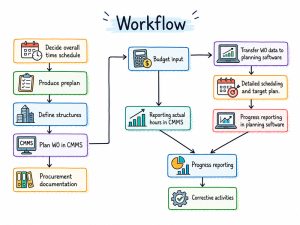
The same logic applies to management. New software, mobile devices and AI tools do not remove the need for a maintenance strategy, clear organisation, effective work orders, planning and scheduling. In many companies, these fundamentals are still incomplete. Adding an advanced tool to a weak process may digitise confusion rather than eliminate it.
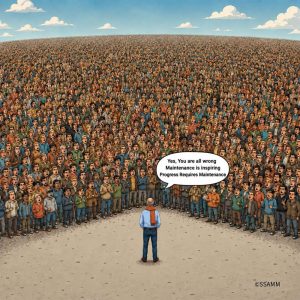
Korb often sees managers searching for what he calls a wormhole, a shortcut through time and space that would allow the organisation to leap directly from firefighting to predictive maintenance.
The image is humorous, but the warning is serious. There is no technology that allows a company to skip reliable data, disciplined processes, competent people and sustained leadership.
For Korb, the response is neither resistance nor uncritical enthusiasm. Maintenance professionals should use the new tools, build trust through evidence and remain capable of challenging the answers they receive. Leaders should protect the time required for reliability work and reward prevention as seriously as rapid recovery. Above all, organisations should resist the temptation to confuse a new tool with a mature maintenance system.
“We still need the foundation,” Korb says. “There is no wormhole that can take us directly from firefighting to predictive maintenance.”
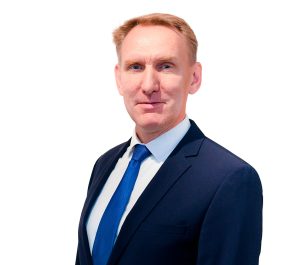
REINHARD KORB
Reinhard Korb is an Austrian mechanical engineer and maintenance and asset management specialist. He holds a doctorate from TU Wien and founded Korb Consulting KG in 2009. He has been a shareholder of MCP Deutschland GmbH since 2014 and Head of International Consultancy for MCP Consulting Group since 2024. Korb is also a member of the advisory board of IBE AG and represents the Maintenance and Facility Management Society of Austria in the EFNMS General Assembly. His international consultancy experience covers more than 20 countries and industries including pharmaceuticals, chemicals, paper, food production and medical devices.
Text: Mia Heiskanen Photos: Reinhard Korb



Subscribe to the free Maintworld newsletter here!

Latest