
Built for the Long Term

Industrial leaders are used to managing assets over decades. Paul Polman argues that the same long-term discipline should now be applied to business itself. In a turbulent world, resilience may depend on looking beyond efficiency, quarterly performance and the boundaries of your own operations.
Industrial companies know something about the long term. A plant, production line, energy system or piece of critical infrastructure is rarely managed only for the next quarter. Decisions made today can determine reliability, cost, safety and performance years from now.
Paul Polman believes business leadership needs to start thinking in much the same way. The former CEO of Unilever describes a world undergoing a fundamental transition. Climate change, geopolitical uncertainty, inequality, pressure on natural resources, technological disruption and declining trust are interacting rather than developing separately. The result is what has increasingly been called a polycrisis. For leaders, this changes the job.

“Leadership used to be to manage complexity in a fairly stable world. Today, many of the assumptions companies once relied upon, from growing markets and globalization to abundant resources and cheap energy, can no longer simply be taken for granted”, Polman says.
Leadership has therefore become the management of complexity in a turbulent world. For industry and asset management, that observation deserves attention. Reliability has traditionally meant keeping equipment and processes performing as intended. Increasingly, however, the resilience of an industrial operation also depends on energy, materials, suppliers, skills, regulation, infrastructure and environmental conditions beyond the factory gate.
An asset can be technically reliable while the system around it becomes increasingly fragile. Polman sees a paradox. Never have companies had greater awareness of the challenges ahead.
Technology is advancing rapidly. According to him, solutions based on technologies already available, could address a large share of the problems facing society. Yet progress remains too slow.
One reason is short-term thinking. Another is that the costs and benefits of change rarely fall neatly within the same organization. One company makes an investment while another participant in the value chain receives part of the benefit. Without trust and cooperation, rational decisions for the system can become difficult decisions for the individual company. Polman describes this as a kind of prisoner’s dilemma.
“If we all don’t do it together, we collectively pay a price for that.”
That logic is familiar in industrial ecosystems. Decarbonizing a value chain, creating circular material flows, improving traceability or developing shared infrastructure often requires several organizations to move simultaneously. Optimizing one link does not necessarily optimize the chain. This is where Polman challenges conventional corporate responsibility. Most companies, he says, have become considerably better at reducing negative impacts. They use less energy, emit less carbon, generate less waste or consume fewer resources per unit of production. That progress matters. But he questions whether “less bad” is an adequate destination.
“If you’re collectively less bad, then if you add it up, you make the situation worse.”
His alternative is the concept of net positive business: companies becoming regenerative, restorative and reparative, and ultimately giving more than they take. He reduces the idea to two simple questions: Is the company profiting from solving the world’s problems or creating them? And is the world better off because the company exists? For industrial leaders, these questions can sound abstract until they are translated into investment decisions.
Polman remembers facing choices as a CEO about entering new markets, building factories, investing in IT and developing people. Such decisions were naturally treated as investments in the future of the business. Sustainability, however, is still often placed in another category: a cost to be justified, a compliance requirement or a risk to be mitigated.
“We see it as a cost instead of an investment. We see it as a risk mitigation instead of an opportunity.”
That distinction matters for asset management. Replacing an inefficient system, redesigning a process, extending equipment life, improving energy efficiency or investing in predictive technologies can all appear differently depending on the time horizon and the boundaries of the calculation. A decision that looks expensive when measured against this year’s budget may look very different when lifecycle cost, resource availability, energy exposure, carbon, resilience and operational risk are considered.
Polman argues that the economics themselves are increasingly changing. In his view, the cost of acting on major sustainability challenges has fallen while the cost of inaction has risen. That turns sustainability from an obligation into what he calls “the biggest business opportunity of the century.”
His own experience at Unilever forms an important part of the argument. During his decade as CEO, the company attempted to decouple growth from environmental impact while putting broader social objectives alongside financial performance. Polman says Unilever generated a 300 percent shareholder return during that period while outperforming its competitive set. For him, this was not evidence that financial performance no longer mattered. Quite the opposite.
“I don’t feel it’s a debate between short and long term. If you’re a good leader, you manage your business obviously for the long term, but you also have to deliver.”
This may be one of the more useful messages for industrial management. Long-term thinking is sometimes interpreted as accepting weaker performance today in exchange for uncertain benefits tomorrow. Polman rejects that framing. Companies still need discipline, sound investments, capable people and competitive operations. The difference is that the definition of performance becomes broader and the time horizon longer.
His model for a net positive company begins with responsibility. Businesses, he says, cannot outsource parts of their value chain and assume that responsibility has been outsourced with them.
Leaders need to understand the total impact of the business and own it.
For asset-intensive organizations, that raises challenging questions. Where do critical raw materials originate? What happens to equipment at the end of its useful life? How resilient are suppliers?
What environmental or social risks are embedded upstream? Could components be repaired, remanufactured or reused rather than replaced? Are purchasing, operations, maintenance and investment decisions pulling in the same direction?
The second principle is to be science based and sufficiently ambitious. Polman says that many companies establish targets by extrapolating from what they have already achieved. Genuine transformation works differently. The starting point should be what is required, even when the route towards the goal is not yet clear.
“If you don’t feel uncomfortable or if you already think you have all the answers, you’re just not ambitious enough.”
There is an interesting parallel with industrial reliability. No serious maintenance organization would define acceptable equipment condition solely according to what happens to be convenient.
Limits are based on engineering requirements, safety and the performance expected from the asset. Polman essentially asks businesses to apply similar discipline to their wider impact.
His third principle is perhaps the most relevant for executives struggling with the divide between sustainability ambitions and operational reality: sustainability must become strategy.
“It is your strategy. It is the core of how you drive your business.”
A sustainability department cannot compensate for capital allocation pointing in the opposite direction. Nor can ambitious public commitments compensate for investment decisions that perpetuate the old operating model. Polman argues that the real priorities of an organization become visible when pressure arrives where money is invested, which projects survive, how people are rewarded and what management protects when difficult choices must be made.
For maintenance and asset management leaders, this brings the discussion remarkably close to everyday work. Asset strategies translate corporate ambitions into physical reality. Decisions about equipment lifetime, modernization, energy use, materials, reliability, digitalization and capital replacement ultimately determine how an industrial company operates for years or decades. If sustainability is genuinely part of strategy, it should therefore be visible in asset management plans, lifecycle decisions and maintenance priorities, not only in corporate reporting.
Consistency is Polman’s fourth principle. Companies are increasingly transparent, and stakeholders can compare what organizations say with what they do. Capital allocation, lobbying, taxation and executive incentives can all strengthen or undermine credibility.
“People will watch what you do, especially when the going gets tough.”
The fifth principle is collaboration. Polman believes many of the challenges facing business have become too large and interconnected for individual companies to solve alone. During his time at
Unilever, this meant working with competitors and other partners on issues including deforestation, palm oil, sanitation and plastics. His message is deliberately provocative: “When it gets to the future of humanity, we should not compete, we should cooperate.”
Competition does not disappear. Companies still compete in technology, service, productivity, quality and innovation. But Polman argues that there are areas where maintaining the system on which everyone depends, requires collective action.
Industrial leaders may recognize the logic. Standards, safety, cybersecurity, infrastructure, skills development, circular material systems and decarbonization can all contain problems where cooperation strengthens the entire ecosystem. There is another reason why his argument resonates with asset management. The profession is fundamentally built around stewardship. The objective is not simply to extract the maximum possible performance from an asset today, but to balance performance, risk and expenditure throughout its lifecycle.
Polman is asking leaders to extend that stewardship mentality beyond individual assets. What if companies managed natural resources, human capability, supply chains and societal trust with the same recognition that neglect eventually creates failure? The analogy is not perfect. Societies and ecosystems cannot be managed like machines. But the underlying principle is familiar: deterioration ignored today rarely becomes cheaper tomorrow.
Despite the scale of the problems, Polman ends up in a position of hope rather than pessimism. Technology exists, knowledge exists, economics are moving. Nature has shown an ability to recover when given the opportunity, and a new generation is entering working life with different expectations and considerable capacity for innovation. What remains, in his view, is leadership and human will.
For industry, that is the most useful question to take away. We spend enormous efforts ensuring that critical assets remain capable of performing their required functions in the future. Are we applying the same discipline to the organizations and systems around them?
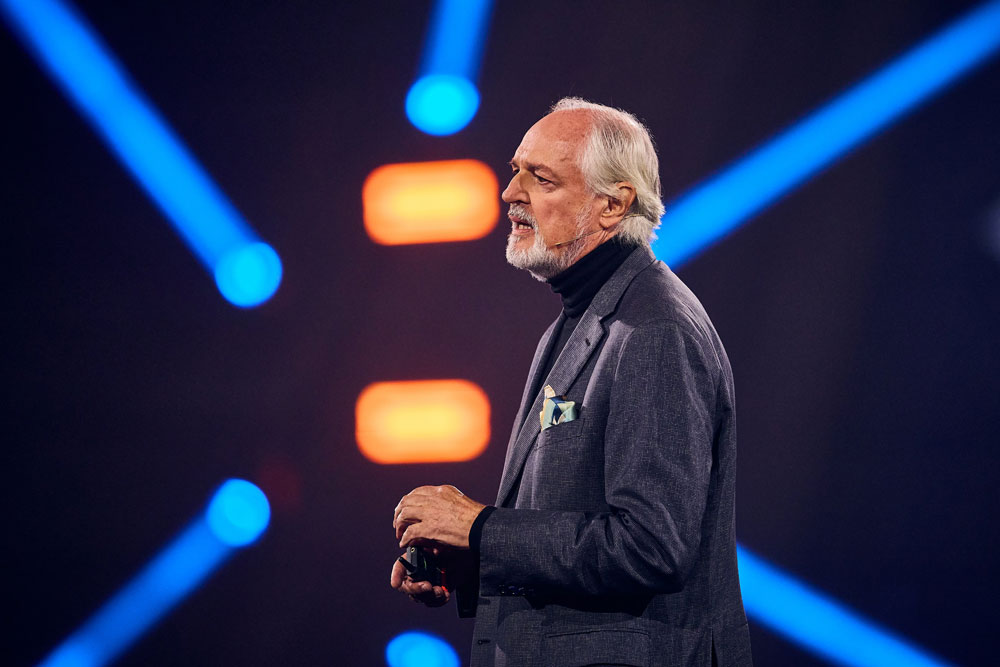
ABOUT PAUL POLMAN
Paul Polman is a business leader, campaigner and author best known for serving as CEO of Unilever from 2008 to 2019. He is an internationally recognized advocate of sustainable and responsible business and was involved in the development of the UN Sustainable Development Goals. Polman is the co-author of Net Positive: How Courageous Companies Thrive by Giving More Than They Take. Today, through board roles, investments and advocacy, he promotes leadership models that combine long-term business performance with positive social and environmental impact.



Subscribe to the free Maintworld newsletter here!

Latest