Maintenance Redefined
As convenor of the EFNMS Body of Knowledge, Antoine Despujols is on a mission to create a unified European maintenance culture. The comprehensive publication defines the scope and best practices of maintenance across Europe – and it’s available for free. But more importantly, it’s changing how we think about the profession itself.
The European Federation of National Maintenance Societies (EFNMS) Body of Knowledge is not just another technical manual. It’s a decade-long collaborative effort to define what maintenance truly means in the modern industrial landscape – and to elevate its status from a reactive necessity to a strategic competitive advantage.
Antoine Despujols, who retired from EDF (the French electricity utility) after a distinguished career spanning nuclear power plants, wind farms, gas turbines, and hydroelectric stations, has been the driving force behind this ambitious project. As convenor, in collaboration with the EFNMS coordinator, Lovro Frkovic, he has coordinated contributions from approximately 20 European experts, managed a review committee of 10 specialists from different countries, and overseen the creation of what is becoming the definitive reference for maintenance professionals across Europe.
The genesis of the Body of Knowledge dates back more than 10 years, though active development began in 2017. “The objective of EFNMS is to share experiences and to increase the visibility of maintenance,” Despujols explains. “We decided to work on the maintenance concept and to think about what the content of maintenance is. What are the borders, the perimeter of maintenance?”
Maintenance is both defensive – avoiding risk – and offensive – enhancing competitiveness. It’s both a shield and a sword.
This question led to a fundamental mapping exercise. The team identified three crucial domains interconnected with maintenance: asset management, risk management, and sustainability. “Maintenance is a part of all three,” Despujols notes. “It makes maintenance both defensive – avoiding risk – and offensive – enhancing competitiveness. It’s both a shield and a sword.”
The BoK’s structure is built on the foundation of the EN17007 European standard for maintenance processes. From this process model, the team identified approximately 80 distinct maintenance subjects, ranging from maintenance management activities and maintenance engineering techniques to maintenance support, occuparional risk management and maintenance execution.
These subjects are organized into six chapters, with each topic covered in a concise 2–3-page summary written by European experts, accompanied by relevant bibliographies for readers seeking deeper knowledge.
The development process is rigorous. Each article undergoes review by two experts from the reading committee, followed by linguistic quality control from a native English speaker in Canada, and finally professional formatting by a UK-based specialist. “It’s quite difficult to make a short article,” Despujols admits. “We have a small compensation for authors because it is real work.”
Finding new authors has become increasingly challenging. “At the beginning, members of EFNMS were significant contributors, but now they’ve written articles and we need to find others,” he says. The current version contains 25 articles, with plans to expand to more than 30 by early next year. But the long-term vision is even more ambitious: a Wikipedia-like collaborative platform where readers can propose modifications and improvements, ensuring the BoK remains a living product.
The decision to make the BoK freely downloadable was deliberate. “It is the role of EFNMS to make these articles accessible,” Despujols explains. “And because it is the first version and not complete, we need authors. If readers can say, ‘I have something to propose about an article, that could be a way to find authors.”
But perhaps the most significant development is the direct link between the BoK and the revised EN15628 standard for qualification of maintenance personnel. Despujols, who is deeply involved in standardization efforts through Technical Committee 319, was instrumental in establishing this connection. “To be qualified in maintenance, you need to have knowledge about these subjects,” he explains. “For companies, it is important for recruitment, for training people, and to know if the people they recruit are qualified.”
This connection transforms the BoK from a reference document into a practical framework for workforce development – addressing one of the industry’s most critical challenges.
When asked about the biggest challenges facing European maintenance today, Despujols points to the gap between research and implementation. “In papers, we often read articles written by researchers, but in companies, it takes time to be implemented. The main difficulty is how to implement these new technologies and new ways to perform maintenance. The relation between research and the field is not simple.”
Looking ahead, Despujols sees digitalization, predictive maintenance, artificial intelligence, and digital twins playing increasingly important roles. However, he’s quick to dispel the notion that these technologies will replace traditional approaches. “Predictive maintenance will not take the place of other kinds of maintenance. We will still have condition-based maintenance, predetermined maintenance, and corrective maintenance. All the techniques will be used in the future, even if predictive will be used increasingly.”
Currently, Despujols is focused on developing a maintenance ontology – defining the relationships between maintenance concepts to enable better use of artificial intelligence. “We need to understand the relation between concepts like failure mode, failure mechanisms, failure rate, maintenance tasks, etc.,” he explains. “This is needed to use artificial intelligence to take into account experience feedback written by technicians.”
You must think about maintenance not as the work of car repair, but as the work of doctors. We are doctors of equipment.
The potential impact is significant. “In the nuclear industry, it is difficult to consider regularly the events and to react and improve continuously the maintenance plan. It is done, but with delays. If we can do that quickly, thanks to digitalization, that will be very efficient in the future.”
But perhaps Despujols’s most compelling contribution is his reframing of the maintenance profession itself. When teaching, he challenges students to reconsider their perception of maintenance work. “Very often, what comes to mind is the person who repairs your car – the garage mechanic. But if we change the maintenance definition slightly and consider the living bodies, the definition is close to medicine. You must think about maintenance not as the work of car repair, but as the work of doctors.”
This parallel is more than rhetorical. “Predictive maintenance and predictive medicine use the same kind of tools. We work on failure mechanisms, which are illnesses of equipment. We are doctors of equipment.” The implications for workforce development are profound. “This image opens the door for young people to be interested. It’s more attractive than putting your head in a car motor. And it opens the door for women too – there are few women car mechanics, but many women doctors.”
The Body of Knowledge represents more than a compilation of technical expertise. It’s an effort to create a unified European maintenance culture, to establish common standards and shared language across national boundaries, and to elevate the profession’s status. As Despujols notes, “One objective of the BoK is to have a European maintenance culture which is the same for all European countries.”
With 80 subjects identified and only 30 articles completed, the work continues. But the foundation has been laid for a comprehensive, evolving resource that bridges theory and practice, research and implementation, and perhaps most importantly, connects maintenance professionals across Europe in a shared mission to keep the continent’s industrial infrastructure running efficiently, safely, and sustainably.
The EFNMS Body of Knowledge is available for free download at www.efnms.eu .

Antoine Despujols career spans the intersection of research, education, and industrial practice. After working in the research and development division of EDF (Électricité de France), where he gained experience across nuclear power plants, wind farms, gas turbines, and hydroelectric stations, he simultaneously served for 12 years as head of a Master’s degree program in maintenance and risk management at a Paris university.
“I was working one day per week at university, and it was really nice for me,” he recalls. “I had the opportunity to visit many companies and to follow many students.” This dual perspective – combining cutting-edge research with practical industrial challenges and academic teaching – uniquely positioned him to lead the Body of Knowledge project.
Now 71 and retired, Despujols continues as a consultant for EDF while remaining active in standardization work and serving as the French delegate to EFNMS, a role he has held since 2008. He previously served on the EFNMS board and continues to contribute to the evolution of maintenance standards and practices across Europe.
His current focus on maintenance ontology – defining the relationships between maintenance concepts to enable AI applications – reflects his ongoing commitment to bridging the gap between theoretical advancement and practical implementation, the challenge he identifies as maintenance’s greatest hurdle.



Subscribe to the free Maintworld newsletter here!
Maintenance Strategies Can Help ESG Goals
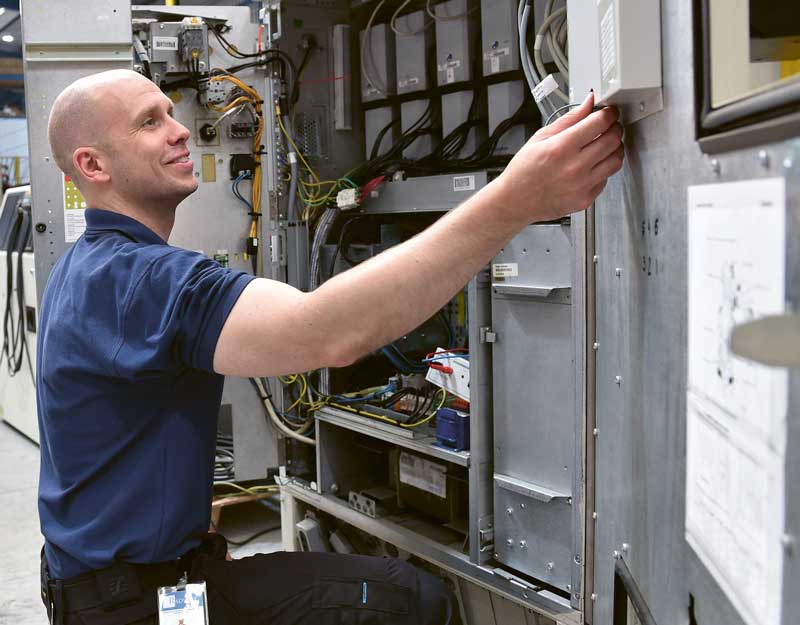
Predictive maintenance and obsolescence management have long been recognised as ways for manufacturers to reduce downtime. But these approaches can also help companies meet their ESG (Environmental, Social and Governance) objectives, argues Matthias Ludwig, Managing Director of Radwell International Germany.
The high cost of downtime
A new Siemens report, The True Cost of Downtime 2024, highlights the financial scale of the problem. It found that unplanned downtime now costs the world’s 500 largest companies an average of 11% of their revenues – a staggering $1.4 trillion, equivalent to the GDP of Spain.
The challenge is exacerbated by ageing assets. A recent white paper by ERIKS UK & Ireland and IET revealed that more than 50% of equipment in 65% of factories is over ten years old. In over 70% of cases, no OEM spare parts are available. While equipment suppliers promote Industry 5.0 and IIoT solutions to minimise downtime in the future, many businesses must continue operating with legacy systems.
This reality makes effective maintenance not only a financial necessity but also an opportunity to strengthen sustainability strategies.
ESG benefits of maintenance and spares
Choosing to repair or replace individual parts, rather than entire systems, brings clear ESG benefits:
• Environmental: Resource efficiency, reduced waste, lower carbon emissions, and less water and energy use compared to full system replacement.
• Social: Support for local suppliers and service providers, plus longer product lifecycles that increase customer trust.
• Governance: Better resource stewardship, reduced operational and compliance risks, and improved transparency in sustainability reporting.
In short, maintenance decisions can make a measurable contribution to a company’s ESG commitments, while also protecting the bottom line.

A strategic approach
To capture these benefits, Ludwig recommends combining predictive maintenance and obsolescence management in a structured plan. The process typically follows four stages:
1. Risk Assessment: Identify critical assets and evaluate obsolescence risk using data such as maintenance logs, supplier reliability, and end-of-line (EOL) plans.
2. Repairs: Define in advance what can be repaired, who will do it, and what lead times apply – particularly for critical components like HMIs.
3. Spare Parts: Secure key spares in advance to minimise downtime. Buying before a breakdown can save costs compared to last-minute sourcing of rare items. Subscription-based inventory services, such as Radwell’s new SparesVault, can also support this process.
4. Strategy and Upgrades: Review maintenance policies regularly and plan upgrades proactively, rather than during unplanned downtime. For example, AC drives are often cost-effective upgrade candidates, offering higher productivity, reliability and energy savings.
Financial and operational gains
Planned upgrades and well-managed spares can significantly cut downtime and reduce costs. In some cases, obsolete parts may be more than twice as expensive as modern equivalents. By upgrading in advance, companies gain access to warranties, longer-term support, and more energy-efficient technologies.
As Matthias Ludwig concludes, “Maintenance is no longer just about keeping the line running. Done strategically, it supports ESG targets, reduces costs, and ensures manufacturers get the best performance from both their people and their capital assets.”
Subscribe to the free Maintworld newsletter here!
Print media is not dead – it is alive, stronger than ever

You are holding the freshly printed Maintworld – the voice and trailblazer of the maintenance sector, now carefully crafted into a visual magazine.
At Maintworld, we believe that in today’s digital era, print is more than just a medium – it is an experience. Print is tangible, authentic, and valuable. When a reader opens a magazine, they pause and dive in – receiving a calm, structured reading experience that leaves a lasting impression.
Well-curated print content is at its best personalized, multisensory, and above all, trustworthy.
Of course, Maintworld is also easily accessible online and through its newsletters. Going forward, we aim to further develop a content strategy where print and digital complement each other seamlessly. While our belief in print remains strong, we are equally committed to expanding our digital services together with you.
Maintworld has reached its audience well online, too. Our ambition is to offer members and readers the best possible combination: the quality and presence of print alongside the speed and flexibility of digital.
In this issue as well, we want to open the world of maintenance as broadly as possible. Be inspired and motivated. Share your feedback or send us your story ideas – we are curious and highly motivated to create the very best maintenance content for you.
Print lives on and thrives wherever a community values depth, trust, and the opportunity to pause with important information. Print is not yesterday – it is today’s premium and a strong partner for all of us working in the field.
And that is precisely why our professional magazine is an investment for you and the community you represent. Together, we want to strengthen trust within the maintenance profession, build on our shared expertise, and leave a lasting mark in our common story.
Jari Kostiainen

Subscribe to the free Maintworld newsletter here!
European Industrial Excellence in Focus: Diego Galar at the Helm of EFNMS
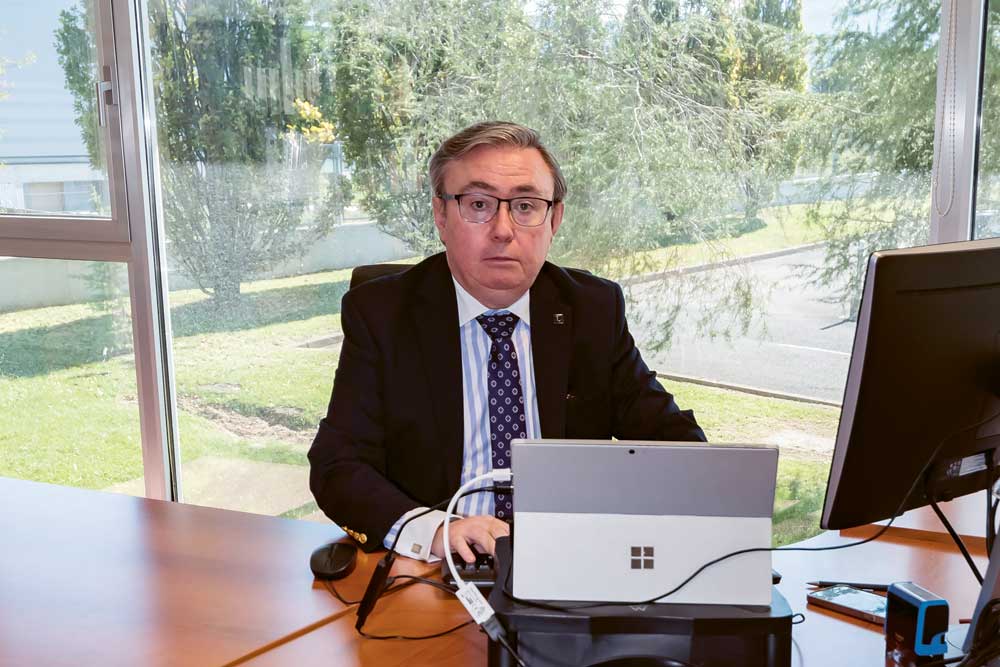
When Professor Diego Galar took over as Chair of the European Federation of National Maintenance Societies (EFNMS) in May, he inherited not only the leadership of Europe’s umbrella organisation for maintenance but also the responsibility to redefine its role in a fast-changing industrial landscape.
Based at Luleå University of Technology in Sweden, where he serves as Professor of Condition Monitoring, Galar is also Director of Technology and Research at Madrid-based industrial solutions company, Sisteplant. This dual role keeps him grounded in both academia and real-world industrial challenges.
In his new role as Chair of EFNMS, Galar is committed to advancing a progressive vision that ensures EFNMS remains a strong and influential representative of European maintenance interests both within the European Union and internationally.
As the Galar puts it:
“Our mission is not only to promote excellence in maintenance but to embed it firmly within the broader discipline of asset management—ensuring that European industry remains globally competitive, technologically advanced, and sustainably resilient.”
At its core, EFNMS exists to connect and amplify expertise: “So that we speak with one coherent European voice.” “This is critical in international forums, whether we are shaping global standards, influencing EU policy, or defining the industrial research agenda.”
Painting the Future of Industrial Maintenance
Galar anticipates that the European maintenance industry will rapidly shift from a reactive, operational task to a proactive, strategic discipline, supporting the entire value lifecycle of industrial assets.
“In this future, maintenance is defined not by breakdowns or scheduled checks, but by an ‘intelligence layer’ that keeps equipment continuously healthy and high performing. Emerging technologies are driving this shift,” Galar explains.
Artificial Intelligence (AI), advanced analytics, and predictive algorithms will play an increasingly significant role in identifying problems early, preventing failures, and enhancing planning and decision-making. Meanwhile, robotics—from drones to tracked crawlers—will increasingly operate in hazardous or inaccessible areas, transmitting real-time data to digital twins
that replicate physical assets. Combined with AI, these twins will predict maintenance needs, support repair-or-replace decisions, and optimise resources, enabling a truly condition-based, predictive approach.
While the efficiency gains from such technological developments can be significant, Galar stresses that the human factor must remain a priority. “Technology must go hand in hand with human capability,” he emphasises. “We need skilled professionals to interpret AI outputs, validate digital twin predictions, and manage robotic systems within an asset management strategy that balances risk, cost, and asset lifespan.”
The professor underscores the importance of human expertise in the face of technological progress. He warns that an overreliance on automation could lead to a loss of fundamental knowledge about how machines work. For him, the solution lies in
Industry 5.0, a phase where people remain at the center and technology supports rather than replaces them.
“In Industry 5.0, technology is a partner, not a substitute,” Galar explains. Robotics will take on tasks that are risky, physically demanding, or repetitive—such as inspecting tall structures, navigating pipelines, or performing precision work in hazardous settings—while AI analyses sensor data to predict failures earlier than before.
Galar stresses that machines can find issues, but humans make the final call. “AI might detect a gearbox problem, but it’s the engineer who must consider the bigger picture, safety, and long-term plans before deciding what to do. For EFNMS, this means putting people first: using AI and robotics to provide better tools, richer data, and safer work environments while respecting human judgment.”
“The future isn’t about replacing workers, but about raising their roles—turning technicians into system designers, supervisors into data analysts, and engineers into strategic managers. The best maintenance teams will be those that combine human insight with technological precision.”
Building the Foundations of Industry 5.0
Translating the promise of Industry 5.0 into reality requires more than technology and ambition, Galar reminds.
“It demands robust frameworks, credible research, and supportive policy to ensure AI, robotics, and digital twins are deployed safely, effectively, and with human expertise at the core.”
Galar highlights that under his leadership, EFNMS will focus on three interconnected pillars – standards, research, and policy. This, he says, will help steer the maintenance profession through this transformation.
“Standardisation is not just technical,” Galar explains. “It ensures innovations like AI-driven diagnostics or robotic inspections are implemented safely, interoperably, and in ways that maximise value across sectors.”
On the research front, EFNMS will strengthen its role as a bridge between academia and industry, ensuring research is relevant, applied, and scalable to help tackle Europe’s most urgent maintenance challenges. Current priorities include AI prognostics, hazardous-environment robotics, sustainable lifecycle management, and even metaverse-based training. “Our role is to turn academic insight into operational best practice,” Galar notes.
The professor emphasises EFNMS’s role in advocating for maintenance as a strategic enabler. The organisation continues to push for recognition of maintenance’s importance, particularly in the context of the European Green Deal, the circular economy, and competitiveness agendas.
“By the end of my term, I want EFNMS to be recognised not only as Europe’s maintenance authority but also as a global thought leader, shaping how assets are managed, maintained, and valued,” Galar says.
“This means pushing for frameworks that incentivise investment in condition-based maintenance, digitalisation, and workforce development – ensuring Europe leads rather than follows in the next industrial revolution.”
Empowering the Next Generation
With discussions about work shortages in many technical fields, including maintenance, engaging young talent is not just a strategic priority but a crucial necessity for maintaining Europe’s leadership in industrial innovation. The active involvement of young professionals is key to shaping the future of maintenance and ensuring its continued relevance in the rapidly evolving industrial landscape.
“We need clear pathways for students, graduates, and early-career engineers to connect with our network, contribute to projects, join working groups, and see the scale of opportunities available,” Galar says,
He adds that cross-border collaboration is not just essential, but also a cornerstone of EFNMS’s approach.
“Maintenance challenges—from AI-driven diagnostics to robotics in hazardous environments and sustainable lifecycle management—are global. Involving young professionals in multinational teams fosters knowledge transfer and exposes them to diverse approaches and innovations.”
Galar notes that EFNMS’s extensive network enables exchanges, mentorship programmes pairing emerging talent with seasoned experts, and participation in EU-funded research. “A young engineer in Portugal could work alongside a robotics specialist in Finland and a digital twin expert in Germany—accelerating innovation and ensuring continuity.”
Galar notes that nurturing talent is not just about technical skills, but also about building curiosity, adaptability, and systems thinking—qualities essential for integrating asset management with the potential of new technologies.
“We have to meet young professionals where they are—online, connected, and ready to collaborate in real time. And we must cultivate not just technical skills, but curiosity, adaptability, and systems thinking.”
If the EFNMS Chair Had One Message
When asked what single message he would deliver to industry leaders, policymakers, and young professionals, Galar doesn’t hesitate:
“If I had to distil my message into one call to action, it would be this: treat maintenance not as a cost to be contained, but as a strategic investment in the future of your assets, your organisation, and your people.”
To industry leaders, Galar urges placing maintenance and asset management at the heart of strategy. The era of reactive, invisible maintenance is over. Today, it is a data-rich, technology-driven, innovation-led discipline. AI, robotics, digital twins, and condition-based maintenance are no longer emerging ideas—they are operational realities that, when used strategically, deliver measurable gains in performance, safety, and sustainability. Those who embrace this shift will lead; those who ignore it will fall behind.
To policymakers, Galar calls for recognising maintenance as a key enabler of their agendas. The European Green Deal, the circular economy, and industrial decarbonisation all depend on assets operating efficiently for as long as possible, with minimal waste and maximum safety. Policies that incentivise proactive maintenance, accelerate the adoption of advanced technologies, and invest in workforce skills will not only strengthen industries but also drive Europe’s environmental and social progress, he notes.
And to young professionals, Galar’s message is one of opportunity and purpose. Maintenance and asset management offer a career path that is intellectually challenging, technologically advanced, and socially relevant.
“This is the field where you can work with robotics one day, AI algorithms the next, and sustainability strategies the day after. You will be solving real problems that keep factories running, infrastructure safe, and societies functioning.”
The future of maintenance will be integrated, autonomous, and intelligent, Galar continues.
“If we work together—industry, academia, policymakers, and professionals across borders—we will not only keep our assets in operation; we will ensure that they operate at their best, delivering value to both business and society for decades to come.”
As a regular contributor to Maintworld magazine, the EFNMS Chair also highlights the role of industrial media in driving this shift. By reporting on innovations, sharing best practices, and amplifying success stories, such media can change perceptions—moving maintenance from the background to the centre of strategic conversations on performance, sustainability, and competitiveness, Galar concludes.

Standardisation and EU Policy Influence: How EFNMS Makes a Difference
EFNMS plays a crucial role in shaping European policies on maintenance, sustainability, and industrial competitiveness. Rather than just observing, it works closely with policymakers, offering practical, trusted advice based on real-world experience in maintenance and asset management.
A significant part of EFNMS’s impact stems from its collaboration with standardisation groups, including CEN, ISO, and IEC. Here, it helps create clear rules for new technologies, such as AI, digital twins, and robotics, used in challenging environments. As EFNMS Chair Diego Galar says, “standards act as the bridge between technical innovation and regulatory acceptance.”
These standards facilitate the safe and confident adoption of new technologies across European industries.
EFNMS also engages directly with European institutions to demonstrate that effective maintenance is crucial to key initiatives such as the European Green Deal and the EU’s Industrial Strategy. They explain how smart maintenance reduces waste, digital tools improve efficiency, and robotics make work safer — all of which help Europe meet its environmental and economic goals.
EFNMS also guides the types of research that should receive funding, focusing on smart assets that can monitor themselves, advanced robotics, AI for predicting failures, designing for reuse, and cybersecurity for connected systems.
Most importantly, EFNMS supports its advice with real-world examples. As Galar says: “Real-world results speak more convincingly to policymakers than theoretical arguments, showing them that well-managed assets are not only more efficient but also more sustainable and more resilient.” By highlighting successful projects, EFNMS is proving that maintenance is vital for Europe’s future green and digital progress.
The European Federation of National Maintenance Societies (EFNMS) is the leading umbrella organisation for maintenance and asset management across Europe, representing 24 national societies. More than just a thought leader, EFNMS backs its advice with real-world success stories. As Chair, Diego Galar notes: “Real-world results speak more convincingly to policymakers than theoretical arguments.” By showcasing proven projects, EFNMS demonstrates how well-managed assets drive efficiency, sustainability, and resilience—making maintenance a cornerstone of Europe’s green and digital transformation.
Text: Nina Garlo-Melkas
Photos: Luleå University & Sisteplant
Subscribe to the free Maintworld newsletter here!
Rising Role of Smart Coatings
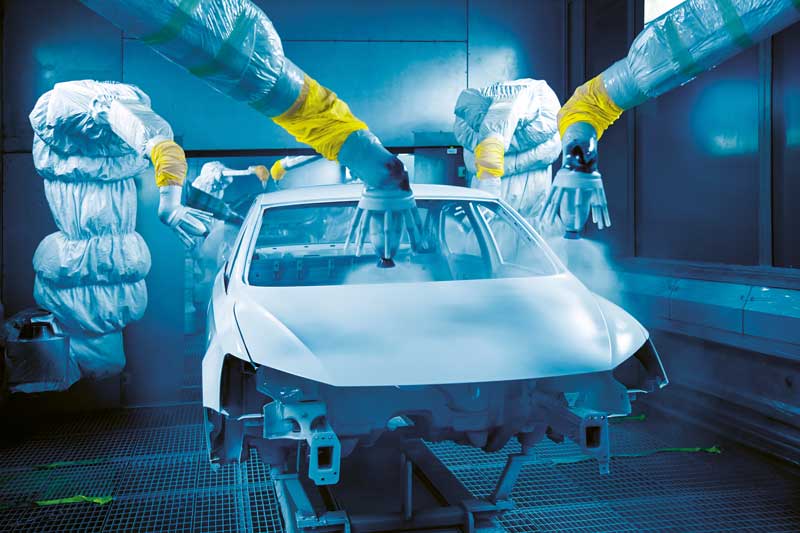
New self-healing, anticorrosive, and antimicrobial coatings can reduce maintenance costs, and their use is expected to increase in the coming years.
Smart coatings may change their structure or appearance when exposed to heat, humidity, mechanical stress or chemical changes such as corrosion. Some are even designed to react to microbial growth.
The scope of applications is broad. In 2011, researchers developed a spray-on antenna that, at a thickness of 8 microns or less, could give electronics wireless connectivity. In 2016, another group created a smart paint that reacts to the metal tip of specialized canes to help pedestrians with visual impairments navigate.
Self-Healing Capabilities
One of the most notable advantages of certain smart paints in industrial maintenance is their ability to repair themselves. In the automotive sector, self-healing clear coats have been in use for years. These coatings typically contain polymers that react to sunlight, releasing a resin that hardens quickly within the paint.
Manufacturers in other industries can also make use of similar solutions. While self-repairing paints cannot restore extensive mechanical damage, they can prevent scratches, chips and surface warping from developing into deeper structural issues. New developments have improved performance as well. A study in 2022 demonstrated a paint that was able to fully recover within just 30 seconds when exposed to heat.
Such coatings are particularly valuable for machinery operating in demanding conditions.
Color-Changing Smart Paint
Another category of smart coatings does not repair damage but reveals it more clearly. Coatings that respond to the chemical changes presented by corrosion are a common and advantageous example.
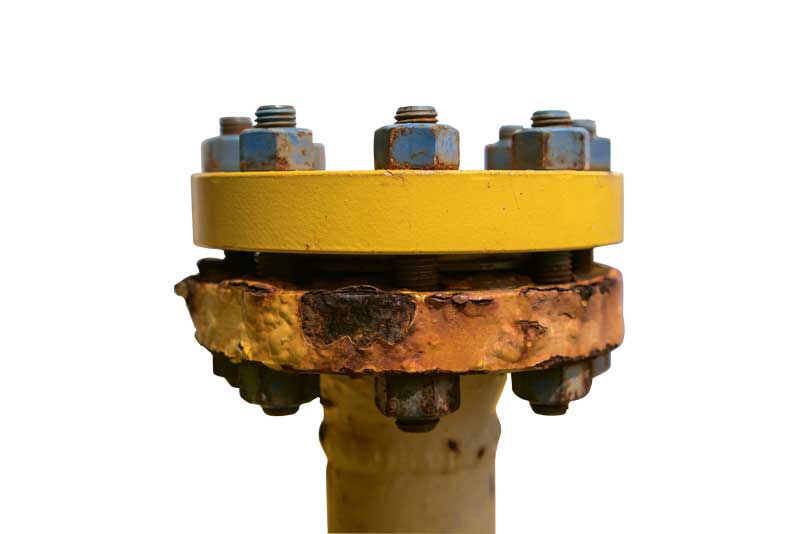
Severe rust is clearly visible to the naked eye, but this degradation is not always easy to see in its earliest stages. A rust-reacting paint can produce a more dramatic color difference, so technicians can recognize the need for repairs before structural damage occurs.
Smart paints may not offer the same in-depth analysis as an IoT maintenance sensor. They do make some amount of condition-based care possible, which leads to fewer breakdowns and avoids unnecessary repairs.
Anticorrosive and Antimicrobial Coatings
Some reactive coatings go a step further by slowing or stopping corrosion once it is detected. One example, adapted from a NASA-developed paint, releases anticorrosive agents when pH levels indicate rust.
Although it cannot completely prevent corrosion, this approach can cut maintenance costs by as much as 50 percent by limiting how far the damage spreads.
When combined with color-changing indicators, such coatings make repair work more efficient. Slowing corrosion until a technician can intervene is especially useful for smaller operators who may not always have maintenance staff available.
Antimicrobial coatings offer a comparable advantage. Using naturally antimicrobial substances such as silver strengthens the protective qualities of paint, preventing the growth or spread of bacteria, fungi or other contaminants. Semiconductor fabs and pharmaceutical production facilities will see the biggest improvements from this use case.
Electronics Protection
Many uses of smart paint act as alternatives to IoT- and AI-based maintenance, but the same technology can also complement these systems to improve their performance. Reactive coatings help safeguard sensitive electronic components, ensuring that advanced systems remain reliable.
Antimicrobial, dust-resistant and scratch-healing layers can keep sensors in good condition, preventing contamination that could interfere with measurements. By reducing these risks, smart coatings support higher data quality and consistency in IoT and AI applications such as predictive maintenance. With poor-quality data costing businesses millions each year, even small improvements in reliability can lead to major savings.
In other cases, facilities may apply smart paints to shield solar panel cells from sun damage or to react to heat in ways that boost efficiency. These adjustments can lower the long-term maintenance costs of renewable energy and help manufacturers reach their climate goals more easily.
One of the most notable advantages of certain smart paints in industrial maintenance is their ability to repair themselves.
Smart Paint Challenges
Smart coatings offer a wide range of applications in factory maintenance, but the technology is not without its limits. These paints can address only minor damage and cover a restricted set of operating concerns.
As such, smart paints can push facility maintenance investments further, but they cannot replace other innovations entirely. This may lead to high upfront costs, even if the coatings themselves are not expensive compared to IoT and AI technologies.
Many of the most disruptive smart coating applications are also in their early stages. More dramatic self-healing, damage prevention and reactive polymers have not seen extensive real-world testing, especially in their newer, more promising forms.
Smart Coatings Market
The economic potential of smart coatings is significant. Market researchers estimate that the global smart coatings industry was valued at $6.34 billion in 2024 and is expected to reach $7.9 billion in 2025, reflecting an annual growth rate of roughly 25 percent. Longer-term projections suggest that the sector could even surpass $19 billion by 2029 if current trends continue. The
Asia-Pacific region was the largest segment of the smart coatings market in 2024 and is expected to be the fastest-growing region in terms of market share.
Key drivers include demand for corrosion protection, antimicrobial properties and self-healing materials. Industries such as automotive, aerospace, construction and energy are expected to lead adoption. In northern regions, anti-icing and de-icing nanocoatings are emerging as a growing niche.
Sources: American Coatings Association (ACA), The Business Research Company, revolutionized.com
Text: Vaula Aunola Photos: Shutterstock
Subscribe to the free Maintworld newsletter here!
Industrial AI to Double Within a year

A new global survey of more than 1,700 senior executives reveals that industrial AI is advancing faster than expected.
Industrial AI is no longer a distant prospect. According to the IFS Invisible Revolution Study 2025, the use of AI in manufacturing companies is predicted to almost double in the next 12 months, from 32% today to 59%. At the same time, profitability improvements are already widespread, with 88% of organisations worldwide reporting that AI has had a positive impact on their bottom line.
“AI is a key driver of business performance. Now is the time to close the adoption gap – bringing people, processes and products together to deliver tangible results,” says Kriti Sharma, CEO of IFS Nexus Black.
For example, in the US, 90% of senior decision makers plan to increase AI investment in 2025 compared to 2024.
AI First Becomes the Norm
The shift in organizational AI maturity is even more dramatic. Today, just under one-third of businesses (32%) claim to be “AI First,” meaning AI is deeply embedded into workflows and decision-making. But within a year, nearly 60% expect to achieve this level of integration. The number of companies still “experimenting” with AI is expected to plummet from 24% to just 7%.
The research shows that companies are rapidly moving beyond pilot projects and concept testing. The proportion of organisations still “experimenting” with AI is expected to fall sharply, from 24% today to just 7% within a year.
This marks a decisive shift towards integrating AI into key functions such as asset management, supply chain optimisation and manufacturing.
“More than half of managers admit that their organisation does not yet have a coherent AI strategy.”
But the momentum also reveals vulnerabilities. More than half of executives admit that their organisations do not yet fully understand AI. This lack of clarity can undermine adoption at a time of increasing competitive pressure.
Training gaps become critical
Skills development has emerged as one of the most pressing challenges. Most managers believe that up to 60% of their workforce will need retraining to adapt to AI-enabled activities. Significantly, a third of respondents estimate that this need could apply to all employees in their organisation.
This training gap is already being felt in recruitment. Many managers describe hiring AI talent as “extremely difficult”, even in countries where the education system is seen as supporting the skills of the future. Without large-scale retraining programmes, organisations risk being left behind just as the AI revolution accelerates.
Over half of US firms (54%) offer formal training, yet 65% of US senior decision makers say their businesses still lack the knowledge to use AI to its fullest. By contrast, just 46% of respondents in Japan feel this gap exists, pointing to stronger internal confidence.
AI Gains Without Strategy
Another barrier is the lack of a strategy. More than half of managers, 53%, admit that their organisation does not yet have a coherent AI strategy.
Despite this, financial returns have exceeded expectations. Globally, 70% of respondents report better-than-expected returns on their AI initiatives, which has driven investment. This figure rises to 92% in the US and 94% in Germany.
Companies are achieving measurable benefits but do not yet have the strategies and governance models needed to sustain long-term change.
Trust remains a barrier
Over half of US organizations are already using automation AI (56%), predictive AI (54%), and agentic AI (35%), systems that can act autonomously to execute decisions. Globally, the numbers are slightly lower but still significant, demonstrating early momentum across industries.
Despite improved profitability and operational efficiency, many managers remain hesitant to hand over decision-making power to AI. Only 29% say it would be easy to let AI systems make strategic decisions on their own. A large majority – 68% – believe that human judgement is still necessary before AI-based insights can be deployed.
Concerns about bias and fairness remain acute. In the US, 63% of respondents consider bias to be a major concern, compared to only 40% in the Nordic countries. This difference shows how cultural and regional differences influence the speed and scale of AI adoption.
Global AI Oversight
That lack of trust extends to how AI is governed. While many enterprises are moving forward with implementation, the call for oversight is growing louder. 71% of US senior decision-makers, and 62% globally, believe AI needs some form of regulation.
Notably, 65% of global respondents support the creation of an international, independent body to oversee AI development and deployment, signalling that organizations are not only concerned about risk within their own walls but are calling for globally coordinated oversight as AI becomes more deeply embedded in critical systems.
However, respondents in Japan (22%), Nordics (19%), the Netherlands (16%), and Germany (13%) were the most resistant to the idea of a global independent AI organisation.
Transforming Business
AI is no longer just transforming operations; it’s redefining business models. 77% of respondents (and 85% in the US) believe servitization — the shift from selling products to delivering value through services and outcomes — will become a dominant revenue model enabled by AI.
Furthermore, 80% of senior decision-makers globally (and 90% in the US) expect AI-driven savings to be reinvested into their enterprises, fueling further innovation, growth, and expansion. Nearly three-quarters (73%) plan to pass some of these savings on to customers through improved pricing and enhanced service.
However, this customer-centric view is not universally shared, particularly in asset-heavy industries where margins are tight and competition is fierce. In these sectors, many expect efficiency gains from AI to be channelled directly into strengthening profitability rather than shared externally.
Environmental impact is also firmly on the agenda. 86% of senior decision-makers believe AI will help organizations meet sustainability goals — from energy efficiency and emissions reporting to CO₂ management.
Source: IFS Invisible Revolution Study 2025.
text: Vaula Aunola
photo: iStock
Subscribe to the free Maintworld newsletter here!
Maintenance Has Magnetism!
As the new Editor-in-Chief, I’ve spent this spring getting to know the world of maintenance. And it’s truly fascinating.
Everyday professionals ensure that operations run smoothly in production plants, on roads, railways, in ports, and shopping centres. In factories, production lines are maintained and deliver on their targets without dramatic interruptions. Roads and transport routes are functional and safe, allowing goods and people to move reliably. Homes and public spaces are refurbished and maintained to ensure they remain good places to live and operate.
Ports, rail transport, depots, and airports – the very foundations of our society – must serve their users 24/7, come calm or storm. Maintenance stands guard and keeps everything running. It is a cornerstone of supply security – often invisible, but vital for life and its ongoing pulse.
Maintenance is a critical part of industry, infrastructure, and services. The expertise of professionals in our field will become even more essential as new technologies and artificial intelligence become part of everyday life. These tools will not replace people – on the contrary, they empower us to do our work better, more efficiently, and more safely.
Today, there are unprecedented opportunities for skilled maintenance professionals. Demand for our know-how is growing, and the future looks bright.
There is work in this field – plenty of it, all around the world. Maintenance never ends: equipment, structures, and processes require constant care and development. As a field, maintenance is a major employer, offering diverse career paths for a wide range of talent.
I look forward to inspiring encounters with experts and readers in our field. Together, we can raise maintenance to the position it deserves and ensure the sector remains attractive and vibrant well into the future.
The future of maintenance is built on competence – let’s make sure, together, that the availability of skilled professionals doesn’t become a barrier to progress. Let’s invest in education in every country – education that inspires, evolves, and continues to produce highly motivated top talent for the industry!
Jari Kostiainen
Subscribe to the free Maintworld newsletter here!
NVDO: A Longstanding EFNMS Partner and Leader in Maintenance Innovation

The Dutch Maintenance Society (NVDO), a founding member of the European Federation of National Maintenance Societies (EFNMS), has been a key force in shaping the European maintenance industry for 50 years. As an active member of three EFNMS committees and the General Assembly, NVDO leads efforts that promote innovation and professional growth throughout the sector.
The Dutch maintenance market keeps growing, even with global economic challenges. It now makes up 4.1% of the country’s GDP and provides jobs for around 326,500 people—representing a 3.7% rise in 2024 from the year before, according to NVDO’s annual survey with universities and industry partners.
After slowing down in 2023, the sector bounced back in 2024, but the shortage of skilled technical workers remains a major challenge.
NVDO General Manager Ellen den Broeder notes that more than two-thirds of job openings over the past year were for technical positions, and companies are finding it increasingly difficult to attract qualified candidates.
“The tight labour market remains a major issue, especially in technical and technological roles,” den Broeder explains. “On a positive note, the proportion of women working in maintenance has risen to a record 9.9% this year—the highest level in at least eight years,” she adds.
Turnover and Talent Retention Under Pressure
According to Den Broeder, the absenteeism rate in the Dutch maintenance sector is 5.4%, closely aligned with the national average of 5.3%, reflecting stable attendance levels. Meanwhile, the NVDO Maintenance Compass report reveals a rising staff turnover rate in the sector. This is largely driven by retirements and employee dissatisfaction.
Furthermore, more professionals are leaving the maintenance field altogether, with the percentage of industry exits increasing from 28% to 39% in just one year.
“This poses challenges for the sector when it comes to training talent. With the rise of advanced technologies and the use of complex digital systems, the demand for well-trained and certified maintenance professionals is growing,” Den Broeder says.
Den Broeder emphasizes that addressing the labour shortage requires a collaborative effort “No single organization can solve this challenge alone. Public-private partnerships between government, businesses, and educational institutions are essential. NVDO is encouraged by the increasing number of such collaborations.”
Cybersecurity – a Core Priority
Den Broeder emphasizes the growing importance of training and retaining skilled professionals in the face of rapid technological change. As operational technology becomes increasingly integrated with IT systems, cybersecurity has emerged as a critical concern. Inadequate data protection can result in severe consequences, including the loss of sensitive business information, underscoring the need for proactive and robust security strategies.
She further notes that upcoming European regulations will compel companies to strengthen their cybersecurity posture. Among these is the Cyber Solidarity Act (Regulation EU 2025/38), a key legislative measure designed to bolster cybersecurity resilience across the EU. It introduces enhanced threat detection capabilities, improved coordination of incident response among member states, a unified risk management framework for EU institutions, and the creation of an Interinstitutional Cybersecurity Board to oversee implementation. The regulation will also introduce mandatory cybersecurity standards that companies must comply with.
Building a Resilient, Skilled Workforce Together
In response to these emerging challenges, NVDO is intensifying its support for the maintenance sector. The organization offers targeted training programmes, upholds certification standards, and promotes lifelong learning to ensure professionals stay current with technological advancements. In parallel, NVDO actively collaborates with industry stakeholders to raise cybersecurity awareness and develop practical frameworks to help companies protect their digital infrastructure and meet evolving regulatory requirements.
Den Broeder hopes that the EFNMS with its committees and partnerships can contribute to the common European-wide problem in the maintenance industry: “Tackling the shortage of skilled technical workers is a shared European challenge. NVDO is keen to explore European solutions that could add significant value to our members.”
Dutch maintenance society (NVDO)
• NVDO represents 326.500 maintenance professionals in the Netherlands.
• The Dutch maintenance sector has an estimated value of €30-35 billion, accounting for about 4% of the country’s GDP.
• NVDO serves as Europe’s largest maintenance platform, supporting businesses and professionals in Asset Management.
• The organization promotes knowledge transfer, advocacy, and networking to enhance maintenance efficiency.
• NVDO works closely with various stakeholders (fe: the government) to drive innovation and best practices.
Dutch Industrial Maintenance Market Set to Reach $9.97 Billion by 2032, Powered by Innovation and Steady Growth
The Netherlands’ industrial maintenance market is on a steady growth trajectory, projected to reach nearly USD 10 billion by 2032, with a compound annual growth rate of 2.7%. Despite challenges like high labour costs, the market continues to grow as companies embrace the benefits of digitization and automation.
Key trends include the rise of predictive maintenance using IoT for real-time monitoring, as well as targeted workforce upskilling initiatives to meet demand for specialized MRO (Maintenance, Repair, and Operations) services.
The Dutch government actively supports this shift through strategic policies and investments:
• Green Deal Industrial Plan: Part of the EU’s broader green strategy, it promotes clean tech and reduced carbon emissions in which NVDO contributes
• Industrial Decarbonization Scheme: A €750 million EU-backed initiative encouraging fossil-free industrial processes.
• Vision on Industry Policy:
A long-term focus on digital transformation and sustainability to boost competitiveness.
Sources: Polaris Market
Research, www.eerstekamer.nl
Text: Nina Garlo Photos: NVDO
Subscribe to the free Maintworld newsletter here!
From Healthcare to Industrial Care: Kemira’s Revolutionary Approach to Asset Management

Just as modern healthcare has shifted from treating illnesses to preventing them, Kemira is revolutionizing industrial maintenance by treating its rotating assets like a population of patients. The secret? Treating equipment failure is not as inevitable, but as entirely preventable.
Through an innovative partnership with Asensiot Oy, the global chemical company has developed a groundbreaking preventive approach that’s already delivered a sevenfold return on investment across ten production sites.
“In safety, every accident is preventable. Yet, when it comes to rotating assets, we still accept failures as inevitable. Why are we willing to tolerate risks that we know can be eliminated? OEE (Overall Equipment Efficiency) can track performance but misses hidden risks, so we needed new metrics in risk assessment,” begins Carl Bristow, Director of Safety & Manufacturing Excellence at Kemira Oyj, a global chemical company.
Kemira operates over 60 production facilities worldwide, but previously lacked a comprehensive, real-time overview of the true condition of its rotating equipment, an essential requirement for enabling a new, more sustainable maintenance strategy.
Traditional condition monitoring practices focus mainly on critical assets, leaving the overall picture of asset health incomplete.
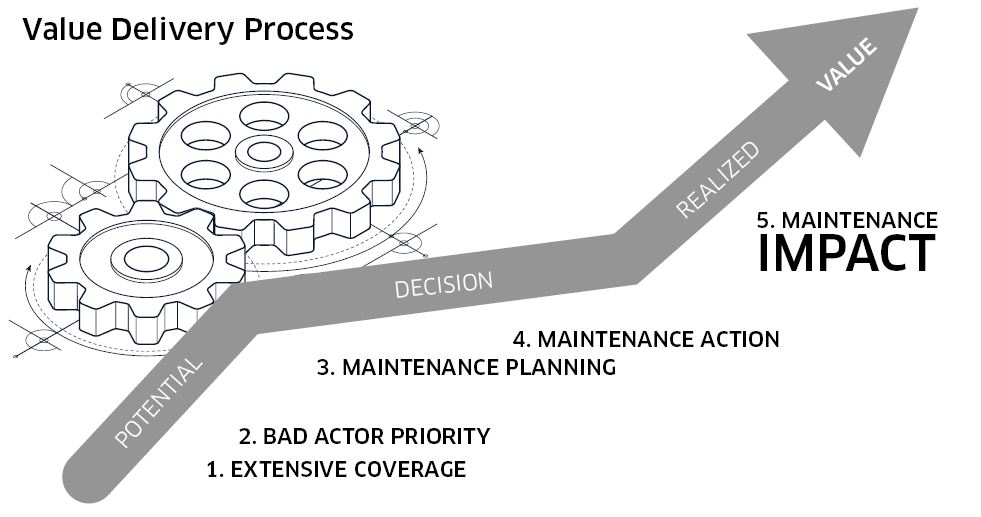
To improve data-driven management, Kemira launched a collaboration project with Asensiot Oy, a Finnish Value-as-a-Service company, in 2021. The goal was to create a new, scalable operating model that would support Kemira’s sustainable maintenance goals, motivate field personnel, and allow for easy and rapid implementation from one plant to another. This approach aimed to quickly identify concrete cases to achieve Kemira’s strategic objectives.
“Just as healthcare focuses on proactive care for large populations, we decided to bring the same large-scale preventive approach to Kemira’s rotating assets. Yet, in industry, the focus is often on scheduling repairs, even though much of the risk of unplanned failures can be minimized by taking proactive actions to address fault progression at an early stage,” says Aki Karuveha, CEO of Asensiot Oy, a MyAsensiot Condition Screening® company.
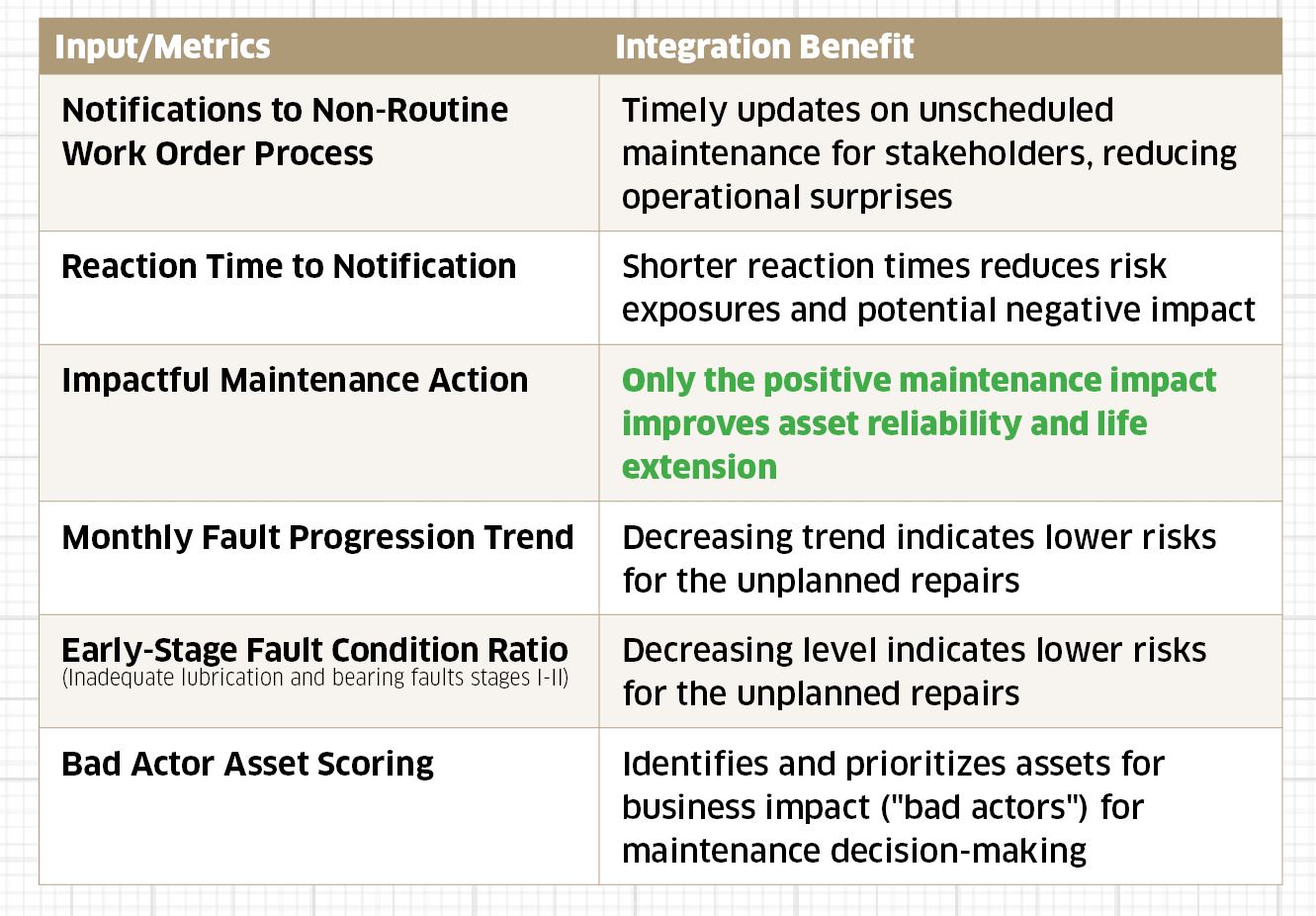
By partnering with Asensiot, Kemira developed a new collaboration model with key metrics that provide proactive, actionable information on rotating assets in a structured format, integrated directly into Kemira’s SAP/HANA system. This enables early detection of potential issues, supports optimized maintenance planning, and reduces the number of corrective interventions required over the long term. It also streamlines maintenance actions, ensuring resources are focused on assets that truly need attention-minimizing unnecessary work and supporting the company’s sustainability and operational excellence goals.
From Vision to Reality: A Scalable Solution
“At first, we wanted to understand what kind of data we should collect and how this could be done efficiently, using available measurement technologies and without requiring special skills at our sites,” says Bristow.
At one of Kemira’s plants, a range of measurement technology tests revealed that wireless technology did not provide a cost-effective solution for achieving a comprehensive overview of asset condition at scale. On the initiative of Kemira’s field personnel, a pilot was launched using an operating model where relevant data is collected quickly and easily with a route collector during existing monthly inspection rounds. RFID technology ensures that data is always measured for the correct asset and later enabled field observations and asset-specific information to be accessed via mobile devices.
“We want our field personnel at production sites to be engaged in the process. Regular route routines and field observations support the development of our safety culture. So monthly measurement routine is much more than only focusing on data,” adds Bristow.
The ability of in-house personnel to conduct measurements provides exceptional flexibility, especially for monitoring batch processes, and enables rapid response when a change in asset performance is suspected. Additionally, quickly verifying asset condition after maintenance helps prevent failures that could arise from potential installation or assembly errors.
At Kemira’s production sites, comprehensive measurements are routinely performed once a month and more frequently if needed with the collected data uploaded to the supplier’s cloud service. The volume of transferred data is optimized, ensuring that only essential, standardized raw signals are sent for processing by artificial intelligence algorithms to pinpoint focus areas.
“We need actionable information integrated into our work order process, not just alarms. It was clear to us that technology alone would not support our sustainable maintenance goals,” highlights Carl Bristow.
Insights into Impact
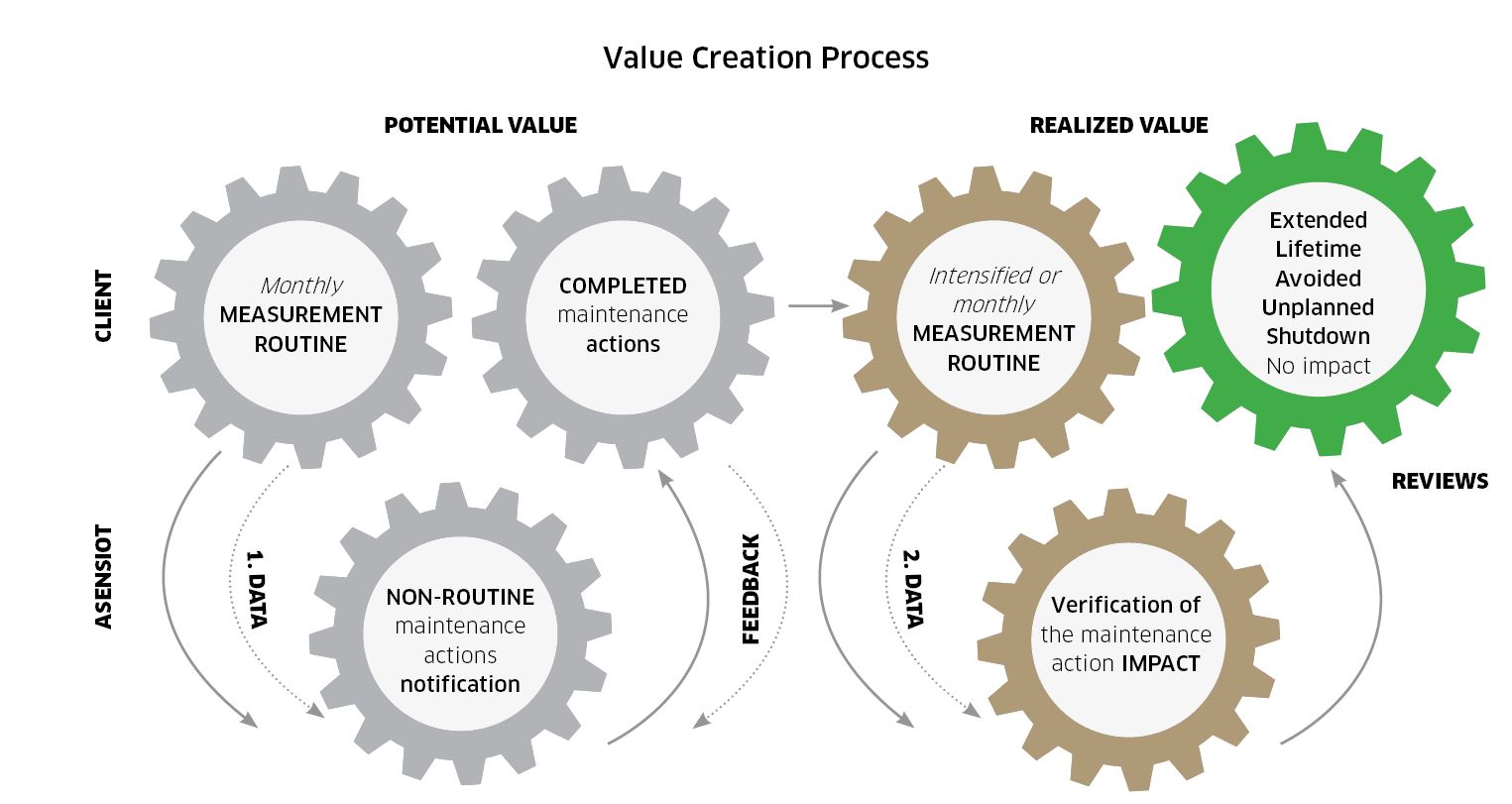
In Kemira’s new condition screening operating model, only essential action-guiding, standardized non-routine notifications are generated for SAP/HANA, thanks to a scalable AI-algorithm-based screening and expert validation process. This allows Kemira to focus solely on what matters, maintenance actions that truly make an impact.
At the core of this new approach are the people in the field and supporting their daily work. User motivation stems from information that makes their work easier-most importantly, by identifying concrete cases where users can see the direct link between actionable guidance and real impact. Without impact, there is no value.
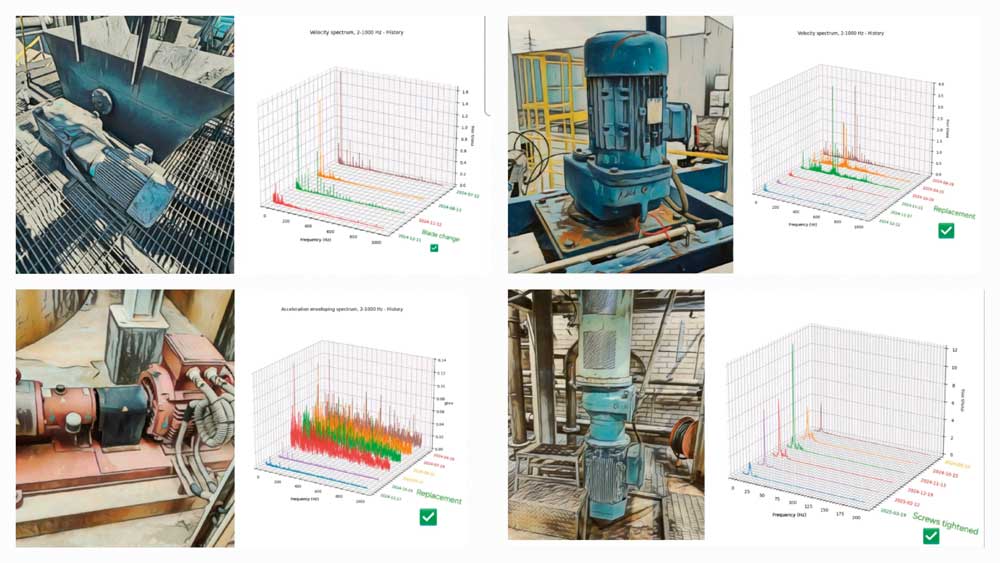
Following a successful pilot, the new operating model was rolled out to 10 production sites in different countries during 2023 (Wave 1). The deployment of monthly monitoring was straightforward and required no prior site-specific information. For a two-person team, the total fieldwork amounted to just around 14 days. In 2024, Kemira implemented the system at 16 additional production sites (Wave 2).
“Sustainable reliability is not just monitoring critical assets or avoiding unplanned shutdowns by scheduling repairs; its true impact at scale lies in extending asset lifetime and avoiding unnecessary maintenance actions to reduce overall risk of unplanned repairs,” explains Aki Karuveha.
Kemira’s Wave 1 Statistics
• Wave 1: 10 Sites (Results from November 2023 Onward)
• Deployment Time: 14 Days On-Site / 2 Persons
• Measured: 779 Individual Assets
• Extended Asset Lifetime: 14 Realized Cases
• Avoided Unplanned Shutdowns: 45 Realized Cases
• Estimated Costs Avoided: €2,264,000 (~7x ROI)
The Numbers Speak
“Kemira has achieved multiple benefits by adopting a sustainable reliability approach to rotating assets, including increased equipment uptime, reduced maintenance costs, decreased manpower requirements, improved energy efficiency, and a smaller ecological footprint,” summarizes Carl Bristow.
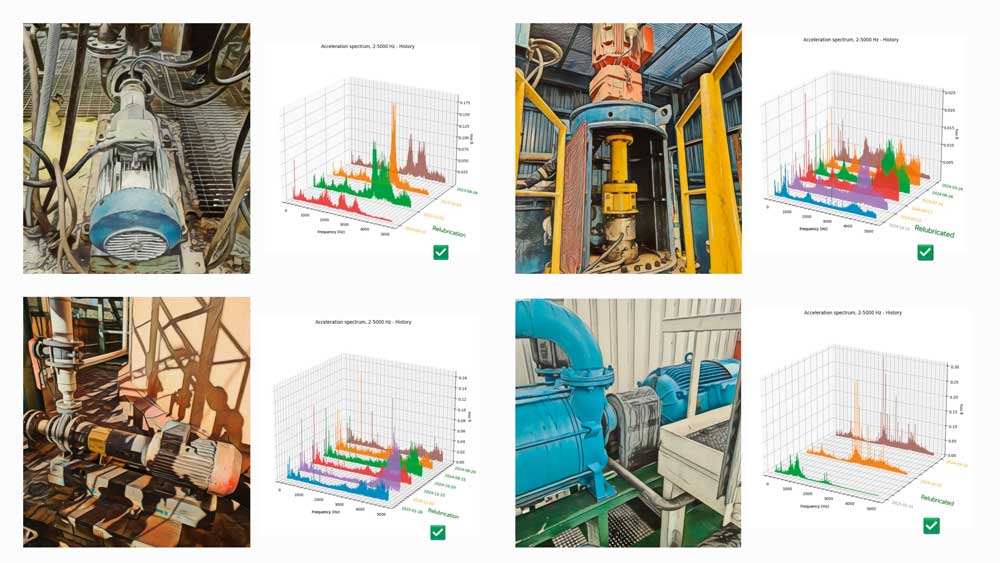
Condition screening provides a comprehensive monthly overview of the health of rotating assets, delivering an extensive situational picture that seamlessly integrates with Kemira’s Asset Performance Management (APM) in SAP/HANA. Without a realistic picture of asset health, APM becomes ineffective, leading to poor decision-making, missed optimization opportunities, increased risks, and fragmented processes. Accurate asset health data is essential for APM to improve reliability, reduce costs, and enhance efficiency.
Kemira is continuously improving communication by linking SAP/HANA with the supplier, enabling tracking of maintenance actions and their impact on resolving flagged issues, and supporting efficient, active collaboration between Kemira and Asensiot.
Text: Mia Heiskanen, Aki Karuveha Images: Asensiot Ltd.
Summary
Kemira’s proactive, data-driven approach to rotating asset risk assessment is delivering tangible benefits across its global operations. By focusing on early detection, actionable insights, and scalable processes, Kemira is setting a new benchmark for sustainable reliability and maintenance excellence in the process industry.
Subscribe to the free Maintworld newsletter here!
The Future of Rail Freight: the Rise of the Internet of Things and Digitalisation

Rail freight transport is undergoing a major transformation, driven by significant investments in the digitalisation of operations.
– The global rail telematics market is driven by the growing demand for efficient, safe, and cost-effective transportation systems.
The expansion is driven by the advancement of digitalization and integration of IoT technologies with an emphasis on real-time data analytics for predictive maintenance, says Adhish Luitel, Principal Analyst, ABI Research.
While Europe has made significant progress in the deployment of IoT, North America is still underdeveloped. According to ABI Research the region has a Total Addressable Market (TAM) of almost 2 million railcars, which offers significant opportunities for IoT-based solutions.
The role of IoT in railways
IoT technologies are transforming freight rail operations by integrating sensors, AI-based analytics, and cloud computing into everyday logistics. Smart train cars equipped with GPS, vibration sensors and automated reporting mechanisms can now send real-time data to operational control centres.
This connection allows operators to monitor location, freight condition and potential maintenance problems, ensuring maximum efficiency and safety throughout the transport process.
Predictive maintenance
Predictive maintenance is one of the most revolutionary aspects of IoT in rail freight. By analysing data collected in real-time from train wagons and infrastructure, AI algorithms can predict failures before they happen.
This reduces downtime, prevents costly disruptions, and improves safety by ensuring that potential mechanical problems are resolved proactively.
Replacing many manual tasks
Traditionally, machine vision and sensor-based inspection equipment, often installed at railway crossings, has been at the forefront of improving operational visibility.
Rail brake inspections are also a critical but time-consuming task. These inspections ensure that the air brake system is functioning correctly throughout the train, which can be more than a mile long. Manual checks require extensive coordination between train crews and control centres, which can cause delays and inefficiencies.
IoT technologies offer a solution by providing real-time data and predictive analytics, ultimately improving safety, reducing downtime, and improving compliance.
Challenges of integration
The deployment of IoT on freight railways faces a number of challenges. In North America, for example, the adoption of IoT-based visibility solutions has been slow compared to Europe, largely due to the extensive infrastructure and the different regulatory environments in different states and countries. In addition, integrating legacy rail systems into modern IoT frameworks requires significant investments in hardware, software, and training.
Security is another growing concern. As more and more train cars are connected, cybersecurity risks will increase, making it important for operators to put in place robust security measures. Strong encryption, real-time threat monitoring and compliance with industry security standards are essential for the successful digital transformation of the industry.
“AI algorithms can predict failures before they happen.”
“The deployment of IoT on freight railways faces a number of challenges.”
Trilogical Technologies: telematics solutions for long freight trains
As freight demand increases, rail operators are moving to longer trains, particularly in North America. Around half of freight trains are now over 1.65 km long, and this growth is continuing.
Trilogical Technologies presented its own technology at InnoTrans 2024. The company has developed the Long-Train Intelligence System (LTIS® ) to manage the complexity of longer trains by integrating real-time control systems that improve safety and efficiency. Key features of the system include:
Continuous Train Integrity: monitors wagon placement from start to finish and ensures train integrity during transport.
Driver Advisory System: provides drivers with status updates and alerts to prevent operational delays.
Condition monitoring: Uses sensors to detect anomalies and reacts quickly to avoid disruptions.
Condition monitoring and predictive maintenance: Supports predictive maintenance strategies that is estimated to reduce costs.
Hitachi Rail, Connected Places Catapult Announce AI Rail Maintenance Tech
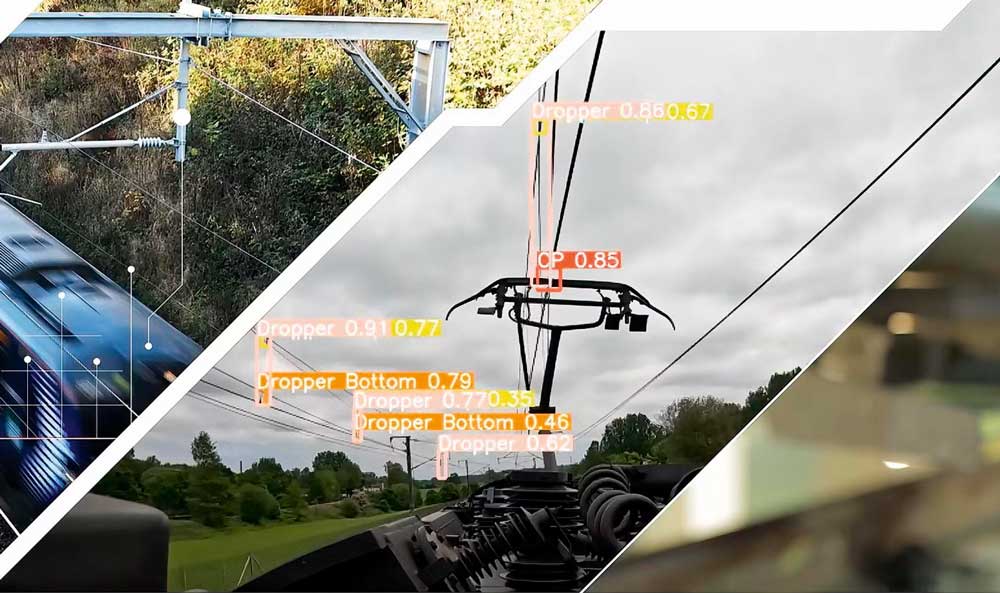
In 2021, Connected Places Catapult (CPC) initiated a technical collaboration that brought together Hitachi Rail, LNER, and Network Rail. The collaboration led to a successful six-month trial on the East Coast Main Line, testing Hitachi’s technology.
The digital overhead line monitoring technology, which Hitachi unveiled at the latest InnoTrans in Berlin, promises to boost punctuality for passengers and improve safety for trackside engineers.
CPC played a pivotal role in supporting the partnership, focusing on understanding user needs and fostering new collaborative working models, thus navigating the challenging “valley of death” in technology innovation.
The project involved mounting cameras on trains to monitor overhead lines in real-time, with machine learning algorithms identifying potential faults to inform maintenance needs.
– The UK’s railway ecosystem has an important part to play in the development of this technology, which is now available to infrastructure operators worldwide, said Hitachi Rail IM and Digital Services Manager Ben Earle.
Following the trial, Hitachi Rail has refined the product, integrating it into its HMAX digital asset monitoring platform.
HMAX, Hitachi Rail’s digital asset management suite, enhances the management of railways by seamlessly integrating operational data from across railway assets and infrastructure into a single platform, optimising the utilisation of railway systems and associated resources. In addition to providing live time monitoring, the system enables the virtual simulation of the physical environment, accelerating the evolution of railway systems.
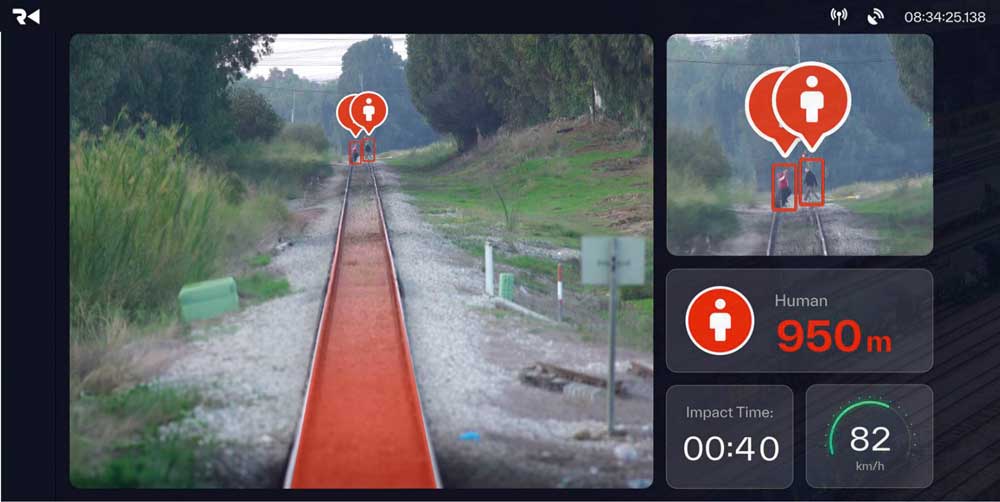
Rail Vision: AI-powered Object Detection for Rail Safety
Subscribe to the free Maintworld newsletter here!
Latest