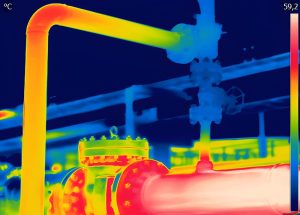

Lubrication management needs a reset
Good lubrication is still one of the most important ways to protect assets, cut waste and improve reliability. Yet in many plants, the basics are slipping.
Lubrication management rarely makes headlines. It is not the shiny part of maintenance that attracts new talent, budgets or conference stages. But on the shop floor, it is often the difference between stable production and recurring, expensive surprises.
That perspective is shaped by years spent close to work. Technical Advisor Aleksi Nykänen has built his career around lubrication management and condition monitoring, first inside large industrial operations and later in customer-facing development work. Technical Manager Mika Römpötti brings decades of hands-on experience across lubrication roles and long-term involvement in professional lubrication networks and industry guidance. They have seen what “good” looks like in mature organisations, and how quickly standards can erode when competence, ownership and routines are not protected.

Two Interflon specialists, Technical Advisor Aleksi Nykänen and Technical Manager Mika Römpötti, describe a pattern they keep seeing across industries: lubrication is treated as a routine task, not as a controlled process. The result is a long list of small, avoidable mistakes that accumulate into major reliability problems.
“People don’t necessarily lack effort. They lack a system,” Nykänen says. “Lubrication management is a wide, multi-part discipline. If the basics aren’t defined and controlled, everything becomes reactive.”
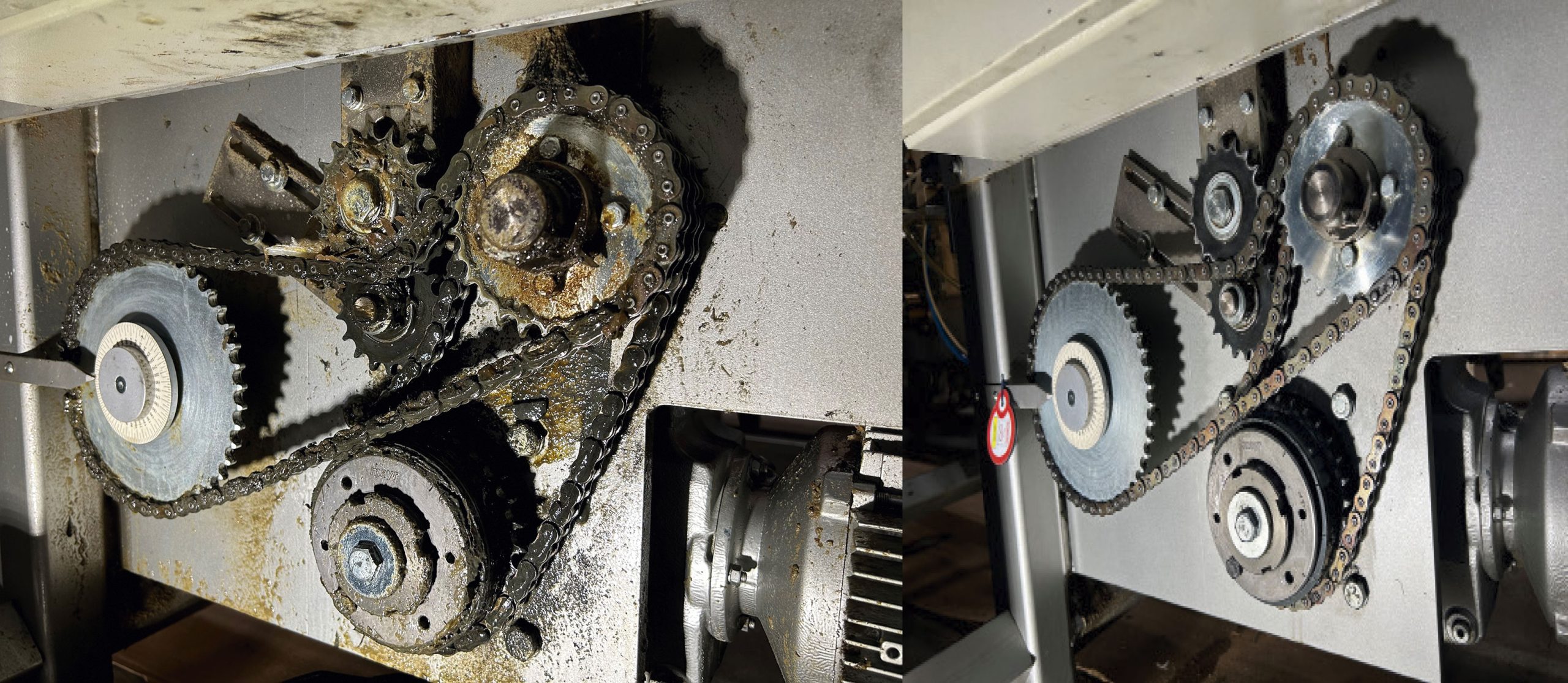
In practice, the issues start with fundamentals: storage, handling and cleanliness. Lubricants are exposed to dirt and moisture, containers are not clearly separated, and the same equipment may end up with multiple incompatible greases. Even when someone is “doing the rounds,” the lubricant may not reach the contact surfaces as intended.
A common visual tells the story: grease around the nipple and on surrounding surfaces, but not necessarily where it is needed. The environment gets messier, contamination increases, and the next lubrication cycle adds more dirt to the same area. It can feel like work is being done, yet the asset is being set up for failure.
Over-lubrication is another recurring theme. Without calculation and clear standards, manual lubrication, automatic or semi-automatic lubricators can deliver far more than required. Excess grease increases heat and drags, pushes past seals, attracts contaminants and creates a housekeeping problem that hides early warning signs.
“If you don’t calculate the right amount, you’re guessing,” Römpötti says. “And guessing often means too much.”
The consequences are not theoretical. Industry sources often cite that a significant share of premature bearing failures is linked to poor lubrication practices and contamination. When plants struggle with cost pressure and productivity targets, it is hard to justify waste that is both preventable and recurring. Yet the root causes are rarely about one bad decision. They are structural.
One factor is the loss of tacit knowledge. Many experienced technicians have retired, and their practical know-how did not transfer into documented standards, training or role definitions. In some organisations, it is not even clearly described what competence is expected from a person responsible for lubrication tasks.
“If you haven’t defined what ‘good’ looks like, how can you ensure the next person can deliver it?” Nykänen asks.
Another factor is education. Lubrication engineering is not widely covered in many technical programmes, and it is not perceived as an attractive speciality for young professionals. The result is a gap between the complexity of modern assets, and the training people receive before entering the field.
Then there is prioritisation. Many organisations talk about predictive maintenance, digitalisation and advanced analytics, but still operate in “firefighting mode.” Preventive routines are squeezed, and lubrication becomes a checkbox rather than a reliability lever. Without the real ownership of lubrication program, it is hard to get lubrication and the culture on the level where it should be.
The specialists are not anti-technology. They use condition monitoring, oil analysis energy consume measurements and existing customer data as part of improvement work. But they are sceptical of the idea that AI can “solve lubrication” if the underlying practices are inconsistent.
“AI can help you predict failures,” Römpötti says. “But it won’t go out there and fix the basics. If the fundamentals are poor, prediction just tells you what you already set in motion.”
There is also a less discussed contributor: equipment design and delivery. Even new machines often arrive without features that make lubrication control practical, or possible such as proper sight glasses for checking oil levels.
“When the only way to verify a level is to remove a plug, every inspection becomes a contamination risk”, Nykänen states.
Maintenance teams are then left with impossible instructions: check the oil level weekly, but do it without a safe, visual method. In the real world, the task is skipped, rushed or done in a way that introduces more dirt.
So, what does improvement look like when the goal is not to sell a product, but to change outcomes?
The approach described by Nykänen and Römpötti starts with a simple principle: do not begin in the deep end. First, make the basics visible and measurable: cleanliness, correct lubricant selection, correct quantities, correct intervals, correct tools and clear responsibilities. After the field is corrected, next step is to correct the content of tasks in the maintenance system.
Their work often begins on site, walking through assets with the people who perform lubrication tasks. The goal is to identify the most critical gaps and fix what is preventing good practice. Sometimes that means reorganising storage and labelling. Sometimes it means adding small hardware upgrades that reduce contamination risk and make inspection realistic. Sometimes it means harmonising lubricant portfolios that have grown uncontrolled over time.
“We want the frontline to succeed,” Nykänen says. “Not to create dependency on an external expert, but to build capability inside the plant.”
This is where training becomes less about classroom theory and more about empowering technicians to make decisions. The wins can be surprisingly small: a leaking gearbox that stops leaking without a major rebuilding, or a lubrication team that finally feels their work is recognised as critical.
“One of the best moments is when people thank you for listening,” Römpötti says. “They feel their work matters again, and then they start improving it themselves.”
The bigger message is uncomfortable but necessary: lubrication management is not a side task. It is an operational discipline that needs standards, competence, tools and leadership attention.
Plants that want higher reliability often invest in sensors, dashboards and analytics. Those investments can pay off, but only if the physical reality is under control. Cleanliness, correct lubrication and clear practices are not old-fashioned. They are prerequisites.
And perhaps that is the most thought-provoking part: the future of maintenance may be digital, but the future of reliability still depends on people doing the basics well.
The hidden cost of “good enough” lubrication
Poor lubrication is rarely a single mistake. It is usually a chain: contamination, wrong product, wrong quantity, and missing routines. The result shows up as repeat failures, wasted energy, and maintenance work that never seems to end.
• Lubrication errors and contamination can account for up to 30% of technical disturbances and around 40% of maintenance costs.
• Excess friction and wear can drive unnecessary energy use. With better lubrication practices, energy consumption linked to friction and wear could be reduced by about 10%.
Source: Interflon
If those numbers feel high, ask a simpler question: how many of your recurring issues are truly “mysterious” once you look at lubricant cleanliness, correct quantities, and basic inspection access?
Lubrication management: a practical reset checklist
1. Define what “good” looks like: roles, competence expectations, standards
2. Control cleanliness: storage, handling, transfer, sealing
3. Harmonise lubricants: avoid uncontrolled product sprawl
4. Calculate quantities: reduce over-lubrication and waste
5. Make inspection safe: sight glasses, sampling points, practical access
6. Use data wisely: oil analysis and condition monitoring to support, not replace, basics
7. Build capability: train and coach the people who do the work
Text: Mia Heiskanen Photos: Interflon





Subscribe to the free Maintworld newsletter here!

Latest