
The Human Side of Reliability
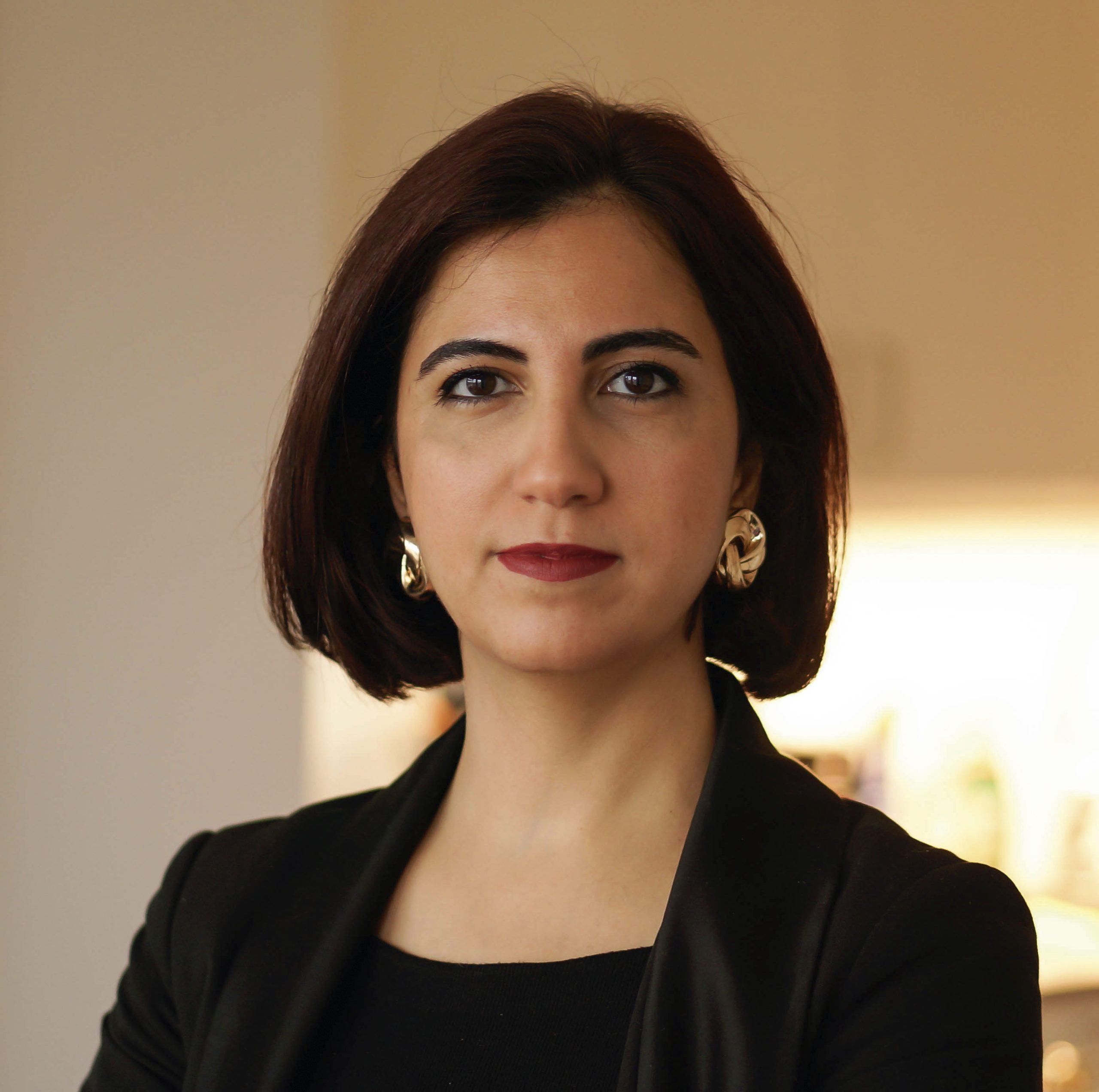
Reliability is built by people. Maroua Ouerghemmi, Senior Manager for Great Britain and Nordics at The Coca Cola Europacific Partners CCEP, explains why trust, clarity, and daily habits matter as much as data, AI, and predictive tools do in industrial maintenance.
In industrial maintenance, the technology is moving fast: online condition monitoring is becoming standard, AI pilots are multiplying, and data is everywhere. Yet one truth remains constant.
Reliability is built by people. Maroua Ouerghemmi, Senior Manager for Great Britain and Nordics at Coca Cola Europacific Partners CCEP, has built her career at the intersection of strategy and shop floor reality. Her message is clear: the future of maintenance will be won not only with smarter tools, but with trust, clarity, and the ability to translate big ambitions into daily habits.
Maroua Ouerghemmi did not enter maintenance by accident. She entered it through numbers.

“I love mathematics,” she says. For her, maintenance was never just about repairing what breaks. It was about understanding why things break, when they are likely to break next, and what decisions can change that outcome.
She graduated as an instrumentation and industrial maintenance engineer, specializing in maintenance management and maintenance engineering. Her studies began in Tunisia, and her graduation took her to Bahrain. From there, she joined APM Terminals as a reliability engineer in a harbor environment, at a time when the concept of reliability was still gaining traction in many organizations. Her role was to help build a reliability function within the maintenance department, shaping a new way of working around data, structure, and prevention.
Then came a defining opportunity. In 2015, APM Terminals built the first fully automated terminal in the Netherlands, and Maroua was asked to move there to implement reliability initiatives in that high-tech environment. In 2016, she relocated as a senior reliability engineer, spending two and a half years translating reliability theory into real-world routines inside an automated operation where the margin for error is thin and the pace is unforgiving.
From the Netherlands, her career continued to Sweden, where she joined Mondelēz at Marabou Chocolate. She started in reliability, then moved into leadership as maintenance manager, leading a team of around 25 people and taking responsibility for additional functions such as the storeroom. Later, she moved to Nynas refinery in Nynäshamn, Sweden, as a reliability and maintenance manager. Six months before the interview, she took on her current role at Coca Cola Europacific Partners CCEP, as Senior Manager for Great Britain and Nordics, supporting multiple sites in their journey from reactive maintenance toward a proactive, reliability-driven way of working.
Across industries and countries, her path has been fast, varied, and unusually rich in perspective. She calls it a privilege. It also shaped the way she sees the gap that often exists between operational reality and strategic ambition.
Over the years, she has worked closely with maintenance teams and leadership groups alike. That dual exposure, she says, gives her a clear understanding of the operational challenges on the shop floor and the strategic gap that can appear higher up. Her job today is to close that gap. Not by writing strategies, but by making them executable.
“My role is really to translate strategy into execution. The mission is to help sites move away from firefighting and into a more structured, proactive approach. That translation work is where many transformations succeed or fail.”
In Maroua’s view, most companies already have strong ambitions. They talk about reliability, performance, and continuous improvement. They may even have clear corporate strategies. But the hardest part is not the vision. The hardest part is turning it into daily behavior for the people who keep the plant running.
“It’s not enough to have a structure, to have the strategy and all the theoretical part,” she says. “What I enjoy is how I can translate that into execution.”
That translation requires patience, and it requires communication that respects the reality of maintenance work. A new process is not a slide deck. It is a new habit. And habits do not change because someone announces them. They change because the people doing the work understand why the change matters, what it means for them, and how it improves their daily life.
Maroua often describes herself as a coach. She enjoys putting structure in place, helping teams become more data-driven, and building processes that make work clearer and more manageable. The satisfaction comes when she can see tangible change, step by step, in how a team plans, prioritizes, and executes.
This is where her leadership philosophy becomes practical. She emphasizes trust, flexibility, and empathy. She believes leaders must invest time in understanding the people they work with, adapting to different behaviors, and building a relationship strong enough to carry change through resistance.
“People are very different,” she says. “It’s important to adapt.”
Empathy is central to her approach, even though she once questioned it. Early in her leadership journey, she worried empathy might be a weakness, something others could take advantage of. She thought she needed to become tougher to be taken seriously. Over time, she realized the opposite. In maintenance, empathy can be a competitive advantage.
It makes a leader approachable. It makes it easier to connect with technicians and engineers. It makes it easier to get honest information from the shop floor, including feedback about what is working and what is not. And without that feedback, reliability programs remain theoretical.
“Whatever strategy you want to implement, if the people on the shop floor don’t adapt it, you won’t get any results,” she says.
Her experience across cultures has reinforced this belief. She has worked in the Middle East and across Europe, and she has learned that maintenance strategies are often universal, but implementation is not. The “what” can be standardized. The “how” must be adapted.
In global organizations, there is a natural desire to standardize. Common KPIs, common systems, common maintenance planning approaches. Maroua supports this. Standards create a reference point, a shared language, and a way to compare progress. But she is equally clear that routines must fit local reality.
Site size matters. Team composition matters. Production communication matters. Organizational maturity matters. A site that is early in its reliability journey cannot absorb the same level of standardization as a mature site without creating frustration and failure. Pushing a standard too rigidly, too fast, can backfire.
“We often push sites to just follow standards, but maybe on terms of maturity they are not there yet,” she says. “And then they fail.”
So, the balance is to keep the standard as the direction, while allowing each site to build its plan based on where it is today. This is not a compromise. It is change management. And change management, in maintenance, is always about people, she says.
That human dimension becomes even more visible when the conversation turns to diversity. Maroua has often been the only woman in maintenance teams across different countries. She acknowledges that the experience can be different. In many environments, a man in a leadership position may receive trust by default. A woman may have to earn it first, sometimes facing skepticism or subtle testing.
Her advice is grounded and direct. Do not overdo it. Do not fall into the trap of trying to prove you know everything. Do not lose yourself by performing a version of leadership you think others expect.
“Be yourself,” she says. “You don’t have to know everything. If you are in the position, you are there for a reason. Trust that. Focus on the job. Work with the team. Let results and consistency build credibility over time.”
When asked about challenges in the maintenance sector, Maroua points to a familiar and persistent issue: maintenance is still too often viewed as a cost center. In many leadership conversations, maintenance appears as a budget line to be reduced, not as a value driver to be strengthened. She believes this mindset must change, and she believes maintenance leaders have a role in changing it.
Maroua thinks that the language needs to evolve.
“Maintenance spending must be framed as investment, linked directly to business outcomes. Reliability is not an abstract technical goal. It affects productivity, quality, safety, and delivery performance. It reduces unplanned downtime and stabilizes operations. It protects assets and extends their life, and it makes planning possible.”
But to make that case convincingly, maintenance must be measured wisely. Here Maroua is critical of two common traps. Some organizations track too many KPIs, creating confusion and diluting focus. Others track the wrong KPIs, leading teams to optimize for metrics that do not drive real improvement.
Her recommendation is to start with a few critical KPIs, with clear baselines and targets, and then link them to daily activities so the team understands what they are doing and why. In her view, the focus should always cover people, process, and cost.
Among the most important reliability measures, she highlights MTBF, mean time between failures, as a core indicator of machine reliability and the effectiveness of maintenance practices. She also emphasizes MTTR, mean time to repair, as a measure of team efficiency, skill levels, and the time it takes to perform tasks, which can guide improvement efforts. And she stresses budget tracking, not as a cost-cutting exercise, but to understand where money is spent and whether it is invested wisely.
From there, the conversation naturally moves to digital transformation. Maintenance is already changing. Online monitoring for vibrations has been in place for years in many sites, though maturity varies widely. Now, AI pilots for predictive maintenance are emerging across industry.
Maroua sees both opportunity and risk. The opportunity is clear. AI can connect data sources that have long been fragmented. It can centralize machine history, OEM recommendations, previous failures, and maintenance actions into one platform. It can accelerate troubleshooting, support root cause analysis, and improve prediction and decision-making.
She mentions a pilot initiative focused on centralizing machine data into a single platform where engineers can quickly access a more complete operational picture. For maintenance teams that have long struggled with missing data, scattered records, and limited visibility, this represents a significant shift.
But she is careful not to oversell it. AI is not yet perfectly accurate. Data must be validated, tools must be trained, and perhaps most importantly, people must be prepared.
“There is data everywhere,” she says. “The challenge is not collecting more. The challenge is integrating it, translating it into actionable decisions, and embedding it into routines.”
She also acknowledges the human fear that comes with rapid technological change. People wonder what it means for their jobs. They worry about being replaced. They feel the pace of change is faster than their ability to adapt. In her view, organizations must address this proactively by planning skill development now, not later.
The future of maintenance, in her eyes, is not a future without people. It is a future where people work differently, with new tools and new competencies, and where the industry must invest in upskills to keep pace with technology.
Looking ahead five to ten years, Maroua hopes to see three shifts. A more diverse maintenance workforce, a more widespread adoption of AI and online monitoring that reduces reactive firefighting, and a broader recognition that maintenance is a value-added contributor to business performance, not a department that simply “drains money.”
Her own ambition is to keep learning and to contribute back to the maintenance and reliability community. Early in her career, platforms and publications helped her understand the field, learn from others, and find direction. Now she wants to be part of that knowledge loop, sharing experience and helping the next generation.
For young engineers entering maintenance, her advice is practical and optimistic. Be open-minded.
“Be patient. Reach out to people and ask questions, try new initiatives and approaches. Do not be afraid to fail, because failure is part of learning in maintenance. And always keep the core goal in focus: improving machine performance.”
Three practical takeaways from Maroua Ouerghemmi
1. Strategy only matters if it becomes a daily habit The success of reliability programs depends on whether maintenance teams can translate them into simple, repeatable actions that make sense in their daily work.
2. Standardize the “what”, adapt the “how” Global KPIs and systems create alignment, but local routines must reflect site maturity, culture, and organizational setup to avoid resistance and failure.
3. Digital transformation is a people project AI and monitoring can unlock huge value, but only if companies invest in skills, validation, and change management so teams can actually use the data to make better decisions.
Text: Mia Heiskanen Photos: Maroua Ouerghemmi archive



Subscribe to the free Maintworld newsletter here!
Latest