Scaling Reliability: What INX International’s Journey Reveals About Sustainable Maintenance
A recent industry webinar highlighted a critical challenge for maintenance professionals: how to move from constant firefighting to building a long-term, sustainable reliability culture across multiple sites.
During the webinar, experts from INX International Ink Co., AssetWatch, and Noria Corporation emphasised that tools and technologies, while important, aren’t what ultimately drive success. The real differentiator is an organisation’s ability to align its people, processes, and daily discipline around reliability.
To better understand the impact of the transformation, Maintworld spoke with INX International about changes to the company’s daily operations.

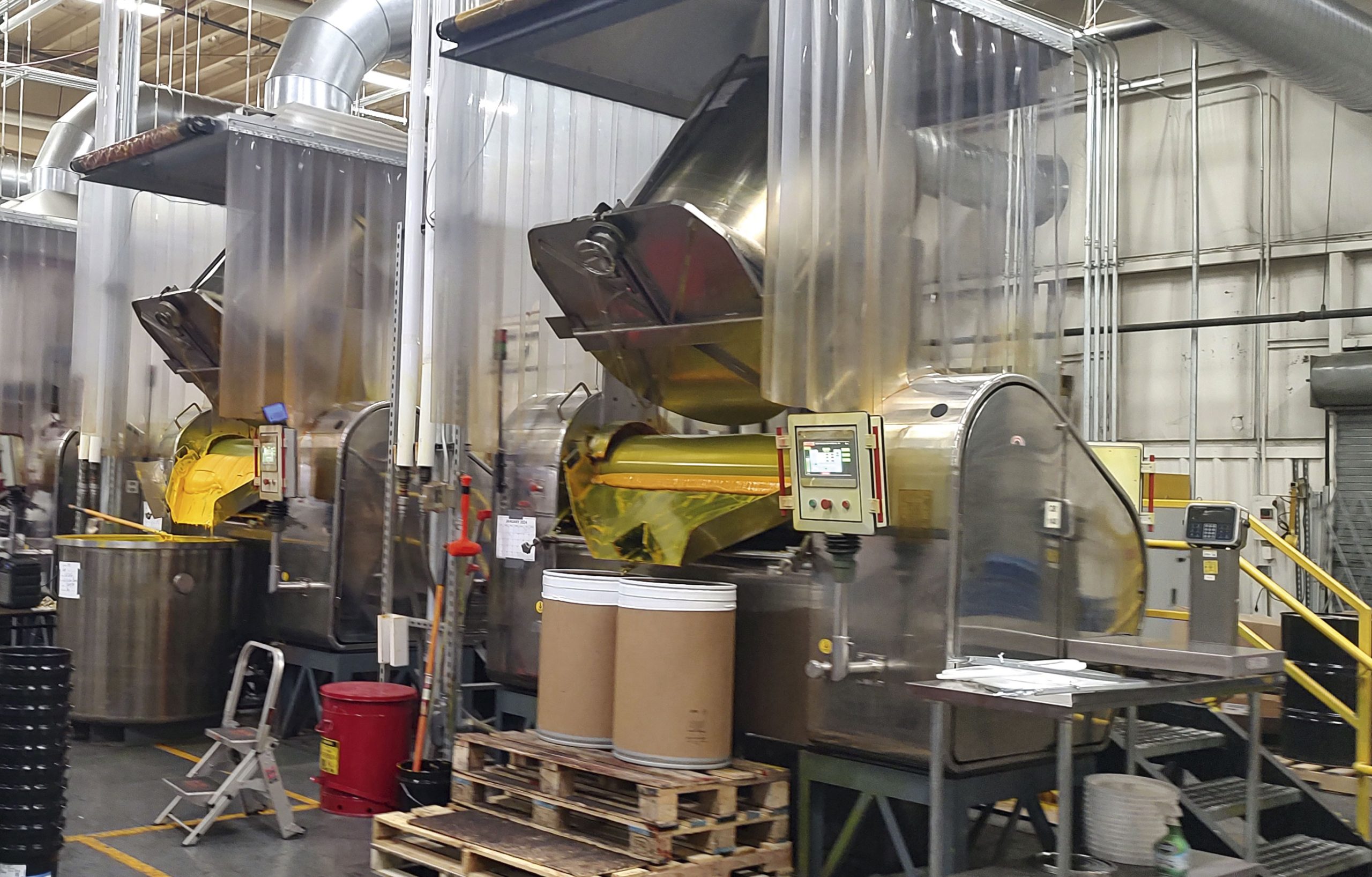
INX International is a global manufacturer of inks and coatings for packaging, commercial, and digital printing. In high-volume production, such as metal decorating, consistent transfer, reliable curing, and stable operation are crucial to uptime. Any performance fluctuation affects the line and supply chain immediately.
INX launched its predictive maintenance strategy in 2023 with a focused pilot at its Charlotte site. Rather than implement tools everywhere, the team first established standard templates, clear asset structures, and consistent processes.
Building on support from digital platforms and condition-monitoring partners, the model was subsequently replicated across other U.S. sites in months.
A key step in this expansion was connecting real-time production data with condition monitoring systems to support maintenance decisions based on actual equipment behaviour. By integrating platforms such as AssetWatch for equipment condition monitoring and Oden for production data visibility, INX aligned maintenance activity with how equipment is running in real time.
“This approach moves maintenance from fixed schedules to interventions based on usage, load, and early wear indicators. Instead of servicing equipment by calendar, teams respond to measurable performance changes,” company officials said.
“In practice, this reduces unnecessary maintenance, improves response time to developing issues, and supports more stable operation across the production environment. A major advantage is the ability to identify early indicators of failure, allowing intervention before unplanned downtime impacts production.”
A central message of the webinar: reliability efforts fail if organisations focus on complex tools before establishing basic, consistent processes.
Many organisations introduce predictive maintenance tools, sensors, or analytics across different sites in parallel. While this can deliver short-term improvements, it often creates fragmentation. Different plants start working in different ways, using different definitions of failure, and measuring success differently. The speakers emphasised that standardisation is essential for successful transformation. This means defining key assets, identifying clear failure modes, and maintaining consistent practices across all sites.
This isn’t about restricting teams, but about creating a shared language. When everyone evaluates equipment consistently, improvements scale rather than being recreated at each site.
Establishing a foundation is essential; only then does it make sense to add advanced tools, such as vibration monitoring or predictive analytics. Otherwise, even the best systems struggle to deliver consistent results.
Turning data into action, not just dashboards, matters. Building on this, another key webinar theme was closing the gap between data collection and action.
Most organisations today are not short of information. Sensors, dashboards, and alerts are everywhere. Yet many still struggle with the same issue: data that is seen but not acted upon.
The webinar made a key point: data alone doesn’t improve reliability, action does. Value comes when teams respond swiftly and reliably to data, such as inspecting equipment early, adjusting lubrication, or scheduling preventive maintenance.
A strong indicator of maturity is response time. As organisations improve, they do not just collect more data, they react to it faster and with greater confidence.
Successful organisations treat data as a trigger for behaviour, not just information for review. When a system flags early signs of equipment degradation, the value lies not in the alert itself but in whether maintenance teams investigate, validate, and act on it in a timely manner. Over time, this creates ‘repeatable wins’: not isolated successes but steadily fewer unexpected breakdowns.
“The feedback loop trains the AI over time. As it learns, alerts become fewer and more refined, providing real signals amid the noise. It requires patience—many give up too soon—but persistence pays off,” says Borpit Intawiwat, Vice President, Engineering, INX International.
While processes and tools dominated much of the technical discussion, culture repeatedly emerged as the real deciding factor.
Reliability programs often fail not because technology is lacking, but because the organisation is not aligned. Maintenance, operations, and management may share goals but have different priorities and incentives.
“Even the best systems can’t overcome misalignment or lack of trust between teams,” one speaker said. As INX International’s VP of Operational Excellence, Chris Rodgers, told Maintworld: “You can install the best monitoring systems, but without alignment and trust between maintenance and operations, the impact remains limited.”
Reliability is ultimately about organisational culture, not just technology. INX’s focus was to use data for faster, better decisions—not simply to increase information. Reliability only improves when data leads to action. When maintenance and production teams share the same data and jointly interpret it, decisions become less reactive and more collaborative. Instead of debating opinions, teams can focus on what the equipment is indicating.
A further shift occurs when frontline teams use reliability tools proactively rather than waiting for instructions. This behavioural change—though small—often signals that reliability is now routine, no longer a separate initiative.
The webinar also touched on a common blind spot: reliability’s human side.
With more predictable maintenance, work environments change: emergency callouts drop, planned work rises, and stress falls. Technicians spend less time reacting and more time improving.
This shift directly affects work-life balance and job satisfaction. In some examples discussed, improved reliability allowed technicians to spend less time reacting to breakdowns and more time focusing on planned, value-added work. The result is not only operational improvement but also a healthier and more stable work environment.
Michael Patulski, Vice President, Paste Operations told Maintworld that recent system integrations and AI have boosted employee retention and streamlined recruiting at INX Charlotte. According to Patulski, AI drives employee development with targeted, real-time learning. These tools speed up new-hire competency, strengthen ongoing training, and accelerate career growth.
“AI has created advanced career paths and improved on-floor performance. INX Charlotte has seen logistics staff advance to frontline production supervision and machine operators move to production analytics. It’s exciting to witness accelerated career growth and high retention at INX Charlotte, Patulski concludes.
INX International
INX International is a wholly owned subsidiary of SAKATA INX worldwide operations, a $1.8 billion company established in 1896. The company is a global manufacturer of high-performance printing inks and coating for commercial, packaging, and digital print applications with full-service locations in North America, South America and Europe.
Lubrication: still the quiet failure point
Despite advances in monitoring technology, lubrication remains one of the most common—and preventable—causes of equipment failure, experts note.
The industry webinar Scaling Reliability with INX: Aligning People, Processes, and PdM, held on April 23, 2026, underscored a key insight: many lubrication failures stem not from poor-quality lubricants, but from contamination and inconsistent practices.
Dirt ingress, moisture, incorrect application, and poor storage practices continue to undermine equipment reliability—even in highly automated environments.
A structured lubrication program typically follows three steps:
1. Set clear targets – for example, cleanliness levels or contamination limits.
2. Define the right actions – such as improved storage, filtration, or application methods.
3. Measure consistently – through oil analysis and regular inspection.
What matters most is not the individual step, but the discipline of repeating the cycle. The speakers in the webinar also stressed that lubrication should not exist in isolation. When combined with vibration analysis, temperature monitoring, and other condition-based tools, it becomes part of a much more complete view of equipment health.
INX’s experience offers clear lessons for real-world reliability scaling:
• Focus on critical assets first –start where failure has the highest impact.
• Standardise early – build templates and shared structures before scaling.
• Invest in training continuously – not once, but repeatedly.
• Work with partners where it adds value – especially for specialised expertise.
• Make reliability shared ownership among operators, engineers, and maintenance teams.
Looking ahead, reliability systems are moving toward greater integration, bringing production data, condition monitoring, and maintenance management together rather than keeping them in separate tools.
The advantage is not increased complexity but less. Connected data lets teams spend less time searching and more time acting.
Text: Nina Garlo-Melkas Photos: INX International



Subscribe to the free Maintworld newsletter here!
Latest