
Global Energy Crisis Accelerates Renewables in Europe, Raises New Maintenance Risks
Europe’s latest energy shock is accelerating the shift toward renewables—but it is also exposing a new and underappreciated challenge: the growing operational and maintenance burden of a more volatile power system.
The closure of the Strait of Hormuz and escalating conflict involving Iran have disrupted global fossil fuel flows, tightening oil and gas markets and pushing energy prices sharply higher. The situation echoes the 2022 energy crisis, when Europe rapidly replaced Russian pipeline gas to stabilize electricity supply.
This time, however, the response is seen faster and more structural. According to WindEurope, governments across the EU and UK are accelerating renewable deployment and grid investments to reduce exposure to geopolitical risk.

Wind already supplies around 20% of Europe’s electricity, but electricity still accounts for less than a quarter of total final energy consumption, leaving the system still heavily exposed to imported fossil fuels.
Investment in wind power is rising in Europe, with around €45 billion committed to new wind energy projects in 2025. This signals a structural shift in Europe’s energy system rather than a temporary adjustment.
The energy transition is increasing system complexity and contributing to greater price volatility. Electricity markets face higher variability due to renewable integration, while fossil fuel prices remain highly unstable, with oil experiencing swings of 20–30% and gas markets fluctuating daily (International Energy Agency). The result is upward pressure on consumer energy bills, renewed inflationary risks, and heightened uncertainty for energy-intensive industries such as steel, chemicals, and manufacturing.
Even short-term instability carries a measurable cost. The non-profit Beyond Fossil Fuels estimated that just three days of gas price volatility cost Europe approximately €620 million.
This volatility reinforces a core structural issue: despite rapid renewable expansion, Europe’s energy system remains highly sensitive to fossil fuel price shocks.
As governments frame energy policy increasingly as a matter of national security, operational realities on the ground are changing just as quickly.
Former Belgian Energy Minister and newly appointed CEO of WindEurope Tinne van der Straeten described the shift bluntly: “This crisis is not a one off. It is becoming a structural feature of the energy system.”
Germany and the UK are responding with accelerated wind deployment, hydrogen strategies, and faster permitting for infrastructure. But behind these strategic moves, a quieter transformation is underway in how energy assets are operated and maintained.
Erwin Bovyn, O&M National Director at Luminus NV, notes that the energy transition is fundamentally reshaping maintenance conditions across the generation fleet.
“Renewable assets are increasingly exposed to curtailment, negative pricing, grid congestion, and environmental constraints,” Bovyn explains.
“This leads to more dynamic operating patterns, including more frequent start-stop cycles.”
These operational shifts are not neutral. “They introduce new mechanical stresses, particularly in flexible gas-fired generation units but we also monitor our wind turbines,” Bovyn says.
In wind assets, more frequent cycling increases fatigue loads on key components such as gearboxes, blades, bearings, and generators. In thermal plants, repeated ramping and load-following duties increase thermal stress in turbines, generators and heat-recovery systems.
The operational profile of Europe’s energy system is moving away from steady-state operation toward highly variable dispatch. This introduces failure modes that traditional maintenance strategies were not designed to detect early.
Bovyn highlights the implications clearly: “More dynamic operating patterns can trigger previously unseen failure mechanisms, requiring stronger condition monitoring, predictive maintenance, and advanced tools such as digital twins powered by AI and machine learning.”
At the same time, conventional generation remains essential. Gas-fired plants are increasingly used as system stabilizers, compensating for intermittent wind and solar output.
Market volatility is also influencing maintenance decisions directly. High electricity prices can incentivize operators to postpone planned outages or extend operating cycles to capture short-term revenue opportunities.
While economically rational, this strategy can create a growing maintenance backlog and increase long-term failure risk.
Bovyn warns that this tension is becoming more pronounced: “Asset owners are increasingly required to upgrade for flexibility, while revenue predictability is declining. At the same time, geopolitical shocks make maintenance planning more uncertain.”
In some cases, scheduled overhauls or upgrades need to be delayed or reduced in scope placing additional strain on already aging infrastructure.
As operating conditions become more volatile, traditional time-based maintenance is losing effectiveness.
Across Europe, operators are shifting toward condition-based maintenance, real-time monitoring, and predictive analytics. Digital twins and AI-driven diagnostics are increasingly used to anticipate degradation before failure occurs.
For example, in Belgium, battery storage growth is helping reduce balancing pressure, but at this stage of the energy transition, thermal assets remain critical for grid stability during peak demand and low renewable output periods.
Spain illustrates how system composition affects operational stress. In 2026, gas set electricity prices in only around 15% of hours, compared with 89% in Italy—reflecting differences in renewable penetration and system flexibility.
Where renewable penetration is higher, exposure to fossil fuel price volatility is lower. But this does not eliminate maintenance challenges—it shifts them toward system balancing and asset flexibility.
The energy transition is no longer defined only by how fast Europe builds renewables. It is increasingly defined by how reliably those assets—and the remaining thermal fleet—can be maintained under volatile, high-stress operating conditions.
As Bovyn summarizes, the central challenge is no longer just expansion, but endurance: managing an increasingly complex asset base in a system where flexibility, not stability, is the new normal.
Key Maintenance Risks in the Current Energy Transition
• Increased cycling stress: More frequent ramping and start-stop operation accelerates fatigue in turbines, boilers, and rotating machinery.
• Deferred maintenance exposure: High market prices incentivize postponing outages, increasing long-term reliability risk.
• Thermal asset strain: Gas and conventional plants face higher wear due to load-following duties.
• Shift to predictive systems: Condition monitoring, AI analytics, and digital twins are becoming essential rather than optional.
• Higher planning uncertainty: Geopolitical volatility complicates maintenance scheduling, spare parts logistics, and investment timing.
Study: Renewables Deliver Lowest System Costs
Renewables are often described as the cheapest form of power generation—but a full system view must also include the costs of grids, storage, and back-up capacity.
According to WindEurope, in a study conducted with Hitachi Energy, even when these additional system costs are included, a renewables-based energy system remains the most cost-effective option for Europe.
The study compares five energy scenarios through 2050, including four net-zero pathways and one “slow transition” case. Scenarios relying more heavily on nuclear, hydrogen, or carbon capture are all more expensive, with cost differences ranging from €487 billion to €860 billion.
Compared to a delayed transition, a renewables-based system delivers even larger savings—around €1.6 trillion by 2050, driven largely by lower fuel imports and reduced carbon costs. Savings begin early, reaching €331 billion by 2035.
Beyond cost, renewables also improve energy security, reducing fuel import dependence to 22% of supply by 2050, compared with 54% in a slower transition scenario. The system is also more resilient to external shocks and supports significant job growth, with the European wind sector expected to employ 600,000 people by 2030.
Erwin Bovyn
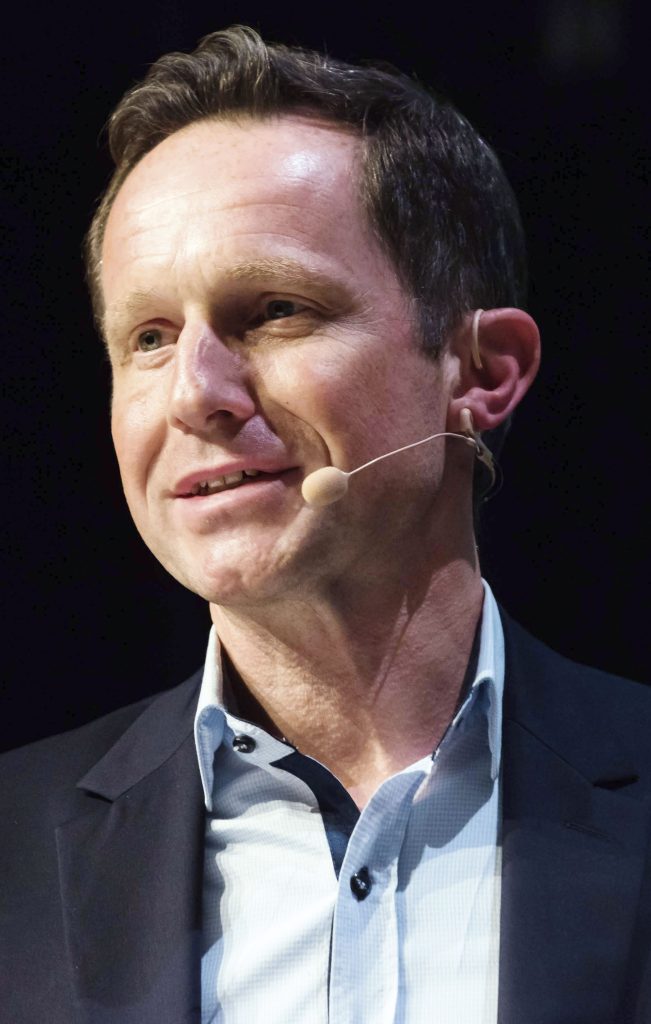
Erwin Bovyn is O&M National Director at Luminus NV. He is also a board member of the Belgian Maintenance Association (BEMAS), where he contributes to advancing professional standards in industrial maintenance. His roles include Chairman of the Jury for Technical Team of the Year. He was elected as Belgium maintenance manager of the year in 2009 and has won the Euromaintenance Incentive award in 2010. Luminus, a key player in the energy transition in Belgium, is active in electricity generation, energy supply and energy solutions and flexibility. The company is No 1 in onshore wind and hydropower in Belgium and has diversified and flexible production units, playing a key role in the country’s security of supply and contributing to grid balance.
Text: Nina Garlo-Melkas Figures: Erwin Bovyn



Subscribe to the free Maintworld newsletter here!

Latest