
From Predictive Maintenance to Autonomous Operations

Artificial intelligence is rapidly changing its role in industry. Rather than serving only as a monitoring or reporting tool, AI is increasingly becoming part of operational decision-making in factories, energy systems and asset management.
For years, predictive maintenance focused on condition monitoring and anomaly detection. Companies installed sensors, collected operational data and used analytics to predict failures before breakdowns occurred. While these approaches reduced unplanned downtime, they still relied heavily on human interpretation and manual processes.
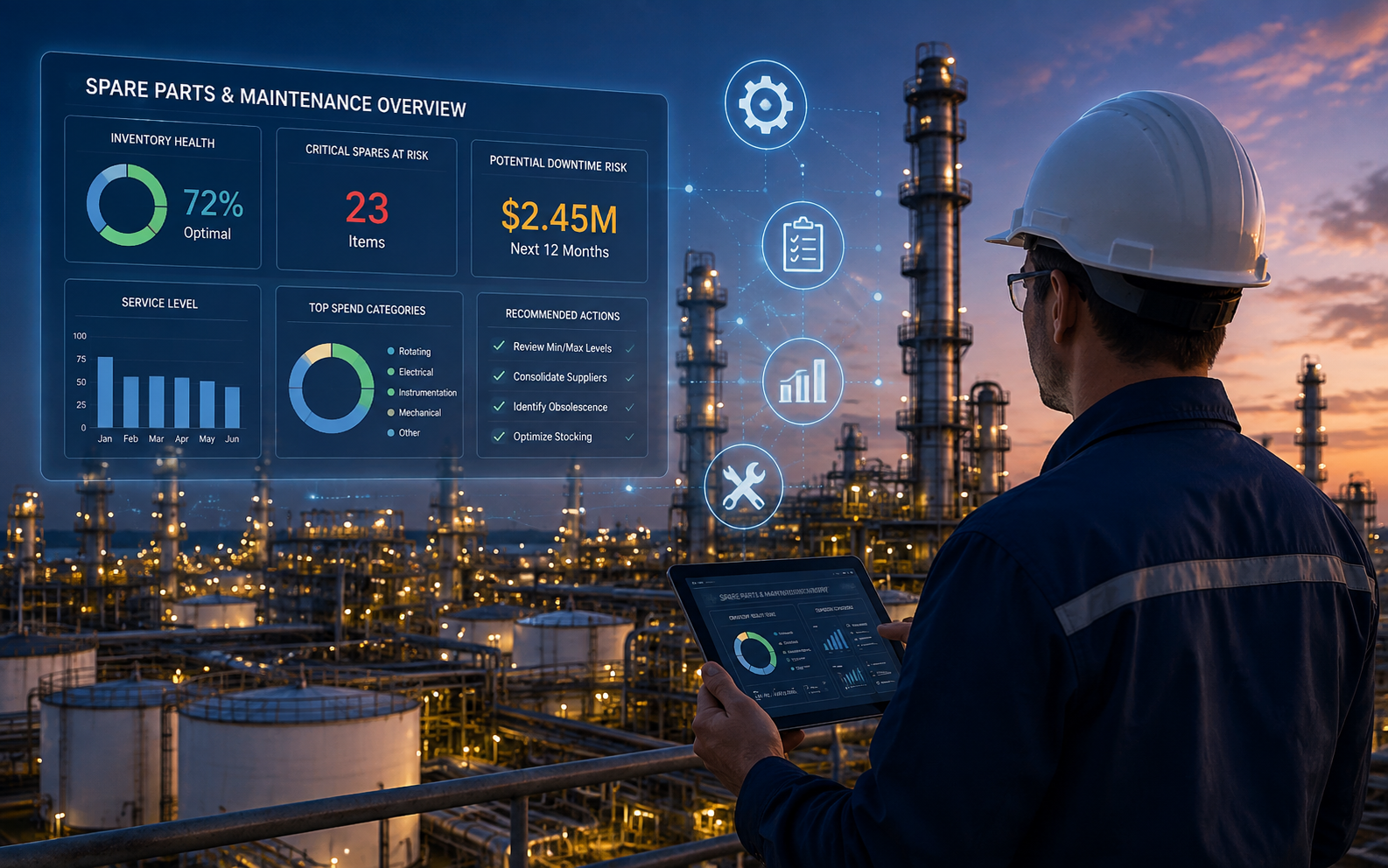
Today, industrial AI is moving beyond dashboards and alerts. New systems are designed to prioritize risks, recommend corrective actions, optimize maintenance schedules and support workflows in real time. The focus is no longer simply on collecting data but on turning industrial data into actionable decisions.

This shift is already visible in industrial deployments. Siemens has expanded its Industrial Copilot platform with generative AI-powered maintenance capabilities integrated with its Senseye predictive maintenance environment. The goal is to support the entire maintenance cycle, from fault detection and diagnostics to planning and optimization. Early pilot projects have reportedly reduced reactive maintenance work by around 25%.
A key enabler of this evolution is the digital twin. Once primarily used for engineering simulations, digital twins are increasingly becoming operational tools connected directly to live industrial data streams. By combining sensor information, operational history and asset performance data, they create dynamic models that mirror real-world equipment behavior.
At the same time, AI is expanding beyond maintenance into broader operational optimization. Digital-first factories are using virtual models and real-time data to optimize production flow, factory layouts and resource utilization before physical commissioning even begins.
Another emerging trend is the rise of agentic AI. Instead of functioning only as analytical tools, AI agents are beginning to act as operational assistants that coordinate tasks and workflows across systems. Gartner predicts that by 2030 semiautonomous AI agents will orchestrate an increasing share of production, quality and maintenance activities, while humans retain final decision authority.
The most advanced industrial AI environments combine several technologies: Industrial IoT sensors, edge computing, machine learning, digital twins and AI copilots that provide recommendations and operational guidance. Increasingly, these systems also work alongside robotics and automated inspection technologies to improve reliability and reduce downtime.
The business drivers are clear. Organizations are under constant pressure to reduce downtime, extend asset life, improve energy efficiency and optimize maintenance resources. Traditional preventive maintenance often results in unnecessary servicing or unexpected failures between inspections. AI-driven maintenance aims to intervene at the right moment based on actual asset condition.
Despite growing momentum, challenges remain. Data quality continues to be a major obstacle, particularly in environments with fragmented systems, legacy equipment and inconsistent maintenance records. AI can only be as effective as the data that supports it. Explainability is another critical issue. Many organizations remain cautious about allowing autonomous systems to make operational decisions without transparency. As a result, most industrial AI implementations today still operate within a human-in-the-loop framework. This human element may ultimately be the key to successful adoption. While AI excels at pattern recognition and large-scale analysis, maintenance expertise and operational judgment remain essential. The most successful organizations are treating AI not as a replacement for maintenance professionals, but as a tool that enhances human decision-making.
The next phase of industrial AI is therefore unlikely to be fully autonomous factories operating without people. A more realistic near-term future is one in which AI continuously supports engineers, operators and maintenance teams with faster diagnostics, predictive insights and better operational decisions.
For maintenance professionals, it looks like predictive maintenance is evolving from a standalone capability into part of a broader intelligent operational ecosystem where AI, digital twins and real-time industrial data increasingly shape everyday decision-making.
Mia Heiskanen
Maintworld Editor
SourceS:
Industry reports and publications from Hannover Messe, Siemens, Business Insider, IIoT World, PatSnap Eureka, Gartner Manufacturing Predicts, and ScienceDirect research on digital twins.



Subscribe to the free Maintworld newsletter here!