
CorPower Ocean Achieves First-Ever DNV Certification for Wave Energy Converter
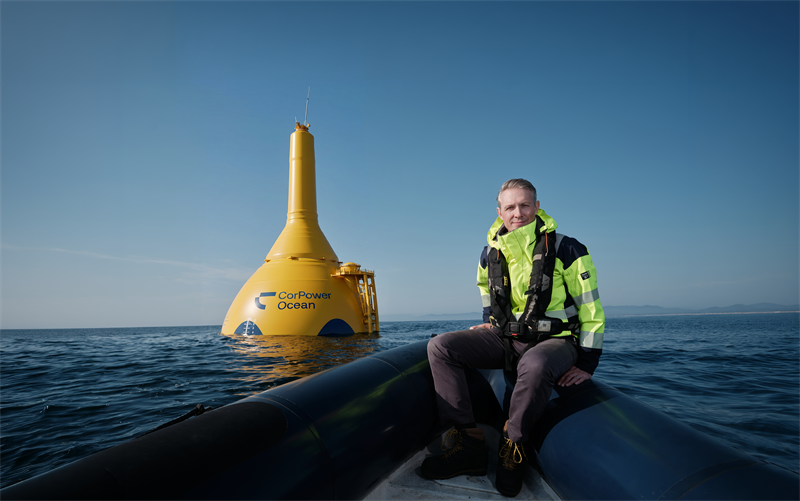
A world-first DNV certification for CorPower Ocean’s wave energy converter could help unlock project finance and accelerate investment in commercial wave energy.
Sweden-based wave energy developer CorPower Ocean has been awarded the world’s first DNV Prototype Certificate for a Wave Energy Converter (WEC), marking a significant step towards the commercialisation of utility-scale wave energy.
The certificate covers the company’s CorPower C4 device and was issued under the DNV-SE-0120 standard for the certification of wave energy converters and arrays. According to DNV, the certification confirms that the technology meets requirements for structural integrity, reliability and safety following an independent verification process.
For the wave energy sector, the certification represents more than a technical milestone. By providing third-party validation of the technology, it is expected to reduce technology risk and improve access to project finance, insurance and institutional investment for commercial projects.
“This is a historic milestone, for CorPower Ocean and the sector,” said Patrik Möller, co-founder and CEO of CorPower Ocean. “It moves wave energy from being a promising technology to being a proven and bankable one.”
Seven-year certification process
The Prototype Certificate is the result of a seven-year certification programme carried out with DNV, one of the offshore energy industry’s leading independent assurance and certification organisations.
The assessment began with establishing the design basis for the CorPower C4 and included independent reviews of concept development, detailed engineering, structural strength and fatigue analysis, manufacturing, assembly, testing, installation, operations and maintenance. DNV also evaluated the device’s performance under extreme sea conditions, including storm waves of up to 18.5 metres.
“The issue of the first Wave Energy Converter Prototype Certificate was the culmination of a thorough and rewarding interaction with CorPower,” said Claudio Bittencourt Ferreira, Project Manager, DNV Renewables Certification. “It marks an important stepping stone in the realisation of commercial wave energy.”
Commercial projects underway
The certification comes as CorPower Ocean advances its first two industrial-scale wave energy projects in Portugal and Scotland.
The company aims to position wave power as a complementary renewable energy source alongside wind and solar, helping to provide a more stable supply of low-carbon electricity. Unlike wind and solar generation, wave energy has the potential to deliver more predictable power production, supporting grid stability and diversifying renewable energy portfolios.
According to Santiago Gil, Head of VC at Santander Alternative Investments, the certification validates years of engineering development while significantly reducing technology risk for investors.
Technology inspired by the human heart
CorPower Ocean develops wave energy converters designed to generate electricity from ocean waves using technology inspired by the pumping principle of the human heart. The company says the design improves energy capture efficiency while reducing mechanical loads in harsh offshore environments.
Headquartered in Sweden, CorPower Ocean operates additional offices in Portugal, Norway and Scotland, where it develops, manufactures and deploys wave energy systems for commercial applications.



Subscribe to the free Maintworld newsletter here!

Predictive Maintenance Drives Growth in Handheld Thermal Camera Market
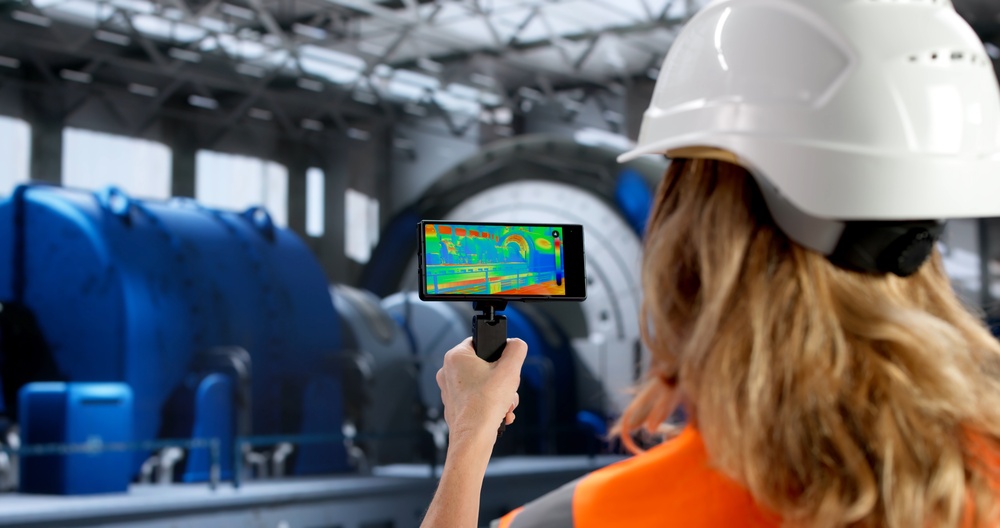
The global handheld thermal camera market is projected to grow from USD 1.83 billion in 2026 to USD 2.83 billion by 2032.
According to MarketsandMarkets™, the global handheld thermal camera market is projected to grow from USD 1.83 billion in 2026 to USD 2.83 billion in 2032, registering a CAGR of 7.6%.
The industrial segment dominated the handheld thermal camera market, by vertical, in 2025.
The industrial segment is dominating the handheld thermal camera industry due to the growing adoption of predictive maintenance, equipment monitoring, and fault detection solutions across manufacturing, energy, oil & gas, automotive, and utility industries.
Industries increasingly use handheld thermal cameras to detect overheating machinery, electrical faults, insulation issues, and mechanical wear before equipment failures occur, helping reduce downtime, maintenance costs, and operational risks. In addition, rising focus on workplace safety, industrial automation, energy efficiency, and continuous monitoring of critical assets is further driving the demand for handheld thermal cameras in industrial applications.
Manufacturers are increasingly developing portable and cost-effective thermal cameras with advanced features such as real-time temperature monitoring, cloud connectivity, predictive maintenance software, and enhanced battery performance.
Handheld Thermal Camera Market
According to the report, building inspectors and energy auditors are expected to remain the dominant profession type during the forecast period. In terms of price tier, the entry-level segment, below USD 799, is projected to record the fastest growth, with a CAGR of 9.5%.
E-commerce is expected to lead among distribution channels, while the DIY/smartphone plug-ins segment is forecast to achieve the highest growth by application, with a CAGR of 12.1%. By vertical, the non-industrial segment is projected to register the strongest growth. Regionally, North America is expected to dominate the market, growing at a CAGR of 7.4% during the forecast period.
Subscribe to the free Maintworld newsletter here!
Saab Invests in Comand AI to Strengthen European Defence Sector

The investment brings French AI expertise into Saab’s defence technology development ecosystem.
Saab announced on 17 June a strategic investment of EUR 11.1 million for a ten percent equity stake in Paris-based battlefield AI company Comand AI.
The investment brings Comand AI’s AI-native planning solutions and technical expertise into Saab’s research and development ecosystem, supporting the continued evolution of Saab’s command and control (C2) and C5ISR* capabilities, including systems such as GlobalEye and ongoing initiatives for multi-domain C2.
“C5ISR systems are central to modern multi-domain operations, and advanced AI is an important enabler for future capability. By partnering with Comand AI, we are strengthening the development of Saab’s C2 and C5ISR capabilities while bringing Swedish defence expertise and French AI innovation together. This collaboration also underlines the value of European cooperation in support of long-term security,” said Carl-Johan Bergholm, head of Saab’s business area Surveillance.
The initiative also strengthens Saab’s co-operation with French industry, promoting a deeper integration within the French innovative technology sector. This move aligns with a broader commitment to enhancing European sovereignty, contributing to a more resilient and adaptable European defence industry capable of developing high-performance capabilities.
The agreement, pending approval from regulatory authorities, underscores Saab’s strategy of combining internal development with targeted external expertise to deliver sovereign and scalable solutions for its global customers.
Subscribe to the free Maintworld newsletter here!
Start of Commercial Operations for Champlain Hudson Power Express Celebrated in New York

The 600-kilometer power line brings Canadian hydroelectric power to the city, covering up to 20% of its electricity consumption.
At an event held in New York on 19 June, NKT celebrated the official commissioning of the 400 kV HVDC interconnector, the Champlain Hudson Power Express, together with its customers, Transmission Developers Inc. (TDI) and Hydro-Québec.
The power line stretches over 600 km (372 miles) from Québec, Canada, to the heart of New York City. It is capable of delivering enough Canadian hydroelectric power to cover up to 20% of electricity consumption—equivalent to the electricity consumption of approximately one million households.
“A world-class power line that will transform the lives of millions of New Yorkers cannot be built without a world-class cable. NKT’s partnership in the CHPE project—from the early stages of development through testing and commissioning—was critical to CHPE’s success. On behalf of the entire TDI team, I would like to thank NKT for its contribution to this significant milestone for the City of New York,” says Justin Sauber, CEO of TDI.
Construction took four years
Awarded in 2022, the turnkey project was executed by NKT and included the design, manufacture, and installation of a 400 kV HVDC power cable system. The power line was put into commercial operation in May, ahead of schedule.
“The commissioning of the Champlain Hudson Power Express is a huge milestone for NKT and for New York’s transition to renewable energy. It reflects the value of strong collaboration and long-term partnerships, and it has been a privilege to work with TDI, Hydro-Québec, and our partners to bring this important project to fruition, which advances the energy transition in the United States,” says NKT CEO Claes Westerlind.
The Champlain Hudson Power Express is now capable of transmitting up to 1,250 megawatts of renewable hydropower from Canada to New York, a significant contribution to the city’s energy transition.
The project has required extensive manufacturing work as well as large-scale installation work both on land and at sea in a variety of environments, including Lake Champlain and the Hudson and Harlem Rivers.
NKT previously completed the grid connection on the Canadian side of the border, enabling a fully integrated transmission link to New York. The commissioning is the result of years of planning, development, and installation work, and was celebrated at an official opening ceremony held in New York on June 16, 2026.
About NKT
NKT has been developing power cable technology and building infrastructure since 1891—from the first incandescent light bulbs to today’s megawatt-class renewable energy. NKT is headquartered in Denmark and has more than 30 offices around the world, as well as 6,500 employees globally. NKT is listed on the Nasdaq Copenhagen stock exchange, and its revenue was 3.6 billion euros in 2025.
Subscribe to the free Maintworld newsletter here!
ABB Report Shows How a 0.2 Percent Motor Efficiency Gain Could Unlock Billions for Industry
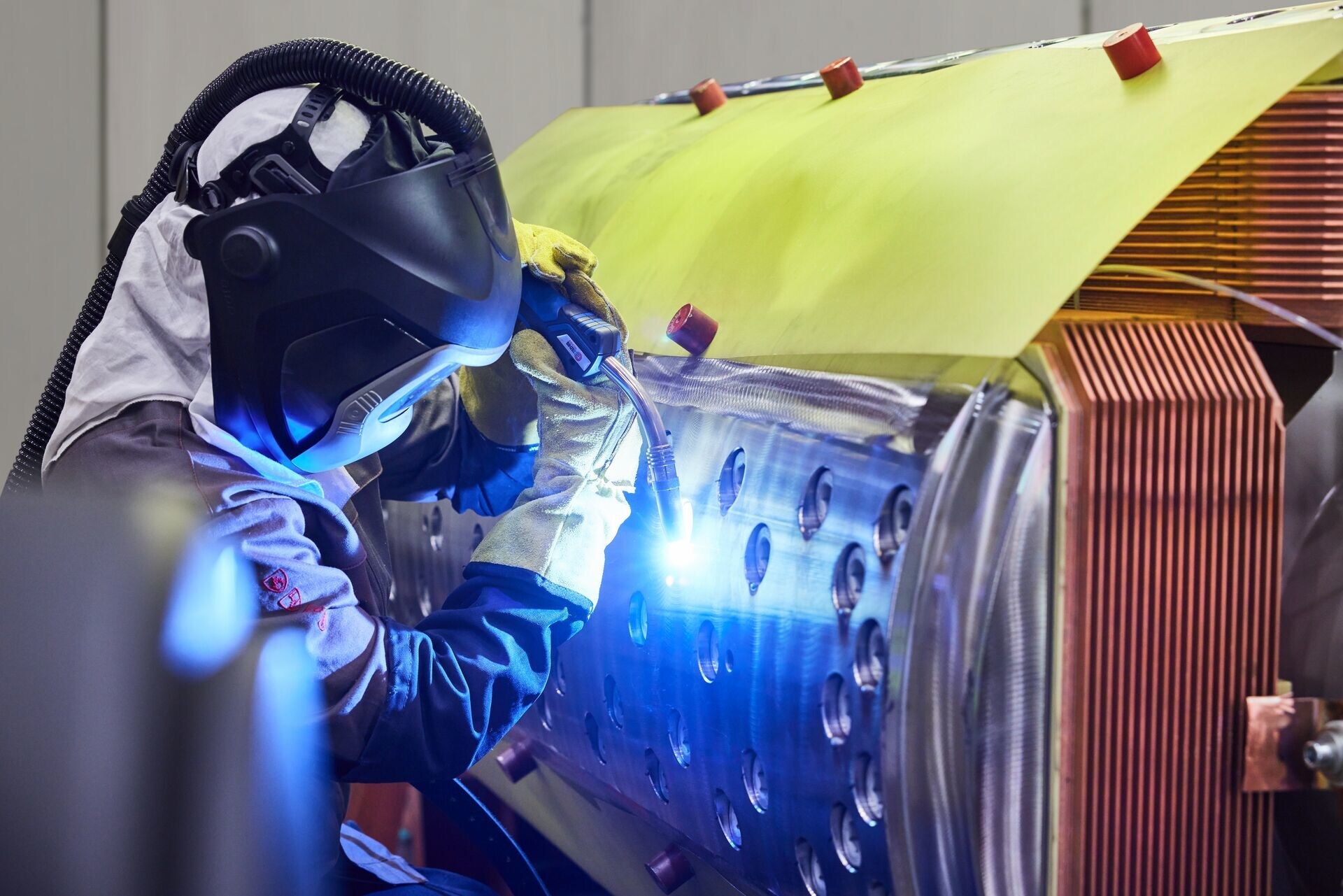
Report examines a decade of data for over 1,000 large motors and generators delivered globally by ABB’s Västerås facility in Sweden.
The company’s new report, The Industrial Efficiency Gap, focuses on motors rated above 375 kW, which ABB says currently account for an estimated 10.4 per cent of global electricity demand. That share is projected to double by 2040.
The report is based on a decade of data from ABB’s manufacturing facility in Västerås, Sweden. It examines more than 1,000 large synchronous motors and generators delivered worldwide between 2015 and 2025.
According to ABB, the data shows a persistent efficiency gap between equipment that is routinely specified and what can be achieved through the company’s Top Industrial Efficiency, or TIE, approach. The approach focuses on specifying the highest-efficiency motor or generator using proven, commercially available technology.
Applied across the global installed base of similar equipment, ABB estimates that a 0.2 percentage-point efficiency gap costs operators between 9.5 and 12 billion dollars in unnecessary electricity costs and generates 60 to 75 million tonnes of avoidable CO₂ over a 25-year asset life. The typical payback period ranges from a few months to up to three years.
Specification Gap, Not Technology Gap
Industrial energy efficiency is becoming more important as the global energy transition accelerates. Rising electricity demand from AI and data centres is adding pressure to power systems, while industry is also seeking to strengthen security of supply.
“Industry has spent decades optimizing what happens inside a plant. Yet large motors and generators have rarely been part of that conversation, even though they run continuously for 25 years and sometimes even more, converting more energy to motion than almost anything else on site,” said David Bjerhag, Global Business Line Manager, High Speed Synchronous, ABB.
“The gap between a standard machine and a TIE-optimized one is not technological. It is a specification gap. The companies closing it fastest are the ones where the engineer who selects the motor and the CFO or CSO responsible for energy performance are aligned around a single metric: total cost of ownership.”
Subscribe to the free Maintworld newsletter here!
AI “Time Machine” Refines Renewable Energy Forecasting
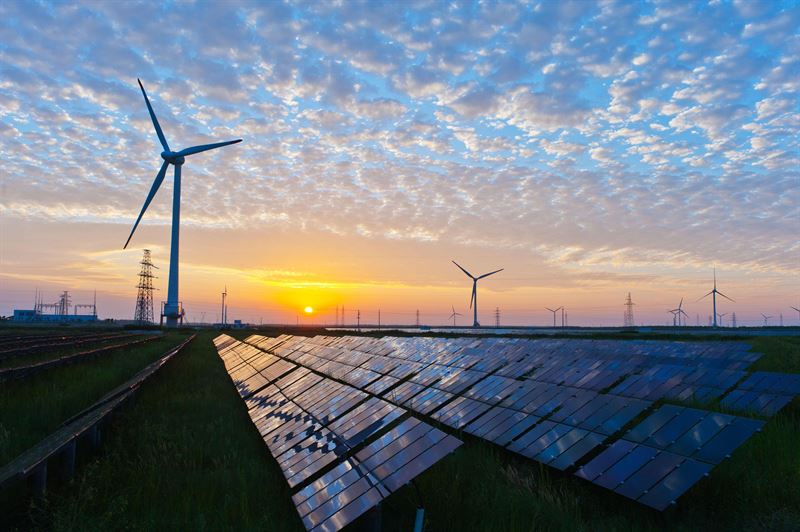
A new AI-based computational “time machine” provides a more accurate assessment of trends in wind and solar power usage.
The “time machine” outperforms current forecasting methods by using AI techniques to analyze historical growth models from different countries. Predicting the future is particularly challenging for technologies such as wind and solar power, where rapid cost reductions are offset by growing obstacles such as public opposition, infrastructure constraints, and policy changes.
“Current models are very good at identifying what needs to be done to achieve climate goals, but they don’t tell us which development paths are most likely. This is precisely the gap we wanted to fill,” says Jessica Jewell, a professor at Chalmers University of Technology.
The researchers observed a recurring pattern in the growth of wind and solar power across more than 200 countries: long periods of relatively steady growth, often interrupted by sudden spikes triggered by policy changes.
“Most models assume a smooth S-shaped growth curve, but in reality, that’s not the case. Growth often occurs in bursts, and if this is ignored, the pace of technology adoption can be misjudged,” says Avi Jakhmola, a doctoral student at Chalmers University of Technology.
13,000 virtual worlds for the future
To improve forecasts, Jakhmola created a model based on 13,000 virtual worlds. In each of these worlds, solar and wind power develop in different ways—from the fastest possible growth to the slowest—and everything in between. A machine learning algorithm was then trained using all of these worlds to learn how to predict global outcomes from early national trends.
“When we apply the model to real-world data, it can tell us what the most likely outcome will be in the future—taking into account what we’ve seen so far and all the virtual worlds the model has seen,” Jakhmola says.
Onshore wind power share to rise to over a quarter
According to the model’s forecast, by 2050 onshore wind power will account for about 26 percent of the world’s electricity (range: 20–34 percent), and solar power for about 21 percent (15–29 percent). These figures are roughly in line with the 2°C target but fall short of the requirements of the 1.5°C target.
The projections also put the pledge made at COP28 to triple renewable energy capacity by 2030 into proper perspective. The pledge falls near the 95th percentile, meaning it would require growth rates rarely observed.
“The pledge to triple renewable energy production isn’t impossible, but it would require everything to go extremely well in every country,” Jewell says.
The researchers also tested what achieving the 1.5°C target would actually require.
“If we start now, the required growth rates are demanding but not unprecedented. They are comparable to the wind power targets in the EU’s REPowerEU program and India’s solar power production plans,” says Jakhmola. “But if we delay until 2030, the required acceleration becomes much steeper and more abrupt. The window of opportunity for expanding production will close rapidly.”
Looking back to verify the model’s reliability
The researchers also used the model to test the reliability of the forecasts—by going back in time.
“We wanted to know if our forecasts would hold true ten or twenty years from now. When we fed only 2015 data into the model, we found that it correctly predicted the developments that occurred afterward. This is what we mean by a ‘computational time machine,’ and it gives us real confidence in future forecasts,” says Jakhmola.
The research points to a broader goal of developing scientifically rigorous methods to predict the most likely growth trajectories for other low-carbon technologies as well, not just wind and solar power.
Jessica Jewell says: “The poor quality of technology forecasts has long been a running joke. But if you’re a decision-maker trying to figure out how aggressively the transition should be driven, you need a realistic starting point. Our study is the first step toward developing such a realistic vision of the future.”
More information about the study
The article “Probabilistic projections of global wind and solar power growth based on historical national experience” has been published in the journal Nature Energy. The researchers have also created an online tool presenting the results, which is available on the Energy Technology and Policy website.
The authors of the article are Avi Jakhmola, Jessica Jewell, Vadim Vinichenko, and Aleh Cherp. They represent Chalmers University of Technology and Lund University in Sweden, the University of Bergen in Norway, the International Institute for Applied Systems Analysis (IIASA), and the Central European University in Austria.
Subscribe to the free Maintworld newsletter here!
Smart Manufacturing and Predictive Maintenance Drive Growth in the Industrial Automation Market
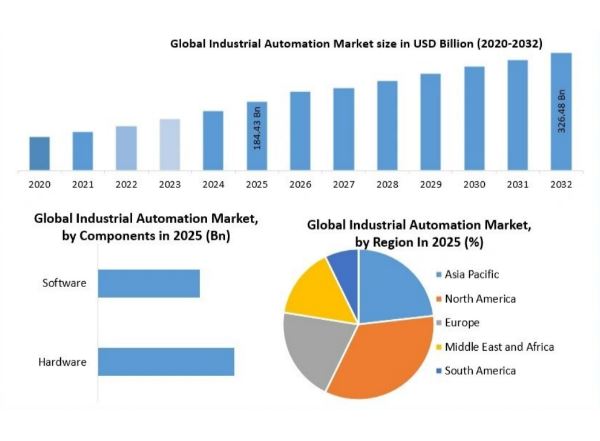
The global industrial automation market is projected to reach US$ 326.48 billion by 2032.
The market was valued at US$ 184.43 billion in 2025 and is expected to grow at a compound annual growth rate (CAGR) of 8.5% from 2025 to 2032, reaching nearly US$ 326.48 billion by 2032, according to Maximize Market Research.
Hardware Segment Maintains Market Leadership
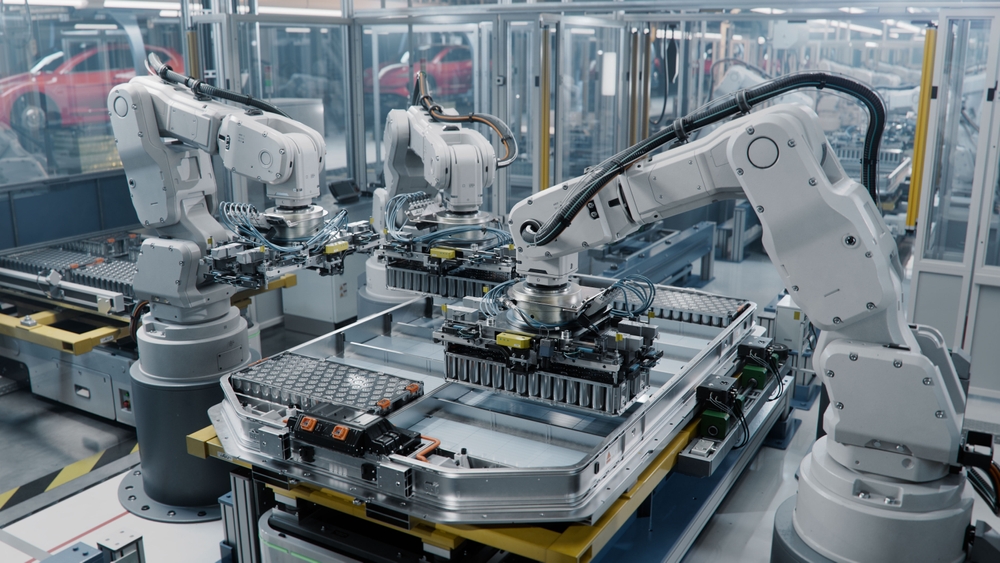
By component, hardware accounted for the largest share of the market in 2025, capturing approximately 50–60%. Growth is driven by increasing demand for physical components in manufacturing automation systems. Industrial robots, programmable logic controllers (PLCs), human–machine interface (HMI) panels, and sensors form the backbone of automation infrastructure.
Investment in robotics and advanced control systems is expected to remain strong, particularly in the automotive, electronics, and energy utilities sectors.
Software and Services Gain Momentum
The software and services segment is experiencing accelerated adoption, fueled by smart manufacturing solutions, AI-driven process control, and real-time analytics platforms. This segment is projected to grow faster than hardware, as companies increasingly deploy predictive maintenance, remote monitoring, and data-driven optimization to improve operational efficiency.
Industrial Robotics at the Core of Innovation
Industrial robots continue to be a key driver of automation growth. Collaborative robots (cobots) and AI-enabled systems are increasingly deployed in assembly, welding, and material handling applications.
Emerging markets in Asia-Pacific, particularly China, are contributing significantly to growth, with a reported 23% year-on-year increase in units shipped in 2022.
Predictive Maintenance and Functional Safety in Focus
Predictive maintenance systems, AI-driven diagnostics, and industrial IoT platforms are transforming manufacturing operations by reducing unplanned downtime and improving equipment performance.
At the same time, safety automation solutions are becoming increasingly critical to prevent workplace accidents and ensure compliance with IEC and ISO functional safety standards.
Automotive Sector Leads End-Use Adoption
The automotive industry remains the largest end-user of industrial automation technologies due to its reliance on precision manufacturing, assembly line automation, and advanced quality control systems.
Automation enables higher productivity, reduced production errors, and improved operational efficiency, positioning the automotive sector as a primary driver of market expansion.
North America Leads, Europe and APAC Close Behind
North America currently leads the global industrial automation market, supported by strong adoption of advanced robotics, smart manufacturing technologies, and high exports of automation equipment.
Europe and the Asia-Pacific region follow, driven by IoT-enabled Industry 4.0 initiatives and government-backed industrial modernization programs.
Consolidation Reshapes the Competitive Landscape
Mergers, collaborations, and strategic partnerships are reshaping the industrial automation sector. Leading providers are integrating AI, IoT, and cloud-based capabilities into unified platforms, expanding product portfolios and delivering end-to-end smart manufacturing solutions.
Subscribe to the free Maintworld newsletter here!