
Digital Waste Management Tools and AI Driving a Cleaner, Leaner Industry

At this year’s Ecomondo fair, two radically different approaches offered glimpses into how data, automation, and artificial intelligence are transforming waste handling. While one focuses on infrastructure-level digitalization, the other targets granular sorting precision. Both point toward the same goal: cutting inefficiencies, reducing environmental impact, and lowering operational risk in waste management.
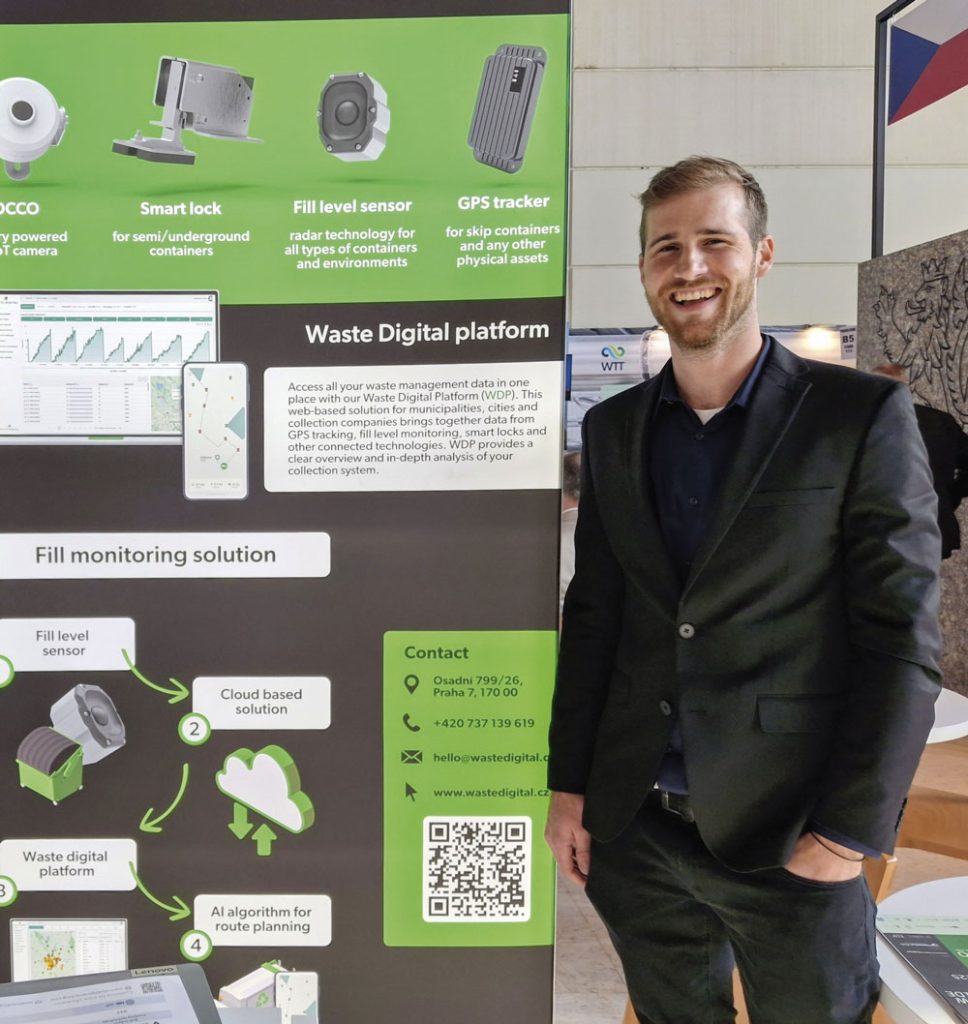
Traditional waste collection still dominates in much of Europe. The usual approach? Trucks follow static schedules, emptying every bin regardless of whether it’s full. This leads to wasted fuel, unnecessary emissions, and operational blind spots. I had an interesting conversation with Waste Digital with a simple proposition: digitize the system to make smarter decisions.
At the core of their solution are fill-level sensors placed inside waste containers. These sensors transmit real-time data on how full each bin is, enabling waste collection routes to be dynamically optimized. The result? Fewer unnecessary stops, up to 25% savings in fuel and kilometers driven, and reduced cost to cities that are billed per bin emptied.
But the system doesn’t stop there. For areas plagued by unauthorized dumping, Waste Digital offers smart locks with NFC-based access. Only residents or businesses with digital credentials can open the bins. This prevents cross-district misuse and enforces accountability.
Then there’s GPS tracking for large industrial containers which are especially relevant for construction firms or event operators managing dozens or hundreds of mobile units. The old method of Excel sheets and guesswork often leads to lost assets. With embedded trackers, companies get live location data for every container in their fleet.
Perhaps the most eye-catching development is an AI-powered camera system that monitors container surroundings. Deployed in cities like Prague, the cameras periodically scan waste zones. If they detect trash piling up outside containers, alerts are sent automatically to clean-up crews. The aim is to preserve urban cleanliness and tackle illegal dumping before it becomes a problem.
For maintenance teams, these technologies offer clear operational upsides:
• Fewer breakdowns due to inefficient overuse of vehicles
• Faster diagnostics and route adjustments based on real-time conditions
• Preventive maintenance insights from container usage patterns
• Centralized control of distributed assets
As Waste Digital sees it, the future of waste logistics is fully autonomous where daily routes are planned algorithmically, downloaded to trucks, and executed with minimal human intervention. And it’s not a distant future.
“We’re already seeing 25% cost and fuel savings where these systems are deployed. Scale that across a country, and the impact becomes huge,” said Ing. Jan Grossmann at the stand.
If Waste Digital is about big-picture infrastructure, Tomra is about fine-tuning the mechanics of sorting down to the label on a milk bottle.
At Ecomondo, Tomra unveiled two new technologies: the FINDER™ COLOR system for metals, and GAINnext™, an AI-powered upgrade for waste sorting. Both are designed to make existing sorting systems smarter, not just faster.
FINDER™ COLOR , aimed at the metal division, enhances object identification based on color recognition — a critical detail for separating different metals more precisely.
The real leap, though, comes with GAINnext™ which is a deep-learning system that allows sorting machines to “memorize” specific waste items using visual data. Different countries may use the same materials but package them differently. A milk carton in Italy doesn’t look like one in Germany. Tomra’s solution compensates for this by learning those local patterns and adapting accordingly.
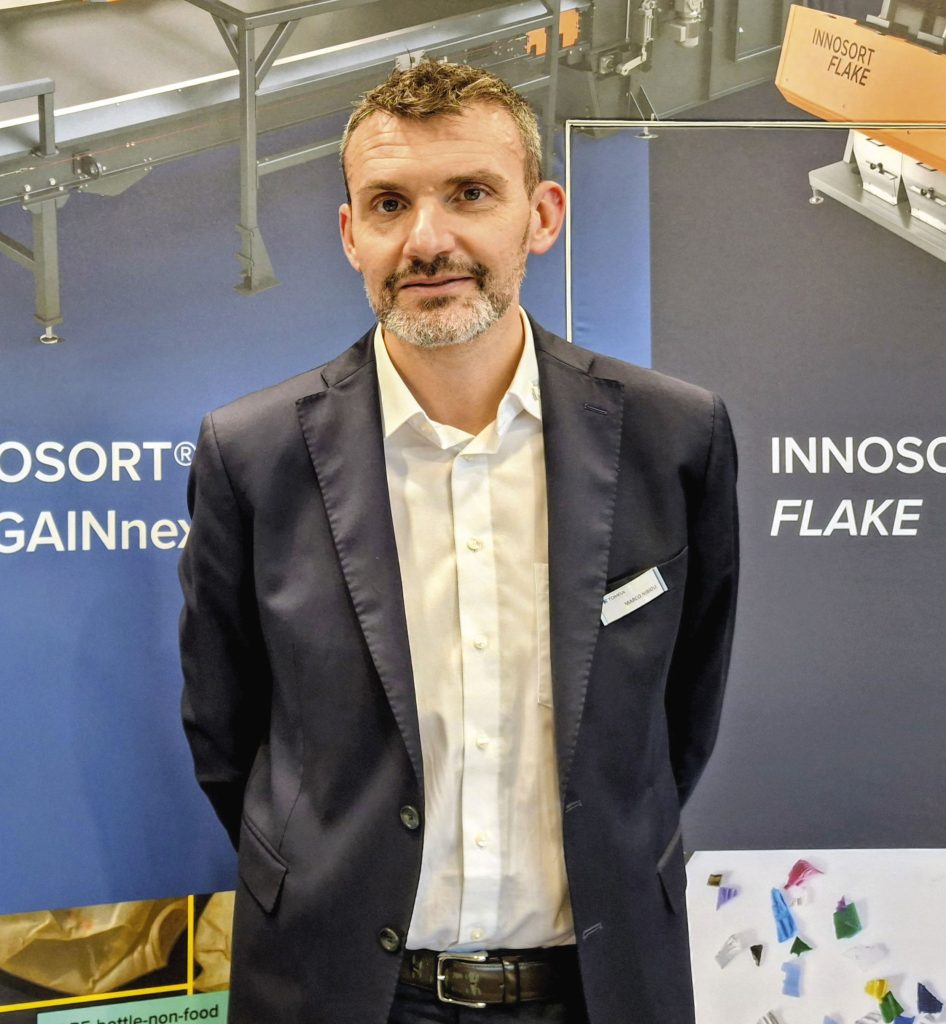
When added to Tomra’s existing auto-sort systems, GAINnext™ reportedly boosts sorting accuracy by 5–8%, enough to significantly reduce reliance on manual sorting labor. -The real gain, said Marco Niboli, Regional Sales Director for South-West
Europe, is in achieving a fully automated line. You can eliminate manual pickers at the end of the process.
From a maintenance and operational standpoint, this is more than a technical upgrade:
• Less manual labor means fewer injury risks and lower personnel overhead.
• More consistent output reduces the risk of contaminated recycling batches.
• Customized AI models ensure performance even with country-specific waste streams.
• Reliability matters. Niboli noted that customers can issue penalties if sorting efficiency falls below promised thresholds.
That last point is crucial. In today’s tight-margin recycling market, even a few percentage points can make or break profitability.
Poor performance doesn’t just mean inefficiency it can mean contractual losses. That’s why Tomra updates GAINnext™ algorithms weekly, ensuring the AI stays aligned with shifting customer needs and waste profiles.
For industrial operators, these aren’t just feel-good sustainability stories. They’re about efficiency, asset management, and resilience. The maintenance landscape is shifting not just from reactive to predictive, but toward strategic automation powered by data and AI.
Whether it’s reducing truck miles through smart sensors or squeezing more accuracy out of automated sorters, the direction is clear: waste management is no longer an afterthought but a core operational pillar with bottom-line implications. As cities and industries wrestle with stricter regulations and rising costs, the message from Rimini is unmistakable: the tools to fix waste are here. The question now is how fast we can put them to work.
Text and photos: Mia Heiskanen



Subscribe to the free Maintworld newsletter here!

A Smarter Way to Upgrade Wastewater Plants

In wastewater treatment, meaningful innovation is often buried under concrete involving costly retrofits, structural overhauls, or new builds. But a quietly growing Italian company is proving that smarter systems don’t have to be heavier ones. In fact, they may just float.
At Ecomondo 2025, Ludovico Sanna, manager of an environmental tech firm, walked through an innovation that could rewrite the rules of biological wastewater treatment: a patented floating device paired with adaptive software, that turns conventionally activated sludge into a hybrid granular system without any structural changes to the plant.
“We don’t change the tanks, dig or rebuild. We just place our device into the reactor and from there, the system transforms itself, Sanna explained.”
Born from a Dream. The story of this innovation did not start in a lab or a university. It started with a dream. The inventor woke up, visited a hardware store, and began prototyping in a biological tank. A week later, something unexpected happened: sludge behavior shifted. Settling improved. The experiment turned into an idea. The idea became a company. And now, that company is scaling a no-dig, no-disruption wastewater upgrade platform across multiple countries.
“We want this to be the standard. Why rebuild a plant if you can transform it from the inside?”
The system acts directly within oxidation tanks or biological reactors, floating in the heart of the treatment process. There, it promotes the natural formation of hybrid granular biomass with a denser, more stable structure than conventional flocculant sludge. This results in:
• Better settling characteristics
• Increased biological capacity
• Optimized nutrient removal
• Lower energy consumption
• Reduced sludge production
• Decreased chemical use
It’s a self-improving process and that’s where the software comes in. While the hardware supports biological restructuring, the advanced control software actively manages the plant’s aeration, recirculation, and mixing systems, adjusting them in real time based on:
• Flow rate
• Organic and nutrient load
• Environmental and seasonal variations
The software doesn’t just automate; it adapts, Sanna explained. It optimizes performance every minute, without waiting for someone to change settings manually.
Installation made deliberately simple. A crane truck lowers the device into the tank; standard control cables are connected to blowers, pumps, and mixers. That’s it. There are no process interruptions. No reengineering of tanks or clarifiers. The only infrastructure added is intelligence in both hardware and code.
According to Sanna, the results are rapid. Plants see measurable energy reductions within days. Sludge production, a more complex, longer-cycle metric typically shows a marked decrease within one month, with full annual impact visible after a year.
“It’s one of the rare technologies where you don’t have to wait years to see payback. The efficiency gains show up fast.”
Real-World Application. Since 2020, the system has been installed at more than a dozen facilities from Italy to Spain to the Caribbean treating populations from 220,000 to 500,000 equivalent inhabitants. Despite the system’s relative youth, results have drawn global attention, with incoming requests from utilities and municipalities in Ukraine, Hungary, Lebanon, Libya, and beyond.
“The performance comes from the synergy between the granular biomass and the advanced operational strategy. It’s not just about a device. It’s how biology and software evolve together.”
Oblysis has been designed for any plant using activated sludge including both civil and industrial facilities. It doesn’t require a specific plant layout, size, or manufacturer making it compatible across a wide range of infrastructures.
Honest Tech. In an era where every vendor claims AI, Sanna is refreshingly candid: the current version doesn’t use artificial intelligence, yet. But that’s intentional.
“Right now, our system uses high-level adaptive control, not AI. We’ve tested sites that used AI-based systems and we outperformed them. It’s more important that it works than that it trends.”
Plans for AI integration is on the roadmap, but with a focus on on-site safety, cybersecurity, and data reliability. When AI does arrive, it will be implemented carefully likely as a locally hosted system with offline model updates to ensure plant networks stay protected
The Takeaway for Maintenance and Operations Teams
For industrial and municipal wastewater teams, the floating system offers less to maintain, more to gain and no structural overhaul required. Operations remain uninterrupted. Maintenance becomes remote. And plant performance improves without changing the footprint. In an industry where infrastructure is often too expensive to replace, a smart, biological retrofit offers a practical alternative.
Text and photo: Mia Heiskanen
Subscribe to the free Maintworld newsletter here!
Kerry Group: Turning Maintenance into Strategic Advantage
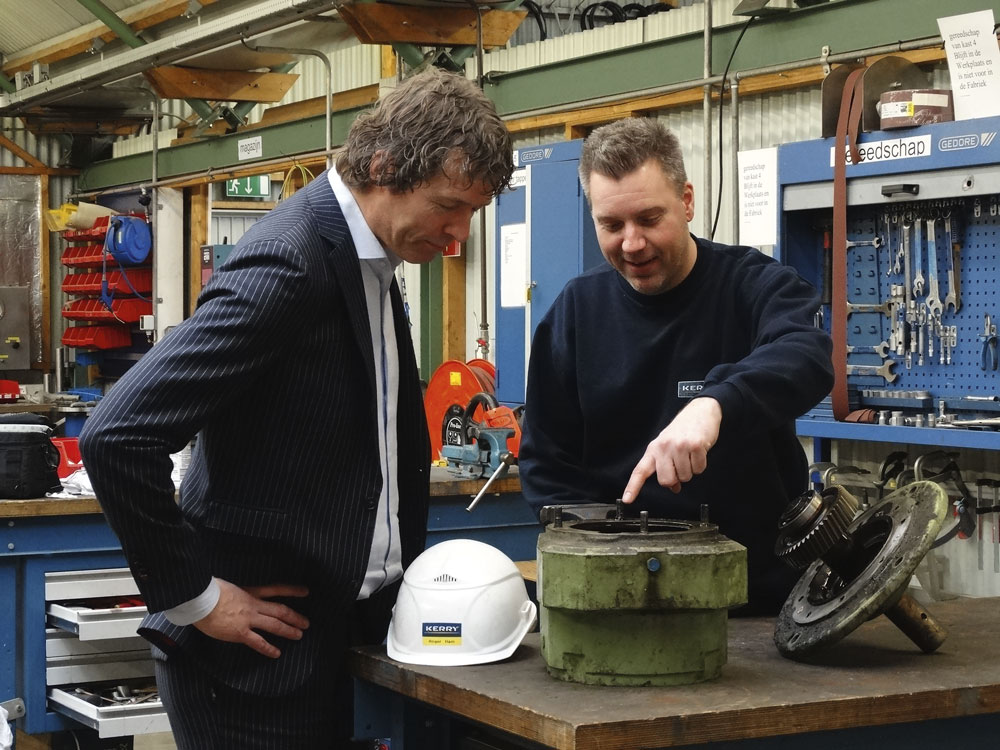
“If you plan and schedule maintenance operations properly, you can, as a company, unlock capacity you didn’t even know you had,” explains Roger Ham, Global Asset Lifecycle Lead at Kerry Group. “It’s like getting two technicians for free—without hiring anyone.”
Since 2019, Roger Ham has led Kerry Group’s global maintenance transformation from his base in the Netherlands. With 148 manufacturing sites worldwide, the Irish-headquartered food ingredients company has spent the past six years standardising its maintenance operations, embracing digital tools, and redefining the role of maintenance across the organisation.
Roger Ham‘s mission as Kerry Group’s global maintenance lead has always been clear: to shift maintenance from a reactive cost centre to a strategic value driver.
“For decades, maintenance was often treated as a background function—essential, but rarely strategic. At Kerry, this view changed fundamentally in 2019,” he explains.
From Fragmentation to Standardisation
When Roger Ham joined the global function in 2019, each Kerry region operated almost independently of the others. Preventive maintenance (PM) programs were inconsistent, Hands-on Tool Time (HoTT) for technicians was low, and asset management was largely reactive.
“Kerry’s maintenance systems were fragmented. Each site had its own naming structures and approaches. A pump at one site could be labelled “P-100,” while another site might call it “Main Transfer 1.” Comparing performance data or sharing learnings was difficult,” Ham describes.
“148 sites meant 148 ways of doing things,” Ham recalls.
“If you’re not speaking the same language, you can’t analyse failures or improve effectively.”
To change the situation, a key focus at the beginning of Kerry Group’s transformations was master data standardisation: equipment hierarchies, naming conventions, maintenance task lists, and taxonomy.
“It was detailed, painstaking work—but essential.”
“If your master data is rubbish, everything else is rubbish too,” Ham says. “Planning, KPIs, digital tools—they all depend on clean data.”

This standardisation created a foundation for global benchmarking, improved planning and scheduling, and the introduction of new digital technologies.
Today, Kerry follows standardised processes across all its sites worldwide, embedding safety, quality, and operational efficiency into every maintenance task.
“Maintenance is finally at the table,” Ham says. “It’s recognised as adding value, not just spending money. We protect people, we ensure product quality, and we ensure the business runs efficiently. This all involves well-functioning maintenance operations”
Securing Tribal Knowledge
Kerry Group, like many manufacturing companies, is facing a retirement wave as veteran technicians with decades of experience are leaving the workforce, often taking critical knowledge with them.
“Some of these guys have personal notebooks full of unique know-how. When they retire, those notebooks disappear,” Ham explains.
To combat this loss, Kerry has systematically extracted and documented knowledge, creating standardised maintenance plans and digital libraries. Master data and uniform equipment naming conventions ensure that critical information resides in the system—not in someone’s pocket.
“Without proper master data, even the same equipment across different sites could be named differently, making it invisible in the system. Standardisation unlocks information and protects operational knowledge.”
Ham notes that the knowledge retention strategy has not only preserved decades of expertise but also enabled new hires and younger technicians to quickly access information, reducing reliance on retired staff and improving overall efficiency.
Planning and Scheduling: The Hidden Goldmine
One of Roger Ham’s main areas of focus is raising the recognition of maintenance planning and scheduling. He often begins his training sessions with a straightforward question:
“How much of a technician’s day is actually spent working with tools?”
Hands-on tool time is generally surprisingly only 30% of a technician’s day—the rest of the working time is lost to searching for parts, waiting for permits, or travelling between locations.
“If you raise hands-on tool time to 40% from 30%, you’ve effectively gained two extra technicians for every ten percent—no overtime, no new hires—just better organisation,” Ham says.
Planning and scheduling are often undervalued responsibilities. But when done correctly, they transform the hidden factory—the time technicians spend away from actual maintenance—into real productivity.”
At Kerry Group, planning and scheduling tasks have been redefined as a distinct operational function, separate from the responsibilities of site managers. While the same individual may perform planning and scheduling, the role itself is structurally independent to ensure focus, accountability, and strategic execution.
“Each site has its own maintenance planner and scheduler. This separation allows site managers to concentrate on broader operational leadership, while planners and schedulers drive maintenance efficiency.”
Now, at Kerry Group, well-functioning teams have achieved hands-on tool time levels of approximately 50%—a notable improvement that exceeds typical industry benchmarks.
The Lego Exercise to Build Competence
Kerry Group conducts two to three training programs annually for its planners and schedulers. These combine e-learning through Kerry’s academy with classroom sessions led by Roger Ham. Each training begins with the site manager present, ensuring leadership alignment.
Ham uses a Lego helicopter exercise during his training sessions to demonstrate the effects of poor planning. Participants receive kits with missing parts or confusing instructions, simulating real-world maintenance challenges.
“It perfectly mirrors a poorly planned job. The frustration is immediate, and people suddenly understand why planning matters.”
Training sessions include planners, schedulers, and site managers, emphasising accountability and operational understanding. By physically experiencing the inefficiencies of poor planning, teams internalise the value of standardised workflows.
From Paper to Mobile
Kerry has moved from paper-based work orders to mobile-enabled CMMS add-ons, providing technicians with digital tools to execute tasks efficiently. For years, Kerry used a CMMS for maintenance planning but relied on printed work orders on the shop floor. Technicians often filled in paperwork at the end of the week, resulting in inaccurate data.
“Let’s be honest,” Ham says. “Technicians would write down hours at the end of the week just to keep the system happy. The data wasn’t reliable.”
In 2024, Kerry launched mobile work order pilots in Northern Ireland and Scotland, integrating their CMMS with a mobile platform. Technicians now receive, execute, and complete work on smartphones. They can scan parts, log torque values, attach photos, and close work in real time.
The results: Improved data quality, faster feedback loops, higher engagement and the elimination of paperwork.
“Once people tried it, nobody wanted to go back to paper,” Ham says.
The platform uses AI in the background. When a maintenance request is logged, the system automatically searches for similar jobs, attaches standard steps, spare parts, and time estimates. This speeds up planning and improves consistency.
“A global rollout for the system is planned over the next two to three years.”
The system enhances data accuracy, minimises errors, and enables management to conduct cost and efficiency analyses.
Preventive maintenance planning benefits directly from these insights, helping Kerry avoid costly downtime and customer complaints.
“Technicians don’t want to work on paper anymore—they want mobile solutions. It makes their lives easier and attracts younger people to the profession,” Ham notes.
“Planning, KPIs, digital tools— they all depend on clean data.
AI as a Strategic Tool
When discussing new technologies further, Roger Ham says he views artificial intelligence as an enabler, not a threat.
“AI is a helping device,” he says. “It can build preventive maintenance plans, analyse breakdown histories, suggest improvements, and support planners. In five years, it’ll be fully integrated.”
AI also plays a role in attracting younger talent. “The next generation doesn’t want to work with clipboards,” Ham notes. “They live on their phones. If we want them in maintenance, we need to provide modern digital tools.”
Accountability at the Top
One of Kerry’s most significant cultural shifts has been its adoption of an accountability model. While maintenance teams are responsible for execution, the site manager is ultimately accountable.
“If something goes wrong, it’s the site manager who goes to court,” Ham explains. “You can delegate responsibilities, but you can’t delegate accountability.”
This approach ensures that maintenance is not sidelined when production is under pressure. Preventive maintenance decisions are made at the top, aligning operational priorities with legal and safety obligations.
“Once the site managers understand their accountability and the workforce sees the benefits of planning, scheduling, and digital tools, everyone wins—safety, quality, efficiency, and engagement,” Ham concludes.
Key Takeaways – Kerry Group’s Maintenance Transformation
1. Standardise the Foundation
Consistent master data across all sites is essential. Without a shared structure, planning, KPIs, and digital tools cannot function effectively.
2. Separate *Planning/Scheduling and Supervision
Dedicated planners/schedulers prepare work at least one week in advance; supervisors coordinate execution. This structured approach raises technician tool time from around 30% to 50%.
3. Capture Tribal Knowledge
Veteran technicians’ expertise is systematically documented in standard task lists and libraries, preserving critical know-how for future generations.
4. Digitalise the Workflow
Shifting from paper to mobile work orders within CMMS has improved real-time data accuracy, accelerated feedback loops, and boosted technician engagement.
5. Use AI as an Enabler
AI assists with generating preventive plans, analysing breakdowns, and standardising job steps—supporting planners rather than replacing them.
6. Leadership Accountability Matters
Site managers bear ultimate accountability for maintenance, ensuring that operational decisions align with legal, safety, and reliability obligations.
7. Invest in People
Targeted training for planners, schedulers, and site leaders builds competence, ownership, and a shared understanding of maintenance
as a strategic function.
“Start with a dedicated planner-scheduler and clean up your master data,” Roger Ham says. “Those two steps change everything. After that, digitalisation and AI multiply the impact.”
Positive Outcomes from Kerry Group’s Shift
The changes implemented since 2019 have produced significant and measurable results:
• Hands-on tool time: Increased from 30% to ~50%, improving productivity without increasing headcount.
• Knowledge retention: Critical expertise preserved through digital libraries and standardised procedures.
• Operational efficiency: AI and mobile tools streamline workflows, reducing wasted time.
• Workforce engagement: Modern tools attract younger technicians, improving morale and retention.
• Strategic value: Maintenance now contributes directly to safety, quality, and operational performance.
Lessons for Industry Leaders
1. Maintenance as Strategy: Elevate maintenance from a cost centre to a strategic function.
2. Capture Critical Knowledge: Preserve expertise before experienced staff retire.
3. Optimise Hands-On Tool Time: Focused planning and scheduling unlock hidden productivity.
4. Leverage Technology: Mobile devices and AI enhance efficiency and attract younger talent.
5. Ensure Accountability & Training: Clear responsibilities and hands-on exercises reinforce compliance and operational understanding
Text: Nina Garlo-Melkas Photos: Kerry Group PLC
Subscribe to the free Maintworld newsletter here!
Eyes in the Sky: How Drones Are Transforming Industrial Inspections
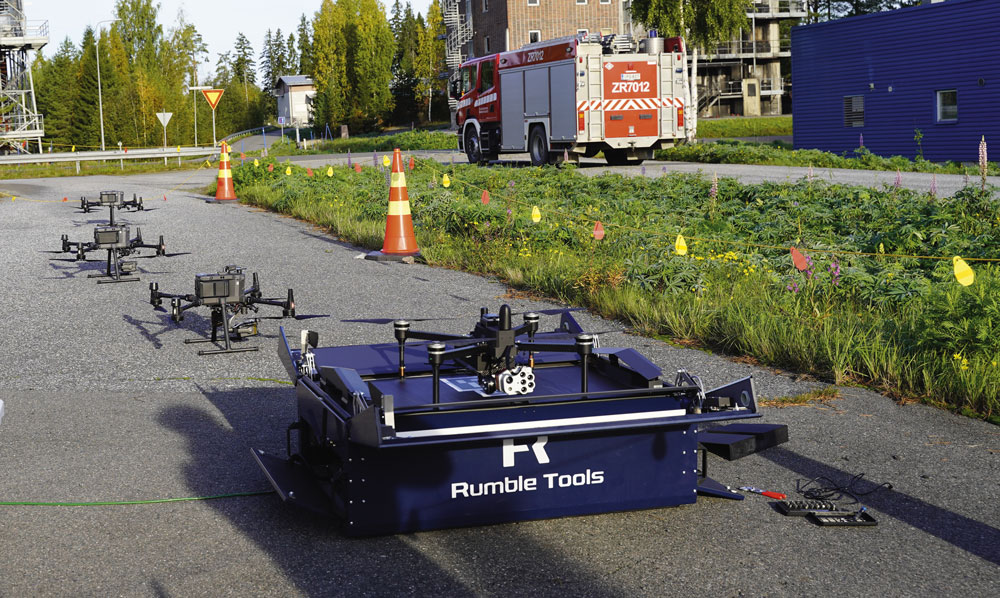
Drones have rapidly gone from experimental gadgets to essential tools in industrial maintenance. Once used just for basic visual checks, they now carry advanced sensors and cameras that can detect leaks, corrosion, and damage with high precision.
Today, refineries, chemical plants, energy facilities, container terminals and infrastructure assets are using drones to access high, hazardous, or hard-to-reach areas that once required scaffolding, rope access, or even full shutdowns. These inspections can now be completed in a fraction of the time—cutting downtime, reducing risk, and saving money.
In a recent webinar hosted by the Belgium Maintenance Association (BEMAS), one case study showed how a 50-meter concrete silo was fully inspected in just one hour, with the results analysed digitally back at the office. Similar efficiencies were seen in flare stack, tank, and cold box inspections, where drones captured visual and thermal data at scale to highlight insulation anomalies and other surface-manifested issues. This expanded coverage made it more likely to detect problems that traditional spot checks might otherwise miss. These insights then help inspectors and asset owners prioritise repairs and plan targeted, quantifiable NDT — potentially robotised — where it adds the most value.
Despite the advantages of modern technology, most inspections are still done manually, with personnel physically walking sites and taking measurements in often hard-to-reach or hazardous areas, said Jean-Louis Weemaes, Chief Business Officer at SkyeBase. He spoke alongside Martijn Cuyx, Innovation Manager at Vinçotte, and Grégory Gourdin, Head of Sales – Energy & Process Industries at Vinçotte, during the Smart Asset Inspection: Leveraging Robotics, Drones and AI webinar.
The webinar—still available for replay—spotlights how advanced technologies like drones, robotics, and remotely operated vehicles (ROVs) are transforming industrial inspections. Speakers from SkyeBase and Vinçotte emphasised a clear industry-wide shift: inspections are moving away from slow, manual routines toward remote, fast, data-driven operations powered by automation and AI.
Making inspections consistent and repeatable
One of the most promising advances in inspection technology is the integration of emission sensors directly onto drones. These sensors can detect over 20 types of gases at extremely low levels, giving quick, site-wide overviews of the emissions. Heat maps then show problem areas—red for high emissions, green for safe levels—so inspectors know precisely where to focus.
Such gas detection drones are widely used in industrial and environmental monitoring. They can detect gases, including methane, CO₂, and volatile organic compounds (VOCs), using sensors like Optical Gas Imaging (OGI) and Tuneable Diode Laser Absorption Spectroscopy (TDLAS). Companies like Finnish firm Aeromon, with its modular BH-series sensor units and cloud-based analytics platform, offer multi-gas detection solutions that can be mounted on drones or used handheld. Advanced systems like the Drone Flux Measurement (DFM) method by the Danish company Explicit integrate wind sensors to trace emissions back to their sources, even in complex environments such as coastal plants.
Such drones are increasingly deployed at oil and gas terminals, chemical plants, and for environmental surveys, enabling fast, non-intrusive inspections.
Drones are also improving consistency in routine inspections. By flying along pre-programmed routes, they can capture identical image sets year after year, making it easier to spot gradual changes like corrosion, cracking, or insulation wear. This repeatability supports more accurate trend analysis and helps engineers plan maintenance before problems escalate. As a result, predictive maintenance becomes faster, safer, and far more precise.
Remote and Connected Operations
Thanks to better connectivity, remote inspections are now more practical and efficient than ever, experts say.
“For routine inspections, an inspector doesn’t have to be on site anymore,” Weemaes described in the webinar. “They can log in, follow the live stream, and guide the drone operator from the office.”
Using Wi-Fi, 4G, or 5G links, inspectors can supervise field operations in real time, cutting travel requirements and site exposure.
For hidden or subsurface degradation (e.g., CUI, internal wall loss, bearings), drones provide condition-based indicators that identify areas for closer examination, enabling targeted, quantifiable (robotised) NDT. Those NDT tasks are performed by qualified personnel on site, while faster connections enable near instant transmission of results to experts off-site. All inspection data can be stored and organised on digital platforms. One of them is I-Spect – an AI-powered asset inspection platform that enables filtering, comparison, and sharing of asset trees, images, and annotations.
The main benefit is that asset owners have a single source of data: all inspection information, images, measurements and annotations in one place, processed and visualised with AI, often in 3D. No more scattered PDFs or separate reports; everything runs through one digital workflow.
Alongside the I-Spect platform from Belgium, several other tools are transforming how companies inspect and maintain their assets. DroneDeploy, based in the United States, offers a popular cloud-based platform for aerial mapping and inspections, especially in construction and energy. Percepto, based in israel, uses autonomous drones and AI analytics for continuous site monitoring, while Flyability, headquartered in Switzerland, builds Elios drones for confined spaces, featuring collision-tolerant designs to inspect hard-to-reach areas safely. In Finland, the company Kelluu provides innovative airship-based services for a wide range of inspection and monitoring tasks, offering longer flight times and lower emissions compared to traditional drones.
Each of these platforms offers its own advantages; some focus on real-time data visualisation, others on autonomous drone operations, and others on seamless integration with asset management tools. Together, they reflect a growing shift across industries toward more innovative, more digital inspection methods that are faster, safer, and powered by AI.
While manual inspections are still widely used, modern tools like drones are quickly gaining ground, experts emphasised during the BEMAS webinar. Many companies have already adopted drone technology, while others are actively testing or preparing for deployment. The shift from pilot projects to full-scale integration is accelerating—driven by clear improvements in safety, cost efficiency, and inspection quality.
Tools that centralise inspection data are making information more traceable and trendable. AI now automatically flags potential defects such as corrosion or cracks, with human inspectors performing final quality assurance. Some systems even support live streaming, allowing inspectors to guide drone operators remotely in real time—watching the feed and directing flight paths from an office or home.
Moving from reactive to proactive maintenance
Traditional inspections often require confined-space entry, scaffolding, and lengthy permitting. By contrast, drones and robotic tools have reduced the number of workers exposed to hazardous environments by up to 90%, while also cutting inspection costs by eliminating the need for scaffolding and insulation removal—expenses that can account for 50–70% of inspection budgets.
In the end, drones are helping asset owners shift from reactive fixes to proactive, data-driven maintenance. With autonomous flight, advanced sensors, and AI analysis, drones have evolved from simple inspection tools into key players in improving industrial reliability, safety, and sustainability.
“Early detection keeps assets in the inspect and maintain zone, where defects are still small and inexpensive to correct. As degradation progresses, costs rise quickly and the risk of failure increases,” explained Martijn Cuyx, Innovation Manager at Vinçotte, during the webinar.
By catching issues early, companies can extend the life of critical assets, minimise downtime, and prevent costly unplanned shutdowns. In this new era of inspection, maintenance isn’t just faster—it’s smarter, safer, and driven by data. The future of asset management is no longer reactive; it’s predictive, precise, and profoundly more resilient.
How Drones Are Changing the Way We Inspect, Monitor, and Respond
Drones are rapidly becoming essential across industries—from infrastructure and energy to emergency response and even wildfire monitoring. Their ability to access hard-to-reach areas, capture high-resolution data, and operate in hazardous conditions makes them ideal for tasks like:
Defence and boarder security. In defence, drones are becoming vital for surveillance, threat detection, and rapid response. Military-grade UAVs (Unmanned Aerial Vehicles) now patrol borders, monitor conflict zones, and support tactical operations with real-time intelligence. Initiatives like Europe’s “drone wall” show how autonomous flight and AI tracking are being scaled to protect critical infrastructure and national security.
Industrial, energy, and infrastructure inspections. Inspecting bridges, pipelines, tanks, railways, and power lines without shutting down operations; Surveying construction sites and managing progress remotely; Globally, drones are streamlining asset inspections. Equipped with high-resolution, thermal and lidar cameras, they detect corrosion, cracks, and leaks with sub-millimetre precision. Automated flight paths ensure consistent data collection, while AI enables predictive maintenance and defect tracking—reducing downtime and eliminating the need for scaffolding. Inspecting bridges, pipelines, and power lines without shutting down operations
Wildfire detection and rescue missions. Supporting search-and-rescue missions and disaster response; Tracking wildfires and mapping affected zones in real time; As wildfires become more frequent and intense due to climate change, drones are changing how we fight them. In the future, coordinated drone swarms could even autonomously drop water or create firebreaks. Future swarms of drones may even deploy water or firebreaks autonomously.
Environmental and emission monitoring. Monitoring crop health and irrigation in agriculture; Drones equipped with gas sensors can detect over 20 compounds at parts-per-million levels, generating heat maps that pinpoint leaks—even in windy conditions. This technology is now used in refineries, tank terminals, and offshore platforms to enhance safety and compliance.
Toward autonomy. Research and development are pushing drone technology toward full autonomy. Companies and agencies are testing drone fleets that can fly autonomously, share data across networks, and safely navigate complex environments. These systems are designed for large-scale tasks such as infrastructure inspection, environmental monitoring, and emergency response.
Nordic Drone Research Tackles Wildfires
As wildfires grow more frequent and intense due to climate change, Finnish researchers are turning to drones for early detection and smarter response. At the forefront is Eija Honkavaara, Research Professor at the National Land Survey of Finland, whose work in the FireMan project is reshaping wildfire monitoring.
“We have developed methods for detecting fires at an early stage and monitoring their progress,” Honkavaara explains.
Her team demonstrated real-time fire detection using drones equipped with compact cameras and onboard computers. These systems can identify ignition points quickly and transmit situational data to firefighting teams—crucial for targeting resources where they’re needed most.
“The biggest advantage of drones is that they enable digital and scalable solutions for rapid fire detection and situational awareness,” she says.
The project also explored digital twin technology—computer models of real environments that help predict fire behaviour and plan containment strategies. Honkavaara believes this approach will become standard in future wildfire response.
“When a fire is detected early, it doesn’t have time to grow out of control,” she notes.
Looking ahead, her research envisions autonomous drone swarms capable of operating in remote areas, communicating across networks, and even transporting water. While challenges remain—such as airspace management and connectivity—Honkavaara is optimistic.
“We are still in the research phase, but through demonstrations and cooperation with companies and practioners, applications can be put into practice and more autonomous drone systems will be part of firefighting in the coming years.”
With wildfires burning over half a million hectares annually in Europe alone, Honkavaara emphasises urgency: “Effective, technology-based methods should be adopted as quickly as possible.”
Drone Wall: Europe’s Digital Defense Against Aerial Threats

The EU is building a “drone wall” — a digital defence system of sensors, AI, and drones designed to detect and neutralise unauthorised aircraft before they reach European airspace.
Announced on October 16 as part of the Defence Readiness Roadmap 2030, the initiative was launched in response to a growing number of airspace violations and hybrid threats along the EU’s eastern borders.
Unlike a physical wall, the system will use radar, optical sensors, signal jammers, and AI tracking tools to create a virtual shield stretching from Finland to the Black Sea. It’s aimed at protecting EU and NATO borders from espionage, sabotage, and other emerging threats.
The project gained urgency following a rise in drone incursions and airport disruptions in countries such as Poland and Romania.
The Baltic states are leading the development, with Croatia, Latvia, and the Netherlands contributing technology and production.
Set to be operational by 2027, the drone wall marks a turning point in Europe’s defence strategy—signalling how drones have evolved from industrial tools to core components of even national security.
How Drones Are Changing the Way We Inspect, Monitor, and Respond
Drones are rapidly becoming essential across industries—from infrastructure and energy to emergency response and even wildfire monitoring. Their ability to access hard-to-reach areas, capture high-resolution data, and operate in hazardous conditions makes them ideal for tasks like:
Defence and boarder security. In defence, drones are becoming vital for surveillance, threat detection, and rapid response. Military-grade UAVs (Unmanned Aerial Vehicles) now patrol borders, monitor conflict zones, and support tactical operations with real-time intelligence. Initiatives like Europe’s “drone wall” show how autonomous flight and AI tracking are being scaled to protect critical infrastructure and national security.
Industrial, energy, and infrastructure inspections. Inspecting bridges, pipelines, tanks, railways, and power lines without shutting down operations; Surveying construction sites and managing progress remotely; Globally, drones are streamlining asset inspections. Equipped with high-resolution, thermal and lidar cameras, they detect corrosion, cracks, and leaks with sub-millimetre precision. Automated flight paths ensure consistent data collection, while AI enables predictive maintenance and defect tracking—reducing downtime and eliminating the need for scaffolding. Inspecting bridges, pipelines, and power lines without shutting down operations
Wildfire detection and rescue missions. Supporting search-and-rescue missions and disaster response; Tracking wildfires and mapping affected zones in real time; As wildfires become more frequent and intense due to climate change, drones are changing how we fight them. In the future, coordinated drone swarms could even autonomously drop water or create firebreaks. Future swarms of drones may even deploy water or firebreaks autonomously.
Environmental and emission monitoring. Monitoring crop health and irrigation in agriculture; Drones equipped with gas sensors can detect over 20 compounds at parts-per-million levels, generating heat maps that pinpoint leaks—even in windy conditions. This technology is now used in refineries, tank terminals, and offshore platforms to enhance safety and compliance.
Toward autonomy. Research and development are pushing drone technology toward full autonomy. Companies and agencies are testing drone fleets that can fly autonomously, share data across networks, and safely navigate complex environments. These systems are designed for large-scale tasks such as infrastructure inspection, environmental monitoring, and emergency response.
Text: NINA GARLO-MELKAS
Photos NLS Finland, shutterstock
Subscribe to the free Maintworld newsletter here!
Digital Battery Passport: A New Standard for Transparency, Traceability, and Sustainability

The European Union is initiating a significant shift toward greater accountability in the battery industry. Following the introduction of the EU Batteries Regulation (EUBR) in summer 2023, the processes surrounding battery manufacturing, usage, and recycling across Europe are being fundamentally redefined.
One of the regulation’s most impactful measures—the digital battery passport—is set to launch in 2027. This tool will provide comprehensive visibility into each battery’s life cycle, enhancing transparency, supporting environmental sustainability, and improving operational efficiency throughout the value chain.
What Is the Digital Battery Passport?
The digital battery passport is an electronic document designed to compile and present essential information about a battery’s life cycle. It includes data ranging from the manufacturer and raw materials to the battery’s carbon footprint, recyclability, and maintenance history.
Each light mobility device (LMT) battery, every industrial battery with a capacity exceeding 2 kWh, and each electric vehicle battery will be assigned a unique identifier, accessible via a QR code affixed directly to the battery.
When a battery reaches the end of its service life and is recycled, its digital passport is closed. This ensures that the battery’s journey is documented from start to finish, enabling better oversight, safer handling, and more efficient material reuse.
“The battery passport makes the entire battery life cycle visible. It is a tool for transparency and responsibility, but also a tool for knowledge management,” explains Saara Haapamäki, Manager – ESG Advisory, KPMG.
EU’s Goal: A Responsible and Traceable Battery Chain
The primary purpose of the battery passport is to ensure that batteries meet the EU’s stringent environmental and safety requirements throughout their life cycle. It also establishes a harmonised reporting framework across all member states, enabling consistent data collection and regulatory compliance.
The passport’s data is divided into two categories: Public information, including the manufacturer, battery category, battery capacity, material composition, and sustainability information (e.g., carbon footprint and responsible sourcing).
Restricted information, such as battery condition, usage cycles, battery history, disposal instructions, and safety data. This information is accessible only to authorised entities, such as regulators and certified service providers.
“This is not just a technical system, but a change in the entire industry’s operating model. The regulation challenges companies to look at where materials come from and how information flows through the value chain,” Haapamäki emphasises.
New Obligations for Industry Players
Implementing the battery passport will require significant changes to how companies manage reporting and data systems. Manufacturers, importers, and distributors will be responsible for ensuring that every battery they place on the market has an up-to-date, properly maintained digital passport. This obligation introduces new requirements for digital infrastructure, data integration, and supply chain collaboration.
“For many companies, this means investing in new systems and processes. At the same time, it offers an opportunity to improve data management, supply chain predictability, and the ability to demonstrate responsibility,” Haapamäki notes.
The battery passport also makes it more difficult to procure raw materials anonymously from open markets. Every material and component must be traceable back to its origin, which enhances transparency but also increases administrative workload.
“A clear understanding of the stages in the battery supply chain helps to find solutions for reducing emissions and the carbon footprint,” Haapamäki adds.
Enabling Circularity and New Business Models
The battery passport plays a key role in facilitating recycling and reuse processes. It also empowers consumers by increasing awareness of the environmental impact of batteries, enabling more informed and responsible purchasing decisions.
By improving the traceability of materials, the passport supports the availability of critical raw materials and helps reduce cost pressures. It encourages the development of new service models, maintenance solutions, aftermarket services, and value-chain optimisation strategies.
“Companies that can demonstrate responsibility and traceability can gain a competitive advantage and strengthen their position in partner networks,” says Haapamäki.
The passport can accelerate the adoption of circular economy principles by enabling:
• Battery reuse and refurbishment
• Lifecycle-based service offerings
• Rental and subscription models
• responsible consumer choices
Companies that strategically leverage battery passport data can optimise material flows, reduce operational risks, and build trust with stakeholders. The passport transforms responsibility from a vague concept into a measurable and commercially viable asset.
Maintenance: Safety and Efficiency Through Data
In industrial settings, the battery passport introduces a new dimension to maintenance operations. When a technician scans the battery’s QR code, they gain access to real-time information about the battery’s structure, disassembly instructions, component composition, and safety guidelines.
“The battery passport is a practical aid for maintenance teams. It helps identify risks before maintenance work and enables monitoring of the battery’s condition throughout its life cycle,” Haapamäki explains.
This data streamlines maintenance planning, enhances safety, and supports predictive maintenance strategies. By tracking usage cycles and performance metrics, companies can schedule maintenance more accurately and extend equipment’s service life.
However, to fully benefit from the battery passport, companies must adapt their internal processes and IT systems not only to read it but also to update it with new data. This requires close collaboration between maintenance and IT departments but offers improved visibility and security throughout the production chain.
Environmental Impact and Sustainable Development
From an environmental perspective, the battery passport represents a significant step forward. It helps ensure that valuable raw materials—such as lithium, nickel, and cobalt—are recovered and reused rather than lost. By documenting the origin and composition of materials, recycling can be conducted more safely and efficiently.
“When the origin and composition of materials are known, recycling can be done more safely and efficiently. At the same time, the carbon footprint of the entire value chain can be monitored and reduced,” Haapamäki explains.
The passport also helps mitigate the risks associated with unethical mining practices and supports the EU’s broader goal of creating a more sustainable and self-sufficient battery materials sector. Transparency and data bring both environmental benefits and business advantages—two goals that have traditionally been seen as conflicting.
A Cultural Shift in Industry
Haapamäki states that by 2027 at the latest, the battery passport will be an essential part of everyday industrial operations.
“This is part of a larger change in which sustainability is no longer a separate area but an integral part of business. The battery passport makes it visible and measurable,” Haapamäki concludes.
As the industry adapts to this new framework, companies that embrace the battery passport early will be better positioned to meet regulatory requirements, build resilient supply chains, and lead the transition toward a more sustainable future.
Digital Battery Passport – At a Glance
What is it? An electronic document that tracks a battery’s life cycle—from production and use to recycling.
When is it coming? Mandatory in the EU starting February 18, 2027, under the EU Batteries Regulation (EUBR).
Applies to
• Electric vehicle batteries
• Industrial batteries, with a capacity greater than 2 kWh
• Light means of transport batteries
Why is it important?
✔ Increases transparency and
accountability
✔ Improves safety and maintenance efficiency
✔ Facilitates recycling and material traceability
✔ Supports sustainability and circular economy goals
How does it work? Each battery has a QR code that links to its digital passport. When the battery is decommissioned and recycled, the passport is closed.
Digital Battery Passport – At a Glance

Text: NINA GARLO-MELKAS Photo: Shutterstock
Subscribe to the free Maintworld newsletter here!
Ecomondo 2025

Attending Ecomondo 2025 in Rimini Italy was more than a visit — it was a full immersion into the scale and urgency of circular innovation.
Thanks to an invitation from Luca Di Marcangelo of Italian Trade Connections, I had the chance to explore what has clearly become the world’s largest showcase for green technologies and sustainable industry. With 166,000 square meters of exhibition space and halls, 1,700+ exhibitors, 380 hosted buyers from 66 countries and growing international presence, the fair reflects a shift that’s no longer emerging but accelerating.
The event’s main themes — circular economy, waste valorization, water cycle and blue economy, bioenergy and agriculture, earth observation and environmental monitoring, circular and regenerative bioeconomy, waste as resource, sites and soil restoration and digital green tech — weren’t abstract. They were grounded in real systems built to solve real problems. What struck me was the wide spectrum of scale: from large industrial players to inventive startups — some of which I’ve featured in my articles from the fair.
I encountered AI-enabled sorting systems improving material recovery. At the same time, I had equally compelling conversations with innovators who choose not to use AI — at least not yet. In both cases, the dialogue around AI felt refreshingly honest. For some, it’s a breakthrough tool. For others, it’s a distraction from reliability, local control, or cybersecurity risks. The dual perspective is alive and well — and necessary.
Another observation: the China Pavilion, signaling a major pivot. China appears to be integrating circular economy principles into its growth model, moving beyond raw output toward recovery, reuse, and reduced landfill reliance.
If there’s a downside, it’s this: many conference sessions were in Italian only, limiting access to broader media coverage. And at some stands, journalists weren’t always seen as part of the value chain — it was a pity and a missed chance to elevate and communicate what are, in many cases, game-changing technologies.
Still, Ecomondo left me optimistic. Not just because of what’s already being built for a more sustainable business — but because of how many people are building it. I’m grateful to Italian Exhibition Group and the team for the opportunity. I’ll be hopefully back with more stories, and a notebook already half full.
Mia Heiskanen
Editor and Journalist
Subscribe to the free Maintworld newsletter here!
Real-Time Water Testing: Why Minutes Matter in Industrial Operations
In industries where water use is measured in millions of liters, small decisions carry big weight. Especially when those decisions rely on data that often arrives too late.
With growing interest from water utilities, pulp and paper operations, and heavy industry, real-time water quality testing is becoming less of a luxury and more of a necessity especially in a regulatory climate where every discharge is monitored, recorded, and accountable. The future isn’t just about testing faster. It’s about knowing sooner and acting smarter.
Traditional testing methods for water quality parameters like Chemical Oxygen Demand (COD) and Biochemical Oxygen Demand (BOD) were designed for labs — not real-time operational decisions. But industrial processes don’t wait for lab results.
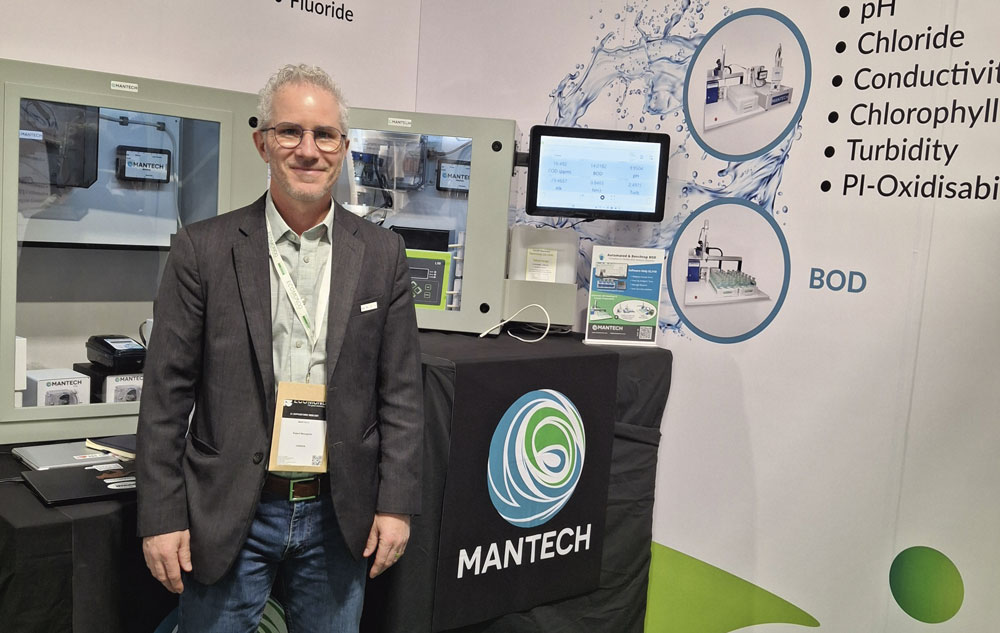
That disconnect is what Canadian company MANTECH is working to fix, offering water testing solutions that provide lab-grade results in under ten minutes, using safe, green chemistry that eliminates the need for toxic reagents like dichromate, mercury, or strong acids.
“We’re not trying to reinvent the lab, said Rob Menegotto, CEO of MANTECH. We’re trying to get meaningful data into the hands of plant operators before it’s too late to act on it.”
From Post-Mortem to Real-Time. In most industrial plants, from wastewater treatment facilities to pulp and paper mills pollution control tests can take hours or even days. That delay turns monitoring into a post-mortem. By the time a test flags a problem, the discharge has already happened.
MANTECH’s approach flips that dynamic. A test that used to take 5 days (BOD) or 3 hours (COD) now takes about 10 minutes, on-site. And the implications go far beyond compliance.
One real-world example underscores the point. In Menegotto’s home city in Canada, a sudden storm overwhelmed the wastewater system. Operators, lacking timely COD data, didn’t know the level of organic loading and couldn’t respond in time.
Untreated waste was discharged into a nearby river.
“The storm lasted an hour. That’s all it took, Menegotto said. -By the time they got lab results, the damage was done. They were fined $200,000 for the pollution event, not because they didn’t care, but because they didn’t have the data when they needed it.”
With live testing in place, they could have immediately diverted flow, activated reservoirs, or adjusted treatment inputs. Instead, they were flying blind.
What Real-Time Looks Like. The system can be deployed as a manual station: grab a sample, prepare it in three minutes, run the test. Or fully automated, mounted to the wall and programmed to run at set intervals.
In pulp and paper mills, where chemical usage and discharge are tightly regulated, MANTECH’s PeCOD® Analyzer has already demonstrated value. Menegetto revealed that a mill in Chile used real-time COD data to optimize hypochlorite dosing and reduce organics in effluent, cutting chemical costs while improving environmental compliance. The result? Over $3 million saved in a year with no loss in product quality.
AI in the Pipeline, but with caution. Menegotto says they are also exploring how artificial intelligence can support predictive water quality management, spotting trends before they escalate, identifying anomalies, and automating alerts. But bringing AI into water infrastructure isn’t straightforward.
“The idea is solid, but the implementation hits a wall. Utilities are rightfully wary of connecting water systems to the internet. The risk of hacking is not theoretical.”
Menegetto explained that water infrastructure is increasingly a target for cyberattacks, and many utilities have blanket bans on connecting testing or control equipment to the cloud. MANTECH’s response is a hybrid model: local AI servers installed on site, running offline but periodically updated with encrypted packages.
“It’s about delivering smart analysis without opening the door to external threats. We’re building intelligence into the process but with security built in by default.”
From the Lab to the Plant Floor. MANTECH’s systems are already established in certified labs. But fair presence like in Ecomondo marks a turning point. According to Menegotto, his company is shifting focus from controlled lab environments to live industrial operations where every minute, every reading, and every decision counts.
“We’ve been a lab-focused company, that’s where our roots are. But it’s time to get out of the lab. That’s why we’re here. We want to meet the operators, the engineers, and the people who are running the plants.”
Text and photo: Mia Heiskanen
Subscribe to the free Maintworld newsletter here!
Cleaning Without Plant Shutdown
Industrial boilers are essential workhorses in waste-to-energy, sludge incineration, and other high-heat process industries. But they share a common challenge: fouling. Over time, fly ash and other particles build up on heat exchange surfaces, reducing efficiency, restricting steam output, and forcing unscheduled shutdowns for manual cleaning.
At Ecomondo, one technology stood out for offering a simple but powerful solution: online cleaning without stopping the plant.
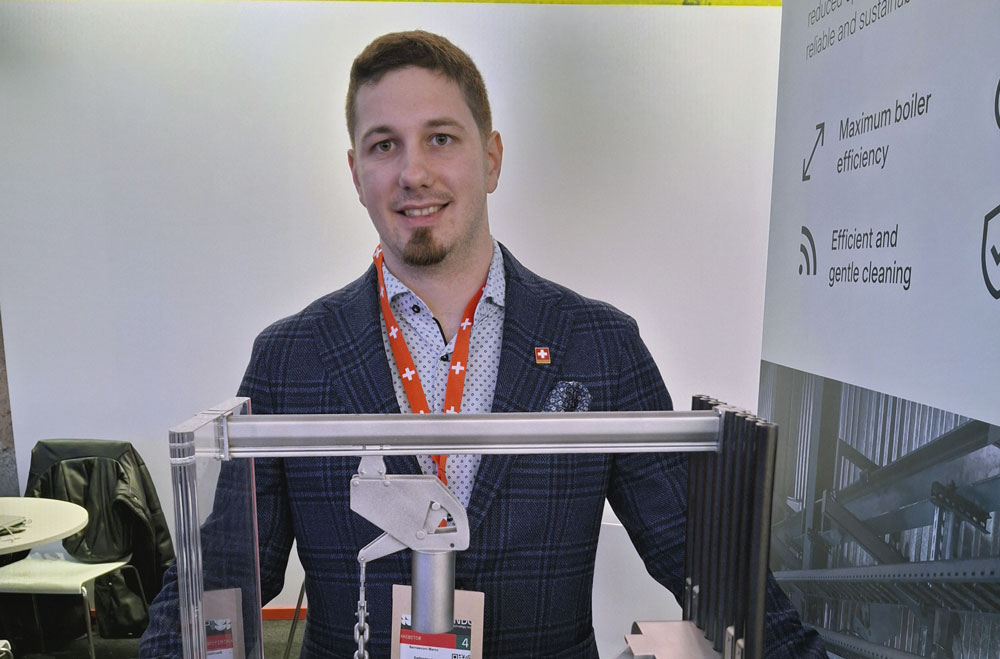
Swiss company Explosion Power has developed a shock pulse generator (SPG), a device that uses controlled bursts of pressure to regularly dislodge fouling inside boilers. The result: less downtime, more consistent performance, and longer intervals between manual maintenance.
How It Works. The SPG is mounted through the boiler wall via a fixed nozzle. Inside its pressure vessel, a mixture of methane, compressed air, and nitrogen is ignited in a combustion chamber. The resulting shock pulse travels into the boiler, loosening buildup from the heat exchanger surfaces.
These pulses are fired on a regular cycle, typically every one to two hours, which prevents major fouling from ever accumulating. It’s not just a cleaning method; it’s a continuous maintenance process built into the operation.
“The key advantage is online cleaning, said Marco Bernasconi, Sales Manager at Explosion Power. According to Bernasconi plants no longer need to shut down to remove fouling as the cleaning is automated and integrated into regular operation.”
Operational Benefits. According to Bernasconi, the impact on plant performance is:
• No need to shut down for cleaning
• Stable steam output with fewer performance dips
• Reduced thermal stress on heat exchangers
• Higher overall plant availability
And for maintenance teams, it introduces flexibility. While the system is designed to operate continuously, maintenance can be done during scheduled outages or even while the plant is running by disconnecting the SPG and sealing the nozzle.
Once installed, the system can essentially run forever, with only periodic maintenance. Even that can be done without taking the whole plant offline, Bernasconi explained.
A Fit for Almost Any Boiler. The system is adaptable to a range of boiler types beyond waste-to-energy, including coal-fired units, black liquor boilers, and hazardous waste incinerators. Installation requires some structural modification including routing through boiler tubes and mounting the recoil-absorbing hardware but once installed, it is built for long-term operation.
“And we provide training for operators either on-site or at their facility to ensure smooth implementation,” Bernasconi added.
Supporting Predictive Maintenance. The company also works with customers to analyze boiler performance and fouling behavior. Bernasconi noted that many plant managers initially misidentify where their fouling issues originate.
“We help operators interpret the pressure and temperature data. Often the real problem is somewhere else and not where they think. ”
For production environments under pressure to increase uptime and reduce energy losses, tools like the shock pulse generator can offer more than convenience, enable a smarter maintenance strategy that aligns with the demands of modern industry.
Text and photo: Mia Heiskanen
Subscribe to the free Maintworld newsletter here!
Belgium’s Path to Excellence in Maintenance and Asset Management
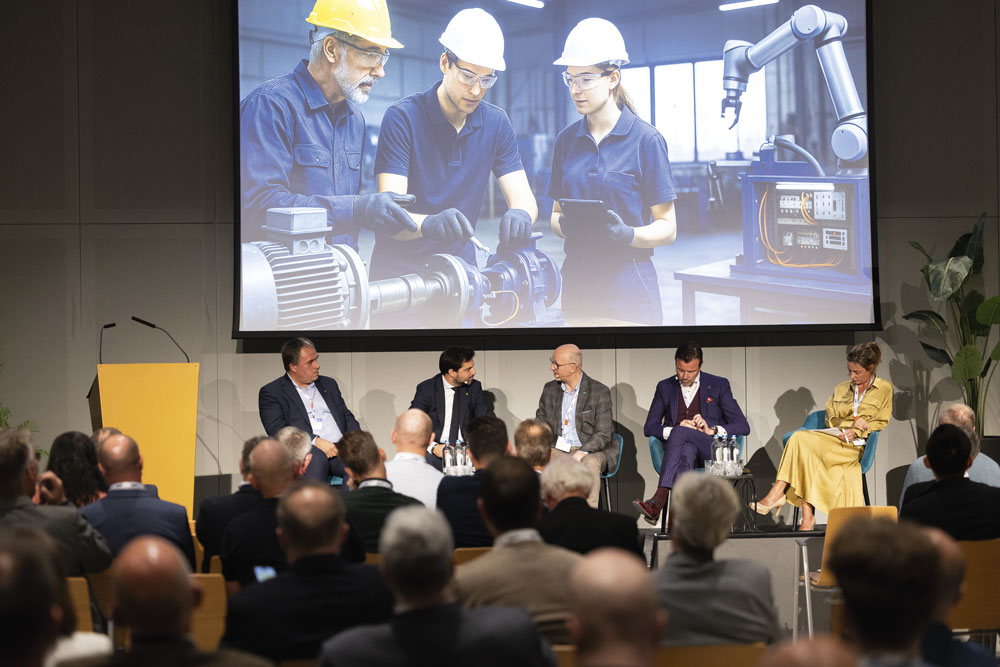
Since its founding in 1989, the Belgian Maintenance Association (BEMAS) has played a leading role in advancing maintenance, reliability, and asset management across Belgium.
Over the past decade, the field has evolved significantly—from a narrow focus on keeping equipment running to a broader, lifecycle-based approach.
“Maintenance now encompasses the entire lifespan of assets,” explains Wim Vancauwenberghe, Director of BEMAS. This shift has been accelerated by digitalisation, with tools like predictive maintenance, IoT technologies, data-driven decision-making, and
Enterprise Asset Management (EAM) systems transforming industrial operations.
BEMAS has helped drive this change by offering targeted training, collaborative projects, and events such as the Asset Performance Conference. These initiatives help professionals align with global standards like ISO 55000 and reliability-centred maintenance—essential for improving asset performance and working effectively across borders.
One example of BEMAS’s European impact is the Maintenance, Repair and Overhaul for Competitive Regions in North-West Europe (MORE4CORE) project, launched in 2013 with partners from the Netherlands, Germany, and France. The initiative aimed to raise awareness of maintenance and asset management across Europe. As part of the project, BEMAS conducted a benchmark study to track key maintenance indicators, particularly in relation to asset age.
“This provided valuable insights into how organisations can adjust strategies over the lifecycle of equipment—extending asset life, reducing costs, and improving performance,” says Vancauwenberghe.
Tackling the Talent Challenge
Attracting young talent remains a pressing issue in Belgium, as in many European countries. In Flanders, three maintenance-related professions consistently rank among the top shortage occupations. In Wallonia, a structural deficit in qualified technicians spans multiple industries.
But the challenge goes beyond technical skills. “Maintenance is often seen as outdated or ‘dirty,’ despite being increasingly high-tech, innovative, and vital to industrial competitiveness and sustainability,” Vancauwenberghe notes. “This perception makes it harder to attract young professionals, who are drawn to booming sectors like IT, automation, and pharma.”
To introduce young people to careers in maintenance, BEMAS supports initiatives such as Repair Teens, the Flemish STEM Platform, and Global Maintenance Day. Through Repair Teens, 12–14-year-olds gain hands-on experience repairing equipment at companies and Repair Cafés—developing problem-solving skills and learning the environmental benefits of reuse.
For early-career professionals, BEMAS offers more than visibility campaigns. In 2024 alone, nearly 3,000 participants took part in over 160 training sessions covering technical disciplines, asset management, reliability, sustainability, and leadership. “These efforts help companies bridge today’s skill gaps while preparing their workforce for tomorrow’s technologies,” says Vancauwenberghe.
Sustainability as a Strategic Driver
Sustainability has become a central driver in maintenance and asset management. Well-maintained assets run more efficiently, reduce material use, minimise waste, and prevent environmental incidents. Maintenance also plays a direct role in meeting climate goals—by improving asset efficiency, extending equipment lifetimes, and supporting renewable energy and electrification.
To make sustainability actionable, BEMAS developed the Sustainable Asset Management Framework as part of the MORE4Sustainability project. This tool helps organisations assess performance, benchmark against peers, and implement improvements that enhance both efficiency and environmental impact. A free e-learning course is available in English, French, German, and Dutch.
“Maintenance is not just about uptime and cost—it’s a key enabler of the energy transition and ESG targets,” Vancauwenberghe emphasises.
Belgium’s Unique Maintenance Ecosystem
Belgium’s dense industrial landscape has fostered a robust network of specialised suppliers and service providers in maintenance. Companies benefit from easy access to technical spare parts and expert maintenance firms for regular servicing, major shutdowns, or complex repairs. This ecosystem also fuels the growth of innovative service providers.
“It’s no coincidence that Belgium is home to world leaders in condition monitoring and predictive maintenance, alongside a vibrant start-up scene,” says Vancauwenberghe.
“This unique Belgian ecosystem in industry and maintenance is also the reason why BEMAS annually organises the international Asset Performance Conference,” he continues.
Innovation and Digital Transformation
Innovation is central to Belgian maintenance. Predictive strategies, condition-based monitoring, and data-driven decision-making help minimise downtime and optimise lifecycle costs. A 2023 study found that 79% of Belgian manufacturing companies have implemented or are initiating Predictive Maintenance 4.0 initiatives.
BEMAS fosters innovation through projects, conferences, and international collaborations—ensuring that technological advances translate into real-world performance. Looking ahead, digital twins, AI, and generative AI will become standard tools for strategic decision-making and reliability enhancement.
Vancauwenberghe also sees maintenance and asset management as vital enablers of competitiveness, sustainability, and resilience in the BANI world we currently live in. With this, he refers to a world defined by fragility, unpredictability, and a lack of clarity.
“Factories of the future will rely on skilled maintenance professionals, advanced automation, and fully data-driven operations,” Vancauwenberghe explains. “Attracting and training this new generation is essential.”
For him, BEMAS is more than a technical association—it’s a platform that connects people, companies, and knowledge in a field often underestimated but critical to industry and society. Today, BEMAS unites around 650 corporate members and over 850 active contacts across Belgium. With more than half of its members being asset owners, the association remains closely tied to operational realities.
By actively participating in the European Federation of National Maintenance Societies (EFNMS) and the Global Forum on Maintenance and Asset Management (GFMAM) BEMAS brings international best practices into everyday use for Belgian companies. These global networks help translate expert knowledge into practical tools.
Reflecting on his career, Vancauwenberghe concludes: “I feel very fortunate to work in a field I’m passionate about. Together with a strong team, a visionary board, and many active members, we serve a valuable community of maintenance, reliability, and asset management professionals—contributing to a sustainable future for Belgian and European industry.”
Text: NINA GARLO-MELKAS Photos: BEMAS
BEMAS: Advancing Maintenance in Belgium

BEMAS supports maintenance and asset management through training, certifications, and flagship events like the Asset Performance Conference. With over 630 company members, it helps professionals align with global standards such as ISO 55000 and drives innovation through European projects like MORE4CORE. In 2024, more than 160 trainings, seminars, company visits, and webinars helped nearly 3,000 professionals strengthen their expertise in reliability, sustainability, and leadership.
Subscribe to the free Maintworld newsletter here!
Maintenance Redefined
As convenor of the EFNMS Body of Knowledge, Antoine Despujols is on a mission to create a unified European maintenance culture. The comprehensive publication defines the scope and best practices of maintenance across Europe – and it’s available for free. But more importantly, it’s changing how we think about the profession itself.
The European Federation of National Maintenance Societies (EFNMS) Body of Knowledge is not just another technical manual. It’s a decade-long collaborative effort to define what maintenance truly means in the modern industrial landscape – and to elevate its status from a reactive necessity to a strategic competitive advantage.
Antoine Despujols, who retired from EDF (the French electricity utility) after a distinguished career spanning nuclear power plants, wind farms, gas turbines, and hydroelectric stations, has been the driving force behind this ambitious project. As convenor, in collaboration with the EFNMS coordinator, Lovro Frkovic, he has coordinated contributions from approximately 20 European experts, managed a review committee of 10 specialists from different countries, and overseen the creation of what is becoming the definitive reference for maintenance professionals across Europe.
The genesis of the Body of Knowledge dates back more than 10 years, though active development began in 2017. “The objective of EFNMS is to share experiences and to increase the visibility of maintenance,” Despujols explains. “We decided to work on the maintenance concept and to think about what the content of maintenance is. What are the borders, the perimeter of maintenance?”
Maintenance is both defensive – avoiding risk – and offensive – enhancing competitiveness. It’s both a shield and a sword.
This question led to a fundamental mapping exercise. The team identified three crucial domains interconnected with maintenance: asset management, risk management, and sustainability. “Maintenance is a part of all three,” Despujols notes. “It makes maintenance both defensive – avoiding risk – and offensive – enhancing competitiveness. It’s both a shield and a sword.”
The BoK’s structure is built on the foundation of the EN17007 European standard for maintenance processes. From this process model, the team identified approximately 80 distinct maintenance subjects, ranging from maintenance management activities and maintenance engineering techniques to maintenance support, occuparional risk management and maintenance execution.
These subjects are organized into six chapters, with each topic covered in a concise 2–3-page summary written by European experts, accompanied by relevant bibliographies for readers seeking deeper knowledge.
The development process is rigorous. Each article undergoes review by two experts from the reading committee, followed by linguistic quality control from a native English speaker in Canada, and finally professional formatting by a UK-based specialist. “It’s quite difficult to make a short article,” Despujols admits. “We have a small compensation for authors because it is real work.”
Finding new authors has become increasingly challenging. “At the beginning, members of EFNMS were significant contributors, but now they’ve written articles and we need to find others,” he says. The current version contains 25 articles, with plans to expand to more than 30 by early next year. But the long-term vision is even more ambitious: a Wikipedia-like collaborative platform where readers can propose modifications and improvements, ensuring the BoK remains a living product.
The decision to make the BoK freely downloadable was deliberate. “It is the role of EFNMS to make these articles accessible,” Despujols explains. “And because it is the first version and not complete, we need authors. If readers can say, ‘I have something to propose about an article, that could be a way to find authors.”
But perhaps the most significant development is the direct link between the BoK and the revised EN15628 standard for qualification of maintenance personnel. Despujols, who is deeply involved in standardization efforts through Technical Committee 319, was instrumental in establishing this connection. “To be qualified in maintenance, you need to have knowledge about these subjects,” he explains. “For companies, it is important for recruitment, for training people, and to know if the people they recruit are qualified.”
This connection transforms the BoK from a reference document into a practical framework for workforce development – addressing one of the industry’s most critical challenges.
When asked about the biggest challenges facing European maintenance today, Despujols points to the gap between research and implementation. “In papers, we often read articles written by researchers, but in companies, it takes time to be implemented. The main difficulty is how to implement these new technologies and new ways to perform maintenance. The relation between research and the field is not simple.”
Looking ahead, Despujols sees digitalization, predictive maintenance, artificial intelligence, and digital twins playing increasingly important roles. However, he’s quick to dispel the notion that these technologies will replace traditional approaches. “Predictive maintenance will not take the place of other kinds of maintenance. We will still have condition-based maintenance, predetermined maintenance, and corrective maintenance. All the techniques will be used in the future, even if predictive will be used increasingly.”
Currently, Despujols is focused on developing a maintenance ontology – defining the relationships between maintenance concepts to enable better use of artificial intelligence. “We need to understand the relation between concepts like failure mode, failure mechanisms, failure rate, maintenance tasks, etc.,” he explains. “This is needed to use artificial intelligence to take into account experience feedback written by technicians.”
You must think about maintenance not as the work of car repair, but as the work of doctors. We are doctors of equipment.
The potential impact is significant. “In the nuclear industry, it is difficult to consider regularly the events and to react and improve continuously the maintenance plan. It is done, but with delays. If we can do that quickly, thanks to digitalization, that will be very efficient in the future.”
But perhaps Despujols’s most compelling contribution is his reframing of the maintenance profession itself. When teaching, he challenges students to reconsider their perception of maintenance work. “Very often, what comes to mind is the person who repairs your car – the garage mechanic. But if we change the maintenance definition slightly and consider the living bodies, the definition is close to medicine. You must think about maintenance not as the work of car repair, but as the work of doctors.”
This parallel is more than rhetorical. “Predictive maintenance and predictive medicine use the same kind of tools. We work on failure mechanisms, which are illnesses of equipment. We are doctors of equipment.” The implications for workforce development are profound. “This image opens the door for young people to be interested. It’s more attractive than putting your head in a car motor. And it opens the door for women too – there are few women car mechanics, but many women doctors.”
The Body of Knowledge represents more than a compilation of technical expertise. It’s an effort to create a unified European maintenance culture, to establish common standards and shared language across national boundaries, and to elevate the profession’s status. As Despujols notes, “One objective of the BoK is to have a European maintenance culture which is the same for all European countries.”
With 80 subjects identified and only 30 articles completed, the work continues. But the foundation has been laid for a comprehensive, evolving resource that bridges theory and practice, research and implementation, and perhaps most importantly, connects maintenance professionals across Europe in a shared mission to keep the continent’s industrial infrastructure running efficiently, safely, and sustainably.
The EFNMS Body of Knowledge is available for free download at www.efnms.eu .

Antoine Despujols career spans the intersection of research, education, and industrial practice. After working in the research and development division of EDF (Électricité de France), where he gained experience across nuclear power plants, wind farms, gas turbines, and hydroelectric stations, he simultaneously served for 12 years as head of a Master’s degree program in maintenance and risk management at a Paris university.
“I was working one day per week at university, and it was really nice for me,” he recalls. “I had the opportunity to visit many companies and to follow many students.” This dual perspective – combining cutting-edge research with practical industrial challenges and academic teaching – uniquely positioned him to lead the Body of Knowledge project.
Now 71 and retired, Despujols continues as a consultant for EDF while remaining active in standardization work and serving as the French delegate to EFNMS, a role he has held since 2008. He previously served on the EFNMS board and continues to contribute to the evolution of maintenance standards and practices across Europe.
His current focus on maintenance ontology – defining the relationships between maintenance concepts to enable AI applications – reflects his ongoing commitment to bridging the gap between theoretical advancement and practical implementation, the challenge he identifies as maintenance’s greatest hurdle.
Subscribe to the free Maintworld newsletter here!