
Value by Design
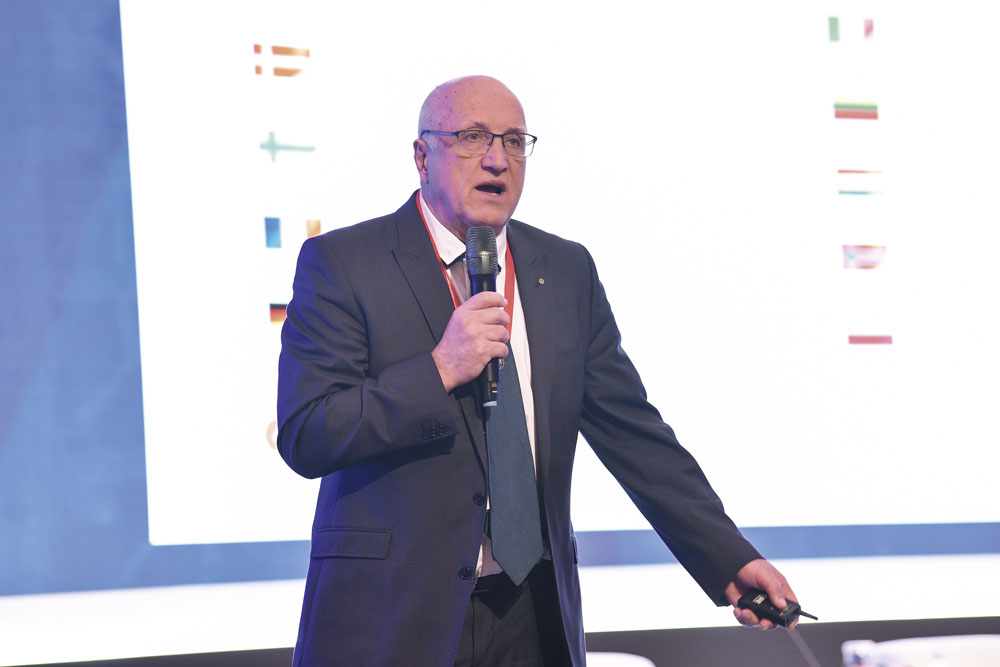
The European Federation of National Maintenance Societies (EFNMS) wants asset management to do more than support operations — it wants it to shape strategy.
That mission is led by Janez Tomažin, the long-serving chair of EFNMS’s Asset Management Committee, and a man whose career arc mirrors the transformation he now champions.
Starting out in paper mills in Slovenia, Tomažin’s journey from maintenance manager to technical director — and eventually to independent advisor and non-profit leader — has given him a unique vantage point. “I’m still a maintenance guy at heart,” he says. “But I’ve come to understand that if we want maintenance to be valued, we have to speak the language of value.”
That shift didn’t happen alone. Tomažin credits much of his evolution to Kari Komonen, a long-time EFNMS thought leader and one of the architects behind the EN 17485 standard, which links maintenance to asset management across the asset lifecycle.
“Without Kari, I wouldn’t have stepped into asset management,” he says. “He’s been my mentor, and I’m deeply grateful for him.”
From shop floor to strategy. The Asset Management Committee (EAMC) is one of several working bodies within EFNMS, but it operates with a distinct focus: to bring ISO 55000 principles to practical use, and to raise the level of asset management maturity across Europe.
“Most people in our field know maintenance,” Tomažin says. “Fewer really understand asset management. We’re trying to bridge that gap — not only through awareness, but through structure, certification, and shared language.”
That structure is built on several fronts. The committee has developed a one-day training program — the Awareness in Asset Management Certificate (AAMC) aimed at professionals across different roles. It’s already been delivered in countries like Slovenia, Italy, Greece, and Lithuania, with more sessions in the pipeline. Trainers such as Andrej Androjna and
Giedrius Slavickas have played key roles in adapting the content to local contexts and languages.
Global standards, local strength. EFNMS isn’t working alone. Through its collaboration with the Global Forum on Maintenance and Asset Management (GFMAM) and World Partners in Asset Management (WPiAM), the committee is linking Europe’s training schemes with globally recognized certifications like CAMA (Certified Asset Management Assessor).
This global integration effort has involved colleagues like Jan Stoker, an experienced trainer and certification advocate, and Janez Teun Koningen, who contributes to sustainability-focused initiatives. “We have strong individuals pushing these efforts,” Tomažin says. “But our strength comes from the fact that we work together.”
The certification ecosystem is also expanding. As part of the Global Certification Scheme, EFNMS is working to align future levels such as CTAM, CPAM, CSAM, CEAM, and CFAM — a step that would allow European professionals to have their competencies recognized anywhere in the world.
Manuals as strategic tools. One area where Tomažin is especially passionate is documentation — the overlooked power of well-designed maintenance and operational manuals. His message is clear: treat manuals as assets, not just instructions.
“Most manuals are delivered too late, or are written solely by the equipment supplier, or without enough context. But if you involve maintainers during the design phase — if you treat the manual as a strategic tool — it increases safety, reliability, and traceability. It even makes training easier.”
It’s a small example, but it reflects a larger belief: that value is realized not just through assets, but through knowledge, integration, and foresight. Tomažin emphasized this by walking through oil system manuals that incorporate lifecycle thinking, sensor integration, and ISO 55000 guidance — all created collaboratively with operators, engineers, and suppliers.
Collaboration, not siloed behavior. The EAMC’s scope extends into multiple international working groups. Alongside peers like Giel Jurgens, asset management lead at the Port of Rotterdam, and Reinhard Korb, who co-leads a metrics-focused project, the committee contributes to a series of live GFMAM initiatives. Topics include ESG, reliability integration, indicators, and global survey development.
“It’s not about one committee or one country,” says Tomažin. “It’s about harmonizing how we think about value, risk, and performance — across industries, geographies, and organizations.”
Slovenia 2028 — and the road ahead. Recently, EFNMS confirmed that Slovenia will host EuroMaintenance 2028, a bid supported in Athens with backing from both industry and government. Tomažin was part of the team that secured the candidacy.
“It wasn’t easy,” he admits. “But it shows how far asset management has come. Ten years ago, few people in ministries or chambers of commerce had even heard of ISO 55000. Now they’re backing an international event built around it.”
What comes next? Though officially retired, Tomažin still works full days — writing, advising, organizing, and mentoring. What keeps him going is the impact he sees in others: when a technician starts thinking strategically, when leader shifts focus from uptime to lifecycle value, when national societies come together under a shared vision.
“I want people to remember that I started in the field,” he says. “And that I worked to help maintenance professionals — people like me — be taken seriously at the strategic table. Asset management makes that possible.”
Text: Mia Heiskanen Photo: Janez Tomažin photo archive
From Awareness to Accreditation




Subscribe to the free Maintworld newsletter here!
What is Wrong with Maintenance…
I visited the Ecomondo fair in Italy at the beginning of November. A huge event with some 100 000 visitors and 30 halls full of stuff from composters to one-family house-sized process lines.
Something for almost everybody. We had our Euromaintenance 2024 event in the same city two months before the Ecomondo event. According to the organizer there were altogether some 3500 visitors.
As important as maintenance is for all of us in our private or business life, the status of the branch is still low. Why is that?
You can say that it is because we – maintainers – are not good at marketing. That might be true. On the other hand, the organizational status of maintenance was (and still might be in some companies) to be the “necessary evil”, whose role is to act as a firefighter and be most of the time invisible. How can this be changed?
For the ISS (International Space Station), the role of maintenance is crucial. I saw just an article explaining that besides performing the scientific tasks, personnel spend most of their time doing maintenance tasks. In a small, closed society it is clear for everybody on board that things need to work, and the importance of maintenance is high.
I think the same applies also on a larger scale, however missing maintenance is not very visible to most of us. When the s..t hits the fan, we see the consequences of missing maintenance – but normally too late. Normally the costs of coming back to normal operational level are much too high. Because of that, decision makers make drastic decisions – close the factories, decrease the level of the services or sometimes just forget the facts.
In addition to AI content, this issue also covers many other topical issues. The Mascot project, for example, explored how the green transition is affecting material choices and the maintenance of process equipment. The article “Thriving in Chaos” looks at how Industry 5.0 is redefining resilience and reliability.
I’m still happy to receive your feedback and story ideas.
Editor-in-Chief, Maintworld Magazine (until the end of 2024)
Subscribe to the free Maintworld newsletter here!
Do Lifts Need to Be Protected Against Cyber-Attacks?

Lifts can no longer be assumed to be closed-loop systems without any connection to the “outside world”. Modern and modernised older lifts alike can be both digital and connected. Internet […]
Lifts can no longer be assumed to be closed-loop systems without any connection to the “outside world”. Modern and modernised older lifts alike can be both digital and connected. Internet access and Wi-Fi enable predictive maintenance and permanent monitoring to be carried out, e.g. improving availability. However, this also involves greater scope for attacks and therefore risks. By publishing TRBS 1115-1, the legislator shows that this hazard potential must not be neglected. But what kind of threats cause lift systems to need protection? What are the risks resulting from cyber-threats? And what constitutes proportionate action?
TRBS 1115-1 defines the following requirements
Every operator of an equipment subject to monitoring has the obligation to draw up a hazard assessment, keep it up to date and review it periodically. The hazard assessment must now also consider cyber-threats to the lift’s safety-related measurement and control devices, but also to all other lift installations where relevant. The procedure remains the same: Identification of potential hazards, evaluate the risk and, where present, reduce to a tolerable level by taking suitable actions. TRBS 1115-1 and other regulations about cybersecurity of lift systems provide guidance by specifying a security level for all lift components. Two standards are particularly helpful in connection with the cybersecurity of lift systems.
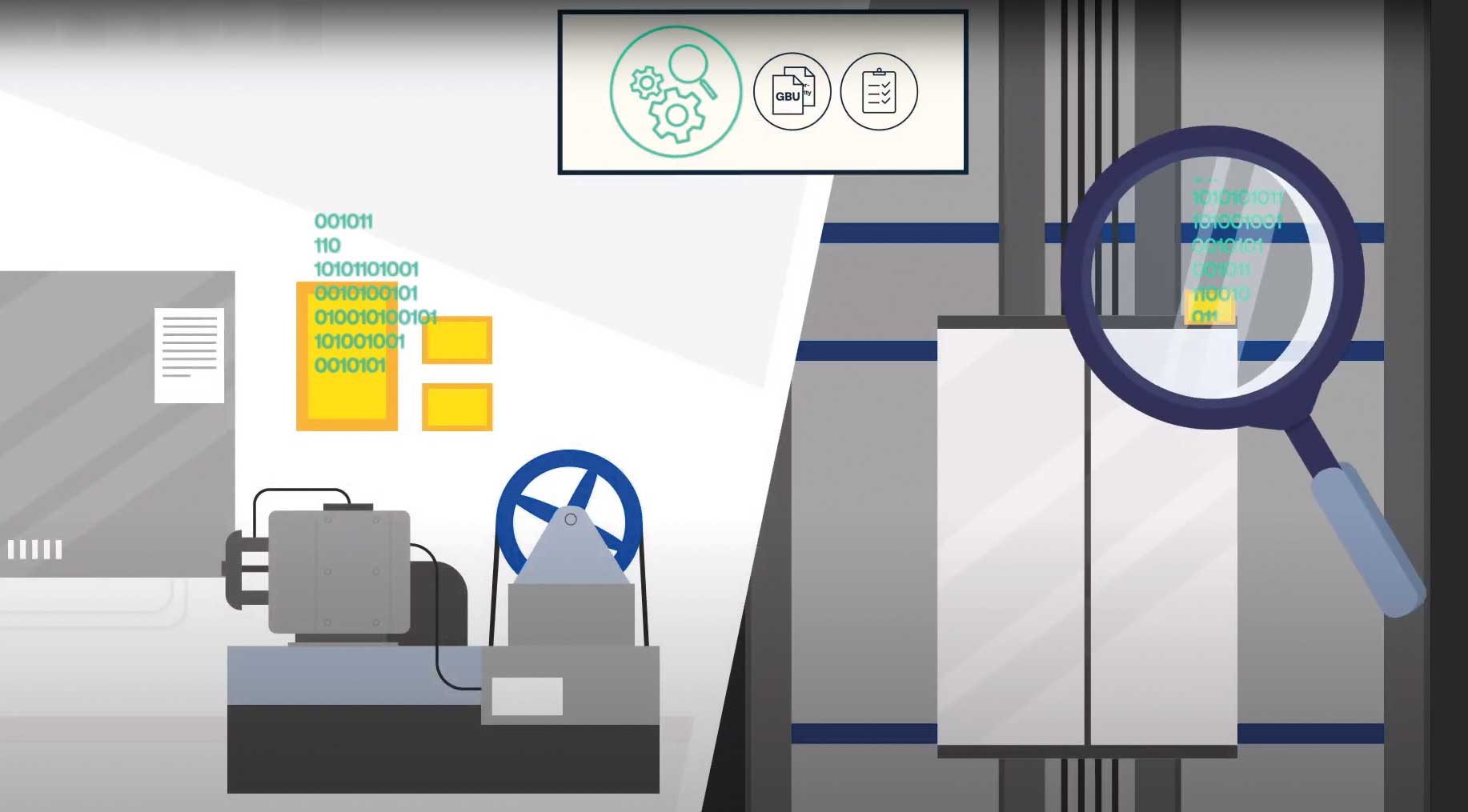
Lifts can no longer be assumed to be closed-loop systems without any connection to the ‘outside world’.
Various lift security levels
Last year, ISO 8102-20 was published. It is the first standard directly addressing the cybersecurity of lift systems and refers to an internationally established series of standards on industrial cybersecurity, the IEC 62443. The ISO 8102-20 standard classifies lifts into three security-related domains and assigns security levels and specific measures to all components of a lift system. The aim is to bring potential threats under control. Even where no safety-related measurement and control devices are concerned, manipulations of other areas might also result in hazardous states of operation. The different domains need to be secured as follows:
1. “Safety” – this domain includes safety-related measurement and control devices, such as digital safety gears and speed governors with SIL. Manipulation may deactivate safety functions, such as tripping the speed governor.
2. “Essential” – components relevant for operation, including the control system, frequency converters, door controllers and many more. Possible consequences of manipulation of the parameters of, say, door controllers might lead to hazards, while manipulation of the levelling position may lead to stumbling.
3. “Alarm” – including the emergency call system. Manipulation may result in failure to forward an emergency call by a trapped passenger, thus preventing rescue, or may enable eavesdropping on passengers’ conversations.

To avoid injuries and damage to property, lift operators need to take suitable means and document them in their hazard assessment.
How lift operators protect their systems
Regardless of the national scope of the TRBS 1115 part 1, lift operators can either draw up a hazard assessment for their lift systems or expand their existing hazard assessment by adding cyber-threats. In doing so, they must look at all relevant components and installations, which can cause hazards, in accordance with ISO 8102-20 and IEC 62443. By identifying affected components, the operators shall consult the above standards to determine the necessary actions.
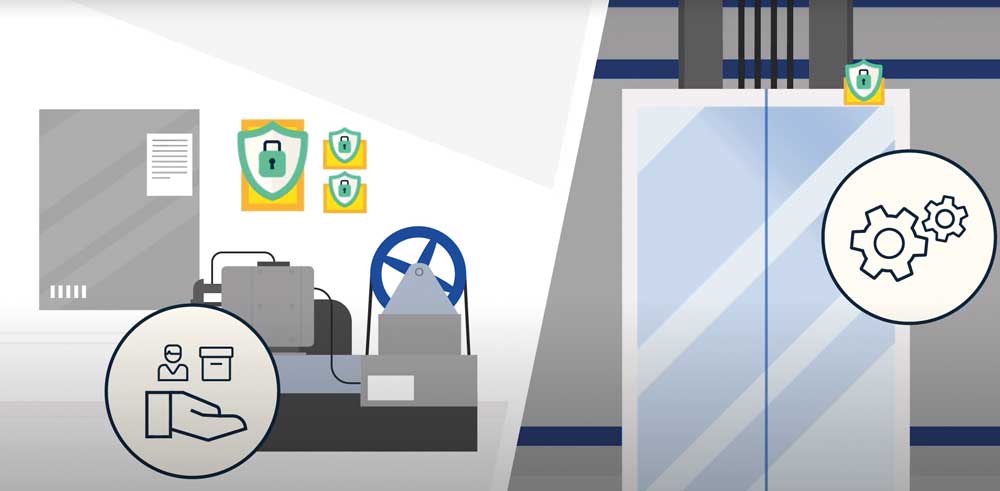
For the majority of the around 800,000 monitored lift systems in Germany, sometimes only the emergency call and the control system are classified as digital cyber-relevant components. As a proportionate measure, adequate physical protection or password protection may be sufficient, under certain circumstances, to significantly impede access and reduce the risk of manipulation to a tolerable level. Approved monitoring agencies support operators with independent technical expertise in this regard.

Text: Thomas Schröder, Cybersecurity Expert, TÜV SÜD Industrie Service Photos: TÜV SÜD, Freepik
More information: tuvsud.com/lifts-and-escalators
Subscribe to the free Maintworld newsletter here!
Uncharted Territory: Only Accurate Detection Can Swing the Pendulum Away From Dangerous Extremes

Today’s world is increasingly polarised on almost every issue. From hugely important topics like the economy and foreign policy to ‘first world problems’ like the casting of a particular TV show, it seems difficult to build a sizable consensus on almost anything.
Using data to inform the global conversation on climate change
Recent years have brought the consequences of climate change into sharp focus for millions of people across the world. In Africa, 1.6 million people have been displaced by climate-induced flooding[1], while the USA has been plagued by extreme weather resulting in an increased acreage of burned land along its West Coast[2]. In total, scientists have counted 504 extreme weather events that have occurred since the turn of the millennium[3]. Of these events, 71% were made more likely or more severe as a consequence of human-caused climate change – and only 49 of them occurred before 2011.
Our environment is a delicately balanced series of interconnected systems, and changing things can have unintended or unexpected side effects.
Put simply, many are realising they cannot ignore climate change anymore, as its results can be seen on their doorstep. The only questions surround what to do about it – and the answers to those questions are held by data. This means that all industries must do their bit to collect more data about their emissions – especially those industries most closely associated with large gas emissions, like oil and gas production, energy, and mining.
Improving data collection can drive real change. The data collected in recent years has given rise to a global focus on carbon that has penetrated mainstream consciousness. Now terms like ‘carbon footprint’ are part of our everyday lexicon, and businesses look to differentiate themselves in the eyes of consumers by promoting the carbon costs of their products.
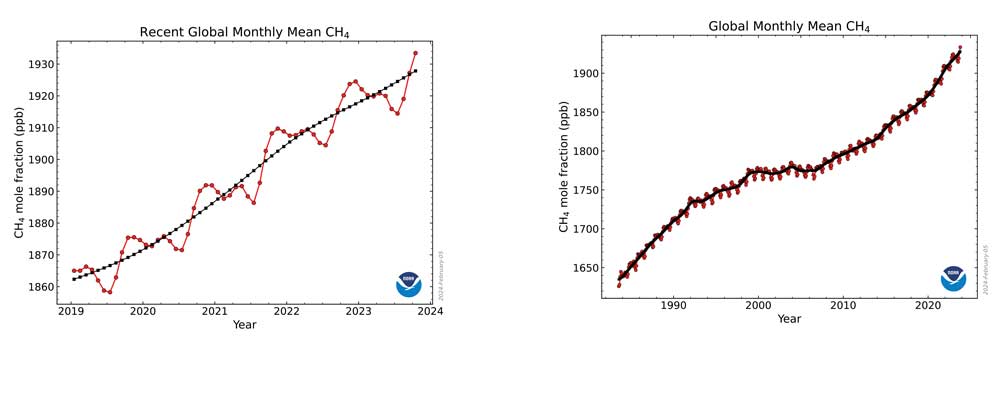
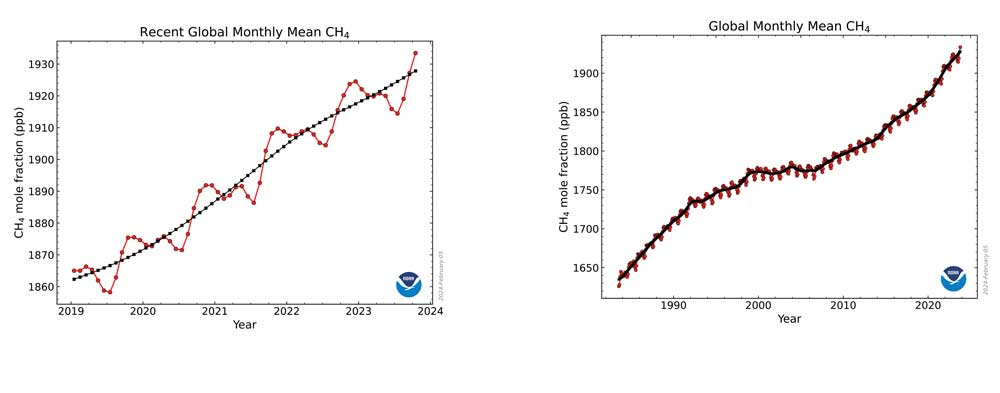
The graphs show globally-averaged, monthly mean atmospheric methane abundance determined from marine surface sites. The first graph shows monthly means for the last four years plus the current year, and the second graph shows the full NOAA time-series starting in 1983. Values for the last year are preliminary, pending recalibrations of standard gases and other quality control steps. Other impacts on the latest few months of data are described below. The Global Monitoring Division of NOAA’s Earth System Research Laboratory has measured methane since 1983 at a globally distributed network of air sampling sites (Dlugokencky et al., 1994). Source: Lan, X., K.W. Thoning, and E.J. Dlugokencky: Trends in globally-averaged CH4, N2O, and SF6 determined from NOAA Global Monitoring Laboratory measurements. Version 2024-02, doi.org/10.15138/P8XG-AA10
However, bringing down carbon emissions is very much a long-term project. The structure of carbon dioxide means each molecule has a relatively low heating potential on its own, but each one can persist in the atmosphere for hundreds of years. This means emissions are building up to have a significant cumulative effect on our climate – and that further changes are ‘baked in’, as emissions from decades ago may not fully dissipate for centuries.
More worryingly, there is a much more pressing threat to our planet’s future that has gone largely under the radar until now – methane.
Building momentum on methane
Unlike carbon dioxide, methane molecules have a very high heating potential, which can be up to 86 times more potent than carbon dioxide when it first reaches the atmosphere. However, it also has a much shorter lifespan, and dissipates within around 20 years[4]. In other words, while methane emissions are accelerating our race towards the climate cliff edge, cutting them could pull us back from the brink just as quickly.


Act includes the creation of the Methane Emissions Reduction Program, which grants up to $350m to states to support businesses in identifying and cutting methane emissions[5]. The EU has proposed similar legislation, set to come into force imminently[6].
These new laws will influence the way many industries operate in the near future. As an example, one of the measures to be passed by the EU is a ban on flaring and venting by 2027. This will particularly impact the upstream oil and gas sector, where flaring and venting are still often used to dispose of excess gas.
And the EU’s law goes further still, forcing operators of fossil fuel infrastructure to measure and report emissions while regularly checking for emissions. This also applies to imports from non-EU countries, meaning importers must demonstrate that their supply chain works to the same or equivalent monitoring standards.


This is a microcosm of the complexities and challenges involved in fighting climate change. Our environment is a delicately balanced series of interconnected systems, and changing things can have unintended or unexpected side effects. As tightening legislation makes it more important for businesses to tackle their methane emissions, it remains crucial to build a complete picture of the world’s methane problem before taking the urgent action needed to address it – and building this picture is only possible with the right tools.
Infrared sensors powered by advanced optical coatings
Although large-scale monitoring operations often rely on satellite technology, technological advances mean that businesses today can employ a wide range of on-the-ground equipment that can help them begin building better-quality data on emissions. Leading the way in this technology are high-performance infrared sensors, which pass lasers through a filter inside a sampling chamber to measure the attenuation of incoming light and determine the precise concentrations of gas that are present.
The next-generation flexibility and sensitivity of gas sensing technology are largely driven by advances in electro-optical coatings. These coatings provide control over which wavelengths of light can reach the sensor. A sampling of the atmosphere is compared against a reference that enables a gas analysis system to monitor for discrepancies between the two. Each gas has a unique structure that absorbs different wavelengths of light in different amounts, providing a unique chemical fingerprint that sensors can use to identify the target gas.
As businesses move beyond estimations into a world of empirical measurement, a true revolution on methane is within reach.
Technology such as this is helping businesses fill in the picture on methane emissions and better focus their mitigation attempts. Combined with other methods, action on methane by the oil and gas sector today could cut human-caused emissions by as much as 45% within 10 years. If achieved, this would stop global temperatures from warming by almost 0.3°C by 2045[9], according to the Climate and Clean Air Coalition.
This may sound like a relatively insignificant amount, but it would represent 20% of progress towards the target of limiting global temperature rises to 1.5°C and would go a long way to helping achieve targets set out under the Paris Agreement.
Widespread adoption of gas detection technology will also vastly improve the data on harmful leaks available across other market sectors, such as engineering and manufacturing, while also facilitating preventative action. Investing in this equipment must therefore be central to any company’s business operations; only by understanding where harmful leaks are occurring can industrial facilities hope to offer their people the protection they deserve.


And the incentives for action here are not purely environmental. Gas leaks come with a significant cost, with billions of dollars’ worth of natural gas being wasted every year – potential profits that are literally vanishing into thin air. The indirect economic impact is even more significant. The Climate and Clean Air Coalition report referenced earlier also found that slowing global heating by reducing methane emissions would also result in 775,000 asthma-related hospital visits, 26 million tonnes of crop losses, and 73 billion lost work hours due to the effects of heat exposure. A more rigorous gas detection approach, supported by technology, could enable more gas to be captured and sold, and have a real impact on a business’s bottom line.
There remains much work to be done. Due to the way methane emissions persist in the atmosphere, the global picture may get worse before it gets better. While it may worsen, it will also become much clearer, giving the world a better idea of where and how emissions are produced, where leaks are occurring – and how they can be fixed.
Text: By Mark Naples, Managing Director at Umicore Coating Services Images: SHuTTERSTOCK, FREEPIK
[1] iea.org/reports/global-methane-tracker-2023
[2] energy.ec.europa.eu/topics/oil-gas-and-coal/methane-emissions_en
[3] theguardian.com/environment/2023/dec/02/us-outlines-measures-to-cut-methane-emissions-by-80-in-next-15-years
[4] theguardian.com/world/2023/may/09/mind-boggling-methane-emissions-from-turkmenistan-revealed
Subscribe to the free Maintworld newsletter here!
Thriving in Chaos: How Industry 5.0 Redefines Resilience and Reliability

In a world rife with disruptions and uncertainty, resilience is no longer a luxury but a necessity. Industry 5.0 steps forward as a game-changer, shifting the focus from mere efficiency to adaptability and innovation, promising industries not just survival, but growth through chaos.
A high-speed train, sleek and unstoppable, comes to a sudden halt in the heart of Europe, leaving hundreds stranded. A pharmaceutical factory, racing to produce life-saving medicines, grinds to a standstill as supply chains collapse. These aren’t hypothetical scenarios – they are the challenges industries face in a volatile, interconnected world. In these moments, survival is no longer enough. Industries must evolve, adapt, and emerge stronger – a feat Industry 5.0 promises to achieve. Whereas its predecessor, Industry 4.0, prioritized automation and efficiency, Industry 5.0 shifts the focus to resilience, sustainability, and the powerful synergy between humans and machines.
Resilience: A Lifeline in Chaos
Think of resilience as the grit of Frodo Baggins in J. R. R. Tolkien’s The Lord of the Rings. Frodo doesn’t just survive countless trials; he grows through them.
Similarly, resilience in Industry 5.0 isn’t about simply handling disruptions; it is about transforming disruption into opportunity. From rerouting supply chains during geopolitical upheavals to keeping production steady despite material shortages, resilience ensures continuity in chaos.

Industry 5.0 goes beyond resilience. Antifragility is the ability to grow stronger under pressure, much like Bruce Wayne evolving into Batman. Adversity didn’t just test him—it transformed him into something far more capable. Similarly, antifragile systems don’t just recover from disruptions; they use challenges as opportunities to improve and innovate.
The Promise of Industry 5.0
Today’s industries operate in a complex web of dependencies, and a single disruption can ripple across continents. To stay competitive, they must master the ability to anticipate, adapt, and transform. This article explores how resilience and antifragility redefine maintenance and reliability in Industry 5.0, providing a blueprint for thriving in the face of unpredictability.
The Essence of Resilience: More Than Survival
Resilience isn’t about either standing tall like a mighty oak or bending like a reed. It is the ability to harness the best of both. Like the oak, resilience provides the strength to withstand disruptions, but like the reed, it offers the adaptability to sway with the winds of change, ensuring survival and growth in the aftermath. In the industrial world, this dual nature of resilience is critical: it allows systems not only to endure shock, but also to evolve.

Consider the global semiconductor shortage as an example. Where some companies faltered, resilient ones reimagined the rules. They diversified suppliers, reshaped logistics, and in some cases, began producing chips in-house. These companies didn’t just recover—they emerged stronger.
Resilience vs. Robustness
It is tempting to equate resilience with robustness, but the two are fundamentally different. Robust systems resist change, like a fortress standing firm during a siege. They endure stress but remain static. Resilient systems adapt dynamically, like a river carving new paths during a flood. They can evolve and grow stronger during disruptions. This adaptability makes resilience a cornerstone of Industry 5.0, ensuring continuity and innovation even in the most unpredictable circumstances. This distinction sets the stage for antifragility, where disruption is not just endured but embraced as a driver of improvement.
Industry 5.0: The Resilience Revolution
Industry 5.0 embraces resilience much like Neo in The Matrix. Faced with overwhelming challenges, Neo doesn’t resist the system—he learns its rules, adapts dynamically, and ultimately masters it. Similarly, resilient systems in Industry 5.0 turn disruptions into opportunities to innovate and thrive.
Adopting the principles of resilience and antifragility requires overcoming a series of interconnected challenges
When the pandemic disrupted global supply chains and halted factories, it exposed a stark reality: even the most efficient systems can crumble under unexpected pressure. Efficiency alone is no longer enough; industries must be designed to withstand, adapt to, and grow from disruption. This is the essence of Industry 5.0 – resilience isn’t just a response.
From Industry 4.0 to Industry 5.0: A Paradigm Shift
Industry 4.0 dazzled with its focus on automation, robotics, and interconnected machines, creating smart factories optimized for efficiency, but these rigid systems revealed their vulnerabilities in the face of sudden, unpredictable shocks. Enter Industry 5.0 – a transformative approach that shifts the focus from optimization to adaptability. It doesn’t aim to create flawless systems; instead, it builds flexible systems designed to thrive in imperfection. While Industry 4.0 sought to eliminate disruptions, Industry 5.0 embraces them as catalysts for innovation.
Industry 5.0 is more than a technological revolution; it’s a mindset shift.
Imagine a production line hit by a sudden material shortage. In an Industry 4.0 factory, operations might grind to a halt. But in an Industry 5.0 factory, AI algorithms will immediately identify alternative suppliers, recalibrate schedules, and dynamically adjust production processes – all in real time. This is resilience in motion.
Technologies Enabling Resilience
Resilience in Industry 5.0 is powered by interconnected technologies. Digital twins simulate disruptions, predictive maintenance ensures proactive responses, and IoT networks provide real-time data streams. Together, these tools create a seamless system that anticipates and adapts to challenges dynamically.
Resilience in Action: Redefining Maintenance
Imagine a factory where downtime is no longer an ever-present fear but a distant memory. Instead of waiting for machines to break, systems anticipate problems, adapt to challenges, and ensure uninterrupted operations. This is the promise of resilience-based maintenance in Industry 5.0.
From Reactive to Proactive Maintenance
For decades, traditional maintenance was reactive, responding to failures as they occurred. While effective in the moment, this approach left industries vulnerable to costly disruptions, cascading failures, and wasted resources. Resilience-based maintenance flips the script. Take a power plant, for example. Let’s say the IoT sensors detect abnormal vibrations in a turbine. Instead of waiting for a costly breakdown, AI algorithms predict the issue and schedule preventive maintenance during off-peak hours. Operations continue smoothly, costs are minimized, and productivity remains unaffected.
The Next Step Beyond Resilience

Resilience is all very well, but can disruptions do more than test systems? Can they actually strengthen them? This is where antifragility – a revolutionary mindset that thrives on uncertainty and transforms challenges into opportunities for growth – comes into play. Resilience provides the foundation for adaptability, but antifragility builds on this foundation. Instead of merely recovering from disruptions, antifragile systems grow stronger with each challenge. This mindset transforms uncertainty into a source of strength, a core tenet of Industry 5.0.
Antifragility: Thriving in Uncertainty
Antifragility, like Harry Potter’s ability to summon a Patronus, thrives on challenges. A Patronus isn’t just a shield—it is a powerful force fuelled by hope and determination, transforming fear into strength. For readers unfamiliar, a Patronus is a magical defence against dark creatures, born out of positive memories and resilience. In the same way, antifragile systems in Industry 5.0 grow stronger through disruptions, turning adversity into a driving force for innovation.
If resilience is about weathering the storm, antifragility is about dancing in the rain. Introduced by Nassim Nicholas Taleb, antifragility describes systems that grow stronger with stress.
This revolutionary concept flips traditional thinking on its head: instead of avoiding disruption, antifragile systems seek it, using chaos as fuel for improvement and innovation. Antifragility in Industry 5.0 reshapes how industries approach challenges. By learning from failures, stress-testing systems, and adapting dynamically, antifragile systems ensure every setback becomes a stepping stone towards growth and innovation.
Challenges and Opportunities
Adopting the principles of resilience and antifragility requires overcoming a series of interconnected challenges. However, these challenges present unprecedented opportunities for transformation.
Key Challenges
• Technological integration: Integrating advanced technologies like IoT, AI, and digital twins into legacy systems is a significant hurdle. Many existing infrastructures lack compatibility, requiring costly upgrades and extensive time investments, but the long-term rewards of smarter, more adaptive operations far outweigh these initial challenges, positioning industries for sustained growth.
• High upfront costs: The financial demands of resilience and antifragility strategies, ranging from new technologies to workforce training, can deter smaller organizations. Yet these investments lay the foundation for systems that minimize future disruptions, ultimately saving costs and creating competitive advantages.
• Workforce transformation: Empowering employees to thrive alongside intelligent systems is a cultural and operational challenge. Training programmes must equip workers with tools like augmented reality (AR) devices and AI-driven insights, fostering a workforce that not only adapts to change but leads it. Organizations prioritizing this transformation will cultivate a resilient, innovative workforce.
• Data complexity: Managing vast amounts of operational data for predictive analytics and real-time decision-making presents security and usability challenges. Robust data management strategies and cybersecurity frameworks are essential for industries to harness data effectively while mitigating risks.
Emerging Opportunities
Despite these hurdles, industries stand to gain in important ways by pursuing resilience and antifragility:
• Sustainability as a driver: Resilience and sustainability are two sides of the same coin. By reducing vulnerabilities, sustainable practices—such as renewable energy integration and circular economy models—directly enhance resilience. For example, a factory powered by renewable energy is less reliant on external grids, making it more adaptable to energy disruptions. Similarly, reusing and recycling materials in local production reduces supply chain risks, ensuring operations remain steady even during global crises. These strategies not only meet consumer expectations and regulatory requirements but also create robust, adaptable systems that give organizations a competitive edge.
• Workforce transformation: By investing in training programmes and equipping employees with tools like augmented reality (AR) devices and predictive analytics, industries can create a workforce that embraces change. As highlighted earlier, this synergy between human creativity and machine precision transforms challenges into opportunities for innovation.
Conclusion: Embracing the Future of Resilience
As we step into the future, disruptions are no longer the exception but the rule. The industries that thrive will be able to redefine their relationship with uncertainty. Resilience is the key to ensuring they can adapt and recover. Antifragility takes this further, transforming challenges into opportunities for growth and reinvention.
Industry 5.0 is more than a technological revolution; it’s a mindset shift. It calls for systems that are not only smart but also adaptable, not only efficient but also sustainable. Most importantly, it places humans at the centre of the transformation, blending ingenuity with intelligent tools to create industries that thrive under pressure.
The question is no longer how industries can avoid the storm but how they can draw on its energy to innovate and evolve. This is the essence of Industry 5.0 – it promises a future defined not by its challenges but by the strength and creativity with which these challenges are met. The future belongs to those who can harness uncertainty as a driver of innovation and progress, shaping a world where challenges fuel growth and creativity.
Industry 5.0 doesn’t just weather the storm—it builds wind turbines to harness its power, transforming uncertainty into the energy that drives innovation and progress.

Text: Professor Diego Galar, Professor Ramin Karim and Professor Uday Kumar Photos: ShutterStock, Freepik, Alamy
Subscribe to the free Maintworld newsletter here!
Lots of Talk, Little Practice

In a series of three articles in Maintworld magazine, we look at how to make maintenance more efficient by using artificial intelligence. In the last issue (3/2024), an introductory article described AI in general and the related concepts. This second part focuses on how AI is currently being used in ICT solutions for maintenance. The final article will consider how AI will change maintenance in the future.
As pointed out in the previous article, current AI solutions are still based on so-called weak AI. Weak AI technologies include those related to machine learning, deep learning, neural networks, speech recognition and machine vision. AI can also be used to enrich the data required by these technologies and to train models.
Generative artificial intelligence can learn
A new and much-hyped technology has emerged: generative artificial intelligence (AI), which can create new content such as text, images, video and audio based on what it learns. Even generative AI is still classed as weak AI. So, we are still a long way from a machine thinking like a human. This does not mean that even today’s weak AI solutions cannot significantly improve maintenance efficiency. In most companies, maintenance is still based on time-based preventive maintenance rather than on the actual maintenance needs of the equipment.
Asking AI itself, for example using ChatGPT, how AI can currently be used in maintenance, results in solutions that specifically use weak AI technologies. These can be used to increase the maturity of maintenance and to achieve significant benefits in terms of equipment availability, reliability and lifetime extension. However, building on past solutions and existing experience is an essential part of the development process.
Generative AI still counts as weak AI. So, we are still a long way from a machine thinking like a human.

The following describes the most common weak AI-based solution areas that can be used to increase the maturity of maintenance. It should be noted that the terminology is quite diverse and solutions are referred to under different and overlapping names.
Condition Based Maintenance (CBM)
The Industrial Internet of Things (IoT) has made it possible to collect huge amounts of data on machines and analyse their condition using various algorithms. Machine learning algorithms can be used to identify the occurrence of certain types of failures and react promptly. Anomaly detection algorithms can be used to generally detect abnormal operation of equipment and to investigate abnormal operations before a potential failure occurs. In this way, maintenance can be based on the actual condition of the equipment, rather than on a time-based approach, whether or not the equipment needs maintenance. As the importance of data-driven algorithms grows, AI can also be used to train the algorithms themselves.
The data often needs to be refined through data analytics to make it more useful.
Predictive Maintenance (PM)
Future equipment failures can be predicted before they occur by using predictive maintenance algorithms. Predictive maintenance not only examines the current condition of the equipment but also its failure history, and can be used to predict when the equipment will next fail. This information is useful not only for failure prevention but also for the optimisation of time-based predictive maintenance programmes. AI also helps in data enrichment, where measurements and the features that can be developed from them are combined with failure history.
Optimisation of planning and scheduling (Optimization)
Maintenance work can be optimally scheduled using various optimisation algorithms, taking into account equipment maintenance schedules, staff availability, and access to spare parts and tools. Similarly, the use of human resources can be optimised based on staff availability and skills. Optimisation algorithms can also be used to optimise the supply chain of spare parts for maintenance and to predict future needs.
Exploiting machine vision (Machine Vision)
Machine vision has typically been used for quality control of production lines, but it can also be used in maintenance for any activity that involves visual inspection. In particular, objects that are difficult to inspect such as structures at height, can be imaged by a drone and machine vision can be used to inspect the images. Interpretation of the images requires the ability to distinguish features and, above all, to detect changes in them.
Natural Language Processing (NLP)
Natural language processing solutions can be used, for example, to review maintenance logs and find relevant information in free text or classify information. This is where generative AI comes in. Numerical interpretation of log texts is also in its infancy.
Data often needs to be refined through data analytics to make it more useful.
Machine learning algorithms can be used to identify the occurrence of certain types of failures and react in time.
Artificial intelligence has brought new opportunities to make the work of maintenance staff more efficient. In particular, generative AI has made it possible to create different types of assistants for maintenance staff. For example, they allow technicians to make queries in natural language, to which the assistant retrieves answers from a defined set of data, such as technical documents, manuals or service manuals. For example, an installer can ask for repair instructions for a specific fault code on a particular piece of equipment.
The wizards can also be used to leverage the knowledge of more experienced installers. For example, a technician can show a picture of the device being repaired on a mobile device, and a more experienced technician can add annotations to the picture to guide the technician through the repair.
The challenges of using AI today
The idea of being able to detect equipment failures before the equipment breaks down of course sounds great. Ready-made solutions in this area are available from several suppliers. But why are these solutions not more widely used?
First of all, the area is vast and difficult to define. The terminology is varied and there are many different solutions. Maximising the benefits would require a top-level strategy, raising the threshold for starting a project. More easily implemented piecemeal solutions, on the other hand, will not bring major overall benefits. However, the reliability of point solutions is easier to verify, so large-scale solutions can also be built through their integration.
One reason is certainly the lack of clarity about who is responsible for what in maintenance organisations? While there are clear benefits for maintenance, data collection, storage and analysis is largely an ICT issue. Traditional operational level maintenance (EAM) systems are end-user applications. On the other hand, for advanced AI-based systems, the only interface with maintenance may be the creation of a defect chain and everything else happens elsewhere. In this case, maintenance may see it as an ICT issue, but the ICT does not see it as their own, so collaboration is essential.
Despite the huge amount of data generated by today’s devices, collecting and storing it is often perceived as a problem. Similarly, data quality is often perceived as poor. Data often needs to be refined through data analytics to make it more useful. AI works best in small entities, so it is worthwhile refining data and building solutions around clear use cases.
In-depth knowledge of equipment failure mechanisms is needed when designing different types of codes to detect failures. Such knowledge may not exist, and defining failure mechanisms from scratch can be a huge task in itself. Off-the-shelf failure libraries can be a big help here, but application expertise is essential.
How to move forward with AI?
Exploiting existing AI solutions requires, first and foremost, data. So, the strategy for collecting, storing and using the data itself should be thought through. The development of maintenance maturity should also be planned at business level and the objectives should be clear. Appropriate sub-segments and their expertise are key here.
At the same time, it would also make sense to gain practical experience in the use and application areas of AI. To increase understanding, data quality and user experience, limited proof of concept trials for the most critical equipment categories will provide valuable insights for the wider deployment of AI.

TEXT: Esko Juuso, Docent, Emeritus University of oulu
PHOTOS: Companies, shutterstock
Subscribe to the free Maintworld newsletter here!
Green Transition Affects Materials Selection and Maintenance of Process Equipment
The green transition challenges the status quo in many societal and industrial activities. Materials are a key enabler of new carbon-neutral technologies. The results of the MASCOT project will provide a basis for materials selection and maintenance activities for the emerging industrial processes.
The goal of the transition to a sustainable carbon-neutral society is underpinned by the hydrogen and circular economy in which new technologies are a cross-cutting theme. The structural materials of investments, such as process equipment, pipelines and raw material storage facilities, are enablers of new technologies and must operate reliably and predictably under new operating conditions. Therefore, understanding the behaviour of structural materials in new environments is essential and the starting point for the right material choices. The maintenance of investments must also be planned based on an understanding of the phenomena.
Hydrogen poses a wide range of demands
Hydrogen is a key piece of the energy puzzle. It can be used for energy storage, for example, to smooth price fluctuations, as fuel for as an energy source, e.g., fuel, and as a raw material for the chemical industry. Hence, it is related to the entire value chain: hydrogen production, storage and transport, and end-use applications.
From a materials selection perspective, there are important issues related to hydrogen storage and transport. The form in which hydrogen is stored and transported (gaseous, liquid, derivative or other chemical) affects the operating conditions that will be needed, such as temperature (liquid hydrogen has a boiling point of -253°C), pressure and possible corrosion resistance requirements.
It should also be noted that not only the materials of the tanks, pressure vessels and piping, but also other components, such as valves and seals, must perform reliably. Since hydrogen affects different materials in different ways, materials selection is an essential part of the hydrogen transfer process.
In the circular economy, the recovery rate is key
In the circular economy, the aim is to close raw material loops and increase value. Circular economy principles include the use of side streams as raw materials, extending product life, reuse, repair and finally recycling of the raw material.
From a circular economy process perspective, the recovery rate is a key parameter, so process conditions are optimised to allow efficient recovery of raw materials. This can mean more aggressive conditions, which in turn require materials used in the process equipment to resist harsh corrosive conditions or even the combined contribution by corrosion and wear.
From a process equipment perspective, circular economy may mean increasing variation in the used feedstock: the use of new types of raw materials, variations in the quality of material flows, and the potential for contaminants to enrich in the cycles. Processes must also operate reliably within these constraints, which must be taken into account when choosing equipment materials.
Assessing suitability requires a new set of capabilities
Hydrogen exists at room temperature as a gas with a very small molecular size. As a result, hydrogen is prone to leakage at the joints of structures. Hydrogen also penetrates easily into materials, especially if there are stress concentrations in the structure. It migrates by diffusion and in some cases significantly degrades the mechanical properties of the material; this is known as hydrogen embrittlement. The potential hydrogen embrittlement susceptibility of materials used in load-bearing structures and applications should therefore be carefully investigated before final materials selection.
Research on surfaces and interfaces supports the green transition.
As hydrogen is a highly flammable and highly combustible gas, safety considerations must always be taken into account when handling hydrogen. From an experimental research perspective, these properties of hydrogen require the test equipment to be tailored to the hydrogen environment, typically using pressure vessels allowing elevated gas pressures. The test procedures are planned to meet the requirement to perform in-situ measurements in hydrogen. Research must also emphasise a safety-first approach. Capabilities to analyse hydrogen, the smallest known atom and molecule, are also needed.
The MASCOT project is working together to find solutions
VTT has a long history of research into the environmentally-assisted cracking of materials. Decades of phenomenological expertise combined with the capabilities of modern research equipment are prerequisites for generating new knowledge, evaluating material solutions catalysing and generating new innovations. This combination of capabilities has been successfully applied in the MAterialS for CO2-neutral processes in resource-intensive industries (MASCOT) project, funded by Business Finland and Andritz Oy, Exote Oy, Neste Oyj, Nordic Tank Oy, Metso Oyj and Wärtsilä Finland Oy. This project, coordinated by VTT, also involves the University of Oulu as a research partner.
Process operating conditions are becoming more challenging and complex.
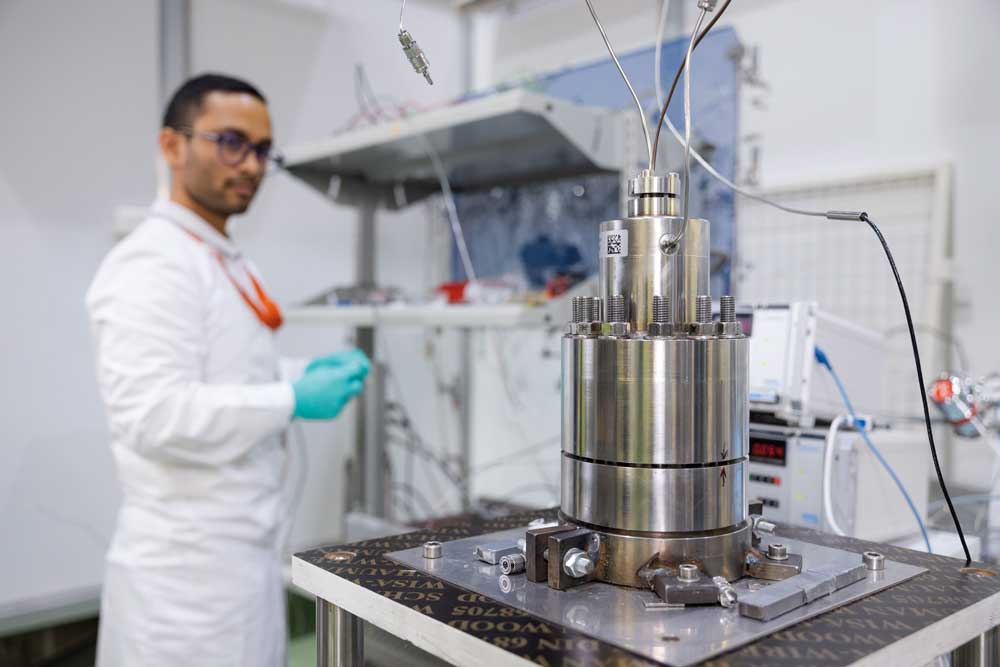
The project has investigated, among other things, the fatigue behaviour of materials potentially suitable for hydrogen transport and storage in high-pressure hydrogen, using a globally unique double bellows loading device operating in pressurised gas, Figure 1. The fatigue life assessment of materials provides a basis for determining, for example, maintenance cycles. In addition to fatigue tests, the project has developed practices for, among other things, the examination and even automation of fracture surfaces (Figure 2a) and sampling to analyse their hydrogen content.
Research on surfaces and interfaces supports the green transition
As process conditions become more challenging and complex, research on surfaces and interfaces lays the foundations for understanding the interactions between materials and their environments.
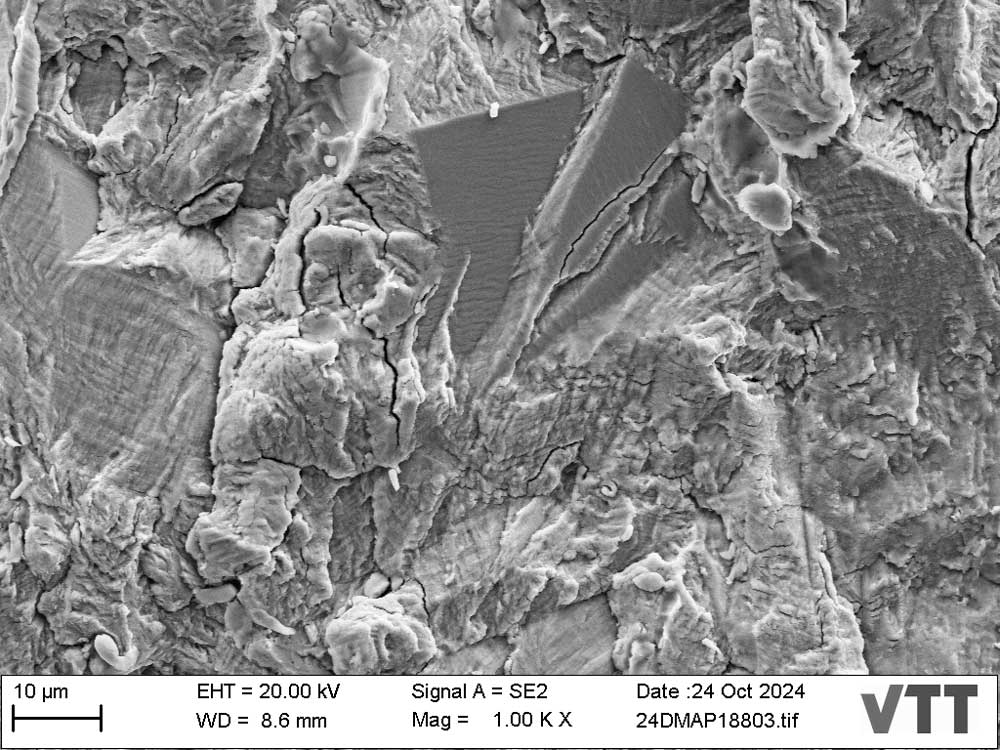
In recent years, VTT has invested heavily in up-to-date, high-quality research equipment to support this theme. For example, in 2023, VTT received a new plasma-FIB (focussed ion beam) FE-SEM (field emission scanning electron microscope), which enables more efficient and reliable examination of interfaces in materials and structures.
VTT is also involved in the Academy of Finland-funded research infrastructure H2MIRI (Hub for Hydrogen-Materials Interaction Research Infrastructures), which strengthens research capabilities in areas such as time-of-flight secondary ion mass spectroscopy (TOF-SIMS) and hydrogen tribology. Tribology refers to the wear, friction and lubrication between surfaces, and hydrogen tribometer, i.e., tribometer operating in the hydrogen atmosphere, will provide new insights into these surface phenomena in the presence of hydrogen.
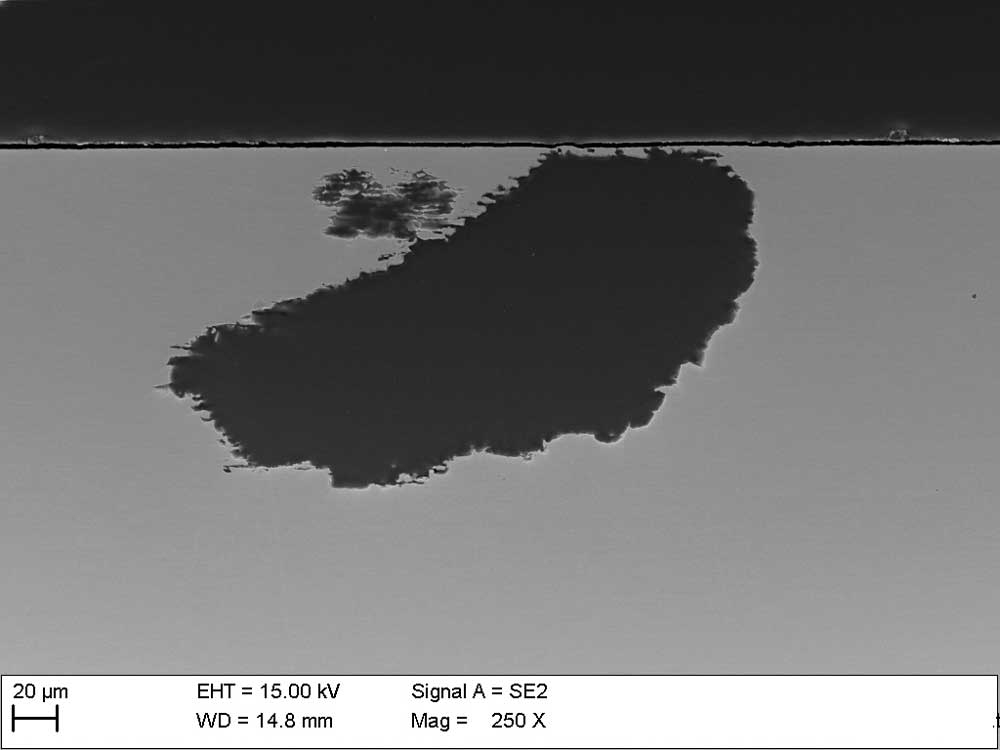
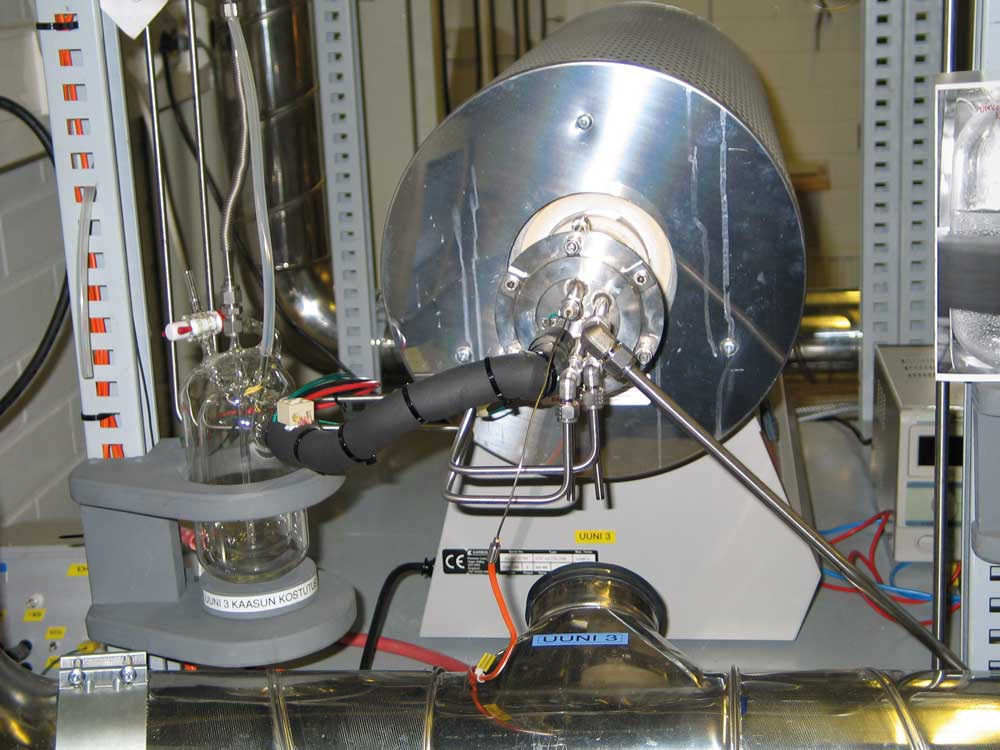
Similarly, in ammonia-rich conditions at elevated temperatures (Figure 3a), for example in engines, the mechanisms of surface layer formation on material surfaces need to be understood and how they can potentially be influenced. The MASCOT project has also sought to provide a knowledge base on this topic.
In addition to solid materials, new operating environments, such as ammonia and hydrogen, also have a potential impact on the lubricants used between contacting surfaces. In the MASCOT project, these changes in the tribological behaviour and frictional properties of aged lubricants have been investigated in a controlled manner using a Mini Traction Machine (MTM) to measure friction between lubricated surfaces (Figure 3b).
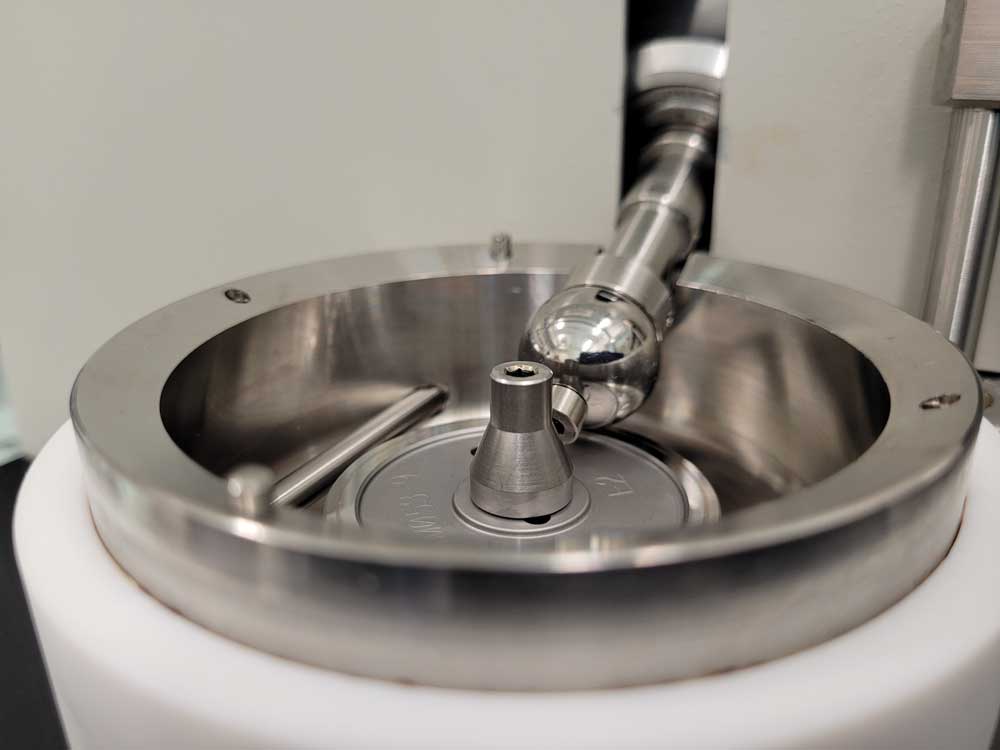
One of the objectives of the MASCOT project has therefore been to increase the material knowledge necessary to enable a sustainable and safe green transition.
Materials research provides a framework for the maintenance
The purpose of maintenance is to ensure the reliability, efficiency and long life of machinery, equipment and investments, and to guarantee the quality of products.
Materials science provides an excellent framework for predictive maintenance through understanding the mechanisms and kinetics of ageing and deterioration of materials and through prevention strategies. Indeed, the best way to achieve carbon neutrality goals is to combine the design of maintenance activities for green transition technologies with the knowledge of science.

Text: Elina Huttunen-Saarivirta, Vilma Ratia-Hanby, Pekka Pohjanne,
VTT Technical Research Centre of Finland Ltd.
Photos: VTT, Shutterstock
Subscribe to the free Maintworld newsletter here!
Use of Sensors to Optimize Maintenance and Lifetime
Industry 4.0 and now Industry 5.0 gives us yet again new trends and interpretations of how the world will develop. Some call Industry 5.0 the revenge of the humans when they are taken into account.
The last couple of years, we have all heard a lot about digitalization, sensors, artificial intelligence, sustainability and machine learning. But what does it mean for us? In this article, I will focus on the sensors and how they are linked to the electromechanical industry.
The Reality of Sensor Adoption
When the digitalization bubble started, it was all about the sensors. Put sensors on everything; they are nearly free. As many of us have experienced, the number of sensors has increased but not even near the numbers communicated. Additionally, the prices are much higher than expected on sensors, software and analysis.
It’s not that simple to do the sales and to change the organization’s work habits. However, some companies have been very successful at installing sensors and have increased their operational radius, increased volume, created higher profit, improved their forecast and satisfied customers.
Barriers to Progress: Navigating Internal and External Challenges
From my perspective, it seems that it is difficult to navigate between the different suppliers, address internal factors with engineers, make decisions about “nice to have vs need to have” discussions, identify good price models and tackle risk management analysis with terms and conditions. These all slow down the progress and positive achievements you can reap from your business.
What are we looking to get out of it?
• Work more efficiently with the customer?
• Create a more accurate forecast?
• Improve uptime?
• Reduce cost?
• Increase number of customers?
All the above bullet points are possible to achieve, but maybe it’s beneficial to delineate the scope. The result many are looking for is actionable information from which you can create value.

Starting Simple: Practical Approaches to Sensor Implementation
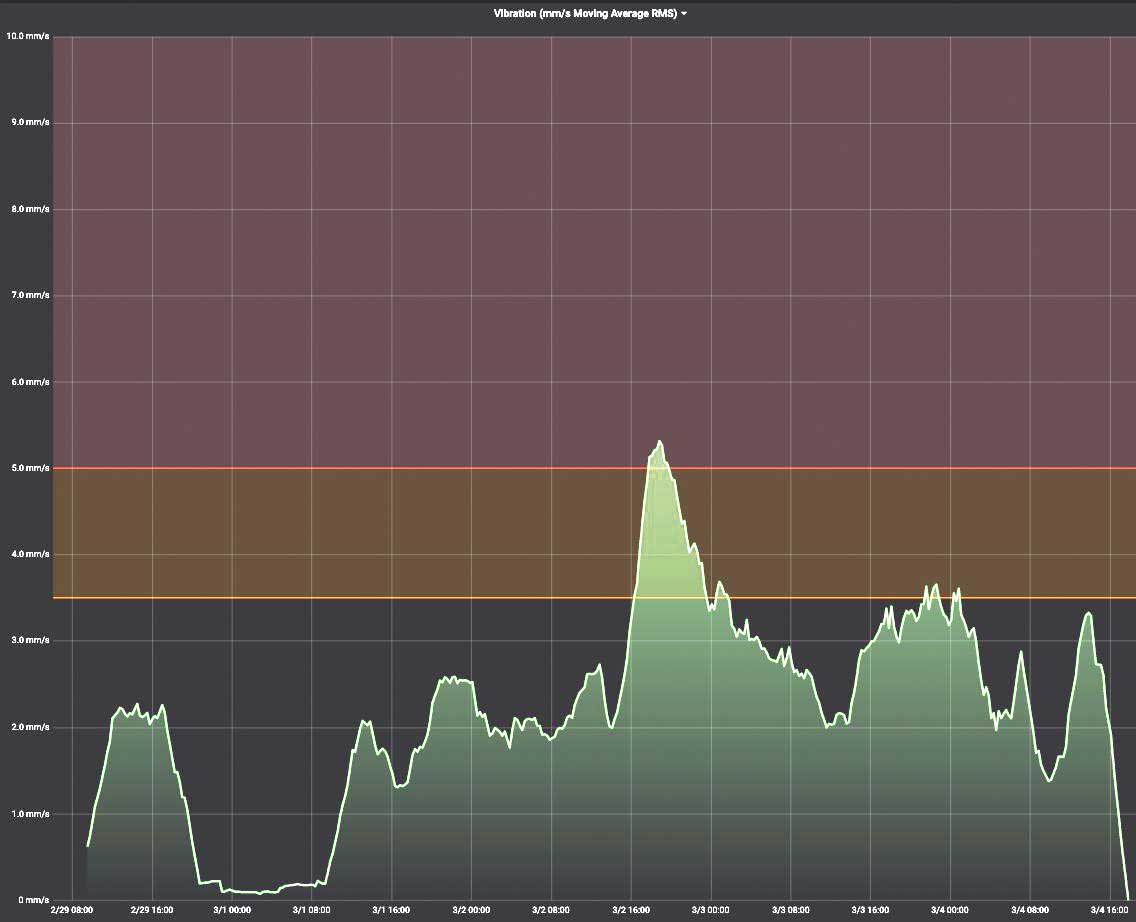
By limiting the scope, you can easily start to create value for both the customer/end user and your business. All you need to do is utilize the value of simple sensor solutions, which is available in the market today, instead of selling the “world of IOT.” Just sell your customer/end user the simple sensor data with simple visualization, providing them with more information to make more precise decisions. (See Figure 1.)
As many of us have experienced, the number of sensors has increased but not even near the numbers communicated.
Most motors will experience improved uptime and will indicate a necessity for maintenance with visual trends of temperature, vibration and alarm setting based on experience. As a guide, ISO standards may be used. However, you choose to set the alarms; it will still be an improvement compared to no alarms.
A large international steel and aluminum manufacturer is putting vibration sensors on many of their machines and has set the alarm to 7.5 mm/s (0.3 in/sec).
With a less complex approach, you will instantly get more data to improve your decisions. You can learn how the plant behaves, and hopefully avoid the 5:00 failure on a Friday afternoon.
Preparing for the Next Step
When you have adapted and developed your organization to react to sensor data and acknowledge the value, it’s much easier to take the next step into higher value maintenance philosophies with your customer.
This article has been offered by EASA, the Electromechanical Authority ( www.easa.com )
Subscribe to the free Maintworld newsletter here!
Drones Have Received Official Permission to Maintain Wind Turbines
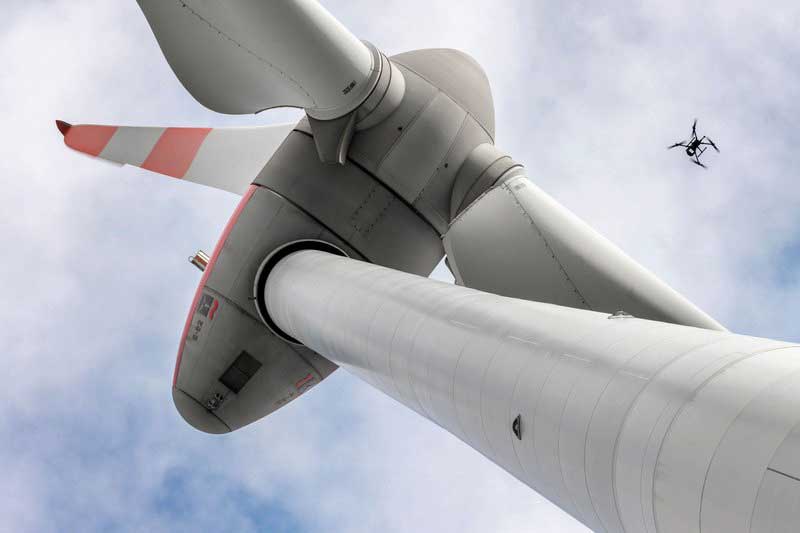
The validation by TÜV NORD confirms that the drone technology used by the Deutsche Windtechnik Inspection Body is suitable for carrying out a range of important inspections such as periodic and condition-oriented inspections.
The multi-stage drone system developed by the Deutsche Windtechnik Inspection Body for inspecting rotor blades and lightning protection systems has successfully passed validation. This is the conclusion reached by TÜV NORD during a conformity assessment that it carried out for the first time.
The drone is able to determine the technical condition of the rotor blades and the functionality of the lightning protection system, and the risks regarding stability and public safety can then be assessed. This means that the drone system, which is called CU-RE, is also suitable for periodic inspections.
– In view of the current shortage of skilled workers and the rapidly-growing turbine inventory, this is very good news for the entire industry because drones will significantly reduce the amount of work required as well as downtimes. In Germany this will close an important gap because legislators have not yet adopted any mandatory requirements for the use of drones in the wind energy industry, says Matthias Brandt, Director of Deutsche Windtechnik.
In addition, using drones to carry out inspections provides long-term benefits associated with continuous data analysis: over the years, monitoring the surface condition of the inspected components has provides a detailed basis for predictive maintenance.
First independent validation
–The inspection procedure was validated against our new TÜV NORD standard. This standard defines criteria and inspection points that allow drone inspection procedures to be evaluated. For the validation, the reliability of the processes was evaluated using documentation tests. In addition to specifications for the equipment used, this also includes specifications for flying and quality assurance, Michael Lange, Head of the ISO 17029 Conformity Assessment Body for Wind Energy at TÜV NORD, explains.
The successful validation only applies to the drone technology used by Deutsche Windtechnik. Other drone systems on the market can also be evaluated using the new standard.
Risk analysis decides
As part of an order-specific risk analysis that is carried out at an early stage, the inspection body evaluates and decides whether the drone system or rope access technology is better suited for the inspection objective.
If using drone technology is found to be more suitable, the now fully validated three-stage model, which is called CU-RE (for “Close-Up and Review”), is then used in the next step. This is based on the stringent, proven inspection requirements specified by the EASA (European Union Aviation Safety Agency), which are used in the aviation industry.
The first stage of the CU-RE system involves carrying out a general visual inspection using an automated drone flight. It scans 100 percent of the outer surface of a rotor blade to detect visible damage, faults or irregularities. If necessary, the first stage can be supplemented in the second stage using selective, manually guided drone technology. If more intensive inspection is required, additional specialised drone or rope access technology options can be deployed during the third stage.
– Our experts decide whether a further inspection stage is necessary in order to be able to clearly identify any detected irregularities, Aeneas Noordanus, Sales Manager for inspection services at Deutsche Windtechnik says.
Increasing the level of detail of the inspection in each stage ensures that both the economic efficiency and the risks are taken into account.
Text: Vaula Aunola Photos: Deutsche Windtechnik, Freepik
Subscribe to the free Maintworld newsletter here!
New Findings Could Lead to Safer, More Stable Metal Batteries

Metal batteries have the potential to deliver more energy, at a lower weight, than the popular lithium-ion battery. The problem, however, is that the technology currently has too short a lifespan due to the highly reactive nature of the lithium metal within these batteries.
Lithium-ion batteries are the most popular battery option today, but in a society facing widespread electrification, new battery technologies are needed that can provide more energy per weight or volume. Therefore, attention is now turning to batteries with metal electrodes, where the graphite electrode of the lithium-ion battery has been replaced by lithium metal. For example, solid-state batteries, seen as one of the most promising upcoming technologies, use a metal electrode and provide cells that deliver a greater amount of energy than today’s lithium-ion battery. However, metal electrodes suffer from one problem – the metal is reactive, which means it reacts easily with the surroundings and it is difficult to create a long-lasting cell.
Metal batteries are one of the focus areas for Professor Aleksandar Matic’s research group at the Department of Physics at Chalmers University of Technology, Sweden, They were the first research team to use 3D X-rays to monitor how the lithium in a lithium metal battery behaves in real time during use. These experiments have led to new insights into the crucial problem that arises in this type of battery – namely that the lithium forms ‘dendrites’, or uneven structures during charging and discharging, which over time affects the stability and function of the battery.
“We work in a very inert environment, but even there the metal finds something to react with and a surface layer is formed, which affects how the metal behaves in the battery. However, we have seen that these reactions can actually be avoided by very simple means: instead of dealing with the reactive electrode materials outside the battery, we create our electrode inside the battery through a process called electroplating. This allows us to avoid the reactive metal reacting with the environment, which is an advantage as we get a more predictable and stable electrode,” says Josef Rizell, doctoral student at the Department of Physics at Chalmers.
Subscribe to the free Maintworld newsletter here!
Latest