From Firefighting to Forecasting: Van Geloven’s Journey Toward Smart Maintenance
Van Geloven, a McCain company in the Netherlands, has moved from reactive to predictive maintenance by embracing data, new technologies, and a cultural shift. Since 2020, some of its sites have reduced downtime from 20% to under 4%, with teams leading improvements and AI increasingly supporting operations.
When Nico Castelijn, Director of Engineering & Maintenance Appetisers CE, joined Van Geloven five years ago, he encountered a familiar scene from many manufacturing companies: decentralised, reactive maintenance teams focused on “putting out fires” instead of avoiding them.
“Maintenance teams were proud firefighters,” he recalls. “They’d fix breakdowns successfully but weren’t necessarily thinking about how to stop them from happening again, perhaps even the next day.”
Drawing on over 20 years of experience in various industries, including the pharmaceutical industry—where traceability and preventive measures are crucial—Castelijn launched a long-term, data-driven transformation project across Van Geloven’s multiple sites, located in both the Netherlands and Belgium.
Building the Foundation:Role Clarity and Structure
One of the first steps in Van Geloven’s journey toward a more predictive maintenance model wasn’t technical—it was structural.
“Before you talk about dashboards, you have to define roles,” he says. “What does a maintenance manager do? A planner? A reliability engineer? We created those profiles and aligned them across sites.”
With consistent role expectations and a clear job structure in place, the foundation was laid for a culture shift—from reactive repair to proactive optimisation.
Transforming the maintenance culture across multiple sites required time and leadership, Castelijn notes. Some teams adjusted in six months; others took over a year. One key strategy was leveraging internal peer learning.

“Transforming the culture required more than new systems—it demanded trust, education, and internal champions, ones who brought the new way of working to colleagues.”
Castelijn encourages peer learning between sites. He urges his teams to visit one another, share experiences, and learn collectively as part of the company’s transformation journey.
He says that monthly cross-site meetings have become collaborative platforms at Van Geloven where technicians present real cases and share dashboard insights. Through this, ownership increases, and a proactive mindset takes hold.
“I tell our maintenance teams: take a company car, drive to another site, spend the day there. Show your work, share your problems, and learn from each other,” he explains. “That peer connection is what changes mindset.”
Data Becomes a Daily Habit
One of the most impactful breakthroughs in streamlining operations was the integration of Power BI dashboards into daily routines, says Castelijn.
“Every morning at 7 a.m. sharp, teams gather to review the past 24 hours of data—equipment breakdowns, performance metrics, and maintenance schedules—all displayed in real-time. This consistent, data-driven approach has replaced reactive, blame-oriented discussions with a culture of collaboration and root cause analysis.”
By making key operational insights instantly visible and accessible, the dashboards have not only improved transparency but also accelerated decision-making and problem-solving across departments.
Castelijn adds that the company uses unified definitions: if a breakdown causes two hours of lost production—even if only 30 minutes was repairing time—that whole time is logged as technical downtime. This clarity promotes cross-functional accountability and realistic planning.
Power BI and CMMS Integration: Turning Data into Action
Castelijn explains that in the past, each site used its separate maintenance system (CMMS), which wasn’t connected to the company’s SAP or finance systems. Because these systems didn’t communicate with each other, it wasn’t easy to track trends or compare performance across sites.
Power BI dashboards, which were initially managed by an external provider, were brought in-house and linked to both the CMMS and the production efficiency system (OEE). This enabled the comparison of production losses and maintenance activities in real-time.
“The dashboards are part of the 7 a.m. routine now,” Castelijn says. Teams review the past 24 hours—failures, root causes, and upcoming PM tasks. It’s not about blame. It’s about learning and prioritising together.”
This integration helps teams plan downtime, optimise resources, and reduce unplanned stops. Maintenance and production data now share a common language.
Mobile Tools and Real-Time Logging
Castelijn emphasises that usability has been crucial in making digital tools successful. Today, technicians use mobile apps and QR/barcode scanners to log work orders, parts used, and failure data instantly.
“Technicians aren’t always keen on admin,” says Castelijn. “So, we made it easy for them. Now everything’s captured in real time—accurate, fast, and easy to share.”
In 2025, Van Geloven began piloting a new AI module in its CMMS at the company’s Tilburg site. The tool quickly answers technician queries by pulling data from past incidents and technical manuals.
“It’s not replacing our technicians—it’s empowering them,” Castelijn explains. “Especially for junior staff or independent workers, it reduces time wasted hunting for information.”
The pilot proved so successful that Tilburg became the first of McCain’s 58 global sites to adopt CMMS-integrated AI.
In his interview with Maintworld, Nico Castelijn shared his perspective on a growing challenge facing the maintenance industry: a shortage of skilled technicians.
Tackling the Skilled Worker Gap
Like much of Europe, the Netherlands is experiencing a chronic lack of technically trained workers, particularly those with hands-on experience in industrial environments.
To address this, Van Geloven has adopted a flexible workforce model, employing a mix of 60% permanent staff and 40% freelance specialists. This enables the company to remain agile while addressing skills gaps. More recently, Van Geloven has also started recruiting qualified technicians from abroad, particularly from countries such as South Africa.
“Most young Dutch workers do not receive in-depth technical education anymore,” Castelijn explains. “But technicians from countries such as South Africa often come with multiple certifications, strong practical experience, and high levels of discipline.”
Looking ahead, Castelijn believes that bridging the technician gap will require both more innovative use of AI tools and strategic global recruitment.
“As technician shortages grow across Europe, companies will need to get creative. Automation, data, and international hiring will be key parts of the solution.”
Data-Driven KPIs Driving Change
To accelerate its shift from reactive to predictive maintenance, Van Geloven has made data a central part of its strategy. At the heart of this approach is a set of carefully chosen key performance indicators (KPIs) that guide day-to-day operations, long-term planning, and cross-site comparisons. These KPIs provide a clear view of what’s working, what needs attention, and where resources should be focused.
The main KPIs tracked include:
• Technical downtime percentage – Measures how much production time is lost due to technical failures.
• Planned vs. unplanned maintenance ratio – Highlights the balance between proactive and reactive work, aiming to reduce unexpected breakdowns.
• Mean Time to Repair (MTTR) and Mean Time Between Repairs (MTBR) – Indicators of equipment reliability and repair efficiency.
• Maintenance cost breakdowns – Tracks spending on preventive versus reactive maintenance, helping to optimise budget allocation.
• Internal vs. external labour usage – Provides insight into workforce efficiency and the use of third-party contractors.
• Schedule adherence – Measures how closely planned maintenance activities follow the schedule, supporting operational discipline.
By closely monitoring these metrics, Van Geloven can benchmark progress across its various sites, identify best practices, and continuously refine its maintenance strategy.
“More than just numbers, these KPIs help create a culture of accountability and continuous improvement—ensuring maintenance is not just a support function, but a key driver of operational performance,” Castelijn says.
A Model for Maintenance Transformation
Today, Van Geloven’s facilities are approaching world-class standards in maintenance. In some locations, technical downtime has dropped from 20% to below 4%, thanks to a shift toward predictive maintenance, root cause analysis, and empowered teams.
Maintenance crews are now developing and leading their own improvement initiatives, while AI has become an integral part of the daily workflow—assisting with planning, decision-making, and efficiency.
“This kind of transformation doesn’t happen in six months,” says Castelijn. “It takes three to four years, strong leadership, and a deep commitment to collecting and maintaining quality data,” he advises other maintenance managers.
His most significant piece of advice?
“If your CMMS data is poor, AI won’t help you. Garbage in, garbage out.”
In today’s competitive global market, where agility and efficiency are non-negotiable, predictive, data-driven maintenance is no longer a nice-to-have—it’s a necessity.
“Companies that don’t embrace this direction will fall behind,” Castelijn warns.
“Predictive maintenance isn’t just smart—it’s survival.”
Van Geloven’s journey proves that with the right vision, sustained commitment, and a supportive culture, even traditional manufacturing operations can lead the way in digital transformation.
Key Takeaways for Maintenance Leaders
• Downtime Reduction: Cut from 20% to under 4% in two years through focused root cause analysis.
• Agile Teams: 60% internal staff, 40% freelancers to maintain flexibility.
• AI support: AI integrated with the CMMS can save time and assist less experienced staff in making better decisions. Currently, at Van Geloven, AI is still in the testing and deployment phase only at the Tilburg site, but it is expected to be rolled out more broadly across other locations in the upcoming two years.
• KPI Discipline: Focus on MTTR (Mean Time To Repair), MTBF (Mean Time Between Failures), technical downtime %, planned vs. unplanned ratio, and schedule adherence.
• Change Timeline: True digital and cultural transformation takes 3–4 years of consistent effort.
A key step in Van Geloven’s digital transformation has been the development and internal hosting of Power BI dashboards, which are now fully integrated with both the company’s Computerised Maintenance Management System (CMMS) and
Overall Equipment Effectiveness (OEE) system. This integration enables real-time tracking and analysis of maintenance activities alongside production losses, allowing for more informed decision-making at all levels.
Lessons in Change Leadership
Van Geloven’s maintenance transformation has been as much about people as it has been about technology. Castelijn’s leadership style is rooted in experience—he began his career as a trained technician, worked shifts on the shop floor, and gradually advanced into management. That background gives him credibility with teams and helps drive cultural change.
“Technicians listen because I’ve done their job,” he says. “And I tell them—if I stayed in one job too long, I would stop learning. That mindset applies to everyone.”
According to Castelijn, effective change leadership starts small and scales gradually.
His recommended approach includes:
• Standardising job roles to eliminate confusion and overlap
• Making the dashboard use a daily habit to build data literacy
• Appointing internal ‘champions’ to lead by example and encourage peers
• Allowing teams to present and own their data, fostering accountability and pride
Castelijn’s message to other maintenance leaders is clear: success doesn’t come from technology alone. It comes from engaging people, setting clear expectations, and building a culture of continuous learning and ownership.
Text: NINA GARLO-MELKAS Photos VAN GELOVEN



Subscribe to the free Maintworld newsletter here!
Future of Sustainability: What Maintenance Leaders Need to Know
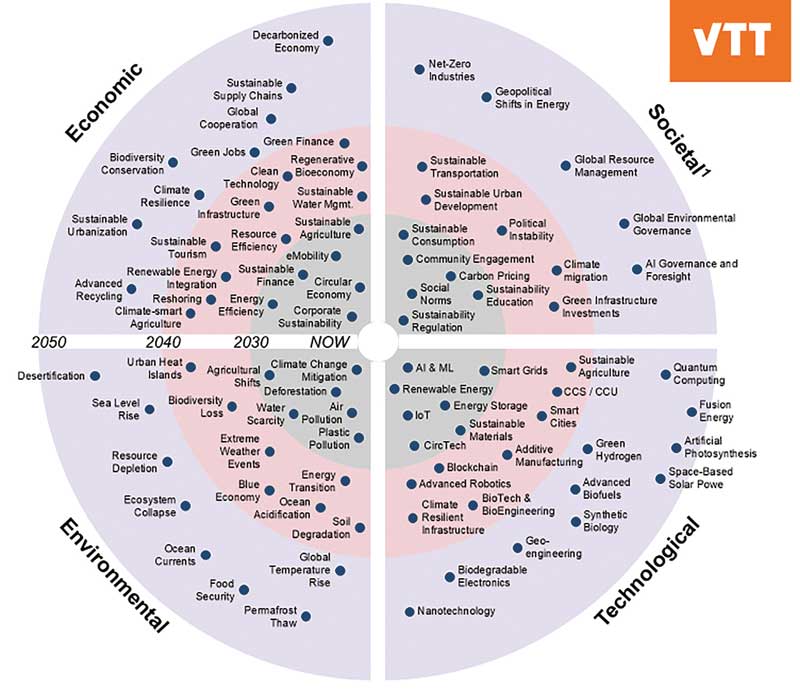
By Michael Hanf, sustainable business strategist and lead author of the Future of Sustainability 2025 study, published by VTT Technical Research Centre of Finland.
The maintenance and asset management sector plays a critical role in the sustainability transition. Well-planned and well-executed maintenance does not just keep assets running. It enables energy and resource efficiency, prolongs equipment life, safeguards operational resilience, and supports the shift to low-carbon and circular business models.
The Future of Sustainability 2025 study, which I authored, identified 87 trends and 5 megatrends shaping the coming decades. Many of these developments are directly relevant for maintenance strategies and point to the sector’s growing influence in achieving both operational and sustainability goals.
From linear to circular maintenance models
The transition from a reactive “repair when broken” approach to proactive, circular maintenance models is gathering pace. Manufacturers are increasingly designing equipment for multiple life cycles, modular upgrades, and easy refurbishment.
For maintenance teams, this means finding ways to extend asset lifespans through predictive analytics, remanufacturing components instead of replacing them, and working with suppliers to enable take-back and reuse.
These approaches reduce waste, minimise the need for virgin materials, and lower the overall environmental footprint of operations. For example, some industrial pump manufacturers now offer full-service models where pumps are monitored remotely, refurbished on schedule, and kept in continuous rotation, reducing downtime, optimising energy use, and conserving materials.
Digital twins as a core tool
Digital twin technology is rapidly moving from pilots to everyday practice, giving maintenance teams a powerful tool for both operational and sustainability performance. Real-time virtual representations of assets make it possible to simulate wear, stress, and performance under a variety of conditions. This capability allows for earlier detection of issues, optimal scheduling of interventions, and more efficient use of spare parts.
A Nordic energy company, for instance, used digital twins of its wind turbines to reduce maintenance costs by 20 percent, extend service intervals by more than 30 percent, and optimise power output, demonstrating the direct link between maintenance innovation and improved energy efficiency.
Climate-resilient infrastructure
As climate change increases the frequency of extreme weather events and shifts operating conditions, the role of maintenance in ensuring resilience becomes more strategic. Maintenance teams are now expected to not only keep assets in service but also enhance their ability to withstand heat, flooding, and other environmental stresses.
This may involve using more heat-resistant materials, elevating critical systems above potential flood levels, or adjusting inspection and service intervals to match new climate realities. These measures protect operational continuity, reduce downtime, and help safeguard both economic performance and environmental outcomes.
Upskilling the workforce
Sustainability-driven changes require new skills for maintenance professionals. Technicians now work with AI-driven analytics tools, understand material recycling and circular processes, and incorporate sustainability metrics into maintenance decisions.
Leading companies are investing in training that combines traditional mechanical knowledge with data literacy, environmental awareness, and systems thinking.
This integration allows maintenance teams to make operational choices that directly improve resource efficiency and environmental performance, while also strengthening their organisation’s ability to adapt to emerging challenges.
The business case for action
When viewed through a sustainability lens, the benefits of advanced maintenance strategies become even more compelling. Circular models reduce total cost of ownership and material demand. Digital tools increase uptime and energy efficiency. Climate resilience protects productivity and reduces risk.
Skilled teams can deliver higher-value services that align with both operational excellence and environmental responsibility. Maintenance is not only a technical function. It is a strategic enabler of efficiency, resilience, and sustainable value creation.
Where to start
A practical first step is to assess your asset base in terms of both operational performance and sustainability potential. Identify opportunities where circular approaches can replace linear ones, where digital tools can boost efficiency, and where climate adaptation is most urgent.
Start with pilot projects, track measurable outcomes, and scale successful initiatives. Engaging maintenance teams from the outset is critical, as they often hold the most valuable insights into how to achieve these goals in practice.
The future of maintenance will belong to organisations that integrate sustainability into every aspect of asset care, using maintenance not just to keep things running, but to drive efficiency, resilience, and long-term business success. The opportunities are already here. The challenge is deciding who will lead the way.
Top 5 Actions for Maintenance Leaders
1. Integrate sustainability into maintenance KPIs. Track energy efficiency, resource use, and waste reduction alongside uptime and reliability metrics.
2. Adopt predictive and condition based maintenance. Use sensors, data analytics, and digital twins to prevent failures, extend asset life, and optimise energy use.
3. Enable circularity in asset management. Refurbish and remanufacture components, implement take-back systems, and work with suppliers on reuse strategies.
4. Build climate resilience into asset care. Adapt materials, designs, and service schedules to withstand extreme weather and changing operating conditions.
5. Invest in workforce upskilling. Equip teams with data literacy, sustainability awareness, and systems thinking to drive innovation on the shop floor.
Text: Michael Hanf Pictures: Image II taken from a video of a Grandlund semina – image I Ira Hanf
Subscribe to the free Maintworld newsletter here!
Galvatek’s Global Transformation Toward Defense Industry
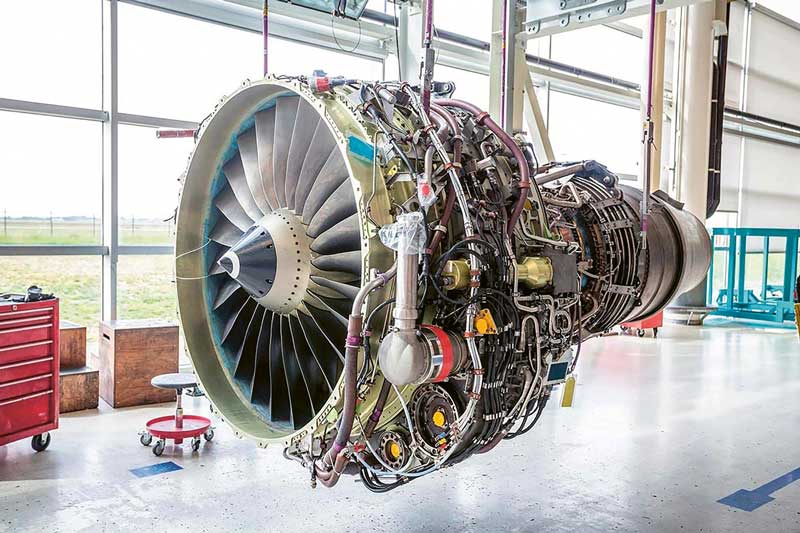
How a Finnish surface treatment specialist transformed crisis into opportunity by pivoting from traditional surface treatment to aviation and defense industry.
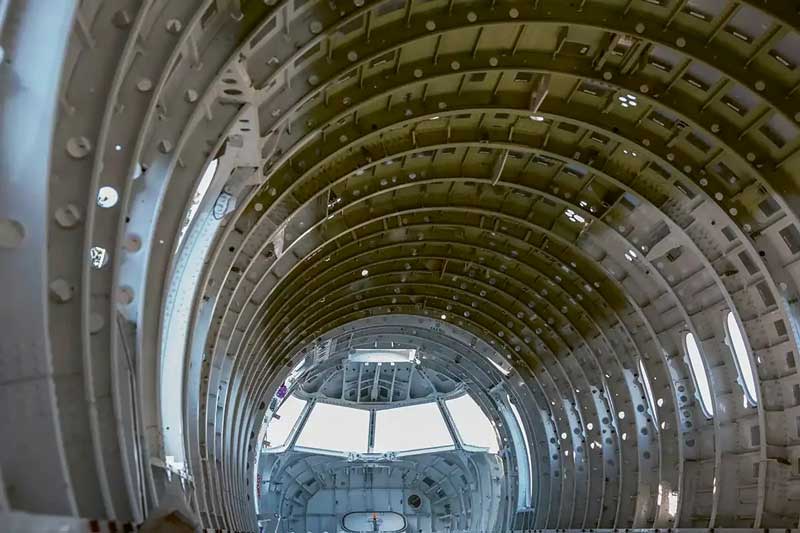
Once known for expertise in industrial surface treatment needs, Galvatek now designs high-tech automated surface treatment lines for the aviation and defense industries. In a discussion with CEO Lasse Vilminko, we explore how the Finnish company navigated a pandemic-driven collapse, found unexpected growth in defense industry, and positioned itself for the next phase of automated manufacturing.
The Automation Advantage. “We deliver precision technology for aviation and defense industries,” says Vilminko. “Surface treatment itself isn’t rocket science—the technologies have been around for decades. What sets Galvatek apart is full automation. We’ve been doing that since the 1980s.”
This focus on complete automation became Galvatek’s differentiator as labor costs made traditional mass production uncompetitive. The company needed to find markets where premium technologies were justified by demanding technical requirements.
In the early 2000s, Galvatek began targeting the aviation sector, where automation, reliability, and complete traceability are non-negotiable.
“Aviation is highly regulated. Everything must be traceable and inspected multiple times. If a component fails, we need to know exactly what treatment it received, when, and by whom,” explains Vilminko. “That level of requirement justifies high-end technology and demands best-in-class automation.”
The strategy paid off. Today, Galvatek supplies automated surface treatment lines to major players like Rolls-Royce, Pratt & Whitney, Lufthansa Technik, and Turkish Technic. Building these relationships required years of proving reliability and meeting stringent certification requirements.
Crisis and Recovery. Then came COVID-19. With the majority of revenue from aviation, Galvatek faced an existential threat when global fleets were grounded.
“We were in the middle of active projects when the bottom dropped out. Some customers hit pause, others cancelled completely. It was dramatic,” Vilminko recalls.
In a difficult situation, Galvatek decided to return to industries familiar from the company’s history, which turned out to be more challenging than expected.
The systems we install today must be intelligent. We’re working toward predictive maintenance and remote diagnostics.
“We learned a lot from the COVID years. But now, we’re looking ahead,” Vilminko says confidently.”
Recovery came faster than expected as passenger volumes rebounded strongly, even exceeding pre-pandemic levels by 2023. Postponed European investments began flowing again, creating new opportunities.
Defense Emerges as Growth Driver. The real surprise came from the defense industry. Galvatek’s previous work with defense company NAMMO on surface treatment lines for 155mm artillery shells suddenly became highly relevant as European nations ramped up ammunition production.
“We didn’t even budget for defense projects in 2024. Now it’s our fastest-growing segment,” says Vilminko. “The scale of demand, especially due to the war in Ukraine, took everyone by surprise.”
Galvatek has evolved beyond being an equipment supplier for surface treatment to become a complete technology integrator, delivering end-to-end systems including robotic handling, zinc phosphating, and coating solutions.
Finland’s NATO membership has accelerated international interest. “Currently, we’re delivering to three NATO countries, and that visibility has generated inquiries from other alliance members. Some contacts surprised us—we had to ask how they found us,” Vilminko notes.
Global Operations, Local Flexibility. Vilminko admits managing simultaneous projects across different continents can present logistical challenges, but Galvatek’s subcontracting model provides strategic advantages. The company manufactures nothing itself, instead relying on a vetted global network.
“That’s our competitive edge,” explains Vilminko. “It lets us be agile. We can optimize for each situation—build complete systems in Europe for smaller projects or build entirely on-site for large installations.”
Building International Teams. Rapid growth has accelerated hiring and talent acquisition has been easier than expected due to Finland´s current market situation. The Lahti based company now employs nine nationalities beyond Finnish staff, with English as the main working language.
“The situation isn´t as challenging as one might think. Finland´s industrial downturn over the past years has actually helped us. The Lahti region has significant industry presence, and many large companies have had major workforce reductions,” Vilminko explains.
The industrial contradiction has created also a need for an international talent pool to support Galvatek expansion. “We´ve recruited across all departments – project managers, sales engineers, automation specialists, designers.”
However, Galvatek’s niche requires extensive onboarding. New hires need months to master the company’s specialized automation approaches and industry requirements, as the company rarely finds candidates with direct experience in their highly specialized field.
Technology Evolution. Galvatek continues advancing its automation platforms, participating in Finland’s initiative to develop AI-enabled processes. The company is also expanding after-sales services to support its expanding global installation base.
“The systems we install today must be intelligent. We’re working toward predictive maintenance and remote diagnostics. Our customers expect it,” Vilminko adds.
Managing Success. Current challenges stem from success itself.
“We’re stretched, in a good way. The volume of work is intense,” says Vilminko. “Managing growth while maintaining quality and developing new capabilities, that’s our daily challenge.”
International trade tensions add complexity, though Galvatek’s flexible subcontracting model provides some protection from tariff changes and supply chain disruptions.
Dual Pillars Strategy. Today, Galvatek stands on two strong pillars: recovering aviation demand and surging defense requirements. Both sectors offer multi-year visibility, with defense investments expected to continue through 2030.
“We have solid foundations now,” concludes Vilminko. “Aviation growth is accelerating globally, especially in Asia. Defense spending will remain elevated for years. These business pillars give us confidence for both medium and long-term planning.”
Energy Sector Opportunities. Looking ahead, Galvatek sees potential in emerging energy sectors, particularly within green hydrogen and small modular reactors (SMRs).
“We’re already supplying equipment for a strategic hydrogen project in Denmark,” Vilminko notes. “And don’t underestimate SMRs. Companies like Rolls-Royce are betting billions on modular nuclear. We intend to be ready when those technologies scale.”
These sectors require the same rigorous surface treatment standards that Galvatek delivers for the aviation industry, potentially providing natural expansion opportunities as these industries mature.
Text: Mia Heiskanen
Photo: Galvatek
Subscribe to the free Maintworld newsletter here!
What the Future Holds for Large-Scale Floating Solutions

As sea levels rise and land grows scarce, the ocean is no longer just a frontier—it’s a foundation. At WCFS2025 in Finland, Dr. Teemu Manderbacka unveiled bold visions for floating megastructures that may reshape how and where we live, work, and build. What´s the beef for maintenance in his vision?
At the 5th World Conference on Floating Solutions (WCFS2025) in Hanasaari, Finland, Dr. Teemu Manderbacka of VTT and Aalto University painted a vision that sits somewhere between speculative moonshot and near-future engineering reality.
His talk, “Future Visions for Large Floating Solutions,” wasn’t just a pitch for ocean-based utopias—it was a grounded look at how floating infrastructure could tackle global crisis while navigating a regulatory minefield and practical maintenance dilemmas.
The big idea is simple: the oceans cover 70 % of the planet. Why not use that space more intelligently? Dr. Manderbacka outlined three visionary directions:
Floating Transport Carriers
Imagine drifting platforms that harness natural ocean currents—zero-emission bulk transport systems slowly carrying materials like freshwater, minerals, even Saharan sand across the seas. No fuel-hungry engines, just the push of the Atlantic’s great conveyor belts.
Ocean-Based Resource Harvesting
Floating structures could support renewable energy generation (solar, wind, wave), aquaculture, carbon capture, and marine nutrient farming. These aren’t sci-fi fantasies; many of these technologies exist today—just not yet at the scale envisioned.
Habitats on Water
Floating hotels, retirement communities, emergency housing, or even full-scale cities—these modular megastructures could be relocated based on need. For events, crisis, or seasonal economies, transportability is the game-changing advantage.
Vision Meets Reality
While the ideas are bold, Manderbacka emphasized that floating infrastructure is already part of our world. Floating homes, entertainment venues, even marine farms are no longer experimental. However, the jump from niche applications to self-sustaining floating cities is a leap—and not just a technological one.

Maintenance: The Unseen Backbone
Maintaining floating systems isn’t like maintaining a ship or a building—it’s like both, simultaneously. Everything from hull integrity and environmental exposure to the reliability of onboard life systems needs constant attention.
A central concern is logistics. How self-sufficient can a floating community realistically be? Will spare parts and services be delivered from land, or produced onboard? The degree of autonomy defines both cost and complexity.
As Manderbacka noted in Maintworld follow-up interview, “All structures require maintenance. Whether it’s a building or a vessel, they have different needs—but floating structures must meet both.”
Maintworld readers know this well: maintenance is not a footnote to innovation; it’s the core enabler.
The Legal Limbo
If there’s a showstopper in this story, it’s regulation. Manderbacka underscored a paradox: floating structures don’t neatly fit into maritime or terrestrial law.
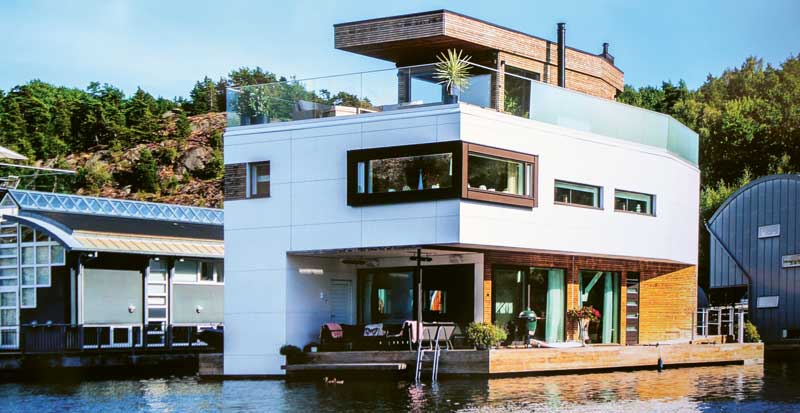
Some nations might treat them as ships, subjecting them to International Maritime Organization (IMO) rules—designed for harsh open-sea conditions—even if they’re moored in calm, sheltered waters. Others might apply building codes, creating mismatched or conflicting standards.
That regulatory uncertainty makes investors wary. A floating structure approved in Helsinki might, for example, not pass muster just a few kilometers away in the city of Espoo.
We need a hybrid legal framework that reflects the reality of floating solutions—modular, mobile, and multi-use.
“The challenge is balancing transportability and local compliance,” Manderbacka explained. “We need a hybrid legal framework that reflects the reality of floating solutions—modular, mobile, and multi-use.”
What Comes Next?
For floating infrastructure to scale, a few things must happen:
• Global legal alignment, or at least standardization zones.
• Maintenance infrastructure built into design, from redundancy systems to remote diagnostics.
• Business models that account for transportability, lifecycle costs, and multipurpose adaptability.
• Public-private partnerships willing to absorb early-stage risk for long-term gains.
The Maintenance Mandate
Floating cities might be a distant goal, but floating infrastructure is already making waves. As urban pressure pushes coastlines to their limits, the sea is no longer just a backdrop—it’s part of the solution.
For the maintenance industry, this isn’t a future problem. It’s now. From structural resilience to life-support systems, floating solutions demand a new kind of readiness. They must be built to move, survive—and crucially—be maintained to endure.
Text: Mia Heiskanen
Photos: Jari Kostiainen
Subscribe to the free Maintworld newsletter here!
The Many Skills of a Maintenance and Asset Manager
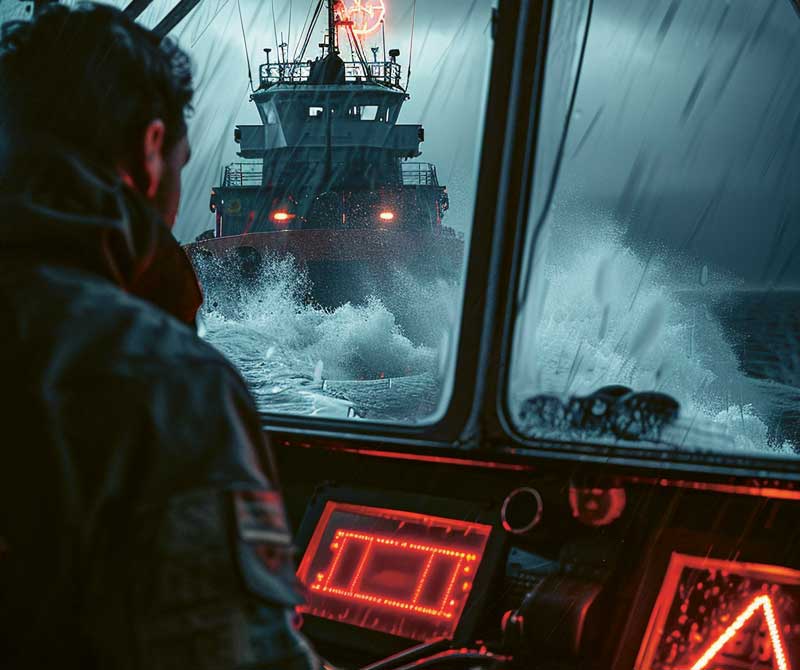
As a maintenance and asset manager, you can sometimes feel like you’ve ended up in a “perfect storm”.
In addition to regular malfunctions, defects and other maintenance activities you have to deal with trends, developments, limitations, new orders from above and struggles from below – or the other way around. How do you keep the helm straight and ensure that your company stays on course?
The term “a perfect storm” is used to describe a dynamic combination of events that together have much greater consequences than the individual events would cause separately. Sounds familiar?
Technical Captain
As a maintenance and asset manager, you are the captain of the ship called “The Technical Service”. You set the course and make choices based on the most important value driver: do you focus on technical availability, or do you focus on minimizing operational costs? Or perhaps (new) legislation is currently leading, or you have to make important decisions in the area of lifetime extension or replacement of critical assets.
Also, you have to deal with “the helmsmen standing ashore” who provide additional challenges or limitations in the form of reducing your OpEx and CaPex budgets. But whatever is decided, the maintenance and asset manager must bring the technical service to calmer waters.
Different roles
Peter Decaigny is a Partner at Mainnovation, a consultancy firm in the field of maintenance and asset management. He has experience with both large and small companies in industry, fleet, and infrastructure. He outlines the skills that the “average maintenance manager in 2025” should possess: “The maintenance and asset manager as an economist, as a sustainability officer, as an ICT specialist, and as a people manager.”
From Cost to Value
“Maintenance is not necessarily a cost item. When you make smart choices, you can add value to the operating result with maintenance and asset management,” Decaigny says.
This message is generally widely approved by management. It does mean that the maintenance and asset manager must calculate this in advance and also make it happen. How do you calculate the dominant Value Driver? How do you create a maintenance budget?
“Besides the OpEx and CapEx, it is important to also take the average age of the installation into account. A young factory does not yet put much pressure on the CapEx budget, but at some point, this will change. Being able to calculate this properly and translate it into value in euros (or any other currency) will help to gain support from the board.”
Steps Toward 2030
In addition to economists, maintenance and asset managers are also increasingly involved in a company’s sustainability objectives.
“There is an obligation under the European Green Deal to reduce CO2 emissions and energy consumption by 2030.
“It is also necessary to remain competitive. All of this has a considerable impact. There are even companies that are dismantling their factories because they cannot meet these requirements. Fortunately, these are exceptions.”
“Yes, sustainability requires the deployment of people and resources, but we can achieve good results with simple steps.” This is the outcome of the international study MORE4Sustainability.
Digitalisation
Developments in digital, sensoring, data and data sharing are almost faster than we can manage. And yet, as a maintenance and asset manager, it is required of you because we have to keep up and stay ahead of the competition. From Excel to CMMS or EAM tools, from predictive to prescriptive maintenance based on data and algorithms.
“The good news: the new generation can help the older generation. They grew up with TikTok and YouTube. They operate a drone as if they have never done anything else and they know how to create a good Chat GPT prompt. Make use of this”, is the tip that Decaigny gives.
Skill Transfer
And of course, the maintenance and asset manager is also a team leader, a coach, a people manager.
“Good technicians are hard to find. But once you have found them, it is important to keep them motivated and engaged.” Also the older employees require attention. This involves securing existing knowledge and skills. Find a way to unlock that knowledge and ensure that it does not disappear when the employee retires.
“By linking older employees to young, new employees, you kill two birds with one stone: the older generation can transfer their knowledge, the newcomers learn how the factory works and how maintenance is carried out and they can teach their buddy something in the field of new techniques.”
“It is important, as a maintenance and asset manager, to ensure that there is understanding and respect for each other’s way of working because it is undoubtedly different.”
Conclusion
Yes, it is a lot. And all these tasks are on top of the daily activities that can be considered “core business”, which ensure that the ship keeps sailing at all. But with extra effort you can tighten the sails a bit, anticipate immediately when the wind blows from a different direction, stick to your course better and perhaps even end up in calmer waters. That will ensure satisfied faces among the crew but also, the captain’s…
Mainnovation is known for its methodology Value Driven Maintenance & Asset Management (VDMXL).
Text: Laura van der Linde
Photo: FREEPIK
Subscribe to the free Maintworld newsletter here!
The New Arsenal of Military Readiness # Part 1 – Eight Trends Transforming Defence Maintenance
The defence and military sector has always been a pioneer in technology adoption. From the jet engine to satellite communications, innovations often take shape in the armed forces before finding their way into civilian industries. Maintenance is no exception. The battlefield of the 21st century is no longer defined only by firepower and strategy, but also by the capacity to keep complex, mission-critical assets in constant readiness.
In 2025, a new wave of technologies and approaches is reshaping how military organizations around the world maintain their fleets, bases, and infrastructure. These innovations go beyond cost savings to include survivability, autonomy, and operational superiority. Simply stated, today’s battlefield is defined by the capacity to keep complex, mission-critical assets in constant readiness.
What follows is a journey through the eight most impactful trends redefining defence maintenance, backed by real examples and the latest policy shifts. Together, they illustrate how maintenance has evolved from a supporting activity to a decisive factor in combat power.
AI Predictive and Prescriptive Maintenance
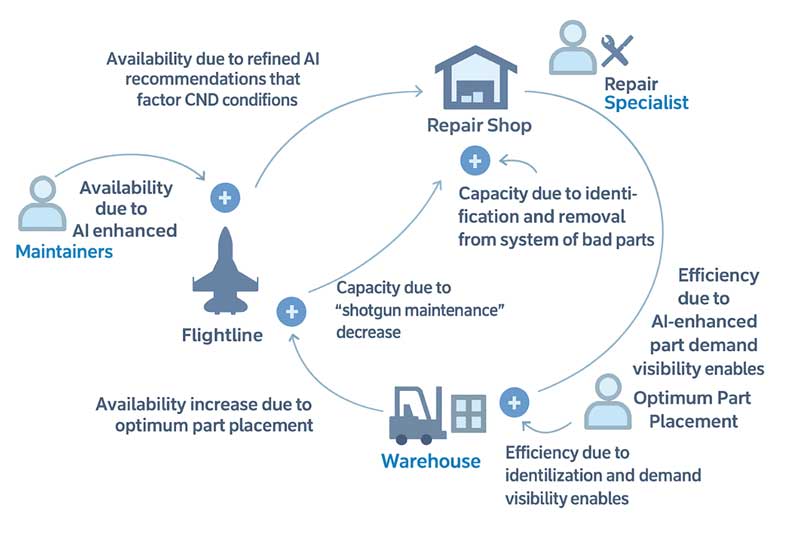
The shift from reactive maintenance to predictive approaches is now a reality across many military branches. Artificial Intelligence (AI) and machine learning (ML) are embedded into modern maintenance ecosystems, enabling the transition from predicting failures to prescribing the best course of action.
A case in point is the USS Fitzgerald, a U.S. Navy destroyer equipped with Enterprise Remote Monitoring v4 (ERM). This system analyses over 10,000 sensor signals per second, offering a real-time health profile of machinery onboard. Instead of scheduling maintenance based on calendar intervals, the system advises commanders exactly when and where intervention is needed.
The payoff is enormous: reduced downtime, optimized spare part usage, and increased combat readiness. A system failure at sea can immobilize a vessel for weeks, but predictive tools allow maintenance teams to act proactively during planned stops.
Innovation is not limited to ships. The U.S. Air Force is testing AI-powered algorithms for engine health monitoring on fighter jets, while NATO allies are investing in predictive vehicle maintenance to extend the service life of armoured fleets deployed in Eastern Europe.
AI-driven maintenance is not a niche experiment but a global movement reshaping readiness doctrines. NATO allies are increasingly pooling resources to build shared AI platforms that harmonize maintenance data across different fleets, making multinational operations smoother. In the United Kingdom, the Royal Air Force has launched pilot projects where predictive analytics monitor Rolls-Royce engines on Typhoon fighters, cutting unscheduled downtime by double digits. In Asia-Pacific, Japan’s Self-Defence Forces are integrating AI into naval fleet diagnostics, while South Korea is experimenting with predictive maintenance for its K2 Black Panther tanks.
Still, certain challenges remain. AI systems demand clean, labelled data, often scarce in legacy platforms. Algorithms must be explainable to gain the trust of military decision-makers. And cybersecurity is paramount: a manipulated dataset could trigger false recommendations with severe consequences.
Right-to-Repair: Empowering the Frontline
Running parallel to AI is a quieter but equally revolutionary development: the right-to-repair movement. For decades, military units were dependent on original equipment manufacturers (OEMs), often waiting weeks for authorized technicians or proprietary parts. In combat, that dependency is a liability.
In May 2025, the U.S. Department of Defense announced the “right to repair” provisions will become standard in Army contracts. Soldiers will gain access to manuals, diagnostic tools, and digital files needed to fix equipment themselves—even fabricating replacement parts when necessary.
This development is critical in theatres where logistics convoys are vulnerable to attack. A battalion stranded by a minor equipment fault can jeopardize an entire mission. If they have the right to repair, troops can patch and restore vehicles within hours instead of waiting for OEM support that might never arrive.
Some compelling applications are emerging in aviation and naval domains. U.S. Air Force depots are exploring right-to-repair concepts for F-35 subsystems, allowing local teams to bypass long OEM approval times. Navies are experimenting with giving submariners autonomy to service critical life-support systems at sea.
As these examples suggest, when operators who may be weeks away from supply hubs are empowered, even highly complex platforms can sustain themselves independently.
Yet the policy has tensions. OEMs are reluctant to release intellectual property, citing lost revenue and safety risks if repairs are improperly executed. The success of right-to-repair will depend on balancing sovereignty, safety, and IP rights. NATO nations are already discussing harmonization to ensure interoperability in joint operations.
Additive Manufacturing and the Mobile Factory
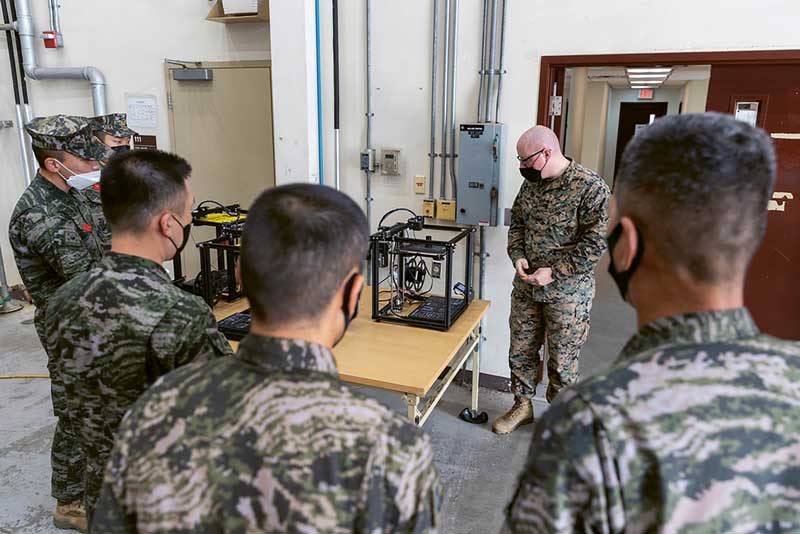
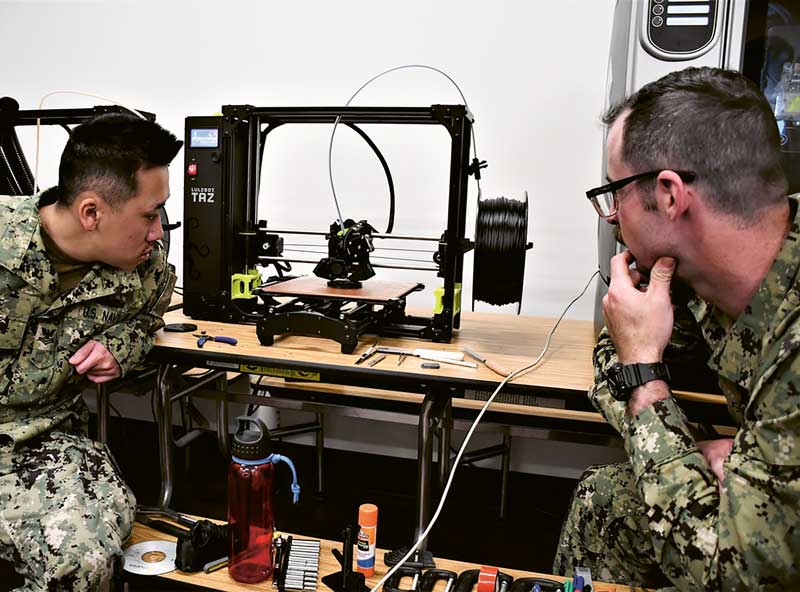
Closely linked to the right-to-repair is the rise of additive manufacturing, better known as 3D printing. Once experimental, additive manufacturing has matured to the point of battlefield deployment. Programs such as Fleetwerx have developed mobile fabrication labs capable of producing spare parts in forward bases.
Whether made of metal alloys, ceramics, or composites, these parts reduce dependency on vulnerable supply lines. Imagine a combat vehicle disabled by a broken valve. Instead of waiting days for delivery, technicians can 3D-print the component within hours, often at reduced weight and optimized geometry.
The British Army has trialled containerized additive manufacturing units in deployed environments, producing small arms parts and UAV components. The U.S. Marine Corps has tested 3D-printed impellers for water purification systems, while the Australian Defence Force explored printing drone airframes during Pacific exercises.
Importantly for high-value platforms, additive manufacturing is moving beyond prototypes into certified airworthy parts. In 2025, the U.S. Air Force approved the first flight of an F-22 Raptor equipped with a 3D-printed titanium cockpit component. Naval forces are experimenting with printing pump impellers and valve housings directly onboard carriers. Submarine maintenance has benefitted as well: the Australian Navy has tested polymer 3D-printed gaskets able to withstand deep-sea pressures.
The real challenge is certification. Defence organizations require rigorous validation before deploying a printed part in mission-critical equipment. To address this, NATO is working on a joint certification framework for additive manufacturing. The vision is clear: every forward base could soon become a miniature factory, where supply chains are virtualized and resilience maximized.
Taken together, these first three trends highlight a decisive shift: maintenance is no longer confined to depots or long supply chains, but is moving directly into the hands of operators and frontline units. AI-guided troubleshooting, the ability to repair equipment without waiting for authorization, and the agility of additive manufacturing are transforming downtime into uptime and dependence into autonomy. Yet this is only part of the story. To truly harness these tactical gains at scale, armed forces are now embracing broader enablers — from digital twins and robotics to connected logistics and performance-based frameworks. These will be the focus of the next part of this article.
Text: Prof. Diego Galar
Subscribe to the free Maintworld newsletter here!
Latest