
Maintaining the Future: Industry 5.0 Triumphs Over Industry 4.0’s Challenges
The Concept of Industry 5.0
The concept of Industry 4.0, while initially promising, encountered various challenges and limitations that ultimately led to its partial failure. Despite its emphasis on automation, data exchange, and manufacturing technologies, it often overlooked the human element, neglecting the crucial role of workers in the production process. Concerns also arose about its environmental sustainability and societal impact, highlighting the need for a more holistic approach to industrial development.
The emerging concept of Industry 5.0 represents a significant departure from traditional industrial models, emphasizing a holistic approach to production that prioritizes human-centricity, sustainability, and resilience. While the exact implications and disruptions of Industry 5.0 remain uncertain, recognition of its potential to bridge the gap between the physical and virtual worlds is growing. In this context, Industry 5.0 embodies a broader purpose that extends beyond profit generation. It underscores the need for industrial practices to align with societal and environmental considerations, emphasizing responsible innovation that benefits all stakeholders, including investors, workers, consumers, and the environment.
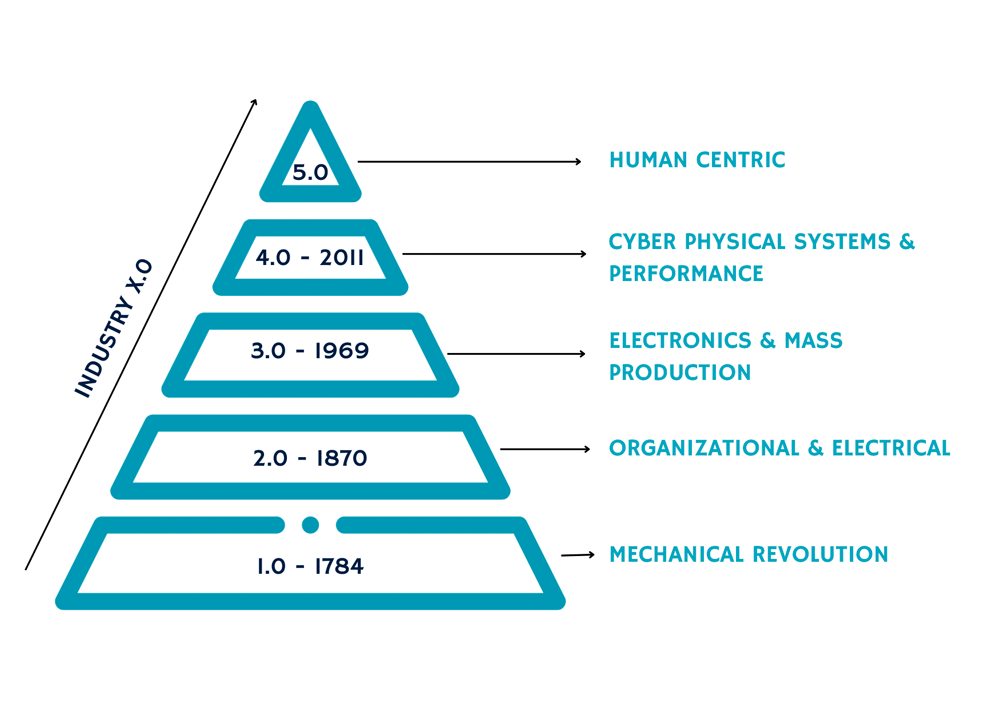
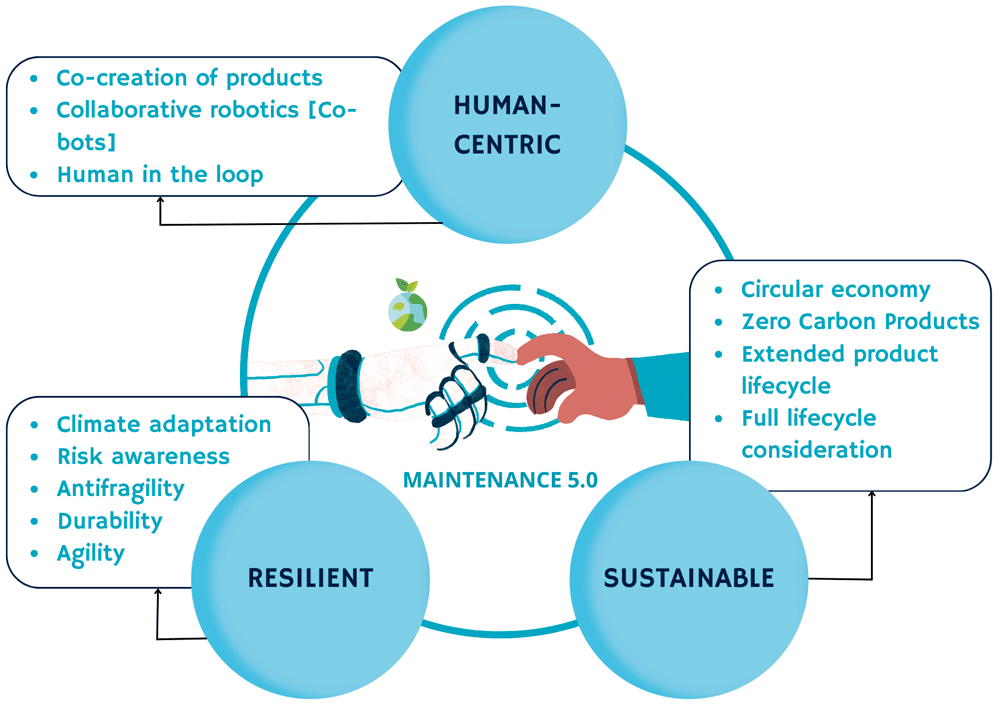
A key facet of Industry 5.0 is its human-centric approach, which places human needs and interests at the forefront of the production process. This approach leverages technology to accommodate the requirements of workers, ensuring their well-being and fundamental rights are upheld. Sustainability is another critical tenet, necessitating the implementation of circular processes and resource-efficient technologies to reduce waste and environmental impact. Resilience also plays a vital role in Industry 5.0, advocating for the development of robust industrial systems that can withstand disruptions and support critical infrastructure, particularly in times of crisis. The concept promotes the establishment of adaptable production capacities and flexible business processes, fostering a resilient and crisis-ready industrial landscape.
Ultimately, Industry 5.0 is defined by its commitment to societal goals, prioritizing the well-being of industry workers and ensuring environmentally sustainable production practices that align with the planet’s natural boundaries. The transition to Industry 5.0 promises a wealth of benefits not only for companies but also for workers. Benefits span the spectrum from enhanced talent attraction and retention to improved energy efficiency and heightened overall resilience.
There are some possible dangers inherent to the shift. Industry needs to ensure sustained competitiveness and relevance by adapting to evolving global markets and societal shifts. While there might be a short-term risk of temporarily losing competitiveness to those not yet embracing Industry 5.0, strategic timing and coordinated investments can help mitigate this potential setback. The most significant peril is the failure to engage with the broader societal transition towards sustainability, human-centricity, and resilience, risking competitiveness in the long run.
Human-Centric
Industry 5.0 represents a paradigm shift that addresses the concerns and challenges associated with the concept of the ‘dark factory’, one where humans are not needed. By prioritizing the human-centric approach, Industry 5.0 integrates advanced technologies to enhance the capabilities and well-being of workers, thereby dispelling the notion of a dark, automated workplace devoid of human presence. This shift towards Industry 5.0 represents a profound transformation in perspective, with a notable shift from a technology-driven to a human-centric approach. This necessitates the incorporation of societal constraints, ensuring no one is left behind. Consequently, the industrial sector must establish a secure and empowering work environment, respect human rights, and develop specific skill sets for workers.
Withing the framework of Industry 5.0, the industry worker assumes a significantly elevated position, viewed not as an expense but as an investment in the company’s growth. This reorientation necessitates a commitment to the advancement of employee skills, capabilities, and well-being, signalling a departure from the traditional practice of balancing worker costs with financial revenues. Moreover, it underscores the critical role of technology in serving the diverse needs of industry workers, empowering them and fostering an inclusive work environment. Addressing workplace safety and inclusivity, Industry 5.0 leverages advancements in robotics and AI to mitigate physical risks and streamline complex tasks, thereby reducing workplace accidents. Technologies like AI, virtual and augmented reality, and wearables also contribute to safeguarding workers’ mental health, emphasizing the importance of maintaining a balance between work and well-being.
A key area where Industry 5.0 yields significant benefits is in attracting and retaining skilled talent. Given the challenges of filling positions that demand digital and multi-disciplinary skills, the focus on accommodating the preferences and values of the millennial workforce is crucial. Research has found the millennial generation is more inclined towards socially responsible and environmentally conscious companies, prioritizing workplace environments that align with their values and offer a sense of purpose. Companies need to adapt their practices, fostering a culture of social responsibility and sustainability to remain competitive in the hiring market.
Sustainability
The 5.0 concept involves leveraging innovative green technologies, driven not only by environmental concerns but also by the potential for enhanced corporate image and cost savings on energy and materials. While industrial production often demands more energy and contributes to increased carbon emissions, innovations and smarter production planning can reverse this trend. Despite notable improvements in energy efficiency across various sectors, the pace of progress in energy-intensive industries has recently slowed, necessitating more targeted research and innovation efforts in this domain.
Resilience
Industry 5.0 champions increased resilience in the face of disruptive changes, both geopolitical and environmental. By fostering adaptive strategies at various levels of value chains and industrial systems, industry players can manage vulnerabilities and minimize the impacts of unforeseen circumstances. Leveraging digital technologies, such as real-time risk monitoring and cybersecurity measures, can bolster industry resilience, ensuring smooth operations even in the face of technical disruptions and cyber threats. The emphasis on resilience is growing, particularly in light of the disruptions caused by the pandemic and the intensifying frequency of extreme weather events attributed to climate change.
Maintenance 5.0
The shift from Maintenance 4.0 to Maintenance 5.0 mirrors the broader transition occurring in the industrial landscape. Maintenance 4.0 focuses on the integration of digital technologies, such as the Internet of Things (IoT), data analytics, and predictive maintenance, to optimize industrial maintenance processes. It emphasizes the use of advanced data-driven techniques and automation to enhance equipment reliability and reduce downtime. Maintenance 5.0 takes this a step farther by incorporating a more human-centric approach, aligning with the principles of Industry 5.0. Maintenance 5.0 also prioritizes sustainability and resilience in maintenance operations. This shift is critical in the face of the dual challenges posed by the COVID-19 pandemic and the escalating impact of climate change. As Maintenance 5.0 increasingly aligns with sustainable and resilient principles, it will become a cornerstone for ensuring the long-term viability and adaptability of industrial processes, mitigating the adverse impacts of global crises on operational efficiency and overall productivity.
Human-Centric Orientation
Maintenance 5.0 goes beyond the traditional focus on machines and processes to prioritize the well-being and involvement of maintenance workers. This approach acknowledges the critical role of human expertise in maintaining industrial systems and promotes the integration of workers into the digitalized maintenance ecosystem. It aims to empower workers through the use of innovative technologies, offering them opportunities for skill development, greater autonomy, and involvement in the decision-making process. It also ensures a safe and inclusive work environment, utilizing technologies to mitigate workplace risks and prioritize workers’ physical and mental well-being.
Maintenance 5.0 emphasizes the adoption of eco-friendly practices to reduce the environmental footprint of industrial processes.
Sustainability
Maintenance 5.0, as an evolution of the maintenance paradigm, emphasizes the integration of sustainability principles within its framework. It recognizes that maintenance practices play a vital role in achieving sustainable development goals, aligning with the broader efforts to minimize environmental impact, conserve resources, and promote social well-being. The concept of sustainability within Maintenance 5.0 underscores the adoption of sustainable practices, such as resource-efficient maintenance processes and circular economy principles, to optimize resource utilization and minimize environmental impact. By implementing predictive and preventive maintenance strategies, industries can reduce unnecessary waste and conserve energy, thereby contributing to the global efforts towards sustainable development.
The sustainability dimension of Maintenance 5.0 encompasses the following key aspects:
• Environmental impact reduction: Maintenance 5.0 emphasizes the adoption of eco-friendly practices to reduce the environmental footprint of industrial processes. This includes the efficient use of resources, waste reduction, and the implementation of sustainable technologies that contribute to a circular economy.
• Energy efficiency: Sustainable maintenance practices focus on optimizing energy consumption and minimizing the carbon footprint of industrial operations. This involves the use of energy-efficient technologies, the adoption of renewable energy sources, and the implementation of energy management systems to reduce overall energy consumption.
• Lifecycle management: Maintenance 5.0 promotes the concept of lifecycle management, which involves considering the entire lifecycle of assets and equipment. This approach integrates sustainable practices throughout the asset lifecycle, from design and production to operation, maintenance, and eventual decommissioning or recycling.
• Circular economy integration: Maintenance 5.0 actively supports the integration of circular economy principles within industrial maintenance processes. This involves extending the life of assets through effective maintenance, refurbishment, and reuse, as well as promoting the recycling and repurposing of materials and components to minimize waste and resource depletion.
By incorporating these sustainability dimensions, Maintenance 5.0 not only enhances operational efficiency and asset performance but also contributes to the overall sustainability goals of organizations, aligning with global efforts to promote environmentally responsible and socially conscious industrial practices.
Resilience
There is a clear need for resilient maintenance strategies that can swiftly adapt to changing circumstances and address disruptions in the industrial landscape, thus ensuring the continuous and reliable operation of critical infrastructure, even during unforeseen crises. Simply stated, resilience in Maintenance 5.0 refers to the ability of industrial organizations to anticipate, adapt to, and recover from various disruptions and challenges that may arise within their operational environment. It emphasizes the implementation of proactive strategies and advanced technologies to ensure the continuous and efficient functioning of critical assets, even in the face of unexpected events or adverse conditions. Resilience is crucial to maintain operational stability, minimize downtime, and sustain productivity, thereby enabling organizations to remain competitive and sustainable in the long run.
Some key aspects related to resilience in Maintenance 5.0 are the following:
• Predictive and preventive maintenance: By integrating predictive maintenance techniques, such as condition monitoring, data analytics, and real-time asset performance tracking, organizations can proactively identify potential equipment failures or operational inefficiencies before they escalate into significant disruptions. Implementing preventive maintenance protocols based on predictive insights allows companies to address issues early, minimizing the risk of costly downtime and ensuring the uninterrupted operation of critical assets.
• Risk management and contingency planning: Effective risk management is a fundamental component of resilient maintenance practices. Organizations need to identify potential vulnerabilities within their operational processes and develop comprehensive contingency plans to mitigate the impact of unforeseen events, such as natural disasters, supply chain disruptions, or technological failures. By establishing robust risk assessment frameworks and implementing adaptive strategies, companies can enhance their ability to respond to and recover from various operational challenges while maintaining overall system resilience.
• Data-driven decision-making: By leveraging advanced data analytics and intelligent automation, Maintenance 5.0 enables organizations to make informed and data-driven decisions regarding asset management and maintenance strategies. By harnessing the power of Big Data and AI-driven insights, companies can optimize maintenance schedules, streamline repair processes, and prioritize resource allocation, thereby enhancing the overall resilience of their maintenance operations. Data-driven decision-making empowers organizations to respond swiftly to changing operational conditions and proactively address emerging maintenance needs.
• Adaptive and flexible maintenance processes: Resilience in Maintenance 5.0 emphasizes the development of adaptive and flexible maintenance processes that can accommodate evolving operational requirements and changing environmental conditions. By fostering a culture of continuous improvement and agility, organizations can optimize their maintenance strategies in response to dynamic market demands, technological advancements, and regulatory changes. Implementing agile maintenance methodologies enables companies to swiftly adapt to new challenges and opportunities, ensuring the efficient and sustainable operation of their assets.
• Technology integration for enhanced resilience: Leveraging advanced technologies, such as IoT devices, digital twins, and cloud-based monitoring systems, enables organizations to build resilient maintenance frameworks that facilitate real-time asset tracking, remote diagnostics, and predictive maintenance scheduling. Integrating smart sensors and interconnected systems within industrial facilities enhances the overall visibility and control of critical assets, enabling organizations to proactively identify potential issues and swiftly address them, thereby minimizing the risk of operational disruptions and ensuring continuous asset reliability.
By incorporating these key aspects, organizations can strengthen their resilience in Maintenance 5.0, fostering a robust operational framework capable of withstanding challenges and uncertainties while ensuring the sustainable and efficient functioning of critical assets.
Conclusion
Overall, the shift from Maintenance 4.0 to Maintenance 5.0 represents a transformational journey from data-driven and automated maintenance practices to a more holistic approach that integrates the well-being of workers, sustainability, and resilience into the core of maintenance operations. By embracing Maintenance 5.0, industries can ensure the optimal performance of their equipment and the empowerment and safety of their maintenance workforce, while contributing to a more sustainable and adaptable industrial ecosystem. In essence, the comprehensive adoption of Industry 5.0 principles in Maintenance 5.0 can pave the way for a sustainable and adaptive industrial landscape, not only providing economic benefits but also promoting environmental consciousness and societal well-being.
Text: Prof. Diego Galar / Prof. Ramin Karim / Prof. Uday Kumar Images: stockphoto, Diego Galar



Subscribe to the free Maintworld newsletter here!

How much air leaks really cost – Leak Survey Examples
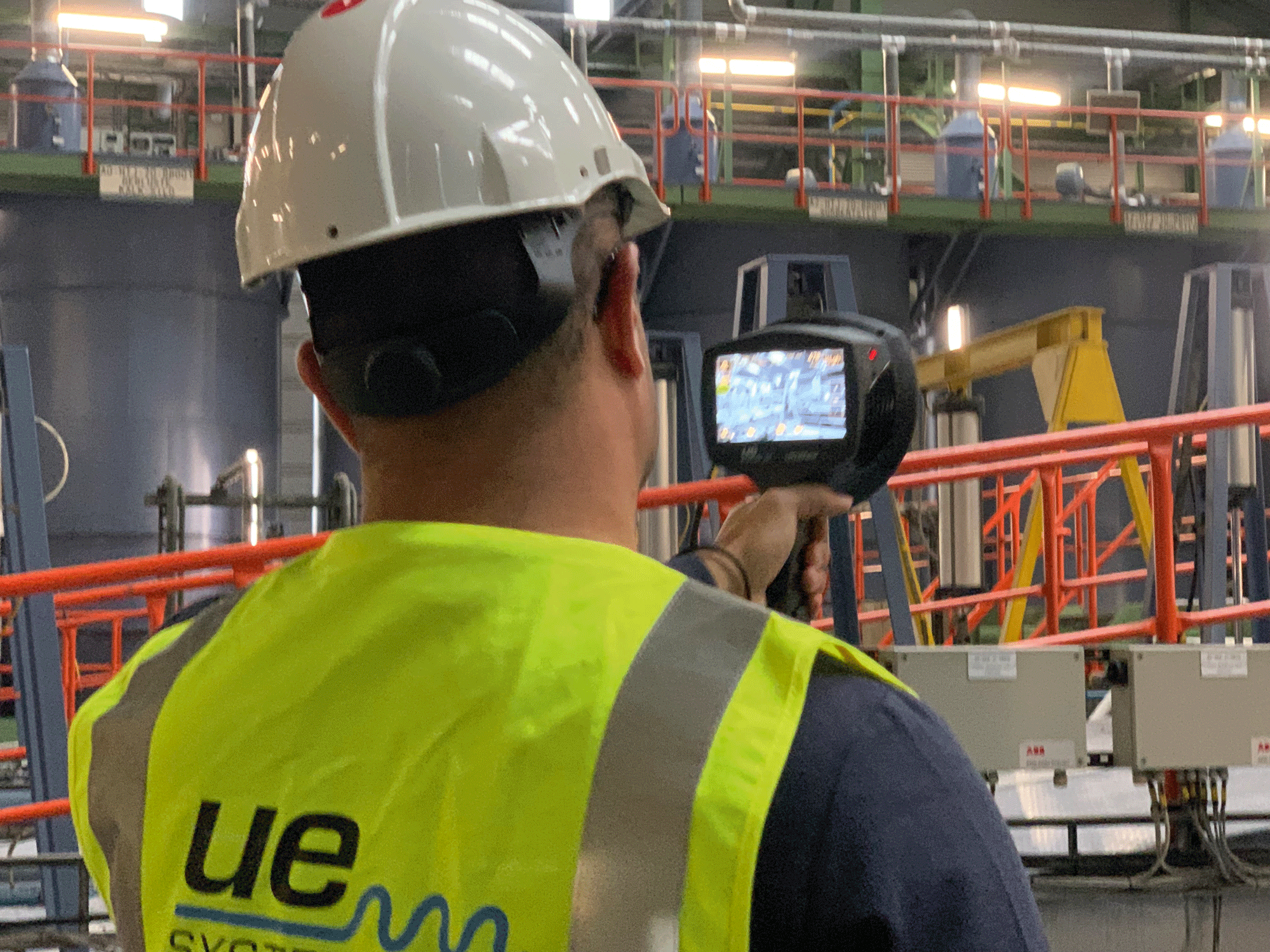
We all know that compressed air leaks are a huge source of energy (and money) waste, but do you know how much they really cost? After conducting around 60 surveys in different facilities from different industries, using an ultrasound camera, we concluded that the average leak would cost around 1200€ per year. When you think that any industrial site will have dozens or even hundreds of leaks, you can quickly realize the savings potential.
As energy prices rose up to historical peaks, compressed air leaks have also become more expensive than ever. In these times, finding and repairing those wasteful leaks must be a priority for any maintenance team looking to cut down on energy waste.
Knowing that, on average, approx. 10% of all energy supplied to an industrial facility will be used for compressed air; and that the average leak rate across a site in industry is 30%, you can quickly realize that compressed air leaks will be one of the greatest sources of waste in industry.
How to conduct effective air leak surveys
It is well established that using ultrasound inspection instruments is the most effective way of finding leaks. Digital instruments will also record the decibel level at the leak point, which will be the basis to calculate the leak cost and elaborate reports.
Normally these are handheld and listen-only instruments – still very effective in detecting leaks, but more recently, with the deployment of ultrasound cameras, you can also see the leaks, in real time, turning leak surveys into a much more effortless and quick task.
Thus, when considering that:
1. Air leaks are more expensive than ever – one leak costs an average of 1200€ per year
2. Finding air leaks is now easier and quicker than ever
We can conclude that having an ultrasound camera is a no-brainer for most industrial facilities.
As these cameras are working by simply showing the leaks on the screen, you can find dozens of leaks in minutes.
Leak Survey Examples & the cost of leaks
The examples of leak surveys below were conducted using the UltraView camera from UE Systems, one of the most advanced leak detection devices available today. You can clearly see how, in a matter of hours (sometimes even minutes), the UltraView can detect and quantify leaks worth thousands.
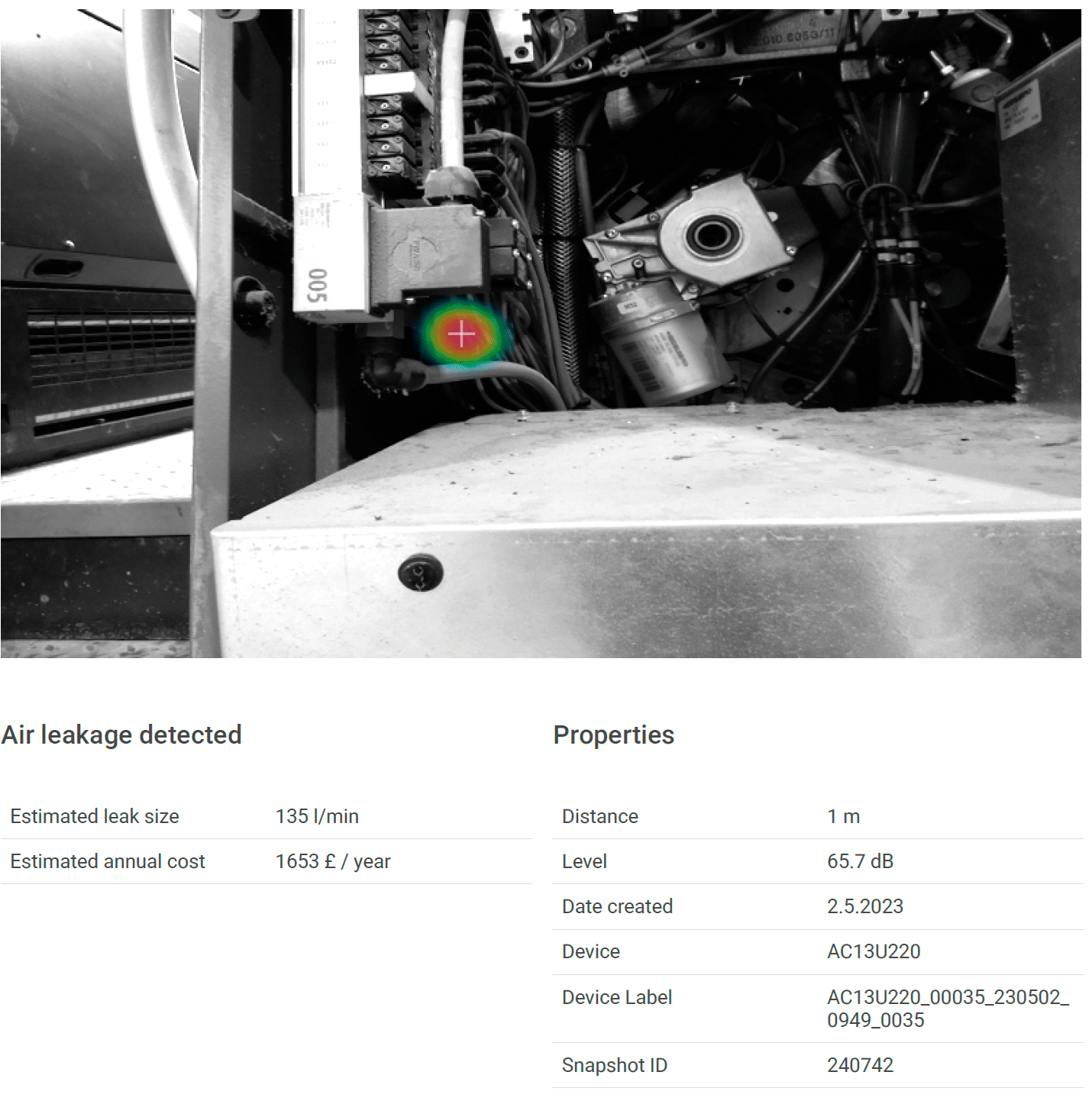
1. Commercial Printing Facility – 1 single leak costing 1650€ per year
The printing industry uses a lot of compressed air (especially when printing newspapers and magazine, like this facility), making these facilities perfect candidates for an efficient leak detection device. With a proper leak detection program in place, cost avoidance can be huge. One single leak was estimated to cost 1650€ per year! A 30-minute survey at this facility carried out with the UltraView detected 6 leaks amounting to a cost of 7000€ per year. This is only a small part of the total amount of leaks estimated at this site, since almost all printing machines will need compressed air.
Besides the energy waste, these leaks bring other issues: as leaks on the printing machines will bring down the system pressure, this will compromise the printing quality. Thus, finding and repairing leaks in the printing industry is not just a matter of energy savings, but also of assuring the final product quality.
2. Costly compressed air and argon/nitrogen leaks found at pharmaceutical company
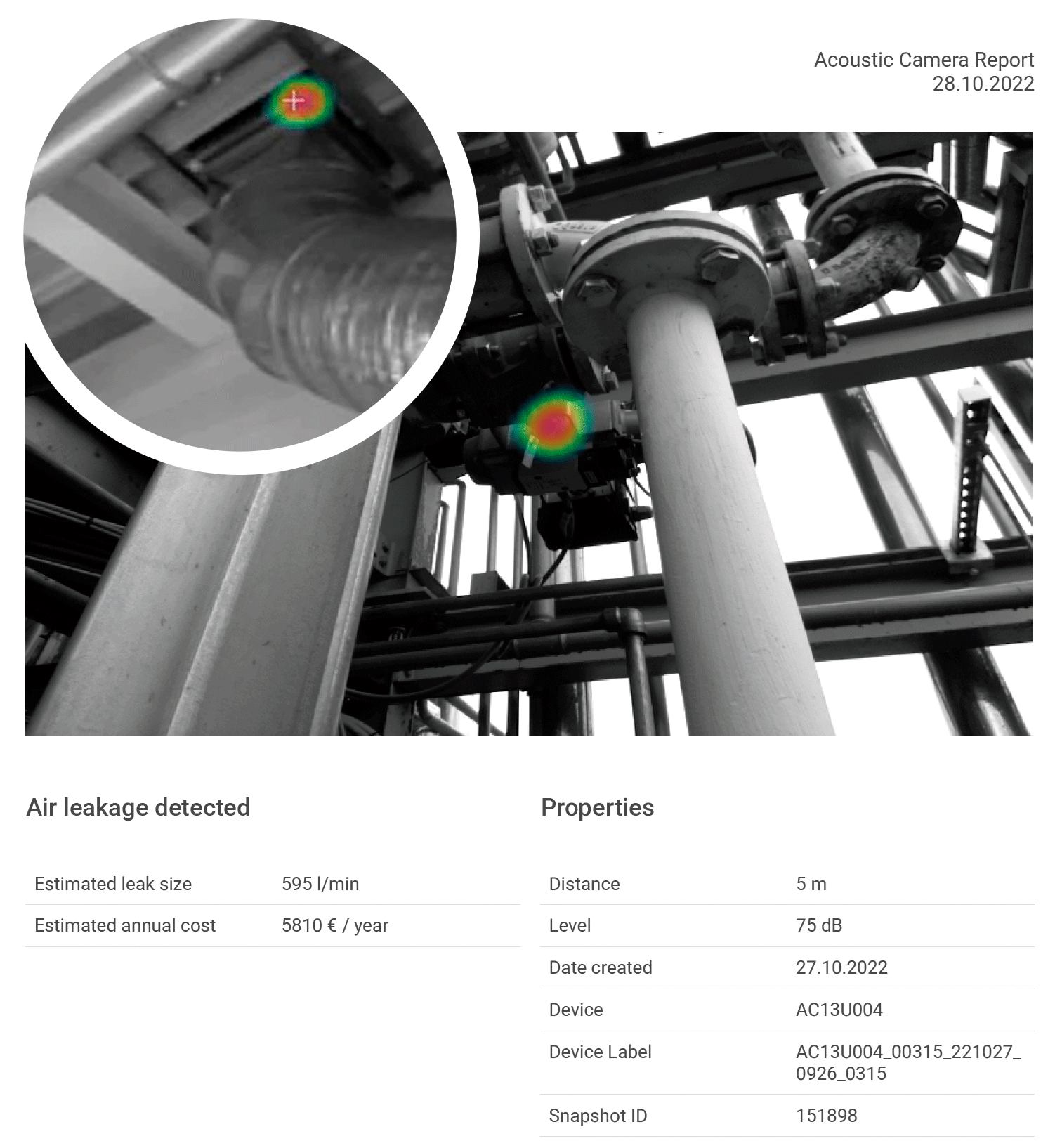
Pharma uses a lot of compressed air, as well as special gas, which means leaks can quickly become a huge source of energy waste. We could attest exactly that when surveying a pharmaceutical plant using the UltraView. During the demonstration we were able to pinpoint and report 29 compressed air leaks in about 2 hours of survey.
The total cost for these leaks is estimated at a costly 28313€ per year. This includes some major leaks, including one huge leak which was undetected so far and was costing the company 5809€. The UltraView was able to easily pinpoint it even at a 5 meter distance.
Besides compressed air, we could also detect some very expensive argon and nitrogen leaks. Special or innate gas leaks can become quite expensive, as the price for these is usually 3 or 4 times more expensive than compressed air.
In the video we can see how the UltraView could find an argon leak at a tank. This is a leak losing 9 liter per minute of argon, meaning that, if it would be left undetected, the tank would be empty in about 3 to 4 days.
3. Food packaging plant: detecting compressed air, vacuum and vent leaks
At a food packaging plant we did a quick survey using the UltraView camera. Packaging facilities normally rely heavily on compressed air, so it was no surprise that we were able to quickly find 22 leaks amounting to almost 13000€, including 2 leaks at hard to reach locations which we could easily detect even at a 5 meter distance. These would be much more difficult to pinpoint using traditional listen-only ultrasound instruments.
On top of that, the UltraView could also detect 3 vacuum leaks and 1 leak in the ventilation system, as we can see in the video. Vacuum leaks are a big issue in many industries, as they are very hard to detect and can quickly lead to product quality loss and increase in production time.
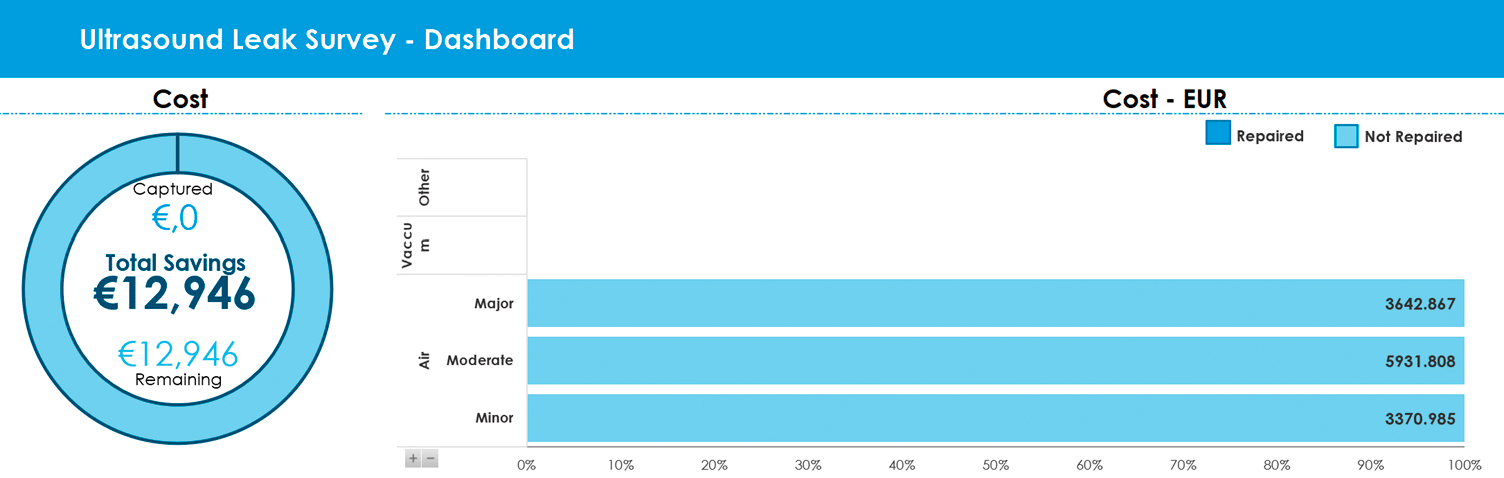
Also, interesting to note that leak at the ventilation system, which is not a typical application for the UltraView but was very important at this facility, since the maintenance team wants to assure the vents are completely sealed, otherwise dangerous gas might not be expelled from the facility as they should.
Peter Boon, Product Specialist, UE Systems
Subscribe to the free Maintworld newsletter here!
Redefining Industrial Maintenance in the Tech-Driven Era: From Mandatory Cost to Value Generator
New intelligent technologies offer numerous opportunities to improve the efficiency of business operations in various sectors – including the maintenance industry, However, the ongoing technological revolution also raises concerns such as – will there be enough jobs in the sector in the future? Is it possible to guarantee the operational reliability and safety of fully automated production plants of the future?
Juha Ryödi, Vice President of Life Cycle Services at Vaisala Oyj, sees that technological change will inevitably affect not only the work of maintenance professionals, but also the image of the maintenance industry. This is a good thing, especially now that the industry fears a growing labour shortage in the future due to retirement trends and cuts in training spending in technical fields.
Ryödi says that new modern technologies and maintenance tools are making the job of a maintenance technician more specialised than routine tasks. New technologies are also making the industrial maintenance sector an attractive career option for young people entering the engineering field. The potential of machine vision, for instance, is being widely explored and tested in the manufacturing industry today. Many believe that it has almost limitless potential for use in condition monitoring and, for example, in improving the efficiency of logistical operations.
Despite recent progress, technological advancement has not yet reached its full potential.
According to Ryödi, new technologies are also bringing a new level of transparency to maintenance operations. Consequently, the results of maintenance activities are more readily visible to other organisations.
– I think maintenance is becoming a fascinating field because it was a somewhat “dark
area” for many years. Thanks to today’s technologies, we can now view maintenance as a productive unit that adds value to the company, rather than just being seen as an obligatory expense, Ryödi says.
Technological progress has not yet reached its full potential
Despite recent progress, technological advancement has not yet reached its full potential, Ryödi states. Much of this is because companies have not yet been able to fully monetise their maintenance services to customers because the benefits of maintenance are more long-term than quick wins.
At the same time, the maintenance sector – like many other sectors – still struggles with the challenge of recruiting sufficient qualified personnel, especially tech-savvy younger generations equipped with the skills needed to adopt new technologies effectively.
– However, as the baby boomer generation retires, skills and knowledge must be transferred and replicated within organisations. This will require adopting different systems and, for example, new digital tools. It will also create future competitive advantage and scalability, which will act as drivers for the evolution of the service business, says Ryödi.
The time for cost efficiency is here, Ryödi continues. On the other hand, industry is undergoing a major energy transition that is creating new investment needs. This situation is creating even more demand for the efficiency of maintenance operations and, ultimately, the adoption of new technologies.
– Traditionally, industrial maintenance has been viewed as a necessary but costly function. It typically involved routine inspections, repairs, and downtime management. However, the advent of cutting-edge technologies is reshaping this narrative, turning maintenance from a liability into a strategic asset.

Modern facilities are hybrid
Factories of the future are forward-looking manufacturing facilities that take full advantage of Industry 4.0 opportunities. Factories of the future focus on digitising their processes, making the most of new production technologies, and managing energy and materials increasingly circularly. What do such factories look like today?
Ryödi stresses that although the word “hybrid” is currently a very overused term, it could be used as a metaphor when describing factories of the future.
– Increasingly, factories are looking for solutions where technology enables as much as possible but still under human control in some aspect – either in terms of physical assembly or through a process control system. The Covid pandemic has greatly boosted the potential for, for example, remote monitoring. Meanwhile, various types of measuring and data collection are a growing trend that allows scaling knowledge in factory control, for example.
What is the role of machine learning in factories of the future?
Machine vision is a very quality-focused technology in industry, and many applications are still related to quality, quality monitoring and reporting, Ryödi says.
Machine vision still has much potential, especially when combined with AI-based decision-making, as different cameras and sensors are becoming more accurate and faster. One exciting area to follow is chip manufacturing and how machine vision will be able to serve – and potentially control – these very high-frequency processes even more efficiently in the future.
Are manufacturing facilities moving towards full automation?
Ryödi notes that there are still relatively few factories that can be called fully automated due to the level of intelligence of the technology and its replicability in relation to repeatable processes. Meanwhile, manufacturing chains are currently struggling a bit to find their place on a global scale. This affects the level of automation in industry because increasing the level of automation means making significant investments, and large investments almost always mean showing a return on investment.
However, at the same time, evolving technology is enabling more and more, and as component shortages ease, the prices of industrial robots, for example, will continue to decline and accelerate their uptake. Highly repeatable and heavy processes have already achieved a high degree of automation. However, how, and when they reach a fully automated level remains to be seen.
How will the role of the maintenance manager change in a fully automated factory?
Modern technologies are making the industrial maintenance sector an attractive career option for young people.
The role of a maintenance manager is crucial in ensuring the smooth and efficient operation of machinery, equipment, and facilities within an organisation. Their primary responsibilities have traditionally included a wide range of tasks to preserve assets, minimise downtime, and promote safety and reliability.
Ryödi anticipates a definite shift in the role of maintenance managers within organisations as automation levels continue to rise.
– I think there is a clear trend here to be more proactive in understanding and planning. Many industries, such as pharmaceutical manufacturing, will soon move to so-called continuous processes instead of batch production, and this will also change the role of maintenance to be more proactive and planned.
– In the future, the maintainer will have to be able to interpret more data and better plan their work, and, on the other hand, to carry out and document it very accurately. However, many things remain constant, such as understanding mechanics or electrical engineering. This is still highly valued.
– A skilled workforce enables us to overcome the small margins that distinguish us from other countries in comparison, Ryödi says.
All eyes on information security
Juha Ryödi adds that although technological change will benefit the sector, it is not without risk. One of the biggest fears associated with increasing automation is currently security.
– In my opinion, information security is the most significant single risk now. Whenever we talk about automation and its connectivity and integration with different systems, we must consider information security and its requirements.
The so-called Hyppönen’s law is also good to remember in maintenance (If It’s Smart, It’s Vulnerable – Mikko Hyppönen), Ryödi says. Mikko Hypponen is a global security expert, speaker, and author. He is the Chief Research Officer at WithSecure and Principal Research Advisor at F-Secure.
Maintenance tools, such as maintenance systems, have become much more cloud and web-based, and on the other hand, many practical tools or customer processes are connected to the web.
– A major transformation is taking place, but so far there have been relatively few security incidents. This is partly because the interconnection of different systems and tools is just reaching its acceleration point, and partially because industrial companies are taking information security risks very seriously. In maintenance, it is also worth remembering that the responsibility of maintenance workers is often greater than that of many others. Maintenance personnel may have greater access to many systems, which puts them in a more critical position.
Juha Ryödi, Vice President of Life Cycle Services at Vaisala Oyj

Juha Ryödi has studied automation and electrical power engineering alongside his job and commercial studies (MBA). He started his career at the automation and power engineering technology giant ABB as a plant engineer in the year 2000. After ABB, Ryödi joined Sataservice Oy, a provider of maintenance and optimisation services to industry.
“I have been working more or less continuously in the engineering field since I turned 18,” Ryödi says.
In 2017, Ryödi joined Vaisala to be responsible for technical services globally. Ryödi is a keen sportsman and played competitive ice hockey in his youth.
Text Nina Garlo-Melkas Images Vaisala Ltd., SHUTTERSTOCK
Subscribe to the free Maintworld newsletter here!
Feature Engineering-Based Operational State Recognition of Rotating Machines
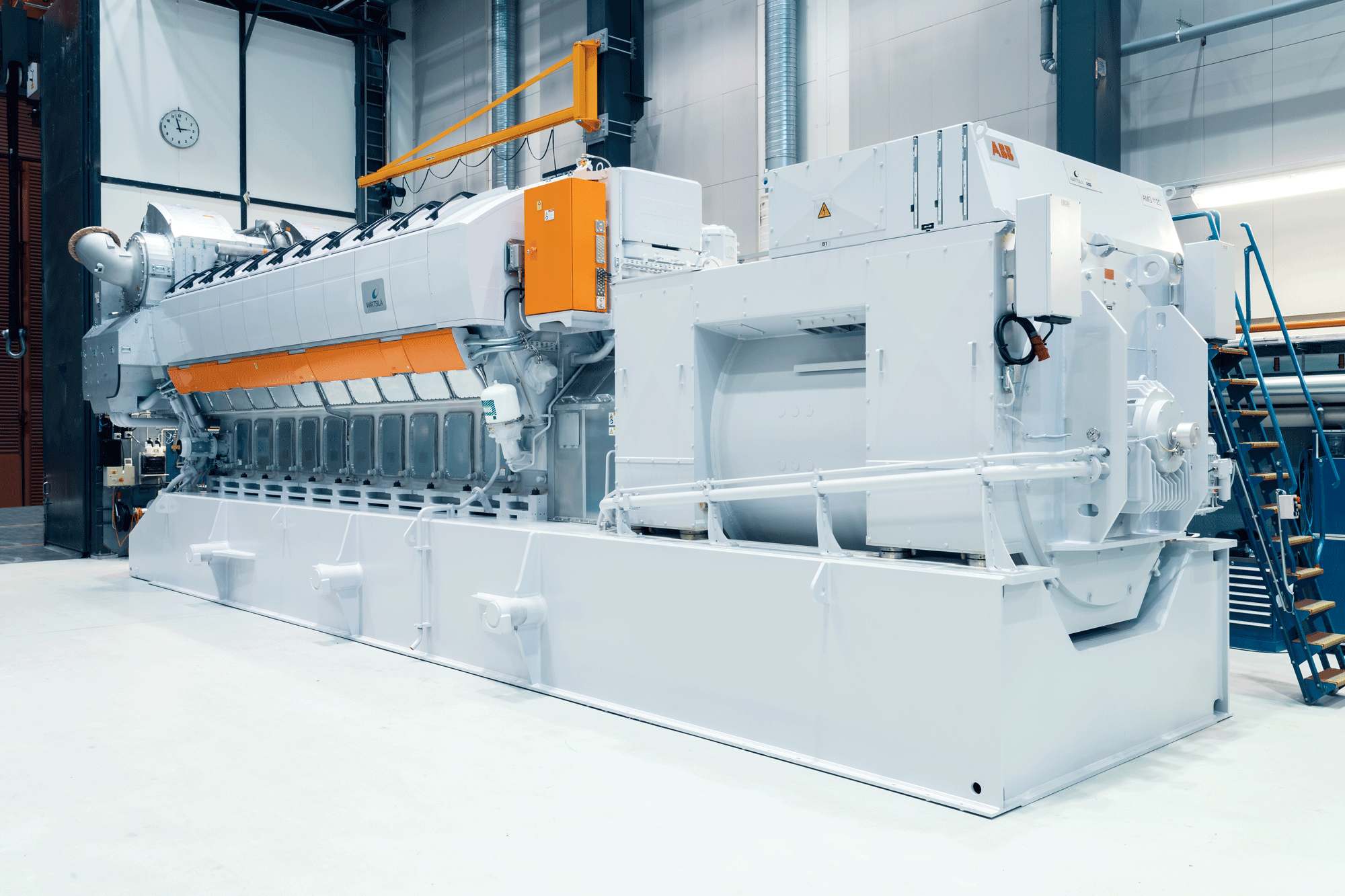
One might think that the era of large internal combustion engines (ICE) as electric power producers would soon be over due to the ongoing green transition.
Such an assumption is being proved wrong by the engineers who work hard on finding solutions to convert these fossil fuel-consuming machines to also operate on renewable fuels. ICE-based power plants have a crucial role in the green transition as a balancing element for the fluctuating nature of wind and solar energy production.
Vibration analysis and machine learning methods
The future goals impose new requirements and raise uncertainties considering the whole lifecycle of the power plants. They generate a need for the development of new tools and methods in a wide range. Within the operational phase of the lifecycle, particularly in the domain of structural condition monitoring, vibration analysis techniques have long been the cornerstone of getting precise insights into the health of rotating machinery and along with the operational data estimating their remaining useful life. On the other hand, increased computing power, and the emergence of the industrial internet of things (IIoT) have created a foundation for continuous operational monitoring in real-time, or at least in near real-time. In this context, vibration analysis (VA) and machine learning (ML) methods can be used to build precise and efficient state recognition models for rotating machines as shown in this case.
Vibration analysis techniques have long been the cornerstone of getting precise insights into the health of rotating machinery and estimating their remaining useful life.
Operational state recognition of a generating set
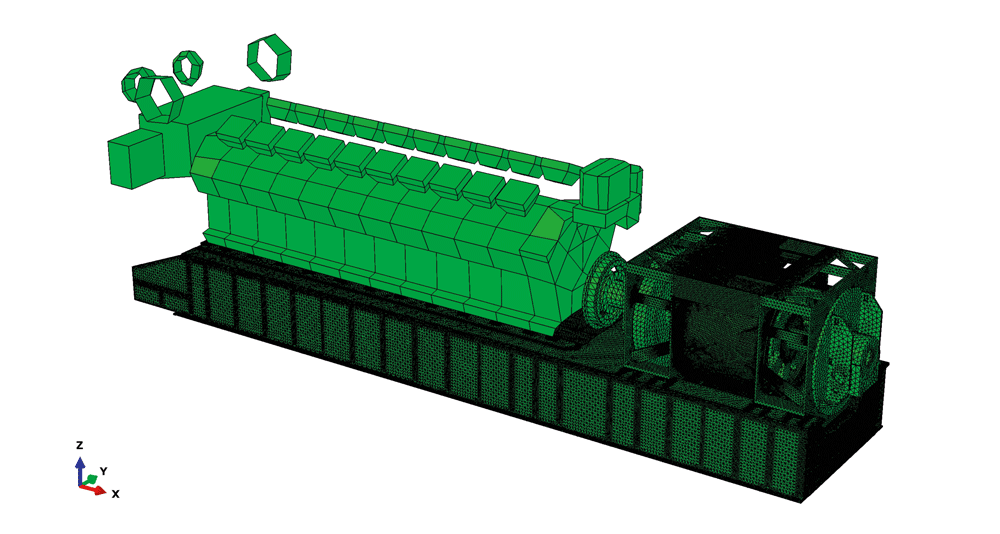
This article introduces simple and computationally light models for the operational state recognition of a generating set (genset). The models were developed in a research project (Digibuzz-VTT) forming part of a joint research effort called DigiBuzz financed by Business Finland and are thoroughly described in a master’s thesis [1]. DigiBuzz was led by LUT University between 10/2019 and 01/2022. One of the partner companies in DigiBuzz, Wärtsilä Finland Oy, provided the dataset for building the operational state recognition models. The data consists of accelerations acquired from a Wärtsilä 20V31SG genset measured at various constant power output levels, as well as during some occasional fault situations. Gensets combine an ICE and an electric generator. They are typically used for producing power to the electric grid. While the electric grids have constant frequency, the power demand fluctuates. As a result, the gensets operate at constant speeds but with variable power output. The grids may encounter occasional disturbances which cause abnormal operation of a genset. Thus, the dataset effectively covers the acceleration response of a genset within its typical operational range.
Inertia forces and gas forces
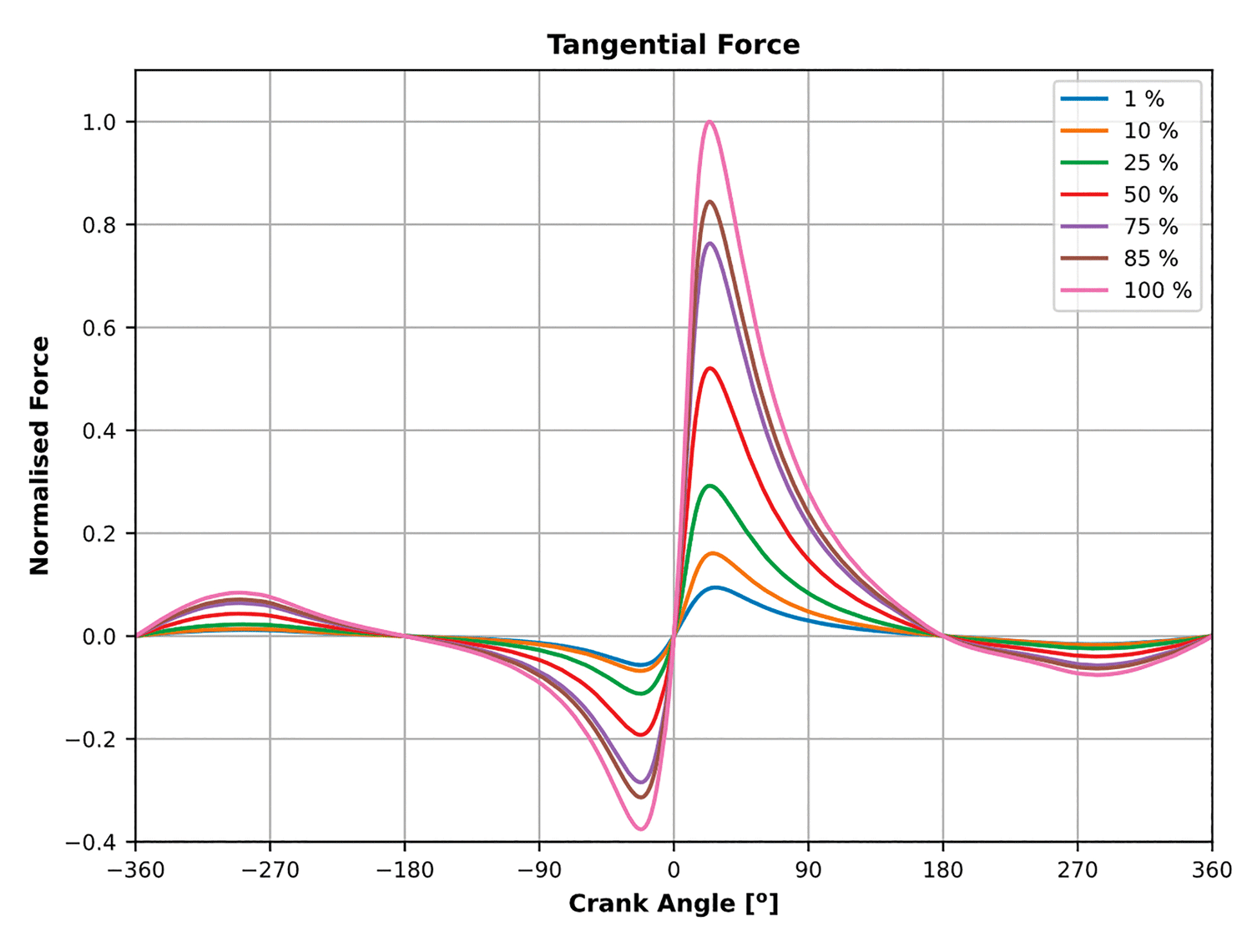
The operational state recognition models discussed in this article are built around the cyclic nature of the operation of ICEs. The general assumption is that the dynamic behaviour, at steady load and constant rotational velocity across engine cycles, repeats itself and that load variation can be seen as a notable change in the dynamic response. Thanks to Newton, most of us know that acceleration and vibration is caused by force, and think that the relation between them is linear. Considering ICEs, the principal forces exciting vibrations can be divided into inertia and gas forces. The origin of the inertia forces are the moving parts of the engine, namely the crank and piston mechanisms. Thus, at constant rotation speed the inertia forces remain periodically stationary. However, due to the virtual linearity between force and acceleration, the gas forces, provoked by the cylinder pressure, do vary in sync with load variations, even though the rotation speed remains constant, since they are responsible of making the engine run and they must adjust to the load demand. Normalized tangential forces at crank pin for different loads during one engine cycle (four-stroke) are presented in Figure 1.
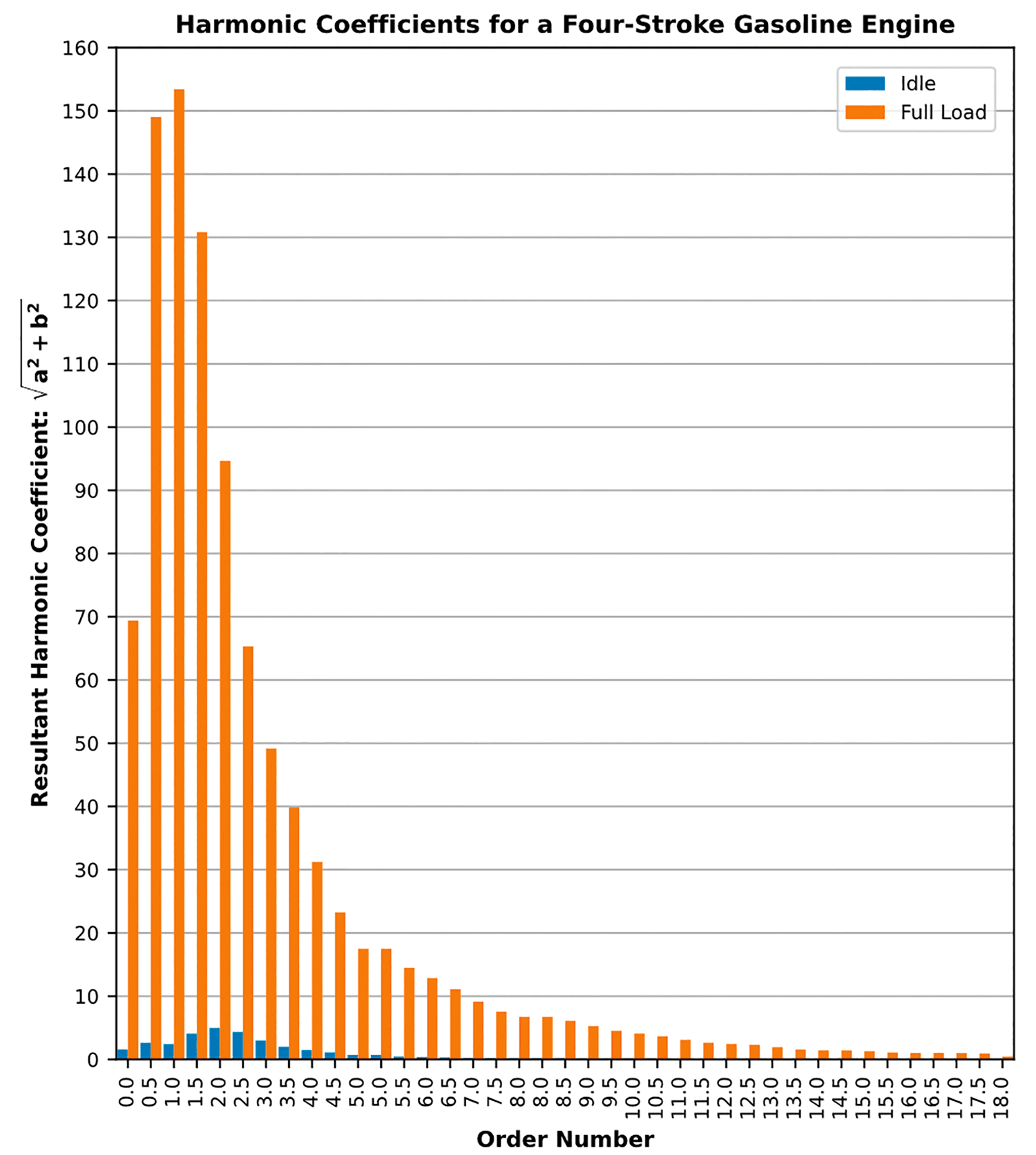
Therefore, if the detection of variations in the load is of interest, it is crucial to extract only the effect of the gas forces on the vibration response. Unlike the gas forces, the inertia forces have an analytic solution which happens to be periodic. It states that the inertia forces have cyclic components only at the frequency of rotation and its second multiple, which then leads to all the other frequency components of the vibration response to depend only on the gas forces. The harmonic frequency components of a signal can be efficiently computed using fast Fourier transform (FFT). The harmonic coefficients of the torque of a four-stroke gasoline engine at full load and at idle presented in Figure 2 were determined by Porter as early as in 1943 [2]. For a four-stroke engine one engine cycle equals two rotations of the crankshaft. In Figure 2 order 1.0 equals the rotation frequency and hence order 0.5 the engine cycle frequency.
Therefore, the right balance between the accuracy and timeliness of the model must be sought depending on the application and needs.
Smoothing out cyclic variations is possible
However, the operation of an ICE in practice is never perfectly constant between engine cycles even at steady load and therefore there is always cyclic variation in the acceleration response as well. This is typical especially considering spark ignited engines, such as the Wärtsilä 20V31SG, for which the peak cylinder pressure between consecutive cycles varies significantly. Considering the presented state recognition models the effect of the cyclic variation can be smoothened by extracting the feature values from signal segments that are multiple engine cycles long. By extending the length of the signal segment the prediction given by the model gets further away from real-time. Therefore, the right balance between the accuracy and timeliness of the model must be sought depending on the application and needs. In this case the accuracy is very high even when using signal segment length of two engine cycles. At the nominal operation speed of the genset, that is at 750 rpm, one engine cycle lasts 0.16 seconds.
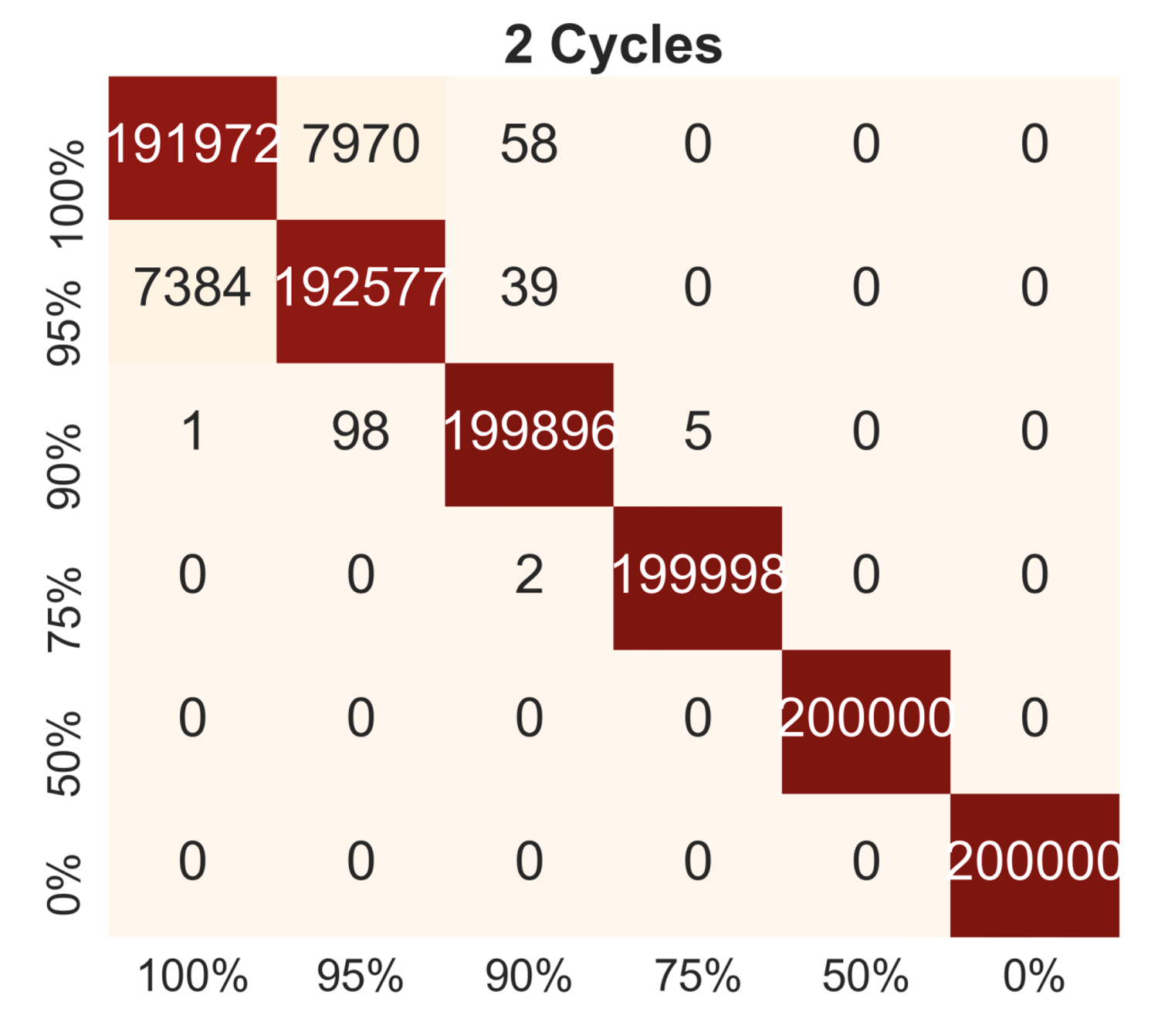
The confusion matrix of a classifier trained with features extracted from two engine cycles long signal segments is presented in Figure 3. Logistic regression was used as the classifier algorithm and the features were the acceleration amplitude at order 1.5 and the signal power extracted from the signals of one triaxial accelerometer. The classes are different power output levels givens as percentages of the rated power of the genset: 0 %, 50 %, 75 %, 90 %, 95 %, and 100%.
Novelty detection can recognise abnormal operation
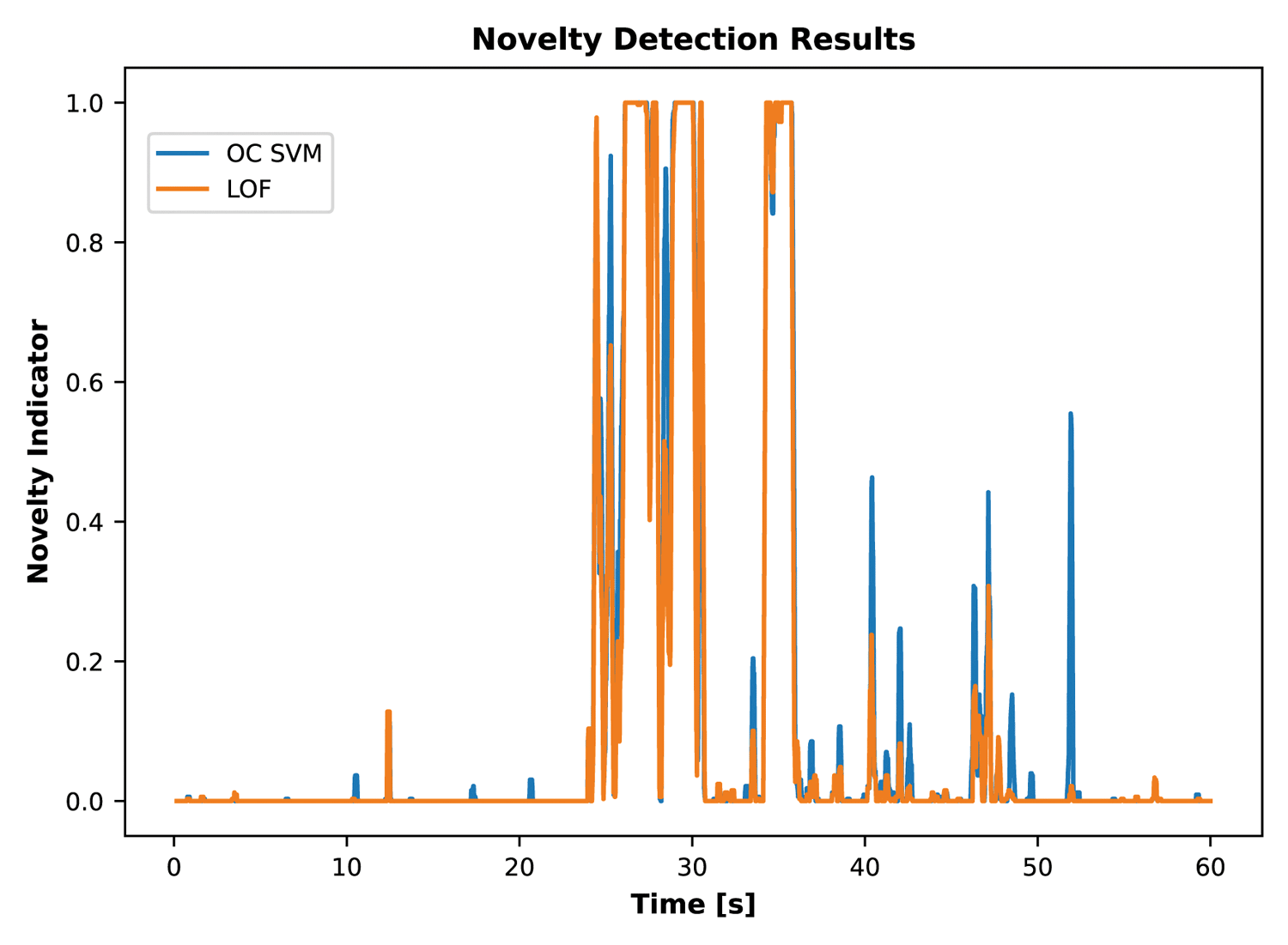
The recognition of abnormal operation can be done using novelty detection. Novelty detection is a subtype of binary classification in which a trained model predicts if a data sample belongs to the same class of the data it was trained with or not. The same features that were used for training the classifier model can be used for training the novelty detection models as well. Separate novelty detection models can be built for each power output level. The result of two novelty detectors trained using different algorithms, One-class support vector machine (OC SVM) and local outlier factor (LOF), are presented in Figure 4.
Further development of the recognition models
Jukka Junttila (MSE, MSE)

Jukka Junttila works as Research Scientist at VTT Technical Research Centre of Finland Ltd. He has over ten years of experience in structural analyses of rotating machines and other dynamic mechanical structures using finite element method. He has also come across research topics such as internal combustion engine technology, experimental structural analysis, topology optimisation, additive manufacturing and laser scanning during his studies and his career at VTT. During the last few years he has broadened his expertise into the fields of Big data analytics, machine learning and systems simulation.
Photo: Wärtsilä corporation
References
[1] Junttila, J., 2021, Operational State Recognition of a Rotating Machine Based on Measured Mechanical Vibration Data. Master’s thesis, Arcada University of Applied Sciences (2021)
[2] Porter, F.P., 1943, Harmonic Coefficients of Engine Torque Curves. In: ASME, Journal of Applied Mecchanics, 10(1): A33-A48. DOI: https://doi.org/10.1115/1.4009248
[3] Junttila, J., Sillanpää, A. Lämsä, V.S., 2022, Validation of Simulated Mechanical Vibration Data for Operational State Recognition System, 2022 IEEE 23rd International Conference on Information Reuse and Integration for Data Science (IRI), San Diego, CA, USA, 2022, pp. 138-143, doi: 10.1109/IRI54793.2022.00040.
Subscribe to the free Maintworld newsletter here!
SDT International SA Announces Transition to High-Performance Leak Detection Solution in Partnership with HANGZHOU CRYSOUND ELECTRONICS CO., LTD
SDT International SA, a global leader in ultrasound solutions for energy management and condition-based maintenance applications, is pleased to announce its transition to a new cutting-edge solution in collaboration with HANGZHOU CRYSOUND ELECTRONICS CO., LTD.
This collaboration marks a significant step in SDT International SA’s ongoing commitment to providing customers with the most innovative and high-performance solutions.
The new solution, replacing the previous offering, represents a remarkable advancement in compressed air leak and partial discharge detection technology within industrial environments. This solution is the culmination of the expertise of SDT International SA and HANGZHOU CRYSOUND ELECTRONICS CO., LTD, two renowned players in the acoustic detection field.
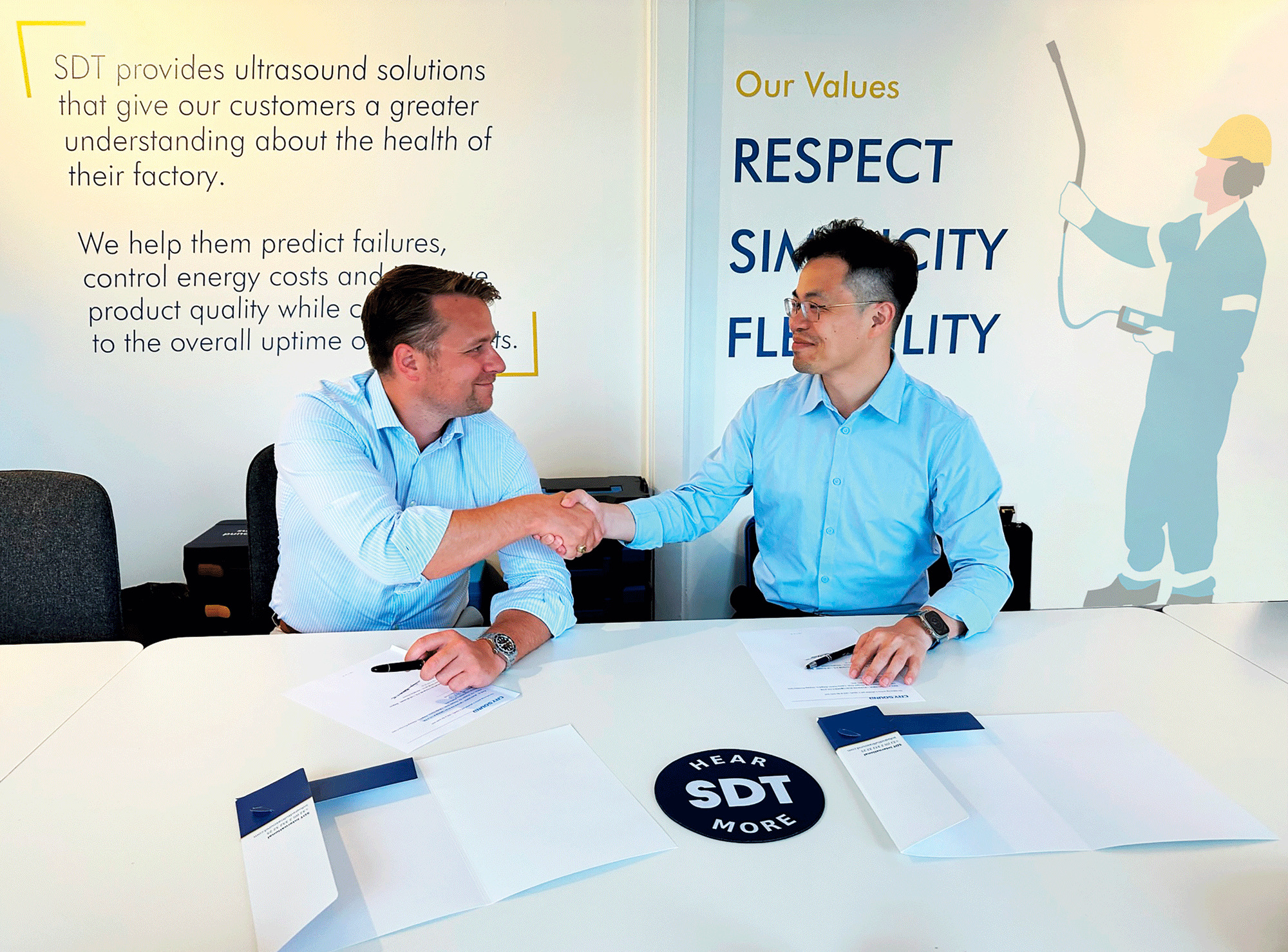
The collaboration is spearheaded by the respective CEOs, André DEGRAEVE for SDT International SA, and Jason CAO for HANGZHOU CRYSOUND ELECTRONICS CO., LTD. Together, they will offer a revolutionary ultrasonic range of acoustic cameras that excel in sensitivity, durability, and versatility.
André DEGRAEVE, CEO of SDT International SA, commented, “This transition to our new solution underscores our ongoing commitment to innovation and customer satisfaction. We are confident that this new solution will provide our customers with more precise and reliable detection, contributing to their energy-saving goals. Its price and manufacturing quality immediately convinced us that it was, in our opinion, by far the most successful solution on the market.”
Jason CAO, CEO of HANGZHOU CRYSOUND ELECTRONICS CO., LTD, added, “We are thrilled to collaborate with SDT International SA to offer a cutting-edge solution that pushes the boundaries of ultrasonic technology. Our dedication to innovation and quality is evident in every aspect of this new ultrasonic camera.”
The transition to the new solution is aligned with both companies’ shared mission to deliver solutions that cater to the evolving needs of industries while promoting energy efficiency and preventive maintenance for air leaks and electrical applications.
Expanded Arguments for the Key Points
Adaptable
• IP54: With a high level of protection (IP54) against dust and humidity, this solution is designed to operate flawlessly in demanding industrial environments.
• ATEX: The CRY2624 is a portable explosion-proof industrial acoustic imager in ATEX version, suitable for hazardous flammable gases and areas with strict explosion protection restrictions.
• RUGGED: Made of an aluminum alloy shell, this industrial acoustics imager is robust and adaptable to complex working environments.
Accurate
• 128 MEMS: With 128 advanced MEMS sensors, this ultrasonic camera offers ultra-sensitive detection of compressed air leaks with reliable results at a distance range of up to 120 m.
• FOCUSING FUNCTION: The focusing function eliminates environmental interference, enabling precise identification of leakage sources.
• INTELLIGENT RECOGNITION: Featuring a PRPD mapping function for partial discharge diagnosis and intelligent gas leak detection.
Agile
• COMPLETE: Range of 3 acoustic cameras easy to use with multiple modes, language support, and expandable memory.
• REPORTING: Template-based data processing and recording for easy report generation.
• PRO VERSION: LEAKChecker and LEAKReporter CMS aid in pinpointing leaks and creating reports.
For more information on SDT International SA’s new leak detection solution, please contact Benoit DEGRAEVE, General Sales
Manager, benoit.degraeve@sdtultrasound.com .
About SDT International SA:
SDT International SA is a global leader in the development, manufacture and marketing of ultrasonic measuring devices dedicated to energy savings and condition-based maintenance solutions, offering cutting-edge technologies to address diverse industry needs.
About HANGZHOU CRYSOUND ELECTRONICS CO., LTD:
HANGZHOU CRYSOUND ELECTRONICS CO., LTD is a Global leading provider of acoustic testing solutions with more than 25 years of continuous efforts. CRYSOUND provides professional acoustic services to solve the world’s most complicated acoustic testing challenges for the industry. They are committed to realizing their mission to make acoustic measurements easier than ever.
Subscribe to the free Maintworld newsletter here!
The added value of digitalization – Market Survey on Digital Trends in Maintenance & Asset Management

A lot is said and written about digitalization in the field of Maintenance & Asset Management. We see inspiring presentations and read articles about the effective use of digital solutions. So, we talk the talk, but do we walk the walk? In other words, to what extent are we implementing digital techniques and realizing their full potential?
Mobile maintenance, predictive maintenance, digital twins, augmented reality and 3D printing are modern digital techniques that can be of great value to the maintenance and asset management (M&AM) department. However, market research by Mainnovation and PwC shows that these digital techniques are hardly used within M&AM.
Market Survey
We surveyed 127 companies in various industries in Belgium, Germany, the Netherlands, Norway, and also in South Africa, which is an emerging country from a digital point of view. “This provided valuable information”, says Mark Haarman, Managing Partner of Mainnovation, “because it gave us an insight into the level of implementation of these digital techniques. ” Annemieke Moerkerken, Director Supply Chain & Manufacturing at PwC Netherlands, adds: “We also wanted to know what companies are using these techniques for and what they consider to be critical success factors. It was also very interesting to find out why companies are deliberately not implementing these techniques.”
Mobile maintenance
The research clearly shows that mobile maintenance already has a strong position within maintenance and asset management. Compared to the other techniques, this solution benefits from more than 20 years of evolution. Haarman: “The first iPhone came out in 2007. Since then, the development of applications and mobile technologies – such as security, Wi-Fi, user interface and available devices – has increased rapidly. It is clear that mobile maintenance is benefiting from these developments. Our own cell phone has become a useful tool in the field. This, along with the development and professionalization of enterprise asset management systems, has led to more reliable, secure, user-friendly and valuable applications within maintenance.”
ROADMAP
Mobile maintenance is therefore clearly at the forefront compared to the other technologies. Haarman: “Companies have various reasons for not implementing a digital technique. They do not see a good business case or a certain technique is not relevant for their type of assets. Could be… but we also see good examples where the implementation proved to be very fruitful.” The results of the research, four inspiring case stories of top performers and a ‘Roadmap to Digitalisation’ are bundled in a 40-page report. This report can be downloaded via www.mainnovation.com
Subscribe to the free Maintworld newsletter here!
How fixing methane leaks from the oil and gas industry can be a game-changer – one that pays for itself
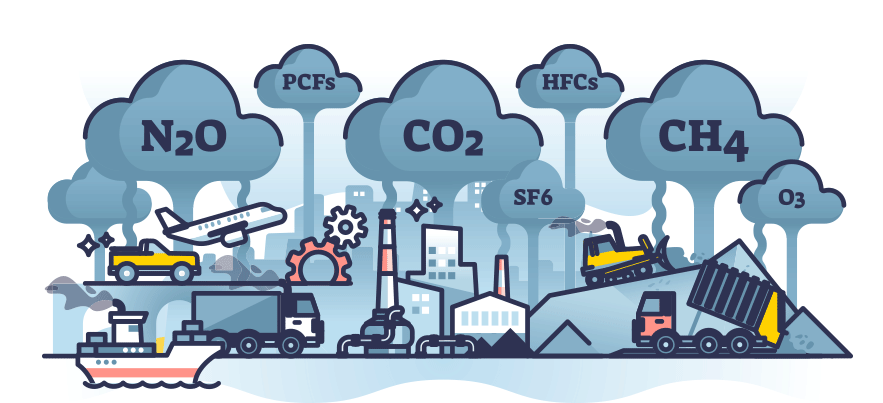
This decade could be the one where methane emissions from the oil and gas industries are eliminated once and for all.
Reducing methane emissions from the energy sector may be one of the most effective methods for preventing further environmental damage. However, levels are not falling fast enough. Despite pledges to act on leaking pipelines and other failing infrastructure, the fossil fuels sector has so far failed to address the growing problem of methane escaping into the atmosphere.
However, as technology advances, the industry has access to more and more tools that can help it not only seriously reduce emissions but do so for minimal cost. By helping refineries detect and act on methane leaks in a cost-effective way, laser absorption spectroscopy may be the solution suppliers need to make a real difference in the fight against climate change. All that is needed is the will to act.
What action is being taken on methane emissions?
Methane leaks in the energy sector are one of the biggest environmental problems facing humanity.
The energy industry is responsible for around 40% of all methane emissions produced by any human activity. According to the International Energy Agency (IEA), 135 million tonnes of methane were released into the atmosphere by energy companies worldwide last year[1], and despite some progress in reducing emissions from the peak observed in 2019, levels are not falling quickly enough. This is particularly true in oil and gas operations, which account for almost 15% of all energy-related greenhouse gases.[2]
The oil and gas industry alone has the potential to reduce methane emissions by 75%.
This should be cause for concern. Methane has caused approximately 30% of the rise in global temperatures since the Industrial Revolution[3], but its inherent properties mean that action to address it should be relatively cheap and simple to take.
Cutting methane emissions is one of the most cost-effective options available for limiting global warming in the near-term. With the benefits of modern technology, the oil and gas industry alone has the potential to reduce methane emissions by 75%, requiring an investment of less than 3% of their total income worldwide in 2022[4]. As more and more energy businesses achieve record profits, addressing this ticking environmental time bomb would require at most a small allocation, as major gains are possible for essentially zero cost.
Minimising temperature change
Although methane is often spoken of in the same sentence as other pollutants such as CO2, the two substances differ markedly in their environmental impact. Methane’s molecular structure makes it better at capturing heat in the form of infrared radiation than other substances, trapping up to 100 times more heat than CO2 when released into the atmosphere.
This negative is offset somewhat by methane’s comparatively short lifespan. Typically, it breaks down in the atmosphere after just 10-12 years, while other gases like CO2 can last for centuries. As a result, acting on methane leaks is one of the most accessible and effective methods businesses have for limiting global temperature change.
More than 150 countries have promised to reduce their methane emissionsm by a minimum of 30% by 2030.
Governments worldwide are recognising the gains that can be made here. More than 150 countries have promised to reduce their methane emissions by a minimum of 30% by 2030. The IEA is more ambitious, calling for a 60% reduction in emissions by oil and gas companies over the same period[5] – above the 45% reduction that the United Nations claims is necessary to keep global warming below the targets set by world leaders[6].
A cost-effective solution
Successfully reducing methane emissions will require the industry to demonstrate its commitment to action while employing the latest technology to identify where the biggest leaks are occurring. By doing so, not only will oil and gas companies reduce their environmental impact, but they will also be able to achieve significant cost savings.
Although leaks from oil and gas operations are being monitored, the scale and frequency of this activity is insufficient to address the problem at hand.
Methane emissions in this sector can be broadly broken down into intentional and unintentional leaks. Intentional leaks during upstream production, often in the form of venting, are technically monitored but these records are rarely accurate. Researchers have found that across the oil and gas sector, the true scale of methane emissions released over the last decade is far higher than existing data says it should be.
In the downstream segment of energy production, emissions are even harder to detect. Failing storage and pipeline infrastructure often leads to unexpected methane leaks and given the scale of the pipe networks in operation, anyone trying to locate a leak may have to search over a vast area.
Leaks like this matter because they waste potential profit. Repairing them and preventing the escape of methane means more of the gas can be captured and sold, bolstering profit margins. The problem is in detecting where the biggest leaks are occurring. Regulators and energy suppliers alike would benefit from a more accurate overview of the level of methane being released – and this is where laser absorption spectroscopy comes in.
Laser absorption spectroscopy
Due to methane’s infrared-trapping properties, infrared spectroscopy sensors can easily detect trace gases and determine their atmospheric concentrations, often at the range of parts per billion.
In laser absorption spectroscopy, an emitter is used to produce infrared light that is passed through a sampling chamber containing a filter that only allows wavelengths absorbed by methane to transmit. This means only those wavelengths will reach the detector, and measuring the intensity or attenuation of those beams enables the precise quantity of methane to be monitored.
By using different filters, users can change the wavelengths of light that reach the detector, meaning that the technology can also be used to detect different gases and particles.
Recently, some suppliers of gas analyser instruments have enhanced the technology by mounting laser diodes on to thermo-electric coolers. This change enables the laser’s wavelength to be tuned to the specific absorption wavelength of different molecules. By exploiting their high-frequency resolution, which provides enhanced sensitivity and discrimination, this technology lowers the risk of false alarms that can plague other common gas detection systems.
Not only do these more advanced laser absorption spectroscopy systems provide faster response times, they also offer users more accurate results without requiring any additional gases to operate. With modern systems including the capability to continuously monitor for combustible gases and vapours, and with immunity to sensor poison, contamination, or corrosion, laser absorption spectroscopy offers an ideal tool for improving the safety of oil and gas industry sites.
Knowledge is power
Through a network of localised methane sensors across oil and gas infrastructure, energy companies can improve the picture of where emissions are occurring and inform government action on the environment.
In business terms, the data collected by laser absorption spectroscopy can be essential for ensuring compliance with environmental regulations, and in improving overall operational efficiency. Leaks may go undetected for months or even years at a time, causing significant costs – a study of one site in the US found that 9% of all methane produced was leaking into the atmosphere, with potential profits literally vanishing into thin air[7]. Better leak detection would enable increased sales of the captured gas, which in turn would mitigate the cost of fixing the leaks in the first place.
In preventing such losses, this technology could even quickly recoup the cost of investment. Researchers have found action with no net cost alone in the oil and gas sector could reduce emissions to 50% below today’s baseline by 2030[8] – essentially, halving emissions for free. If all available technologies are employed, this could rise as high as 80%.
The expense of methane leaks is not limited to lost revenue or damaged energy infrastructure. Research from 2022 found that in the previous decade, gas leaks in the US were responsible for more than $4 billion dollars’ worth of damage, and the deaths of 122 people.[9] The ability to detect these leaks before a disaster occurs could prevent incalculable costs to human life and significant fines to the businesses responsible. Worldwide, the UN estimates that cutting methane emissions 45% by 2030 would avoid 255,000 premature deaths per year and save 73 billion hours of lost labour caused by extreme heat[10].
At Umicore, we specialise in helping companies build dependable climate strategies by enhancing their data sets. Our custom infrared designs, informed by more than 35 years’ experience in thin film design and manufacture, mean we can offer a range of bandpass optical filters that enable high-performance gas detection and analysis.
As the deadlines to reduce global temperature rises rapidly approach, it becomes more important than ever that the oil and gas industry can take effective action on methane leaks. However, without a solid foundation of accurate, actionable data, any measures they can take will be limited. The sector needs a clear picture of where methane emissions are occurring – only then will suppliers be able to take the action that is needed to make a difference.
Laser absorption spectroscopy is the tool that industry needs to improve its data on methane leaks. By embracing this technology, suppliers can identify where emissions are occurring, and take action to prevent untold environmental damage, at essentially zero cost to themselves.
Mark Naples, Managing Director at Umicore Coating Services Ltd.
Subscribe to the free Maintworld newsletter here!
Thoughts About the Ongoing Energy Transition and the Importance of Listening

We are witnessing a global transition from fossil-based energy to new, supposedly emission-free sources. For people involved in the energy sector, be it on a local, national, or global level, it might feel like the change is increasingly speeding up at the same time as the complexity and uncertainty keeps growing.
The ongoing energy transition is fundamental, affecting all levels of society. It is also highly political, challenging existing markets and business models. Not to forget that digitalisation adds a third “cyber” layer to the more traditional socio-physical systems. Digitalisation is being considered the primary solution to control the increasingly electrified, fragmented and sector coupled energy production and consumption systems.
The concept of energy transition does not automatically equal the use of renewables nor sustainability outcomes. It can also entail the change from one polluting source or unsustainable behaviour to another.
Historically, energy transitions have been driven by the need and availability of energy sources. For example, Fouquet and Pearson (2012) define energy transition as “the switch from an economic system dependent on one or a series of energy sources and technologies to another”.
Research shows that most transitions seem to have unfolded over long periods of time; for example, oil was drilled from the first commercial well in the US in 1859, but the market share of 25% was passed in 1953. Then, there is evidence of quick energy transitions as well. For example, Brazil managed to increase ethanol production and substitute ethanol for petroleum in conventional vehicles so that in 1981, six years after the Proálcool program started in November 1975, over 90% of all new vehicles sold in Brazil could run on ethanol (see Sovacool 2017). One could suggest that the ongoing European “Green Deal” or the global “Grand transition” (a name coined by the World Energy Council) seem to be moving relatively fast compared to most historical transitions. Time will tell how they compare to them.
Considering the current global geopolitical situation and its effects on the investment landscape, countries dealing with energy scarcity and security issues, shifting power balances between big economies, as well as new innovations entering the markets, we are definitely in the middle of a great shift. The Paris Agreement (COP21), with its aim to halt global warming, is still working as a backbone for international cooperation and guiding national energy strategies in many countries. The outcomes of what has been put into motion by these international agreements are being materialised at the national and local level.
It has been suggested that energy transitions are becoming more of a social or political priority in ways that previous transitions have not been. In earlier times, the transitions may have been accidental or circumstantial, whereas future shifts have become more planned and coordinated. It is important to remember that something inherent to the consumption and production of energy is human power dynamics. According to Avelino (2017), understanding the politics of transitions requires careful attention to the question of who wins or loses when new innovations emerge and get implemented and which vision(s) of the future predominate in deciding the direction of energy transitions. Politics is linked to issues of power and agency and are closely related to the theme of governance and the implementation of transitions.
The last ten years have introduced us to concepts such as prosumers, energy communities, microgrids, smart cities, carbon sinks, net zero buildings, energy poverty, flexibility markets and so on, involving “ordinary” people with energy issues, compared to what was earlier considered something of a “plug in the wall” commodity. Especially now, in the aftermath of the so-called EU energy crisis (I am writing this paper in September 2023), many Finns, together with the rest of the EU, are probably wondering how the coming winter weather will affect the electricity prices after the first “expensive winter”.
Understanding the socio-cultural embeddedness of energy
On the EU level, the Roadmap 2030 and European Green Deal are shaping the energy market towards, for example, a massive growth in wind power investments and instalments of solar power (also on household level). The next step seems to be the roll-out of hydrogen solutions, all in the support of the increasing electrification and digitalisation of the energy sector. As new technologies, modes of operating, actors, services, and applications enter local markets, they inevitably cause positive and negative disruptions to people’s lives.
The age of specialisation in a highly technological society, such as the Western society, means that our daily lives are embedded in technology that requires expertise and different outside services. Even if most of us agree that modern society has come a long way in making life comfortable and safe, it seems we might forget some of the basics that humans are psycho-physical beings. Our senses capture information on many levels and the rational mind is just the tip of an iceberg compared to the subconscious mind. We are also creatures of habit and “cultural animals” formed by our socio-cultural contexts. This means many shared collective beliefs set the base for our well-being and a sense of belonging to certain landscape(s), nature, music, family, and community. When something disrupts the existing order of things, it also challenges our inner (subconscious) feeling of safety – whether we are aware of it or not.
It still seems to surprise many tech developers that suddenly – “out of the blue” – people start opposing a solution which seems perfectly straightforward… at least from the perspective of the person designing it. Still, there is a good chance that it disrupts something of intrinsic value to people. As in, for example, wind parks built in a popular outdoor area where local people have hunted, picked berries, or just wandered for generations. Thus, the technological function and its usefulness are understood, but they collide with other values, leading to adverse feelings and reactions.
The art of listening
Although the energy technology and digital solutions are the same (or similar) in most countries, their implementation is not. This is because society, culture, habits, institutions, and geography differ. The so-called socio-cultural aspects of a nation and region affect how people use or accept new innovations brought to their doorstep.
Knowing your customer-citizen is an obvious element of the fundamental understanding required for a company or policymaker to successfully manage transitions in the desired direction. But there are certain pitfalls and challenges, especially if the business or governance approach is geared towards “one size fits all” solutions, meaning that the segmentation and target group is very narrowly defined and understood.
For example, research on municipal energy transition (Berg et al 2021) shows that it is quite common that only a small group of decision-makers and experts, as well as some energy-interested inhabitants, are consulted when planning local energy solutions. The majority of local people do not participate; they will not sign up for discussion and workshop events even if the events are open for everyone. Still, the main users of the future energy solutions or those who could benefit economically might be in those groups remaining outside the discussions and planning, thus affecting the actual realisation of them. Examples of negative outcomes include protests against new instalments such as wind power, solar power and smart meters or non-compliance to agreements.
Even if renewable, clean energy solutions could present opportunities to boost regional wealth and livelihoods, there is always a chance of the actual gain landing somewhere else, on someone else’s plate. Whilst there might be a significant investment in a new renewable energy facility in a municipality, the economic gain might go to a multinational company. The locals are left with the negative side effects of the construction phase, restricted land use and other changes in the living environment. Unwanted externalities are unfortunately commonplace in most market systems, and the energy sector is no exception.
When something disrupts the existing order of things, it also challenges our inner feeling of safety.
So, why do so many people remain outside important planning processes, one might ask? Especially if there has been a clear invitation to join? One explanation, outside the lack of personal interest and knowledge, might be found in the hidden and/or visible power hierarchies. Power dynamics are inherent to energy transitions. The social and cultural structures of a country, region and local context affect who will be heard and considered an expert. How can we break these invisible hierarchies and power structures so that more people can have a say in development that is clearly affecting their lives? There are many positive examples of local (energy) communities where many different actors have started working together towards a common goal. These groups are usually “bottom-up”, created by a clearly defined need or challenge.
We as humans need connection to each other, nature, and our roots (culture). A safe place for well-being might look different to different people, but it is usually connected to what we consider our home. What if there was more focus on the local and “home” levels in the planning phase of new energy solutions? Would it make a difference to the success of projects and new innovations, or maybe people would choose differently?
Smart cities, smart households, digital IDs, electric vehicles, and ultimately people are becoming part of the Internet of Things at a time when global policies and “big tech” are driving the Western energy market(s) towards electrification.
All of this is taking place in the name of sustainability. One can wonder whether there is a “stop button”, i.e. a right to opt out and find alternative solutions to our energy futures. Perhaps there are alternative possibilities or visions accessible to us that would equally encourage a healthier world?
Petra Berg – Postdoctoral Researcher School of Marketing and Communication and VEBIC, University of Vaasa
Subscribe to the free Maintworld newsletter here!
Biohydrogen powers future industry and circulation
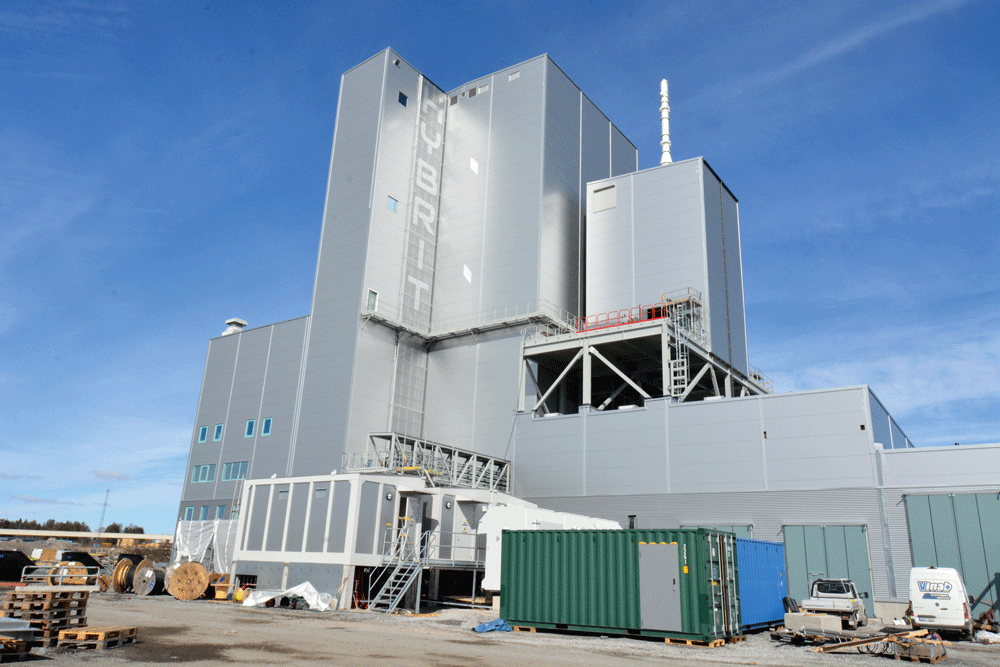
When our societies and industries look for alternative solutions to fossil energy, it is good to remember that the latter still cover almost 80% of the current global energy needs and 65% of the electricity generation.
ydrogen gas is one of the most realistic complementary ways to sustain our modern lifestyle. It is the most abundant element in the universe (15%) and applies to industrial energy and processes in its gaseous form. This molecular Hydrogen is increasingly produced as “green hydrogen” by using renewable energy, such as solar or wind, for splitting and liberating it from water. Alternatively, it could be produced in the low-energy route as biohydrogen, exploiting the metabolic potentials of anaerobic bacteria. This method is the most sustainable and can also be used in a localized pattern. This ensures maintenance security for unit plants as biomasses and side streams could be used as raw material sources.
Why has the Hydrogen launch been delayed?
Some fifteen years ago, the US Environmental Protection Agency estimated that in the year 2025, the USA would move into a “Hydrogen economy,” meaning that Hydrogen would produce more energy than fossil sources. This has yet to happen since there has been a transition period where numerous sustainable energy sources have been developed. There have also been some issues with, for example, the storage of Hydrogen. However, at the moment it provides a promising solution for energy storage. Hydrogen can also be further processed into methane or methanol. “Green ammonia” can also be produced from green Hydrogen or biohydrogen, and it can be used for storing energy and then being converted back to Hydrogen when needed. In the future, the use of these gaseous compounds will grow intensely. They can also provide solutions for boat, air, and heavy road traffic.
Hydrogen could be produced an energy-efficient way as biohydrogen, exploiting the metabolic potentials of anaerobic bacteria.
The Industrial networks for distributing Hydrogen have already been established in places like the Ruhr area in Germany, the Midwest in England, and industrial Japan. For instance, traffic solutions are also tested and implemented in California and South Korea. In Luleå, Sweden, SSAB Ab started a steel factory in 2020 using Hydrogen gas as the reducing agent.
This is important from the climate point of view since 7% of the global emissions come from steelmaking industries.

Lucrative options for future maintenance and energy security
Compared with the vast energy and chemical needs described above, biohydrogen is in the very first stages of development. However, it could offer a flexible solution for decentralized energy sources that serve unit plants ecologically and sustainably, providing increased maintenance security as the production units can be protected better than pipelines, for example. Moreover, the local biomass raw materials and side streams offer flexible sources for the processes and production. Economically, combining bacterial biohydrogen production with the manufacturing of organic chemicals and fertilizers is easy. Thus, the biohydrogen way could be an essential future avenue for industrial development globally. It could also provide energy and reduce the power needed for recycling materials and cleaning up pollution or contamination in ecosystems, cities, or agricultural fields.
In some countries, biohydrogen production has been started in smaller units like big animal farms or other distributed units. The diminished scale in such cases provides flexibility. In other words, the strong point of microbial biotechnology can be utilized, as the same installation could easily apply various biomass sources. In this sense, biohydrogen production could resemble, for some parts, biogas production, which has been taken into use besides the agricultural or smaller industrial units and the municipal water treatment systems in many places.
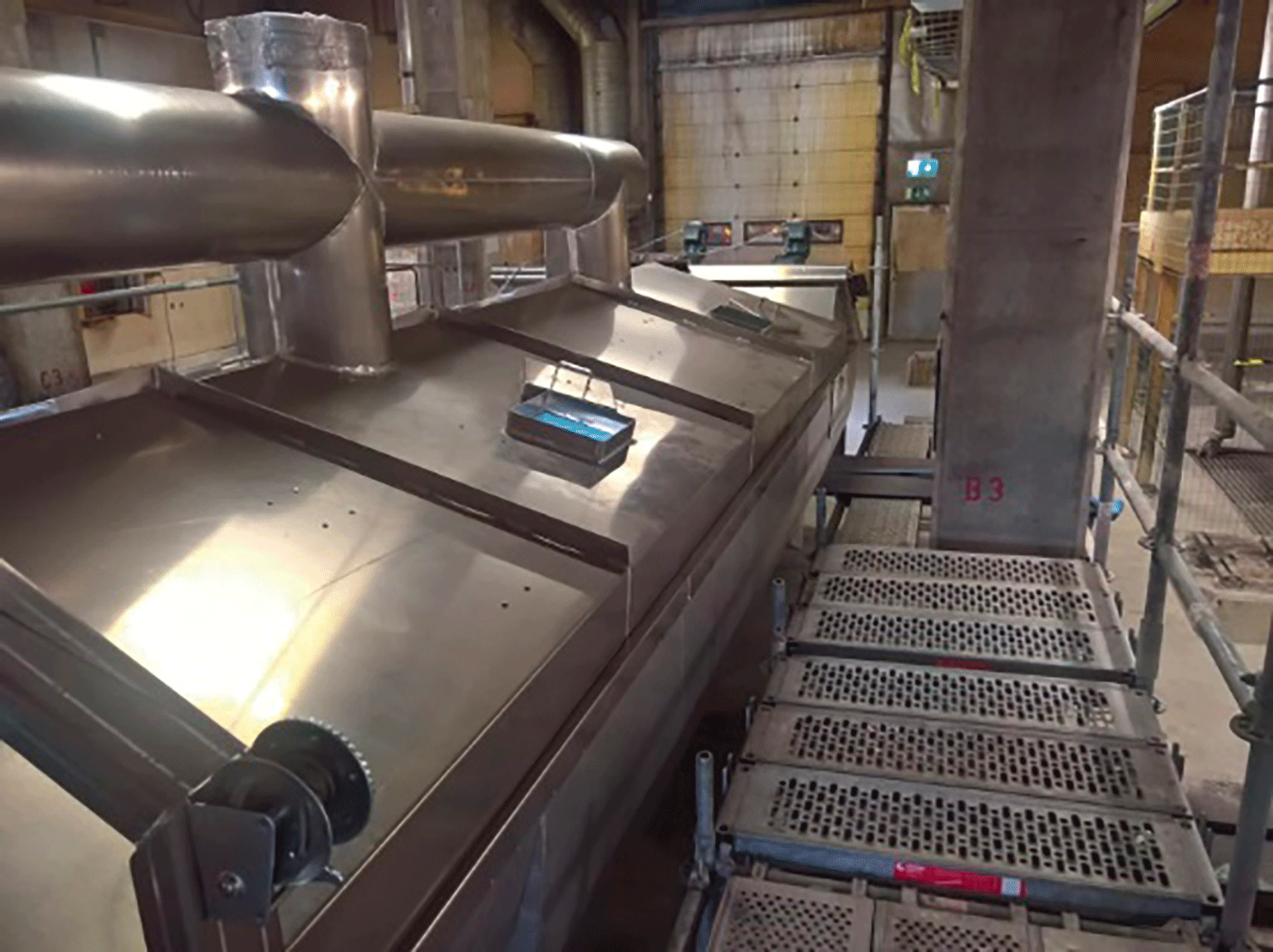
Biohydrogen is omnipotent
Since biological materials are found almost everywhere, it is relatively easy to imagine their use for biohydrogen production, which will not produce waste but diminish or shrink its volumes. The numerous bacterial strains could be used in various processes for different organic raw materials. This versatility of planning options of the bioprocess could make biohydrogen the mainstream technology in future. This easiness of planning could make biohydrogen the mainstream technology in future. It could provide multiple industries with flexible and secured energy sources and options for future development.
Finnoflag’s biorefinery experience
In recent decades, our R&D company, Finnoflag Oy, has carried out more than ten industrial pilot projects using microbes or their enzymes as biocatalysts. In such trials as the European Union Baltic Sea Biorefinery Project ABOWE, we realized that cohesively with the production of biochemicals, we could obtain significant amounts of biohydrogen.
The numerous bacterial strains could be used for various processes with different organic raw materials.
The project was participated by six countries: Germany, Lithuania, Estonia, Poland, Sweden and Finland. The movable pocket-sized biorefinery was tested for potato industry side streams in Poland, agricultural and abattoir waste in Sweden, and Paper and Pulp industry side streams in Finland. In all cases, biohydrogen was emitted into the carrier gas in the bioreactors with a maximal concentration of 3-4%. Savonia University of Applied Sciences constructed the movable biorefinery unit in Kuopio under the supervision of the undersigned and Finnoflag Oy in 2013, and its testing in three countries took place in 2014. Besides biohydrogen, many organic acids were formed, such as lactate, butyrate, acetate and valerate, and alcohols or sugar alcohols like ethanol, butanol, propanol, pentanol, and 2,3-butanediol. The residual fraction could be refined into organic soil improvement. The reliable and accurate NMR method (Nucleic Magnetic Resonance) was used for measuring the products by the School of Pharmacy of the University of Eastern Finland.
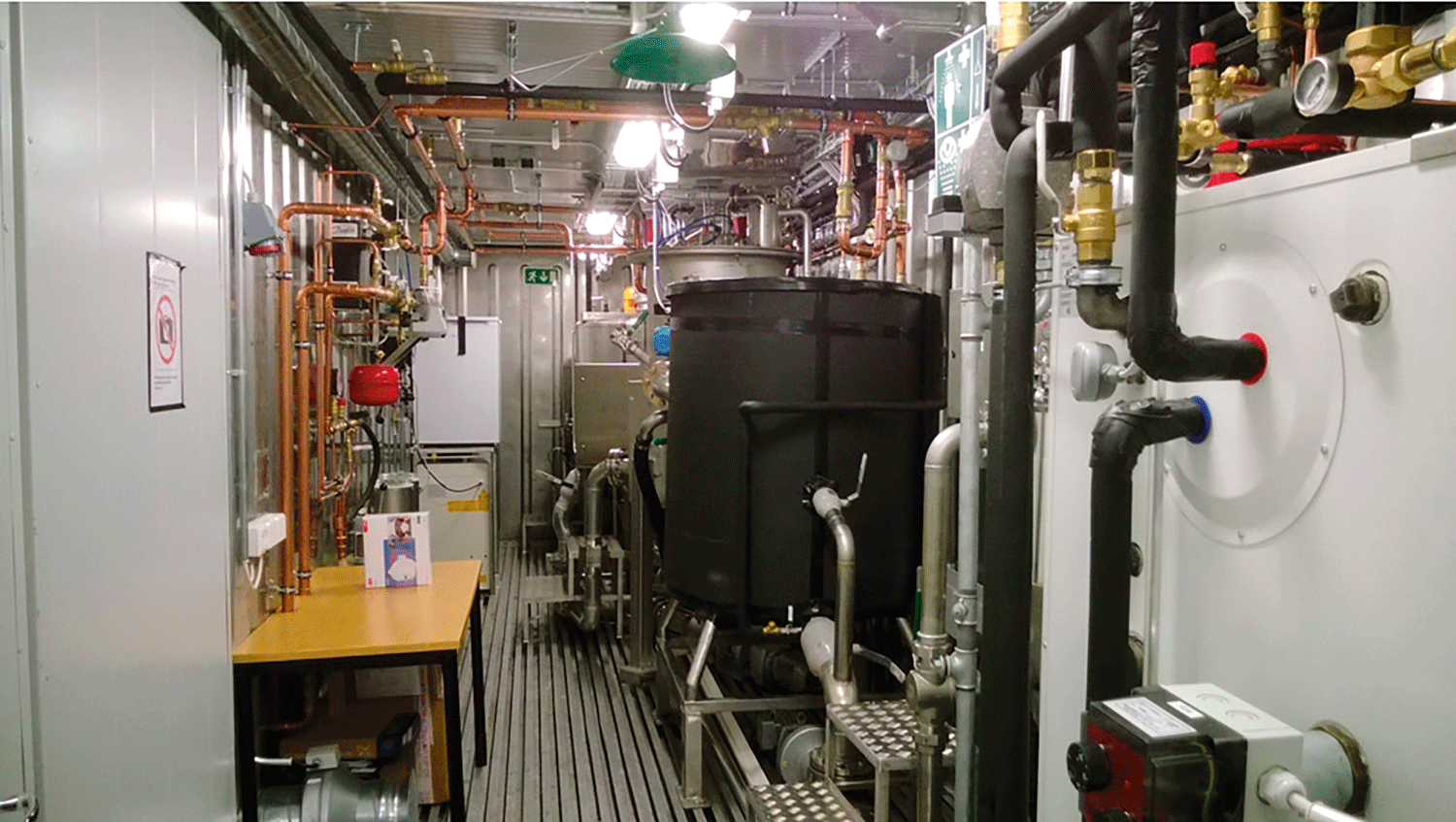
A few years later, in 2018-19, we produced biochemicals, energy gases, and fertilizing agents from environmentally deposited cellulosic waste in the lake bottom sediment in Tampere, Finland. In these trials, the biohydrogen levels exceeded 1-2% in the outflowing gas. Mälardalen University of Västerås, Sweden, participated in the downstream processing of chemical commodities such as lactate. The gas levels were detected from the airspace of the horizontal bioreactor unit of 15 cubic meters of liquid space. In this case, the gas flow space was even more significant. These production levels could be elevated, and the current productivities are a good start for novel biological process thinking by the Finnoflag method using non-aseptic fermentation. This approach lowers the investment expenses to about 25 % of the traditional industrial fermentation costs at best.
Global hope in biorefining
Most importantly, biohydrogen and its associated products of microbial biorefineries could make it possible to establish various novel industries which would act economically and sustainably. They could be used for cleaning up the environment in ecosystem engineering projects. The biohydrogen approach is also compatible with developing Hydrogen and other energy production, storage, security, transfer and equipment maintenance techniques at any scale.
Elias Hakalehto, PhD, Adj. Prof., Microbiologist,
Biotechnologist, CEO and inventor, Finnoflag Oy
Subscribe to the free Maintworld newsletter here!
Using Technology to Improve Manufacturing: 4 Ways Big Data and AI Affect Manufacturing Processes

The manufacturing world continues to rebound after shutdowns and allied disruptions of the COVID-19 pandemic. Competition remains intense in most industries, so businesses must make every effort to be as efficient and as productive as possible.
Emerging technologies are playing an increasingly important role in efficiency-related strategies. Artificial intelligence (AI) may be well-known, but a precise definition is still helpful: AI is the simulation of human intelligence processes by machines, in particular IT systems. AI encompasses systems such as machine learning (ML), natural language processing (NLP), and computer vision (CV).
AI capabilities have led to an explosion of Big Data, which Oracle refers to as: “data that contains greater variety, which arrives in increasing volumes and with more velocity, which arrives in increasing volumes and with more velocity.” The result is far more data in more complex data sets. AI-enhanced algorithms can make sense of all the data, providing invaluable insights across multiple business functions.
With the above in mind, this article will explore four ways in which Big Data and AI can improve manufacturing processes.
Improved Production Efficiency
Big Data and AI are needed more than ever to improve the efficiency of manufacturing. A Deloitte survey found that 45% of manufacturing executives expect that increases in operational efficiency will be derived from investments in the industrial Internet of Things (IIoT), whereby digitally interconnected machines communicate with each other on the plant floor. 50% of the respondents were convinced that investments in robots and cobots would improve their efficiency in 2022.
Further efficiencies soon will also be gained with 5G, the next generation of cellular communications. The ultra-reliable, low-latency connections (goodbye, buffering!) offered by 5G will be a boon for manufacturers. 5G will enable the proliferation of IIoT on production floors and the widespread use of small, cost-effective sensors across machines and processes. According to the Manufacturer’s Alliance, 5G has “the potential to become the core communication platform for many manufacturing companies”.
Improved Maintenance
Few things negatively impact production costs and revenue targets in a manufacturing facility as much as unintended downtime does. According to Deloitte, unplanned downtime costs industrial manufacturers as much as $50 billion a year in the US alone.
Furthermore, poor plant maintenance can reduce productivity by as much as 20%.
The beauty of IIoT is that it provides always-on, always-monitoring capabilities that enhance maintenance. The maintenance reach of IIoT is immense.
However, IIoT can be immensely data-heavy, which is why it makes sense to pair it with a computerized maintenance management system (CMMS). This software provides a facility with a centralized, AI-enhanced platform that can store and effectively manage all the incoming data regarding physical assets.
Examples abound of what can be achieved. In Germany, the country’s national railway company, Deutsche Bahn, has partnered with Siemens to devise AI and Big Data solutions that help improve the railway company’s preventative maintenance regime. One such example is intelligent braking systems that can be monitored for optimal replacement time, while sensors monitor the state of the track to predict needed repairs.
It gets even more exciting: soon, machines will have self-maintenance abilities. AI, coupled with technology such as 3D printing, will take maintenance even beyond the already-impressive capacity of IIoT applications.
Improved Risk Management
AI and Big Data can dramatically improve risk management, in everything from occupational health and safety to security-related risks and environmental impacts. These enterprise risks can sometimes be disastrous and difficult to predict. The cognitive capabilities of AI can therefore be invaluable in reducing risk. For example, ML algorithms can assess past risky behaviors of employees in hazardous locations and build predictive models to reduce the risk.
Although not a manufacturing facility, one of Canada’s largest medical research facilities provides an excellent case study of the power of AI: the facility was experiencing failures with its air-handling units. A medical research facility simply cannot have ‘downtime’ due to malfunctioning ventilation systems. An AI solution was selected that provided live data on the condition of fans within air extraction units. Among multiple benefits was the fact that the solution provided 100% uptime of a critical ventilation system that ensured acceptable laboratory air quality at all times.
Improved Tackling of the ‘Big Issues’
Manufacturers cannot only be concerned with production costs and efficiency rates. Today, sustainability is imperative, both strategically and operationally. AI and Big Data can do much to help a manufacturer tackle its sustainability goals and initiatives. The United Nations itself advocates the use of Big Data in reaching its Sustainable Development Goals (SDGs). The UN notes how AI-enabled smart metering can help attain affordable and clean energy (SDG 7) by allowing utility companies to manage electricity or gas consumption levels more intelligently, at both peak and non-peak levels.
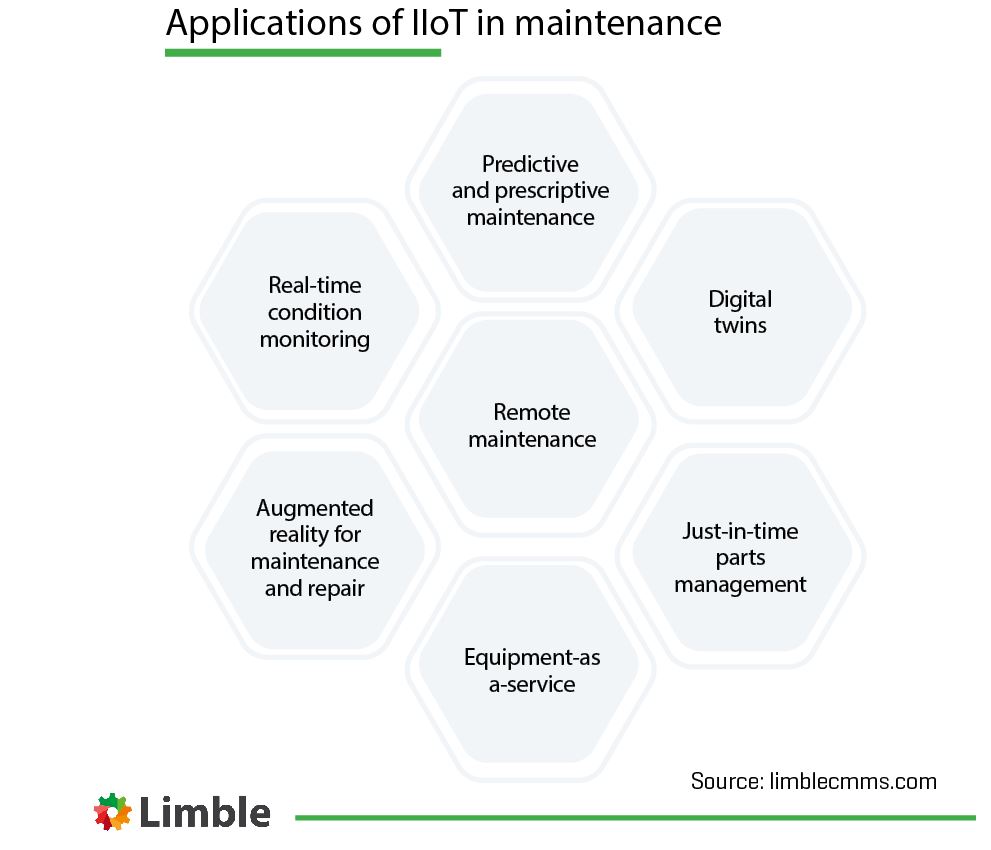
Climate change mitigation and carbon management are also more easily attained with the assistance of AI, particularly regarding the all-important energy efficiency targets. The Indiana Economic Development Corporation has collaborated with Amazon Web Services (AWS) to develop Energy INsights, which is being rolled out at over 100 manufacturers in the Hoosier state. The Indiana program integrates the I4.0 Accelerator from AWS, which gathers data from legacy factory equipment and energy systems. It then optimizes energy efficiency by using AI and data analytics, with projected energy reductions of between 8 and 20%.
Production efficiency is paramount for any manufacturing business. It ensures that production costs are minimized relative to revenue. However, operational costs have been impacted by adverse factors beyond the control of manufacturers, such as labor shortages and supply chain instabilities. The war in Eastern Europe has only exacerbated costs. These inflationary factors are expected to continue well into 2023.
As seen, AI and Big Data improve production and will be key in making manufacturing increasingly sustainable as well.
Manufacturers will do well to appreciate the positive ROI of investing in these fast-evolving technologies.
Bryan Christiansen, founder, and CEO of Limble CMMS.
Subscribe to the free Maintworld newsletter here!