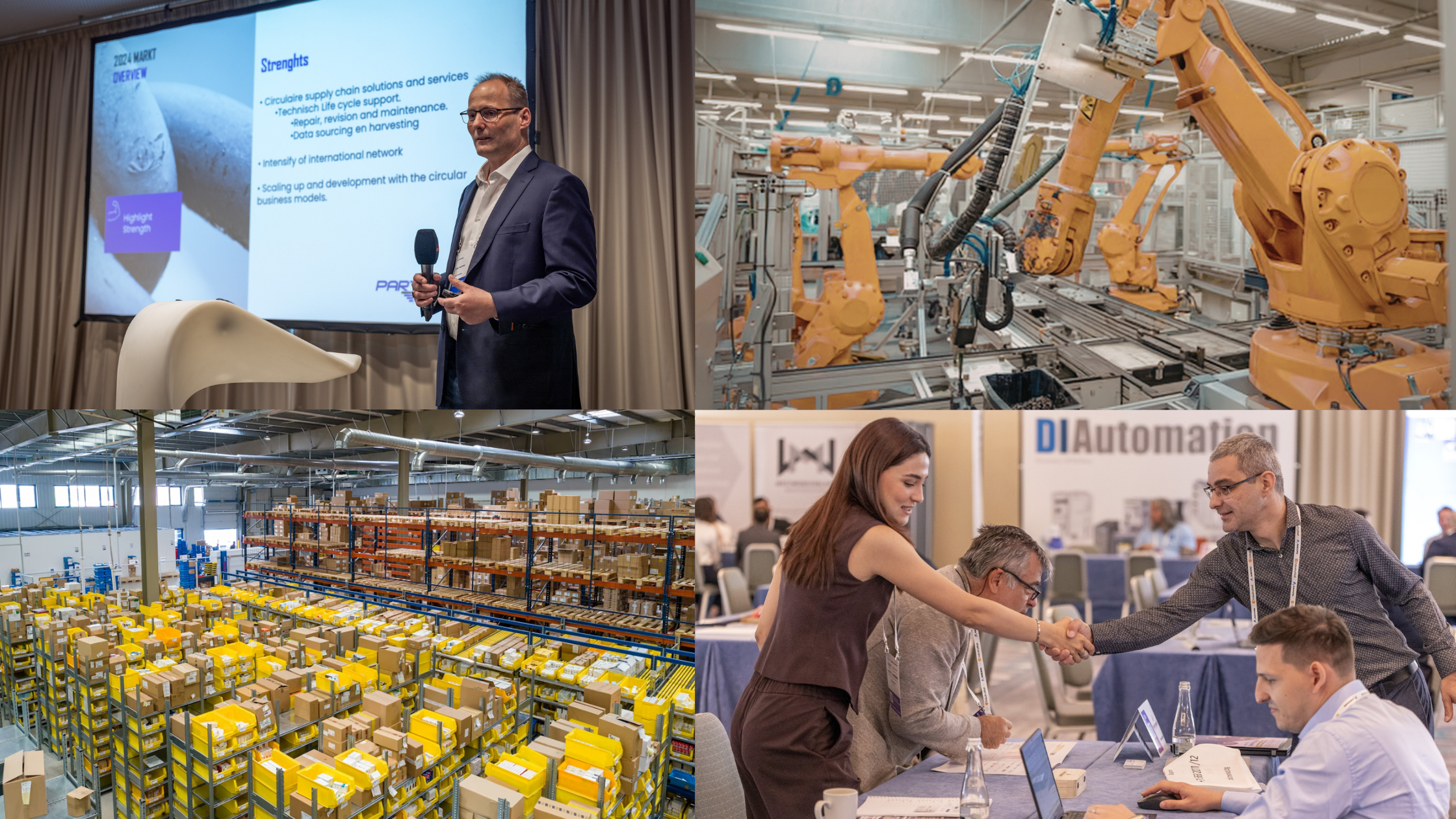

How Industry 4.0 Revolutionized Manufacturing and Maintenance
The term “Industry 4.0” often emerges in conversations about the future of manufacturing. Industry 4.0 is not merely technological upgrade; it’s a fundamental transformation in how factories operate.
This ongoing evolution promises not just improved productivity but also enhanced efficiency, reduced downtime and a greater ability to meet customer demands.
What Is Industry 4.0?
Industry 4.0, often known as the fourth industrial revolution, is a transformative shift in the manufacturing sector resulting from the adoption of cutting-edge technologies. The major goal of Industry 4.0 is to build smart factories and highly automated environments in which machines, systems and people all connect seamlessly.
Industry 4.0 refers to more than just automation. It also involves intelligent automation, in which systems may self-monitor, self-diagnose and make data-driven decisions. Deploying Industry 4.0 technology can result in efficiency gains of up to 20% in industrial operations.
Examples of Industry 4.0 in Action
Several industries lead the way in leveraging the capabilities of Industry 4.0, such as:
Consumer Goods
In the consumer goods market, manufacturers use AI and IoT to monitor and optimize production processes, minimize waste and improve product quality. Smart factories, for example, may alter the output in real time in response to demand. This ensures that items reach customers as promptly as possible.
Automotive Manufacturing
In the automotive industry, IoT sensors monitor manufacturing lines, AI predicts goals for maintenance departments and robots assemble parts precisely. This integration results in enhanced productivity and reduced downtime.
Core Technologies That Enable “Maintenance 4.0”
Let’s look at how Industry 4.0 technologies are affecting maintenance methods in the manufacturing sector.
Saving Time and Money With Artificial Intelligence
AI is a game changer in maintenance. It provides predictive analytics, allowing you to anticipate equipment issues before they occur. AI can offer appropriate industrial maintenance management goals based on historical data, saving you both time and money.
Predictive Maintenance Via Industrial Internet of Things (IIoT)
IIoT combines machines, sensors and devices to establish a network that continuously collects data. This connectivity provides real-time monitoring and predictive maintenance, allowing you to deal with issues proactively rather than reactively.
Maintenance Record Analysis Through Big Data
Imagine having access to a wealth of information that can help you predict equipment failures before they happen. With big data analytics, you can analyze patterns from past maintenance records, usage statistics and even environmental conditions. This allows you to implement a strong maintenance plan.
Advantages of Implementing Maintenance 4.0
As businesses shift to Industry 4.0, the significance of implementing Maintenance 4.0 practices becomes clear. Here are some of the advantages:
Improved Asset Management With Real-Time Information
Real-time information enables producers to monitor asset performance continuously. This allows timely decision-making based on reliable data, resulting in better resource allocation and less waste. Companies using real-time monitoring often claim an increase in asset utilization.
Reduced Maintenance Costs With Smart Inventory Management
Intelligent inventory management solutions assist firms in maintaining ideal inventory levels, eliminating extra costs and guaranteeing that vital items are always available.
Predictive Maintenance Helps to Reduce Downtime
Predictive maintenance uses data analysis techniques to predict probable issues before they occur, hence reducing unnecessary downtime. Companies can save greatly by decreasing equipment failures and increasing asset life by setting correct maintenance goals.
To Summarize
Industry 4.0 brought tremendous change to production environments. It has helped define new maintenance management goals through the integration of sophisticated technologies that promote automation, connection and efficiency.
Industry 4.0’s components — IoT, AI, big data analytics, cloud computing and cyber-physical systems — are altering not only factory maintenance processes but the entire manufacturing ecosystem.
As you investigate the potential of these technologies, think about how they may be integrated into your operations to increase efficiency, save costs, achieve maintenance goals and improve product quality. Embracing these developments is more than just keeping up with the competition; it is about long-term survival.
Remember there is always more to learn. It’s an important part of preparing yourself to succeed in the new manufacturing era.



Subscribe to the free Maintworld newsletter here!
Trump’s 360° Trade War: What Industrial Leaders Need to Know

Uncertainty is the new normal. President Trump’s aggressive tariff strategy is not just a trade policy—it’s a global shockwave. Companies that move quickly to understand and manage the macroeconomic impacts will be better prepared to weather the volatility and protect competitiveness. Those that wait for clarity may fall behind.
On April 2, 2025 President Trump enacted a sweeping tariff hike, catapulting the U.S. average effective tariff rate to around 23%—a tenfold increase from the previous year. The move rattled markets and injected deep uncertainty into global trade. For executives in the industrial sectors, this shift demands more than a reactive shrug. It calls for a strategic rethink of risk, supply chains, and long-term positioning.
Despite the temporary 90-day pause on retaliatory tariffs for most countries, the signal is clear: we’ve entered a new era of unpredictable trade policy—what economists from Boston Consulting Group call a regime of “deliberate uncertainty.”
This isn’t a bilateral dispute—it’s a one-versus-all trade war. The U.S. has applied tariffs broadly, without targeting specific countries or industries. In contrast, other nations are only engaging the U.S. The asymmetry is important: while the U.S. risks global blowback, its trade partners face disruption only in their U.S. business. This weakens the U.S.’s negotiating position and complicates outcomes for global companies trying to plan.
First-Order Effects: Supply and Demand Shocks
1. Supply shocks – mostly self-inflicted for the U.S.
Tariffs act as a tax on imports, and those costs pass through to businesses and consumers. For U.S. manufacturers, this means costlier inputs and squeezed margins. The expected result: higher inflation, reduced real incomes, slower consumption, and weaker GDP growth—projected to drop by 1.4% in 2025.
2. Retaliatory pain – limited but real for others
If other nations impose counter-tariffs, they too face inflation and slower growth, though the effect is smaller—around 0.1 % to 0.3 % GDP impact—because they’re targeting only U.S. goods.
3. Demand shocks – trade partners hit harder
Higher U.S. tariffs make it harder for foreign producers to sell into the U.S. market. The impact depends on how sensitive demand is to price changes. For most countries, the hit could range from -0.2 % to -0.6 % of GDP. But for highly exposed economies like Vietnam, losses may top 6 %.
4. U.S. exports face headwinds
As other countries respond, American exports decline. Though the U.S. is less reliant on exports than, say, Germany or China, the widespread nature of retaliation could shrink GDP by another 0.5 %.
Trump’s tariff policy seeks to reshore production and revive U.S. manufacturing. But tariffs are a blunt instrument. Unlike targeted incentives like the CHIPS Act, which spurred strategic investments in semiconductors, tariffs affect all goods, regardless of their economic or strategic value.
The risk? Misallocating resources to low-productivity sectors like furniture or apparel, which may cannibalize labor and capital from more advanced industries. With unemployment already low, the economy doesn’t have surplus workers to absorb new, labor-intensive production. This could drag down average productivity and hinder long-term growth—a net loss for the economy.
Trade policy isn’t just a Washington game anymore, it’s a frontline issue for global business. Managing macro risk, once a niche skill, is fast becoming essential. Industrial leaders who invest now in analytical capacity, scenario planning, and supply chain intelligence will not only endure the current turbulence—they’ll gain a competitive edge for whatever comes next.
Five Hidden Undercurrents Leaders Can’t Ignore
Beyond the immediate economic drag, industrial leaders should watch for five secondary effects—less predictable, but equally important.
• Confidence erosion
Consumers and businesses lose faith. Even if confidence metrics don’t always predict outcomes (as seen in recent years), they remain a bellwether worth monitoring.
• Wealth effects
Markets have already taken a hit. Lower equity valuations translate to lower consumer spending and tighter capital for firms.
• Policy missteps
The Federal Reserve is stuck between battling inflation and supporting growth. Tariffs complicate their dual mandate and raise the odds of miscalculation.
• Competitiveness loss
Around 50% of U.S. imports are intermediate goods—raw materials, tools, components. Tariffs increase production costs and erode the competitive edge, especially in capital-intensive industries.
• Compounding shocks
When an economy is weakened, it becomes more vulnerable. A financial mishap, cyberattack, geopolitical event, or even natural disaster could hit harder and last longer under these conditions.
Subscribe to the free Maintworld newsletter here!
The Forgotten Crisis: Why Industry and Technical Services Must Act Now
While global attention is focused on the conflicts in Ukraine and Gaza, and the changes in international trade rules, a crisis is unfolding in the background—one that threatens the very foundations of our economy and civilization: the climate crisis.
And this warning no longer comes only from climate activists, scientists, or politicians. Increasingly, it’s being echoed by top figures in the financial sector itself. Günther Thallinger, Chair of the Investment Management Board at Allianz, recently warned: “The climate crisis is destroying capital and assets in real time.
Entire regions risk becoming uninsurable. This is a systemic risk that fundamentally threatens our market economy.”
The increasing frequency of extreme weather, soaring damage costs, and declining asset values are putting structural pressure on how markets and businesses operate. Thallinger notes that many solutions are already available—but they are not being implemented quickly enough or at a large enough scale.
Untapped Potential for Improvement
Fortunately, change is on the horizon. The shipping industry, whose global emissions rival those of industrial giants like Germany or Japan, agreed on April 11 under the IMO Net-Zero Framework to cut CO₂ emissions by 65% by 2040. Concrete measures are being introduced, such as a CO₂ tax for those who fail to meet the targets.
In the industrial sector as well, frontrunners are proving that major progress is possible. The MORE4Sustainability project benchmark shows that early adopters have achieved up to 31% improvement in energy efficiency and 28% emissions reduction within just a few years.
BEMAS, the Belgian Maintenance Association, recently awarded the Maintenance & Facility team of Safran Aero Boosters in Herstal as “Technical Team of the Year” in Wallonia. Over the past five years, they managed to cut energy use by 15%—not just through major investments, but also through smart technical measures. One example: eliminating standby consumption from idle machines, which used to consume up to 80% of their energy even when not in use. Today, those machines are completely shut off at night and on weekends, resulting in significant ecological and economic gains.
What About Your Technical Team?
Within your own organization, there are huge opportunities to improve energy efficiency and reduce emissions with relatively simple actions. Not just to help fight climate change, but also to stay competitive and financially sound. Be honest: can your company really afford to consume—and pay for—30% more energy than your competitors?
The technology exists. The methodology is available. The best practices are proven. All that’s missing is rapid and widespread adoption.
The choice is yours. But the time to act is now.
Wim Vancauwenberghe
Maintenance Evangelist and Director of BEMAS
Subscribe to the free Maintworld newsletter here!
From Confusion to Innovation: How GreaseTech is Transforming Lubrication Maintenance in Corrugating Plants
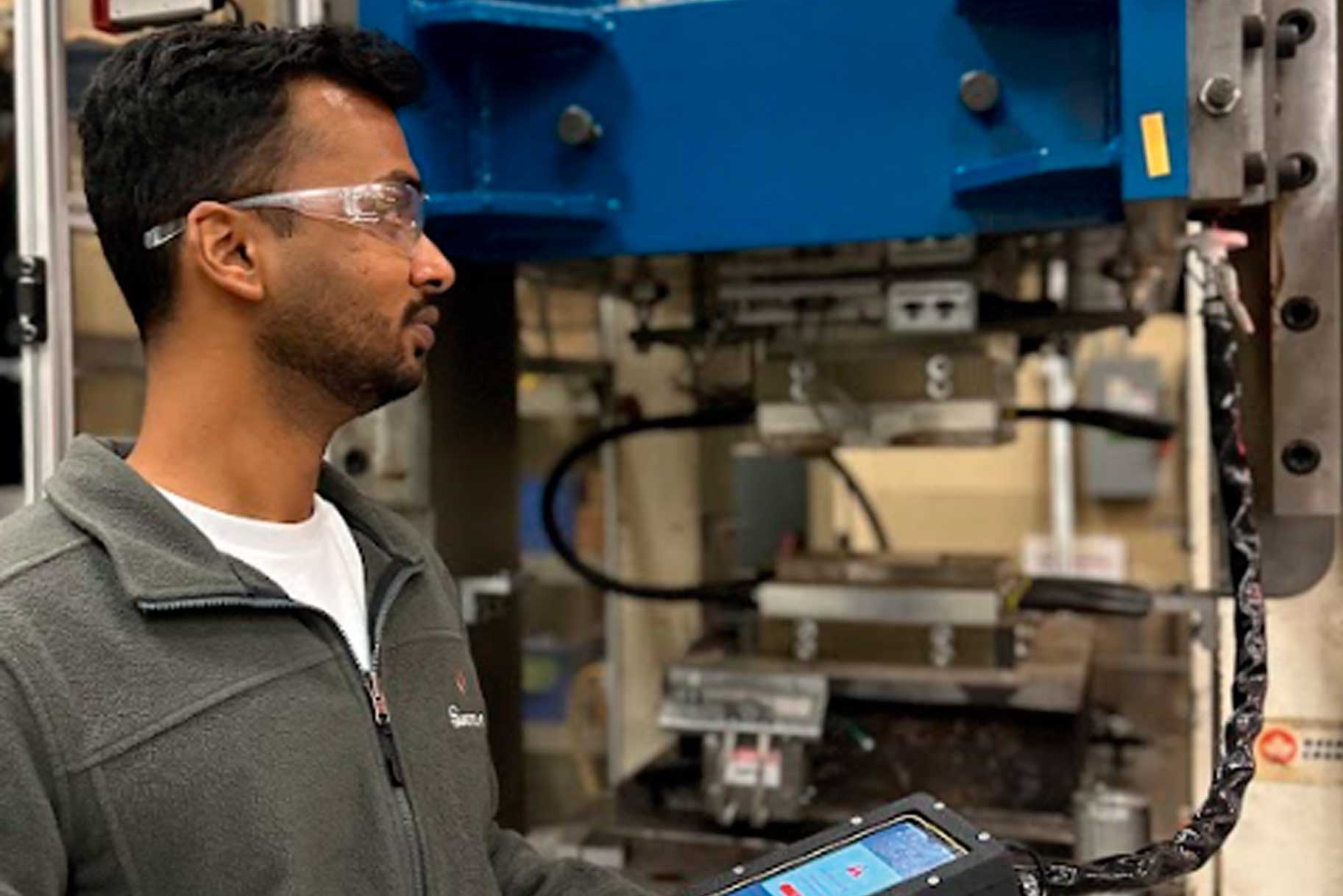
Jesh Ramesh realised during his Master’s degree studies that the tools available to maintenance teams were outdated and inadequate. He was determined to find a better way.
As a young engineer at Packaging Corporation of America (PCA) in Jackson, TN, I was eager to make an impact. One of my earliest challenges was tackling lubrication Preventative Maintenance (PM) processes—a critical yet often overlooked aspect of plant operations. It didn’t take long to realize just how overwhelming this task was for maintenance teams and how much room there was for improvement. This experience planted the seed for what would eventually become GreaseTech.
The Problem: Complexity and Chaos in Lubrication PMs
In the corrugating industry, production often takes priority over everything else, and PM downtime is consistently squeezed. This creates significant challenges for maintenance teams, especially when it comes to lubrication. As I observed technicians attempting to grease hundreds of bearings during limited windows of time,
I saw how difficult it was for them to:
• Track every bearing and ensure none were missed.
• Identify the correct lubricant for each specific point.
• Apply the precise amount needed, avoiding under-greasing or over-greasing.
The situation wasn’t any easier for maintenance managers. They had no visibility into what work had been completed, what was skipped, or whether the lubrication was done correctly. Improper lubrication—a key contributor to nearly 70% of mechanical failures—was wreaking havoc on operations.
It was clear to me that something had to change.
The Spark of Innovation
Years later, while pursuing my Master’s in Business, Entrepreneurship, and Technology at the University of Waterloo, this problem kept nagging at me. I realized that the tools available to maintenance teams were outdated and inadequate, and I was determined to find a better way.
That’s when I met Nathan Wong, a brilliant computer science student at the University of Waterloo. Nathan had been coding since the age of 11, and his technical expertise was the perfect complement to my industry knowledge. We quickly realized we shared a passion for solving real-world problems and started brainstorming how technology could transform lubrication maintenance. Together, we began developing what would become GreaseTech.
The GreaseTech Solution
GreaseTech combines cutting-edge hardware and intuitive software to address the challenges I saw firsthand in the corrugating industry. Here’s how it works:
1. Automated Tracking: Every lubrication point in the plant is digitally mapped and tagged. Technicians use a smart grease gun equipped with sensors to track which points have been serviced, ensuring nothing is overlooked.
2. Lubricant Matching: GreaseTech’s system stores detailed specifications for every bearing, including the exact type and amount of lubricant required. This eliminates the guesswork and reduces mismatches that lead to equipment failures.
3. Real-Time Visibility: Maintenance managers can access a centralized dashboard to monitor progress, identify skipped tasks, and ensure compliance with schedules—all in real time.
4. Data-Driven Maintenance: Digital records allow plants to analyze lubrication trends, address recurring issues, and optimize their PM schedules.
Why It Matters for Corrugating Plants
Corrugating plants operate in high-pressure environments where unplanned downtime directly impacts production and profitability. Lubrication PMs, while essential, often take a backseat to immediate production needs.
GreaseTech bridges this gap by empowering maintenance teams with tools that ensure efficiency and accuracy. Bearings are no longer over-greased or under-greased, and managers gain the insights they need to optimize their operations. The result?
Reduced downtime, fewer equipment failures, and greater overall reliability.
Building a Vision for the Future
The journey from identifying a problem at PCA to building a solution at Waterloo has been one of collaboration and innovation. Nathan and I poured countless hours into understanding the needs of maintenance teams and designing a system that truly addresses their pain points. Today, GreaseTech is helping corrugating plants across North America improve reliability and simplify lubrication processes.
At GreaseTech, we believe that innovation starts on the plant floor. My experience at PCA and Nathan’s technical expertise have allowed us to create a solution that’s not only practical but transformative. Together, we’re committed to making the lives of maintenance technicians, planners, and managers easier—one bearing at a time.
To learn more about GreaseTech and how it can improve your plant’s lubrication PMs, visit our website or contact us directly.
Let’s redefine reliability, together.
Website and demo video: https://www.greasetech.ca/product
Jesh Ramesh
The Co-Founder and CEO of GreaseTech
Where he combines his deep industry experience with a passion for innovation to improve plant maintenance processes.
Subscribe to the free Maintworld newsletter here!
Latest