
The Market for Railway Maintenance Machines is Growing

Railway maintenance equipment is expected to grow by USD 1.44 billion from 2023 to 2027 at a compound annual growth rate (CAGR) of nearly 6.4%.
The global market size for railway maintenance equipment is expected to grow by USD 1.44 billion from 2023 to 2027 at a compound annual growth rate (CAGR) of nearly 6.4% over the forecast period.
The railway maintenance equipment market is driven by factors such as increasing development of railway infrastructure, growing demand for high-speed trains, and the need for regular maintenance to ensure safety and reliability. Companies specialising in this field offer innovative solutions to the unique challenges of railway maintenance, including the use of advanced technologies such as the Internet of Things, artificial intelligence and machine learning. The market is expected to grow significantly in the coming years due to these trends and the growing importance of efficient and reliable railway systems.
Rail networks, which consist of numerous components such as signals, rolling stock and stations, require integrated management to ensure smooth operations. The adoption of IoT, such as SNCF’s use of IBM Watson technologies, promises better customer experiences and operational excellence.
Rail maintenance processes are increasingly leveraging IoT for optimisation.
Rail maintenance processes are increasingly leveraging IoT for optimisation. Predictive maintenance, facilitated by IoT sensors on trains and tracks that send real-time data to the cloud, enables proactive fault detection and timely maintenance, ensuring uninterrupted service and preventing costly repairs.
The market share of the scaffolding segment is expected to grow significantly over the forecast period. Traditional and old railway tracks consist of railroad ties, steel rails, ballast benches and sleepers. This segment witnessed a steady growth from USD 2,328.71 million in 2017 to 2021. Ballast tracks are easy to install and require minimal investment, which contributes to safe operation.
Railway maintenance machines play a crucial role in monitoring and maintaining ballast tracks, performing tasks such as tamping, cleaning, bridge laying, and ballast replacement. Some machines have multiple functions, such as ballast tamping machines, which are combined with track levelling.
There is a significant barrier in the global market for railway maintenance equipment due to the high cost of the equipment. Different types of machines, such as tamping machines and ballast cleaning equipment, cost a considerable amount, around USD 0,06 million each. As rail projects require several machines, costs can increase.
As a result, many countries opt for manual maintenance to save costs, which slows market growth, and the availability of refurbished machines provides a cheaper alternative, which further slows market growth.



Subscribe to the free Maintworld newsletter here!
TÜV SÜD at Hannover Messe 2024: Advancing Safe Hydrogen Tech
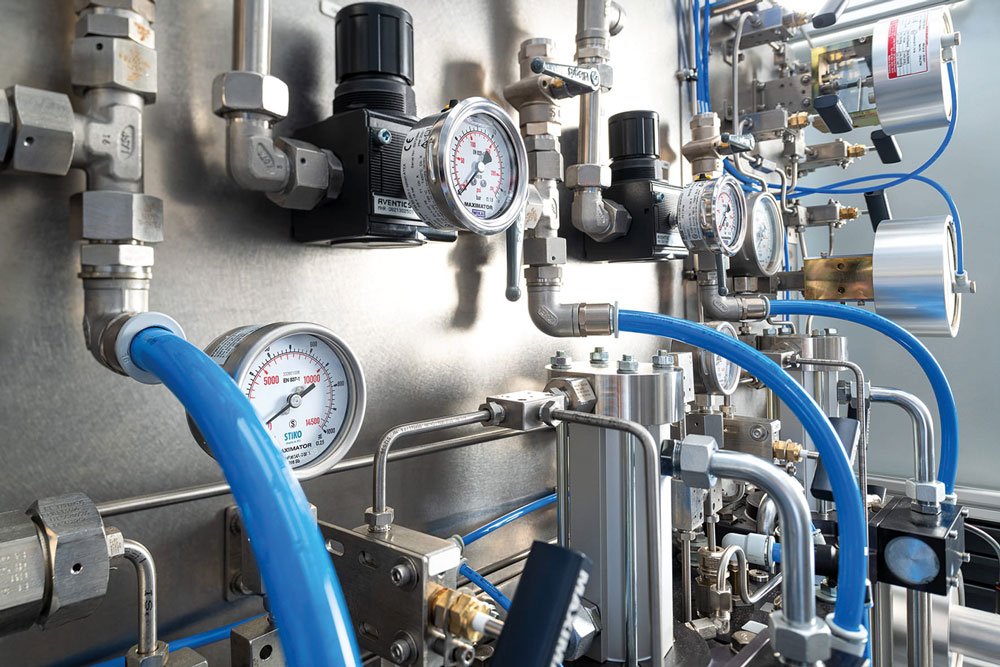
TÜV SÜD has created a solution to provide reliable opinions on the suitability of materials and components for future hydrogen use.
For example, experts have worked closely with manufacturers to develop the P003 standard on the resistance of materials to hydrogen under pressure. The company has also developed a guideline on H2 readiness of power plants, which supports manufacturers and operators in developing a roadmap for the conversion of combined cycle power plants to hydrogen, thus protecting investments in sustainable energy supply.
The company also provides hydrogen safety and performance testing across the entire pressure and temperature range of hydrogen, helium and gas mixtures. TIC’s services also include component performance and durability tests up to 130 MPa, leakage and permeability tests up to 130 MPa, hydraulic fracture tests up to 400 MPa and gas flow tests up to 100 g/s and 100 MPa.
Leakage and permeability tests of pressure vessels shall also be carried out up to 105 MPa. The tests also cover hydrogen compatibility of metallic and non-metallic materials and product and system certification. The range of services also includes EMC testing of hydrogen systems and environmental testing of components and pressure vessels according to LV123/124 requirements.
Testing covers components for mobile, stationary and industrial hydrogen applications, fuel cell modules and systems, and pressure vessels.
TÜV SÜD also offers voluntary certification schemes that manufacturers of fuel cell systems, electrolyzers and H2 system components can use to demonstrate the safety and quality of their products. So far, these schemes are targeted at stationary, factory-produced fuel cell systems, electrolyzers and hydrogen transport components for power generation.
Subscribe to the free Maintworld newsletter here!
Green Hydrogen Industry Research 2023: The global market is growing really fast
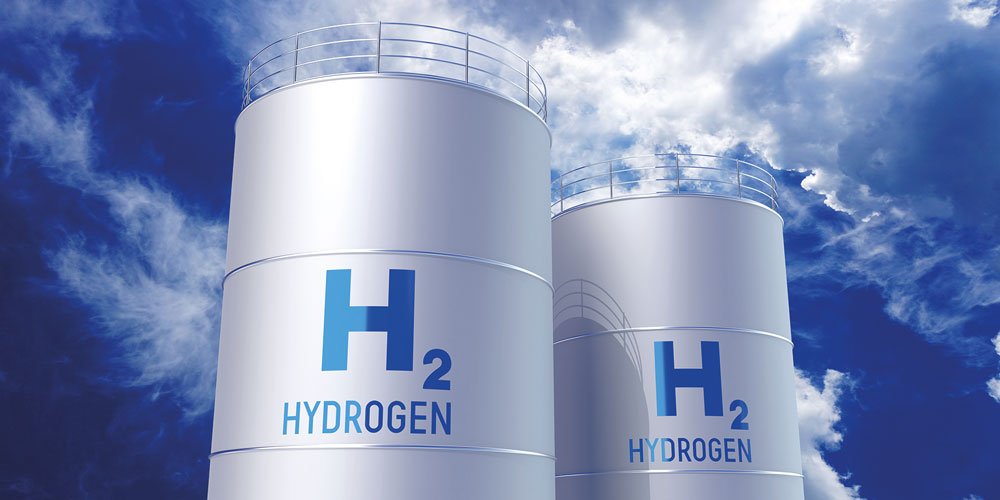
This growth of the green hydrogen market is likely to be driven by low variable renewable energy (VRE) electricity costs, global plans for net-zero emissions by 2050, and increasing awareness regarding green hydrogen.
The primary method for producing green hydrogen is through the electrolysis of water, a process that utilises electricity generated from renewable sources such as wind, solar, or hydropower to split water into hydrogen and oxygen. This method is particularly advantageous because it results in zero carbon emissions, making green hydrogen a clean energy source. It is also highly versatile, finding applications in various sectors such as transportation, industry, and energy storage, and can act as a medium for storing surplus renewable energy.
However, the production of green hydrogen is currently faced with several challenges, including high costs and significant energy requirements. Moreover, there is a substantial need for investment in infrastructure to facilitate its production, storage, and distribution.
The global green hydrogen market was valued at $828.2 million in 2023, and it is expected to grow with a CAGR of 67.19% during the forecast period 2023-2033 to reach $141.29 billion by 2033.
Despite the current challenges, the outlook for the green hydrogen market is very promising. As technology continues to advance and production costs decrease, the market is expected to expand significantly. Key to this growth will be the support from government policies and international cooperation.
Europe is poised to hold the highest share in the global green hydrogen market, a status underscored by its strategic, economic, and policy-driven initiatives. This leadership stems from Europe’s aggressive approach towards renewable energy and a strong commitment to reducing carbon emissions. Key to this dominance is Europe’s robust policy framework, exemplified by ambitious climate goals such as the European Green Deal and various national strategies explicitly supporting green hydrogen development.
The region has witnessed significant public and private investments in green hydrogen, encompassing not just production but also the development of necessary infrastructure for storage and distribution. Technological innovation in Europe is at its peak, with leading renewable energy technology companies spearheading advancements in green hydrogen production.
The application of green hydrogen as an industrial feedstock represents a significant and transformative segment of the global green hydrogen market. As industries worldwide seek to reduce their carbon footprint and transition towards sustainable practices, green hydrogen emerges as a pivotal player, especially in sectors heavily reliant on traditional hydrocarbon feedstocks.
Alkaline Electrolyzer to Lead the Global Green Hydrogen Market (by Technology)
The alkaline electrolyzer segment held the largest share of the green hydrogen market in 2022. Alkaline electrolyzers were the initial electrolyzers to enter the market for industrial applications, and they remained the sole electrolyzer technology available until the 1970s, when proton exchange membrane (PEM) technology emerged. Unlike PEM electrolyzers, alkaline electrolyzers do not require the use of precious metals, offering a longer operational lifespan and a more cost-effective solution.
Solar Energy to Hold Highest Share in Global Green Hydrogen Market (by Renewable Energy Source)
The assertion that solar energy will hold the highest share in the global green hydrogen market is rooted in several key factors. The cost of solar photovoltaic (PV) technology has been decreasing rapidly, making solar energy more economically viable for hydrogen production. This cost-effectiveness is crucial in the context of green hydrogen, where production costs are a significant concern. Solar energy’s role in the global green hydrogen market is becoming increasingly prominent, offering a pathway to a sustainable and economically viable hydrogen economy.
Among the prominent players in the global green hydrogen market, the public players dominate, commanding approximately 93.3% of the market share in 2022. The remaining 6.67% is held by private companies.
Source: ResearchAndMarkets.com, BIS Research (2024)
Subscribe to the free Maintworld newsletter here!
The Escalating Threat of AI-Driven Phishing

The rapid adoption of Generative AI (GenAI) technologies has led to a significant increase in sophisticated phishing campaigns.
A recent study by Abnormal Security reveals that 80% of these campaigns now leverage GenAI tools, marking a critical turning point in the fight against digital fraud.
The integration of AI in phishing attacks has led to a dramatic 1265% increase in such incidents since 2022, as reported by InfoSecurity Magazine. The availability of free or trial-based AI tools, such as ChatGPT, has made it easier for cybercriminals to generate convincing phishing content, with the potential to create up to 30 templates per hour.
The integration of AI into phishing attacks has led to a dramatic 1265% increase in such incidents since 2022.
AI’s proficiency in generating high-quality content has significantly reduced the effectiveness of traditional phishing detection methods. AI-based proofreading tools can eliminate common phishing indicators, making attacks more challenging to identify.
The rapid response rates of AI models, like ChatGPT’s 15-20 seconds and the 3.5 Turbo Model API’s under 3 seconds, further enhance the efficiency of these attacks.
The concept of ‘Malicious-AI-as-a-Service’ is gaining traction, facilitating the automation and scaling of phishing operations. This development lowers the entry barrier for cybercrime, enabling even those with minimal technical skills to execute sophisticated attacks.
Source: DigiCert.
Subscribe to the free Maintworld newsletter here!
Wind Turbine Manufacturers See Record Year Driven by Growth in Home Markets
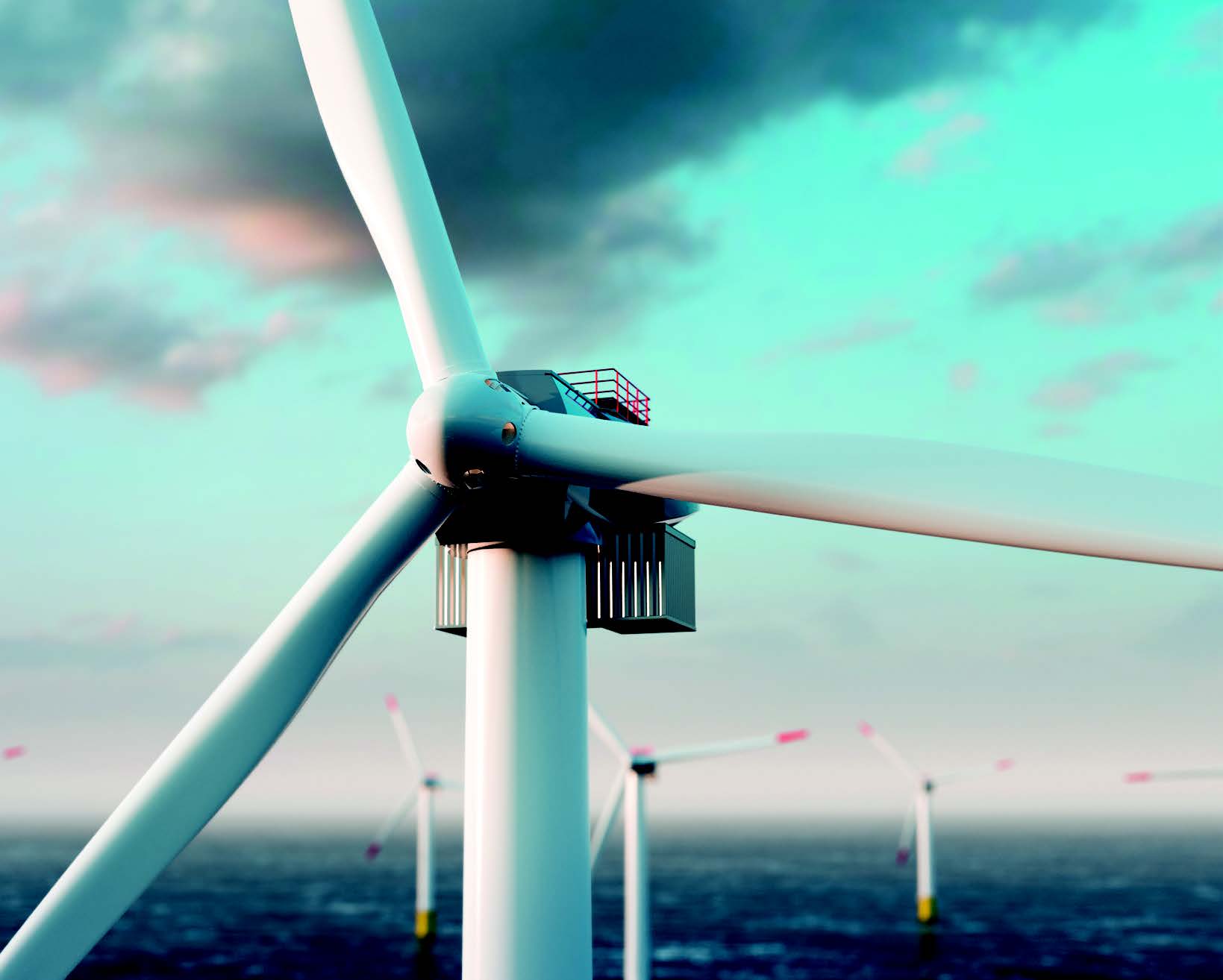
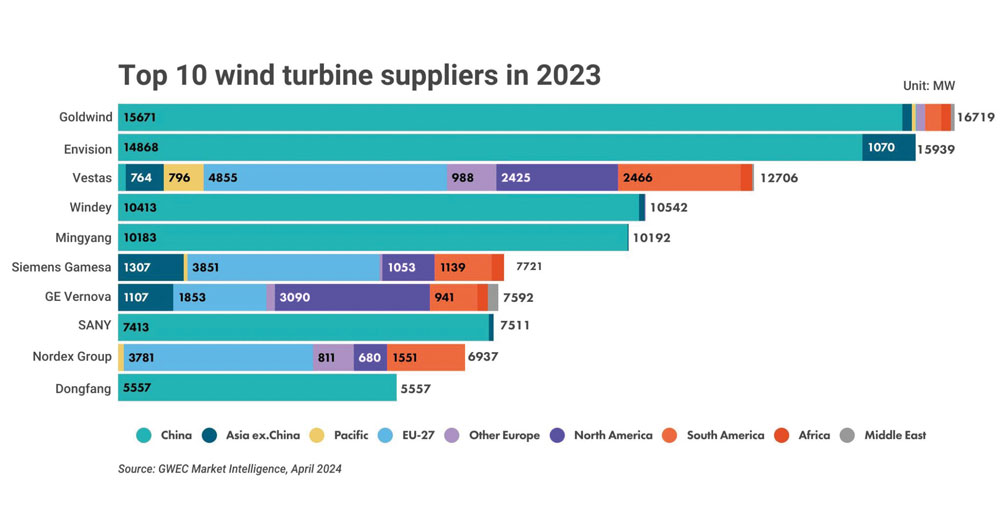
LAST YEAR, wind turbine manufacturers set a new volume record, installing 120.7 GW globally despite economic and supply chain challenges, as per GWEC’s report. Chinese companies dominated the market, with Goldwind leading, followed by Envision and Vestas.
While Chinese firms held top positions, 97% of their installations were in China, with only 2.3 GW installed elsewhere, primarily in Asia.
Vestas, Siemens Gamesa, Nordex Group, GE Vernova and Enercon, remained the top five turbine suppliers in Europe, in 2023. Globally, Vestas fell two positions from 2022 to 3rd place, although with wind turbines installed in 36 countries the Danish OEM remains the most geographically diverse.
In terms of total global cumulative wind turbine installations, Vestas, Siemens Gamesa and GE Vernova remained the world’s Top-3 wind turbine suppliers as of the end of 2023.
Ben Backwell, CEO of GWEC, said: “The data in this report paints a picture of a global industry that has entered a period of accelerated growth. However, that growth is concentrated in mature markets like China, the US and Germany. For wind energy to play its full role in the push to achieve Net Zero, growth needs to speed up across the globe, particularly in emerging and developing economies.
“The wind industry can thrive globally if governments collaborate with industry to implement the energy transition through supportive, long-term policymaking and multilateral cooperation. Despite a record year for wind energy installations, we need to make faster progress to achieve climate goals, and make sure market conditions support a healthy global manufacturing supply chain. The industry is ready to work with its partners across the world to create conditions for long-term market growth and deliver the tripling of renewables agreed at COP28.
In 2023, 23,833 wind turbines were installed globally by 30 companies, with 19 from Asia-Pacific, 8 from Europe, 2 from America, and 1 from the Middle East. Main growth was driven by orders from China, the US, and Europe.
More than 120 GW capacity of wind turbine was installed worldwide in 2023. Two-thirds of this was supplied by Chinese companies.
Goldwind installed 16.7 GW of capacity last year, to become the number one supplier in 2023, with Envision moving up three positions to second place. Vestas fell two positions to 3rd place from 2022, although with wind turbines installed in 36 countries the Danish OEM’s new wind installations in 2023 increased by one percent compared with 2022. Windey and Mingyang occupy fourth and fifth place respectively, with the latter the world’s largest offshore wind turbine supplier in 2023.
Feng Zhao, Head of Strategy and Market Intelligence, GWEC, said: “More than 120 GW capacity of wind turbine was mechanically installed worldwide in 2023, of which two-thirds was delivered by Chinese wind turbine suppliers.
“Although fierce price competition in China has been driving Chinese turbine OEMS to pursue opportunities in the overseas markets since 2021, 97 per cent of their installations in 2023 are still in their home market.
“Vestas, Siemens Gamesa, Nordex Group, GE Vernova and Enercon remain the top five turbine suppliers in Europe, in 2023. Chinese OEMs only installed 194.1 MW of wind turbines in Europe last year, of which only 8.4 MW was in the EU27.”
“Of the top 3 western OEMs, Vestas and Siemens Gamesa reported 155 MW and 3 MW installations in China in 2023, respectively, together accounting for only 0.2 per cent of the new installations in the world’s largest wind market.”
Energy transition – investment megatrend of 2024?
The energy transition could be one of the investment megatrends this year and beyond as interest rates are likely to be cut, says the CEO of one of the world’s largest independent financial advisory, asset management and fintech organisations, deVere Group’s Nigel Green.
Source: Global Wind Energy Council
Subscribe to the free Maintworld newsletter here!
Radiation From Space Can Cause Errors in the Operation of Quantum Computers
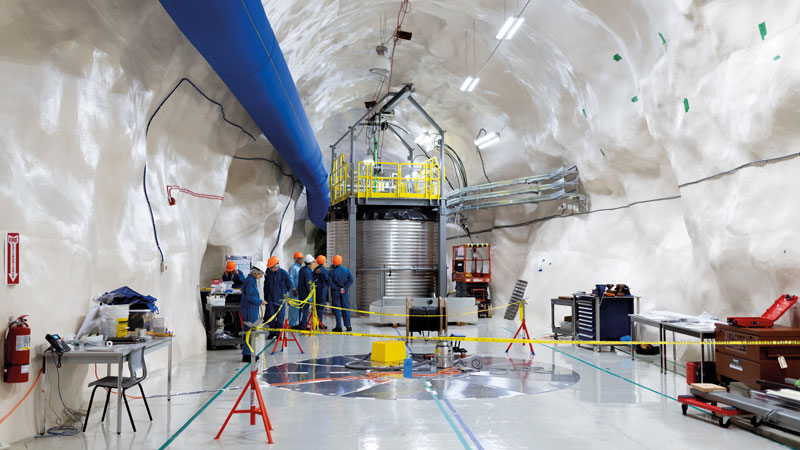
Radiation from space is a challenge for quantum computers as their computation time becomes limited by cosmic rays.
A recently-discovered cause of errors in quantum computers is cosmic radiation. Highly-charged particles from space disturb the sensitive qubits and cause them to lose their quantum state, as well as the ability to continue a calculation. But now quantum researchers from Sweden and Canada will join forces to find a solution to the problem – in the world’s deepest located clean room, two kilometers underground.
Researchers from Chalmers University of Technology, Sweden, and University of Waterloo in Canada are now going deep underground in the search for a solution to this problem – in a two-kilometer-deep mine.
– We are super excited about this project because it addresses the very important question of how cosmic radiation affects qubits and quantum processors. Gaining access to this underground facility is crucial to understanding how the effects of cosmic radiation can be mitigated, says Per Delsing, Professor of Quantum Technology at Chalmers University of Technology, Sweden, and Director of the Wallenberg Center for Quantum Technology.
In the study, superconducting qubits manufactured at Chalmers University of Technology will first be tested above ground in both Sweden and Canada. Next, the same qubits will be tested far below the Canadian ground so that differences between the two environments may be studied. With the help of the two-kilometer-thick “ground shield” that surrounds the world’s deepest clean room located in the Vales Creighton mine in Ontario, the researchers may shut out cosmic rays or radioactivity that otherwise would have “knocked out” the qubits above ground.
– SNOLAB maintains the lowest muon flux* in the world and has advanced cryogenics testing capabilities, making it an ideal place to conduct valuable research on quantum technologies, says Jeter Hall, Director of research at SNOLAB and Adjunct Professor at Laurentian University in Canada.
For the impact of quantum computers to be realised in society, quantum researchers first need to solve the issue of error correction. While classical computers use systems that can correct the errors that occur and provide reliable results, there are no current systems powerful enough to correct the significantly more complex errors that occur in quantum computers.
The error correction methods used on quantum computers today assume that each error caused by cosmic rays occurs independently of each other. This is an incorrect assessment, since these kinds of errors, on the contrary, usually correlate with each other. Current error correction methods cannot correct correlating errors, which means that multiple qubits can lose their quantum state at the same time. By increasing the understanding of the qubit processes, the researchers now want to find methods to reduce the number of correlated errors.
– With this project, we hope to start understanding what’s going on with the qubit decoherence in relation to cosmic rays, and then start understanding how the radiation affects the qubits in more controlled ways, says Dr. Chris Wilson, Professor at the University of Waterloo and active at the Institute for Quantum Computing in Ontario.
The project is carried out in collaboration between Chalmers University of Technology, the Institute for Quantum Computing (IQC) at the University of Waterloo, Ontario, Canada, and SNOLAB near Sudbury, Ontario, Canada.
The research project is funded by the grant “Advanced Characterization and Mitigation of Qubit Decoherence in a Deep Underground Environment”, sponsored by the Army Research Office, U.S. Combat Capabilities Development Command’s Army Research Laboratory.
* particles formed when cosmic rays reach the Earth’s atmosphere.
Subscribe to the free Maintworld newsletter here!
Demand for Critical Energy Transition Minerals Could Increase Almost Fourfold by 2050
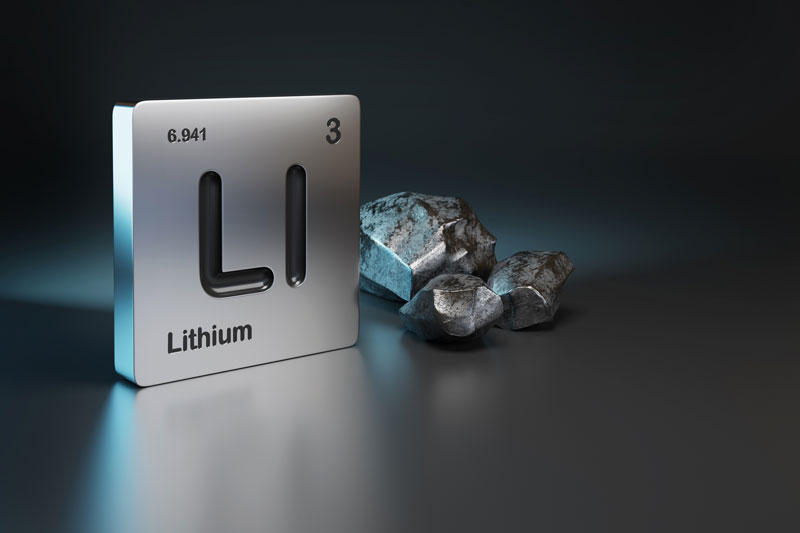
As the climate emergency intensifies, demand is surging for minerals that are critical for renewable energy technologies like solar panels, wind turbines and electric vehicles (EVs).
Even though prices are currently down from where they were in 2022, experts still see the monumental importance of lithium in the years and decades ahead.
UN Trade and Development (UNCTAD) projections based on data from the International Energy Agency indicate that by 2050, for example, lithium demand could rise by over 1,500%, with similar increases for nickel, cobalt and copper.
UCTAD also believes that to achieve the global 2030 net-zero emission targets, the lithium mining industry will need 70 new mines.
Many developing countries have a wealth of these minerals but lack the processing capabilities needed to add value. Commodity dependence affects 66% of small island developing states, 83% of least developed countries and 85% of landlocked developing countries.
Mining sector prepares ahead of 1,500% surge in lithium demand by 2050.
UN Trade and Development has identified 110 new mining projects worldwide, valued at $39 billion, with $22 billion invested in 60 projects in developing countries.
Yet to achieve the 2030 net-zero emission targets, the industry may need around 80 new copper mines, 70 of both lithium and nickel mines, and 30 new cobalt mines.
The investment needed between 2022 and 2030 ranges from $360 billion to $450 billion, potentially leaving a gap of $180 billion to $270 billion. The most significant shortfalls are in copper and nickel, accounting for 36% and 16% of the total gap, respectively.
Source: International Energy Agency
Subscribe to the free Maintworld newsletter here!
Asset Management
Asset management was a hot topic at the Euromaintenance 2023 congress with several speakers focusing on the area. One of the speakers brought up the need to create asset management ecosystems. As an example, he mentioned the new decentralized forms of production on the energy side, where project developers can only play the role of financier or investor in projects.
Theoretically, asset management could be seen as a systematic approach concerning the governance of all value for which a group or entity is responsible. Responsibility is divided into two areas, tangible assets (equipment, manufacturing plants, infrastructure, buildings) and intangible assets (intellectual property, financial assets). From a maintenance perspective, tangible assets are our main concern, I guess?
The need to develop asset management and make definitions that support the topic started in Europe from England. PAS55 was written some 20 years ago, and the ISO 55000 standard was published in 2014. ISO 55000 provides an overview of asset management, its principles and terminology, and the expected benefits from adopting asset management. The EN 16646 standard introduces physical asset management as a framework for maintenance activities.
Ageing assets are one of the main factors driving the asset management deployment in various organizations. Controlling maintenance debt and avoiding faults that might cause problems force organizations to develop their long-term asset management. Unfortunately, there have been several incidents in Europe caused by the poor management of physical assets.
What is the role of the maintenance organization in asset management? Is it the asset owner or the production organization who runs asset management? These and other questions will be decided based on companies’ strategies and internal competences.
At the same time, technological developments are advancing at incredible speed. In this issue, for example, Professors Diego Galar, Ramin Karim and Uday Kumar reflect on what changes Industry 5.0 will bring. Hanna Heinonen of Kone, a company with operations in more than 60 countries, explores how virtual reality can be used effectively in maintenance. We also look at how maintenance solutions for the ITER fusion reactor are being developed.
Editor-in-Chief, Maintworld Magazine (until the end of 2024)
Subscribe to the free Maintworld newsletter here!
Latest