
Saab Invests in Comand AI to Strengthen European Defence Sector
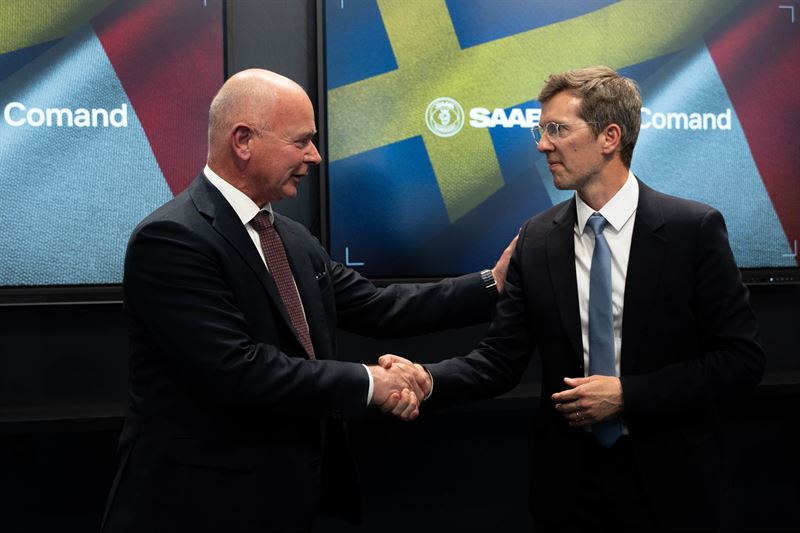
The investment brings French AI expertise into Saab’s defence technology development ecosystem.
Saab announced on 17 June a strategic investment of EUR 11.1 million for a ten percent equity stake in Paris-based battlefield AI company Comand AI.
The investment brings Comand AI’s AI-native planning solutions and technical expertise into Saab’s research and development ecosystem, supporting the continued evolution of Saab’s command and control (C2) and C5ISR* capabilities, including systems such as GlobalEye and ongoing initiatives for multi-domain C2.
“C5ISR systems are central to modern multi-domain operations, and advanced AI is an important enabler for future capability. By partnering with Comand AI, we are strengthening the development of Saab’s C2 and C5ISR capabilities while bringing Swedish defence expertise and French AI innovation together. This collaboration also underlines the value of European cooperation in support of long-term security,” said Carl-Johan Bergholm, head of Saab’s business area Surveillance.
The initiative also strengthens Saab’s co-operation with French industry, promoting a deeper integration within the French innovative technology sector. This move aligns with a broader commitment to enhancing European sovereignty, contributing to a more resilient and adaptable European defence industry capable of developing high-performance capabilities.
The agreement, pending approval from regulatory authorities, underscores Saab’s strategy of combining internal development with targeted external expertise to deliver sovereign and scalable solutions for its global customers.



Subscribe to the free Maintworld newsletter here!
KONE and TKE to Combine, Creating a World-Class Elevator and Escalator Company
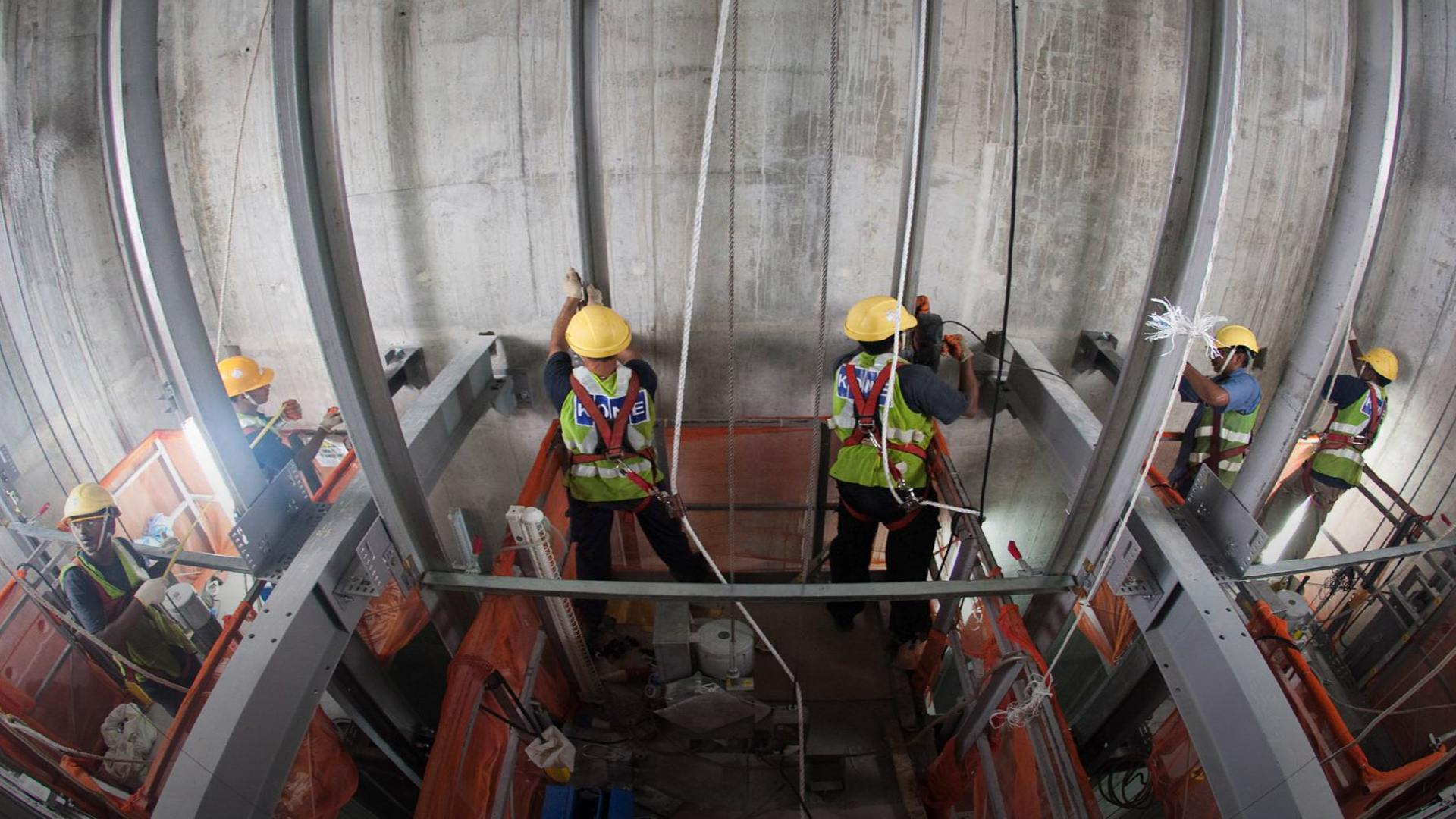
The combined group’s annual revenue would be approximately €20.5 billion, of which about 65% would come from maintenance and modernization services.
KONE Corporation and a consortium led by Advent and Cinven have, through their jointly controlled holding company Vertical Topco I S.A., entered into an agreement to merge KONE and TKE in a cash and stock transaction.
The combination would deliver significant value creation from synergies estimated at approximately EUR 700 million annually, benefiting both customers and shareholders.
The synergies are expected to be realized primarily through denser coverage of service networks, the strengthening of combined research and development functions, platform optimization, procurement efficiencies, and savings in sales, administrative, and general expenses.
Based on example data from the last fiscal year, the combined group’s annual revenue would be approximately €20.5 billion, of which about 65% would come from maintenance and modernization services. Adjusted operating profit, excluding synergy benefits, would exceed €2.7 billion, and the number of devices under maintenance would be approximately 3.2 million.
The completion of the transaction is subject to, among other things, regulatory approvals and the approval of KONE’s Extraordinary General Meeting for the material terms of the transaction. The Extraordinary General Meeting is scheduled to be convened in June 2026.
KONE’s current CEO, Philippe Delorme, would lead the combined group, and Ilkka Hara would serve as CFO. Antti Herlin would continue as Chairman of the Board, with his ownership stake representing over 50% of KONE’s voting rights, ensuring continuity and a long-term strategic focus. TKE’s shareholders would have the right to appoint up to two members to KONE’s Board of Directors.
“This combination would significantly enhance our ability to meet customers’ growing demand for reliable and sustainable solutions and services in a rapidly changing environment, while creating a stronger, more diverse global team based on the combined expertise of both organizations. It would also accelerate our strategic transition to services and modernization and strengthen our sustainability,” KONE CEO Philippe Delorme said.
Subscribe to the free Maintworld newsletter here!
AI-Driven Predictive Maintenance Market to Reach $19.27 Billion by 2032

Growing investments in smart asset management and automation are accelerating the adoption of AI-based predictive maintenance solutions.
According to MarketsandMarkets™, the AI-based predictive maintenance market is projected to grow from $2.61 billion in 2026 to $19.27 billion by 2032, representing a compound annual growth rate (CAGR) of 39.5% over the forecast period.
The shift toward predictive maintenance and the integration of networked systems are driving demand for solutions that improve operational efficiency and equipment reliability.
In addition, growing corporate investments in digital transformation and smart asset management are accelerating the adoption of AI-based predictive maintenance solutions in key industries.
On the supply side, software is expected to dominate the segment with a 74.0% share in 2025.
By solution type, standalone solutions are projected to achieve the highest CAGR of 42.4% over the forecast period.
In terms of deployment methods, cloud-based deployment is projected to grow the fastest during the forecast period.
In terms of technology, acoustic monitoring is projected to achieve the highest CAGR of 42.7% during the forecast period.
North America held the largest market share last year
By region, the Asia-Pacific region is projected to achieve the highest CAGR during the forecast period.
North America held the largest AI-based predictive maintenance market share in 2025. According to the report, continuous innovation, a growing focus on automation and digital transformation, and the availability of a skilled workforce will continue to support the adoption of predictive maintenance solutions and reinforce North America’s leading position in the market.
Subscribe to the free Maintworld newsletter here!
Wärtsilä and Erik Thun Group Strengthen Lifecycle Partnership Across the Fleet
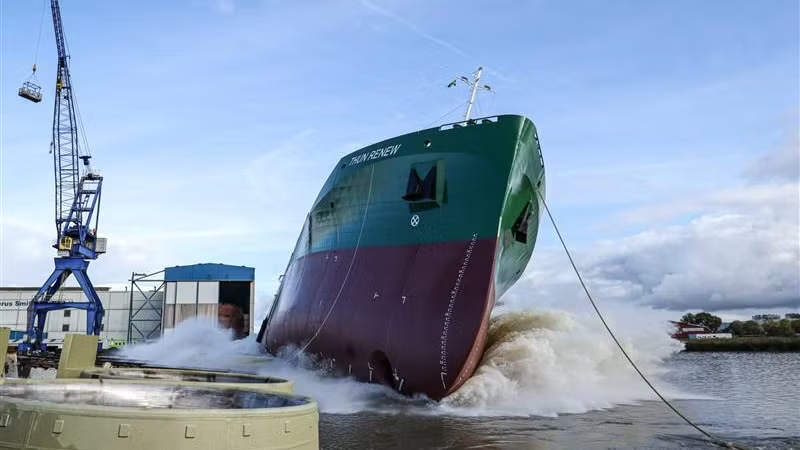
The shipping industry is shifting from transactional services to long-term lifecycle partnerships.
Technology group Wärtsilä has signed a new long-term overhaul frame agreement with Swedish operator Erik Thun Group. The agreement has been developed jointly with longstanding fleet management partner MF Shipping Group, and includes comprehensive overhaul services, technical services, field services, workshop support, and parts supplies. The agreement was booked by Wärtsilä in Q1 2026.
Industry shift toward long-term value
The shipping industry is shifting from transactional services to long-term lifecycle partnerships, prioritising operational continuity and efficiency in response to market demands for reliability and sustainability.
“This agreement reflects our commitment to reliable operations and continuous improvement. We continue to introduce new and increasingly sustainable generations of vessels, and in this, the know-how and expertise of Wärtsilä plays an important role,” comments Henrik Källsson, Deputy Managing Director, Erik Thun Group.
Comprehensive service scope
The scope of the agreement between Wärtsilä and Erik Thun Group includes comprehensive technical and operational services, including maintenance of 4-stroke medium-speed engines, propulsion systems, and shaft line equipment across Erik Thun Group’s fleet.
Wärtsilä will deliver field services to minimise vessel downtime through proactive maintenance. Workshop support will be provided to recondition and restore components to working condition and to meet OEM standards. In addition, a reliable supply of spare parts will ensure consistent operational reliability.
Improved performance and continuity
Erik Thun Group will benefit from improved fleet performance, technical services, extended equipment lifecycles, and assured operational continuity, ensuring their vessels operate efficiently and sustainably.
“By delivering broad service coverage and OEM-level support, we can enhance fleet reliability, minimise downtime, reduce fuel consumption and simplify overhaul planning for short sea schedules. As the industry moves towards decarbonised operations, Wärtsilä provides the lifecycle support needed to ensure compliance, operational performance, and future-ready viability,” says Stefan Wiik, Vice President, Parts & Field Service, Wärtsilä Marine.
Fleet operations in Northern Europe
The Erik Thun Group fleet, comprising of general dry cargo vessels, product tankers and cement carriers, operates across Northern European short sea shipping routes with around 50 vessels serving multiple segments. As a longstanding Wärtsilä customer, Erik Thun Group has procured engines and propulsion solutions for various vessel classes.
Subscribe to the free Maintworld newsletter here!
Horse Powertrain Develops AI Factory Solution for the Automotive Industry
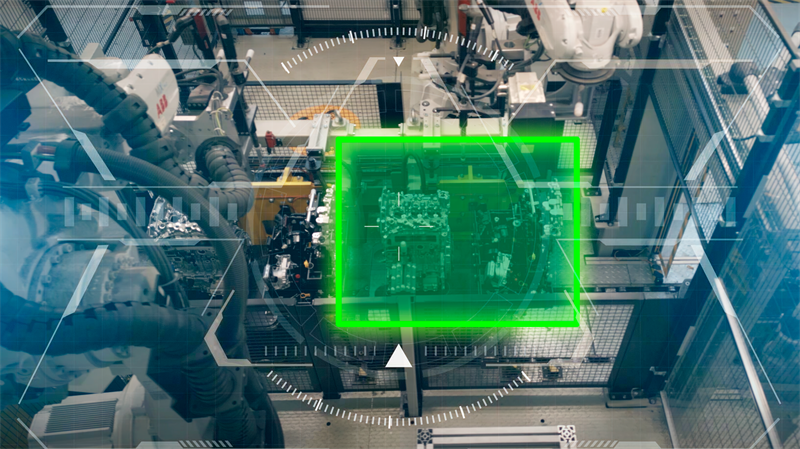
AI Factory supports model training, simulation, digital twins, and other industrial AI applications.
According to Horse Powertrain, which focuses on powertrain technology, the kAIros project aims to reduce time-to-market by nearly 50%, cut low-value process work by 40%, and improve design cycle efficiency by 25%.
AI Factory supports industrial AI applications.
A key part of the concept is the generation of training data, which helps continuously improve models and digital twins over time.
The AI Factory includes:
- NVIDIA RTX PRO servers equipped with NVIDIA RTX PRO 6000 Blackwell Server Edition GPUs
- Google Cloud NVIDIA RTX 6000 Blackwell Server Edition GPUs
- NVIDIA AI software, including CUDA-X, Omniverse, and Cosmos, helping accelerate application development across the business
- NVIDIA RTX PRO servers equipped with NVIDIA RTX PRO 6000 Blackwell Server Edition graphics processors
kAIros also supports the development of physical AI by integrating real-world operations into virtual systems in real time. This helps systems understand their environment, supports autonomous decision-making, and enables direct collaboration with cobots, autonomous vehicles, and smart machines on the factory floor.
“Our goal is to turn data into insights, simulations into real value, and innovations into a competitive advantage. Horse Powertrain aims to be more agile and reliable because we understand that AI is not just a tool and that kAIros is one of Europe’s first AI factories for the automotive industry,” says Patrice Haettel, Chief Operating Officer of Horse Powertrain and CEO of Horse Technologies, in the company’s press release.
About Horse Powertrain
Horse Powertrain operates in the hybrid and internal combustion engine solutions sector and supports automotive OEMs with a diverse range of systems, including engines, transmissions, power electronics, and integrated hybrid platforms.
The company has 17 production facilities and 5 research and development centers around the world. It serves numerous manufacturers, including the Renault Group, Geely Auto, Volvo Cars, Proton, Nissan, and Mitsubishi Motors Corporation.
Horse Powertrain is headquartered in London, UK, and employs 19,000 people globally. The company’s three shareholders are the Renault Group (45%), Geely (45%), and Aramco (10%).
Subscribe to the free Maintworld newsletter here!
AI “Time Machine” Refines Renewable Energy Forecasting
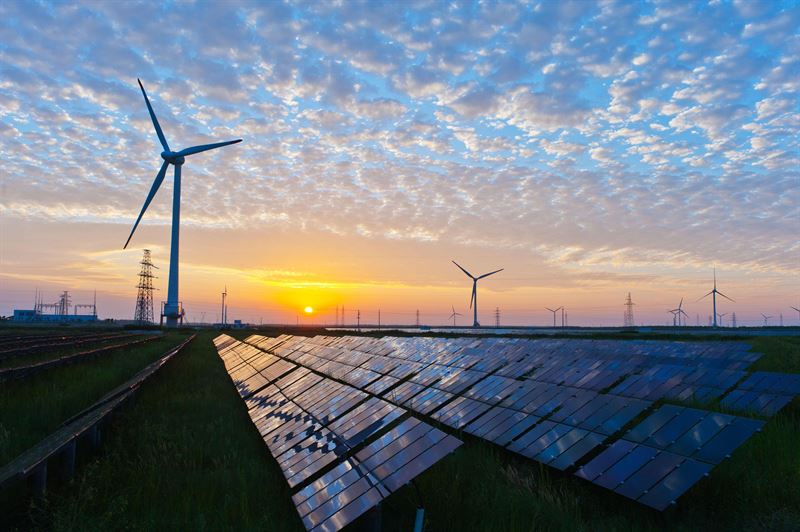
A new AI-based computational “time machine” provides a more accurate assessment of trends in wind and solar power usage.
The “time machine” outperforms current forecasting methods by using AI techniques to analyze historical growth models from different countries. Predicting the future is particularly challenging for technologies such as wind and solar power, where rapid cost reductions are offset by growing obstacles such as public opposition, infrastructure constraints, and policy changes.
“Current models are very good at identifying what needs to be done to achieve climate goals, but they don’t tell us which development paths are most likely. This is precisely the gap we wanted to fill,” says Jessica Jewell, a professor at Chalmers University of Technology.
The researchers observed a recurring pattern in the growth of wind and solar power across more than 200 countries: long periods of relatively steady growth, often interrupted by sudden spikes triggered by policy changes.
“Most models assume a smooth S-shaped growth curve, but in reality, that’s not the case. Growth often occurs in bursts, and if this is ignored, the pace of technology adoption can be misjudged,” says Avi Jakhmola, a doctoral student at Chalmers University of Technology.
13,000 virtual worlds for the future
To improve forecasts, Jakhmola created a model based on 13,000 virtual worlds. In each of these worlds, solar and wind power develop in different ways—from the fastest possible growth to the slowest—and everything in between. A machine learning algorithm was then trained using all of these worlds to learn how to predict global outcomes from early national trends.
“When we apply the model to real-world data, it can tell us what the most likely outcome will be in the future—taking into account what we’ve seen so far and all the virtual worlds the model has seen,” Jakhmola says.
Onshore wind power share to rise to over a quarter
According to the model’s forecast, by 2050 onshore wind power will account for about 26 percent of the world’s electricity (range: 20–34 percent), and solar power for about 21 percent (15–29 percent). These figures are roughly in line with the 2°C target but fall short of the requirements of the 1.5°C target.
The projections also put the pledge made at COP28 to triple renewable energy capacity by 2030 into proper perspective. The pledge falls near the 95th percentile, meaning it would require growth rates rarely observed.
“The pledge to triple renewable energy production isn’t impossible, but it would require everything to go extremely well in every country,” Jewell says.
The researchers also tested what achieving the 1.5°C target would actually require.
“If we start now, the required growth rates are demanding but not unprecedented. They are comparable to the wind power targets in the EU’s REPowerEU program and India’s solar power production plans,” says Jakhmola. “But if we delay until 2030, the required acceleration becomes much steeper and more abrupt. The window of opportunity for expanding production will close rapidly.”
Looking back to verify the model’s reliability
The researchers also used the model to test the reliability of the forecasts—by going back in time.
“We wanted to know if our forecasts would hold true ten or twenty years from now. When we fed only 2015 data into the model, we found that it correctly predicted the developments that occurred afterward. This is what we mean by a ‘computational time machine,’ and it gives us real confidence in future forecasts,” says Jakhmola.
The research points to a broader goal of developing scientifically rigorous methods to predict the most likely growth trajectories for other low-carbon technologies as well, not just wind and solar power.
Jessica Jewell says: “The poor quality of technology forecasts has long been a running joke. But if you’re a decision-maker trying to figure out how aggressively the transition should be driven, you need a realistic starting point. Our study is the first step toward developing such a realistic vision of the future.”
More information about the study
The article “Probabilistic projections of global wind and solar power growth based on historical national experience” has been published in the journal Nature Energy. The researchers have also created an online tool presenting the results, which is available on the Energy Technology and Policy website.
The authors of the article are Avi Jakhmola, Jessica Jewell, Vadim Vinichenko, and Aleh Cherp. They represent Chalmers University of Technology and Lund University in Sweden, the University of Bergen in Norway, the International Institute for Applied Systems Analysis (IIASA), and the Central European University in Austria.
Subscribe to the free Maintworld newsletter here!
Latest