Maintenance is a competitive advantage – not just a cost item
Maintenance is finally gaining its rightful place in the strategic field of industry. It is no longer just a cost item that eats up the budget and causes sighs in the financial statements – when managed correctly, maintenance produces a clear competitive advantage and strengthens the company’s performance.
Current studies show without a doubt that predictive maintenance, which utilizes data in the right way, can bring the owner more than it takes – maintenance is an investment that pays for itself many times over.
With new technology, predictive maintenance is no longer just optimization in theory or plans. It is up-to-date, precise and efficient.
With the help of sensors, artificial intelligence and analytics, it is possible to continuously monitor the condition of machines and equipment, address problems before they turn into expensive downtime and extend the life cycle of production equipment at the lowest possible cost.
Increasing the competitiveness of industry is no longer limited to just production volumes or price optimization – maintenance is the resource that separates the winners from the losers.
However, technology is not the only resource. The revolution in industrial maintenance is also reflected in the development of the circular economy. Regulation, innovation and new business models are completely changing the way maintenance is done.
As our journalist Mia Heiskanen writes in her Ecomondo trade fair report, the circular economy is no longer an emerging trend – it is accelerating rapidly and changing the entire industrial field.
Predictive maintenance is increasingly becoming a service where resource optimization, material reuse and comprehensive life cycle thinking are seamlessly intertwined.
Machines and equipment are no longer just performance items made of iron and electronics. They are part of a complex ecosystem where foresight, intelligent data processing and innovative maintenance models decide who stays ahead of the competition.
Robots, drones and other solutions familiar from military technology have found their way into the management of factories and production facilities – they are no longer a futuristic addition, but an everyday occurrence that enhances maintenance and brings visibility that was previously impossible.
This issue offers two insightful articles on the growing role of drones in maintenance.
Properly managed maintenance is therefore not just an economic necessity. It is a strategic choice that is reflected in the continuity of production, resource efficiency and competitive advantage.
It opens up new business opportunities, supports the growth of the circular economy and gives industry the tools to respond to changes in both technology and markets quickly and flexibly.
Maintenance is changing – and the change is radical. Now is the time to elevate maintenance to the position it deserves: a resource that supports business, generates revenue and builds the future. Every industrial professional who understands this can turn the power of maintenance into their own competitive advantage.
Jari Kostiainen Editor-in-Chief, Maintworld



Subscribe to the free Maintworld newsletter here!
Maintenance is a competitive advantage – not just a cost item

Maintenance is finally gaining its rightful place in the strategic field of industry. It is no longer just a cost item that eats up the budget and causes sighs in the financial statements – when managed correctly, maintenance produces a clear competitive advantage and strengthens the company’s performance.
Current studies show without a doubt that predictive maintenance, which utilizes data in the right way, can bring the owner more than it takes – maintenance is an investment that pays for itself many times over.
With new technology, predictive maintenance is no longer just optimization in theory or plans. It is up-to-date, precise and efficient.
With the help of sensors, artificial intelligence and analytics, it is possible to continuously monitor the condition of machines and equipment, address problems before they turn into expensive downtime and extend the life cycle of production equipment at the lowest possible cost.
Increasing the competitiveness of industry is no longer limited to just production volumes or price optimization – maintenance is the resource that separates the winners from the losers.
However, technology is not the only resource. The revolution in industrial maintenance is also reflected in the development of the circular economy. Regulation, innovation and new business models are completely changing the way maintenance is done.
As our journalist Mia Heiskanen writes in her Ecomondo trade fair report, the circular economy is no longer an emerging trend – it is accelerating rapidly and changing the entire industrial field.
Predictive maintenance is increasingly becoming a service where resource optimization, material reuse and comprehensive life cycle thinking are seamlessly intertwined.
Machines and equipment are no longer just performance items made of iron and electronics. They are part of a complex ecosystem where foresight, intelligent data processing and innovative maintenance models decide who stays ahead of the competition.
Robots, drones and other solutions familiar from military technology have found their way into the management of factories and production facilities – they are no longer a futuristic addition, but an everyday occurrence that enhances maintenance and brings visibility that was previously impossible.
This issue offers two insightful articles on the growing role of drones in maintenance.
Properly managed maintenance is therefore not just an economic necessity. It is a strategic choice that is reflected in the continuity of production, resource efficiency and competitive advantage.
It opens up new business opportunities, supports the growth of the circular economy and gives industry the tools to respond to changes in both technology and markets quickly and flexibly.
Maintenance is changing – and the change is radical. Now is the time to elevate maintenance to the position it deserves: a resource that supports business, generates revenue and builds the future. Every industrial professional who understands this can turn the power of maintenance into their own competitive advantage.
Jari Kostiainen

Subscribe to the free Maintworld newsletter here!
Love the Flux: How to Lead When the Rules Keep Changing

Change doesn’t slow down. It stacks. Faster. Weirder. All at once. April Rinne’s keynote at Nordic Business Forum 2025 wasn’t just a wake-up call—it was a practical guide for anyone tired of pretending the chaos will pass.
The world won’t settle. We live in what futurist April Rinne calls a state of “flux”—a relentless, unpredictable, no-turning-back swirl of change. In her talk, How to Make Change Suck Less, Rinne gave leaders a toolkit not for controlling uncertainty—but for becoming better at moving with it.
This isn’t about being fearless. It’s about being ready. Rinne, who’s worked in more than 100 countries and experienced profound personal tragedy, doesn’t speak from theory. At age 20, she lost both parents in a car crash. Her life flipped. She didn’t have a choice but to see differently—and that lens became the foundation of what she now teaches global leaders: developing a flux mindset.
Flux, she says, isn’t just change. It’s change that never stops, never stabilizes. Think Everything Everywhere All at Once, but real life. And no kung fu skills required—just the willingness to upgrade your leadership habits. Rinne laid out three “flux superpowers” that leaders need right now: slow your pace, let go of control, and learn to see what others miss.
Run slower to move smarter. That’s not a contradiction—it’s neuroscience. In our speed-obsessed world, fast is default. But our brains don’t function well in constant sprint mode. Clarity disappears. Creativity evaporates. Leadership suffers. “When you’re racing,” Rinne warns, “you tend to make foolish mistakes.” The remedy? Adopt the mantra: slow is smooth, and smooth is fast.
Running slower doesn’t mean doing less—it means choosing better.
• Practical tip: Start your meetings with a “slow minute”—60 seconds of silence to breathe, reset, and refocus. It signals calm and control when everything else feels urgent.
Next, let go. Control is leadership’s most overrated obsession. Rinne dismantles the myth that leaders must have all the answers. In a world this uncertainty, pretending you do is both dishonest and harmful. Instead, she advocates for strategic surrender—letting go of outdated beliefs, flawed assumptions, and the need to be right. “What gets us in trouble,” she says, quoting Mark Twain, “is not what we don’t know. It’s what we know for sure that just isn’t so.”
• Practical tip: Create a “Let Go List” with your team. Include legacy processes, rituals, or assumptions that no longer serve your purpose. Revisit it quarterly—and act.
Finally, see the invisible. The biggest threats—and the biggest opportunities—are often the ones we overlook. We miss things that feel impossible, uncomfortable, or simply unfamiliar. But once seen, they’re undeniable. Rinne challenges leaders to actively question their beliefs: “What are you practicing at becoming?” That one question reveals whether you’re staying flexible—or stuck.
• Practical tip: Schedule “Unsee Reviews”—monthly sessions where your team reflects on blind spots, biases, or missed trends. What did we not notice that we should have?
Rinne’s message lands because it’s brutally honest and radically hopeful. Change won’t stop. Complexity won’t shrink. But we can get better at navigating it. By practicing these counterintuitive habits, not mastering them once, but practicing them constantly—leaders can thrive where others freeze.
In her words: “A flux mindset doesn’t drop from the sky… It’s something you must apply and put into action.”
The goal isn’t to control the chaos. It’s to build your capacity to thrive inside it.
Text: Mia Heiskanen Photos: Pasi Salminen
April Rinne
April Rinne is a global authority on the future of work and author of Flux: 8 Superpowers for Thriving in Constant Change. She’s advised governments, startups, and Fortune 500s, and has been named one of the world’s 50 leading female futurists by Forbes. Her insights are shaped by global experience, deep personal loss, and an unshakable belief that uncertainty is not a threat—but a gift

April Rinne: Flux – 8 Superpowers for Thriving in Constant Change
Subscribe to the free Maintworld newsletter here!
A New Era of Drone Technology for Offshore Inspections
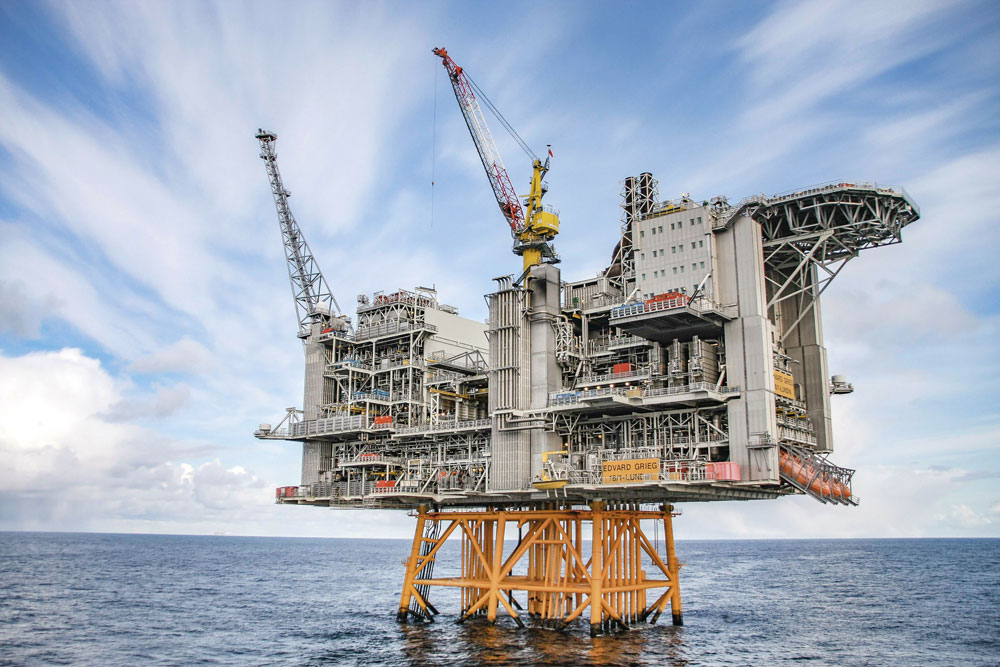
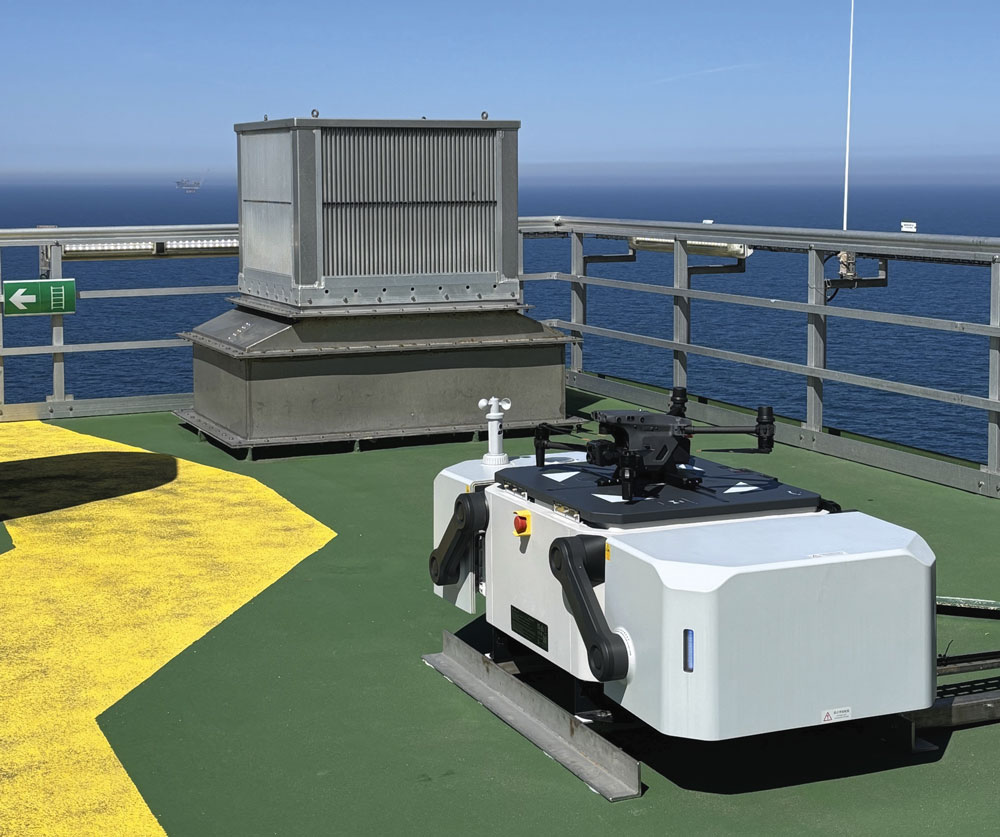
The Edvard Grieg platform in the North Sea now has a drone with its own docking station.
Aker Solutions has permanently installed an autonomous drone system on Aker BP’s Edvard Grieg platform in the North Sea, enabling frequent remote inspections from shore.
The use of drones is not new, they have been used for years to monitor infrastructure and emissions across the world. But the fixed-mount drone system sets a new standard in the industry.
Aker Solutions predicts that fully autonomous drones, flying without remote pilots, could become a reality in the next few years and potentially change the way the industry operates.
“We believe that autonomous drones will revolutionise inspection and maintenance in the energy industry,” says Anja Dyb, Head of Lifecycle Services at Aker Solutions.
Control Room Hundreds of Kilometres Away
The drone system on Edvard Grieg includes an offshore docking station and supporting infrastructure.
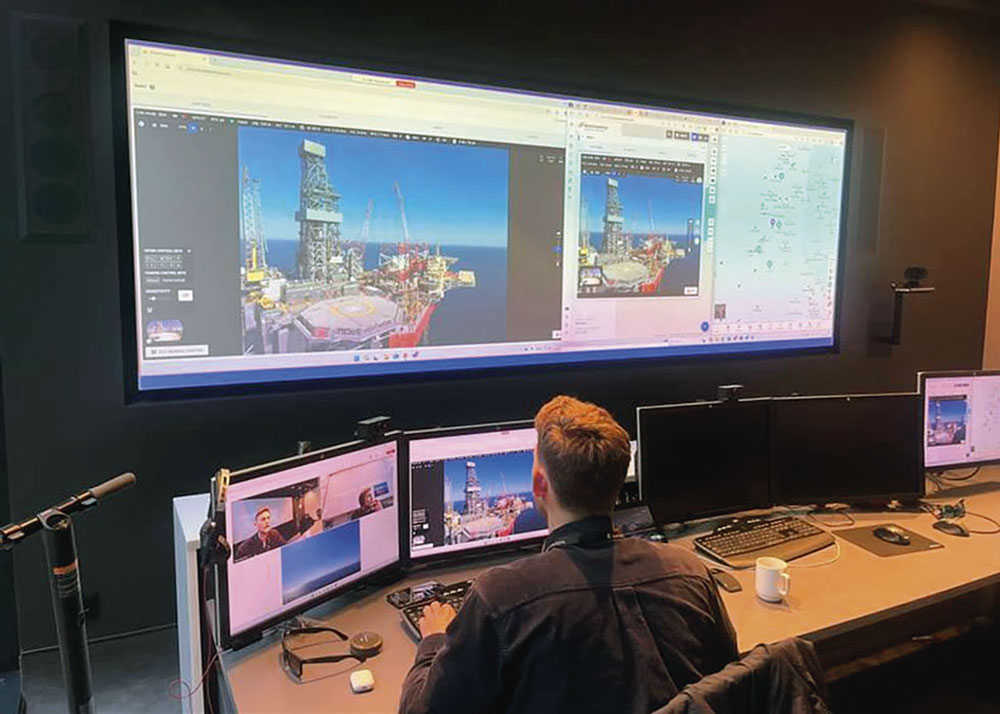
Aker Solutions has also developed software systems and established an onshore control room.
The solution includes airspace and AIS monitoring, two-way communication with the Helicopter Landing Officer (HLO), aviation management and platform operations.
The drone is equipped with autonomous navigation capabilities and advanced sensors that collect high-resolution images and data during its inspection rounds.
BVLOS operations are piloted remotely from an onshore control room located hundreds of kilometres away.
The First Test Flight Was Successful
Last summer, the company conducted its first Beyond Visual Line of Sight (BVLOS) drone operation, controlled from its ground-based control centre.
The flight is seen by the industry as a major step towards fully autonomous offshore inspections.
“The permanent deployment of drones on an oil rig, combined with robotics, artificial intelligence and digital technology, will take offshore maintenance to a new level, improving safety, reducing costs and enhancing the management of the entire offshore asset,” says Anja Dyb.
The system’s ability to operate remotely also aligns with Norway’s efforts to free up airspace above North Sea oil rigs for drone operations. The aim is to set a precedent for other regions.
“Aker BP’s business strategy is based on the assumption that robotics and drones will be an integral part of offshore monitoring, inspection and operations,” underlines Thomas Øvretveit, Chief Operating Officer at Aker BP.
Innovation reduces operational risks and cuts costs by minimising offshore labour.
Sensors Transmit a Wide Range of Information
An installed DJI drone can perform structural integrity checks, monitor discharges and detect leaks, transmitting live footage to the control room.
The recorded data is analysed using artificial intelligence and machine learning algorithms.
This enables predictive maintenance that identifies potential problems before they escalate.
According to Aker Solutions, this is crucial for facilities operating in the harsh environment of the North Sea.
Bringing Significant Savings
Permanent installation will eliminate the logistical challenges of transporting drones to offshore locations, which often require helicopters or boats.
By reducing human involvement, the technology not only improves safety but also reduces operating costs.
“Instead of the crew carrying the drone to the platform, doing the work and then taking it back home, the drone is always there,” says Joachim Hovland, Head of Aker Solutions’ Drone and Robotics Division.
“We estimate that autonomous drones can reduce inspection costs by up to 70 per cent and produce detailed data in a matter of hours, a process that traditionally takes days for manual drone operations.”
Autonomous drones and AI analytics enable frequent, high-precision inspections
The scalability of the system is another advantage.
“Not too much at once, because it has to be done safely,” says Anja Dyb, noting that people currently programme flight paths in advance and monitor inspections.
Full BVLOS Certification
Aker Solutions is the first company in Europe to be awarded full BVLOS certification.
The certification allows the company to operate autonomously alongside manned helicopters and aircraft, ensuring zero interference with helideck operations, airports or controlled airspace.
It is independent of systems and products, enabling the company to remain flexible in its choice of platforms, suppliers and technologies.
Protecting critical offshore infrastructure
Recent incidents involving unidentified drones in the vicinity of critical installations have highlighted the growing need for reliable detection systems.Several companies are now developing solutions to this problem.
Kongsberg Discovery and Aker Solutions have launched a joint project this autumn. The aim is to demonstrate Aker’s UAV detection system using Kongsberg’s UAV detection radar at Aker’s control centre in Stavanger.
The aim of the collaboration is to provide solutions to improve situational awareness around offshore assets and transit routes in the North Sea.
Aker Solutions will act as the system integrator and Kongsberg Discovery as subcontractor.
Kongsberg’s technologies are widely used in navigation and infrastructure protection.
The goal is to create a system with phases that include installation of the detection system on service vessels, integration with shore-based control centres, and wider deployment on drilling rigs and vessels, with possible expansion to other areas.
Cato Giil Eliassen, Director of Infrastructure at Kongsberg Discovery, stresses the urgency of the matter:
“Over the past couple of years, there have been several sightings of drones in the vicinity of critical infrastructure. Few of them have been properly documented.”
Text: Vaula Aunola Photos: Aker Solution, Aker BP
Subscribe to the free Maintworld newsletter here!
The New Arsenal of Military Readiness – Systems, Standards, and the Road Ahead
In the previous issue, we explored the first wave of maintenance innovations transforming defense: AI-driven predictive and prescriptive tools, the rise of right-to-repair, and additive manufacturing at the frontline. These trends illustrated how autonomy, foresight, and resilience are being embedded directly into operational units. In this second part, we shift focus to the system-level enablers that connect, simulate, and optimize maintenance at scale — from digital twins and robotics to connected logistics, XR-based training, and performance-based logistics frameworks. Together, they extend tactical innovations into full-spectrum readiness.
Digital Twins and Extended Reality
Additive manufacturing ensures parts are available anywhere, but digital twins ensure military decision-makers know precisely when and why those parts are needed. Indeed, additive manufacturing redefines the supply chain, and digital twins transform how assets are managed. A digital twin is a virtual replica of a physical asset, continuously updated with real-time data. By mirroring the state of an aircraft, ship, or vehicle, digital twins allow engineers to test “what-if” scenarios, optimize operations, and foresee problems before they occur.
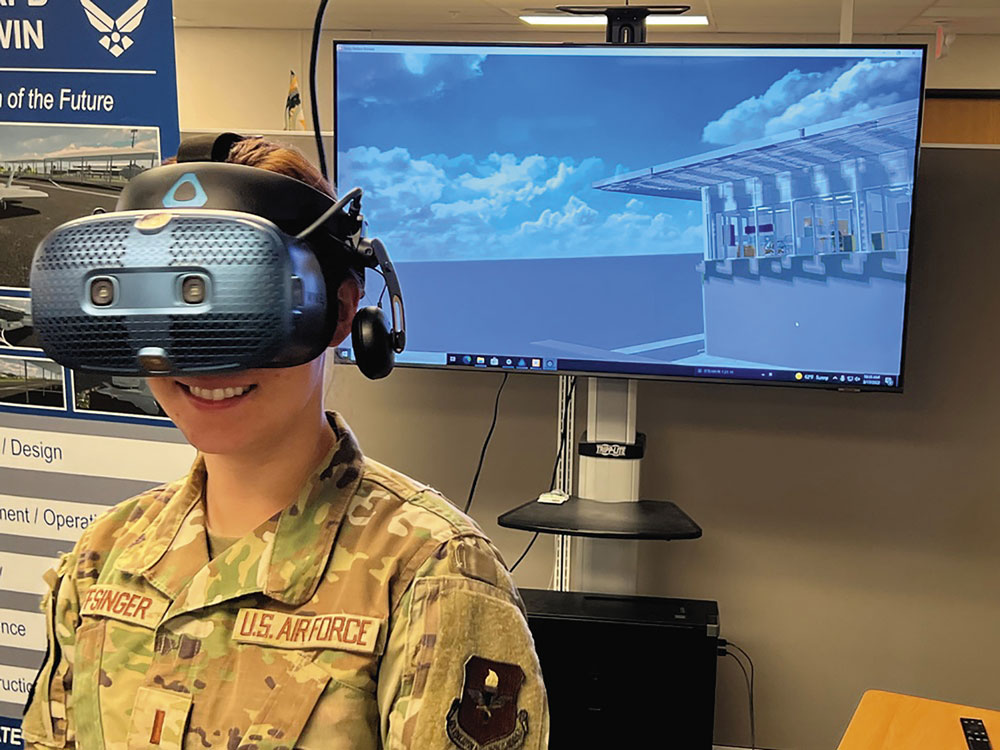
A landmark example is the collaboration between Gecko Robotics and L3Harris, which delivered an extended reality (XR) system for the U.S. Air Force. The XR system combines high-resolution scans with digital twins, allowing maintainers to see structural issues through immersive headsets, reducing inspection times and enabling remote collaboration.
European defence industries are equally engaged. The Franco-German Future Combat Air System (FCAS) program integrates digital twin technology into both aircraft and ground support, enabling seamless lifecycle management.
There is a price to pay for the power of digital twins, however: massive data integration requirements. Inputs from sensors, historical records, and simulations must be harmonized to build a useful twin. The defence sector—traditionally siloed—must shift toward data sharing across services and nations.
Despite these hurdles, digital twins offer unmatched advantages: lower costs, higher readiness, and the ability to rehearse maintenance actions in a zero-risk virtual environment.
Autonomous Systems and Robotics in Maintenance Support
While digital twins provide a virtual reflection of assets, autonomous systems carry this intelligence into the physical world, acting as robotic partners in inspection and repair. Digital twins create a virtual mirror of assets, allowing autonomous systems and robotics to be extended into the physical world. The Advanced Reconnaissance Vehicle (ARV) developed for the U.S. Marine Corps integrates modular robotics and AI tools to self-diagnose and facilitate servicing.
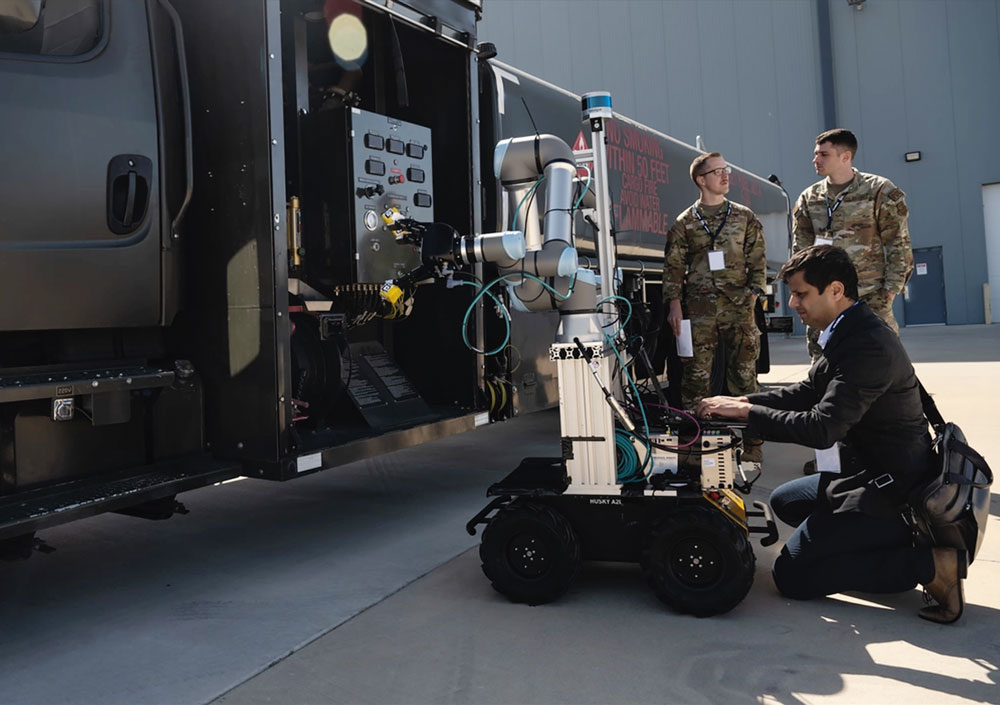
In naval operations, underwater robots now inspect hulls for cracks or corrosion without the need for divers. Gecko Robotics deploys wall-climbing machines to scan massive structures such as fuel tanks and submarine exteriors.
These technologies do not replace humans—they amplify their effectiveness. A single technician supported by inspection robots can do the work of a team, covering hazardous or confined spaces quickly and safely.
Robotics adoption also addresses a demographic challenge: many armed forces face shortages of skilled maintainers. By reducing repetitive manual work, autonomous systems free personnel for higher-value tasks. The obstacle lies in integration—robot-generated data must flow seamlessly into digital twin and logistics platforms. Achieving this requires open standards and interoperability, still a work in progress across NATO.

Connected Logistics and Cyber-Resilient Maintenance
Connectivity is the invisible backbone of modern defence maintenance. Once described as the Internet of Military Things (IoMT), the concept has matured into connected logistics: secure, decentralized systems resilient to cyber threats.
Every vehicle, aircraft, and weapon system now generates telemetry. These data flow into logistics platforms that anticipate spare part demand, schedule maintenance proactively, and even simulate fleet-wide readiness scenarios.
The U.S. Army’s Global Combat Support System (GCSS-Army) is one example, providing commanders with real-time insight into the health of their units. Similar initiatives in NATO allow multinational data exchanges so coalition forces can coordinate maintenance across borders.
But with connectivity comes vulnerability. Adversaries could corrupt maintenance data, trigger false alarms, or conceal critical faults. The authenticity of additive manufacturing files is another concern: a hacked blueprint could produce a defective part.
These worries make cybersecurity a core element of maintenance strategy, no less vital than protecting fuel convoys or ammunition depots.
Virtual Training and Augmented Reality for Maintainers
Even the most advanced tools require skilled personnel. Training maintainers has always been challenging, especially when access to complex systems is limited. This is where virtual maintenance training (VMT) and augmented reality (AR) are proving transformative.
VMT systems provide immersive 3D environments where technicians can practice disassembly and repair without touching real equipment. This is invaluable for nuclear submarines or stealth aircraft, where live training is restricted.
AR overlays digital guidance directly on the maintainer’s field of view, offering “X-ray” insights into hidden components or step-by-step instructions. The U.S. Air Force has deployed AR headsets for F-35 maintenance, and the German Bundeswehr is testing similar systems for Eurofighter support.
These technologies accelerate learning, standardize procedures, and reduce error rates. In multinational exercises, AR even bridges language barriers, with overlays delivering instructions in multiple languages simultaneously.
Challenges include the cost of XR hardware, connectivity in remote bases, and the need for constant updates of digital content. But the return on investment is clear: faster training, safer operations, and more resilient maintenance teams.
Performance-Based Logistics and S4000P
Technology alone does not deliver readiness. Contracting models and standards provide the structure that makes it work.
Performance-Based Logistics (PBL) has become the gold standard in defence contracting. Instead of paying suppliers for tasks or parts, militaries now pay for outcomes: availability, reliability, and cost efficiency. The U.S. Department of Defense reports PBL contracts can deliver 10–20% cost savings while improving readiness.
The S4000P standard, developed by European and U.S. aerospace associations, is the reference for preventive maintenance across defence programs. It provides a systematic method for defining tasks that ensure safety and readiness at minimal lifecycle cost.
Together, PBL and S4000P ensure cutting-edge technologies are anchored in a sustainable framework of accountability and best practice.
Challenges and Barriers
Despite the promise of these innovations, several cross-cutting challenges remain:
• Cybersecurity risks: Maintenance data and digital twins are prime targets for adversaries. Manipulating them could disable fleets without firing a shot.
• Certification and trust: 3D-printed parts, AI predictions, and autonomous robots must meet strict safety standards before full acceptance. Certification is often slower than innovation.
• Workforce transformation: Maintainers must now master data analytics, robotics, and cybersecurity alongside mechanics. This requires a major investment in training.
• Budgetary pressures: Initial investments in these technologies are high. Decision-makers must balance them against competing procurement priorities.
• Interoperability: NATO and coalition operations depend on shared standards. Without harmonization of data, certification, and AI models, joint maintenance risks fragmentation.
Beyond the technical and contractual hurdles, one of the greatest obstacles lies in cultural and organizational inertia. Armed forces, by nature, are conservative and risk-averse, and this is likely to slow the adoption of disruptive maintenance practices. Even when pilot projects prove successful, scaling them across entire fleets can take years due to rigid hierarchies, fragmented responsibilities, and reluctance to move away from established routines. Added to this are geopolitical supply chain dependencies, where reliance on rare materials or foreign suppliers undermines the very autonomy the right-to-repair and additive manufacturing aim to deliver. These cultural and geopolitical dimensions remind us that innovation in maintenance is not purely a technological challenge—it is also an institutional one. How these challenges are addressed will determine whether current pilot projects remain isolated or scale into the backbone of global defence maintenance.
Regional Perspectives
Although the trends toward innovation are global, the adoption of technology varies significantly across regions, reflecting different strategic priorities, industrial bases, and defence cultures.
• United States: The U.S. continues to lead in AI-enabled predictive maintenance and additive manufacturing, driven by strong investment in programs like ERM for naval fleets and 3D-printed parts for aircraft. Its emphasis is on deploying disruptive technologies quickly, even if certification frameworks are still evolving. The right-to-repair initiative also marks a major cultural shift, designed to reduce dependency on OEMs and speed up frontline readiness.
• Europe: European defence forces focus on standards and frameworks, such as S4000P for preventive maintenance and digital twin initiatives in multinational programs like FCAS. The EU’s collaborative approach emphasizes interoperability, sustainability, and lifecycle cost control. Robotics and AR-based training systems are being rolled out progressively, but adoption is often slowed by fragmented procurement and regulatory processes across EU member states.
• Asia-Pacific: Nations like Japan, South Korea, and Australia are prioritizing autonomy and resilience in maintenance. Japan has integrated AI into naval fleet diagnostics, South Korea is piloting predictive analytics for armoured vehicles, and Australia is at the forefront of deploying additive manufacturing in forward bases and submarines. In this region, where logistics chains may be stretched over vast maritime distances, self-sufficiency through AM and robotics is a strategic necessity.
While the technologies are universal, their application is shaped by local conditions. The U.S. favours rapid innovation, Europe emphasizes harmonization, and Asia-Pacific prioritizes resilience and autonomy. Together, they underline that maintenance has become a pillar of defence strategies worldwide.
The Bigger Picture: From Maintenance to Mission Assurance
The common thread across all these innovations is a transformation in mindset. Maintenance is no longer viewed as a cost centre or a back-office function. It is a strategic enabler of operational superiority.
• AI and digital twins create foresight.
• Additive manufacturing and right-to-repair create autonomy.
• Autonomous robots and XR tools create safety and efficiency.
• Connected logistics and cybersecurity create resilience.
• Standards and contracting frameworks create sustainability.
In military operations, downtime is vulnerability. The new maintenance arsenal ensures armed forces can deploy, fight, and return home with maximum effectiveness and minimum disruption.
Looking Ahead
As the defence sector looks toward 2030 and beyond, several questions remain open:
• How will cyber threats challenge predictive maintenance platforms?
• To what extent can autonomous systems replace human inspection and repair?
• Will right-to-repair and additive manufacturing reshape the relationship between militaries and OEMs?
• How will NATO harmonize digital twin frameworks across borders?
• Can training systems scale fast enough to close the skills gap in technical roles?
One thing is certain: the race for maintenance superiority is no less important than the race for hypersonic missiles or AI-driven command systems. Armed forces mastering these trends will enjoy both lower costs and a decisive operational edge.
Final Word
Maintenance in defence has moved to the forefront of innovation, blending data science, robotics, new manufacturing methods, immersive training, and smart contracting. For industry professionals, policymakers, and operators alike, the message is clear: maintenance is mission assurance.
Future wars may be won not just by who fires first, but by who keeps their equipment running longest, safest, and smartest.
Text: Prof. Diego Galar
Subscribe to the free Maintworld newsletter here!
Ask Smarter, Innovate Faster

Innovation doesn’t die from a lack of ideas—it dies from a lack of curiosity. Diana Kander, bestselling author and innovation strategist, believes we’re asking the wrong questions.
In a world where disruption is constant and failure are feared, she challenges leaders to flip the script: get curious, stay humble, and fall in love with learning. This isn’t just advice it’s a blueprint for reinvention.
Most leaders are asking the wrong questions. Diana Kander argues that curiosity is a leader’s most underused asset. But in too many organizations, curiosity is stifled by ego, routine, and the pressure to appear confident. Kander’s message is clear: stop pretending you know and start asking what you’re missing. “When you ask the right question, innovation follows,” she says.
The real enemy of innovation is overconfidence. Success often leads to blind spots. When teams become too sure of their own brilliance, they stop seeking feedback. “When you feel like the smartest person in the room, you’ve stopped learning,” Kander warns. Instead, she champions humility, feedback loops, and relentless experimentation as the foundation for creative progress.
Too many teams fall in love with solutions, not problems. Kander urges innovators to flip that. “Spend less time pitching your solution and more time validating your assumptions,” she advises. Innovation fails not because ideas are bad, but because no one tests them fast enough—or honestly enough—to know.
Real innovation starts small and messy. One standout example from Kander’s experience involves a team testing a product idea in a grocery store. Instead of running expensive focus groups or building a full prototype, they simply acted it out in public. The responses they gathered on the spot helped them pivot instantly. The lesson? You don’t need polish you need proximity to reality.
Diana Kander offers three practical shifts every leader can make today:
1. Prototype fast and ugly. Don’t wait until an idea is perfect. Build the minimum version and get it in front of real users.
2. Kill your darlings. If you’re not challenging your own ideas, they’ll eventually be challenged by the market. Ask: What would make this fail?
3. Create safe failure zones. Build environments where people are free to experiment, fail, and learn—without career damage.
“You can’t learn and look good at the same time”, Kander quips. That truth hits hard in performance-driven cultures where image often trumps insight. But growth requires risk, vulnerability, and the kind of honesty that makes learning possible.
The culture you build will either feed or choke innovation. Do you reward flawless execution or fearless learning? Do your team members hide failures or share them as lessons? Kander believes the companies that will win in the long term are those that treat curiosity as a strategic advantage, not a side note.
She knows this personally. Kander’s own journey is full of experiments, some that soared, many that didn’t. What separated the wins from the losses was how quickly she and her teams could learn, adapt, and try again. For her, curiosity isn’t just a mindset—it’s a muscle. And the best leaders train it daily.
Make innovation part of the way you lead. Not a department. Not a quarterly sprint. But an everyday discipline grounded in small tests, sharp questions, and fast feedback. That’s how organizations grow ideas that actually matter.
Diana Kander at a Glance
Diana Kander is a bestselling author, innovation coach, and serial entrepreneur. She has advised Fortune 100 companies, startups, and even military leaders on how to unlock creativity and drive meaningful change. She delivered a standout keynote on innovation at Nordic Business Forum 2025.
Diana Kander: Go Big or Go Home
An insightful and entertaining guide that shows how asking better questions can lead to bolder results. Packed with tools to make innovation more accessible, impactful, and fun.
Text: Mia Heiskanen Photos: Pasi Salminen Visual: Nordic Business Forum/Linda Saukko-Rauta
Subscribe to the free Maintworld newsletter here!
What Unplanned Downtime Really Costs

When production stops, losses start adding up fast. New study shows just how costly unplanned downtime has become for manufacturers.
A recently published study by Fluke Corporation reveals the true cost of downtime in industrial manufacturing.
The survey, conducted by Censuswide, interviewed 600 respondents representing food and beverage, oil and gas, life sciences and automotive manufacturing companies in Germany, the UK and the US. Last year, 61% of manufacturers suffered unplanned downtime, costing the industry up to $852 million per week.
Downtime Is Common
48% of companies report between six and ten outages per week, and almost one in five (19%) face between 11 and 20 weekly outages. 45% of businesses reported outages lasting up to 12 hours, and 15% experienced downtime of up to 72 hours.
Globally, the risks are highest for large companies. 40% of organisations with more than 50,000 employees report between 11 and 20 outages per week, and half of these organisations experience outages lasting up to 72 hours.
“Our research paints a compelling picture: manufacturers are caught in a cycle where downtime directly undermines competitiveness, and too many are forced to settle for piecemeal fixes,” said Parker Burke, Group President at Fluke Corporation.
Average Costs
According to the report, the average cost is $1.7 million per hour, meaning that a single outage can result in losses of up to $42.6 million.
While the number of outages is fairly consistent across the three regions studied, there are differences in costs.
In the UK and Germany, losses can reach up to $62.7 million, while the global average is much lower at $40.8 million per outage.
“The data shows that outages can no longer be seen as just an operational problem. It is a real risk to competitiveness and business value,” says Burke.
Increasing Resilience
The report found that many companies remain fragmented in their response. Manufacturers are spreading their digital investments across multiple tools – such as predictive maintenance (12%), digital twins (12%) and condition monitoring (13%) – rather than implementing integrated reliability strategies.
“Our research shows a stark reality: too many manufacturers are stuck reacting to outages instead of getting ahead of them. Quick fixes might keep things going for a while, but they don’t build long-term sustainability,” Burke said.
Text: Vaula Aunola Photo SHUTTERSTOCK
Subscribe to the free Maintworld newsletter here!
Driving Europe’s Maintenance Evolution Through Digitalisation and Education

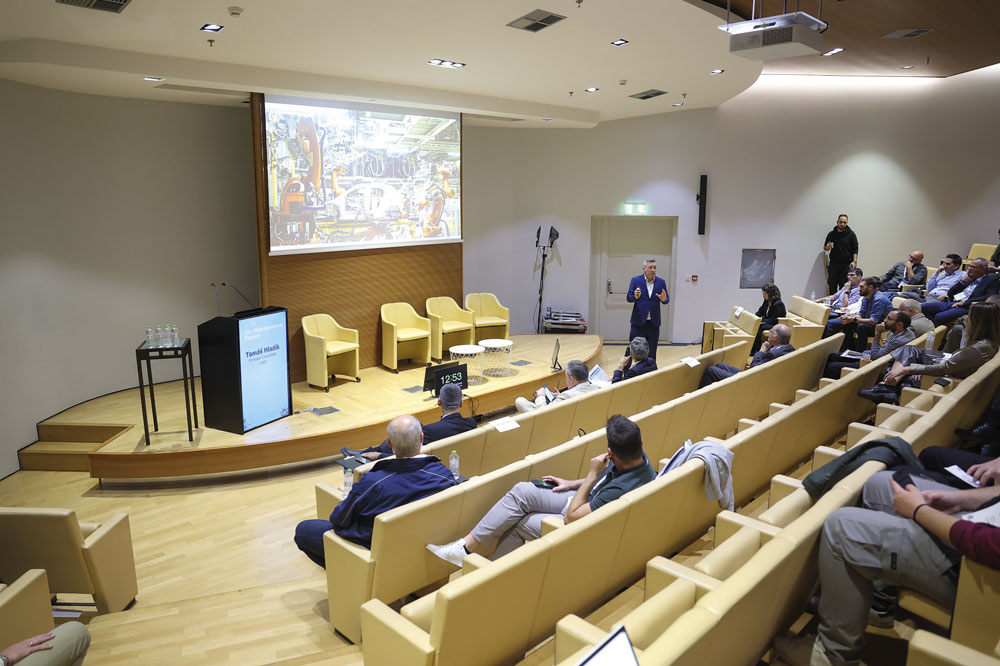
When critical equipment fails, the consequences can ripple across entire operations. That’s why, for Tomáš Hladík—Vice Chairman of the EFNMS European Training Committee—maintenance is not just a technical chore. It is a strategic part of doing business.
Whether it is a factory, a railway, or a power plant, a single breakdown can grind operations to a halt, disrupt services, and trigger a chain of costly delays. Sometimes, all it takes is one missing spare part to bring an entire system to a standstill.
Tomáš Hladík believes it’s time to rethink the role of maintenance—and to remember that spare parts management, too, is a critical component of any effective maintenance strategy.
“Maintenance must move from the back office to the boardroom,” he insists. “It shapes competitiveness, resilience, and sustainability across European industry.”
Based in Prague, Czechia, Tomáš bridges industry, academia, and international collaboration. At the Czech University of Life Sciences Prague, he teaches courses on supply chain efficiency and modern maintenance strategies.
One of his key academic contributions lies in the field of Reliability and Risk Treatment–Centred Maintenance. In his research, he has applied methodologies such as Reliability-Centred Maintenance (RCM) and Risk-Based Inspection (RBI).
In his paper, Monetising Data in Maintenance, he explored how digitisation and Industry 4.0 technologies – such as IoT and IIoT – can optimise spare parts inventory. In this study, he proposes models for big data monetisation and outlines eight best practices for effective spare parts management, including inventory segmentation, criticality assessment, and forecasting.
Modernising Maintenance Education
As a Principal Consultant at Logio—a European consulting and technology firm specialising in supply chain management—Tomáš has spent nearly two decades translating theory into practice. He works closely with manufacturers and retailers to streamline their operations and achieve measurable reductions in waste through data-driven decision-making.
Beyond his consulting and research work, Tomáš has helped to steer the future of maintenance education across Europe. As Vice Chairman of the Training Committee at the European Federation of National Maintenance Societies (EFNMS), he is helping to modernise educational programs, harmonise knowledge frameworks, and elevate professional standards. In this role, his goal is to align training across the continent and prepare the next generation of professionals for a future defined by digital transformation and sustainability.
“I’ve always blended business with academia,” Tomáš says. “It’s not just about teaching—it’s about connecting students with real-world projects and bridging the gap between theory and practice.”
Tomáš Hladík’s path into European maintenance leadership wasn’t planned. After finishing his engineering studies at the Czech University of Life Sciences Prague, he was invited to teach and, through a mentor, got involved with EFNMS in 2006.
“I was the youngest member for a long time,” he says with a smile. “Not anymore, but the industry still needs more young people. That’s a big challenge.”
After chairing the committee for several years, he is now helping to shape how maintenance professionals are educated across Europe. He values the power of networks his work with EFNMS provides: “If I need an expert in any country, I know exactly who to contact.”
He also contributes to the EFNMS Body of Knowledge, a guide to key areas in maintenance and asset management. With his background in supply chains, Tomáš has helped reframe spare parts management as a strategic issue—not just a logistics issue.
Optimising these systems, he says, improves reliability, cuts waste, and strengthens resilience.
“Spare parts aren’t just about storage anymore—they’re vital to long-term performance.”
Spare Parts: A Strategic Discipline
If there is one topic that consistently captures Tomáš Hladík’s attention, it is spare parts management—often overlooked but vital. At first glance, it may seem like a simple logistics issue: keep enough stock to avoid shortages. But Hladík insists it is far more complex.
“Not having critical spare parts could put you out of business quite easily,” he warns. “This is especially true in industries like power generation or oil and gas, but it is just as relevant for manufacturers or operators of complex technologies and fleets like trains or trams.”
A tram, for example, may consist of 12,000 individual components, but only around 2,000 are practical to provide as spares. Identifying these LRUs (“line-replaceable units”) requires deep knowledge, foresight, and coordination across design, procurement, production, and operations. It is part of Product Lifecycle Management (PLM) – another strategic process that integrates data and activities across all stages of the life cycle of a complex machine, such as a train or tram.
“Some manufacturers still guess,” Hladík admits. “That creates enormous risk. Underestimate, and you face downtime and angry customers. Overestimate, and you tie up millions in unnecessary stock. Getting it right is a strategic advantage.”
From Selling Products to Selling Services
Looking ahead, Tomáš sees the rise of performance-based and full-service contracts—where providers guarantee uptime and performance over decades—as one of the most significant shifts in the industry.
“This is gaining more and more popularity in public transport—trams, trains, metros, aeroplanes,” he says. “Instead of buying a tram, for instance, the customer buys years of operation, hours of good performance measured by defined KPIs. The risk of downtime and inefficiency shifts from the operator to the manufacturer. That completely changes the business model.”
Large European manufacturers of trains or trams, he explains, are excellent at building trains. But selling long-term operations is another story. “They struggle because they don’t know what the actual reliability or MTBFs will be over 20 years. They’re guessing—and that makes pricing and managing these contracts very difficult.”
The shift toward full-service models in industrial assets is accelerating across Europe and around the globe. Western Europe is relatively advanced, Central Europe is catching up, and Eastern Europe is just starting to catch up. However, the direction is clear: customers are increasingly paying for outcomes rather than assets.
“You don’t need to own, for instance, the turbine anymore,” Tomáš says. “You rent it and pay only for the tonnes of steam it produces. The same model is being offered for automated logistics solutions, like automated warehouses or robotic handling in e-commerce fulfilment centres. The provider takes the risk for maintenance and inefficiency. This is already happening—and it will only grow.”
Challenges and Opportunities for Europe
Europe’s industrial sector is facing mounting pressure. Years of de-industrialisation have shifted core manufacturing to Asia, leaving the continent increasingly dependent on imports of electric vehicles, batteries, solar panels, and even advanced tech like robots.
“We’ve almost lost the ability to compete in the production of electric vehicles,” notes Tomáš. “Chinese EVs aren’t just cheaper—they’re often higher in quality than European models. The same story plays out in batteries and renewable technologies. These are technologies in which we once led, but now we repurchase them from Asia.”
Demographic shifts further complicate the picture. Countries such as Germany, Italy, Poland, and Finland are experiencing workforce shrinkage. Migration offers partial relief—Czechia, for instance, has welcomed 380,000 Ukrainian immigrants, half of whom are now employed and paying taxes, contributing positively to the economy—but it’s not a long-term fix, Tomáš says.
Despite the current challenges, Tomáš remains optimistic about Europe’s industrial future. He believes the continent must define its signature product for the 21st century—whether in pharmaceuticals, green technology, or sustainable infrastructure—and identify its next major growth market.
While Asia continues to dominate in many sectors, Tomáš views Africa’s rapidly growing population as a strategic opportunity.
“Europe is ageing and losing ground in automotive, AI, green technologies, and industrial automation. Meanwhile, China faces a population crisis and is turning to large-scale robotisation—using robots made in China. But as China’s domestic demand declines, it too is looking toward the market of the future: Africa. Whoever leads in Africa may well lead the next century,” Tomáš says.
To seize existing opportunities, Europe must also address a critical talent gap. Attracting young professionals to industrial and maintenance careers is essential for long-term EU industry competitiveness.
“Maintenance sits at the intersection of reliability, safety, and competitiveness,” Tomáš explains.
“It’s not routine work—it’s a dynamic, high-impact profession that shapes the future of industry. We need to communicate this clearly to the next generation.”
Education for a Changing Industry
Education is one of Tomáš Hladík’s enduring passions. As the industrial landscape undergoes rapid transformation, he insists that certain foundational principles must remain intact. “Skills like critical thinking, problem-solving, and the ability to learn form the foundation of every program,” he says. “They’re non-negotiable.”
Yet, the demands of modern industry require more than timeless skills. New competencies—such as predictive analytics, lifecycle management, digitalisation, and sustainability—are now central to effective maintenance. As technology evolves, so must the educational frameworks that support it.
“Technicians must learn how to maintain robots,” Hladík explains. “Not just gears and gearboxes, but sensors, grippers, and control systems. In 2023, Germany already had 430 industrial robots per 10,000 employees. In China, that number was 470, and the shift toward robotics has only just begun. This is the reality we must prepare for.”
Electric vehicles (EVs) present another emerging challenge. “In theory, EVs require less maintenance,” he notes. “But in practice, if your EV breaks down, you’ll wait a long time. There aren’t enough workshops with the skills to repair them. We urgently need more education and talent in this field.”
For Tomáš, the message is clear: education must evolve continuously. “Critical thinking, problem-solving, and the ability to learn will always remain at the core,” he emphasises. “But they must be combined with fundamentals and knowledge of emerging technologies and sustainability practices. That’s how we prepare the next generation.”
The Demographic Dilemma
Europe’s maintenance industry is navigating not only technological disruption but also a looming demographic crisis.
“By 2030, in the EU, most of the workforce will be between 50 and 65,” notes Tomáš. “That’s a serious challenge.”
While attracting young talent is essential, Hladík warns against sidelining older professionals.
“Many companies focus on hiring the young, but seniors hold a wealth of knowledge and experience. That expertise should be treated as a goldmine—not discarded.”
He points to Japan’s “super seniors” as a model: retired experts who continue contributing without rigid performance targets, mentoring younger colleagues and preserving institutional wisdom. In contrast, Europe often loses this expertise when workers retire and exit the workforce entirely.
Technology, Hladík believes, can help bridge the generational gap.
“With augmented reality, retired experts can guide younger technicians remotely offering real-time advice from home. It’s a new way of transferring knowledge without being physically present. We must explore these options.”
For Tomáš, maintenance is more than keeping machines running—it’s becoming a key driver of competitiveness and sustainability.
As European industry rapidly evolves, his vision highlights how innovation and experience together can transform maintenance into a cornerstone of industrial strategy.
“In our new reality, education must keep pace,” he stresses. “We can’t afford to fall behind.”
Text: Nina Garlo-Melkas
Photos: Mia Krizkova
Optimising Spare Parts: Hladík’s Eight Strategies for Data-Driven Maintenance
Tomáš Hladík presents a data-driven approach to improving spare parts management in his paper “Monetising Data in Maintenance: Data-driven Spare Parts Management,” published in the Maintworld magazine (issue 3/21).
Here are the key strategies he recommends:
1. Focus on Preventive Maintenance. Preventive (and predictive) strategies reduce the need to hold extensive inventories of spare parts.
2. Solve Process Inefficiencies: Identify and eliminate bottlenecks and data insufficiencies in spare parts workflows to optimise efficiency.
3. Segment the Spare Parts Portfolio. Classify parts by usage, value, and criticality, and work with each segment separately to optimise stock levels.
4. Evaluate Criticality and Assess which parts are essential for operations, prioritising their availability.
5. Utilise Accurate Forecasting Methods: Employ statistical models to predict demand accurately and prevent overstocking or shortages.
6. Handle Intermittent Demand Smartly. Use specialised techniques for parts with irregular usage patterns.
7. Consider Asset Lifecycle: Align spare parts decisions with the full lifecycle of equipment and machinery.
8. Clean and Rectify Master Data. Improve naming conventions and eliminate duplicates to enhance data quality and accuracy.
About Tomáš Hladík
• Location: Prague, Czechia
• Roles: Principal Consultant & Project Manager at Logio | Vice Chair, EFNMS European Training Committee | Member of the board, Czech Maintenance Society | Lecturer, Czech University of Life Sciences
• Education: PhD (Quality & Reliability of Machines), Czech University of Life Sciences Prague; MSc (Operations Management), University of Birmingham
• Expertise: Spare parts management, simulation and optimisation, supply chain resilience, maintenance and asset management
• Research & Publications: Inventory optimisation, reverse redistribution management, maintenance efficiency
• Professional Service: Former Chair, EFNMS European Training Committee; contributor to EFNMS Body of Knowledge
Rethinking Maintenance: A Strategic Path for Europe’s Industrial Renewal
• Invest in predictive maintenance to reduce unplanned downtime and extend asset life.
• Establish regional spare parts hubs to minimise reliance on global supply chains.
• Modernise training programs to equip technicians with skills in robotics, EVs, and sustainable technologies.
• Be brave and hire experienced seniors—this is the forgotten golden mine of human resources in Europe.
• Use augmented reality to retain senior expertise and support younger workers through remote mentoring.
• Strengthen cross-border collaboration via networks like EFNMS to share best practices and accelerate innovation.
Europe’s industrial resilience hinges on its ability to reframe maintenance—not as a cost centre, but as a strategic engine for competitiveness, sustainability, and long-term growth.
Text: Nina Garlo-Melkas
Photos: Mia Krizkova
Subscribe to the free Maintworld newsletter here!
Turning Emissions into Assets
Biogenic carbon dioxide (CO₂) and Carbon Capture Utilisation (CCU) are emerging as transformative technologies across sectors. Projects like Metsä Group’s Rauma pilot mark key steps toward scalable carbon valorisation in the forest industry.
As industries move away from fossil materials, biogenic CO₂ captured from biomass processes is gaining attention. Unlike fossil carbon dioxide, biogenic CO₂ is part of the natural carbon cycle and can be reused without raising net emissions.
In the forest industry, this side stream has remained largely untapped. But experts now believe it could be the key to a new industrial revolution—especially as the hydrogen economy matures and synthetic fuels gain traction.
Exploring CCU from pulp mill emissions
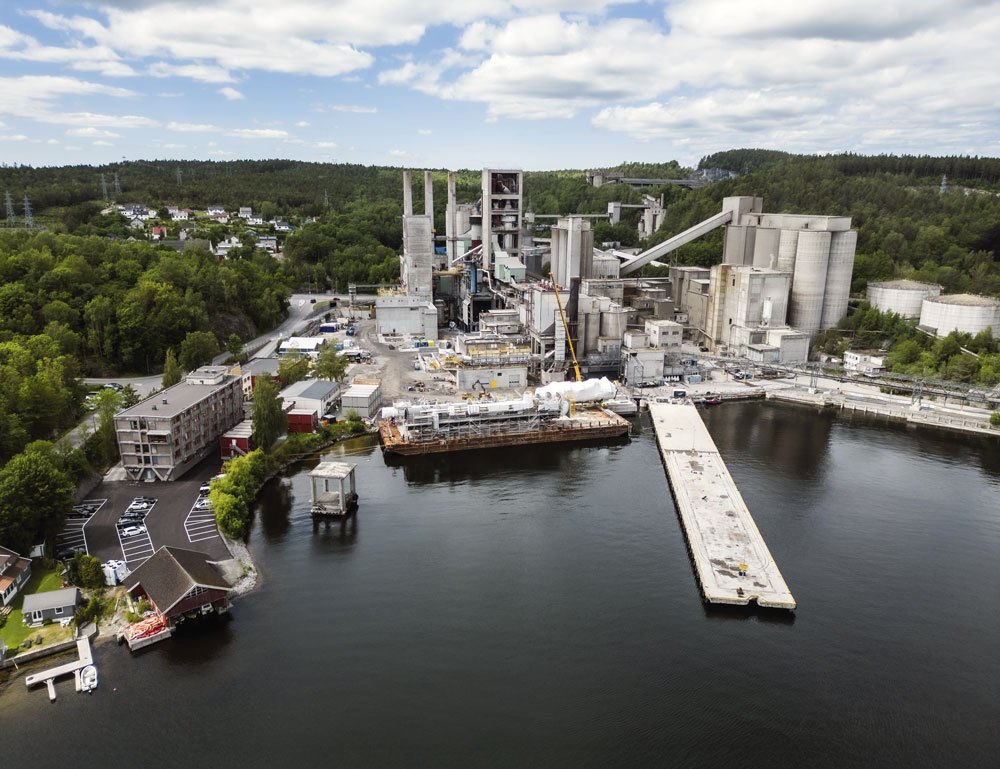
In September 2025, Finnish forestry company Metsä Group said it launched a carbon capture pilot at its Rauma pulp mill in collaboration with technology partner Andritz. The plant, operational since June, has the capacity to capture approximately one ton of carbon dioxide per day from pulp mill flue gases—marking the first such application in the sector.
“So far, the technology appears to be working well with pulp mill flue gases,” said Kaija Pehu-Lehtonen, SVP Business Development and head of the project.
The pilot is not yet aimed at commercialisation. Instead, it is exploring process conditions like energy consumption, flue gas cleaning needs, and carbon dioxide purity. If successful, Metsä Group may scale up to a facility capturing 30,000–100,000 tons annually—over 100 times the current capacity.
However, scaling will require viable markets and partners who can utilise the captured CO₂ in their own production.
“The entire value chain must be financially feasible,” Pehu-Lehtonen noted.
What Is CCU—and Why It Matters
CCU refers to the process of capturing carbon dioxide emissions and converting them into valuable products. Unlike Carbon Capture and Storage (CCS), which sequesters carbon dioxide underground, CCU keeps carbon in circulation by transforming it into fuels, chemicals, or materials.
In the forest industry, CCU offers a unique opportunity to:
• Reduce emissions from biomass combustion
• Replace fossil carbon in industrial processes
• Create new revenue streams from captured CO₂
When combined with green hydrogen, biogenic carbon dioxide enables the production of synthetic fuels such as methanol, methane, and jet fuel. It also has applications in fertilizers, plastics, and even concrete—where mineral binding can make products carbon-negative. Finnish startup Carbonaide and U.S.-based Carbix are already pioneering such technologies.
“Biogenic carbon dioxide is not just an emission—it’s a renewable raw material that can connect the forest industry
and the hydrogen economy,” Professor Kristian Melin of LUT University said in an interview with Forest.fi.
Policy Push: EU Targets Sustainable Aviation
Professor Kristian Melin, an expert in novel processes using biomass and biogenic carbon dioxide at LUT University, views Metsä Group’s Rauma pilot as a critical step in demonstrating the viability of CCU technology within forest industry operations.
According to Melin, small-scale pilots like this are essential for refining process conditions and ensuring that future large-scale facilities can operate efficiently and reliably.
The strategic importance of biogenic carbon dioxide is expected to grow significantly in coming years as global demand for synthetic fuels rises—particularly in sectors like aviation, where decarbonization is technically challenging.
This shift is reinforced by EU policy. The ReFuelEU Aviation Regulation mandates the increased use of sustainable aviation fuels (SAF), including both bio-based and synthetic options. By 2030, the EU aims to consume at least 2 million tons of SAF annually, with even higher targets set for 2050.
Melin believes that Nordic countries, especially Finland and Sweden, are well-positioned to lead in this emerging market.
“We have abundant sources of biogenic carbon dioxide and access to competitively priced renewable electricity—both of which are essential for producing green hydrogen and synthetic fuels,” he noted.
Cementing the Future
Carbon capture and storage (CCS) is reshaping the future of heavy industry, and few sectors stand to benefit more than cement. Responsible for an estimated 7–8% of global CO₂ emissions, cement production poses a unique challenge: much of its carbon footprint stems not from energy use, but from the chemical reaction that occurs when limestone (CaCO₃) is heated to produce clinker. These process emissions are difficult to eliminate through efficiency improvements alone.
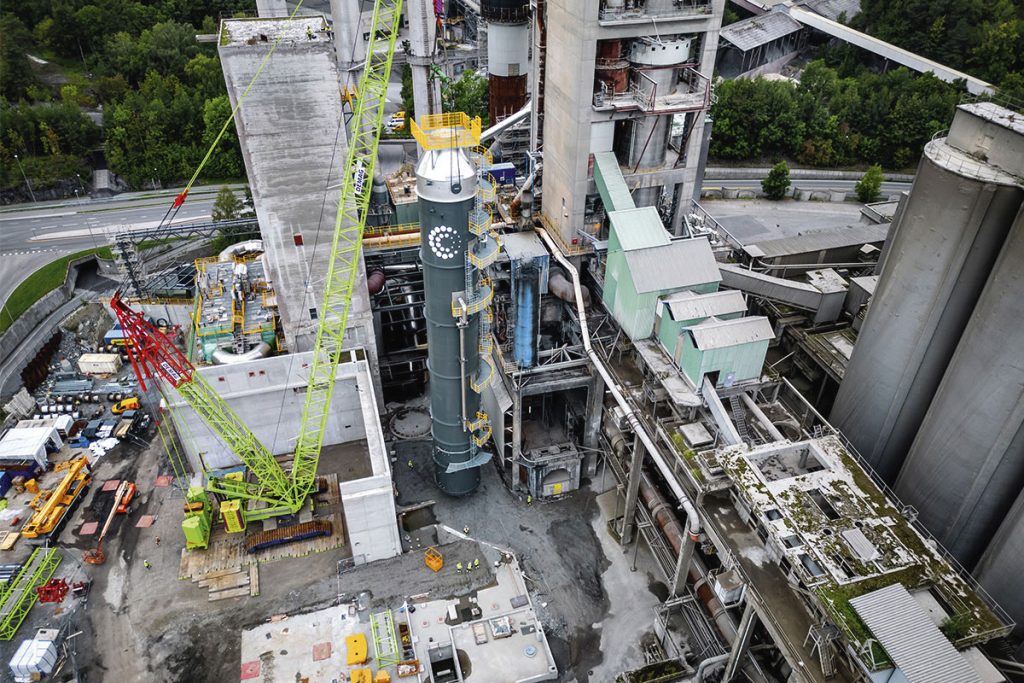
A breakthrough has been underway in Norway. The Norcem Brevik cement plant, operated by Heidelberg Materials, became the world’s first full-scale CCS facility in the cement industry when it began capturing CO₂ in June 2025. The captured carbon is transported to Øygarden on Norway’s west coast, where it is permanently stored beneath the seabed as part of the country’s Longship climate initiative.
Brevik’s achievement is not just technological—it’s operational. Running a complex CCS system alongside full-scale cement production demands precision and resilience. The facility integrates chemical scrubbers for CO₂ separation, heat exchangers for energy recovery, cryogenic tanks for liquefied CO₂ storage, and high-pressure pipelines for safe transport to the coast.
Maintaining this infrastructure requires more than routine oversight. Heidelberg Materials reports that the project involved over 1.2 million hours of technical work and coordination among hundreds of engineers and partners. It’s a testament to what’s possible when innovation is matched by execution.
Global Momentum Builds
The Norcem Brevik cement plant has inspired similar carbon capture initiatives across Europe.
In Denmark, the nation’s largest cement producer Aalborg Portland is currently advancing its own CCS strategy as part of the broader Project Greensand initiative, which aims to store carbon dioxide in depleted oil fields beneath the North Sea.
Working with partners, the company plans to build and operate a carbon capture facility capable of reducing emissions by 1.5 million tons of carbon dioxide annually starting in 2030. If successful, it would mark the largest single CO₂ reduction in
Denmark’s history, significantly supporting the country’s national climate goals.
Meanwhile on 1 October 2025, Heidelberg Materials announced its plan to build a new full-scale carbon capture facility at its
Padeswood cement plant in Wales. The plant will capture nearly 800,000 tons of CO₂ annually—virtually eliminating its emissions—and supply evoZero, the company’s net-zero concrete across Europe.
Padeswood will therefore become Heidelberg’s second industrial-scale CCS site, following the launch of the Norcem Brevik CCS in Norway earlier this year.
Norcem Brevik CCS
• Location: Norcem Cement Plant, Brevik, Norway
• Operator: Heidelberg Materials in collaboration with SLB Capturi
• Launch: Mechanical completion in Dec 2024; official opening held 17–19 June 2025
• CO₂ Capture: 400,000 tonnes/year (about half of plant’s emissions)
• Technology: Big Catch™ concept with heat integration and on-site storage
• Storage Site: Øygarden, under the North Sea (via Longship project)
• Impact: Enables net-zero cement production and sets a global CCS benchmark
Subscribe to the free Maintworld newsletter here!
How Hyperspectral Imaging Is Reshaping Mining Safety
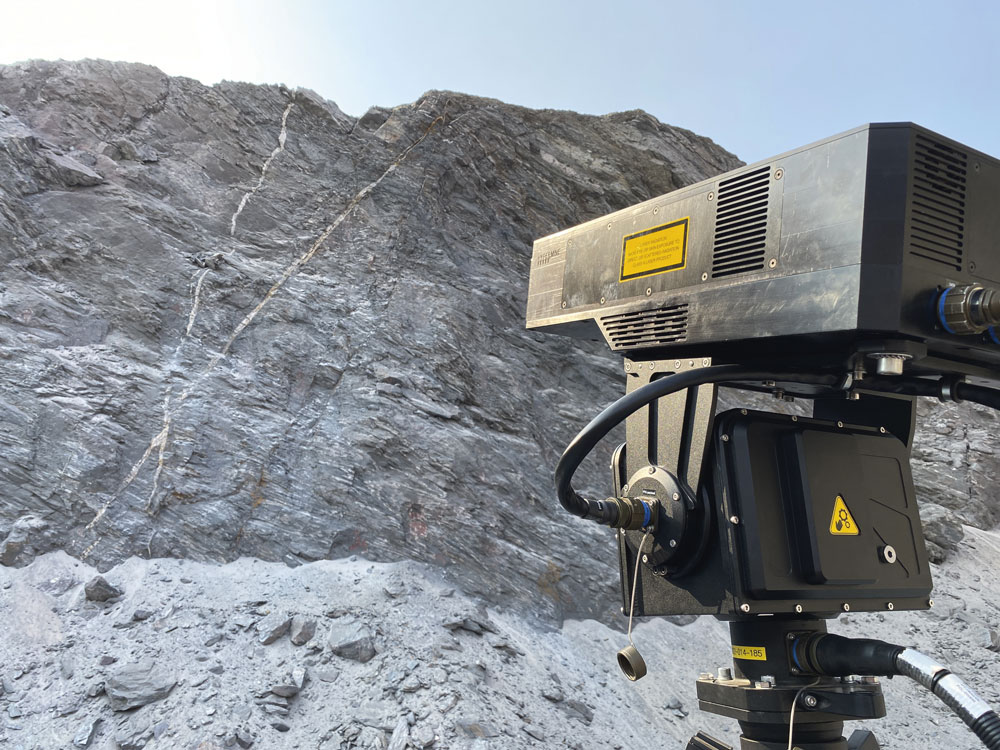
A laser-based hyperspectral scanner developed by Finnish scientists gives mining companies a faster and more precise way to identify mineral compositions, enabling the early-stage separation of valuable minerals directly at the point of extraction.
Hyperspectral mineral detection is one of the most promising alternatives to traditional mineral detection methods, as it enables real-time analysis of excavated rock and the separation of valuable ore even from rock considered as waste. This not only reduces material loss and optimises production but also supports maintenance efficiency and improves operational safety.
A 2023 study in the International Journal of Mining Science and Technology found that hyperspectral imaging offers greater accuracy and flexibility than traditional mineral detection, particularly for continuous, non-destructive measurements. Unlike laboratory-based methods that require physical samples, hyperspectral systems gather data remotely and instantly, enhancing mineral identification, process control, and maintenance planning.
Hypermine Global Ltd., the company behind the new laser-based system, reports that its technology can improve detection accuracy by up to a hundredfold, increase mine yields by 10%, while reducing energy and water use in production processes.
From research to global innovation
Hypermine Global originated at VTT, Finland’s leading research and technology centre, where hyperspectral technology has been developed since the 1960s. Over the years, VTT’s research has produced several successful spin-offs, including SPECIM, Spectral Imaging Oy Ltd., whose hyperspectral cameras are used today worldwide.
Mining remains a cornerstone of modern industry—essential for energy, electronics, and construction—but operations often take place in challenging environments. Hypermine Global was founded to address these challenges by applying hyperspectral technology to real mining conditions.
Initially used in laboratories, laser-based hyperspectral imaging evolved toward field applications through a co-development with a leading mining company led by Dr. Mikhail Mekhrengin and Dr. Andrei Rupasov.Early discussions with major mining companies revealed strong interest.
“We spoke with more than ten major mining firms worldwide, and over 95% wanted to pilot the solution immediately. That was a clear sign we were on the right path,” says Hypermine Global CEO Mikhail Mekhrengin..
More revenue, less waste
Global megatrends—urbanisation, population growth, and the energy transition—are increasing demand for minerals, even as easily accessible deposits decline.
“Currently, rocks are sorted in massive 10,000-ton mining blocks, which leads to unnecessary waste,” Mekhrengin explains.
“Our technology identifies good and poor boulders right after blasting, boosting yields while cutting energy, acid use, and water consumption by 10–15%.”
This precision also reduces wear and tear on mining equipment. By separating valuable fragments early, unnecessary handling is avoided, optimising system loads and extending machine life.
“At the same time, safety improves: when only selected materials are processed, equipment experiences less stress and fewer failures,” says Mekhrengin.
Remote analysis further enhances worker safety by eliminating the need for manual sampling in hazardous zones, reducing exposure to dust, chemicals, and collapse risks, Mekhrengin adds. Real-time data also improves maintenance predictability, allowing early detection of potential failures or safety threats.
How hyperspectral imaging works
Traditionally, run-of-mine (ROM) material selection depends on exploration phase sampling and laboratory testing — methods that are labour-intensive, time-consuming, and costly. Hyperspectral laser scanning provides a proven alternative, offering rapid and comprehensive data on the chemical composition and physical properties of mined materials.
By analysing subtle spectral variations, engineers can identify mineral types, trace elements, and quality indicators such as alumina or gypsum content. Scanners can be positioned throughout mining operations—on trucks, conveyors, or near drilling areas—to assess material composition in real time.
“The core of HyperMine™ technology is rapid, point-by-point mineral identification,” Mekhrengin explains. “A broadband laser targets the rock, and a hyperspectral sensor measures the reflected signal. Algorithms then determine the mineral composition. Each point is analysed separately, ensuring accuracy and repeatability regardless of lighting or weather.”
Results are delivered in under a minute, enabling deployment at various stages—from blasting to loading and transport.
The system has been piloted in the UK, South Africa, Brazil, and Canada. “The pilots taught us the optimal balance between detection speed and accuracy,” says Mekhrengin. “Having major players involved has validated our technology and built strong credibility in a tightly connected global industry.”
Safety, maintenance, and sustainability
“In mining, everything connects to safety. If maintenance fails, both people and production are at risk,” says Mekhrengin.
Traditional sampling often forces personnel into unstable or contaminated areas. Hyperspectral sensors eliminate this by allowing remote, non-contact material analysis. Integration with existing monitoring and fleet management systems is straightforward, ensuring seamless adoption without major infrastructure changes.
“Samples can be analysed safely from a distance. Integration with truck fleets and process systems is simple,” Mekhrengin adds.
Beyond operational gains, hyperspectral imaging supports sustainability. By optimising material flows and reducing waste, mines can lower their environmental footprint.
“Mining inevitably leaves a footprint, but optimising material flows through precise mineral identification helps reduce unnecessary processing. In some cases, the technology even enables reprocessing of old waste piles—turning discarded material into usable resources.”
AI and global growth
Hypermine Global aims to become a major international player, combining economic success with societal impact. Its first customer is already one of South America’s largest mines, with further implementations in progress.
“The potential market is enormous—worth €20–40 billion annually in benefits to customers,” says Mekhrengin. “Our goal is to grow to several hundred million euros in annual revenue.”
Artificial intelligence will play a growing role in the next decade.
“We’re already using machine learning to refine our systems,” Mekhrengin notes. “By combining AI with hyperspectral data, geologists and data scientists can unlock new applications. Once customers see how accurate and repeatable the measurements are, new ideas emerge.”
Real-time, data-driven decision-making could soon become the industry standard.
“Our goal isn’t to replace people,” Mekhrengin concludes, “but to give them tools to do their jobs better. This will be one of the most significant transformations in mining technology in the coming years.”
Hyperspectral imaging in maintenance
1. Less unnecessary load: More accurate separation of ore and waste rock reduces stress on equipment.
2. Safer working environment: Safe-distance analytics reduces the need for dangerous tasks.
3. Energy savings and lower environmental impact: Less waste material saves energy, chemicals, and water.
4. Better process control: Real-time data supports maintenance and process optimisation.
5. Longer mine life: Finer granularity selection of valuable materials, and optimising material flows extends mine life and enables the reuse of waste piles.
Text: NINA GARLO-MELKAS Photo: Hypermine Global
Subscribe to the free Maintworld newsletter here!
Latest