Use of Sensors to Optimize Maintenance and Lifetime
Industry 4.0 and now Industry 5.0 gives us yet again new trends and interpretations of how the world will develop. Some call Industry 5.0 the revenge of the humans when they are taken into account.
The last couple of years, we have all heard a lot about digitalization, sensors, artificial intelligence, sustainability and machine learning. But what does it mean for us? In this article, I will focus on the sensors and how they are linked to the electromechanical industry.
The Reality of Sensor Adoption
When the digitalization bubble started, it was all about the sensors. Put sensors on everything; they are nearly free. As many of us have experienced, the number of sensors has increased but not even near the numbers communicated. Additionally, the prices are much higher than expected on sensors, software and analysis.

It’s not that simple to do the sales and to change the organization’s work habits. However, some companies have been very successful at installing sensors and have increased their operational radius, increased volume, created higher profit, improved their forecast and satisfied customers.
Barriers to Progress: Navigating Internal and External Challenges
From my perspective, it seems that it is difficult to navigate between the different suppliers, address internal factors with engineers, make decisions about “nice to have vs need to have” discussions, identify good price models and tackle risk management analysis with terms and conditions. These all slow down the progress and positive achievements you can reap from your business.
What are we looking to get out of it?
• Work more efficiently with the customer?
• Create a more accurate forecast?
• Improve uptime?
• Reduce cost?
• Increase number of customers?
All the above bullet points are possible to achieve, but maybe it’s beneficial to delineate the scope. The result many are looking for is actionable information from which you can create value.

Starting Simple: Practical Approaches to Sensor Implementation
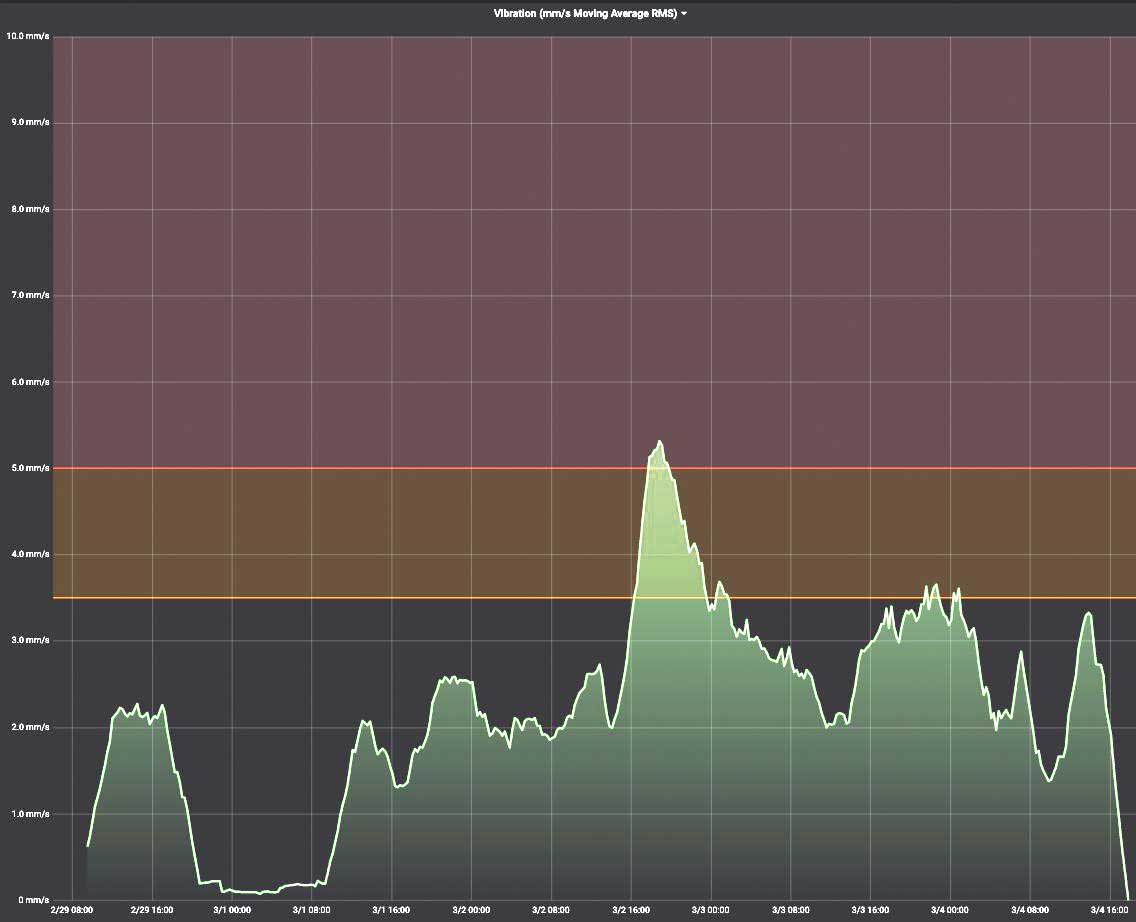
By limiting the scope, you can easily start to create value for both the customer/end user and your business. All you need to do is utilize the value of simple sensor solutions, which is available in the market today, instead of selling the “world of IOT.” Just sell your customer/end user the simple sensor data with simple visualization, providing them with more information to make more precise decisions. (See Figure 1.)
As many of us have experienced, the number of sensors has increased but not even near the numbers communicated.
Most motors will experience improved uptime and will indicate a necessity for maintenance with visual trends of temperature, vibration and alarm setting based on experience. As a guide, ISO standards may be used. However, you choose to set the alarms; it will still be an improvement compared to no alarms.
A large international steel and aluminum manufacturer is putting vibration sensors on many of their machines and has set the alarm to 7.5 mm/s (0.3 in/sec).
With a less complex approach, you will instantly get more data to improve your decisions. You can learn how the plant behaves, and hopefully avoid the 5:00 failure on a Friday afternoon.
Preparing for the Next Step
When you have adapted and developed your organization to react to sensor data and acknowledge the value, it’s much easier to take the next step into higher value maintenance philosophies with your customer.
This article has been offered by EASA, the Electromechanical Authority ( www.easa.com )



Subscribe to the free Maintworld newsletter here!

Latest